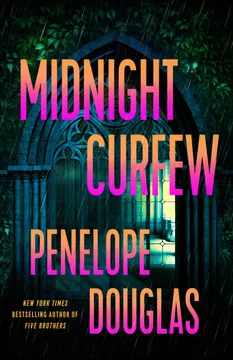


Summary Unavailable
This book is not suitable for a summary (it may be a textbook, workbook, cookbook, reference book, or collection). However, you can still explore the FAQs, about author, and other metadata below!
Plot Summary
The Teacher and the Heir
Dallas Jaeger,1 a philosophy teacher from Sanoa Bay, earns money by performing elaborate sexual fantasies for wealthy clients, but the role ends with the same familiar emptiness. His real work is helping his family keep their ancestral community from being absorbed by St. Carmen.
The Jaegers have spent years placing relatives in influential jobs, including Dallas1 at Marymount Academy. There, four years after their last encounter, he finds Callum Ames,2 newly returned from college and backed by the town's secretive Council.
Callum2 pins Dallas's1 wrists to his desk and makes clear that their old conflict is not over. Behind their personal hostility lies a land dispute: the Ames family wants the Bay's coastal property, and a five-year agreement giving the Jaegers time to protect it is nearing its deadline.
Dallas's paid performance introduces a man who can convincingly inhabit any role except that of someone who needs another person. The contrast matters because Callum's return makes his practiced detachment immediately unstable. Their conflict is never only romantic: Callum's authority comes from inherited wealth and institutions, while Dallas's family has built influence through local ties and mutual dependence. The looming land deadline turns desire into a political pressure point. Their attraction can be exploited by either man, but their unequal access to power makes every private gesture potentially consequential in public.
The Lawn-Side Dare
Five years earlier, Dallas1 works with his brothers at the Ames estate, cutting grass and cleaning pools while wealthy teenagers watch from the water. Callum,2 then seventeen, studies Dallas1 from a balcony through a telescope.
When Dallas1 notices, he deliberately challenges him to come closer, and Callum2 answers by inviting him upstairs. Their first encounter is not tender: Callum2 grabs Dallas1 by the throat, reminding him that a rich boy can escape consequences that a worker cannot.
Dallas1 refuses to be intimidated and predicts that Callum2 will keep hiring him because he wants him nearby. The exchange turns class resentment into a private game of pursuit. Callum2 has the power to punish Dallas,1 but Dallas1 recognizes that being watched is already a form of surrender.
Their first meeting establishes the contradiction that governs the romance: Callum possesses institutional power, yet Dallas can make him feel exposed. Dallas's bravado is partly self-protection, but it also gives him leverage over a boy trained to treat wealth as control. Callum's physical threat is therefore not simply aggression; it is an attempt to restore a hierarchy that Dallas has unsettled. The telescope makes desire a form of surveillance from the outset. Each man watches the other for evidence of weakness, then mistakes that attention for a kind of victory.
The Storm-Party Collision
Callum2 arrives at a Jaeger party with rich school friends, expecting to provoke the family and impress his companions. Instead, he fixates on Dallas,1 who kisses a woman while holding Callum's2 gaze. Callum2 approaches Liv,8 Dallas's younger sister,8 partly to draw Dallas1 out, but the conversation turns unexpectedly candid when Liv8 describes her attraction to women.
Dallas1 interrupts and challenges Callum;2 their shoving becomes a fight in the rain, with each man aroused by the other's refusal to back down. After the crowd scatters and the brothers argue, Dallas1 and Callum2 kiss and have sex in the mud. Callum2 returns again and again that summer, and the physical contest becomes a clandestine relationship neither knows how to name.
The party transforms a class contest into a private attachment without removing its danger. Callum uses Liv as a provocation, but Liv's directness briefly interrupts the boys' rivalry and gives Callum a glimpse of a life less governed by performance. The fight lets both men express desire in a language they can tolerate: force, challenge, and bodily risk. Their secrecy protects them from their families, yet it also prevents them from developing a shared account of what they are doing. The affair begins with real intimacy and an equally real refusal to acknowledge its emotional cost.
The Morning Dallas Left
As the summer deepens, Callum2 begins to trust Dallas1 with more than his body. One morning, he admits that life with his father12 makes him feel ashamed and that Dallas's1 room is one of the few places where he can stop pretending.
Dallas1 answers by revealing the guilt he carries over finding his mother dead after her suicide, a secret he has never shared with his family. Their closeness frightens him, and he tries to restore distance. Soon Garrett Ames12 catches the two boys together outside a visitor center, strikes Callum,2 and grabs him painfully while berating him.
Dallas1 intervenes, but Callum2 insists he can handle his father.12 Watching him leave with Garrett,12 Dallas1 cuts off contact rather than risk attachment or expose the relationship further.
The relationship's first rupture comes from two different survival strategies. Callum reaches for a witness to his private self; Dallas answers with a confession, then panics when that intimacy makes loss imaginable. Garrett's violence confirms Callum's fear that desire can be used to punish him, while Dallas's withdrawal confirms his belief that dependence is dangerous. Dallas does not leave because he feels nothing. He leaves because he has no model for staying without surrendering control. The resulting silence converts an imperfect but meaningful connection into a wound each man will interpret differently.
Liv Becomes the Weapon
Months after Dallas1 cuts him off, Callum2 retaliates by arranging to take Liv8 from a limousine and bring her to Fox Hill. He tells himself the abduction is a bargain that will give Liv8 access to help for her family, but the men with him restrain and threaten her. Liv8 resists, loosens her bindings, and escapes before they can assault her.
Dallas,1 Clay,10 and his brothers find the group; Clay10 cuts Milo Price's13 face to stop him from attacking Liv,8 while Dallas1 beats Callum2 inside the club. Liv8 also plays a recording that exposes Callum's2 attempt to trade sexual access for influence over the family's land. Callum2 leaves with a new enemy and a scar, while Dallas's1 guilt and anger harden into the hostility that greets Callum's2 return.
Callum's revenge repeats the coercive logic he fears in his father: he treats another person's vulnerability as a lever for reaching Dallas. Liv's escape is the decisive moral fact. Her resistance prevents Callum's plan from becoming an assault, but it cannot undo the terror he has caused or the trust he has broken. Clay's intervention shows that the Jaeger family is not merely a male defense force; its women act decisively and accept risk. The episode also makes clear that attraction does not excuse harm. Their later reconciliation must confront this history, not erase it.
The Midnight Curfew
Back in the present, Callum2 uses his Council connections to impose a midnight curfew on Sanoa Bay, ostensibly as protection during storm season. Dallas1 realizes the timing is deliberate when police trap the Jaegers' trucks carrying black-market liquor across the railroad tracks. The curfew threatens the bar, the family's supply network, and residents who work late shifts.
Dallas1 drives away from the others to draw the police after him, then hides at Marymount, where he confronts Callum2 beside the swimming pool. Callum2 has kept an officer on the phone and uses the threat of arrest to control the encounter. Dallas1 answers by staging a sexual performance with Amy Chandler while Callum2 watches, but neither man leaves the scene untouched.
The curfew translates class power into a daily inconvenience that can force people to leave without a formal eviction. Callum's policy is effective precisely because it looks neutral: weather alerts and policing conceal a targeted economic attack. Dallas responds in the only arena where he believes he can still exert control, turning sex into spectacle and using Callum's jealousy as counterpressure. Yet the performance reveals how little either man can separate desire from strategy. Their bodies become another contested territory, while the community pays for a conflict it did not choose.
The Girl in the Classroom
At Marymount, Dallas's classroom has become a refuge for Callum's stepsister,3 Sophia Beaumont,3 who now prefers the name Anna-Katherine.3 She paints on the windows, reads, and helps with classwork; Dallas1 lets her set the room's rhythm without demanding an explanation for her trauma.
Callum2 is protective but often calls her Sophia,3 revealing how differently he sees her. When Milo13 threatens to exploit her, Callum2 later smashes Milo's13 hands with a library mallet and expels him from the Council's circle.
Meanwhile, Liv8 suggests Dallas1 enter the Wolfe Room, the elite club where Callum's2 allies gather, so he can collect leverage and pressure Callum2 to ease the curfew. Dallas1 accepts the plan despite knowing that proximity to Callum2 is dangerous for him.
Anna-Katherine's classroom refuge complicates the story's language of protection. Dallas does not claim to cure her; he offers predictable space and respects the name she chooses. Callum's protection is more forceful, shaped by guilt and fear, and his violence against Milo shows both devotion and the danger of responding to abuse with domination. Dallas's decision to enter the Wolfe Room is similarly double-edged. It is politically strategic, but it also gives him an excuse to return to the person who once made him feel seen. Care and self-interest remain entangled.
Behind the Wolfe Room
Callum2 brings Dallas1 into the Wolfe Room, a private club where St. Carmen's wealthy couples use sex and spectatorship to reinforce their social bonds. Dallas1 sees wives, husbands, business partners, and acquaintances performing for one another, then follows Callum2 into the hidden Covo, where the encounters become more aggressive and anonymous.
Callum2 reveals that his father12 once brought Anna-Katherine3 there when she was a teenager. Dallas1 understands that her trauma is tied not only to one man's abuse but to a network that concealed it. He watches Callum2 attempt to prove he can desire women, while Callum2 watches Dallas1 pleasure another man's wife. The club offers access to information, but it also exposes the moral cost of their world.
The Wolfe Room is less a pleasure palace than an institution for laundering power into private ritual. Familiar faces and business relationships make secrecy communal rather than isolating: everyone can pretend not to know what they have witnessed. The Covo sharpens that structure by hiding the participants' identities and lowering the threshold for coercion. Callum's disclosure about Anna-Katherine changes Dallas's understanding of his rival. Callum is not simply a privileged predator or a helpless son; he has failed to stop harm within his own family and is trying to control what cannot be undone.
A Song in the Dark
After a night of arrests and club games, Dallas1 follows Callum2 to his home and witnesses Anna-Katherine's3 PTSD crisis. She panics when she smells the Wolfe Room on Callum,2 and he does not threaten or restrain her; he sits with her and sings the song that helps her return to herself.
Later, Dallas1 and Callum2 meet again at school and have sex, but the encounter shifts when Dallas1 admits that he heard his mother crying before her suicide and stayed on the stairs instead of going to her. Callum2 recognizes the shame beneath Dallas's1 bravado. They agree not to call their relationship love, yet both begin seeking each other beyond the immediate thrill, and Dallas's1 instinct to protect Anna-Katherine3 deepens.
The song gives the story a concrete alternative to force. Callum helps Anna-Katherine regulate distress through a shared routine, not by demanding that she explain or perform recovery. Dallas sees a capacity for tenderness that complicates his image of Callum as merely manipulative. His own confession links the present crisis to his childhood paralysis, and the intimacy between the men becomes more than erotic recognition: each has now witnessed the other's shame. Their agreement to avoid love is a defense, not a neutral pact. The emotional risk has already begun.
The Yacht Interruption
Callum2 attempts to move toward a less entangled relationship with Micah Hearst,16 an older hotel owner introduced through Jerome Watson.14 Dallas1 sees Callum2 respond to Micah's16 attention and becomes sharply jealous, though he insists he has no claim on him.
With Liv8 and Iron,6 Dallas1 boards Callum's2 yacht and interrupts the date by knocking Micah16 unconscious with chloroform, then taking him away to Fox Hill. The stunt is meant to punish Callum2 and expose his dependence on the Jaegers, but it also reveals how strongly Dallas1 reacts to losing his attention.
Callum2 does not retaliate by abandoning the Bay. Instead, he challenges Dallas1 to return with him to the Wolfe Room, where their next encounter can serve both their private rivalry and the family struggle.
Micah offers Callum a relationship built on explicit terms and adult distance, but that apparent safety provokes Dallas more than the Wolfe Room does. Dallas's abduction of Micah is reckless and morally compromised; he treats another person as an instrument, repeating the very behavior he condemns in Callum. The scene makes jealousy legible as fear of replacement, not proof of devotion. Callum's response is significant because he refuses the simple role of victim or victor. He channels the confrontation back into the arena where both men are most vulnerable, intimacy intertwined with power.
The Cemetery's False Graves
Callum2 begins sketching a major Marymount expansion after realizing that students like Anna-Katherine3 need safer structures and adults beyond their families. A classroom discussion about ethics and shared wealth directs his attention to the old Bay cemetery.
He remembers the Jaeger family chapel, the fresh flowers beside unmarked ground, and the raised soil around apparently ancient graves. Callum2 infers that the family has been moving a hidden pirate treasure through false burials.
The discovery gives him a way to challenge the Jaegers financially and to prove himself to Garrett,12 who has long treated him as a disappointment. It also changes Callum's2 own plans: he imagines using money and the school to build lasting influence, not simply clearing land for his father's12 development scheme.
The cemetery turns history into both inheritance and evidence. The Jaegers have concealed wealth not to indulge themselves but to fund roads, businesses, and education while avoiding the attention that conspicuous riches would bring. Callum initially reads the clues through the logic of acquisition, yet his school plans suggest a competing idea of power: infrastructure can protect people as well as control them. The discovery tests whether his ambition is merely an imitation of Garrett's or whether he can redirect inherited resources toward a different civic future. His motives remain mixed, which makes the choice consequential.
Aracely's Dangerous Bargain
Callum2 offers Dallas1 a bargain: bring Aracely Diaz,11 the Jaegers' well-connected manager, to the Wolfe Room, and he will reconsider the curfew. Aracely11 agrees to perform but sets clear limits.
In the club, Callum2 and Dallas1 stage desire around her without having sex with her; their shared attention turns the spectacle into a contest between them. Callum2 then leads Dallas1 into the Covo, where Dallas1 sees the same culture of exploitation that harmed Anna-Katherine.3
Callum2 reveals that he has arranged for the police and Council to focus elsewhere while his team empties the false graves and seizes the treasure. When Dallas1 returns to the Bay, the family chapel is open and the hidden fortune is gone, leaving Callum2 with the leverage to claim the land.
Aracely's participation is not a simple prop: she negotiates boundaries and understands the social intelligence that makes her valuable to the Bay. But the men still frame her body as a performance through which they communicate with one another. The Covo exposes the gap between consent as a stated rule and consent within an institution built around wealth, secrecy, and pressure. Callum's diversion succeeds because he recognizes the Jaegers' loyalty as a vulnerability: Dallas will stay close to him, and the family will respond to threats against its community. Political strategy and erotic fixation become a single trap.
The Chapel Stands Empty
Callum2 arrives at the cemetery as police inspect the empty Jaeger chapel and tells Dallas1 that the $260 million treasure gives him the power to force a sale through eminent domain. Dallas's1 family understands that the curfew, the arrests, and the lost liquor supply were parts of the same campaign.
Back at the pub, the Jaegers argue over lawyers and lost livelihoods; Dallas1 says little, convinced that trusting Callum2 has ruined them. He spends the next days drinking alone and considers leaving the Bay. In his room, he takes an axe to the beam where his mother died, then finally tells his family that he heard her crying and chose not to enter. His confession turns a private guilt into a family reckoning.
The empty chapel makes the conflict material: a hidden resource, once used to sustain a community, has become an instrument of dispossession. Dallas's despair is not only about losing money. He experiences the defeat as confirmation that he is useless and unworthy of belonging. Destroying the beam is an attempt to erase the childhood scene rather than interpret it. His confession interrupts that repetition. The family does not answer with easy absolution; they recognize the limits of a thirteen-year-old's power and the grief he has carried alone. Being witnessed begins to replace self-punishment.
The Storm's Hidden Treasure
As a tropical storm bears down, Dallas1 finally admits that he loves Callum2 and wants a life with him, not another escape. Macon4 decides the family will go after both Callum2 and the treasure. At the Marymount, Garrett12 has arrived, and Callum2 has hidden most of the fortune in a delivery van at the old fienile.
Before the Jaegers can reach him, Milo13 and two men ram Callum's2 car and seize Anna-Katherine.3 Dallas1 and his brothers arrive in the rain, fight them off, and reunite with Callum.2 Callum2 tells Dallas1 where the treasure is hidden. The Jaegers retrieve it and bring the van back to the Bay, while Dallas1 and Callum2 stop treating their desire as a temporary truce and choose each other amid the storm.
The storm compresses the book's private and public crises into one test of action. Dallas can no longer preserve himself by withholding commitment, and the family responds to his confession with a practical choice: they will risk themselves to retrieve Callum and the treasure. Callum's hidden cache reveals that he has not fully surrendered the fortune to Garrett, though his motives remain tangled with ambition and revenge. The rescue is not a romantic reward detached from consequences. Anna-Katherine is in danger, Milo's violence is real, and the Jaegers must cooperate before they can celebrate either love or recovery.
The Council Stairwell
After the treasure is returned, Callum2 and Anna-Katherine3 go back to Marymount, where Garrett12 tries to force his son2 to reveal the hiding place and threatens to use Anna-Katherine3 against him. Callum2 refuses to surrender her. When Officer Grady18 arrives and orders Garrett12 to lower his weapon, Garrett12 attacks him; Callum2 intervenes and the struggle reaches the open stairwell.
Anna-Katherine3 pushes Garrett12 over the railing before he can hurt Callum2 or Grady.18 He survives but suffers serious injuries, and the attack on an officer gives the police grounds to arrest him. Callum2 stops Anna-Katherine3 from stabbing him as he lies injured. Elsewhere, Milo13 is found dead in a canal, and the Jaegers do not know who killed him.
Anna-Katherine's intervention marks a shift from being protected to exercising agency, but the moment is not framed as a cure or a clean triumph. She acts under threat, and Callum then prevents her from turning defense into a killing. Garrett's fall reverses the family's long pattern of being forced to accommodate his power, while Grady's presence brings public accountability into a system that usually protects the wealthy. Milo's unexplained death leaves violence unresolved. The story grants the Jaegers a decisive victory over Garrett without pretending that the town's deeper habits of impunity have vanished.
A Bay Rebuilt Together
With Garrett12 under arrest and the hidden treasure back in Jaeger hands, Callum2 uses his financial experience to manage the family fortune and his father's12 properties. Rather than simply seize the Bay, he works with the Jaegers on Marymount's expansion, local businesses, and the community's recovery.
Dallas1 keeps teaching and stops treating departure as his only protection against loss. He and Callum2 build a shared life while helping Anna-Katherine3 find work, friendships, and support.
The Bay is no longer merely defending itself from St. Carmen; it has resources and allies to shape its future. Their relationship remains intense and imperfect, but Dallas1 begins to imagine a home, family photographs, and children rather than a solitary escape.
The resolution revises the novel's central equation of wealth and power. Callum's money does not become virtuous by itself; its meaning changes because he chooses to place it within relationships and civic commitments. The Jaegers' communal wealth had already embodied a cautious alternative to private accumulation, but secrecy made it vulnerable. Dallas's emotional development parallels that political shift. He no longer defines freedom as the ability to leave before anyone can hurt him. Staying becomes a chosen risk, supported by a family that can hold his guilt without making it his entire identity.
Epilogue
Four months later, Dallas1 and Callum2 share a home and prepare to spend Christmas with the Jaegers, taking Anna-Katherine3 to Colorado so she can finally see snow. Dallas1 imagines asking Callum2 to marry him, while Callum2 speaks openly about a future that may include children.
Their ordinary life is noisy, communal, and interrupted by family plans, a sharp contrast to the secrecy that once defined them. The epilogue then turns to an earlier family gathering, where the Jaegers consider who might eventually replace Marymount's aging priest. Dallas1 refuses the role, and the family's attention shifts toward Iron,6 leaving that new possibility unresolved.
The domestic scenes make intimacy visible in the places where the couple once had to hide: the shared home, the pool, the holiday plans, and the family gathering. Dallas's desire for marriage and children is not presented as a cure for his fear, but as evidence that he can now imagine a future without treating attachment as a trap. Anna-Katherine's wish to see snow gives the trip a modest, concrete purpose grounded in her recovery. The final discussion about the priesthood opens a new family problem rather than closing every thread, preserving the Jaegers' defining condition: private life and civic duty keep colliding.
Analysis
Midnight Curfew binds a romance to a struggle over land, institutions, and the unequal distribution of safety. Callum2 can impose a curfew because the city treats his family's wealth as legitimate authority; the same rule can endanger Bay workers while presenting itself as ordinary governance. The Jaegers resist through a different form of power, a dense network of family labor, local businesses, and carefully managed shared wealth. Their secrecy protects the community but also leaves it vulnerable when Callum2 discovers the treasure.
The central relationship repeats this conflict at an intimate scale. Dallas1 and Callum2 use sex, provocation, and withholding to test who controls the encounter. Their history shows how easily desire can be confused with entitlement: Callum's2 past treatment of Liv8 cannot be redeemed by attraction, and Dallas's1 own reckless behavior can harm people outside the couple. The novel's eventual movement toward trust comes not from declaring their past harmless, but from watching them act differently when Anna-Katherine3 is at risk.
Anna-Katherine's3 recovery offers a quieter countermodel to both men's strategies. She is not restored by force or by a single revelation. She gains stability through routine, consent, chosen relationships, and environments in which others take her perception seriously. Dallas1 becomes more than a defender when he listens; Callum2 becomes more than a protector when he acknowledges that her needs are not identical to his.
The treasure embodies the novel's question about what power is for. Garrett12 treats wealth as permission to possess people and places. Callum2 begins by copying that logic, then redirects resources toward education and civic growth. Dallas's1 emotional arc follows the same shift: freedom is no longer simply leaving before he can be abandoned. He learns to stay, accept help, and imagine a future that depends on other people without surrendering himself.
Last updated:
Report IssueReview Summary
Midnight Curfew receives mixed reviews, averaging 3.9/5 stars. Readers praise the intense chemistry and toxic dynamic between Dallas and Callum, calling the enemies-to-lovers tension "delicious" and unputdownable. Critics cite pacing issues, underdeveloped romance, and an abrupt emotional resolution. Several readers take issue with multiple MF/FM scenes in a marketed MM romance. The writing occasionally confused readers regarding POV clarity. Fans of Penelope Douglas's previous Sanoa Bay books generally enjoyed it, while newcomers and MM-focused readers found it less satisfying.
Characters
Dallas Jaeger
The defiant Bay teacherDallas is a philosophy teacher, a Jaeger brother, and a man who uses confidence, sex, and humor to keep vulnerability at a distance. He grew up amid grief, financial strain, and the responsibility of helping his family survive, yet resists being managed by his older brothers. His restless appetite often masks a belief that love leads to loss, a belief rooted in his mother's suicide and his own childhood guilt. He is perceptive about class and power, but far less perceptive about his need for belonging. His connection to Callum2 forces him to confront the difference between control and safety, while his care for Anna-Katherine3 reveals a gentler instinct he has rarely trusted.
Callum Ames
The controlled heirCallum is a finance-trained heir raised in the wealthy, politically influential Ames family. He is disciplined, strategic, and accustomed to turning emotion into a plan, partly because his father12 uses affection and authority as tools of control. His attraction to men conflicts with the public role expected of him, so he learns to perform the acceptable version of himself. He is fiercely protective of his stepsister3, though his impulse to control her choices can echo the power he opposes. Dallas1 unsettles Callum because Dallas1 sees past his polish and refuses to behave like a grateful subordinate. Beneath his ambition is a desire to escape his father's12 shadow and build a life that feels like his own.
Anna-Katherine Beaumont
The guarded stepsisterAnna-Katherine, born Sophia Beaumont, is Callum's stepsister2 and a young woman living with the effects of severe trauma. She chooses a childlike name and routines that help her feel safe, including painting, reading, familiar clothing, and a particular song. Her retreat is not simple innocence: she notices when people patronize her and understands more than they assume. She trusts Callum2 and gradually feels safe in Dallas's classroom, where he respects her preferred name and gives her room to work. Her recovery depends less on being forced back into an expected adulthood than on having reliable people, real choices, and protection that does not erase her agency.
Macon Jaeger
The family's hard-won leaderMacon is the eldest Jaeger brother, a former Marine, and the principal strategist behind the family's effort to preserve Sanoa Bay. He learned responsibility too young after his parents died and often protects his siblings through blunt rules rather than emotional explanations. His marriage to Krisjen9 softens his habits without making him less decisive. He expects each family member to contribute, but his authority is tested when Dallas's1 actions threaten the whole community.
Army Jaeger
The family policemanArmy is a Jaeger brother who becomes a police officer, giving the family an uneasy foothold in St. Carmen's law enforcement. He is practical, protective, and blunt, with a strong desire for a stable family life of his own. His instinct is to contain danger before it reaches the younger relatives, though his frustration with Dallas1 sometimes makes protection sound like judgment.
Iron Jaeger
The returned fighterIron is one of the middle Jaeger brothers, recently returned after a long prison sentence caused by his violent temper. He and Dallas1 have a close, teasing bond built during a childhood when the older brothers were often occupied with survival. Prison has changed his rhythms, and his family is careful not to assume that his return means he is immediately unchanged or at ease.
Trace Jaeger
The quick-witted youngest brotherTrace is the Jaegers' younger brother, a sociable and humorous man who runs a bar and helps move liquor to Sanoa Bay. His warmth makes him a natural counterweight to the family's harsher personalities, though his joking can conceal the work he does to keep the business running. He is loyal without needing to dominate every family decision.
Olivia Jaeger
The youngest JaegerOlivia, usually called Liv, is the youngest Jaeger sibling and a filmmaker who is building a life with Clay10. Growing up protected by five brothers has not made her passive; she understands the family's power structure and can identify strategies others overlook. She is compassionate toward Callum's2 vulnerability but does not excuse his past actions, and she often pushes Dallas1 to consider solutions beyond anger.
Krisjen Jaeger
The civic-minded wifeKrisjen is Macon's wife4 and a member of St. Carmen's municipal government. She is socially skilled, generous, and capable of challenging the Jaegers without trying to remake them. Her practical support helps make the family home more livable, while her political work gives the Bay a voice inside institutions that once excluded it.
Clay Collins
Liv's fearless partnerClay is Liv's partner8 and a woman who learned to stand her ground among St. Carmen's wealthy families. Her loyalty is active rather than sentimental: she intervenes when Liv8 is threatened and uses the social and practical resources available to her. She also understands how reputation and family influence can be turned against the people who rely on them.
Aracely Diaz
The Bay's information hubAracely manages the Mariette's restaurant and much of Macon's4 schedule, while keeping track of the people and businesses that sustain the Bay. She is observant, capable, and difficult to intimidate. Her history with the Jaeger brothers gives her personal access to the family, but her usefulness comes from her own network and judgment, not merely her relationships with them.
Garrett Ames
The coercive patriarchGarrett is Callum's father2, a wealthy developer and influential figure in St. Carmen. He treats power as proof of entitlement and expects family members to serve his ambitions. His polished public position conceals cruelty at home and a willingness to exploit people with less money or social protection. Callum's2 struggle to resist him is also a struggle to avoid inheriting his methods.
Milo Price
Callum's volatile allyMilo is one of Callum's2 wealthy school friends and a man who confuses dominance with authority. He treats women and rivals as objects in contests, while his loyalty to Callum2 depends on being included in the circle of power. His aggression makes him especially dangerous when a target cannot easily fight back.
Jerome Watson
The Council's old guardJerome is older than Callum2 and a member of the social network surrounding the Marymount Council and Fox Hill. He has longstanding resentments toward the Jaegers and uses connections as readily as money. He can be useful to Callum2, but his loyalty is pragmatic, shaped by his own ambitions and past disappointments.
Vincent Law
The polished accompliceVincent is part of Callum's2 wealthy circle and participates in the group's social and political maneuvering. He is more measured than Milo13, but his composure helps normalize the privileges and excesses of their world. He is also present when Callum2 begins considering a broader future for Marymount.
Micah Hearst
The possible safe alternativeMicah is an older hotel owner introduced to Callum2 through Jerome14. He is self-possessed and candid about wanting a casual arrangement rather than a romance. His directness offers Callum2 a glimpse of intimacy without the history and emotional risk attached to Dallas1.
Ava Ames
Sophia's watchful motherAva is Garrett's wife12 and Anna-Katherine's mother3. She cares deeply for her daughter3 and tries to support her treatment and independence, but her marriage to Garrett12 limits how effectively she can intervene. She is thoughtful and gentle, though the compromises she has made leave her daughter3 exposed to harms she should have been able to prevent.
Officer Grady
The compromised lawmanGrady is a St. Carmen police officer who has a working relationship with Callum2 and the Ames family. His position leaves him navigating competing pressures from wealthy donors, local institutions, and the law. He knows that the city's rules are not applied evenly, but his choices still have consequences.
Plot Devices
The Midnight Curfew
Economic pressure by decreeCallum's2 curfew keeps Sanoa Bay residents off St. Carmen's streets from midnight to early morning, supposedly because of storms and theft. In practice, it disrupts the Jaegers' after-hours liquor deliveries and threatens workers whose shifts do not fit the restriction. Because police enforce the rule, Callum2 can make economic harm look like neutral public safety. The curfew also creates repeated nighttime encounters between Dallas1 and Callum2, turning legal risk into part of their private contest.
The Wolfe Room
A private power theaterThe Wolfe Room is an exclusive underground club used by St. Carmen's wealthy residents for sexual display, voyeurism, and social bonding. Its hidden inner space, the Covo, strips away more of the club's public polish and makes coercion easier to conceal. Callum2 takes Dallas1 there as both a provocation and a tour of the world that shaped his father12. The club supplies access to influential people and compromising knowledge, but it also reveals how privilege allows its members to mistake secrecy for consent.
The False Graves
Hidden wealth and leverageThe old Bay cemetery contains false graves concealing a pirate treasure that the Jaegers have used cautiously to invest in their community. Callum2 recognizes clues in the chapel, flowers, and unsettled ground, then uses the fortune to threaten the family's hold on its land. Later, he hides most of the treasure away from his father12 and reveals its location when the Jaegers need to reclaim it. The treasure makes inherited history a practical weapon and forces the characters to decide whether wealth will serve one man's control or an entire community.
The Classroom Refuge
Safety through routineDallas's1 Marymount classroom gives Anna-Katherine3 a place to paint, read, and follow routines she chooses. The colored window art and familiar song give her concrete ways to manage distress without being forced to explain her trauma. The room also brings Dallas1 and Callum2 into repeated contact, making school a political battleground as well as a refuge. Its meaning depends on who controls the space: Dallas1 allows Anna-Katherine3 to inhabit it on her terms, while Callum's2 Council role threatens to turn the school into another instrument of family power.
Seneca and Nero
A lesson about inheritanceDallas1 keeps a sculpture of Seneca teaching Nero in his classroom and uses it to think about the dangers of influence, ambition, and a teacher's failure to shape a student. Callum2 recognizes the image as a mirror for their relationship: each man can claim to be the pupil or the mentor, depending on who holds power at that moment. The reference gives their conflict a language beyond insult, but it also exposes the limits of treating people as lessons. Neither Dallas1 nor Callum2 can control what the other becomes simply by loving, teaching, or hurting him.
About the Author
Penelope Douglas is a New York Times, USA Today, and Wall Street Journal bestselling author whose work spans multiple beloved series and standalones. Their books, including the Fall Away Series, the Devil's Night Series, and standalones like Tryst Six Venom and Five Brothers, have been translated into more than twenty languages, earning a devoted global readership. Midnight Curfew marks their first MM romance, set within the established Sanoa Bay universe. Douglas lives in New England with their husband and daughter and is currently developing The Hellbent Series as their next project.
Download PDF
Download EPUB
.epub digital book format is ideal for reading ebooks on phones, tablets, and e-readers.








