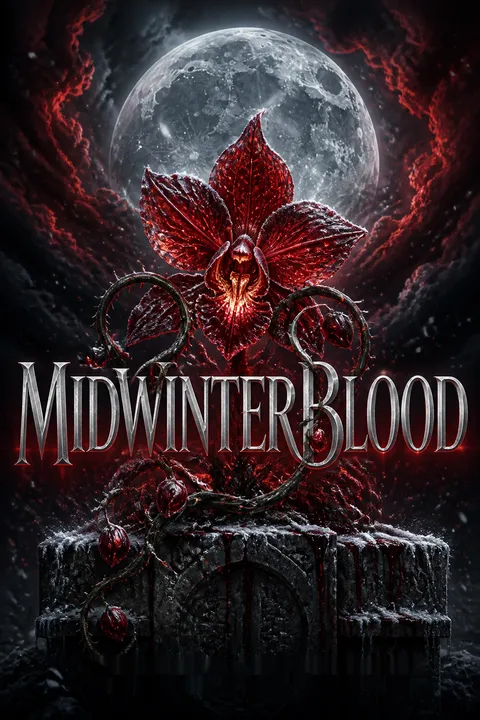


Plot Summary
The Island That Forgets
Journalist Eric Seven travels to remote Blessed Island to investigate claims that its rare orchid can restore health and prolong life. His OneDegree app finds no connections among the passengers, and on the island his devices have no signal. The welcoming Ward, Tor, offers him a house and tea, while Merle, a young islander, unsettles him with an immediate sense of recognition and calm.
Eric is drawn to her, but his thoughts repeatedly cloud over. He notices there are no children, that the islanders seem unusually generous, and that the local map omits part of the island. A cup of tea and a long sleep leave him content, hungry, and unable to remember the work that brought him there.
Eric arrives expecting to turn rumor into evidence, but the island makes ordinary investigative habits unreliable: networks fail, maps conceal, and his own memory becomes the missing archive. His attraction to Merle is not presented as a simple romantic distraction. It is another form of recognition he cannot verify, which places desire and inquiry on the same unstable footing. The island’s hospitality feels comforting precisely because it erodes his suspicion. His first loss is not freedom but the confidence that his own mind can tell him what is happening.
Beyond the Painted Map
After finding his charger missing, Eric tries to work around his failing device and borrows a map from Tor. Its blank half confirms his suspicion that the western island is being concealed. He also realizes his bicycle seems to roll without pedaling, except on the steep hill that leads toward the hidden shore.
Thorny brush and painted stone eyes guide him across the divide, where thousands of dragon orchids grow beside a ruined church. Inside, he uncovers a vast painting of a blood ritual. Tor and the other Wards arrive, cover the image, and seize Eric. They drag him toward a stone table as Merle watches. In the struggle, Eric recognizes the terror as something already lived, though he cannot yet recover the memory.
The hidden half of the island turns Eric’s investigation into a passage through controlled perception. Its boundary is not merely geographic: the map, the sedative tea, and his own lapses have all trained him to accept an incomplete account. The painted eyes make discovery feel guided rather than accidental, while the church painting converts a rumor about medicine into a visible history of violence. Eric’s capture exposes the cost of treating knowledge as neutral. Once he sees what the island has hidden, the Wards regard him not as a reporter but as a body to be used.
Bones Beneath the Meadow
Years earlier, archaeologist Edward struggles to find anything in a Blessed Island meadow until Eric, a large, nearly silent boy who carries a stuffed hare, indicates where to dig. The team uncovers a Viking stone coffin containing two skeletons, the larger curled around the smaller.
Eric’s strength helps lift the lid, but a deeper trench soon reveals an unexploded wartime bomb. When Mat falls beside it, Eric carries the bomb across the meadow and drops it into the sea, then helps rescue Mat.
The crisis brings Edward closer to Eric’s mother, Merle. She explains that a scythe accident when Eric was two left him profoundly changed, and Edward responds with affection rather than discomfort. The boy’s strange knowledge and courage remain unexplained.
The excavation makes the novel’s recurring images material: the protective embrace in the grave anticipates the costs of care, while the buried bomb brings later violence into a present that had seemed pastoral. Eric’s silence does not make him passive. He directs the dig and acts decisively when trained adults freeze, unsettling assumptions about competence and disability. Edward’s response to Merle’s account matters because he listens without reducing Eric to an injury. The episode offers a counterpoint to the island’s coercive uses of bodies: here, help is given freely, and the boy’s difference is met with respect.
The Airman and the Farm
During the Second World War, injured airman David Thompson parachutes onto Blessed Island and is sheltered by farmer Erik, his wife Rebecka, and their son Benjamin. Erik distrusts him because bombs dropped by Allied planes killed the family’s daughter, Sarah, and he throws David’s pistol into the sea.
Rebecka treats David’s broken ankle with dragon-orchid tea, while the household’s grief and fear deepen. When soldiers begin searching for the airman, David discovers his uniform and equipment burning, but Erik relents after seeing a photograph of David’s daughter, also named Merle.
Rebecka arranges a boat and a route to the resistance. Erik returns David’s pistol, draws the soldiers away, and is shot as David rows to safety. David later reunites with his family.
This episode refuses the clean moral divisions that wartime stories often offer. Erik’s hostility is rooted in a daughter killed by the same military world David serves, while David is both a wounded stranger and a threat to the people sheltering him. The photograph of Merle does not erase the loss of Sarah; it gives Erik a concrete bridge between two families whose grief might otherwise remain opposing claims. His final assistance is therefore neither easy forgiveness nor patriotic duty. It is a choice to protect another child’s bond with her father, even at terrible personal cost.
The Painter's Last Canvas
At seven, Merle disobeys her mother, Bridget, and explores the western island, where she discovers the reclusive painter Eric Carlsson fallen and unable to rise. Bridget treats him with her herbal tea, and Merle begins bringing him apples and keeping him company.
Their friendship helps Carlsson return to a painting he had abandoned for decades: a huge scene of an ancient king’s sacrifice on Blessed Island. He finishes it and invites the two to see the work before museum officials reject it as grotesque and irrelevant.
Bridget later finds Carlsson dead beside the canvas. His brush is still wet, and the painting has changed: Merle now appears in the scene, offering an apple to the doomed king. Her small act of care has entered the history he painted.
Merle’s kindness begins as practical attention: she sees that the apples are falling unused and then recognizes that an old man needs help. Carlsson’s recovery of artistic purpose is linked to being cared for, not to professional approval. The museum’s dismissal shows how institutions can mistake emotional discomfort for historical irrelevance, especially when art refuses to keep sacrifice safely in the past. The altered painting makes the relationship reciprocal. Merle helps Carlsson return to his work, and his final image gives her a place within the story that adults and institutions have failed to understand.
A Hare in the Story
During a northern holiday, twins listen at bedtime to a woman they know as Laura, who tells them of Merle and Erik, forbidden lovers separated by Merle’s wealthy father. Erik drowns, and Merle’s grief drives her to seek a witch’s potion that turns her into a hare so she can follow him.
The twins go downstairs and find their parents with a different woman, the real Laura, who has only just arrived. Their parents insist no storyteller was upstairs, but Laura recognizes the lovers’ tale in another form, with different identities and a different reason their love was forbidden. Outside, a woman in black and purple hears the house fall quiet and mourns the story’s lost lover.
The episode makes storytelling itself unstable evidence. The twins experience the visitor as real, their parents deny her presence, and the real Laura confirms that the tale exists while disputing its details. Each version preserves the emotional structure of separation but alters names, status, and circumstance. That instability prepares the reader to recognize recurrence without treating memory as a perfect record. The hare is especially charged: it can be toy, companion, transformed lover, or witness. By letting incompatible accounts coexist, the book makes folklore a vessel for persistent feeling rather than a reliable transcript of events.
Tor Returns from Death
In an earlier Viking age, twins Melle and Eirik learn that Tor, newly returned to the island, is their uncle and claims their fathered them. Their father, Wulf, kills Tor during a fight, but the burial does not end the danger. Animals go mad, livestock are drained of blood, and Tor returns to attack people while demanding the twins.
Wulf and the village uncover his grave and pin the body with thorn stakes. The killings pause, then begin again. Eirik leaves Melle’s side and gives himself to Tor; afterward the hauntings stop. Much later, archaeologists find a grave containing an adult skeleton holding a child, an echo that connects this island’s violence to the other lives told in the book.
Tor’s return turns family secrecy into physical horror. The uncertainty over paternity is not resolved by authority or genealogy; instead, it becomes a demand to possess the children. Wulf’s violence temporarily contains Tor but cannot undo the original betrayal, and the community’s fear shifts blame toward the twins themselves. Eirik’s sacrifice halts the immediate attacks, yet the grave discovered centuries later suggests that the cost has not simply vanished. The episode examines how communities manage guilt by burying bodies and stories together, only for the buried past to surface in altered form.
The King's Seven Lives
In the oldest account, crops have failed for three years, and King Eirikr accepts a blood sacrifice as the last hope for his starving people. His queen, Melle, loves him, but the chosen executioner is Gunnar, a rival who wants the throne. As the ritual begins, Gunnar cuts Eirikr’s throat despite Melle’s attempt to reach him. Eirikr promises that he will live seven lives and seek her in each.
Melle disappears, then returns years later, silent and unchanged, carrying a hare-bone necklace. She survives as generations pass, while the island’s people grow old around her. At last, she lies on the sacrificial stone and dies after accepting that she will follow him. Their separation becomes a pattern the later stories repeat.
The king’s sacrifice exposes a political bargain disguised as sacred necessity. Eirikr consents because famine has made hope scarce, but Gunnar uses the ceremony to secure power, so communal survival and personal ambition occupy the same ritual. Melle’s long life is not a triumphant escape from grief; it is a sustained refusal to let the loss become final. Her return without speech separates her from ordinary social time, while her eventual choice to die restores agency to a life defined by waiting. The seven-life vow gives the novel a structure for asking whether love can persist without repeating its injuries.
Epilogue
In June 2073, Eric understands that he has lived before and that this is his final life. Merle has secretly stopped drinking the tea, then turns on Tor and the islanders as they prepare to sacrifice Eric. She cuts the hands restraining him and wounds Tor and Henrik, giving the pair a chance to flee.
They reach a boat, but islanders seize them and drag them back to the altar. Eric and Merle stop fighting. She remembers their time together in the sea, and they face the knife with that shared memory. Their deaths end this life’s pursuit, and their love outlasts the island’s violence.
The final scene offers no conventional rescue. Merle acts decisively, but the island’s numbers and the ritual’s power close around the couple again. Their choice to stop resisting is not consent to the Wards’ belief system; it is a refusal to let the captors define the meaning of their last moments. Remembering the swim makes intimacy an experience they can reclaim, not merely a promise deferred into another life. The ending is deliberately double: their bodies are destroyed, while the narrative describes their love as continuing beyond bodily life. The cycle concludes not with escape from death, but with a moment they choose for themselves.
Analysis
Midwinterblood builds its plot as a sequence of lives rather than a single uninterrupted biography. Each section changes period, genre, and point of view, but repeated images make the shifts legible: a hare, a stone burial, a flower with medicinal and lethal uses, a painting of sacrifice, and the names Merle and Erik. The structure asks readers to experience recognition before certainty. Details that first seem atmospheric or incidental become evidence only after another story supplies a different angle.
The island is not merely an isolated setting. Its missing map, absent children, and local customs show how a community can control knowledge by making concealment feel ordinary. The Wards preserve a social order through hospitality and ritual, but those same practices can drug, silence, or sacrifice individuals. The novel therefore treats tradition as neither innocent wisdom nor simple superstition. It is a technology of belonging, and its moral value depends on who controls it and who pays its costs.
Care offers a counterforce to that control. Bridget tends Carlsson, Rebecka treats David, and Merle attends to people whom others overlook. These gestures do not erase grief or prevent violence, but they create moments in which a person is valued apart from usefulness, ancestry, or political role. The repeated sacrifices expose the opposite logic: the claim that one body can be spent for the community’s future. The book’s romantic promise does not make that violence harmless. Instead, its ending asks whether chosen intimacy can retain meaning when escape is impossible. Memory, in this novel, is not a perfect return to the past. It is the fragile capacity to recognize another life and act differently within the moment available.
Review Summary
Midwinterblood received mostly positive reviews, praised for its unique structure, atmospheric writing, and compelling interconnected stories spanning centuries. Readers appreciated the exploration of different types of love and reincarnation. Some found the book confusing initially but were ultimately captivated by the unfolding mystery. Critics noted the sparse writing style as both a strength and weakness. While some felt the target audience was unclear, many considered it a refreshing departure from typical YA novels. A few readers found the ending unsatisfying, but most were deeply moved by the haunting tale.
People Also Read
Characters
Eric Seven
The searching journalistA traveling reporter who values evidence, independence, and the neutrality of names. He keeps the number chosen by his religious parents despite rejecting their faith, suggesting a complicated loyalty to origins he would rather not discuss. His work has made him observant, but his appetite for the next story has also left him rootless. On Blessed Island, his attraction to Merle and the failures of his devices challenge his belief that experience can be mastered through information. He is the contemporary center of the book’s questions about memory, identity, and what makes one life feel like one’s own.
Merle
The island's watchful daughterA young woman on Blessed Island whose quiet attentiveness draws Eric Seven toward her. She is perceptive about the island’s customs and increasingly uneasy with the Wards’ insistence on tradition. Her recurring association with the sea, flowers, and the name Merle links very different stories without making her an easy symbol. She is not simply a love interest: her choices and silences carry knowledge that other characters lack. Her connection to the island is intimate, but she also questions the authority claimed in its name.
Tor
The island's stern WardThe elderly Ward who welcomes Eric Seven while controlling access to the island’s people and places. His hospitality is precise and paternal, but his decisions leave little room for disagreement. He monitors the younger islanders, guards the western half, and treats inherited ritual as a source of authority. His pale eye and careful silences make him difficult to read. Tor represents the unsettling overlap between genuine care for a community and the impulse to control what that community is allowed to remember.
Edward
The uncertain archaeologistAn archaeologist whose underfunded dig has yielded little until Eric, the boy with the hare, directs him toward a promising mound. Edward is experienced but privately anxious about his career and the chances he believes he has missed. His growing respect for Eric and concern for Merle reveal a capacity to revise his assumptions. The excavation becomes both professional breakthrough and personal encounter with a family whose grief cannot be reduced to an artifact.
Eric, the boy with the hare
The silent young guideMerle’s son, a strong and largely nonverbal boy who carries a worn stuffed hare. A childhood accident changed how he communicates, but not his ability to notice what others overlook. He directs the archaeologists toward a burial and later acts without hesitation when a bomb threatens Mat. His mother loves him fiercely while struggling to understand the inner world he inhabits. The hare gives him comfort and connects his story to the island’s older tales.
David Thompson
The stranded airmanA Royal Air Force pilot whose crash lands him injured on an island that has tried to remain outside the war. David is proud of flying and reluctant to become a burden, yet his dependence on the farm family forces him to accept care. He understands that his uniform makes him dangerous to his hosts, especially after he learns what their daughter suffered. His photograph of his own child reveals the family attachment beneath his military identity.
Erik, the farmer
The grieving islanderA farmer who shelters David after finding him injured, despite believing that the airman’s side caused his family’s loss. Erik’s reserve and anger grow from grief for Sarah and from his determination to keep the war away from his home. He distrusts easy gratitude and initially treats David as a threat rather than a guest. His relationship with his wife, Rebecka, is shaped by shared labor and a sorrow they do not express in the same way.
Rebecka
The farm's healerErik’s wife and Benjamin’s mother, Rebecka tends the farm while caring for David’s injury with a traditional orchid preparation. Her kindness does not require her to minimize the war or the death of her daughter. She can name the family’s grief when Erik cannot, and she helps David understand the cost of remaining in their home. Her practical care is a form of courage, grounded in work rather than sentiment.
Benjamin
The farmer's helpful sonErik and Rebecka’s son, Benjamin helps care for David and brings news that enemy soldiers are searching nearby. He is open and considerate, but his loyalty to his family makes the danger of harboring the airman personal. His presence also shows how the household continues to function while carrying the loss of his sister.
Eric Carlsson
The blocked painterA celebrated painter living in isolation on the western half of the island. After his family life and artistic confidence were altered by bereavement, he stopped creating for many years. His vast unfinished painting shows that his imagination has not disappeared, though he is unable to complete it alone. Merle’s company and Bridget’s care draw him back toward the work. He is proud of his craft but vulnerable to the judgment of institutions that claim to decide what art matters.
Bridget
The keeper of old remediesMerle’s mother, a skilled practitioner who knows how to prepare the dragon orchid for different purposes. Bridget respects inherited knowledge while recognizing that its dangers are not fully understood. She tries to protect Merle from the island’s hidden places, but she also teaches her daughter to gather and prepare the flowers. Her care for Carlsson reveals a generous side of her craft, while her parenting balances caution with trust.
Melle
The waiting queenQueen and twin sister to Eirik in an old Viking story, Melle is presented as thoughtful where her brother is impulsive. She reads danger in the behavior of adults before he does and carries the emotional burden of events that others would rather leave unexplained. Her love is expressed through memory, persistence, and a promise whose meaning changes over time. Melle connects the island’s ancient history to the later stories of Merle without losing her own distinct voice and circumstances.
Eirikr
The famine-struck kingA long-reigning king facing years of crop failure, illness, and hunger. Eirikr believes the dragon flower has extended his life, but his longevity has not given him an heir or an answer to the famine. He must weigh his attachment to Melle against his responsibility to a desperate people. His authority is genuine, yet the ritual staged around him can be exploited by ambitious men. His story asks what a ruler owes to those whose survival depends on his choices.
Wulf
The twins' chieftain fatherA Viking chieftain and father to Melle and Eirik, Wulf is strong, proud, and accustomed to acting before explaining himself. He loves his children, but his authority cannot prevent the family secret that divides the island. When conflict becomes physical, his strength can protect the household only temporarily. His choices show how a parent’s attempt to control a painful truth may intensify the danger facing the children.
Thorolf
The ritual's one-eyed priestA one-eyed religious authority who presides over the ancient sacrifice and serves the dragon-flower cult. Thorolf speaks for the old rites and helps give political acts the appearance of sacred necessity. His confidence in ritual sets him apart from people who doubt the flower’s power or its cost. He is a figure through whom the book examines how belief can protect a community, while also legitimizing coercion.
Gunnar
The ambitious warriorA powerful warrior who wants to succeed Eirikr as king. Gunnar uses the sacrificial ceremony to advance his own claim, making him more than a dutiful instrument of the community’s beliefs. His ambition reveals how public rituals can conceal private contests for power.
Laura
The twins' storytellerThe caregiver expected to look after a pair of visiting twins. A storyteller appearing in their room gives them a haunting account of lovers named Merle and Erik, though the adults dispute that she was ever there. The real Laura recognizes a different version of the same tale, leaving the children caught between memory, folklore, and adult certainty.
Sarah
The lost farm daughterErik and Rebecka’s daughter, whose death in a bombing shapes her family’s distrust of the war and its soldiers. Though she is absent from the farm, David’s photograph of his own daughter makes Sarah’s loss newly present in the household.
Plot Devices
The dragon orchid
A flower with divided usesThe rare orchid grows on the western half of Blessed Island and can be prepared as medicine or as poison. Islanders use it in tea to ease pain and induce sleep, and its effects help explain the reporter’s repeating lapses of memory. Older stories connect the flower to longevity, fertility, and sacred ritual. Because its uses depend on preparation, it resists a simple classification as either healing or harmful. The orchid ties contemporary rumors to the island’s older customs and makes the beauty of its landscape inseparable from the danger concealed within it.
The hidden painting
History made visibleA monumental painting in the ruined church depicts an ancient sacrifice and becomes a visual link between Eric Seven’s present and the island’s past. Eric Carlsson creates it after years without painting, while the Wards conceal it from visitors. Its scenes echo events in other stories, so each later revelation changes how the image can be read. The painting also records a small act of kindness that would otherwise seem lost to history. It makes art function as evidence, memory, and a challenge to the authority of those who decide which parts of the past should remain hidden.
The hare
A witness across storiesHares and hare images recur as companions, omens, and figures of transformation. The boy Eric carries a worn stuffed hare, while the twins hear a story in which a grieving woman seeks the form of a hare. Melle wears a hare-bone necklace, and the archaeological grave contains a child held by an adult. These appearances do not always offer a single explanation. Instead, the hare links vulnerability to endurance and gives the stories a shared image that can pass from toy to legend to memory.
The seven-life vow
A promise that drives recurrenceAt the ancient sacrifice, Eirikr promises Melle that he will live seven lives and seek her in each. The vow gives the book’s shifting eras a narrative spine, joining characters whose circumstances and names differ. It also complicates the romance: reunion is promised, but the lives that follow contain new forms of loss, coercion, and danger. The vow is not proof that every detail repeats unchanged. It is a framework through which the novel asks whether love can recognize another person across altered histories without mistaking recurrence for safety.

Download PDF
Download EPUB
.epub digital book format is ideal for reading ebooks on phones, tablets, and e-readers.








