

Key Takeaways
Build a repeatable edge, then protect the capital that keeps you playing
Many routes, few shared habits. The book follows 12 independent traders across stocks, futures, and currencies. Their methods conflict: some trade rapid intraday moves, others hold positions for months; some rely on charts, others on fundamentals or market behavior. There is no single formula to copy. The common thread is that they learned a method, practiced discipline, and treated losses as a threat to survival rather than as a challenge to their pride.
Failure came first. Several traders lost heavily or blew up an account before improving. Dana Allen lost accounts early in his career; Rob Booker gave back 90 percent of his first account after trading without a stop. Their eventual success came from changing how they managed risk, not from discovering a way to be right every time.
What's striking is that the book presents trading success as a craft assembled from habits, not a secret indicator. That is a more useful lesson than any one trader's particular setup. Still, these are interviews with people who survived and prospered, not a representative sample of everyone who tried. Their stories show what successful traders say they do, but cannot establish how likely a newcomer is to succeed. The sound use of the book is as a collection of practices to test, not as proof that trading is a reliable path to wealth.
Decide your exit before entry, and never let one trade own you
Choose the point of control. The traders repeatedly describe exits as the line between a manageable loss and a damaged account. Franki Law avoids adding money to a losing position after a margin call because being trapped in a large position can take away his ability to make a fresh decision. Rob Booker learned the same lesson painfully when one unprotected trade nearly erased his account. Stops can define a price at which the trade is wrong, while a time stop ends a position that has failed to move as expected.
Protect gains as well. Dana Allen sometimes exits a crash-buying trade at the end of the day if the expected bounce has not appeared. That time limit reflects the logic of his setup: a quick rebound is the point, not an indefinite bet on recovery. A stop is not a prediction. It is a precommitment about what loss is acceptable.
A planned exit functions like a circuit breaker: it does not prevent every mistake, but it can keep one mistake from becoming a cascade. The deeper benefit is restored agency. Once a trader is no longer defending an oversized losing position, the next decision can be based on current evidence rather than the desire to recover. Stops are not magic, though. Fast markets can fill orders at worse prices than expected, and an arbitrary stop can eject a trader from ordinary fluctuation. The level needs to fit the strategy and the instrument.
Prove a method on practice capital before asking real money to trust it
Practice is part of the method. Hoosain Harneker wanted evidence before risking the $1,000 he had spent months saving. He required himself to triple a demo account three times in a row before going live. Rob Booker spent 11 months testing moving-average ideas on historical charts, while Paul Willette paper-traded futures for three months before placing a real trade. These examples show different versions of the same discipline: do not confuse enthusiasm with an edge.
Keep records, then review. Testing can reveal how a setup behaved across many examples, while a small live account exposes the pressure that simulated trading cannot reproduce. Reviewing both winners and losers can reveal practical patterns, such as poor results around news releases or at a particular time of day. A system that looks promising in theory still needs to survive actual execution.
Testing turns a trading idea into a question that can be examined: under what conditions does it work, and what does it lose when it fails? That mindset discourages impulsive strategy-hopping. Yet historical performance can mislead if a trader has tuned a method too closely to old data, and market behavior can change. Demo results also understate the emotional weight of real losses. The strongest process therefore combines historical review, realistic simulation, and cautious live testing, with no stage treated as a guarantee.
Choose a trading rhythm that fits your temperament, not someone else's
There is no universal pace. Rob Booker concluded that he could reliably aim for 50 to 100 pips a week, but became less disciplined when he pushed beyond his personal limit. Hoosain Harneker preferred a modest daily target and stopped trading after reaching it. By contrast, Franki Law looked for larger moves and could hold a position for weeks. Chuck Hays found his best opportunities early in the trading day and often finished after a short, intense session.
Fit the instrument and schedule. A trader who wants constant action may struggle to hold a long-term position through ordinary fluctuations. Someone who prefers analysis and patience may find rapid scalping exhausting. The practical task is to identify which markets, hours, and holding periods can be followed consistently, then test whether that comfort also produces sound results.
Matching method to temperament resembles designing work around a person's attentional strengths. It can reduce the temptation to abandon a strategy during its normal discomforts. The distinction matters: comfort is not evidence of profitability. A trader can feel at home in a high-speed market and still be losing money, or dislike a profitable approach because its drawdowns are hard to tolerate. Personal fit should therefore be assessed alongside records, risk, and the ability to follow rules under pressure.
After a loss, shrink the risk instead of demanding an instant recovery
Don't turn a loss into a campaign. Chuck Hays warns against revenge trading, the impulse to recover a major loss with one oversized trade. His alternative is to trade smaller and seek modest wins, rebuilding control gradually rather than swinging for a dramatic comeback. Rob Booker describes a similar danger: after losing money, traders can increase size or keep adding to a bad position because they cannot accept being wrong.
Know when to pause. Ashkan Bolour treats two consecutive losses as a possible sign that he is out of sync with the market and steps away. A pause can prevent frustration from dictating the next decision. The loss does not need to be earned back today, or even this week. Each new trade should be judged on its own setup, not on the account's emotional history.
Losses create urgency because they are both financial events and threats to a trader's self-image. Reducing size or stopping temporarily interrupts the urge to escalate. This is not retreat from the work; it is a way to preserve the capacity to make another decision. The qualification is that a fixed pause rule should be tested against the trader's method. A short-term strategy may generate ordinary clusters of losses, so a pause should prompt review, not automatically prove that the strategy has stopped working.
Take partial profits, but leave a small position room to catch the rare run
Bank some, keep some. Traders cannot reliably identify the exact top or bottom while a market is moving. Tyrone Ball learned to take profits when they were available instead of waiting for a perfect exit. Paul Willette used staged exits to protect gains while leaving a portion of a position open. In one example, he began with 20 futures contracts and exited in stages. The final five contracts, just one quarter of the starting position, contributed 31 of the trade's 61 total points.
Let the market decide the rest. A trailing stop can allow a remaining position to stay open while the trend continues, then exit if the move reverses enough. This approach makes room for an unusually large winner without requiring the trader to hold the entire position through every pullback. It does not remove risk; it distributes the decision across the trade.
Scaling out addresses a genuine tension: taking profits reduces the chance of watching a winner disappear, but selling everything too early can forfeit the occasional large move that matters disproportionately. The technique makes that tradeoff explicit. Its value depends on execution costs and the behavior of the instrument, since frequent partial exits can add fees or leave awkward residual positions. The broader lesson is not that every trader should use the same fractions, but that exits can be designed to balance immediate certainty with continued exposure.
Adapt your method when market structure changes instead of defending old habits
The playing field moves. Tyrone Ball began as a stock trader, then adapted as market conditions changed and decimalization narrowed spreads. He shifted toward momentum trading, filters, and new ways of finding active stocks. Steven Ickow adjusted to automated trading by placing small test orders and watching how bids and offers responded. He used those responses to form a view of the market rather than assuming the old, human-driven patterns still applied.
Treat observations as provisional. Both traders depended on careful observation, but neither method was frozen. A strategy that works in a fast, volatile market may struggle when volume or volatility changes. Reviewing results and modifying the method is part of the job. The aim is not to chase every new tool or trend, but to notice when the conditions that supported a method have changed.
Adaptation is more than novelty-seeking. It is a disciplined response to changed conditions, much like revising a model when its assumptions no longer match the data. Ickow's small orders illustrate how action can gather information as well as produce profit. However, visible bids and offers can be misleading, especially when participants conceal or rapidly change orders. Price behavior offers clues, not certainty. A trader should treat apparent market intent as a hypothesis and keep the risk of being wrong explicit.
Match evidence to timeframe: value, news, price action, and carry do different jobs
Use the right lens. Dana Allen looked for stocks that fell despite good earnings, betting that short-term fear or profit-taking had pushed a sound company below value. Rob Booker used economic fundamentals to add context to longer currency trades, but relied more on technical setups for entries. Hoosain Harneker avoided trading around scheduled news after discovering that releases and execution problems hurt his results. Their choices differ because their instruments, timeframes, and strategies differ.
Make interest part of the calculation. In currency trading, carry is the interest earned or paid for holding one currency against another. Marcelino Livian favored positions with positive carry because he often held trades for months. That benefit could support a position, but it did not eliminate the need to control risk. Evidence should serve a defined decision, not become a collection of signals that all have to agree.
The traders' disagreement is itself instructive: market information has different uses at different horizons. Earnings may help assess a company's longer-term value, while a news release can disrupt a short-term entry, and interest can accumulate during a long currency position. This is a form of matching evidence to the decision being made. The danger is turning any one lens into a story that justifies a losing trade. Fundamentals, price patterns, and carry can inform a position, but none guarantees its direction.
Give trading financial runway so urgency does not dictate your decisions
Separate living money from risk capital. The book's traders began with very different resources. Harneker saved for months to assemble a $1,000 account; Booker faced debt and worked other jobs while learning; Willette's wife supported the household while he developed his approach. Their stories make the same practical point: depending on immediate trading profits can turn every position into a rent payment with a chart attached.
Budget for the real business. Trading involves more than a brokerage deposit. Commissions, equipment, taxes, and ordinary living costs all affect how long a trader can keep learning. Hays cautioned that futures require substantial capital relative to position size, while other traders began much smaller. No single starting amount fits everyone. A realistic plan includes a financial cushion, restrained position sizes, and a willingness to stop if the losses exceed the plan.
Financial runway changes the decision environment. When a trader must make a particular amount by a particular date, the temptation to force trades rises, even when no good setup exists. Separating household expenses from trading capital can reduce that pressure and make experimentation less destructive. The book's examples should not be read as a capital formula: account sizes, costs, and obligations vary widely. A person can be undercapitalized for a chosen instrument even with a substantial balance, or adequately funded for a cautious, smaller-scale approach.
Analysis
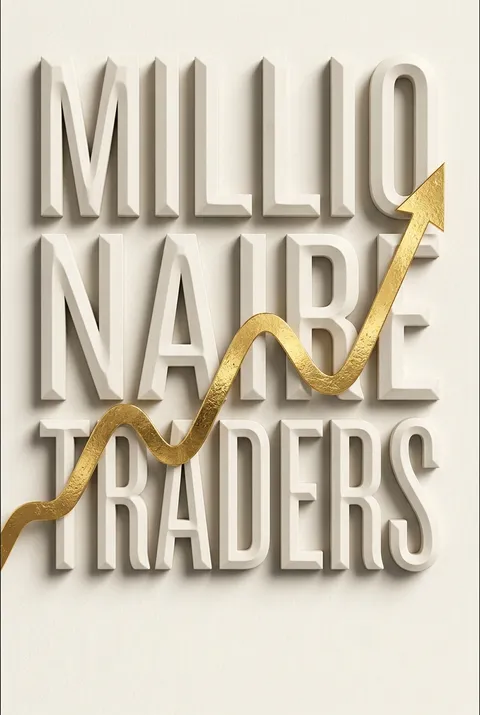
Millionaire Traders is less a manual than a gallery of decision-makers. Its organizing tension is that the traders often disagree about almost everything visible: some scalp, some trend-follow, some fade extremes; some emphasize technical signals, while others look to company value, macroeconomic conditions, or order flow. The stable lesson lies beneath those differences. Successful trading is not one recipe but a managed process of forming a view, controlling exposure, and revising decisions when evidence changes.
The book's most persuasive stories are not the spectacular winners. Dana Allen's painful $150,000 drawdown after ignoring a broken stock channel, Rob Booker's account collapse after trading without a stop, and the repeated early losses of others show how quickly conviction can become self-destruction. In contrast, the durable practices are modest: define what would invalidate a position, test a system, reduce risk when judgment falters, and leave room for a rare extended winner. These are operational habits, not inspirational slogans.
The anthology also reveals a tradeoff between discretion and systemization. Automation can reduce emotional interference, but a system can be overfit or fail when conditions shift. Human judgment can detect context, but intuition can become a flattering name for impulse. The stronger approach is neither pure machine nor pure instinct. It is a method whose assumptions are visible, whose results are reviewed, and whose risk is limited when the assumptions fail.
Finally, the title's promise needs careful reading. The traders demonstrate that individuals can build skill and earn money outside institutional firms. Their selected success stories do not show that this outcome is common or that a particular reader can reproduce it. The book is most valuable as a practical set of questions: What is the edge? How will a loss be contained? What market conditions suit the method? What evidence would make the trader change course? Those questions are useful even for readers who ultimately decide not to trade.
Review Summary
Millionaire Traders receives mixed reviews, with an average rating of 3.61/5. Readers appreciate the motivational aspects and insights into successful traders' habits. The book is compared to Market Wizards but considered less informative. Some find it enjoyable and recommend it for beginners, while others criticize its length and lack of specific strategies. It's seen as a good supplement to technical books, offering diverse perspectives on trading styles. Overall, it's valued for its disciplinary lessons and trader stories, though experienced traders may find limited new information.
People Also Read







Glossary
Possum trading
Ignoring a losing positionRob Booker uses this term for avoiding a losing trade by shutting off the screen or mentally withdrawing, as if the position might improve without attention. The danger is that an unmanaged loss can grow while the trader delays making a decision. The term describes a behavior to avoid, not a trading strategy.
Probative orders
Small orders that test marketSteven Ickow uses small bids or offers to learn how other participants respond. For example, he may raise a bid and observe whether other bids follow, or offer stock and see whether sellers become aggressive. The resulting price response offers clues about market activity, though it cannot reveal other traders' intentions with certainty.
Time stop
Exit after a time limitA time stop closes a position when it has not moved as expected within a chosen period, even if a price-based stop has not been reached. Dana Allen applies this logic to intraday crash-buying: the anticipated rebound should occur quickly, so a trade that remains weak by the end of the day may no longer fit the setup.
Carry
Interest earned or paidIn currency trading, carry is the interest effect of holding one currency against another. A position may earn interest when the held currency offers a higher rate than the currency sold, or incur a cost when the rate relationship is reversed. Long-term traders in the book consider carry because daily interest can accumulate during extended positions.
Averaging in
Building a position in stagesAveraging in means entering a position through multiple purchases or sales rather than placing the entire trade at once. Traders in the book use staged entries for different reasons, including expecting an initially imperfect price or building exposure as a trade moves favorably. It is not the same as blindly adding to a losing trade, which can increase risk sharply.
Uncle point
Prechosen point to exitRoland Campbell uses this phrase for the point beyond which repeated additions to a position should stop and the trader should reconsider the trade. In his approach to averaging into a position, the limit prevents a planned sequence of entries from becoming an open-ended defense of a bad idea.
About the Author
Other books by Kathy Lien



Download PDF
Download EPUB
.epub digital book format is ideal for reading ebooks on phones, tablets, and e-readers.








