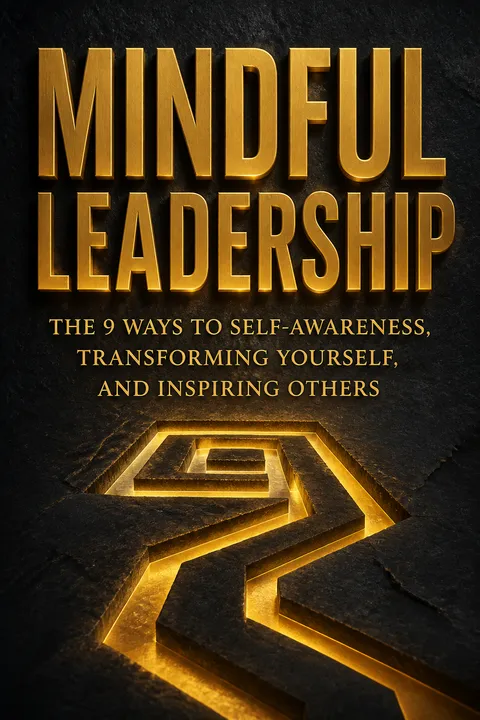


Key Takeaways
Lead yourself first by noticing experience before it chooses your behavior
Leadership starts within. Gonzalez defines mindfulness as noticing experience without grasping at it or pushing it away. Leadership, in this view, is not just a title: anyone who can influence another person is leading. Self-leadership means becoming aware of your habits and reactions before they shape decisions or relationships. The skill is trainable, not a personality trait reserved for naturally calm people.
Outcomes are not yours to command. A financial-services CEO describes moving from emotional highs and lows tied to winning deals toward doing the work while accepting that results remain uncertain. The surprising effect, the CEO reports, is steadier performance and better learning from setbacks. Mindful leadership begins with that shift: take responsibility for the quality of your response, not for controlling every result.
The useful distinction is between influence and formal authority. It makes leadership relevant to ordinary interactions, while also raising the standard for people with greater power: their habits affect more people. The CEO's account captures a familiar paradox in performance psychology. Excessive outcome control can narrow attention toward threat and status, while process focus leaves more room for learning. Acceptance should not be mistaken for indifference, however. Leaders remain accountable for setting direction and correcting preventable problems, even when final outcomes cannot be guaranteed.
Treat attention as one lane, not a multitasking superpower
Switching has a price. The book argues that people often mistake rapid task-switching for effective multitasking. It cites research finding that frequent multitaskers were more distractible and weaker at filtering information and shifting between tasks than people who multitasked less. It also reports an estimate that workers were interrupted about every 11 minutes and needed roughly 25 minutes to return to the original task.
Work in deliberate turns. A leader can manage several projects over a day, but should give each one focused attention while working on it. In a meeting, answering messages alongside listening may mean missing a client concern or repeating work later. The aim is not to eliminate planning or complexity. It is to choose one object of attention at a time, then return to it when distraction pulls attention elsewhere.
The practical point is stronger than the literal claim that multitasking is impossible: attention has limits, and switching carries costs. That matters in leadership because missed details can become poor decisions, not merely lost minutes. The idea also supports protected blocks of attention and fewer unnecessary interruptions. Still, not every task requires the same depth of focus. Some routine activities can coexist, while safety-critical work, such as driving, demands undivided attention. A useful rule is to match attentional intensity to the consequences of error.
Read emotion through body sensations before it writes your response
Separate the inner signals. Gonzalez's Internal Awareness practice asks people to notice three kinds of experience: bodily sensations linked with emotion, mental images, and inner speech. The point is not to suppress thought or force calm, but to see what is happening before it becomes an automatic reaction. A tight stomach, a replayed conversation, and an anxious prediction are related, but they are not the same event.
Interrupt the spiral. Imagine receiving disappointing feedback about a job or project. One thought can quickly become a chain of worst-case forecasts, while physical tension intensifies the sense of danger. By noticing the body's sensations and the accompanying images and self-talk, a person can slow down and distinguish the present problem from imagined consequences. That awareness can make a rushed decision less likely.
This practice resembles interoception, the ability to notice signals from inside the body, and emotional labeling, which can make a vague reaction more specific. It offers a concrete way to recognize that emotion is not only a thought but also a physical event. The caution is equally important: bodily discomfort is information, not a verdict. A tight stomach cannot prove that a proposal is wrong. Its value is to prompt investigation, so intuition is considered alongside evidence, advice, and actual circumstances.
Accept what cannot change without surrendering what you can
Acceptance creates room to act. Equanimity is the capacity to allow present thoughts and feelings without fighting them, while recognizing which external circumstances cannot be controlled. It is not passivity. A leader can accept anxiety about a market downturn and still revise a business plan, while acknowledging that the market itself cannot be ordered to behave differently.
Pain is not the whole story. The book distinguishes unavoidable difficulty from the extra distress added by resisting, denying, or catastrophizing about it. During the 2008 financial crisis, Gonzalez says, leaders practicing mindfulness were better able to examine facts and consider long-term consequences rather than making fear-driven decisions. They still faced uncertainty. Their advantage was responding to it with more perspective instead of treating every anxious thought as a prediction.
This is a useful bridge between emotional regulation and decision-making. Acceptance can reduce the impulse to waste energy disputing reality, leaving more capacity for choices that remain available. The distinction also guards against a common misunderstanding: accepting an emotion does not mean acting it out, and accepting a situation does not mean endorsing it. In workplaces, this matters when conditions are changeable but uncomfortable. A leader can acknowledge fear or anger, then still challenge unfair treatment, address poor performance, or pursue a better option.
Check the five hindrances before confusing certainty with clear judgment
Notice the recurring traps. Gonzalez groups five patterns that can distort leadership: attachment to success or status, aversion to loss, ignorance or confusion that blocks reality, envy or jealousy, and pride expressed as superiority or inferiority. These are ordinary human tendencies, not evidence that someone is irredeemably flawed. They become dangerous when they quietly steer choices.
Look for the motive beneath the decision. A leader attached to a favored strategy may ignore changing customer preferences. Fear of bad news may teach a team to conceal it. Envy can push an organization into a purchase or expansion simply because a competitor made one. The practical check is to ask what the decision protects or proves, and whether the available facts support it. Awareness does not guarantee a wise choice, but it can restore options that defensiveness had hidden.
The hindrances function like a compact bias checklist. They direct attention toward motives that are often disguised as strategy, especially when money, status, or control is involved. This connects the book's personal practice to organizational learning: a leader's reaction to unwelcome information helps determine whether a team shares reality or manages appearances. Individual awareness is not enough, though. Incentives and workplace norms can reward silence or overconfidence. Leaders should examine both their own reactions and the systems that make certain reactions costly to express.
Listen so fully that people need not repeat themselves
Presence is observable. Mindful listening means attending to a speaker's words, tone, and visible reactions, rather than preparing a rebuttal or checking a device. Mindful speaking means staying on point and watching whether the message is understood. The book's manufacturing COO describes using a phone during meetings and believing it was efficient, only to realize that important information about clients and competitors was being missed.
Attention changes the interaction. A present leader can ask a relevant question, notice confusion, and clarify a message before misunderstanding hardens. Gonzalez also argues that meetings can become shorter when participants listen closely, since they repeat themselves less and can decide with better information. Being present does not mean refusing to plan. It means giving deliberate attention to planning when planning is the task, and to the person speaking when listening is the task.
Listening is both an information practice and a signal of respect. A leader who visibly attends to a concern makes it easier for others to contribute, while distraction can be interpreted as a judgment about the speaker's importance. The attention to tone and body language is useful, but those cues are ambiguous and culturally variable. They should guide clarifying questions, not confident mind-reading. Presence makes communication more accurate when it is paired with curiosity and a willingness to check what the other person actually means.
Build your life vision from lived fulfillment, not borrowed job titles
Look for patterns in experience. The book warns that people can mistake roles, such as parent, executive, or professional, for a life purpose. When identity depends entirely on a role, losing it or receiving disapproval can make life feel empty. Gonzalez proposes reviewing both satisfying and unhappy periods, then noticing which activities, skills, environments, and relationships recur in each.
Turn insight into direction. The exercise asks readers to imagine a fulfilling life, draft a personal vision, and translate it into a mission with nearer and longer time frames, such as six months, a year, and two to five years. The vision is meant to guide choices, not to be perfectly worded at the start. Gonzalez's own example centers on helping others develop their potential. The key is to find a direction that can guide different roles, rather than letting a role dictate the whole identity.
The autobiographical method gives purpose a useful evidential base: remembered moments can reveal what energizes a person more clearly than prestige labels do. A vision can also function as a decision filter, helping people decline opportunities that look impressive but pull them away from their priorities. The idea is most convincing when purpose is treated as a revisable compass, not a single hidden destiny. Life circumstances change, and the patterns people value can change too. Regular reflection keeps a vision useful rather than turning it into another rigid identity.
Practice calm and focus in ten minutes, then carry them into work
Train attention regularly. Gonzalez recommends a consistent meditation practice, noting that even 10 to 15 minutes a day may be beneficial, while regularity matters more than occasional longer sessions. Exercises include attending to the breath, relaxing the body systematically, or observing internal and external sensations. When attention wanders, the task is simply to notice and return, without scolding oneself.
Use ordinary cues. The book's mindfulness-in-action strategies bring the practice into the day: take a breath when the phone rings, notice tension before a difficult conversation, or focus on the speaker in a meeting. It also recommends removing avoidable stress, such as impossible schedules, rather than trying to meditate one's way through every self-created emergency. The relaxation response, as the book uses the term, is the learned ability to create calm deliberately.
The strength of the approach is its transfer from formal practice to real situations. A short pause before responding is small enough to repeat and relevant to work, family, and conflict. The book also draws on research about meditation and brain plasticity, but readers should distinguish promising findings from claims of permanent change or broad health effects. Meditation is not a replacement for sleep, reasonable workloads, medical care, or organizational reform. Its most grounded promise here is improved capacity to notice distraction and choose where attention goes.
Use influence to serve with compassion, gratitude, and honest accountability
Care without control. Gonzalez describes compassion as caring deeply without making another person's outcome a measure of one's own worth. It includes self-compassion, so service does not become exhaustion or a bid for approval. Positivity means looking for constructive possibilities and expressing gratitude, not pretending that a serious problem is harmless.
Integrity is not perfection. Impeccable leadership means acting honestly and responsibly under the circumstances, including admitting mistakes, making repairs where possible, and learning rather than remaining trapped in guilt. After an important acquisition fails, a mindful leader can recognize the disappointment, thank the team for its work, and identify what the effort taught the organization instead of blaming people for an uncertain outcome. The aim is to use power with care and leave people able to contribute, not intimidated into silence.
The combination of compassion and accountability avoids two familiar distortions: kindness without standards and standards without regard for people. Gratitude can help make effort visible, while honest feedback preserves the information a team needs to improve. This also reframes leadership as stewardship rather than personal victory. Yet service requires boundaries, and optimism must remain responsive to evidence. A constructive leader does not promise that every setback hides an easy solution. The stronger practice is to be candid about constraints while helping people see what can still be done.
Analysis
The book's central argument is that leadership quality depends on the trained relationship between attention, emotion, and action. Its structure moves from meditation skills to workplace behavior, then to purpose and ethical influence. That progression matters: presence is not presented merely as a productivity trick. It is the foundation for noticing fear, clarifying motives, listening accurately, and using authority with care. The practical cases, from a distracted meeting to an acquisition that falls through, translate inward awareness into choices other people can experience.
The strongest practical contribution is its insistence that awareness must travel beyond a meditation cushion. Breath, body sensations, and attention to a speaker become cues for changing conduct in real time. The proposed practice is modest and repeatable, which makes the book more actionable than a leadership manifesto built on charisma or personality types. Its distinction between accepting a feeling and accepting an external condition is especially important: emotional steadiness can support action rather than replace it.
The framework also has limits. The book draws confidently on a range of studies, some reported in 2012 through media summaries, and sometimes moves quickly from specific research findings to broad promises about health, productivity, or lasting brain change. Those claims deserve more caution than the practical advice to pause, attend, and return. Likewise, individual mindfulness cannot repair an organization whose workload, incentives, or power structure continually produce distress. A calm employee still needs safe conditions in which to speak.
Read as a whole, the most durable model is not serenity for its own sake. It is the creation of a little more choice between stimulus and behavior, followed by a commitment to use that choice responsibly. The book is most persuasive when it links inward discipline to observable practices: hearing difficult feedback, acknowledging uncertainty, correcting mistakes, and serving without demanding control over outcomes.
Glossary
Mindfulness
noticing without graspingIn this book, mindfulness is the skill of noticing what is happening in the present without clinging to pleasant experience or pushing away unpleasant experience. Meditation is one way to train it, but the skill is meant to apply throughout daily life, including conversations, decisions, and moments of stress.
Equanimity
balanced acceptanceEquanimity is accepting present thoughts, emotions, and sensations without resistance, while recognizing that some external conditions cannot be controlled. It does not mean passivity or approval. A person can accept an emotion, assess a situation calmly, and still act to change what is changeable.
Internal Awareness
observing inner experienceA mindfulness practice that notices three aspects of internal experience: physical sensations associated with emotion, mental images, and inner speech. By attending to these separately, a person can see how thoughts and bodily reactions reinforce each other, and become less likely to act impulsively under stress.
External Awareness
attending to present sensesA practice of noticing present-moment bodily contact, sights, and sounds. These sensory experiences help anchor attention in what is happening now, rather than in memories or imagined futures. The technique can be used in formal meditation or during ordinary activities such as walking, listening, or driving.
Mindfulness-in-action strategies
everyday attention practicesPractical ways to apply mindfulness during ordinary activities rather than only during formal meditation. Examples in the book include taking a breath before answering a call, noticing tension during a difficult conversation, and giving a speaker full attention. Repeated use is intended to make awareness more available in daily life.
The Hindrances
five patterns clouding judgmentThe book's five hindrances are attachment, aversion, ignorance or confusion or delusion, envy or jealousy, and pride. They describe patterns that can distort judgment and behavior, such as clinging to status, fearing loss, ignoring evidence, comparing oneself with others, or needing to feel superior or inferior.
Purification
clearing habitual patternsPurification refers to the weakening of negative habitual patterns by noticing thoughts, emotions, and sensations without suppressing or feeding them. In the book's account, mindful attention allows these patterns to lose their hold, freeing energy and making more deliberate choices possible. It is a term from the author's meditation framework.
relaxation response
calm created deliberatelyThe relaxation response is the ability to create calm intentionally, rather than remaining caught in stress and physiological alertness. The book associates it with deliberate practices such as steady breathing and systematic body relaxation, and presents it as a way to manage unavoidable stress and improve the chance of a considered response.
vipassana
insight meditationVipassana is the traditional meditation practice that the book identifies as the historical root of mindfulness meditation. Gonzalez presents it as a way to train attention and insight into experience, while emphasizing that contemporary mindfulness practice can be taught in a secular form and used in professional and personal settings.
Download PDF
Download EPUB
.epub digital book format is ideal for reading ebooks on phones, tablets, and e-readers.








