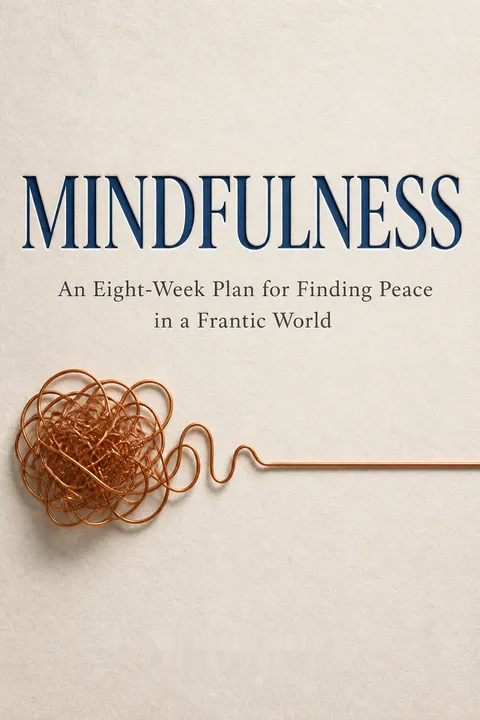


Key Takeaways
Stop trying to think your way out of every bad mood
Mood recruits its own evidence. A brief dip in mood can cue memories and thoughts that match it, making sadness feel like proof that life is failing. Lucy, a capable clothing buyer, spirals from ordinary stress into self-attack: she cannot finish a spreadsheet, then concludes something is wrong with her. The book explains that mood, memory, thoughts, and bodily sensations reinforce one another, so a small trigger can gather force quickly.
Analysis can deepen distress. Trying to solve an emotion by asking why it is here often focuses attention on the gap between how someone feels and how they think they should feel. That brooding tends to produce more self-criticism, not an emotional solution. Notice the mood first; reserve problem-solving for a concrete problem that can actually be acted on.
The useful distinction is not between thinking and feeling, but between a tool and the job it can do. Planning can resolve a missed deadline; it cannot reliably command sadness to disappear. The account also explains why self-criticism feels persuasive: the mind selectively retrieves memories that fit its current state. That does not mean every painful mood is merely a cognitive loop. Sleep loss, illness, unsafe conditions, or structural pressures may require practical or clinical responses. Awareness helps identify the right response; it should not be used to dismiss the cause.
Practice noticing thoughts, rather than obeying or erasing them
Attention is the practice. Mindfulness here means paying attention to present experience with purpose and without immediate judgment. In a one-minute breath exercise, attention will probably wander. The practice is to recognize that it wandered, then guide it back gently. Success is not a blank mind. Hannah, who expected meditation to silence her thoughts, discovered that observing a busy mind without scolding herself changed her relationship to it.
A clinical application matters. The book presents Mindfulness-Based Cognitive Therapy, or MBCT, developed to reduce recurrence among people with repeated depression. It cites trials in which an eight-week course reduced relapse risk by about 40 to 50 percent for people with three or more prior episodes. That is a specific clinical finding, not a promise that mindfulness cures every form of distress.
This reframes attention as a learnable capacity rather than a test of composure. A wandering mind supplies the very moment in which noticing and redirecting can be practiced. That makes the method less vulnerable to perfectionism than instructions to stay focused continuously. The clinical evidence is especially relevant because it concerns relapse prevention, not simply feeling calmer after a session. The distinction matters: a useful intervention for a defined group should not be casually generalized to all depression, nor treated as a substitute for professional care when someone is seriously unwell.
Use problem-solving for solvable problems, and presence for feelings
Two modes serve different jobs. The book calls goal-driven analysis the Doing mode. It compares the present with a desired outcome and works to close the gap, a strength when navigating a city or organizing a schedule. But applying that same strategy to an emotion can turn a passing feeling into a project: “I am sad” becomes “I must fix myself.” The alternative, Being mode, attends to experience as it unfolds, without immediately measuring it against an ideal.
Shift gears deliberately. The point is not to abolish analysis or accept harmful circumstances. It is to notice when analysis is repeating itself without helping, pause, and sense what is happening now. A different perspective can create room for clearer action, including action to change a real situation.
The distinction is strongest when treated as flexible gear selection, not a moral ranking. Analysis is essential for planning, diagnosis, and changing conditions; present-centered attention is useful when analysis becomes circular or treats an emotion as a malfunction. In that sense, the model resembles a general principle of good judgment: match the method to the problem. Its practical test is observable. Is thinking generating a next step, or merely rehearsing the same discrepancy? If it is the latter, a pause may restore options without requiring passivity.
Return to the body when attention gets hijacked by worry
The body offers an anchor. Breath is always occurring in the present, and bodily sensations can reveal tension before someone has fully named the emotion. The Body Scan trains attention to move through the body, noticing sensation without demanding that anything special appear. Jason, a driving instructor who feared his students would crash, learned to detect his own physical alarm and respond more calmly. Movement can serve the same purpose, provided it stays within the body's limits.
Use a short reset. The Three-Minute Breathing Space moves from noticing thoughts, feelings, and sensations, to focusing on breath, then widening attention to the body as a whole. It is a compact way to pause during a workday or an emotional surge, rather than waiting for ideal quiet.
This approach makes emotional awareness concrete. Instead of asking only what a person thinks, it asks what the body is doing: bracing, tightening, or breathing shallowly. That sensory information can interrupt automatic reactions and make emotion easier to recognize. The practice is also portable, unlike a long formal meditation. Still, inward attention is not comfortable or appropriate for everyone in every moment, especially when bodily sensations feel threatening. The book's emphasis on gentleness and choice is therefore important: shifting posture, opening the eyes, or returning attention outward can be sensible adjustments.
Treat thoughts as passing reports, not verified facts
Interpretation hides in plain sight. The book uses an ABC model: A is the observable situation, B is the interpretation, and C is the emotional and behavioral reaction. If friends fail to acknowledge someone in a crowded bar, the fact may be simple: they did not respond. The interpretation, such as “they are rejecting me,” can trigger shame or anger. Because the mind generates that story quickly, it can feel like part of the event itself.
Watch the mental broadcast. In a Sounds and Thoughts meditation, sounds are noticed as they arise and fade; thoughts are observed in a similar way. This does not require proving each thought false. It creates distance to ask whether a thought is accurate, useful, or simply one more mental event, like a radio voice that need not be obeyed.
The ABC model usefully separates an event from the meaning assigned to it, a distinction that can prevent emotional certainty from being mistaken for factual certainty. The sound analogy adds a practical method: experience the thought as something noticed, rather than as an instruction. Yet not every interpretation is distortion, and some social cues do signal real exclusion or danger. The aim is not to distrust every judgment. It is to make interpretations testable, so a person can respond to evidence instead of being swept along by the first, most emotionally charged explanation.
Turn toward manageable discomfort before avoidance feeds it
Acceptance creates choice. In this book, acceptance means clearly acknowledging what is happening, not approving of it or surrendering to it. Elana Rosenbaum, facing a return of cancer, recognized that she was exhausted and allowed colleagues to take over her teaching. Naming her limits was not giving up; it let her respond more honestly to an illness she could not simply think away.
Approach in small doses. The Exploring Difficulty meditation asks a person to bring a manageable concern to mind, notice its bodily effects, and stay curious about changing sensations. If the experience becomes overwhelming, attention can step back. This matters because suppressing or repeatedly analyzing distress can add a second layer of suffering to the original difficulty. Some problems need direct action; others cannot be solved by brooding.
The account of Rosenbaum gives acceptance moral weight: acknowledging vulnerability can make room for help and more appropriate decisions. The practice also avoids the false choice between fighting every feeling and resigning oneself to circumstances. A person can accept the fact of fear while still pursuing treatment or setting a boundary. Its safest interpretation is gradual and voluntary. Turning toward distress is not a demand to endure overwhelming sensations, and acceptance should never be confused with tolerating abuse, neglect, or preventable harm.
Answer self-criticism with the care you'd offer someone vulnerable
Self-attack can masquerade as responsibility. After a car accident that injured no one, Kate replayed what might have happened and blamed herself. Over time, her memories became broad conclusions about being damaged and having no future. The book calls one related pattern overgeneral memory: recalling a summary such as “we always argued” instead of a specific event. Research cited in the book links this pattern with difficulty recovering from distress; it also reports that mindfulness training can support more specific recall.
Practice friendship, not flattery. The Befriending meditation offers kind wishes first to oneself, then to loved ones, strangers, and, if appropriate, someone difficult. It is not a claim that every action is acceptable. It is a way to meet pain without adding punishment, so that a person can see what happened and respond more clearly.
Self-compassion is often misunderstood as lowering standards. In this account, it functions more like removing noise from self-assessment: shame and fear can turn a particular mistake into a permanent identity. Specific memories restore distinctions between what happened once and what supposedly always happens. The practice is not an argument that the self deserves more care than others; it treats care as a resource rather than a scarce reward. Still, compassionate attention alone cannot settle questions of accountability. It can make honest responsibility more possible by separating repair from self-condemnation.
Protect nourishing activities before work narrows life to exhaustion
Busyness can remove its own remedies. The Exhaustion Funnel describes how people under pressure drop activities that seem optional, often beginning with hobbies, friendships, exercise, or relaxed meals. Marissa gives up choir, a book club, and time with her daughter to work more. The apparent gain in hours comes with diminishing energy, creativity, and connection, making work harder rather than easier.
Map what restores you. List ordinary daily activities and mark which tend to nourish or deplete you. Then make small adjustments: restore one enjoyable activity, reduce a draining task where possible, or bring full attention to an unavoidable one. Marissa's colleague Beth found brief pauses while waiting for a response or a computer to start. Small openings in a crowded day can become opportunities to reset.
The funnel describes a feedback loop, not merely poor time management. Removing restorative activities may reduce the capacity required to meet existing demands, so the strategy of “clearing the decks” can worsen performance and mood. That makes the inventory more useful than a generic instruction to relax: it identifies what actually replenishes a particular person. The model also invites a structural question. If a workplace continually consumes evenings and recovery time, individual mindfulness cannot make its demands reasonable. Personal adjustments help, but some sources of depletion require negotiation or collective change.
After pausing, take one small action before waiting for motivation
Action can precede desire. When mood is low, waiting to feel motivated may leave a person stuck. The book recommends using a Breathing Space, then choosing a small action that offers pleasure, a sense of completion, or mindful contact with the present. A walk, a brief household task, or a call to a friend can serve as an experiment, not a test of willpower. Marissa learned to notice when her low mood was discouraging the very activities that might help.
Build a sustainable routine. The eight-week program moves from everyday attention and breath, through body awareness and thought observation, toward difficulty, self-kindness, and life balance. It recommends regular practice, often around 20 to 30 minutes, but encourages realistic adaptation. Habit Releasers, such as changing seats or choosing a film spontaneously, interrupt routines and renew attention.
The recommendation to act before motivation resembles behavioral activation: small, chosen behaviors can create contact with pleasure, competence, or connection before mood improves. Framing them as experiments reduces the pressure to feel transformed immediately. The eight-week structure also matters because it converts an abstract aspiration into repeated practice, while leaving room to tailor the routine. The limit is that tiny actions cannot repair every cause of distress. Their value lies in restoring some agency and information, not in implying that a depleted person can solve systemic or clinical problems through better habits alone.
Analysis
The book's central achievement is to make mindfulness less mystical and more diagnostic. Its question is not simply, “How can a person feel calm?” but, “What is the mind doing when a passing feeling becomes a day, a story, or an identity?” The answer is a reinforcing loop among mood, memory, bodily signals, and interpretation. Mindfulness interrupts that loop by training attention to observe before reacting. The practical sequence moves from sensory attention to metacognitive distance, then toward acceptance, compassion, and behavior change. This is a coherent account of how attentional training can support emotional regulation without requiring positive thinking.
The distinction between Doing and Being modes is persuasive as a functional model, but it should not be mistaken for a literal division between two brain systems. Analytical thinking is not inherently harmful, and present awareness does not automatically reveal the wisest choice. The useful claim is narrower: repetitive goal correction can become counterproductive when the target is an emotion that cannot be forced away. The model helps readers notice when a problem-solving strategy has stopped producing solutions.
The book also joins contemplative practice to cognitive therapy and behavioral activation. Its practices ask readers to observe interpretations, approach manageable feelings, and resume meaningful activity. That combination is more grounded than a promise of permanent serenity. The evidence discussed in the text is presented accessibly, but claims about brain change, immune effects, and broad medical benefits deserve more caution than claims about a structured course supporting people with recurrent depression. Brain imaging can identify associations and group-level changes; it does not by itself prove a durable personal transformation or establish that meditation is appropriate for everyone.
The most durable takeaway is therefore not that distress is unreal, or that acceptance replaces action. It is that attention can create a pause in which a person distinguishes a feeling from a verdict, an interpretation from an event, and an unavoidable difficulty from an avoidable burden. That pause is small, but it can change what happens next.
Review Summary
Mindfulness receives high praise from readers for its practical approach to meditation and stress reduction. Many find the 8-week program and guided meditations helpful in managing anxiety, depression, and daily stress. Readers appreciate the scientific backing and accessible writing style. Some note the book's repetitive nature but still find value in its teachings. The audiobook version is particularly well-regarded for its meditations. While a few struggle with the time commitment, most report significant benefits from practicing mindfulness techniques regularly.
People Also Read






Glossary
Mindfulness-Based Cognitive Therapy
Mindfulness-based relapse preventionA structured psychological program combining mindfulness practices with cognitive therapy ideas. Developed for people with a history of repeated depression, it trains participants to notice thoughts, feelings, and bodily sensations without automatically treating them as facts or commands. The book describes an eight-week version and cites evidence for reducing the risk of depressive relapse.
Doing mode
Goal-driven problem solvingA mode of mind that compares present conditions with a desired state and works to close the gap. It supports planning and practical tasks, but can become counterproductive when applied to emotions that cannot be solved by analysis. Repeatedly judging, brooding, and trying to eliminate a feeling can make distress more persistent.
Being mode
Open present-moment awarenessA way of relating to experience through direct attention to the present, including thoughts, emotions, bodily sensations, and the senses. Rather than immediately evaluating or changing what is happening, a person observes it with less judgment. The book presents this mode as an alternative to repetitive analysis, not as a rejection of planning or action.
Three-Minute Breathing Space
A brief attention resetA short meditation designed to connect formal mindfulness practice with daily situations. It moves through three phases: noticing current thoughts, feelings, and bodily sensations; gathering attention around the breath; and widening awareness to include the whole body. It can be practiced at set times or during moments of pressure.
Body Scan
Sequential bodily attentionA meditation in which attention moves through regions of the body, noticing sensations without trying to produce a particular experience. It develops sustained attention and helps practitioners recognize how emotions and stress appear physically. The practice treats blankness, discomfort, and distraction as observations rather than evidence of failure.
Exhaustion Funnel
A narrowing cycle of depletionA model of burnout in which pressure leads people to abandon activities they regard as optional, often the very activities that replenish them. As nourishment and social connection shrink, energy, creativity, and effectiveness can also decline, increasing the felt pressure to work harder. The model encourages deliberate attention to what restores or drains energy.
overgeneral memory
Broad instead of specific recallA pattern of autobiographical remembering in which a person recalls general summaries rather than particular events. For example, someone may remember that arguments with a parent happened repeatedly without retrieving one specific occasion. The book links this pattern with brooding and difficulty recovering after distress, and describes mindfulness training as helping recall become more specific.
Befriending meditation
Kind wishes directed toward self and othersA guided practice that cultivates goodwill by silently offering wishes for freedom from suffering, health, and ease. It begins with oneself and can extend to loved ones, neutral acquaintances, difficult people, and all beings. The book frames the practice as a way to counter self-attack and strengthen compassion, not as approval of harmful behavior.
Habit Releaser
A routine-breaking awareness exerciseA small deliberate change to an everyday routine, carried out with attention. Examples in the book include sitting in a different chair, taking a mindful walk, or choosing a film after arriving at the cinema. The aim is to interrupt automatic behavior, renew curiosity, and make familiar surroundings more noticeable.
FAQ
What's Mindfulness: An Eight-Week Plan for Finding Peace in a Frantic World about?
- Eight-Week Program: The book offers a structured eight-week program to help individuals cultivate mindfulness, focusing on being present and fully engaged in the moment.
- Addressing Modern Stress: It tackles modern challenges like anxiety, stress, and exhaustion, providing practical techniques to find peace and contentment.
- Scientific Foundation: Authors J. Mark G. Williams and Danny Penman base their methods on over thirty years of research in mindfulness-based cognitive therapy (MBCT).
Why should I read Mindfulness: An Eight-Week Plan for Finding Peace in a Frantic World?
- Proven Techniques: The mindfulness practices in the book are clinically proven to reduce depression risk and enhance well-being.
- Accessible to All: It offers a structured, easy-to-follow program suitable for beginners and those experienced in meditation.
- Transformative Insights: Readers gain insights into their thought patterns and emotional responses, leading to a more fulfilling life.
What are the key takeaways of Mindfulness: An Eight-Week Plan for Finding Peace in a Frantic World?
- Mindfulness as Practice: Mindfulness is a practice requiring commitment, involving observing thoughts and feelings without judgment.
- Mind-Body Connection: The book highlights the interconnectedness of thoughts, feelings, and bodily sensations in managing stress.
- Habit Releasers: Introduces activities to break negative thought patterns and encourage mindfulness in daily life.
What is the Eight-Week Mindfulness Program in Mindfulness: An Eight-Week Plan for Finding Peace in a Frantic World?
- Structured Approach: The program includes weekly meditations and exercises that build on each other to deepen mindfulness practice.
- Focus on Aspects: Each week targets different mindfulness aspects, such as body awareness and handling difficult emotions.
- Flexible Practice: The program can be adapted to individual schedules, allowing personal exploration of mindfulness.
How does Mindfulness: An Eight-Week Plan for Finding Peace in a Frantic World define mindfulness?
- Present-Moment Awareness: Mindfulness is maintaining awareness of thoughts, feelings, bodily sensations, and the environment.
- Non-Judgmental Observation: It involves observing experiences without judgment, fostering compassionate self-understanding.
- Acceptance of the Present: Emphasizes accepting the present moment as it is, rather than striving to change it.
What is mindfulness meditation, and how is it practiced in Mindfulness: An Eight-Week Plan for Finding Peace in a Frantic World?
- Observation Without Judgment: Focuses on the present moment, often through the breath, observing thoughts and feelings without judgment.
- Breath as Anchor: The breath is used as an anchor to return awareness to the present when the mind wanders.
- Regular Practice: Encourages daily practice, starting with short sessions and gradually increasing duration for deeper mindfulness.
What are "Habit Releasers" in Mindfulness: An Eight-Week Plan for Finding Peace in a Frantic World, and how do they work?
- Breaking Negative Patterns: Simple activities designed to disrupt automatic behaviors and thought patterns contributing to stress.
- Encouraging Curiosity: These activities promote curiosity and engagement, helping individuals appreciate small joys.
- Examples Provided: Includes activities like changing your route to work to break free from routine.
What is the Breathing Space meditation in Mindfulness: An Eight-Week Plan for Finding Peace in a Frantic World?
- Three-Step Process: Involves becoming aware of your experience, focusing on your breath, and expanding awareness to your whole body.
- Quick and Effective: Designed to be completed in about three minutes, it helps regain perspective during stress.
- Hourglass Metaphor: The process is likened to an hourglass, broadening awareness, narrowing focus, then expanding it again.
How does Mindfulness: An Eight-Week Plan for Finding Peace in a Frantic World address the connection between thoughts and emotions?
- Thoughts Influence Emotions: Explains how thoughts can trigger emotional responses, creating a feedback loop of stress.
- Mindfulness as a Tool: Teaches observing thoughts and feelings without entanglement, reducing their emotional impact.
- Awareness of Patterns: Encourages recognizing negative thinking patterns for better emotional management.
What role does self-compassion play in Mindfulness: An Eight-Week Plan for Finding Peace in a Frantic World?
- Foundation of Mindfulness: Self-compassion is crucial, allowing individuals to approach experiences with kindness.
- Reducing Negative Self-Talk: Encourages challenging negative self-talk and fostering a compassionate inner dialogue.
- Enhancing Emotional Resilience: Builds emotional resilience, helping cope with stress and adversity.
How can I integrate mindfulness into my daily life according to Mindfulness: An Eight-Week Plan for Finding Peace in a Frantic World?
- Mindful Moments: Incorporate mindfulness into activities like eating or walking by focusing fully on the experience.
- Scheduled Practices: Set specific times for meditation, like the Breathing Space, to reinforce mindfulness.
- Awareness of Thoughts: Regularly check in with thoughts and feelings to maintain a mindful approach.
What are the benefits of practicing mindfulness as outlined in Mindfulness: An Eight-Week Plan for Finding Peace in a Frantic World?
- Improved Mental Health: Reduces symptoms of anxiety, depression, and stress, enhancing overall well-being.
- Enhanced Focus and Clarity: Improves concentration and clarity, allowing fuller engagement in daily activities.
- Greater Emotional Resilience: Fosters resilience, enabling compassionate and understanding responses to challenges.
About the Author


Download PDF
Download EPUB
.epub digital book format is ideal for reading ebooks on phones, tablets, and e-readers.








