

Key Takeaways
Treat language as evidence of inner life, never as a mind-reading shortcut.
Patterns matter more than tells. Lieberman’s central proposition is that word choice, sentence structure, and behavior can offer clues to what someone feels or wants, sometimes even when the person is unaware of it. A speaker who repeatedly avoids taking ownership of actions may be distancing themselves from responsibility. One sentence, however, cannot establish dishonesty or character. The same phrasing can reflect habit, culture, stress, or personality.
Build a fuller picture. The book recommends combining clues across longer conversations and different situations. Its examples range from ordinary exchanges to job interviews and high-stakes accusations. For instance, a study cited in the book found that high-performing interviewees used about 60 percent more first-person pronouns than low performers, while low performers used many more second- and third-person pronouns. The finding is suggestive, not a reliable verdict on any individual.
What's useful here is the shift from theatrical body-language myths to patterns in ordinary speech, which can be observed in emails, calls, and masked conversations. Language research often finds meaningful group-level associations, but prediction about one person is a harder task. A pronoun can be shaped by culture, task, and conversational style as much as by motive. The sound practice is to treat a clue as a question to investigate, then seek independent evidence before acting on it.
Track pronouns and grammatical glue to see whether people build connection or distance.
Listen for shared ground. Function words are grammatical connectors such as pronouns, articles, and prepositions. Because their meaning depends on shared context, Lieberman treats their use as a possible sign of conversational alignment. A person who uses more shared phrasing may be inviting common ground, while blunt, fully specified sentences can signal distance or irritation. In a coffee-shop conversation, small changes in how two strangers refer to familiar places can make the exchange feel either mutually engaged or merely polite.
Notice relationship language. The book also highlights shifts between “we” and “you,” or between “our” and “my.” Research cited on couples links more cooperative pronoun use with greater relationship satisfaction and lower divorce rates. At work, calling colleagues “they” and the workplace “the company” may suggest weaker identification. These are contextual hints, not a test: a person can use “we” out of habit or strategy.
This is a practical application of linguistic alignment: conversation is not only information transfer, it is coordination. Shared references can reveal that two people are building a common frame, a process also important in teamwork and negotiation. Yet pronouns are cheap signals. A persuasive speaker can manufacture togetherness, while a distant-sounding person may simply be concise. The strongest inference comes from matching language with reciprocal behavior, such as whether both people contribute, listen, and share responsibility.
Read anxiety and power through context, not posture alone.
Stress changes attention. The book argues that anxiety makes people monitor themselves more closely, disrupting actions that are usually automatic. A relaxed person may reach for a drink without watching every movement; a tense person may move stiffly and focus on each small action. Physical signs such as fidgeting, a strained voice, or visible efforts to control breathing may add context, but none proves deception.
Separate mood from habit. Lieberman distinguishes a state, a temporary response to a situation, from a trait, a more enduring pattern. He also reads power through language: people who feel less secure may soften requests with apologies, questions, or hedges, while those who feel in control may speak more directly. These patterns shift with hierarchy. A deferential request from an employee to a manager means less about personality than the same pattern between peers.
The useful psychological link is between perceived stakes and self-monitoring. Performance research describes how pressure can interfere with well-practiced skills when attention turns inward. That makes anxiety cues meaningful as evidence of strain, but not of its cause. A job interview, unfamiliar room, or social threat can produce the same response. Status is similarly relational: the person with leverage in one exchange may have none in another. Reading the situation prevents a nervous gesture from becoming a character judgment.
Test accounts for relevant, integrated detail, not theatrical confidence.
Judge the story’s shape. Lieberman advises looking at whether details matter to the event, fit naturally into the sequence, and appear in proportion. A truthful account may include dialogue, movement, sensory cues, and other people’s perspectives. A fabricated account, in his model, may pad its opening with trivial facts, rush through the central event, or stop abruptly before describing what followed. Irrelevant detail is not automatically suspicious, and traumatic memories may be fragmented even when truthful.
Ask for clarity, not a performance. The book also favors direct answers to direct accusations over speeches about someone’s good character. Its proposed probes include asking about details the person would know firsthand. But pauses, omissions, or defensive reactions can arise from confusion, fear, or poor memory as well as deception. The method is best treated as a reason to verify an account, not as proof that someone lied.
Narrative analysis has a sound intuitive core: memory and fabrication can differ in how people retrieve and construct events. But the distinction is not a lie detector. Trauma, time, language ability, and stress can all alter detail, coherence, and recall. Conversely, a practiced liar may provide a fluent account. A fair assessment compares statements with records and independent witnesses, and asks open questions without pressuring someone into supplying details they do not remember.
In a bluff, watch for performance that overshoots the truth.
Notice impression management. In a guarded exchange, a person knows they are being judged and may try to appear calm, unconcerned, or certain. Lieberman’s model says bluffers can overdo that performance: a person threatening to leave a firm may sound more committed than someone who genuinely faces that choice, while a poker player with a strong hand may appear less eager than expected. The clue is not a particular pose, but a mismatch between the display and the person’s likely interests.
Follow the incentive. A threat often seeks a preferred outcome rather than the threatened action. Someone demanding a concession in exchange for staying may want the concession and the job. This logic can help test a claim, but it cannot settle it: genuine ultimatums exist, and people vary in how they express confidence. Calmness, loudness, or emphasis alone cannot establish intent.
The strongest part of this approach is incentive analysis. Instead of asking whether someone looks sincere, it asks what outcome their position serves and what costs follow from acting on it. That resembles strategic reasoning in negotiation, where stated preferences may differ from underlying interests. Still, displays are ambiguous: people can sound emphatic because they are frightened, inexperienced, or culturally direct. The practical lesson is to examine consistency between words, incentives, and costly actions, not to reward theatrical certainty with belief.
Slow down when a scammer uses authority, urgency, and instant intimacy.
Scams narrow attention. The book describes a common sequence: a fraudster claims authority, provokes fear or excitement, supplies facts the target recognizes, then tells a story that demands action. Familiar details can make the next claim feel credible even when the conclusion does not follow. Urgency keeps the target from checking. A supposed official, prize representative, or expert may use symbols of authority to discourage questions.
Watch for manufactured trust. Scammers may flatter, stress similarities, reveal personal information early, or invest time so the target feels obliged to reciprocate. The book notes that loneliness, financial strain, illness, or major life change can weaken judgment, and that sunk costs can keep someone committed to a failing deal. A practical defense is to pause, verify identity through an independent channel, and refuse decisions made under artificial deadlines.
This account connects persuasion to cognitive load. Strong emotion and time pressure can narrow attention, while trusted titles and social similarity encourage people to accept claims without checking them. The defense is procedural rather than psychological: build a pause into financial decisions, verify through a source the caller did not provide, and ask another person to review the offer. That approach is more dependable than trying to spot a con artist’s personality from charm or eye contact.
Ask what someone’s attention protects to uncover their personal story.
Attention reveals priorities. Lieberman calls a person’s evolving account of who they are and why their life makes sense a narrative identity. People tend to notice and interpret events in ways that support that account, sometimes filtering out contradictions. The book links this to confirmation bias and to the brain’s attention system, which selects what seems important. What someone repeatedly praises, condemns, notices, or avoids can suggest which parts of their self-image feel most significant.
An omission can prompt a question. In one anecdote, an art dealer examined several paintings but barely looked at one. The owner became suspicious, rejected the dealer’s offer, and later learned that the neglected painting was worth far more than the offer for the collection. The omission was useful because it broke the expected pattern. Still, attention is not a confession: distraction, expertise, or chance may explain what someone overlooks.
The narrative-identity lens helps explain why people do not simply collect facts about themselves; they organize them into stories that preserve continuity and self-respect. Attention can therefore reveal what feels salient, even when a person never names it. But interpretation is vulnerable to confirmation bias, the same error the book warns about. An ignored detail may be meaningful, or it may be noise. The most responsible response is curiosity: notice the pattern, generate more than one explanation, and gather evidence before choosing among them.
Measure emotional health by meaning, self-control, and flexibility under stress.
Worth is not bravado. Lieberman distinguishes confidence in a particular skill from self-esteem, a broader sense of being worthy of care and good treatment. He argues that an inflated ego can mask insecurity, while stable self-worth makes it easier to tolerate mistakes and invest in long-term well-being. He also connects durable satisfaction with meaningful pursuits and relationships, rather than relying only on comfort, status, or immediate pleasure.
Watch the coping pattern. Under stress, people may turn to distraction, impulsive spending, substances, or other short-term relief. Such choices can temporarily quiet distress while making the underlying problem harder to face. Resilience, in the book’s account, is the capacity to adapt to stress without becoming persistently overwhelmed. Flexibility matters: discipline can help, but rigid overcontrol can be as unhealthy as impulsive undercontrol.
The distinction between task-specific confidence and general self-worth is useful because it prevents one failure from becoming a verdict on the whole person. The emphasis on meaning also fits research traditions that distinguish intrinsic aims, such as relationships and growth, from status-oriented rewards. A needed qualification is that coping behaviors are shaped by access, health, and circumstance, not simply character. Self-control is valuable, but resilience also depends on support, material security, and the ability to recover after a setback.
Use recurring language and relationship patterns as prompts, not diagnoses.
Look for persistence and impact. The book associates repeated absolutist language, chronic blame, rigid judgments, and fragmented communication with possible distress. It also contrasts stories that treat one bad moment as ruining everything with accounts that can recognize some value or learning amid hardship. These patterns may warrant attention, especially when paired with a sudden decline in functioning, isolation, or strained relationships. They do not establish a psychiatric condition.
Relationships add evidence. Lieberman recommends noticing how someone talks about past coworkers, handles commitments, treats people with less power, and responds when others set limits. Repeated contempt, broken promises, or boundary violations matter more than a polished self-description. Context remains essential: conflict, disability, culture, and temporary crisis can change behavior. A concerning pattern calls for careful conversation or professional support, not amateur diagnosis.
This section is strongest when it shifts from labels to observable impact. Repeated breaches of trust or disregard for another person’s limits can be addressed without deciding whether the person has a disorder. Clinical diagnosis requires a broader history, impairment assessment, and expertise; speech markers alone cannot provide that. The book’s distinction between temporary states and enduring traits supports caution, though its personality typologies can sound more certain than the evidence warrants. Patterns should guide questions and boundaries, not stigma.
Treat threats as patterns to assess, not predictions from a diagnosis.
Look for escalation and capability. The book lists warning behaviors such as threats, cruelty, destruction of objects, persistent grievances, detailed plans, access to weapons, and a sudden decline in functioning. It stresses that mental illness alone does not mean someone is violent. A major stressor or substance misuse can increase concern when combined with other signs, but no single factor predicts what a person will do.
Use JACA as a checklist. This threat-assessment framework asks whether a person feels violence is justified, sees alternatives, considers consequences, and has the ability to act. The questions focus on motive and means rather than a personality label. If someone appears at immediate risk of harming themselves or others, the book’s practical implication is to seek qualified, urgent help rather than rely on amateur interpretation.
A behavior-based assessment is more responsible than treating diagnosis as a proxy for danger. JACA directs attention to justification, options, consequences, and capability, which encourages concrete questions about the situation. Threat assessment nevertheless involves uncertainty, and the costs of both false alarm and missed warning can be severe. The sensible boundary is to document specific behavior, involve trained professionals when risk appears credible, and avoid confronting a potentially dangerous person alone.
Analysis
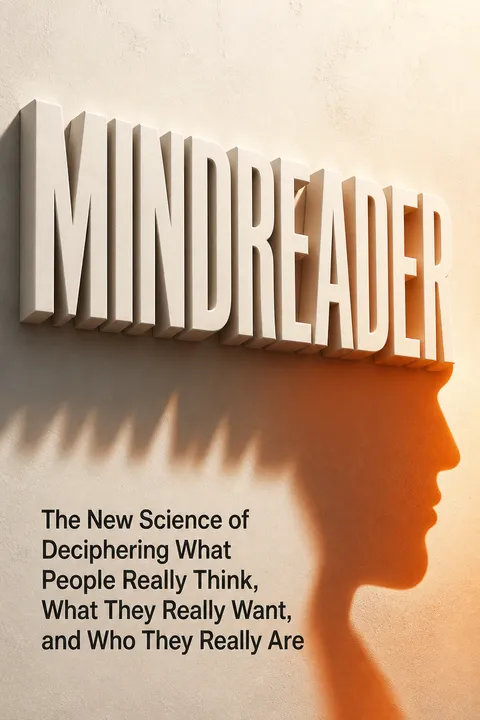
Mindreader is organized as a progression from small conversational clues to broader judgments about personality, emotional health, and risk. Its most valuable recurring idea is methodological: observe patterns across contexts rather than treating a gesture or sentence as a verdict. Pronouns, narrative structure, attention, and relationship behavior become prompts for inquiry. The book is especially memorable when it translates abstract ideas into ordinary situations, such as workplace language, a negotiation, or an art dealer overlooking one painting.
The same ambition creates its central weakness. Many linguistic and behavioral associations described in the book are probabilistic, context-sensitive, and easier to observe across groups than to use for reliable individual diagnosis. A person may omit first-person language because of habit, use absolute terms in ordinary emphasis, or become defensive when innocent but frightened. The book sometimes turns a plausible clue into a confident account of what someone secretly intends. That leap risks confirmation bias: once a reader suspects deception or pathology, every hesitation can appear to confirm it.
A safer reading treats the proposed cues as hypothesis generators. Notice a pattern, consider alternative explanations, ask open questions, and seek corroboration from behavior or independent evidence. The book’s own distinction between a temporary state and a lasting trait supports this restraint. Its advice about scammers and threats is most useful when converted into procedures: pause under pressure, verify claims independently, respect boundaries, and involve qualified help when safety is at stake.
The deeper contribution is less literal mind-reading than disciplined attention. Language reflects social relationships and emotional priorities, but it does not provide transparent access to another person’s mind. A careful observer can learn to hear more without pretending to know everything. In that sense, the book works best as a field guide to better questions, not a verdict machine.
Review Summary
Mindreader receives generally positive reviews, with readers praising its insights into human behavior and psychology. Many find it useful for understanding others and themselves better. Critics appreciate Lieberman's expertise and the book's practical applications in various fields. Some readers note the book's occasional generalization and technical language. While most find it engaging and informative, a few criticize it for not fully delivering on its promises. Overall, reviewers recommend it for those interested in improving their ability to read people and navigate social situations.
People Also Read


Glossary
Function words
grammatical connectorsWords such as pronouns, articles, and prepositions that link the meaningful content of a sentence and often depend on shared context. Lieberman treats their patterns as possible clues to connection or distance because understanding them requires speakers to share a frame of reference. Their use can also reflect ordinary grammar habits, so it should not be read as direct proof of motive.
Spatial immediacy
language of closenessA linguistic pattern in which words indicating location or distance, such as here, there, this, or that, can reflect a speaker’s felt closeness to a person, object, or idea. The book argues that language of proximity may suggest positive association. It cautions that distance words alone do not establish disinterest or negative feeling.
Conversational spotlights
attention-drawing phrasesLieberman’s label for expressions that emphasize a point, including phrases equivalent to actually, honestly, or as it turns out. In casual conversation, he interprets them as possible efforts to engage or impress a listener. In a high-stakes exchange, he says they may also function differently and should be assessed alongside the speaker’s purpose and other evidence.
Narrative identity
one's evolving self-storyThe internal story a person constructs to explain who they are, how their life has unfolded, and what gives it unity or purpose. The book argues that people notice and interpret events partly to preserve this story. Attention, omissions, and judgments can therefore offer clues to what matters to someone, though they do not reveal a complete or objective account of that person.
Defense grid
ego-protective responsesThe book’s metaphor for psychological defenses that help a person preserve a preferred self-image when reality conflicts with it. Avoidance, denial, justification, blame, and detachment can reduce immediate discomfort. Lieberman treats these responses as possible signs that a subject touches a vulnerable part of someone’s identity, not as proof of deception or a clinical disorder.
Contamination narrative
a story dominated by lossA way of recounting experience in which a negative event is treated as spoiling the entire episode, including what had been positive beforehand. For example, one setback may become the defining feature of an otherwise enjoyable day. The book associates persistent contamination narratives with poorer well-being, while recognizing that a genuinely severe event can understandably dominate memory.
Redemptive narrative
a story that finds valueA way of making sense of hardship that can identify meaning, connection, or personal change without denying the pain. A person might describe a difficult illness as prompting family members to become closer. The term does not require pretending that the good outweighed the harm; it describes the ability to recognize some constructive significance within a painful experience.
Focusing illusion
attention magnifies importanceA cognitive tendency, discussed through Daniel Kahneman’s work, in which whatever occupies attention seems more consequential than it may be in the broader context of life. Repeatedly thinking about a worry can make it feel increasingly important, which can intensify further rumination. Redirecting attention can reduce a concern’s grip, though it does not necessarily solve the underlying problem.
JACA
four-part threat assessmentA framework for considering whether a threat may be carried out. It asks about Justification, whether the person believes violence is warranted; Alternatives, whether nonviolent options seem available; Consequences, how the person weighs likely outcomes; and Ability, whether the person believes they can act. It is a structured aid to assessment, not a predictive guarantee or substitute for professional support.
Embedded bumps
small disruptions in a storyLieberman’s term for delays, mistakes, and interruptions that appear within an account of an event, such as a machine failing to start or a drink being spilled during a hurried moment. He argues these details can be difficult to invent naturally and may support an account when they fit its context. Their presence or absence cannot independently establish whether a story is true.
FAQ
What's "Mindreader" by David J. Lieberman about?
- Deciphering Human Behavior: "Mindreader" explores the science of understanding what people really think, want, and who they truly are by analyzing their language and behavior.
- Advanced Techniques: The book introduces cutting-edge methods in profiling people, moving beyond traditional body language cues to more sophisticated psycholinguistic techniques.
- Practical Applications: It provides tools for everyday situations, from casual conversations to high-stakes negotiations, to uncover hidden thoughts and emotions.
- Comprehensive Guide: The book is divided into four parts, each focusing on different aspects of human behavior, including subconscious reveals, lie detection, psychological profiling, and understanding personality and mental health.
Why should I read "Mindreader"?
- Enhance Interpersonal Skills: The book offers insights into human nature that can improve personal and professional relationships.
- Detect Deception: Learn how to identify when someone is lying or being deceitful, which is valuable in both personal and business contexts.
- Understand Others Better: Gain a deeper understanding of what drives people's actions and how to predict their behavior.
- Self-Improvement: The techniques not only help in reading others but also in gaining self-awareness and improving one's own emotional health.
What are the key takeaways of "Mindreader"?
- Language Patterns Matter: The way people use language, including pronouns and sentence structure, can reveal their true thoughts and feelings.
- Beyond Body Language: Traditional body language cues are often unreliable; the book emphasizes more nuanced psycholinguistic methods.
- Profiling Techniques: Learn to build psychological profiles to understand personality types and potential mental health issues.
- Practical Application: The book provides actionable strategies for real-life situations, from casual interactions to high-stakes negotiations.
How does David J. Lieberman suggest detecting lies in "Mindreader"?
- Behavioral Cues: Look for inconsistencies in language and behavior, such as avoiding direct denials or over-explaining.
- Emotional Expressiveness: Genuine emotional reactions are often more expressive; a lack of expression can indicate deceit.
- Narrative Structure: Pay attention to the structure of a person's story; deceitful accounts often lack detail or have irrelevant details.
- Stress Responses: Introducing a stressor can reveal discomfort in a person who is hiding something.
What are the "Subconscious Reveals" discussed in "Mindreader"?
- Language Indicators: Subtle shifts in language, such as pronoun use and sentence structure, can indicate subconscious thoughts.
- Emotional Distance: The use of distancing language can reveal a person's true feelings about a situation or relationship.
- Behavioral Patterns: Consistent patterns in behavior and language provide insights into a person's subconscious mind.
- Contextual Clues: Understanding the context of a conversation or interaction is crucial for interpreting subconscious reveals.
What is the "Human Lie Detector" section about in "Mindreader"?
- Assessing Honesty: Techniques to determine if someone is likely to be open and honest or guarded and deceitful.
- Reading Bluffs: Identifying when someone is bluffing by observing overcompensation in their behavior or language.
- Story Analysis: Analyzing the structure and details of a person's story to detect fabrication or deceit.
- Psychological Tactics: Understanding the psychological tactics used by manipulators and con artists to deceive others.
How does "Mindreader" address personality and mental health?
- Personality Insights: The book provides methods to assess personality traits and potential mental health issues through language and behavior.
- Ego and Self-Esteem: It explores how ego and self-esteem influence behavior and emotional health.
- Resilience Factors: Understanding resilience and how different people cope with stress and trauma.
- Pathology Trajectories: Identifying the potential path of mental unwellness and the signs of personality disorders.
What are some practical applications of "Mindreader"?
- Everyday Interactions: Use the techniques to improve communication and understanding in daily interactions.
- Professional Settings: Apply the methods in business negotiations, interviews, and team dynamics to gain an edge.
- Personal Relationships: Enhance personal relationships by understanding the true thoughts and feelings of others.
- Self-Reflection: Use the insights to gain self-awareness and improve one's own emotional health and behavior.
What are the best quotes from "Mindreader" and what do they mean?
- "We lie to ourselves so we can live with ourselves." This highlights the role of ego and defense mechanisms in distorting reality to protect self-image.
- "The truth, once embraced, can never be bruised or injured." Emphasizes the power of accepting reality and the strength it brings.
- "Perspective provides context, and context allows for meaning." Stresses the importance of perspective in understanding and interpreting experiences.
- "Knowledge is a tool, like any other. How we wield it makes all of the difference." Encourages responsible use of the insights gained from the book.
How does "Mindreader" suggest building a psychological profile?
- Observing Language: Analyze language patterns, including pronoun use and sentence structure, to gain insights into personality.
- Behavioral Analysis: Look for consistent patterns in behavior that reveal underlying personality traits and mental health.
- Contextual Understanding: Consider the context of interactions to accurately interpret behavior and language.
- Holistic Approach: Combine multiple observations and techniques to create a comprehensive psychological profile.
What is the significance of "Narrative Identity" in "Mindreader"?
- Personal Story: Everyone has a narrative that explains "who I am and why I am," which guides their behavior and decisions.
- Confirmation Bias: People tend to see what they expect to see, reinforcing their personal narrative.
- Ego and Perspective: The ego influences how we interpret the world to fit our narrative, affecting our mental health.
- Understanding Others: By understanding a person's narrative identity, you can predict their behavior and emotional responses.
How does "Mindreader" address the concept of resilience?
- Emotional Resilience: The ability to adapt to and cope with stress and adversity without becoming dysfunctional.
- Ego and Control: Less ego means less need to control, leading to greater resilience and emotional health.
- Coping Mechanisms: Identifying how people typically respond to stress and anxiety to gauge their resilience.
- Self-Esteem and Impulse Control: High self-esteem and impulse control are key factors in building resilience and maintaining emotional health.
About the Author
Other books by David J. Lieberman



Download PDF
Download EPUB
.epub digital book format is ideal for reading ebooks on phones, tablets, and e-readers.








