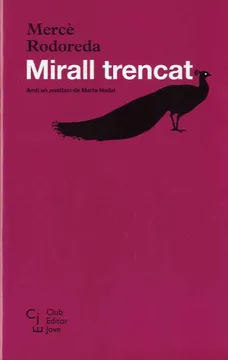


Plot Summary
Prologue
The author’s preface describes how a story about a wealthy family, an abandoned house, and a garden gradually took shape. Teresa1 began as a beautiful young fish seller, while the family’s secrets, loves, and losses accumulated around her.
Rodoreda explains that the title came from the novel’s fragmented view of life: each character and object reflects only part of the past. Flowers, jewels, children, and the house itself become carriers of memory in a story that moves from youthful desire toward age, death, and the fading of a family.
The preface prepares readers for a novel built less like a single chain of causes than a gathering of remembered fragments. Rodoreda identifies the family, house, and garden as the story’s central materials, but also warns that no one can hold the whole past at once. That principle is enacted through the shifting viewpoints and recurring objects: a jewel can mean security to Teresa and inheritance to Sofia, while the same house shelters childhood and decay. The preface therefore frames the plot as an act of recovery, not a complete or neutral record.
Teresa Buys Her Escape
As a young woman helping her mother sell fish in Barcelona, Teresa1 falls in love with Miquel Masdéu,12 a lamplighter who is already married. Their son13 is kept with Teresa’s aunt Adela while Teresa1 accepts the proposal of Nicolau Rovira,11 an elderly financier whose fortune offers escape from poverty and public disgrace.
After Nicolau11 gives her an extravagant diamond brooch, Teresa1 secretly sells it to pay Miquel12 to have the baby13 adopted by his childless wife. She arranges to remain the boy’s13 godmother, preserving a narrow path back to him. Then she pretends the brooch was stolen, and Nicolau11 pays to replace it. Her new wealth begins with a lie that protects both her status and her son.13
Teresa’s first ascent is neither simple opportunism nor romantic surrender. She uses marriage as a practical shelter, but the sale of the brooch shows that she will spend even the symbols of her new rank to control what becomes of her child. Her deception protects the marriage while binding her to a private history that cannot be erased. The brooch acquires two meanings at once: public proof of Nicolau’s generosity and hidden capital for Teresa’s maternal decision. Her power begins not with freedom from dependence, but with learning how to act inside it.
The Violinist in Vienna
Salvador Valldaura,9 a Catalan diplomat, notices Bàrbara,10 a young Viennese violinist, during a concert and begins sending her violets. On a walk in the Prater, she shares memories of her absent mother and childhood, then accepts his attention. During their next evening together, a mirror frightens her because it recalls a dream of being trapped beyond its glass.
Two days later, Salvador9 learns that Bàrbara10 has drowned herself in a canal. He revisits the places they shared and finds her likeness in a painting, unable to release the memory. A transfer to Paris slowly restores his composure. Back in Barcelona, his friend Rafael21 introduces him to Teresa,1 now widowed, beginning a second love shaped by the first loss.
Bàrbara’s brief courtship becomes the emotional measure against which Salvador experiences later intimacy. Her remembered childhood and fear of the mirror make her more than a lost romance: she embodies a fragile past that Salvador cannot rescue by loving harder. After her death, he preserves her through repeated visits and visual resemblance, converting grief into a private ritual. When Teresa enters his life, he is capable of devotion but not of forgetting. The novel establishes early that love may continue as memory after the beloved has vanished, altering every attachment that follows.
A Tower for Teresa
Teresa1 dislikes Paris and grows increasingly homesick, especially after becoming pregnant. Salvador9 gives up his diplomatic career and buys a neglected tower in Sant Gervasi, with a vast garden, an overgrown pond, and an old laurel beside the house. The couple restores the property and settles there with their infant daughter, Sofia.3
During a spring storm, Teresa1 gathers the frightened servants and baby inside while lightning and wind batter the house. By morning, half the laurel has been torn away, though the tree survives. The family’s home is now a carefully made refuge, but its garden has already shown that beauty and shelter cannot keep damage out.
The tower turns private affection into a physical world: Salvador reshapes his career and surroundings to answer Teresa’s homesickness. Yet the storm immediately limits the fantasy of protection. The household gathers together, but the laurel is split, and the garden’s lushness comes with deep water, old trees, and sudden weather. The setting is not a passive emblem of wealth; it stores the conditions of later events. Teresa’s new home joins cultivated beauty to latent danger, so the refuge that supports family life also becomes the place where its secrets and injuries remain visible.
The Son at the Gate
Years after arranging her baby’s adoption, Teresa1 invites her godson,13 Jesús,13 to the tower for her name day. He is nearly eleven, raised by Miquel12 and his wife, and arrives carrying flowers. Teresa1 recognizes the son13 she surrendered, but their meeting stays formal: she offers sweets, gives him money, and watches him leave with his adoptive father.12
Jesús13 returns occasionally as he grows up, eventually training as a painter, but he remains outside the Valldaura family’s daily life. Teresa’s1 choice allows her to help him without undoing the arrangement that secured her social position. The visit makes the hidden family history tangible, while showing how little affection can repair a childhood lived elsewhere.
The encounter exposes the cost of Teresa’s strategy without resolving it. She can provide money and a place at the gate, but she cannot make herself the mother Jesús has known. His politeness and her restraint protect both from a painful claim neither can easily sustain. The tower’s threshold becomes a social boundary as well as a physical one: Teresa’s wealth permits contact, yet the adopted son remains a visitor. Her attachment is real, but it is expressed through controlled gestures, revealing how class mobility can preserve a life by dividing it.
Sofia Inherits the House
After Salvador9 dies, Sofia3 expects the estate her father9 had promised her, but his will leaves the tower and fortune to Teresa.1 Sofia’s3 grief hardens into resentment. During the two years before her marriage to Eladi Farriols,4 Eladi4 begins an affair with Pilar Segura,15 a cabaret performer who gives birth to their daughter,5 Maria.5
Pilar15 eventually relinquishes the baby to a wealthy household on condition that she never see her again. On Sofia3 and Eladi’s4 wedding night, Eladi4 reveals that he has a daughter.5 Sofia3 could reject the marriage, but instead accepts Maria5 into the tower. Her decision is generous in appearance and forceful in practice: she takes the child into her own household, where she can shape the place Maria5 will occupy.
Sofia’s inheritance disappointment and Eladi’s confession establish her central method: she converts injury into control. Accepting Maria keeps the marriage intact, but it also lets Sofia decide the child’s home and social identity. Pilar’s surrender is a different kind of constraint, a mother’s attempt to secure a future she cannot provide herself. The women’s choices are not equivalent, since money and status give Sofia far greater power. Still, the child becomes the point where their unequal circumstances meet, and the household’s apparent respectability begins to depend on a story that its members do not share.
Three Children, One House
Sofia3 returns from her honeymoon to find Maria5 established in the tower. She later gives birth to Ramon,6 then to Jaume,7 who arrives prematurely and remains frail. Eladi’s4 affection settles most easily on Maria,5 intensifying Sofia’s3 vigilance over the household. He also begins an affair with Armanda,8 the young cook, and gives her diamond earrings.
Armanda8 stays in service after the affair ends, becoming a trusted witness to the family’s private life. Meanwhile Teresa’s1 legs weaken, and she increasingly depends on the servants. The children grow among adults who conceal desire, jealousy, and kinship. Their nursery is not separate from the family’s secrets; it is where those secrets begin to shape the next generation.
The household does not distribute affection evenly, and the children register that imbalance before they can understand its causes. Maria’s favored position unsettles Sofia, while Jaume’s illness invites care that is mixed with fatigue and resentment. Eladi’s relations with Armanda repeat his habit of seeking pleasure without accepting its emotional consequences. Armanda, unlike the family, cannot leave the consequences behind when an affair ends. Her continued presence gives her a long view of the house, turning domestic service into a form of knowledge that the wealthy characters often underestimate.
The Pond Takes Jaume
Ramon6 and Maria5 often exclude Jaume,7 whose frail body and imaginative habits make him an easy target. They frighten him with games, take his insects, and mock his attempts to join them. One day Ramon6 presses a forked branch against Jaume’s7 neck while Maria5 pricks him with a hairpin; Ramon6 then shoves him toward the deep garden pond. Jaume7 falls into the water and dies.
The family treats the death as drowning, but the dark mark around his neck makes Armanda8 doubt that explanation, and Teresa1 sees the injury herself. The children’s secret is never openly exposed. Instead, the pond becomes a place where their play, jealousy, and violence merge, leaving grief to spread through the household without a public account of what happened.
The scene refuses the comforting idea that childhood is innocent by nature. Ramon and Maria’s cruelty grows out of play and rivalry, but Jaume’s weakness makes the consequences irreversible. Their actions move from exclusion to physical harm without a clear adult boundary intervening. The adults’ acceptance of drowning as the explanation protects the family’s surface, not its members: Armanda sees the evidence, and Teresa must absorb a grief sharpened by suspicion. The pond stores what the household cannot say aloud. Its stillness is not peace but concealment, and the children’s secret becomes an unspoken inheritance.
A Childhood Turns Dangerous
As they grow older, Ramon6 and Maria5 remain bound by the private world they made as children, including their rooftop games and their shared refuge in the garden. Their attachment turns into romantic longing, though both have been raised to believe they are brother and sister.
During a summer visit with the Balsareny family, Maria5 grows close to Marius,20 a politically restless university friend of Ramon’s.6 Ramon6 watches them together with jealousy, then tries to restore his old intimacy with Maria.5
At the tower, the governess Rosa18 notices their closeness and warns Eladi4 that the relationship is becoming dangerous. Eladi4 writes for his children to return, but avoids making the journey himself. His delay gives the secret more time to tighten around them.
Ramon and Maria’s desire develops inside a childhood bond that has never been given a safe way to change. Their shared memories make separation feel like a betrayal, while their assumed siblinghood makes desire shameful and impossible to name. Marius briefly offers Maria a route outward, but Ramon’s jealousy pulls attention back to the closed family world. Rosa’s warning gives the adults a chance to intervene; Eladi’s hesitation wastes it. The failure is not simply a lack of knowledge. It is a familiar family pattern in which discomfort is postponed until the younger generation must bear its cost.
The Family Secret Breaks
When the children return, Eladi4 finally tells Ramon6 that Maria5 is his half-sister, the daughter5 he had with Pilar15 before marrying Sofia.3 Ramon6 leaves the tower in shock, unable to remain in the home where his memories of Maria5 have become forbidden. He reaches the family of the notary Riera’s14 sister, who gives him temporary shelter.
Maria5 hears enough of the disclosure to understand why Ramon6 is gone, but she shuts herself away rather than face him. The revelation clarifies the family’s hidden structure but offers no comfort: their childhood affection remains real, while the future they imagined is closed. The adults have preserved the truth too long, and disclosure now separates the two people it was meant to protect.
The revelation corrects the family record but cannot restore an uninjured past. Ramon’s love does not vanish when he learns the truth; instead, it becomes inseparable from shame and loss. Maria’s refusal to open her door marks the same rupture from the other side, turning silence into a barrier neither can cross. Eladi’s confession is morally necessary and disastrously late. The family’s secrecy had allowed the children to build an identity together, so truth arrives not as liberation but as the destruction of the only future they had imagined.
Maria Falls Through the Mirror
After Ramon6 leaves, Maria5 retreats into the tower and returns to the roof where they once played. She searches an old family album and finds a newspaper image of Lady Godiva, the stage name of her birth mother,15 whose face resembles her own. Later, she goes into the garden, revisits the pond and the tree where she and Ramon6 once marked their initials, and destroys reminders of the childhood they shared.
At night she climbs back to the roof and looks down at the familiar garden. She falls onto the laurel, whose broken branches pierce her. The household receives another death without being able to undo the sequence that led to it: hidden parentage, childhood violence, and a love that has no permitted future.
Maria’s final movement through the house and garden is an attempt to dismantle the world that once made her feel secure. The photograph links her to a mother she never knew, while the old initials and pond return her to a childhood now altered by the family secret. The laurel, previously damaged by lightning, becomes the point where memory turns bodily. Her death does not resolve the contradictions of her identity; it makes them permanent. The garden that once offered privacy and wonder becomes the witness to a loss the family can only mourn.
Teresa’s Last Testament
In later life, Teresa’s1 secret relationship with Amadeu Riera,14 the family notary, has become a memory she returns to as her body fails. Their affair outlasted the marriage that first brought them together, but Riera14 eventually withdrew, and Teresa’s1 legs became useless after the heartbreak. When he visits, she asks him to prepare a will leaving the tower to Maria,5 whom she loves despite the girl’s distance from her.
She also insists that her son13 Jesús13 receive what is due to him. Elsewhere, Eulàlia,16 widowed after Rafael’s21 murder, finds companionship with Quim Bergadà,17 Salvador’s9 old friend. These late attachments do not restore youth, but they show Teresa1 and Eulàlia16 choosing tenderness even when the past has already narrowed their lives.
Teresa’s testament converts private feeling into a final act of distribution. She cannot repair her relationship with Maria through intimacy, so she assigns the house to her, making inheritance carry the care she could not express directly. Her request that Jesús be remembered also returns to the first secret of her life. Eulàlia and Quim’s companionship offers a quieter counterpoint: grief can open the possibility of a new bond, though it cannot erase the dead. Both stories resist a simple division between passion and duty. Late love survives, but it must negotiate memory, property, and an aging body.
Eladi Burns the Past
After Maria’s5 death, Eladi4 withdraws from the life of flirtation that once distracted him. He fills the library with books, handles them obsessively, and burns the portraits of Ramon6 and Maria.5
Among Salvador’s9 papers, he finds a notebook describing the private world Salvador9 made from memory and discovers how completely his father-in-law9 remained haunted by an earlier love. Eladi4 recognizes a similar division in himself, as his attachment to Bàrbara10 has shadowed his marriages and fatherhood.
He commissions a stone marked with Maria’s5 name for the foot of the laurel and spends hours beside it. A letter reports that Ramon6 has left the Riera14 household, but gives no details. Eladi’s4 grief turns the library and garden into places of vigil, then he dies after a period of illness.
Eladi’s mourning is expressed through handling, arranging, and destroying objects rather than through repair. The books give him a task he can control, while burning the children’s portraits attempts to remove the pain of looking. Salvador’s notebook unsettles him because it exposes the inheritance of emotional absence: both men have been divided between domestic life and a private attachment to the past. The stone at the laurel is Eladi’s most direct act of care, but it arrives after he can no longer protect Maria. His death leaves the family’s losses stored in objects and rooms.
Teresa Keeps the Pearl
Teresa1 spends her last years bedridden, dependent on Armanda8 and surrounded by medicines, sweets, and the furnishings she once chose. Her mind moves among the men she loved, the son13 she surrendered, and the children she could not save. When Salvador9 died, Teresa1 secretly removed the gray pearl from his tie rather than let it be buried with him; she kept it as a private remnant of the marriage and of the life that followed.
Now her swollen body and failing breath make the rooms she once commanded feel beyond reach. She dies after a long decline, leaving the tower and its memories behind. Her final inheritance is not control of the house, but the vivid past that continues to occupy it.
Teresa’s death brings the novel’s central tension between possession and loss into the body itself. The woman who once moved through the tower choosing jewels, flowers, and rooms can no longer reach even the objects beside her. The stolen pearl condenses her emotional life: she preserves what belongs to Salvador while also carrying the trace of her affair with Riera and her own changing desires. Her memories refuse a clean moral accounting. The same person has pursued security, kept secrets, loved intensely, and caused pain. In old age, these roles return together rather than settling into a single verdict.
The Tower Falls to War
As political violence spreads through Barcelona, Sofia3 arranges to escape abroad with her jewels, helped by Marcel,22 the chauffeur, who secures travel papers. Armanda8 refuses to leave. After Sofia’s3 car departs, Armanda8 walks through the tower wearing Teresa’s1 old purple domino and holding a hand mirror. She falls on the stairs, shattering it; in its pieces she sees episodes from the family’s life.
Militiamen soon seize the property and turn its rooms into offices. Jesús,13 now a militia officer, recognizes Armanda8 and ensures that the rooms she names are left untouched, then finds her a nearby flat. After the war, she returns to the emptied tower, unable to abandon it, and eventually entrusts its keys to Fontanills.19
War converts the family’s long private decline into public dispossession. Sofia can carry jewels and leave, while Armanda stays because the tower has become the structure of her own life. The broken mirror gives that attachment a form: its fragments do not restore a whole story, but each catches a distinct moment. Jesús’s intervention briefly joins the hidden son to the house that never fully claimed him, allowing Armanda to preserve selected rooms. Yet survival does not mean restoration. When Armanda returns, the tower is empty, and her loyalty has become an obligation to a past that no longer has a living family to receive it.
Sofia Finds Ramon
Years later, Sofia3 returns from France, widowed and wealthy again, intending to replace the old tower with modern apartment buildings. At the house she meets Ramon,6 who has come back after years abroad and war. He is married, has two children, and has lived with poverty and the guilt of leaving home.
Sofia3 gives him money and offers a future connection, but neither can restore the years between them. Armanda8 arrives and recognizes him; she tells Sofia3 where she buried the family jewels and silver during the upheaval, then asks only for cuttings from the old rosebushes.
Ramon6 leaves with help he needs but without recovering the childhood home he remembers. Sofia’s3 plan to demolish the tower now advances with the family’s last surviving witnesses briefly gathered inside it.
The reunion offers material assistance without pretending to repair emotional history. Sofia can give Ramon money, but her wealth cannot return the years in which he lived as a stranger to his family. Ramon’s poverty and family life also complicate the old image of the reckless boy: he has built another household, though the past remains physically present in his response to the tower. Armanda’s request for rose cuttings is smaller than Sofia’s plans for the land, yet it carries more continuity. She asks not for the family’s fortune, but for something living that can be replanted elsewhere.
The House Becomes Rubble
As workers empty the deteriorated tower, they uncover the stone bearing Maria’s5 name and prepare to carry it away. In the novel’s ghostly vision, Maria5 pleads through memory for the objects and places that anchored her childhood, while the workmen continue without hearing her. The garden has grown wild, the pond is foul, and the birds have vanished.
A rat moves through the rooms and over the grounds, feeding among the rubbish before returning to the house. When demolition begins, it hides in a chestnut tree and is killed by the workers. The tower, family, and garden are finally reduced to abandoned matter. The story ends not with a surviving heir in possession, but with the small animal left among the ruins.
The ending refuses the consolations of inheritance. Maria’s ghost clings to the stone because memory needs material anchors, but the workers see only an obstruction to be removed. The rat’s passage through the ruined rooms offers a final, unsentimental continuity: life persists among the family’s discarded objects, then is destroyed by the same process that clears the site. Unlike a bird or flower, the rat carries no promise of renewal. Its death closes the novel’s movement from cultivated abundance to neglect, showing that the family’s memories can outlast their house only briefly and without protection.
Analysis
Mirall trencat follows a family through the long afterlife of its secrets. Teresa’s1 rise from the fish market to the tower does not erase her earlier vulnerability; it teaches her to manage it through money, beauty, and selective disclosure. The next generation inherits both the material rewards of that ascent and the emotional habits that accompanied it. Eladi4 hides his past, Sofia3 turns hurt into authority, and the children build their identities inside a household whose adults have never given them a complete account of their origins.
The novel’s treatment of childhood is especially unsentimental. Ramon6 and Maria’s5 games contain tenderness, exclusion, and cruelty at once, while Jaume’s7 dependence makes him vulnerable to both siblings and adults who fail to intervene. Their childhood is not a pure refuge later corrupted by adulthood. It already holds the family’s unequal distribution of power. The children’s imagined world, full of animals, objects, and private rituals, is emotionally real, but it cannot protect them from facts withheld by adults.
Objects carry what characters cannot say directly. The jewels turn status into something touchable; the pearl preserves a marriage and its complications; the dollhouse keeps childhood still; the broken mirror makes memory visibly partial. The house and garden perform the same work on a larger scale. They shelter the family, absorb its acts, and outlast many of its members, but preservation is not repair. The laurel and pond remain in place while the people who know their histories disappear.
The closing movement rejects a triumphant idea of inheritance. Sofia3 can recover wealth, Ramon6 can build another family, and Armanda8 can preserve a few objects, yet none can reclaim the lost household. The tower’s destruction does not resolve its history; it removes the setting that held the evidence. The final rat among the ruins offers no promise of renewal. The novel leaves readers with the knowledge that memory may survive its owners, but only in scattered, vulnerable pieces.
Review Summary
Mirall trencat is widely regarded as Mercè Rodoreda's most ambitious and mature work, praised for its poetic prose, rich symbolism, and complex multi-generational portrayal of a declining Catalan bourgeois family. Reviewers highlight the fragmented narrative structure—mirroring its title—and the vividly constructed characters, particularly its female protagonists. The gothic mansion setting is frequently noted as a character in itself. While most readers consider it a masterpiece surpassing even La plaça del diamant, some find the pacing uneven and emotional connection difficult.
People Also Read


Characters
Teresa Goday de Valldaura
The self-made matriarchTeresa begins in modest circumstances, helping her mother sell fish, and possesses a strong instinct for recognizing the openings that can change her position. Beauty, jewels, flowers, and an elegant home matter to her, but they are not mere decoration: they are ways to make security visible and to shape how others see her. She can be tender and calculating in the same moment, especially when love conflicts with social respectability. As wife, mother, lover, and later keeper of memories, she repeatedly tries to direct the terms on which people belong to her. Her deepest drive is not simply wealth, but the hope that a life she has chosen can be made permanent.
Salvador Valldaura
The haunted diplomatSalvador is a cultivated diplomat whose imagination is shaped by music, landscape, and a capacity for intense attachment. His love for Bàrbara10 leaves him vulnerable to memory, even as he builds a life with Teresa1 and creates the tower as a home for their family. He is generous and affectionate, especially toward Sofia3, but often retreats into silence when feeling threatens to become too difficult to manage. The garden and its birds give him a language for emotions he cannot readily explain. Salvador’s desire to protect those he loves is sincere, yet his private grief remains a room others cannot enter.
Sofia Valldaura Farriols
The iron heiressSofia is reserved, observant, and proud of her ability to govern herself. She dislikes being pitied and turns acceptance into a form of strength, often withholding warmth when she feels exposed. Her relationship with Teresa1 combines dependence, rivalry, and a need to distinguish herself from her mother’s1 sensual, openly affectionate nature. Sofia values authority over the household and the security of property, but her control does not guarantee intimacy with those around her. She is most revealing when acting decisively: she can take in a child, direct a household, or leave a home behind without making her feelings easy to read.
Eladi Farriols
The pleasure-seeking heirEladi is a polished shopkeeper and heir who enjoys admiration, artifice, and the pursuit of women, but resists the demands that follow his desires. He can be charming and attentive in brief encounters, yet his emotional life is marked by evasions and compartmentalization. His attraction to performers and his fixation on small sensual details contrast with the responsibilities of marriage and fatherhood. Eladi wants to be moved without being changed; when consequences arrive, he often delays or turns toward distraction. His refinement is genuine, but it also serves as a screen for weakness and unexamined privilege.
Maria
The luminous outsiderMaria is a striking, perceptive girl raised within the Valldaura household, where her place is never entirely free of uncertainty. She is drawn to beauty, performance, and the private rituals she shares with the other children. Her attachment to Ramon6 grows from an intense childhood closeness, and she is sensitive to shifts in affection even when adults hide their reasons. Maria can appear poised and self-possessed, yet much of that composure depends on the enclosed world of the tower and garden. She embodies the tension between belonging as a feeling and belonging as a fact assigned by family.
Ramon Farriols
The restless firstbornRamon is energetic, competitive, and accustomed to taking the lead among the children. His confidence can shade into cruelty when someone weaker interrupts the bond he values most. He is drawn to Maria5 as both companion and emotional refuge, and he struggles to separate love from possession. As he grows, his sense of himself depends heavily on the family’s version of its past. Ramon is not simply a rebel or a victim: he can wound others and be wounded by truths he was never given. His life is shaped by the difficult work of building an identity outside the tower.
Jaume Farriols
The fragile youngestJaume is physically frail, imaginative, and deeply attentive to small creatures, changing light, and the objects adults overlook. He seeks safety in Teresa’s1 room and in the routines that make him feel recognized. His siblings’ games often leave him isolated, though he continues trying to join them. Jaume’s inwardness gives the childhood chapters a different scale: a barque, an insect, or a cup can matter more to him than the family’s grand rooms. He needs patience and affection, but the household’s adults and children do not consistently understand how exposed he is.
Armanda
The house's faithful witnessArmanda enters the Valldaura household as a young servant and gradually becomes its most enduring witness. Practical, observant, and emotionally restrained, she understands the routines and silences that sustain the family better than the family understands her. Her attachment to Eladi4 exposes her vulnerability, while her long service gives her a durable place among the household’s memories. Armanda values useful work, small comforts, and the dignity of being trusted. She rarely claims authority, yet she knows where objects are kept, what people conceal, and how the house changes when its owners are absent.
Salvador Valldaura
The haunted diplomatSalvador is a cultivated diplomat whose imagination is shaped by music, landscape, and a capacity for intense attachment. His love for Bàrbara10 leaves him vulnerable to memory, even as he builds a life with Teresa1 and creates the tower as a home for their family. He is generous and affectionate, especially toward Sofia3, but often retreats into silence when feeling threatens to become too difficult to manage. The garden and its birds give him a language for emotions he cannot readily explain. Salvador’s desire to protect those he loves is sincere, yet his private grief remains a room others cannot enter.
Bàrbara
The doomed violinistBàrbara is a young Viennese violinist whose reserve gives way to sudden, intimate disclosures. Music is both her discipline and a fragile route toward recognition. Her memories of an absent mother and her fear of mirrors suggest a private unease that Salvador9 cannot fully comprehend. She is not simply the object of his longing; she has an inner life that remains partly inaccessible to him. Her brief presence establishes how a moment of connection can become more powerful in memory than it was in lived time.
Nicolau Rovira
The aging benefactorNicolau is a wealthy, elderly financier who offers Teresa1 marriage with a clear awareness of their unequal ages and unequal resources. He expresses affection through expensive gifts and practical generosity rather than demanding that Teresa1 pretend to feel what she does not. His confidence in money as something he can give reflects both kindness and the limits of his emotional imagination. Nicolau provides Teresa1 with a route into a different social world, though he cannot know the full private life she carries into their marriage.
Miquel Masdéu
The married lamplighterMiquel is a working-class lamplighter whose rough appearance and direct manner attract the young Teresa1. He is capable of tenderness, but his existing marriage makes their relationship unequal from the start. As a father, he accepts responsibility for a child who cannot be publicly acknowledged as his. Later, his connection to Teresa’s1 family continues through his son13, Jesús13. Miquel represents a youthful love that is emotionally vivid but constrained by circumstances neither lover can fully control.
Jesús Masdéu
The painter godsonJesús grows up outside the Valldaura household but is linked to Teresa1 through godparenthood. Curious about art and beauty, he becomes a painter and continues visiting the tower, where he is treated with kindness but never quite as family. His relationship with Teresa1 is shaped by this distinction: affection exists, yet it cannot erase the life he has lived elsewhere. Jesús is patient and modest about his ambitions, and his artistic eye gives him a way to approach the house without claiming ownership of it.
Amadeu Riera
The romantic notaryAmadeu is a respected notary who combines professional integrity with a romantic temperament. His office, with its carefully kept objects and flowers, reflects a man attentive to beauty as well as legal order. He is trusted by the Valldaura family, yet his connection to Teresa1 carries a private emotional history that complicates that role. Amadeu is reflective and self-conscious, often measuring his choices against the respectable life he has built. He understands how memory can sustain a person and also prevent that person from living fully in the present.
Pilar Segura
The cabaret performerPilar is a cabaret performer known as Lady Godiva, whose stage persona gives her a livelihood but does not define her private tenderness. She loves Eladi4 and faces motherhood without the security of marriage or wealth. When circumstances force her to consider giving up her child, she weighs the loss against the possibility of a better life for the baby. Pilar’s dignity lies in the seriousness with which she makes that choice, even when others treat her as an episode in a wealthy man’s life.
Eulàlia
The perceptive godmotherEulàlia is Sofia’s3 godmother and a longtime friend of Teresa1, alert to social performances and unspoken motives. She can be witty and sharp-tongued, but her judgments arise from close observation rather than simple malice. Her own emotional life includes bereavement and the desire for companionship, which temper her earlier confidence about other people’s choices. Eulàlia understands how status shapes marriage and how loneliness can outlast a respectable life. Her friendship with the Valldaura women gives her an outsider’s view of their family’s changing fortunes.
Quim Bergadà
The restless friendQuim is Salvador’s9 old friend, a diplomat and man of appetite who grows tired of distance, travel, and unsuccessful courtships. His jokes often conceal disappointment, and he is not as self-sufficient as he would like to appear. His bond with Salvador9 gives him access to the Valldaura family, while his later companionship with Eulàlia16 reveals a more attentive side. Quim is driven by a need for affection but often approaches it indirectly, through charm, complaint, and restless plans.
Rosa
The severe governessRosa is the children’s governess, educated, strict, and proud of her competence. She wants the children to respect the rules she teaches, but their pranks repeatedly expose how little authority she has within the household. Her frustration makes her observant and sometimes vindictive. Rosa notices shifts in the children’s behavior that their parents prefer not to examine. She occupies an uneasy position: responsible for discipline, yet dependent on the family that can dismiss her and dismiss her warnings.
Josep Fontanills
The scrupulous stewardFontanills manages the Valldaura properties and is valued for his honesty, patience, and practical judgment. He helps Salvador9 find the tower and continues advising the family as its fortunes and circumstances change. His attention to land, repairs, and accounts contrasts with the family’s tendency to live through memory and emotion. Fontanills is not an intimate confidant, but his steady work gives the household a durable connection to the world beyond its private dramas.
Marius Balsareny
The rebellious classmateMarius is Ramon’s6 university friend, politically active and more openly rebellious than the young men around him. His growing closeness with Maria5 during a summer visit unsettles Ramon6 and briefly widens her world beyond the tower. Marius serves as a contrast to the enclosed family circle, carrying the energy of public causes and youthful possibility.
Rafael Bergadà
The industrialist husbandRafael is Eulàlia’s16 husband and a Barcelona industrialist whose work brings him into conflict with labor unrest. His importance lies partly in the life Eulàlia16 builds with him and partly in the loss that reshapes her later choices. He belongs to the public, business-minded world that surrounds the family’s more private dramas.
Marcel
The household chauffeurMarcel is the Valldaura household’s chauffeur, familiar with the property and its routines. He is capable and discreet, and his practical position gives him access to the family’s movements at a time when the household’s security is changing. His loyalty is expressed through action rather than intimacy.
Plot Devices
The Broken Hand Mirror
Memory in fragmentsThe hand mirror breaks when Armanda8 descends the stairs after Sofia’s3 flight. Its uneven pieces prompt her to see separate moments from her years in the tower, rather than a single continuous family history. The image gives the title its central meaning: each person remembers only a portion, and no reflection can restore what time has damaged. The mirror’s break also connects domestic life to the novel’s final destruction of the house, where objects and memories are scattered rather than preserved.
The Garden and Pond
Beauty conceals dangerThe tower’s garden begins as a place of beauty and play, with old trees, birds, flowers, a pond, and the laurel beside the house. It also holds the family’s most painful childhood events. The pond becomes inseparable from Jaume’s7 death, while the laurel later marks Maria’s5 end. As the family declines, the garden grows wild and loses its birds, mirroring the loss of order inside the house. It is both a refuge for the children and a witness that cannot speak.
Jewels and the Pearl
Status carries secretsJewels track the women’s changing power and the family’s hidden histories. Teresa1 sells Nicolau’s11 diamond brooch to arrange her child’s13 adoption, then lets him believe it was lost. Later, the gray pearl connects Salvador’s9 marriage to Teresa’s1 private memories. Sofia3 and Armanda8 also attach different meanings to inherited or gifted stones. These objects are never only ornaments: their value lets characters bargain, preserve memories, conceal choices, or claim a place in the household.
Hidden Parentage
Silence distorts kinshipThe adults conceal children’s origins to protect reputation, marriage, or a hoped-for future. Teresa1 keeps Jesús’s13 parentage private while remaining his godmother; Eladi’s4 daughter Maria5 is brought into the tower without the children knowing the family structure. These decisions give children a home, but they also deprive them of knowledge needed to understand their relationships. When the truth surfaces, it cannot undo the intimacy that has already formed. Secrecy functions as protection in the short term and as a force that makes later harm harder to prevent.
The Dollhouse and Its Head
Childhood survives as relicThe dollhouse gives the children a miniature version of adult domestic life, complete with parents, rooms, and children who remain fixed in place. Jaume7 is fascinated by it, while Ramon6 later carries away the doll figure’s head when he leaves the tower. Armanda8 preserves that small fragment and brushes it long after the family has dispersed. The dollhouse condenses the novel’s larger concern with memory: a childhood world can be arranged and revisited, but its figures are fragile, incomplete, and unable to grow beyond the roles assigned to them.
Download PDF
Download EPUB
.epub digital book format is ideal for reading ebooks on phones, tablets, and e-readers.








