

Key Takeaways
Protect your privacy without letting other people author your entire story.
A life in motion. Born into a touring Yiddish theater family, Elaine May attended more than fifty schools by age ten. Her father died when she was ten, leaving her mother and her to scrape by. At twenty, May left her young daughter with her mother and hitchhiked to Chicago to pursue theater and education. That choice opened a path to a career, but it also carried a lasting human cost.
Privacy as performance. May later embellished or contradicted details about her childhood and background, sometimes just to see whether interviewers were listening. She avoided publicity because words, once printed, could not be retrieved. Her public self became another role, carefully managed through silence, invention, and jokes.
What's striking is that May both resisted being defined by biography and actively shaped the stories told about her. That tension resembles autobiographical memory itself: people select, revise, and arrange their pasts to make a livable account of who they are. Yet silence has a cost. When a subject declines to correct a story, others may fill the gap with speculation, and a protective boundary can become a public myth. The biography treats that opacity as part of May's artistic character, while reminding readers that an unknowable persona can never fully explain the person behind it.
Accept the scene, then make a bold choice that gives it direction.
Improvisation has rules. At the Compass Players, May helped develop practices that made unscripted performance more than random spontaneity. Actors accepted the reality established by a scene partner, made choices with enough specificity to move the scene, and drew characters from magnified parts of themselves. May and director Ted Flicker refined these ideas while analyzing what made scenes work.
A premise needs action. May and Mike Nichols once tried a scene about someone repeatedly calling a lover who would not answer. The observation felt true, but onstage it had nowhere to go. Their later scenes worked when a concrete relationship or desire gave the characters something to do. In their First Line/Last Line routine, audience members supplied an opening, an ending, and a style, and the pair improvised the bridge.
This approach resembles effective collaboration in any uncertain setting: accept shared facts before proposing a direction. It lowers the temptation to win a scene by contradicting a partner, while bold choices prevent agreement from becoming passive. The same balance matters in teams, where trust enables experimentation but clear action keeps discussion from wandering. Improvisation is not a substitute for structure, though. May and Nichols learned that a perceptive premise alone could still leave performers stranded unless it created motives, conflict, or movement.
Pair invention with an editor who can turn possibility into shape.
Different minds, shared work. May could keep inventing characters and dialogue; Nichols was better at shaping a scene and moving it forward. Onstage, the contrast became an engine: her expanding possibilities met his instinct for selection. Their material made ordinary situations, including a nervous teenage date or a guilt-laden call from a mother, feel newly observed rather than assembled from standard joke patterns.
Trust has limits. The partnership made them famous, but years of performing the same material wore them down. They separated after the failed production of May's play A Matter of Position, where professional insecurity and conflicting artistic demands helped turn a creative disagreement into a personal breach. They later reunited as friends and collaborators, including on The Birdcage, where Nichols directed May's screenplay.
The pairing illustrates a useful distinction between generative and evaluative thinking. One person expands the pool of ideas, while another identifies which ideas can carry a whole scene. Neither function is inherently superior, and the strongest partnership protects both from collapsing into a single mode. But creative dependence can become brittle when one partner's contribution is treated as indispensable or when disagreement threatens the relationship itself. Their history shows that trust helps create exceptional work, but does not eliminate the need for boundaries, credit, and honest communication.
Make comedy reveal the wound beneath behavior, not just its absurdity.
Laughter can diagnose. In the Nichols and May sketch about a mother and son, the joke was not simply that a mother guilted her adult child. It exposed how guilt could keep a grown person trapped in a childlike role. In The Heartbreak Kid, May directed viewers to watch Lenny's self-serving choices closely, allowing them to understand his unhappiness without excusing the damage he causes.
Empathy is not immunity. The Birdcage used a family dinner and a conservative politician's hypocrisy as comic pressure points, while giving its characters genuine affection. Still, the film's treatment of gay life and some racialized character choices drew criticism. May's intention to make the characters human did not guarantee that every representation escaped stereotype or flattened difference.
The strongest satire creates two simultaneous responses: recognition of the behavior and discomfort at its consequences. That double vision is more demanding than ridicule, because it asks audiences to see how ordinary motives can produce cruelty. The section also exposes a limit of empathy as a creative method. Feeling affection for characters does not ensure cultural accuracy, especially when the writers speak from outside a community's experience. Compassion can deepen satire, but it cannot replace listening, specificity, or accountability for who becomes the joke.
Judge a woman's failure by the same standard applied to men's.
A narrow opening. From 1949 to 1979, Hollywood's major distributors released 7,332 films, and just seven women directed fourteen of them. May was responsible for three. Her first major directing deal paid her $50,000 to write, direct, and act in A New Leaf; star Walter Matthau received $375,000, plus participation in profits.
Talent met a double standard. May's insistence on control and her difficult working style were real, and productions could suffer from them. But male directors who overspent or struggled were often given more chances, while a woman's stumble could be treated as evidence that women should not direct. The biography asks readers to hold both facts at once: May could be hard to work with, and the industry could judge her more harshly for it.
This is a classic problem of attribution: the same behavior can be read as authority in one person and abrasiveness in another, depending on expectations about gender. The numbers make the imbalance hard to dismiss, while the production stories complicate any simple claim that May's setbacks were entirely imposed from outside. Structural bias and individual responsibility are not competing explanations. A fair account asks whether the penalties were proportionate, whether comparable men faced the same consequences, and whether institutions offered the support and training they expected her to supply alone.
Build guardrails before intuition turns a film into endless retakes.
Freedom needs form. May began directing A New Leaf without much technical film experience or a mentor. She shot extensively, then delivered a three-and-a-half-hour cut that Paramount re-edited against her wishes. She fought the studio in court, but the released film was not the version she intended.
Constraints can help. The Heartbreak Kid gave her a different working environment. Neil Simon's contract limited changes to his script, and the independent production had a firm schedule and budget. May could still shape performances and physical details, but the boundaries made it harder for the production to drift. On Ishtar, by contrast, her desire to keep exploring scenes met a far larger production and a long edit, increasing the cost of indecision.
Creative freedom is often treated as the opposite of constraint, but a boundary can preserve attention for the decisions that matter most. In project design, deadlines and clear decision rights reduce the number of unresolved possibilities a team must carry. The key is that constraints need legitimacy: studio interference can protect a budget while damaging a film's intended meaning, as A New Leaf demonstrates. Guardrails should support the artist's purpose, not quietly replace it with the institution's preferred product.
Recognize invisible creative labor without mistaking anonymity for lack of authorship.
A quiet reputation. May became a sought-after script doctor, meaning a writer hired to revise an existing screenplay, often close to production. For Tootsie, she delivered a 145-page revision in three weeks, improving character depth and story structure. She was paid $325,000 but received no public writing credit. She also made substantial contributions to Reds without being credited on the film.
Anonymity had rules. May sometimes declined credit to protect the credited writer or avoid implying that a film had needed rescue. After learning that Larry Gelbart had not been told she was working on Tootsie, she insisted that the last credited writer personally approve her involvement on future projects. She and several colleagues also proposed the DBA Company, a collective intended to protect writers through paid, uncredited production rewrites.
Anonymity can be generous when it protects a colleague and does not erase compensation or consent. It can also make the history of creative work less accurate, allowing institutions to present collaborative achievements as the product of a single credited name. May's practice exposes that contradiction: she could use invisibility as leverage, but the same invisibility made her labor harder to recognize. The ethical question is not whether every contributor must seek fame. It is whether the choice to remain uncredited is genuinely theirs, and whether the work remains fairly paid and properly understood.
Treat a notorious flop as one outcome, not a verdict on talent.
A failure becomes a legend. Ishtar, May's 1987 comedy starring Warren Beatty and Dustin Hoffman, became shorthand for Hollywood excess. The film reportedly cost about $51 million, used roughly 650,000 feet of footage, and grossed just over $14 million in theaters. Negative stories about its production circulated before release, while reviews attacked both the movie and its budget.
The record is mixed. Ishtar has real weaknesses, but its collapse was not the work of a single villain or a single bad decision. The biography describes a combination of ambitious choices, production problems, hostile expectations, and a publicity climate eager for a spectacular failure. The film later found defenders and a cult audience, though it did not restore May's career as a feature director. She returned to writing, theater, and uncredited work.
A reputation can behave like a cascade: early negative accounts shape how later evidence is interpreted, and each repetition makes the story feel more certain. That does not mean criticism is fabricated or that Ishtar was secretly flawless. It means reception is part of a film's history, not a neutral measurement of quality. The gendered context matters because failure carried broader consequences for women directors, but it should not turn every artistic misfire into proof of persecution. Both the film's shortcomings and the industry's uneven tolerance deserve attention.
Keep practicing, even when recognition arrives decades after the work.
An unexpected return. At eighty-six, after more than fifty years away from Broadway, May played Gladys Green in Kenneth Lonergan's The Waverly Gallery, a woman gradually losing her grip on reality. The performance asked her to balance comedy, confusion, and vulnerability in a demanding script. The production ran for 140 performances, and May missed only part of one show because of illness.
Mastery stayed alive. Castmates said she changed the performance from night to night, responding closely to what other actors did. She won her first Tony Award for acting, after a career spanning comedy, writing, directing, and performance. The acclaim was welcome to many who had long championed her, but it arrived after years in which projects had stalled and her film work had gone unseen or uncredited.
May's late performance challenges the idea that artistic development belongs only to youth. Repetition can deepen craft when the performer remains attentive rather than merely reproducing a successful routine. Yet the story should not become a sentimental claim that persistence guarantees recognition. May's achievement depended on a rare role, a strong director, a supportive cast, and an audience ready to see her differently. Late acclaim can honor a career, but it cannot return the projects or opportunities that never materialized.
Analysis
Courogen's central achievement is to resist the easy biography of a misunderstood genius. May was a visionary performer and filmmaker, but also a difficult collaborator whose instincts could produce discovery or grind a production to a halt. The book's narrative works because it keeps both versions in view. The same fierce control that protected her stories also narrowed the range of people who could help her realize them.
The biography is especially valuable when it treats creative work as a system rather than a solo act. May's partnership with Nichols, her script revisions for other filmmakers, and her dependence on trusted producers show how artistic identity forms through collaboration. Her habit of refusing credit complicates the familiar equation between visibility and authorship. It also makes the historical record less complete, a cost that generosity and privacy cannot entirely erase.
The argument about gender is strongest when it separates unequal treatment from individual conduct. May's pay, scarcity of directing opportunities, and vulnerability to being labeled difficult belong to a larger pattern. Her prolonged shoots and resistance to practical limits still affected colleagues and budgets. A fair reading does not need to choose between structural bias and personal accountability. The problem is that the industry often converted one woman's failures into a judgment about all women, while allowing comparable men to fail without becoming a permanent warning.
The book's reliance on interviews and conflicting recollections suits a subject who repeatedly altered her own story, though it also requires readers to distinguish documented events from plausible interpretation. Its portrait remains incomplete by design. That incompleteness is not a flaw to solve so much as a reminder that a life, especially one deliberately kept private, exceeds the story others can assemble. May's work offers the firmer evidence: a comedy that finds truth in behavior, then refuses to make truth comfortable.
Review Summary
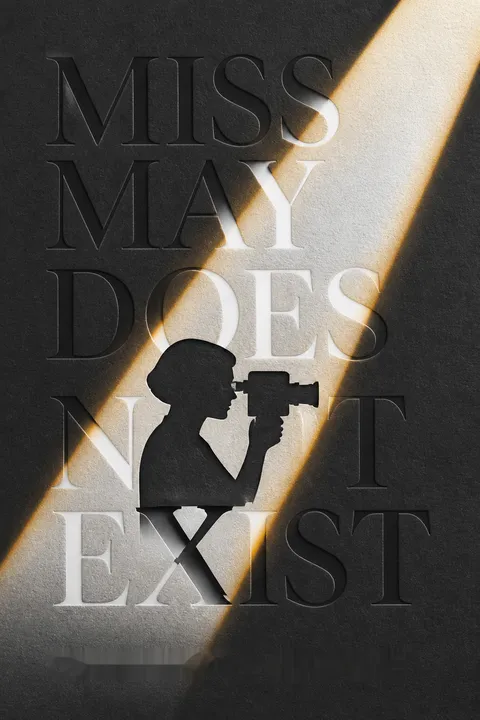
Miss May Does Not Exist receives mixed reviews, with ratings ranging from 1 to 5 stars. Praised for its extensive research and casual writing style, some readers appreciate the insight into Elaine May's life and career. However, critics argue the book lacks substance, relies too heavily on speculation, and exhibits an overly fawning tone towards its subject. Many reviewers note the author's struggle with May's privacy and reluctance to participate, leading to a biographical work that some find incomplete or biased.
People Also Read



Glossary
First Line/Last Line
Audience-prompted improvisationAn improvisational routine in which audience members provide an opening line, a final line, and sometimes a literary style. Performers invent the scene that connects the two lines in real time. Nichols and May used it to demonstrate how a prepared premise, broad knowledge, and responsive acting could make an apparently spontaneous performance feel coherent.
tilted insight
An angled view of realityMay's description of a way of seeing that notices the odd, revealing angle in ordinary behavior. Her work uses that perspective to expose contradictions in relationships, social manners, and self-image. It is not a formal method with fixed steps, but a recurring sensibility that can make a situation funny and unsettling at once.
script doctor
A screenplay reviserA writer hired to improve an existing screenplay, often by clarifying its structure, strengthening characters, or revising scenes and dialogue. May became known for quickly identifying what a story lacked and proposing solutions. Such work can be highly influential while remaining uncredited, particularly when the original credited writer retains public authorship.
DBA Company
A writers' protection collectiveA proposed group formed by Elaine May, Peter Feibleman, Joan Didion, and John Gregory Dunne. DBA stood for Doing Business As. The writers hoped to take paid production rewrites collectively, without identifying which member contributed which changes, while avoiding work that displaced a credited writer without consent. The arrangement did not become a lasting operation.
Download PDF
Download EPUB
.epub digital book format is ideal for reading ebooks on phones, tablets, and e-readers.








