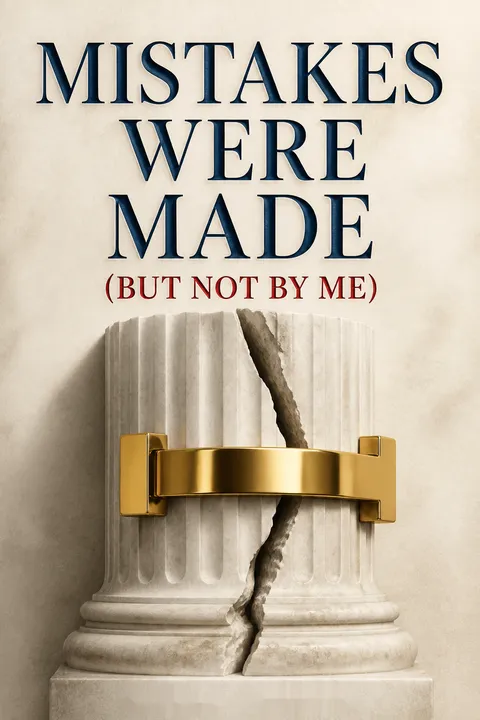


Key Takeaways
Treat the urge to defend a decision as a cue to recheck it.
Discomfort seeks an explanation. Cognitive dissonance is the mental tension produced by holding beliefs or actions that conflict, such as believing smoking is dangerous while continuing to smoke. People can reduce that tension by changing their behavior, but they can also reinterpret the facts to protect their self-image. When Marian Keech's followers waited for a spaceship that never came, they explained that their faith had saved the world. Some then went out to recruit new believers. Their failed prediction became evidence for the belief, not against it.
The stakes can be small. A person who spends too much on a car may emphasize its safety and encourage friends to buy one too. Self-justification can soften regret and preserve confidence, but it can also make a mistake harder to see and correct.
What's striking is that this mechanism protects identity as much as belief. Changing one's mind can feel like admitting not merely an error, but a defect in judgment or character. That helps explain why more evidence does not always persuade: the person may experience it as a threat rather than useful information. A practical test is to notice when an argument is serving mainly to make a past choice feel respectable. Still, persistence is not automatically irrational. Sometimes the evidence really is ambiguous, so the useful response is rechecking the reasons, not reflexively reversing course.
Set an early stop rule before small compromises become a new normal.
Commitment compounds. The Pyramid of Choice describes how an uncertain decision can grow into firm conviction: a person chooses, justifies the choice, then takes further actions that require still more justification. Jeb Stuart Magruder, a Nixon aide who became a central figure in Watergate, did not begin by agreeing to a burglary. Small accommodations to political power made the next compromise easier to accept.
Each step changes the next. In Stanley Milgram's obedience experiments, about two-thirds of participants continued administering what they believed were dangerous electric shocks, moving up in small increments. The book's point is not that every participant lacked morals. Rather, each previous action helped make the next one seem less extraordinary. Decide in advance what evidence or behavior would make you pause, withdraw, or seek outside review.
The pyramid is a useful account of moral drift because it directs attention to beginnings, not just spectacular endings. It also suggests that organizations should define ethical limits before pressure arrives, when refusing a request is less costly. A written stop rule can make a later decision less dependent on how much has already been invested. Yet gradual escalation is not destiny. People can still interrupt it, especially when colleagues treat early objections as information rather than disloyalty.
Assume your own objectivity is the blind spot most worth checking.
Everyone feels reasonable. Naïve realism is the assumption that personal perceptions show events as they really are, while people who disagree must be biased. In experiments described in the book, people judged the same policy differently depending on whether they believed their own political party or its opponents had proposed it. They still experienced their opinions as independent judgments.
Identity colors evidence. People also sort others into groups, often favoring those labeled as “us” and flattening differences among those labeled as “them.” Stereotypes can then justify unequal treatment, while unequal treatment reinforces the stereotype. The authors point to Abraham Lincoln's cabinet, which included political rivals willing to challenge him, as an example of building disagreement into leadership. Seek credible critics and test whether a proposal looks different when its source is relabeled.
The key move is to treat disagreement as a possible signal about one's own perspective, not merely a problem to solve in others. That is especially valuable when group loyalty and personal status are involved, since both can make contrary evidence feel hostile. Dissent helps only when it is genuinely independent and safe to express. A room full of rivals who fear punishment may produce silence, not better judgment. The goal is not endless debate, but a process that gives competing interpretations a fair hearing.
Treat vivid memories as reconstructions, not recordings.
Memory rebuilds the past. A memory is not a complete recording stored for playback. People assemble recollections from fragments, later conversations, photographs, and current beliefs. Carol Tavris describes vividly remembering her father reading her a children's book, then discovering it was published a year after his death. The memory felt real because it fit her understanding of him, but someone else must have read it to her.
Certainty is not verification. Repeatedly imagining an event, discussing it as though it happened, or receiving leading interpretations can add details and make a false memory feel authentic. This matters in family disputes and therapy, where a compelling recollection can shape relationships or accusations. Memory's fallibility does not mean trauma is imaginary or that abuse should be dismissed. It means confidence alone cannot establish what happened, and conclusions should be checked against independent evidence where possible.
The distinction between a real experience and a reliable account of it is essential. Memory research does not make personal testimony worthless; it shows that recollection is vulnerable to suggestion, later knowledge, and the desire for a coherent story. That calls for care in both directions: avoiding automatic belief in every detail, and avoiding automatic disbelief of people reporting harm. The strongest approach pairs empathy with questions about how a memory formed and what independent information supports it.
Require independent evidence when professionals judge their own success.
Expertise needs correction. In private clinical practice, a therapist may interpret improvement as proof that a treatment worked, but explain no improvement as client resistance. Either result can appear to confirm the therapist's theory. The book calls this a closed loop: beliefs shape what the professional notices, and those observations then reinforce the beliefs. In the recovered-memory cases discussed, suggestive techniques and leading interpretations helped some clients form memories that were not supported by independent evidence.
Test the explanation. A clinical impression can be useful, but it is not a substitute for controlled research, comparison cases, or careful assessment of alternatives. The authors note that abused children show no single reliable pattern of symptoms, and many have no symptoms at all. This is not an argument against therapy. It is a warning that confidence and good intentions cannot make an untested method safe.
The larger lesson applies wherever the person evaluating a method also has a stake in its success. Independent measures, transparent records, and comparison with alternatives reduce the risk of interpreting every outcome in one's favor. These safeguards do not eliminate professional judgment; they make it answerable to evidence beyond the practitioner’s own impressions. At the same time, research findings rarely dictate a perfect response to an individual case. The disciplined position is neither blind trust in intuition nor mechanical reliance on averages, but informed judgment that remains open to correction.
Record interrogations because confidence cannot distinguish truth from a confession.
Certainty can tunnel. Investigators may settle on a suspect, then interpret denials, nervousness, and contradictory details as further proof of guilt. The Central Park Jogger case illustrates the danger: five teenagers confessed after lengthy questioning, but their accounts conflicted and lacked physical support. Years later, DNA evidence linked the crime to another man, and the convictions were overturned.
A confession can be false. Among prisoners later exonerated, the authors report that 15 to 25 percent had confessed to crimes they did not commit. Long questioning, deception about evidence, and exhaustion can make an innocent person feel trapped and accept an explanation offered by interrogators. Recording the full interview allows others to assess how a confession was obtained. Independent review and openness to new evidence help keep an initial theory from becoming irreversible.
The case exposes a basic procedural problem: a confession is powerful evidence, but the process that produces it can shape its contents. Full recordings let judges, jurors, and independent reviewers assess both the suspect's words and the questions that prompted them. They also protect investigators from unsupported claims about their conduct. Recording is not a cure-all, since interpretation can still be biased and context still matters. Its value lies in making the evidence inspectable rather than asking everyone to trust an investigator's confidence.
Critique a partner's behavior without turning it into their permanent identity.
Blame hardens quickly. Debra wanted her husband Frank to discuss their relationship; Frank felt criticized and withdrew. Each interpreted the other's behavior as a character flaw: she saw passivity, he saw irrationality. Their explanations made their own actions seem reasonable and the other's impossible to accept. The argument was not simply about personality differences. It was sustained by stories that made each partner the injured, sensible one.
Describe actions, not essences. Happy couples are more likely to see a partner's bad behavior as shaped by circumstances and good behavior as evidence of character. In John Gottman's research, stable couples showed roughly five positive interactions for every negative one. The ratio is not a formula for happiness, but it illustrates how affection and humor can keep conflict from defining the whole relationship. Ask what happened, what each person needed, and what could change, rather than declaring what kind of person the partner is.
This approach does not require pretending that harmful behavior is harmless. It separates accountability for a specific action from the claim that a partner is fundamentally defective and incapable of change. That distinction leaves room for repair while still naming real injury. The reported five-to-one ratio is best read as a pattern, not a quota couples can hit through forced cheerfulness. In relationships marked by coercion or abuse, mutual understanding cannot substitute for safety, boundaries, and responsibility.
Break retaliation by naming harm without making revenge the remedy.
Harm looks different from each side. People who have hurt someone often describe the event as justified, minor, or finished; those hurt may remember it as damaging and unresolved. The book uses this asymmetry to explain why family feuds and political conflicts persist: each side sees its own response as reasonable and the other's as aggression. The authors caution that this pattern does not make responsibility equal in every conflict. Enslaved people, abused children, and victims of rape are not to blame for the harm done to them.
Repair needs truth. South Africa's Truth and Reconciliation Commission gave victims a forum to describe abuses and required perpetrators seeking amnesty to disclose what they had done. The process was imperfect, but it helped the country avoid a bloodbath. Reconciliation is not forgetting or excusing. It requires acknowledgment, accountability, and a route forward that does not simply reproduce the original injury.
The distinction between reconciliation and absolution is crucial. A harmed person should not be pressured to forgive, and a political settlement should not erase unequal power or responsibility. The book's strongest insight is that durable repair requires more than asking victims to move on: perpetrators must acknowledge harm, while institutions create conditions for safety and redress. In interpersonal disputes, separating an apology from a demand for immediate forgiveness can make accountability more credible. The same principle scales upward, though groups need formal protections that private relationships may not.
Make fallibility visible, then correct errors before they harden into policy.
Owning error can restore trust. After Oprah Winfrey learned that James Frey's celebrated memoir contained fabrications, she first defended her endorsement, then publicly acknowledged that she had let her enthusiasm cloud her judgment. NASA manager Wayne Hale, after the Columbia shuttle disaster, took personal responsibility for failing to act on information. Their examples show that admitting a mistake need not mean denying every good intention or defining a person by one failure.
Treat mistakes as information. The book contrasts fear of error with classrooms where mistakes are part of learning. Research it describes found that praising effort rather than supposed innate ability made students more willing to persist and learn from setbacks. For individuals and institutions, the useful sequence is to identify what went wrong, accept responsibility, and change the process that allowed it. An apology without correction is incomplete; correction without honesty is hard to trust.
A healthy culture does not celebrate failure for its own sake. It makes accurate reporting safer than concealment, then uses what is learned to prevent recurrence. That distinction matters in high-stakes fields, where a penalty-free approach could excuse recklessness, but a punishment-first approach can bury early warnings. Credible accountability combines candor, proportionate consequences, and visible procedural change. The aim is not to make people comfortable with being wrong; it is to make the cost of hiding an error greater than the discomfort of admitting it.
Analysis
The book's organizing achievement is to connect ordinary defensiveness with institutional harm without treating them as separate species of behavior. A failed prediction, a couple's quarrel, a clinician's theory, and a wrongful conviction can all involve the same sequence: action, threat to self-image, selective interpretation, and renewed commitment. This scale-shifting structure is persuasive because it turns self-justification from a moral insult into a mechanism readers can recognize in their own reasoning.
Its strongest contribution is explanatory, not diagnostic. The concept helps explain why evidence alone often fails to change minds, why memory can become a defense attorney for the self, and why sincere professionals may harm others without consciously intending to. The book also moves beyond individual virtue by emphasizing external checks: independent evidence, dissenting colleagues, recorded interviews, and procedures for correcting error. These are more dependable than hoping every decision-maker will become unusually humble.
The framework has limits. Because dissonance can explain both persistence and reversal, it can become too flexible unless paired with evidence about incentives, power, and context. A victim's account and a perpetrator's account may both be self-protective, but that does not make their responsibility symmetrical. Likewise, a professional's resistance to criticism may reflect self-interest, but could also reflect genuinely incomplete evidence. The book is most useful when it prompts better questions, not when it supplies a universal verdict about motives.
Its practical ethic is therefore not permanent doubt. It is calibrated confidence: care about a conclusion, while preserving a route by which it could be corrected. Personal humility matters, but systems matter more because they make correction possible even when humility fails. The core challenge is to distinguish protecting a valuable commitment from protecting the ego that has become attached to it.
Review Summary
Mistakes Were Made (But Not By Me) explores cognitive dissonance and self-justification, explaining why people struggle to admit mistakes. Readers found it insightful, challenging, and applicable to various aspects of life. The book uses compelling examples from politics, relationships, and psychology to illustrate how humans rationalize their actions. While some found it repetitive, many praised its ability to promote self-reflection and understanding of human behavior. The authors' approach combines scientific research with accessible writing, making complex psychological concepts relatable to a general audience.
People Also Read








Glossary
Cognitive dissonance
Tension between conflicting beliefsCognitive dissonance is the mental discomfort that arises when a person holds conflicting beliefs, attitudes, or actions. People try to reduce the discomfort, sometimes by changing behavior or beliefs, but often by reinterpreting events to make their choices seem sensible. The book presents this process as a central motive behind self-justification.
Pyramid of Choice
Escalating commitment after a choiceThe Pyramid of Choice describes how an initially uncertain decision can lead people toward increasingly firm positions. After choosing one path, they justify it, take further actions consistent with it, and become more committed. As ambivalence diminishes, people may grow further from those who made a different choice, even if their original decisions were close.
naïve realism
Belief in one's own objectivityNaïve realism is the conviction that one's perceptions are an accurate view of reality, while people who disagree are more likely to be biased or uninformed. Because opponents often hold the same conviction, disagreement can deepen rather than resolve conflict. The book uses this idea to explain political polarization and resistance to compromise.
confirmation bias
Favoring evidence that agreesConfirmation bias is the tendency to accept information that supports existing beliefs while scrutinizing, dismissing, or reinterpreting information that challenges them. It can make people more certain after encountering opposing arguments, because they focus on flaws in the contrary case and strengths in their own.
source confusion
Misremembering where information came fromSource confusion occurs when someone remembers information but misidentifies its origin. A person may mistake something read, imagined, or heard from another person for a direct personal memory. The book emphasizes that later stories, photographs, and conversations can become blended with recollections of an event.
imagination inflation
Imagining increases belief in occurrenceImagination inflation is the process by which repeatedly imagining an event can increase confidence that it actually happened. As people picture a possible experience, they may add sensory details and later mistake those details for evidence of a real memory. The book discusses this risk in the context of suggestive therapeutic techniques.
closed loop
Beliefs confirm their own interpretationA closed loop is a pattern in which a professional's expectations shape observations, and those observations are then treated as confirmation of the expectations. In the book's clinical example, improvement can be credited to the therapist's method, while lack of improvement is attributed to the client. Either result may protect the original theory from being tested.
virtuous circle
Kind action encourages warmer regardA virtuous circle is a reinforcing process in which doing something generous can lead a person to view the recipient more positively. The action creates a reason to see the other person as deserving of kindness, which can make future generosity more likely. The authors contrast this with the cycle in which harming someone leads to blame and further aggression.
Reid Technique
Structured police interrogation methodThe Reid Technique is a police interrogation approach discussed in the book, designed to elicit confessions from suspects investigators believe are guilty. The authors criticize its use of deception, pressure, and assumptions about how guilty or innocent people behave. They argue that such methods can reinforce investigators' certainty and contribute to false confessions.
FAQ
What's Mistakes Were Made, but Not by Me about?
- Exploration of Self-Justification: The book examines how individuals rationalize their mistakes and misdeeds through self-justification, driven by cognitive dissonance.
- Real-World Examples: It uses examples from politics, personal relationships, and professional settings to show how self-justification manifests in various contexts.
- Consequences of Self-Deception: The authors highlight the dangers of self-deception, emphasizing the importance of acknowledging mistakes for personal and societal growth.
Why should I read Mistakes Were Made, but Not by Me?
- Understanding Human Behavior: The book provides insights into why people often refuse to admit their mistakes, enhancing understanding of interpersonal dynamics.
- Practical Applications: Concepts discussed can improve decision-making, conflict resolution, and foster a culture of accountability in personal and professional settings.
- Engaging Writing Style: Tavris and Aronson present complex psychological theories in an accessible manner, making it suitable for both lay readers and those familiar with psychology.
What are the key takeaways of Mistakes Were Made, but Not by Me?
- Cognitive Dissonance: The book explains cognitive dissonance as the discomfort from holding contradictory beliefs, leading to self-justification.
- Memory Distortion: It discusses how memory is often reconstructed to fit our self-image, leading to false memories.
- Importance of Accountability: Acknowledging mistakes is crucial for personal growth and societal progress, as self-justification can hinder these processes.
What are the best quotes from Mistakes Were Made, but Not by Me and what do they mean?
- "Mistakes were made, but not by me.": This phrase captures the essence of self-justification, highlighting the tendency to deflect responsibility.
- "To err is human, but humans then have a choice between covering up or fessing up.": It emphasizes the importance of acknowledging errors for personal development.
- "Self-justification is not the same thing as lying.": This distinction shows that self-justification involves convincing oneself of the righteousness of one’s actions, rather than outright deception.
What is cognitive dissonance as defined in Mistakes Were Made, but Not by Me?
- Definition of Cognitive Dissonance: It is described as a state of tension from holding two contradictory beliefs, prompting individuals to justify their actions.
- Examples of Dissonance: The book provides examples like a smoker who continues smoking despite knowing the risks, illustrating irrational behavior.
- Impact on Decision-Making: Cognitive dissonance affects decision-making, leading individuals to ignore evidence that contradicts their beliefs.
How does self-justification affect relationships according to Mistakes Were Made, but Not by Me?
- Impact on Communication: Self-justification can lead to poor communication, as individuals may refuse to acknowledge their mistakes.
- Cycle of Blame: It can create a cycle of blame, focusing on others' faults rather than self-reflection, exacerbating tensions.
- Path to Healing: Acknowledging mistakes and taking responsibility is crucial for healing and improving relationships.
What role does memory play in self-justification in Mistakes Were Made, but Not by Me?
- Memory as a Self-Justifying Tool: Memory is often reconstructed to fit our self-image, leading to confabulation and false memories.
- Influence of Emotion: Emotional experiences influence memory formation, leading to distortions that support self-justifying narratives.
- Consequences of Memory Distortion: Distorted memories can affect personal identity and relationships, highlighting the need to critically examine one’s memories.
How can understanding self-justification help in professional settings, as discussed in Mistakes Were Made, but Not by Me?
- Improving Decision-Making: Recognizing self-justification can lead to better decision-making by encouraging diverse perspectives.
- Fostering Accountability: Acknowledging mistakes can improve practices and outcomes, creating a culture of trust and collaboration.
- Enhancing Leadership: Leaders who understand self-justification can better navigate conflicts and foster open communication.
What are the dangers of self-deception according to Mistakes Were Made, but Not by Me?
- Hindrance to Personal Growth: Self-deception prevents learning from mistakes, hindering personal development.
- Impact on Relationships: It can damage relationships by leading to a breakdown in trust and communication.
- Societal Consequences: Self-deception can justify harmful actions or beliefs, perpetuating cycles of injustice and conflict.
How does Mistakes Were Made, but Not by Me suggest we can overcome self-justification?
- Awareness and Reflection: Increased self-awareness and reflection are key strategies for overcoming self-justification.
- Embracing Vulnerability: Acknowledging mistakes and being open to feedback can foster growth and strengthen connections.
- Seeking External Perspectives: Engaging in honest conversations and seeking diverse perspectives can challenge self-justifying beliefs.
How does Mistakes Were Made, but Not by Me relate to wrongful convictions?
- Case Studies: The book discusses wrongful conviction cases, showing how self-justification among prosecutors can lead to continued imprisonment of innocents.
- DNA Evidence Dismissal: It highlights instances where DNA evidence is dismissed due to the need to justify original decisions.
- Call for Reform: The authors advocate for systemic changes to ensure accountability and prevent wrongful convictions.
What are the implications of self-justification in the legal system as discussed in Mistakes Were Made, but Not by Me?
- Prosecutorial Bias: Self-justification can lead prosecutors to ignore evidence, resulting in wrongful convictions.
- Need for Reform: The authors argue for reforms to ensure mistakes are acknowledged and corrected, like mandatory videotaping of interrogations.
- Impact on Justice: Self-justification affects public trust in the legal system, necessitating systemic changes to address these issues.
About the Author

Download PDF
Download EPUB
.epub digital book format is ideal for reading ebooks on phones, tablets, and e-readers.








