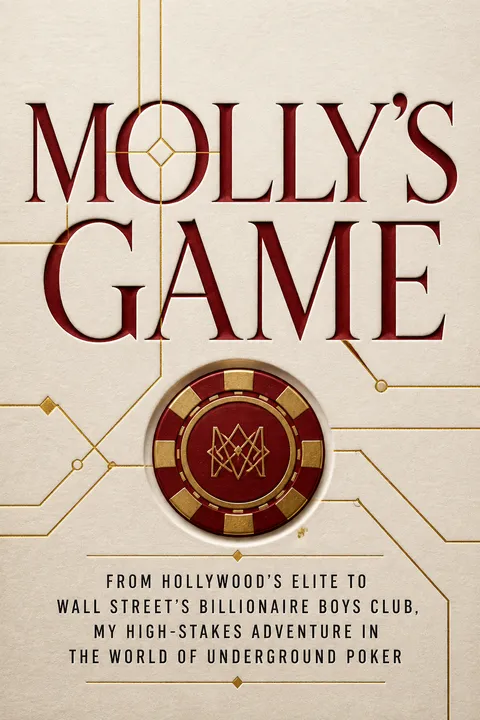


Key Takeaways
Turn the need to prove yourself into a skill, not a life sentence.
Ambition had two engines. Molly grew up watching her brothers earn the praise their exceptional athletic and academic gifts brought them. After emergency surgery fused eleven vertebrae, doctors told her to quit competitive sports. She returned to skiing anyway, eventually placing third overall in the country and making the U.S. Ski Team. The achievement proved her resilience, but it also grew from a hunger to be noticed and valued by her demanding father.
Success did not settle the hunger. Leaving skiing and moving to Los Angeles opened a world beyond family expectations, but the old urge to demonstrate her worth traveled with her. That drive later helped her survive punishing work and build a poker business. It also made approval and status unusually powerful rewards.
What's compelling is that the same motivation can be both fuel and vulnerability. Competitive drive helps Molly keep moving after an injury and enter unfamiliar worlds, but approval-seeking can make mistreatment feel like tuition and status feel like proof of personal worth. The distinction is not between ambition and modesty. It is between choosing a demanding goal and needing other people to certify that the goal makes one valuable. Her story invites a practical question: if recognition disappeared, would the work still matter? That question can help separate durable ambition from a chase for applause.
Learn in the room, but do not confuse pressure with mentorship.
Reardon taught by immersion. After Molly struggled as a waitress, her volatile employer hired her to assist with a real-estate fund. He gave her impossible assignments, from securing scarce restaurant reservations to handling unfamiliar escrow work, often with little explanation. She studied how he negotiated, assessed deals, and learned whatever he needed to know. Over time, she became capable under pressure and more perceptive about business and human behavior.
The education came at a cost. Reardon also shouted insults, threw bagels, threatened her job, and imposed fines. Molly sometimes went home and cried, yet she interpreted endurance as the price of access to his world. His practical lessons were valuable; his cruelty was not necessary to the learning. The memoir shows how easily the two can become tangled when a powerful teacher controls opportunity.
The apprenticeship here is unusually vivid because learning happens through consequential work, not abstract advice. Molly gains pattern recognition by watching negotiations and solving operational problems in real time. But the story also exposes a common mistake in high-pressure workplaces: treating a mentor's effectiveness as evidence that every behavior is justified. A demanding environment can accelerate learning while still imposing avoidable psychological costs. The useful lesson is to extract the method without romanticizing the abuse. Skill development should be judged by what a person learns, not by how much humiliation they can tolerate.
Sell the whole experience, not just the game.
The room was the product. Molly's first weekly poker game at the Viper Room drew famous actors, directors, and wealthy businessmen. She learned that players wanted more than cards: they wanted privacy, status, lively company, preferred food and drinks, and a sense that the evening was designed for them. She memorized individual preferences, recruited interesting newcomers, and eventually moved games into luxury hotel suites with dealers, attentive staff, and extras such as massages.
Exclusivity increased the appeal. The game was invite-only, and Molly kept professional poker players out because skilled regulars could drain the recreational players and change the atmosphere. New players were vetted for money, temperament, and fit. This transformed hospitality into a business advantage: the experience encouraged players to return and tip generously, even though Molly did not take a percentage of each pot.
Molly's operation resembles experience design: the cards provide the core activity, while setting, service, and social composition shape whether people want to return. Her attention to individual preferences is a form of customer knowledge that many businesses claim to value but rarely operationalize so carefully. Yet the same design magnifies risk. A polished environment can make extreme betting feel like entertainment rather than financial danger, and exclusivity can disguise how much the business depends on a few wealthy participants. The experience is genuinely valuable to customers, but its appeal does not make the underlying activity harmless.
Treat gray areas as risks, not clever loopholes.
Legal advice offered no guarantee. When Molly took over the games, she hired a criminal attorney to assess her role. He described the operation as a gray area and advised her not to add drugs, prostitution, sports betting, or violent debt collection. She did not take a rake, meaning a share of every pot; instead, players tipped her to retain access to the exclusive game. She also says she paid taxes and used written records for buy-ins.
Institutional risk appeared anyway. A bank later closed her accounts after learning about the poker business. In New York, players and associates brought other sources of danger, and the operation became entangled with a federal investigation. The earlier advice had addressed a narrow legal question, not every risk created by the people, money, and alleged criminal activity around the games.
A lawyer's assessment is one input into risk, not a force field around a business. The story distinguishes formal compliance from systemic exposure: even if an operator avoids a particular prohibited fee, the enterprise can still attract scrutiny through its clients, transactions, or associates. This is especially important in informal markets, where reputation and cash may substitute for transparent institutions. The memoir also complicates the idea of a clever loophole. A structure can seem workable while its safety depends on assumptions about other people that the organizer cannot control.
If work consumes every relationship, success is charging hidden interest.
The game expanded beyond its room. Molly missed her friend Blair's birthday, concealed her work from her family, and began sleeping with two BlackBerrys close at hand so she could answer players at any hour. Collections could interrupt holidays, dinners, and time with her boyfriend Drew. When he asked her to be present, she often treated the game as the less negotiable commitment.
The cost became intimate. Drew was her first love, but their relationship weakened under her absences, secrecy, and relentless focus on the business. She eventually ended it, recognizing that she was not available for the kind of partnership she wanted. The losses were not simply a side effect of busy work. The work rewarded constant availability, and Molly increasingly organized her life around what the game might need next.
The hidden cost here is attention, not merely hours. A person can be physically beside a friend or partner while mentally monitoring the next call, debt, or opportunity. That makes the conflict harder to notice because each interruption can be defended as a one-time necessity. In Molly's case, the business also supplies belonging, excitement, and identity, so stepping away risks more than lost income. The useful test is not whether a demanding project matters. It is whether its demands leave room for other chosen commitments, or quietly make every relationship compete against an always-growing emergency.
Build a business that does not depend on one patron's favor.
Molly's Los Angeles position was powerful but fragile. She controlled invitations, recruited players, and managed the details, yet the game's richest participants could still shift its location and allegiance. When Arthur Grossman began hosting the game without her, her calls went unanswered. She learned that Tobey Maguire had helped engineer her removal, a discovery relayed by an assistant, not established through a direct admission.
She rebuilt in New York. Molly persuaded the Wall Street players to give her a trial, upgraded the setting and service, recruited new gamblers, and soon ran several games. The move showed that her real asset was not one room or one patron. It was her ability to assemble people, manage logistics, and make the game attractive. But rebuilding also meant entering a competitive scene where she had new rivals and fresh vulnerabilities.
The distinction between owning a business and controlling its key relationships is central here. Molly had built valuable operating knowledge, but she had no formal protection against a powerful player relocating the game or persuading others to follow. Her New York rebuild demonstrates entrepreneurial portability: methods, contacts, and judgment can travel even when a specific venture collapses. The vulnerability remains instructive. An enterprise can be highly profitable yet structurally dependent on a few clients who hold more economic power than its organizer. Diversification helps, but trust and access are not the same as durable control.
Know exactly whose losses you are underwriting.
The organizer became the backstop. Molly tracked buy-ins, collected debts, paid winners, and sometimes guaranteed that the game would settle even when a player paid slowly. A rake is a fee taken from each pot; because she avoided that arrangement, tips and other deals funded her role. Yet the cash moving through her hands created exposure that could exceed what a glamorous room suggested.
A bad night could become her liability. Houston Curtis lost heavily after playing recklessly while exhausted, and Molly eventually refused him more chips. In other cases, she covered shortfalls, pursued debts, and discovered a player had secretly added chips to his stack. Bradley Ruderman's losses later became part of a federal case after he was accused of running a Ponzi scheme. Wealth, confidence, and a signed check did not guarantee that money was available or honestly obtained.
Molly's job combined event management with informal credit underwriting. That is a different business from simply hosting a card game: every extension of trust creates a question about who absorbs the loss if a player cannot or will not pay. The operation shows the danger of using social status as a proxy for liquidity. A wealthy person's visible lifestyle may say little about the reliability of a particular debt. Detailed records and prompt collections help, but they cannot eliminate asymmetric information or make the organizer's balance sheet limitless.
Do not mistake a gray-area opinion for immunity.
The risks became physical and legal. In New York, two men pressed Molly to partner with them on collections, then attacked and robbed her after she declined. She believed the assault was connected to that refusal, though she did not report it at the time. Later, a federal raid targeted a game involving people who were under investigation. The government seized her assets, and she fled to Colorado before returning to face the case.
The consequences reached beyond poker. A separate investigation tied players to alleged fraud and illegal gambling operations. Molly was indicted alongside thirty-three others. In 2013, she chose not to fight the charges, citing the cost and uncertainty of a trial, and accepted them, becoming a convicted felon while awaiting sentencing. Her memoir ends not with a clean verdict on the venture, but with an account of ambition, harm, and accountability.
The ending resists a simple rise-and-fall morality play. Molly's story includes exploitation, agency, professional ingenuity, and choices that narrowed her options. Her account also requires careful distinctions: allegations involving associates do not automatically establish what every participant knew, while her eventual acceptance of charges is a consequential legal outcome, not a general proof that every part of the operation was unlawful. The broader lesson is that informal ventures can generate public consequences through networks the founder does not fully understand. Personal confidence and private legal advice cannot neutralize that uncertainty.
Analysis
Molly's Game works as both an entrepreneurial memoir and a study in how identity can become fused to a high-risk enterprise. The plot follows a clear ascent: a former competitive skier enters Los Angeles, learns by watching powerful men, discovers that she can organize their appetite for poker, and builds a service operation around access, discretion, and status. The reversal is equally clear. Control over invitations and logistics does not equal control over the players, their money, or the broader networks that surround them.
The book's strongest insight is not that Molly found a lucrative niche. It is that she understood the social architecture of the game. She matched personalities, curated new entrants, learned preferences, and made an evening feel effortless. Those skills are real forms of business intelligence. Yet the same competence helps make a dangerous system feel inviting. The polished suites and attentive service did not reduce the financial volatility; they helped contain it within a seductive fantasy of leisure.
The memoir's moral center is its tension between self-invention and self-deception. Molly presents herself as observant, resilient, and unusually capable, while also describing how praise, money, and access encouraged secrecy, overwork, and compromised judgment. Reardon offers genuine practical instruction alongside abuse. The players provide opportunity alongside manipulation. Her account avoids pretending that a successful operator is automatically a good person or that a spectacular adventure is therefore worth its cost. As memoir, the book is necessarily shaped by retrospective interpretation. Its dialogue is reconstructed from memory, and some claims about other people's motives are presented as Molly's understanding rather than independently demonstrated fact. That limitation does not erase the narrative's value. It makes the most reliable lesson structural: talent and hustle can build a remarkable operation, but businesses built on secrecy, informal credit, concentrated power, and fragile trust can transfer risk to the very person who appears to be in control. The final reckoning forces the distinction between feeling like the game's owner and being able to control its consequences.
Review Summary
Molly's Game received mixed reviews, with readers praising its entertaining and riveting story about the world of high-stakes poker and celebrity culture. Many found Bloom's journey from waitress to "Poker Princess" fascinating, though some criticized her materialism and lack of self-reflection. The book offers insights into the lives of wealthy gamblers and celebrities, with Tobey Maguire notably portrayed negatively. While some reviewers found the writing style lacking, most agreed it was a quick, engaging read that provided an interesting glimpse into an underground world.
People Also Read



Glossary
Beginner's Luck
Novice success in pokerA supposed tendency for a poker novice to experience an unusually high share of early success. In the memoir, the label also captures Molly's entrance into a world she does not yet understand, where her outsider status and first successes give her access before she has mastered the risks.
Hollywooding
Acting to mislead opponentsAn exaggerated performance during a poker hand, used to make opponents misread a player's strength or intentions. The term reflects how players may use demeanor as part of strategy, turning confidence, hesitation, or apparent distress into signals that can themselves be deceptive.
Playing the Rush
Riding a lucky streakA run of favorable outcomes in a game of chance over a relatively short period. The memoir uses the phrase for the intoxicating period when Molly's operation grows quickly and money, access, and opportunity seem to keep arriving, even as the favorable momentum obscures accumulating risks.
Cooler
A strong hand losesA poker situation in which a player holds a hand strong enough to justify substantial betting, but an opponent has an even stronger hand. It describes a painful loss that can occur without obvious recklessness, because the losing player may reasonably believe the hand is exceptional.
A Chip and a Chair
A small chance remainsA poker expression meaning that a tournament player can still recover as long as a single chip and a seat remain. In the memoir, it also suggests the possibility of rebuilding after a business collapse, though survival in the game does not guarantee that a comeback will be safe or lasting.
Cold Deck
An intentionally rigged deckA deck deliberately arranged to influence the cards dealt and prevent a player from winning fairly. The phrase evokes a game whose outcome has been manipulated before play begins, and serves as a metaphor for betrayal and hidden control within Molly's business world.
rake
A fee from each potA portion of money taken from poker pots by a game operator or cardroom as compensation for running the game. Molly emphasizes that she did not take a rake from her private games. Instead, she relied on tips and other arrangements, a distinction that shaped her understanding of the operation's legal status.
vogue
Guarantee another player's debtA guarantee that another person will cover a player's losses if the player does not pay. Molly describes seeking or providing a vogue as a way to establish that a new participant was financially backed. It shifted the risk from the player to the guarantor rather than removing it.
tilt
Emotion-driven poor playA state in which frustration, fatigue, or distress causes a poker player to abandon disciplined strategy and make reckless decisions. In the memoir, tilt helps explain how a player can lose far more than planned, especially when the game continues through the night and large sums are available.
FAQ
What's Molly's Game about?
- High-stakes poker world: Molly's Game is a memoir by Molly Bloom detailing her transition from a competitive skier to running exclusive underground poker games for Hollywood celebrities and Wall Street moguls.
- Personal struggles and triumphs: The book explores Bloom's personal challenges, including her family dynamics and her quest for identity and approval in a male-dominated environment.
- Legal battles: It also covers the legal troubles she faced, including her arrest, and examines the consequences of her lifestyle choices.
Why should I read Molly's Game?
- Inspiring true story: The memoir offers an inspiring account of a woman who defied the odds to succeed in a high-stakes world, showcasing her strength and tenacity.
- Insight into poker culture: Readers gain a unique perspective on the underground poker scene, including the personalities involved and the dynamics of high-stakes gambling.
- Complex character exploration: Molly Bloom's multifaceted character and her struggles with identity, ambition, and morality resonate with many, encouraging readers to reflect on their own choices.
What are the key takeaways of Molly's Game?
- Resilience in adversity: Molly's journey emphasizes the importance of resilience and determination in overcoming obstacles, serving as a powerful reminder of inner strength.
- Understanding risk and reward: The book illustrates the delicate balance between risk and reward, particularly in gambling, encouraging readers to consider the implications of their choices.
- The power of networking: Molly's success highlights the significance of building relationships and connections, demonstrating how networking can create unexpected opportunities.
What are the best quotes from Molly's Game and what do they mean?
- “You can do anything you want, honey, anything you put your mind to.” This quote from Molly's mother encapsulates empowerment and the belief in one's potential, emphasizing determination and hard work.
- “Poker is much more than a game. It’s a strategy for life.” This reflects the deeper lessons learned through poker, such as risk management and understanding human behavior, applicable to various life aspects.
- “I can’t go back to yesterday because I was a different person then.” This signifies personal growth and transformation, emphasizing that experiences shape who we are and the necessity of embracing change.
How did Molly Bloom get involved in the underground poker scene?
- Transition from skiing: After an injury ended her skiing career, Molly moved to Los Angeles to explore new opportunities.
- Job as a waitress: She initially worked as a waitress, where she met influential people in the entertainment industry, leading her to host poker games.
- Building her own game: Gaining experience and confidence, Molly began organizing her own high-stakes poker games, attracting high-profile players and creating a lucrative business.
What challenges did Molly face while running her poker games?
- Managing high-stakes players: Molly had to navigate the egos and personalities of wealthy players, requiring strong interpersonal skills to maintain balance.
- Legal and ethical dilemmas: As her games grew, she faced legal challenges and ethical dilemmas, with the line between legality and illegality becoming blurred.
- Betrayal and trust issues: Molly experienced betrayal from trusted individuals, teaching her valuable lessons about the importance of trust and the consequences of misplaced faith.
How does Molly Bloom describe her family dynamics in Molly's Game?
- Father's high expectations: Molly's father is portrayed as demanding, instilling a strong drive for excellence, which created pressure but also motivated her.
- Mother's nurturing influence: Her mother is compassionate and supportive, encouraging her children to pursue their dreams, balancing strictness with nurturing.
- Sibling rivalry: Molly reflects on feelings of inadequacy compared to her brothers, fueling her determination to prove herself and find her own path.
How did Molly Bloom's life change after her legal troubles?
- Indictment and arrest: Molly's life dramatically changed with her indictment for illegal gambling operations, forcing her to confront the consequences of her choices.
- Loss of business and reputation: Her legal troubles resulted in the loss of her poker business and damaged her reputation, leading to public scrutiny.
- Personal growth and reflection: Despite hardships, Molly emerged with newfound self-awareness and resilience, learning valuable lessons about ambition and ethical choices.
How does Molly manage her relationships with the poker players?
- Building trust: Molly emphasizes the importance of building trust with players, ensuring they feel comfortable and valued.
- Maintaining discretion: Discretion is crucial, and Molly understands the need to keep players' secrets private, fostering loyalty and respect.
- Balancing professionalism and friendship: She maintains a professional demeanor while forming personal connections, creating a supportive atmosphere while managing business aspects.
What role does gambling play in Molly's Game?
- A metaphor for life: Gambling serves as a metaphor for life's risks and uncertainties, illustrating the highs and lows of taking chances.
- Escapism for players: The poker games provide an escape for wealthy players, highlighting the allure of gambling and its impact on behavior.
- Financial stakes: The financial aspect drives the dynamics of the games, creating tension and excitement, shaping interactions and outcomes.
What lessons does Molly learn from her experiences in Molly's Game?
- The importance of resilience: Molly learns that resilience is key to overcoming challenges, with her ability to adapt becoming a defining trait.
- Understanding human behavior: Through player interactions, she gains insights into human psychology, helping her navigate poker complexities.
- Embracing her identity: Her journey leads to embracing her identity, valuing her strengths, and pursuing her passions unapologetically.
How does Molly Bloom's character evolve throughout Molly's Game?
- From athlete to entrepreneur: Molly transitions from a skier to a businesswoman running poker games, showcasing adaptability and resourcefulness.
- Struggles with identity: She grapples with her sense of self and societal expectations, reflecting a quest for authenticity and self-acceptance.
- Empowerment and independence: Gaining confidence, Molly learns to assert herself, embracing her identity and ambitions unapologetically.
Download PDF
Download EPUB
.epub digital book format is ideal for reading ebooks on phones, tablets, and e-readers.








