

Key Takeaways
Treat money as social infrastructure, not merely a tool for buying things
Money begins as shared belief. It has no value by itself: people accept it because they expect others to accept it too. That agreement lets strangers coordinate work, trade, and plans for the future. Money can also be used to break that agreement. Hitler’s wartime plan to drop counterfeit sterling over Britain aimed to cause inflation and public panic. At Sachsenhausen, prisoners forced to work on the forgery produced more than £130 million in convincing notes, but the planned air drop never happened.
Belief has real consequences. The book calls humans a “plutophyte” species: a species shaped by money as well as shaping it. Like language, money becomes more useful as more people share it. It can expand cooperation, but it can also magnify the motives of those who control it.
Money works like a coordination protocol: its usefulness depends less on the physical object than on shared expectations and enforceable rules. That helps explain why counterfeiting can feel like an attack on civic order, not just a theft. Yet shared belief is not the whole story. Tax obligations, courts, and state power help sustain acceptance, often unevenly. The framework is strongest when it treats money as both a social convention and an institution backed by authority.
Use interest to price uncertainty and make tomorrow investable today
Interest gives time a price. In ancient Sumer, a brewer named Kushim borrowed barley at an annual rate of about 33 percent, with two and a half years to repay. His success depended on future harvests, barley prices, and whether customers paid him. The interest rate compensated the lender for waiting and for the chance of not being repaid, while giving Kushim resources to produce before earning revenue.
Records made promises scalable. Sumerians tracked debts, weights, and obligations in writing. A tablet from Drehem, dating to around 2100 BCE, set out livestock projections under different assumptions about births, deaths, and yields. It resembles an early business model. With interest, accounting, and contracts, people could compare present costs with hoped-for future income, rather than relying only on what they already possessed.
Interest is not simply a fee. It compresses judgments about time, uncertainty, and alternatives into a price that can guide decisions. That makes it powerful, but also easy to misread as objective truth. A rate can reflect a lender’s bargaining power as much as a borrower’s risk. Kushim’s example makes financial abstraction human: the future becomes investable, yet the borrower carries the consequences if nature or markets disappoint.
Standardize value so strangers can trade, while remembering markets never guarantee equality
Coins made exchange portable. The Lydians turned electrum, a naturally occurring gold and silver alloy, into stamped coins. A state seal helped buyers recognize a coin without weighing and testing every piece. Smaller denominations widened participation in everyday trade, while a common unit made very different goods comparable. The Greek silver tetradrachm later connected distant ports and trading communities through a widely accepted currency.
Markets reshaped public life. In Athens, coins supported trade, urban growth, and a lively marketplace where commercial exchange mixed with conversation and debate. The book links monetized life to Greek habits of logic, economics, and democratic participation. That link has limits: Athenian democracy excluded women and relied heavily on slavery. A coin could flatten purchasing power in a transaction without making people equal in status or rights.
A common unit of value reduces the social work required to trade. Strangers need not share kinship, custom, or language to make an exchange. That same commensurability can also make unlike things seem morally equivalent, including labor and human beings. The Greek case therefore supports a more careful lesson: markets can loosen inherited hierarchies, but economic access alone does not create political inclusion. Institutions determine who gets to participate and on what terms.
Credit can fund empire, then make its success dangerously dependent on confidence
Promises expanded Rome. Roman credit linked investors, tax collectors, provinces, and government projects. Wealth from conquered territories supplied income streams that could support loans and shares. In 33 CE, Emperor Tiberius’s effort to force senators to hold more wealth in Italian land helped trigger a property and credit crisis. Falling land prices, debt, and hoarding spread the shock through connected markets. Tiberius then lent 100 million sesterces to banks, taking land as collateral, and acted as lender of last resort.
Expansion carried a cost. Credit helped Rome finance trade and conquest, but it also tied the system to confidence and a supply of precious-metal coin. Later emperors reduced the silver content of coins to meet spending needs. As the currency weakened, lending and trust suffered. The book argues that monetary breakdown may have contributed to Rome’s decline, while acknowledging that historians identify many causes.
Credit is a coordination tool with a built-in tension: it funds productive activity by moving resources forward, but it connects balance sheets so tightly that one failure can travel. Tiberius’s rescue illustrates the public authority’s stabilizing role, even as the collateral terms favored the emperor. The Roman story is compelling as a pattern, not a single-cause explanation. Monetary stress can accelerate political weakness without independently explaining an empire’s collapse.
Connect numeracy, trade, and publishing to let practical knowledge compound
Knowledge traveled with commerce. As northern Europe’s heavy plough raised farm output, German silver returned to circulation and helped towns grow. Trade then carried ideas as well as goods. In Sicily, a mixed society of Christians, Muslims, and Jews helped Hindu-Arabic numerals and algebra reach European merchants. Fibonacci’s practical mathematics showed traders how to calculate interest and compare costs. Double-entry bookkeeping made complex ventures easier to monitor.
Printing multiplied access. Gutenberg combined metalworking with the mechanical wine press to produce books more quickly and consistently. Between 1450 and 1500, book prices fell by about two thirds. Printed pamphlets also helped Martin Luther’s arguments spread beyond clerical institutions. The broader sequence matters: productivity created surplus, money supported specialized work, and communication technologies helped ideas circulate beyond their point of origin.
Innovation rarely arrives as a solitary flash. The account emphasizes recombination: existing tools, skills, capital, and contacts meet in places where experimentation is possible. That view connects economic history to the circulation of knowledge. Still, a useful technology does not automatically produce broad benefit. Printing could widen access while spreading polemic, and trade could transmit ideas alongside exploitation. The social rules surrounding distribution shape what a technical breakthrough actually changes.
Make state money credible before asking citizens to trust paper promises
Paper needs an institution. Dutch merchants built a sophisticated financial system around the Wisselbank, shareholding companies, and public borrowing. Perpetual bonds, which paid income without repaying the original principal, reveal how deeply trust could extend. John Law later tried to use paper money and a company tied to colonial prospects to address France’s debts. Share prices soared, then collapsed, damaging confidence. During the French Revolution, assignats backed by seized Church land initially helped finance change, but excessive issuance helped turn them into depreciating currency.
Hamilton chose an anchor. After the American Revolution, Alexander Hamilton linked the new dollar to the widely used Spanish silver dollar and built federal credit institutions. The contrast is instructive: financial innovation can expand a state’s capacity, but credibility depends on rules, assets, and confidence that obligations will be honored.
The repeated pattern is that monetary credibility is accumulated more easily than restored. A state can issue a promise, but users judge it through experience: whether prices remain usable, debts are treated consistently, and institutions endure. Hamilton’s approach shows the value of anchoring a new currency in a recognized standard. Yet an anchor is not neutral. It can constrain policy and shift costs onto debtors, workers, or regions with less political influence.
Ask who benefits from monetary rules, especially when money is scarce
Scarcity distributes power. Under the late nineteenth-century Gold Standard, the money supply was constrained by available gold. When the economy and population grew faster than gold reserves, prices and wages faced downward pressure, while debt remained fixed in gold terms. Farmers in Kansas saw the price of corn fall from 43 cents a bushel in 1870 to 10 cents in 1890. The Populists and William Jennings Bryan argued for adding silver to the monetary base, a political fight dramatized in the book’s reading of The Wizard of Oz.
Too much money can destroy trust. Weimar Germany shows the opposite danger. War debts, reparations, political conflict, and money creation helped produce hyperinflation. People paid in wages or pensions saw savings lose value, while those holding physical assets were better protected. Monetary rules are never merely technical: they decide whose incomes, debts, and savings absorb the adjustment.
Monetary regimes distribute gains and losses even when they present themselves as neutral rules. A fixed supply can protect existing holders while tightening conditions for borrowers; excessive issuance can punish savers and people on fixed incomes. The comparison guards against a simplistic choice between hard money and flexible money. The deeper question is who bears adjustment when supply, demand, and political promises collide, and whether those people have meaningful influence over the rules.
Trace financial profits back to the people and places supplying them
Capital can hide its origins. In the late nineteenth century, the bicycle boom increased demand for rubber. Investors could buy shares in companies supplying it, while the paperwork made their returns appear distant from the labor behind them. In the Congo Free State, King Leopold’s rubber companies used armed force and coercion to extract rubber from local people. The book estimates that between 5 and 10 million people died there between 1885 and 1908.
Accountability followed evidence. Roger Casement documented abuses, and E. D. Morel helped publicize the trade. Their campaign exposed the human reality behind a clean-looking share certificate. The case complicates any story in which money simply liberates: financial networks can fund innovation and connect markets, but they can also make violence profitable and responsibility difficult to see.
Financial distance can become moral distance. A share price summarizes a claim on future returns, not the conditions under which those returns are produced. That abstraction enables large-scale investment, but it can also obscure who pays the human and ecological costs. Casement’s investigation shows why transparency matters. At the same time, exposure alone does not guarantee justice: public outrage can coexist with strategic interests that preserve the underlying system.
Treat asset booms as social contagions amplified by bank-created credit
Prices move people, not just markets. During the 2008 housing boom, rising prices encouraged buyers to borrow, banks to lend against rising collateral, and builders to supply more homes. Owners told others about apparent gains, drawing in further buyers. McWilliams calls this social feedback the “economics of gossip.” When prices fell, banks demanded more collateral and many borrowers tried to sell at once, worsening the decline. The 1630s Dutch tulip boom showed a similar crowd dynamic, though it was less deeply financed by credit.
Banks create much of the money. A commercial bank can create a deposit when it makes a loan, recording both a new asset and a new liability. Central banks influence the cost and conditions of lending, but commercial credit responds to demand and incentives. The resulting cycles can benefit asset owners disproportionately, particularly when public rescues prevent wider collapse.
The social account of prices complements the financial account. A rising asset is not only a number; it can change perceived status, urgency, and willingness to borrow. Credit then gives those feelings purchasing power. That interaction explains why a boom can persist even when fundamentals look strained. The nuance is that crowd psychology is not a substitute for regulation or balance-sheet analysis. Incentives, leverage, and institutional safeguards help determine whether collective optimism becomes a manageable upswing or a crisis.
Prefer monetary innovation that solves access problems over novelty without use
Usefulness beats spectacle. The book contrasts cryptocurrencies with M-Pesa, a Kenyan mobile-money service. M-Pesa lets users convert phone credit into local currency, send payments, save, and access small loans through mobile phones and local agents. It grew because it addressed practical barriers to banking and remittances. The account reports roughly 50,000 registered agents, use by 70 percent of Kenya’s population, and transactions equivalent to 30 percent of national GDP.
Money remains a public question. McWilliams argues that volatile crypto tokens struggle to function as everyday money because their value swings sharply and they generally provide no income claim. He sees the central issue as who can issue and regulate money: public authorities or private firms. M-Pesa shows that monetary change can come from a simple adaptation, not just an elaborate new technology.
M-Pesa is a strong test of innovation because it begins with a concrete need: moving and storing value where conventional banking is hard to reach. Crypto’s promise, by contrast, often centers on ideology or expected price gains. That distinction does not prove every public system is fair or every decentralized tool is useless. It does suggest a practical standard: judge monetary technology by reliability, access, and accountability, not novelty or promotional certainty.
Analysis
The book’s central contribution is to shift money from the margins of history to its connective tissue. Grain accounting, coinage, credit, numeracy, printing, public debt, and mobile payments appear not as isolated financial curiosities but as social technologies that let larger groups coordinate across distance and time. The stories make that claim memorable: Kushim’s risky barley loan, Tiberius’s rescue of Roman credit, Gutenberg’s indebted workshop, and Kenyan phone-based transfers all show money organizing action before economists formalize it.
The strongest explanatory thread is feedback. Money enables trade and specialization; these create new demands for accounting, institutions, and more adaptable money. Credit accelerates the cycle, financing growth while linking balance sheets and making confidence contagious. The book is especially effective when it shows how the same mechanism can produce both a Renaissance city and a fragile speculative boom, or how a financial claim can finance a project while concealing its human costs.
The argument needs one important qualification. Correlation between monetization and cultural or political flourishing does not establish that money caused those developments on its own. Geography, agricultural productivity, public authority, literacy, conflict, and social norms also matter, and often interact with monetary systems. The author sometimes gives money a starring role in transformations that were probably collective productions. His own account, however, supplies the tools for a more balanced reading: money is an enabling condition and an amplifier, not a moral agent or a universal cause.
That distinction clarifies the book’s political value. Currency rules determine who can save, borrow, invest, or absorb losses, while systems of credit often create more spendable claims than central banks directly issue. Trust therefore depends on both public legitimacy and private incentives. The most useful question is not whether money is good or evil, but what kinds of cooperation its design makes possible, whose interests it serves, and who remains outside the network.
Review Summary
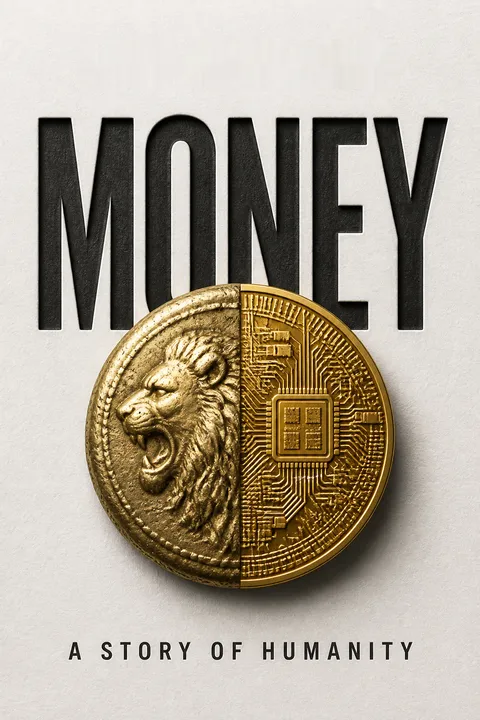
Money: A Story of Humanity offers an engaging exploration of money's role in shaping civilization. Readers praise McWilliams' accessible writing style, historical anecdotes, and ability to make complex economic concepts understandable. The book covers a vast timeline, from ancient civilizations to modern cryptocurrencies, drawing connections between different eras. While some found certain sections slow-paced or lacking depth, many appreciated the author's wit and passion. Critics note a Western-centric focus and occasional oversimplification, but overall, the book is widely recommended for those interested in economic history and the evolution of money.
Glossary
plutophyte
Humanity shaped by moneyA term McWilliams coins for humans as a species adapted to money and, in turn, reshaped by it. The concept parallels the idea of humans as a fire-adapted species. It captures the book’s claim that money is not merely an economic instrument but a technology that has altered social organization, behavior, and human possibilities.
economics of gossip
Prices spread through social talkMcWilliams’s term for the way people transmit financial expectations through conversation, rumor, and shared excitement or fear. In a rising market, reports of gains can attract new buyers and help push prices higher. When confidence reverses, the same social channels can accelerate selling. The idea emphasizes that markets are shaped by social behavior, not only by impersonal supply and demand.
fiat money
State-issued money without commodity backingMoney whose legal status comes from the authority of the state rather than a fixed claim on a commodity such as gold. Its credibility depends on public institutions, including the government’s ability to collect taxes and uphold law, and on confidence that the currency will retain practical value. Most modern national currencies operate under a fiat system.
Eurodollars
Offshore dollar-denominated bank moneyDollar deposits and loans created outside the United States, often through foreign banks or offshore branches of American banks. Despite the name, Eurodollars are not euros. They form an international dollar credit market that grew beyond direct US domestic regulation. McWilliams uses this market to argue that commercial finance can expand beyond the central bank’s direct control.
M-Pesa
Mobile phone-based money serviceA Kenyan financial service that uses mobile phones and local agents to let customers store value, transfer money, make payments, and access savings or small loans. Users can convert phone credit into local currency. The service grew in response to limited access to conventional banking, making basic financial transactions available to many people through existing mobile technology.
evolutionary economy
Economy changing through adaptationA view of the economy as a changing, interconnected system in which new products and businesses are tested, some succeed, and others fail. Money supplies resources for experimentation and speeds the process. Outcomes are difficult to predict because innovations interact with existing technologies, institutions, and human behavior, sometimes producing consequences their creators did not intend.
push story
Central bank-led money supplyThe conventional account in which a central bank creates money and pushes it through commercial banks into the wider economy. In this model, central authorities determine the quantity of money and banks distribute it. McWilliams contrasts this with the pull story, arguing that commercial banks create much of the credit in response to lending demand.
pull story
Credit demand draws money creationMcWilliams’s account of modern banking, in which commercial banks create deposits when they make loans, responding to borrowers and their own lending incentives. The central bank influences lending through interest rates, regulation, and settlement conditions, but does not directly determine every loan or the total amount of bank credit. This perspective highlights the limits of central-bank control.
FAQ
What’s Money: A Story of Humanity by David McWilliams about?
- Comprehensive history of money: The book traces the evolution of money from prehistoric accounting tools to modern digital currencies, showing how money has shaped civilizations, economies, and societies.
- Money as social technology: McWilliams argues that money is not just a medium of exchange but a foundational social technology that enables cooperation, trade, and complex societies.
- Interplay with trust and power: The narrative explores how trust underpins money’s value, and how money is deeply intertwined with politics, culture, and human psychology.
- Focus on key events and figures: The book highlights pivotal moments and personalities, from ancient Sumerian traders to Alexander Hamilton and the creators of cryptocurrencies.
Why should I read Money: A Story of Humanity by David McWilliams?
- Unique perspective on money: The book offers an accessible, engaging exploration of money’s impact on culture, psychology, and history, making it relevant for readers beyond economics.
- Insight into financial crises: McWilliams explains the causes and consequences of major financial upheavals, helping readers understand why crises happen and how money systems can fail or succeed.
- Bridges past and present: The narrative connects ancient monetary practices with contemporary issues like fiat money, central banking, and cryptocurrencies.
- Lively storytelling: The book combines rigorous research with vivid storytelling, making complex concepts understandable and memorable.
What are the key takeaways from Money: A Story of Humanity by David McWilliams?
- Money as a social contract: Money’s value depends on collective trust and belief, not just physical substance or government decree.
- Evolutionary nature of money: Monetary systems evolve in response to economic needs and technological advances, from grain and coins to paper, digital, and mobile money.
- Money amplifies human behavior: Money shapes morals, motivations, and social structures, enabling both progress and crises.
- Limits of control: Central banks and governments can influence money, but market forces and psychology often drive outcomes beyond their control.
How does David McWilliams define money and its role in human society in Money: A Story of Humanity?
- Money as social technology: McWilliams defines money as a tool that organizes society, enables trade, and reflects trust in institutions.
- Beyond physical currency: He emphasizes that money is not just coins or notes, but includes credit, contracts, and digital forms.
- Foundation of civilization: Money is portrayed as a foundational technology that has enabled the rise of complex societies, art, and political systems.
- Trust as the core: The book argues that trust is the essential ingredient that gives money its power and value.
How does Money: A Story of Humanity by David McWilliams explain the origins and early evolution of money?
- Prehistoric accounting: The book discusses early counting tools like the Ishango Bone, suggesting that rudimentary trade and bookkeeping predate agriculture.
- Grain as early money: With the advent of farming, grain became a universal unit of value, enabling surplus storage, taxation, and the first monetary systems.
- Writing and law: The emergence of writing, laws, and weights was closely linked to the need for complex trade and property rights, with money as the central organizing tool.
- Abstract financial concepts: Early societies developed sophisticated ideas like interest and compound interest, showing advanced financial thinking thousands of years ago.
What role did coins and coinage play in the development of money, according to David McWilliams?
- Transition to physical tokens: Coins, first minted by the Lydians, transformed money from abstract contracts to portable, universally accepted tokens.
- State power and standardization: State-minted coins with official stamps created a monopoly on money issuance and linked currency to sovereignty.
- Social mobility and markets: Coins enabled individuals to acquire status and wealth regardless of birth, fostering market economies and challenging rigid hierarchies.
- Greek and Roman innovation: The Greeks and Romans expanded coinage, underpinning trade, intellectual advancements, and the rise of economics as a discipline.
How does Money: A Story of Humanity by David McWilliams describe the impact of the Middle Ages and Renaissance on money and finance?
- Collapse and revival: After Rome’s fall, Europe reverted to barter and feudal systems, but money and commerce revived with new technologies and silver influxes around 1000 CE.
- Guilds and urbanization: Money enabled the rise of guilds, artisans, and urban centers, fostering specialization and innovation.
- Financial innovations: The period saw the birth of annuities, municipal bonds, double-entry bookkeeping, and early banking practices.
- Florence and the florin: Renaissance Florence’s stable gold florin, merchant guilds, and banking innovations laid the groundwork for modern finance and capitalism.
What was the significance of the Dutch financial revolution in Money: A Story of Humanity by David McWilliams?
- Central banking and paper money: The Dutch established the Wisselbank, pioneering central banking and standardized paper money backed by state credibility.
- Financial instruments and trust: Dutch society embraced perpetual bonds and sophisticated financial instruments, reflecting deep trust in money and institutions.
- Stock market and speculation: Amsterdam hosted the first stock market, enabling capital mobilization and risk sharing, but also speculative bubbles like Tulipmania.
- Model for modern finance: The Dutch innovations set the stage for global finance, influencing later developments in England and beyond.
How did Alexander Hamilton shape the US dollar and American finance, according to David McWilliams?
- Learning from European failures: Hamilton avoided risky paper money experiments, anchoring the US dollar to the trusted Spanish silver dollar.
- Monetary discipline and trust: He insisted on monetary discipline and public trust, stabilizing the post-independence American economy.
- Centralizing debt and finance: Hamilton consolidated state debts, created a central bank, and established a sinking fund to manage national debt.
- Enduring legacy: His financial architecture made the dollar a symbol of federal unity and economic power, with lasting global influence.
What does David McWilliams say about the Gold Standard and its effects in Money: A Story of Humanity?
- Monetary conservatism: The Gold Standard tied currencies to a fixed gold supply, limiting money supply growth and causing deflation.
- Favoring the wealthy: The system benefited those with gold and assets, while penalizing workers and debtors through falling prices and wages.
- Political conflict: The Gold Standard was a central political issue, with elites favoring gold and working classes advocating for silver-backed money.
- Collapse and consequences: The Gold Standard collapsed during the Great Depression, with Keynes famously calling it a “barbarous relic.”
How does Money: A Story of Humanity by David McWilliams explain the psychology of money and financial crises?
- Money amplifies emotions: Money intensifies hope, greed, envy, and pride, driving speculative booms and busts.
- Momentum vs. value investing: Most investors chase rising prices (momentum), inflating bubbles, while value investors are a minority.
- Boom-bust cycles: Credit expansion and leverage fuel asset bubbles, which eventually burst, leading to panic and recession.
- Trust and fragility: Financial systems rely on trust; when it erodes, bank runs and collapses occur, as seen in the 2008 crisis.
What insights does David McWilliams provide about the future of money, including cryptocurrencies and mobile money, in Money: A Story of Humanity?
- Organic evolution of money: Money evolves to meet economic needs, with successful innovations solving real problems and gaining wide acceptance.
- Critique of cryptocurrencies: McWilliams argues that cryptocurrencies like bitcoin are volatile, speculative, and fail as practical money, often benefiting early adopters.
- Public vs. private money: Historically, money has been public and state-regulated; private money risks concentrating wealth and undermining stability.
- Mobile money’s success: Innovations like M-Pesa in Africa show how technology can increase financial inclusion and solve real-world problems, pointing to the likely future direction of money.
Download PDF
Download EPUB
.epub digital book format is ideal for reading ebooks on phones, tablets, and e-readers.








