

Key Takeaways
Treat money as a relationship to examine, not a verdict on your worth.
Money carries meanings. Northrup argues that money is a human-made system for exchanging value, yet it can stand in for security, affection, pleasure, or status. Those meanings make financial choices emotional, not merely mathematical. Her own story shows the cost of ignoring that fact: despite earning well through a business, she accumulated nearly $20,000 in credit-card debt, avoided the statements, and felt like a fraud while teaching others about financial freedom.
Attention changes the story. Her turning point was not discovering a perfect investment strategy. It was becoming willing to look honestly at her finances and ask what her habits expressed. The book’s central promise is that practical money management works better when joined to self-understanding, rather than shame or rigid rules.
What's useful here is the distinction between money as a tool and the meanings attached to it. Behavioral economics similarly finds that people do not make financial decisions as detached calculators: identity, fear, and social comparison shape what feels affordable or desirable. Naming those forces can interrupt avoidance. The claim should not be stretched into the idea that financial difficulty is primarily emotional, though. Low wages, medical costs, discrimination, and economic shocks can overwhelm even careful planning. The book is strongest when it treats reflection as a way to improve agency within real constraints, not as a substitute for addressing them.
Trace today's money habits back to the stories you inherited.
Old lessons persist. Northrup asks readers to recall family sayings and early money memories, then compare them with present-day frustrations. One workshop participant, Rosie, remembered seeing her father scold her mother for spending on clothes. As an adult, Rosie feared financial dependence, yet repeatedly partnered with men who struggled with money. Recognizing the pattern gave her a chance to respond deliberately instead of reenacting it unconsciously.
Tell the truth kindly. Northrup also examines her own family history, including her parents’ divorce and contrasting approaches to spending and saving. She recommends recording the story honestly, feeling the grief or anger in it, and then looking for lessons without pretending painful events were harmless. Reframing is not denial. It is a way to stop treating the past as a fixed identity or an excuse to surrender responsibility.
This exercise resembles narrative therapy, which helps people distinguish an event from the story they have built around it. A remembered family conflict can become a rule about dependence, deservingness, or danger, even when that rule no longer fits adult life. The approach is especially powerful when it replaces blame with curiosity. Still, a pattern does not prove that childhood caused a present difficulty, and not every financial habit hides a dramatic origin. The practical test is whether examining a memory produces a clearer choice now. Insight matters when it changes behavior, not simply because a story can be made to sound coherent.
Look at your numbers regularly, with curiosity instead of punishment.
Start with one step. When Northrup felt overwhelmed by debt and overdrafts, she began by checking her bank balance each morning. She paired the habit with gratitude, then gradually tracked income and expenses, reviewed investments, and met with an advisor. Crucially, she tracked what came in as well as what went out. Looking only at expenses had made money feel like a catalogue of restrictions.
Build a clear picture. The book’s practical inventory includes assets, debts, income, expenses, and the monthly cushion left after expenses. A financial calendar can make bills and review dates visible, while regular check-ins turn vague worry into specific information. Northrup also recommends making these routines pleasant enough to repeat, such as setting aside a weekly money date. The goal is not perfect accounting on day one. It is dependable contact with reality.
The small-step approach addresses a familiar avoidance loop: uncertainty creates anxiety, anxiety encourages delay, and delay increases uncertainty. A brief, predictable check-in can reduce the psychological cost of starting and reveal problems while they are still manageable. Tracking both inflows and outflows also gives a more complete view than focusing on spending alone. Gratitude may help some people approach the task with less dread, but it should not be used to minimize a negative balance or excuse inaction. A useful money routine combines emotional steadiness with accurate records and concrete follow-through.
Build financial agency before handing anyone else the steering wheel.
Rescue has a cost. Northrup uses Prince Charming as a name for the person or institution someone expects to solve their financial life. It could be a romantic partner, a parent, a job, or a hoped-for inheritance. Her mother had once relied on her husband to manage finances; after divorce, she had to learn the subject quickly. Northrup herself lived in an apartment owned by her mother and worked in a business partnership with her, without a written agreement that clarified compensation.
Agency is not isolation. Northrup eventually separated her finances and business from her mother’s, a change that improved both her independence and their relationship. The lesson is not to refuse help or partnership. It is to understand the numbers, make agreements explicit, and choose professionals who answer to the client. Being informed makes collaboration safer and support more useful.
The strongest point is not that people should become self-sufficient in every respect. It is that dependence without information leaves one person vulnerable to another person’s choices, whether or not those choices are well-intentioned. Financial literacy can improve bargaining power inside families and institutions, much as legal literacy helps people ask better questions before signing a contract. A balanced version of the principle welcomes expertise while preserving oversight: professionals can advise, partners can share responsibility, and clients can still understand the decisions being made. Agency is the capacity to participate, not a demand to do everything alone.
Let prosperity serve your values, without treating wealth as proof of virtue.
Money is morally neutral. Northrup recounts meeting Sally, a yoga teacher raised in a commune where money and wealthy people were described as corrupt. Sally had students but struggled to pay bills and felt afraid to charge more. Northrup argues that wanting financial stability does not automatically make someone greedy or less spiritual. Being under-resourced does not, by itself, help people who are poor or ill.
Generosity needs capacity. The book contrasts sustainable giving with self-sacrifice that leaves everyone strained. A person unable to lend money can still offer practical help, such as working through a friend’s budget together. Northrup also argues that money amplifies what its holder already does: it can expand harmful conduct or support useful work. The ethical question is not simply whether money is present, but how it is earned, used, and shared.
This reframing challenges a familiar moral confusion: equating personal deprivation with compassion. In care work and community organizing, burnout often reduces the help a person can offer, while adequate resources can support sustained contribution. The book makes a persuasive case for meeting one’s own needs before giving from a genuine surplus. Yet the claim that money merely amplifies character is incomplete: wealth also buys access, influence, and protection, and institutions shape how those powers are used. Ethical prosperity therefore involves more than positive intentions. It also requires accountability, fair exchange, and attention to who benefits from the value being created.
Spend toward the life you value, not the image you need.
Define rich personally. Northrup asks readers to identify meaningful experiences, notice what they have in common, and name the values and feelings those experiences reveal. Someone’s richest moments might involve friendship, quiet, nature, recognition, or adventure. The purpose is to make financial choices reflect a real life, rather than a borrowed picture of success.
Use a decision compass. The author calls the chosen values and desired feelings Touchstones of Freedom. They can guide choices about spending, work, travel, and opportunities. Northrup admits that some of her debt-funded purchases were meant to make her look successful, attractive, or connected to influential people. Checking whether a purchase fits her values helped expose the gap between what she wanted to signal and what actually mattered to her. Bodily feelings can offer clues, but should not replace practical checks on cost and consequences.
This is a useful bridge between values clarification and budgeting. Instead of treating spending plans as exercises in restriction, it asks what a person wants money to make possible. Research on well-being often distinguishes material display from experiences that strengthen relationships or autonomy, which supports the general direction of the exercise. Still, values can conflict: security may pull one way, adventure another, and a meaningful purchase can strain a budget. A values compass does not eliminate trade-offs. It makes them visible, so choices can be made deliberately rather than through comparison, advertising, or the pressure to appear successful.
Make debt repayment emotionally manageable and mathematically sound.
Replace shame with a plan. Northrup calls bills and debts Invoices for Blessings Already Received, a label meant to recall the value already received rather than brand the borrower as irresponsible. She recommends listing each debt, its balance, interest rate, and required payment, then recognizing what the spending made possible. Her Money For Me method gives saved or newly earned money a deliberate destination, whether that is a cushion, debt repayment, saving, or a chosen treat.
Account for emotion. The book suggests ranking debts partly by the emotional strain they create, since a family loan may weigh more heavily than a credit card balance. That can help a repayment plan feel personally meaningful. But the plan must also account for interest costs, minimum payments, essential expenses, and a cash cushion. Northrup warns against overpaying so aggressively that a person falls into overdraft and creates new debt.
The emotional dimension matters because a repayment plan that triggers shame can encourage avoidance or renewed spending. Naming the benefit received may help a borrower face a balance without treating it as a character flaw. But emotional salience should not automatically determine repayment order. High-interest debt can grow quickly, while missed minimums can bring fees and credit consequences. A sound method balances psychological momentum with arithmetic: protect essentials, pay required minimums, compare interest rates, and choose any extra payment strategy that remains sustainable. Compassion improves execution; it does not make the cost of borrowing disappear.
Buy back time by building income that does not require every hour.
Income has different structures. Northrup distinguishes linear income, paid for a particular amount of work, from leveraged income, which can produce repeat earnings from an earlier investment of work, capital, or systems. She uses Robert Kiyosaki’s Cashflow Quadrant to distinguish employees, self-employed workers, business owners, and investors. Her example of a massage therapist shows the difference: when an injury stops her hands from working, her service income stops; licensing a teachable method could create income beyond her own appointments.
Leverage is not effortless. The book names several possible routes, including intellectual property, investments, businesses, franchises, and network marketing. Each requires skill, time, and often capital, and each carries risks. Northrup’s own experience in network marketing shapes her recommendations, so readers should assess the business model, costs, demand, and likely returns independently rather than assuming that recurring income is guaranteed.
The distinction between selling time and owning an asset or repeatable system is economically important. It directs attention toward scalability, but scalability is not the same as security. A book may not sell, a rental may sit vacant, an investment may fall, and a business may depend on the founder more than expected. Some routes also transfer risk to workers or customers. The most useful question is therefore not whether income is called passive, but what work, capital, maintenance, and uncertainty it requires. Diversification and a reliable financial base can matter as much as the promise of leverage.
Use financial freedom to live your purpose without postponing joy.
Freedom is more than a balance. Northrup defines financial freedom in practical terms as leveraged income exceeding living expenses, and in personal terms as having a less troubled relationship with money and more choice in how to spend time. For her, lowering financial stress created room to write, speak, and contribute in ways that felt meaningful. The endpoint is not wealth for its own sake, but the ability to participate more fully in life.
Do not wait for perfect. Northrup cautions against postponing love, meaningful work, or everyday pleasure until every debt is gone or every goal is met. She remembers paying off her final credit-card balance, celebrating, and then returning to ordinary life. The number mattered, but the deeper benefit was living more in line with her values. Financial progress can support a richer present; it should not become a reason to defer living until some flawless future arrives.
This ending keeps financial planning connected to human aims rather than turning it into an endless optimization project. Greater security can widen the range of choices available, while relationships, health, and purpose remain valuable before any particular income threshold is reached. The distinction prevents a common trap in self-improvement: making present happiness conditional on reaching the next milestone. At the same time, financial freedom is not equally accessible to everyone, and meaningful lives do not require passive income. The durable insight is to use whatever financial agency is available to reduce avoidable stress and make more room for what matters now.
Analysis
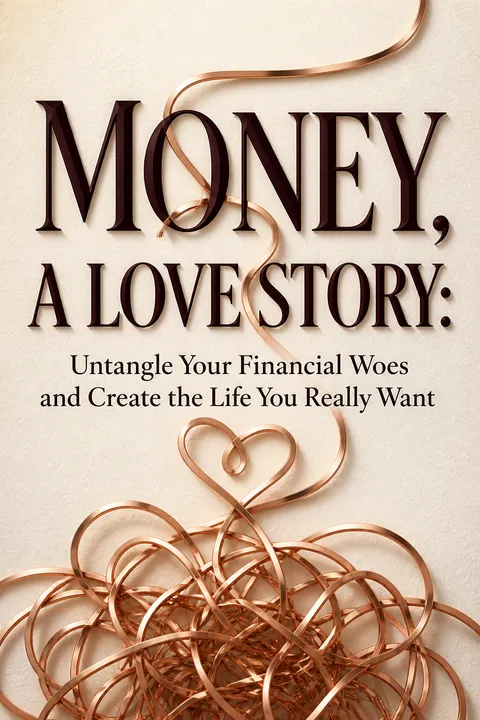
Money, A Love Story combines memoir, reflective exercises, practical personal finance, and entrepreneurial advocacy. Its central argument is that money habits become easier to change when financial facts are approached without shame and connected to values, identity, and relationships. Northrup makes that case through a personal arc: a financially comfortable childhood with little direct money education, a period of earning well while accumulating debt, and a deliberate shift toward tracking, planning, and separating her work from her mother’s. This narrative gives the book emotional credibility, especially for readers who avoid statements or feel embarrassed by their financial decisions.
The most useful contribution is its insistence that emotional insight and basic financial administration belong together. A reader is asked not only to reconsider inherited beliefs, but also to list income, expenses, assets, debts, and due dates. That combination avoids the false choice between inner work and spreadsheets. Its values exercises also provide a practical alternative to status-driven spending: identify what creates satisfaction, then compare purchases with those priorities.
The book’s claims need boundaries. Self-respect and attention can support better choices, but they do not guarantee higher income or make structural barriers disappear. Gratitude can soften avoidance, but it cannot erase interest charges. Likewise, residual income can create leverage, yet it is not effortless or assured. Northrup’s strong commitment to network marketing informs some of her financial recommendations, so the reader benefits from separating general principles, such as diversifying income and building systems, from any particular business opportunity.
At its best, the book treats money as a domain of agency rather than a measure of human value. Its most lasting lesson is not that wealth proves worth, but that a person can face financial reality with both compassion and rigor, then use the resulting choices to support a life that feels genuinely theirs.
Review Summary
Money, A Love Story receives mixed reviews. Some readers appreciate the positive mindset and exercises for improving one's relationship with money. However, many criticize the author's privileged background, finding her experiences unrelatable. The book is seen as lacking practical advice for those truly struggling financially. Some useful tips are noted, but much of the content is viewed as recycled from other sources. The book's promotion of network marketing in later chapters is off-putting to many readers. Overall, opinions are divided on its effectiveness and relatability.
Glossary
Money Love Score
Money relationship self-assessmentA score produced by the book’s 39-question quiz about financial knowledge, habits, feelings, and avoidance. Readers add positive responses to questions about financial engagement and negative responses to questions about stress or harmful habits. It is intended as a reflective baseline to revisit, not as a clinical or professionally validated measure.
Financial Energy Leaks
Spending that feels misalignedThe author’s label for expenses that evoke a sense of contraction or discomfort when reviewed. The exercise asks readers to inspect statements, note those transactions, and look for recurring categories or relationships connected to them. The label is a prompt for reflection about spending, not evidence that a purchase is objectively harmful.
Money For Me
A named savings allocationAn account or tracking category for money deliberately retained through spending less, negotiating lower costs, earning more, or receiving unexpected income. Its purpose is to make saving feel like keeping resources for oneself rather than suffering deprivation. The balance can support bills, debt repayment, savings, investing, giving, or a chosen reward.
Invoices for Blessings Already Received
A gratitude-based name for billsA term used for bills and debts to emphasize that the person has already received value connected with the expense. Northrup uses the phrase to reduce shame and encourage gratitude while facing balances and making a repayment plan. She notes that the terminology was already used by other prosperity teachers, rather than claiming to have originated it.
Touchstones of Freedom
Values and feelings decision guideA personal reference list built from the values and desired feelings identified through reflection on meaningful experiences. The book recommends consulting it when considering purchases, work, investments, or opportunities, and asking whether a choice supports those priorities. It is a decision aid, not a guarantee that a choice will produce a particular outcome.
Cashflow Quadrant
Four income-role categoriesA framework from Robert Kiyosaki’s work that groups income sources into four roles: Employee, Self-Employed, Business Owner, and Investor. Northrup uses it to contrast income tied closely to a person’s labor with income generated through businesses, systems, or investments. The framework describes broad models, not a rule that every person should move through them.
Financial Freedom Freeways
Routes to leveraged incomeNorthrup’s name for possible paths toward income that can recur or continue beyond a single work session. Her examples include intellectual property, investing, traditional businesses, franchises, and network marketing. She presents these as options with different costs, demands, and risks, and advises choosing a route that fits one’s circumstances rather than pursuing several at once.
Leveraged income
Earnings beyond one work sessionIncome that is not strictly proportional to the time spent on each payment. It may come from a product sold repeatedly, a business system, investments, or other assets built through earlier work or capital. Northrup contrasts it with linear income, while emphasizing that creating and maintaining leveraged income still requires effort, skill, and often risk.
About the Author
Other books by Kate Northrup

Download PDF
Download EPUB
.epub digital book format is ideal for reading ebooks on phones, tablets, and e-readers.








