

Key Takeaways
Treat money as a relationship, not merely a math problem.
Money carries personal meaning. Toneatto argues that money is more than a way to pay for things. It can stand for safety, self-worth, freedom, or the ability to care for others. Those meanings influence everyday decisions, from asking for a raise to avoiding a bank statement. The book does not teach budgeting or investing mechanics. Its focus is the emotional patterns that can shape how people earn, spend, and receive money.
Her own path illustrates the point. Toneatto describes becoming a single mother, paying off credit-card and student debt over four years, building a successful public-sector career, then leaving after burnout to start a coaching business. Financial achievement did not eliminate the need to examine her beliefs and habits. She presents money mastery as ongoing self-understanding joined to practical choices.
What's useful here is the shift from treating money as a neutral object to asking what it represents in a particular life. That question can expose why a seemingly simple decision feels loaded. The distinction also keeps the book's promise in proportion: reflection can help someone make clearer choices, but it is not a replacement for financial knowledge, adequate income, or sound advice. The strongest version of the argument is that emotions affect financial behavior, not that emotions alone determine financial outcomes.
Separate inherited money rules from the choices your life now requires.
Family lessons linger. Toneatto describes how relatives can teach money rules without stating them outright: who controls household finances, who gets educational opportunities, and whether spending is treated as dangerous or shameful. Laura, a client raised to buy only discounted clothes, struggled to spend even when she could afford a purchase. She realized that her hesitation was tied to loyalty to her parents' habits, not her current finances.
Culture reinforces the script. The book also challenges fairy-tale plots in which a woman's security arrives through a rescuer, and notes the historical dependence created by laws and social expectations. It cites a 2017 estimate that women globally earned 77 cents for each dollar men earned. That context matters: personal beliefs can be changed, but unequal pay and access to opportunity are not simply mindset problems.
This is the book's most important counterweight to its emphasis on personal change. Family conditioning can shape choices, while workplaces, laws, and access to capital shape the options available. Treating these as separate levels avoids two mistakes: blaming individuals for structural barriers, or assuming that changing policy automatically resolves private anxiety. Laura's story suggests a practical question: which inherited habits still protect a person, and which only preserve an old fear?
Treat fear, guilt, shame, and anger as financial signals, not verdicts.
Emotions can drive money behavior. Toneatto identifies four common emotional blocks: fear of losing security, guilt about spending or having more than relatives, shame about debt or financial mistakes, and anger over perceived unfairness. In her account, these feelings can lead to avoidance, overspending, hoarding, or indecision. A 2013 study cited in the book found that nearly half of surveyed American women feared becoming homeless or financially destitute, including some in households earning over $200,000 a year.
Name the feeling, then trace the behavior. The book's journal exercise asks readers to record a money fear, where it may have come from, how it affects behavior, and what more useful belief they want to practice. A fear of not having enough, for example, might appear as refusing necessary purchases. The exercise is intended to make a hidden pattern visible before it shapes another decision.
The signal metaphor is valuable because it encourages curiosity instead of self-condemnation. Shame often makes people conceal precisely the information they need to solve a problem, while naming an emotion can make a conversation or plan possible. Still, a feeling is not a diagnosis. Anxiety about money may reflect real financial danger, not merely an old belief. Emotional reflection works best alongside an honest review of income, debts, obligations, and available support.
Protect your boundaries when generosity turns into unpaid overwork.
Care needs limits. The book links several common business problems: underearning, charging too little, giving away time, and unclear rules with clients. Hillary, a career coach, routinely ran past session limits and discounted her work to stay competitive. She began to resent clients, then recognized that her pricing and boundaries did not reflect the value she believed she offered. After changing her rates and service structure, she stopped extending sessions for free and worked with clients who were a better fit.
Make the value visible. Toneatto recommends identifying the expertise, time, and results a service provides, then setting fees and policies accordingly. This can mean stating a rate without immediately offering a discount, setting clear session limits, and declining work that is a poor fit. The principle is not that every price should rise. It is that generosity should be a deliberate choice rather than a substitute for self-respect or a business model.
The examples make a strong case that boundaries are operational, not just emotional. A defined fee, payment policy, and service limit reduce ambiguity for both provider and client. The nuance is that pricing also depends on demand, affordability, competition, and the kind of service offered. A person should not interpret every low income as a failure of confidence. The useful test is whether the arrangement is sustainable, freely chosen, and consistent with the value and costs involved.
Connect income goals to a purpose, then check whether the plan can work.
Purpose gives money direction. Toneatto uses the term social promise for doing good while earning well, such as using a business or career to support a cause. She encourages readers to connect a money goal to a reason that matters: what the income will make possible, for whom, and why. This can provide motivation through setbacks without reducing success to a salary figure.
A meaningful goal still needs a business plan. Erin, who ran a live-event company, initially imagined earning $550,000 in a year, nearly three times her then-current income. She was not ready to hire the staff or change the business model required to reach that figure, so she chose $300,000 as a challenging but more workable target. Her plan included adjusting services, pricing, and revenue streams. The story shows purpose and ambition being tested against capacity.
A larger reason for earning can make financial ambition feel less like status seeking and more like a chosen responsibility. Erin's example is especially useful because it pairs aspiration with constraints instead of treating doubt as something to override. The same discipline should apply to social impact: a mission does not guarantee that a service is viable or beneficial. Clear costs, realistic capacity, and evidence of value help turn good intentions into durable contribution.
Treat manifestation as focused preparation, not a substitute for action.
Intention needs behavior. The book describes the Core Manifesting Process as four linked moves: clarify what is wanted, imagine receiving it, loosen attachment to one exact outcome, and take actions that support the goal. Toneatto also recommends affirmations, meditation, visualization, and writing an ideal future scene. These practices are presented as ways to focus attention, confidence, and readiness, rather than as a reason to wait passively for money to appear.
Prepare to receive. Someone seeking a new income source might identify a specific target, picture what achieving it would change, then update a resume, contact potential clients, or organize finances. Toneatto cautions that merely thinking or speaking about a goal is not enough. Her spiritual account also assigns a role to universal forces and synchronicities. The practical core remains clearer: set an intention, notice options, and act on opportunities.
The practical interpretation is more persuasive than a literal promise that thoughts attract matching events. Visualization can clarify a goal and help someone rehearse action; it cannot ensure that a client, job, or investment will materialize. Toneatto's insistence on participation gives the process a grounded element, while the metaphysical language may resonate with some readers and alienate others. Its usefulness does not depend on settling that spiritual question: the exercises can still organize attention and follow-through.
Track your money and rewrite the story that keeps you avoiding it.
Visibility replaces evasion. Toneatto recommends tracking money coming in and going out, paying bills on time, following up on payments owed, and paying yourself regularly. These steps help turn financial care into observable behavior. Gwen, an architect and business owner, called money a hassle and left nearly all financial decisions to her bookkeeper and accountant. She began to take responsibility for understanding her finances and replacing a helpless account of money with a more active one.
A money story is a recurring explanation. In the book, this term means the personal narrative about what money says about one's identity, worth, and future. Writing a new story can help clarify a goal, but Toneatto also urges readers to connect it to concrete actions. The narrative is most useful when it points toward behavior, such as reviewing accounts, setting repayment dates, or having a difficult money conversation.
The shift from avoidance to visibility has a direct practical payoff: problems are easier to address when they can be seen. Tracking also creates a useful check on optimistic or pessimistic assumptions. The story exercise adds motivation, but a revised narrative cannot alter a bank balance by itself. Pairing it with records and a specific next step keeps the exercise from becoming wishful thinking and allows progress to be measured.
Use all eight money principles to diagnose where progress is breaking down.
The system is holistic by design. Toneatto calls her framework the Wealth Creation System, organized around eight principles: clarity, mind-set, emotions, self-expression, purpose and impact, actions, environment, and focus. The aim is to examine money from several angles rather than assume that motivation is the only missing ingredient. A person may have a clear goal but avoid money conversations, lack supportive peers, or struggle to maintain consistent habits.
Look beyond the bank balance. The Holistic Wealth Wheel exercise asks readers to rate satisfaction across areas such as work, health, relationships, spirituality, recreation, and surroundings. It is meant to reveal how financial concerns interact with the rest of life, not to calculate net worth. The framework's value lies in diagnosis: identify the strained area, choose a specific adjustment, and see whether the whole picture improves.
The framework's breadth helps prevent a narrow diagnosis. A revenue problem could involve pricing, an emotional trigger, limited time, or an unsupportive work setting, and each calls for a different response. The wheel is best treated as a reflection prompt, not a validated measurement tool or proof that every life domain is equally connected to money. Its practical strength is that it prompts people to notice tradeoffs they might otherwise ignore.
Turn a stretch income target into milestones, review dates, and support.
Goals need a route. Toneatto recommends setting specific, measurable, achievable, realistic, and time-based money goals, then breaking a large target into smaller steps. Readers are also asked to identify likely obstacles, schedule focused time, review progress, and decide who can help hold them accountable. These practices translate a hoped-for result into a plan that can be revised as circumstances change.
Focus depends on conditions. The book advises reducing distractions, organizing physical and financial records, protecting time, and seeking a coach, mentor, or peer group when specialized support is needed. Tara, a presentation coach, worked on setting measurable goals and creating smoother business systems. She added revenue streams while maintaining time for family and community volunteering. Her example makes focus less about constant effort and more about designing work that can be sustained.
This is where the book's introspective approach becomes testable. Milestones show whether a strategy is working, while scheduled reviews make it possible to adapt rather than treat a missed target as a personal failure. Support can add accountability, though paid coaching is not the only option and should be evaluated like any other expense. The central discipline is to keep the goal visible while remaining willing to change the route.
Use wealth to contribute without confusing self-denial with spiritual virtue.
Money can extend a person's reach. Toneatto rejects the assumption that spiritual or service-oriented people should avoid earning well. In her view, money can support families, fund meaningful work, and help address social needs. She calls for aligning prosperity with a contribution, while treating money as a tool rather than a measure of moral worth.
Giving should remain sustainable. The book discusses tithing, or donating a portion of income, and suggests 10 percent as one possible practice while acknowledging that the amount depends on personal circumstances. It also warns against giving so much that a person neglects their own needs. The guiding idea is balance: earn ethically, care for oneself, and give in ways that can be maintained. Contribution can begin before wealth is substantial, through career choices, business practices, or support for causes.
The argument usefully separates generosity from poverty and insists that service work deserves material support. It also resists treating money as inherently virtuous: wealth's effects depend on how it is earned, used, and shared. The emphasis on women's natural generosity should be handled carefully, since care and giving are not universal traits of one gender and can become another expectation placed on women. Sustainable contribution requires choice, boundaries, and attention to who benefits.
Analysis
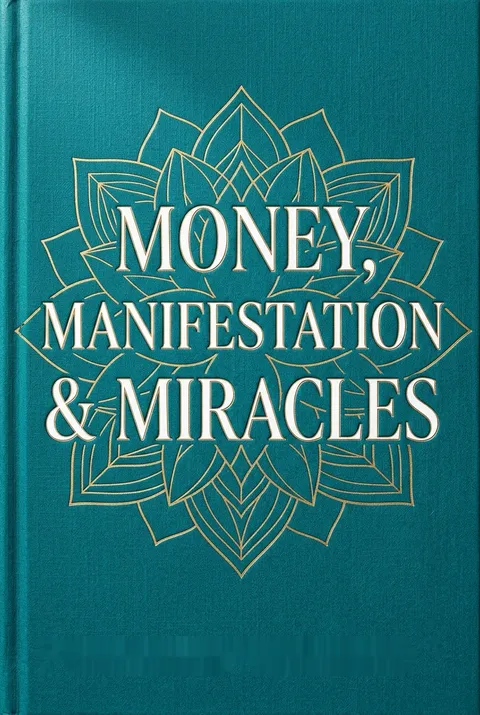
Money, Manifestation & Miracles is part financial self-help, part coaching workbook, and part spiritual argument. Its central move is to treat money behavior as an expression of beliefs, emotions, identity, and social purpose. That gives readers a useful route into topics they often avoid: debt, asking for compensation, inherited expectations, and the discomfort of wanting more. The client stories make abstract patterns legible, while exercises turn reflection into a repeated practice.
The book is strongest when it connects inner work to observable conduct. Tracking spending, stating fees, setting boundaries, building a realistic income plan, and reviewing progress are practices that can change outcomes because they change decisions. The Eight Holistic Principles offer a broad diagnostic map rather than a narrowly technical method. Readers can use that map to ask whether a stalled goal reflects unclear priorities, fear, poor systems, lack of support, or several factors at once.
Its least secure claims are the metaphysical ones: that thoughts attract corresponding events, abundance is a natural state, or the Universe supports a clear intention. Such claims are matters of belief, not established financial mechanisms. The practical practices remain useful when reframed as attention, planning, confidence, and action. That reframing also prevents a harmful implication that hardship reflects inadequate positivity or deservingness.
The book recognizes wage gaps and unequal access to capital, but its strongest emphasis falls on personal transformation. A balanced reading should hold both levels at once. Self-advocacy and financial visibility can expand a person's choices, yet they cannot by themselves correct discrimination, caregiving burdens, or economic inequality. Nor does emotional mastery substitute for financial literacy. The book says it is not a guide to budgeting or investing, so readers should pair its reflective tools with practical financial education. Its lasting contribution is the invitation to pursue money without shame, to make ambition answerable to purpose, and to build habits that turn aspiration into accountable action.
Review Summary
Glossary
Wealth Creation System
Holistic wealth frameworkToneatto's integrated approach to creating financial prosperity while attending to personal development, purpose, relationships, and contribution. It is designed to help readers identify emotional or behavioral obstacles to financial goals and choose practices to address them. The system is organized around the Eight Holistic Principles and is broader than financial planning or investment instruction.
Eight Holistic Principles
Eight areas for money masteryThe eight dimensions Toneatto uses to examine a person's relationship with money: clarity, mind-set, emotions, self-expression, purpose and impact, actions, environment, and focus. Together they form a diagnostic framework. The reader can use them to locate where a financial goal is being obstructed, rather than assuming that motivation or positive thinking alone will solve the problem.
Core Manifesting Process
Intent paired with actionToneatto's four-step process for pursuing a desired outcome: become clear about what is wanted, visualize receiving it, loosen attachment to one exact result, and take actions aligned with the goal. The process is presented as a practice for financial and broader life aims. The author combines practical preparation with a spiritual belief in support from the Universe.
Holistic Wealth Wheel
Life-satisfaction self-assessmentA reflective exercise in which readers rate their satisfaction across areas such as work, health, relationships, spirituality, recreation, and environment. The ratings are connected to create a visual snapshot of how balanced or uneven life feels. Toneatto uses the exercise to broaden the meaning of prosperity beyond income and savings, not as a financial calculation or clinical measure.
Money story
Personal narrative about moneyThe recurring, often partly unconscious account a person holds about who they are in relation to money, what they deserve, what wealth means, and what might happen if they gain or lose it. Toneatto encourages readers to examine how family experience and personal history shape this narrative, then write a more empowering version linked to specific financial goals and actions.
Social promise
Prosperity joined to contributionToneatto's term for combining personal or business prosperity with a desire to benefit society. It can mean supporting causes, serving a community through one's work, or directing some business resources toward social aims. The concept is not limited to nonprofits or large companies; the author presents it as a way to connect income with a chosen purpose.
Wealth consciousness
Abundance-oriented money outlookA mind-set Toneatto associates with seeing opportunities, appreciating what is already present, and approaching life as more than a struggle over scarcity. It is contrasted with a lack-focused outlook that can intensify worry and avoidance. In the book, cultivating this perspective is meant to support confidence and action, not replace financial facts or practical planning.
feminine connection to money
Relational view of wealthToneatto's description of an approach to money that emphasizes relationships, care, generosity, and using resources to support others as well as oneself. She argues that this perspective can help women connect prosperity with social contribution. It is a framing used by the author, not a universal description of women or a claim that all people relate to money according to gender.
Universal and Spiritual Laws of money and financial prosperity
Spiritual principles for prosperityToneatto's collective name for twelve metaphysical principles she applies to money, including abundance, attention, attraction, clarity, flow, giving and receiving, intention, manifestation, nonattachment, prosperity, success, and limitless thinking. The author presents them as guides to mindset and behavior, combining spiritual beliefs with advice to set goals, stay attentive, and take purposeful action.
Download PDF
Download EPUB
.epub digital book format is ideal for reading ebooks on phones, tablets, and e-readers.








