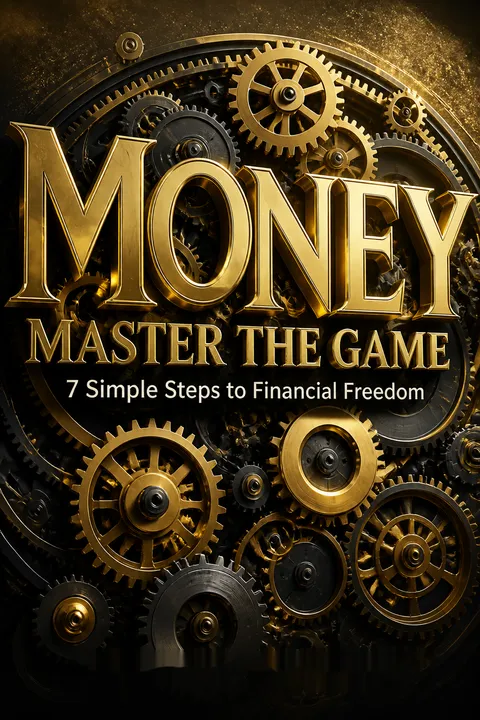


Key Takeaways
Use money to buy choices, then build assets that outlast your paycheck.
Freedom starts with ownership. Robbins treats money as a tool for security, choice, and contribution, not as the finish line. A salary can support a good life, but if every dollar is spent, work remains the only source of income. Investing turns a portion of present earnings into assets that may generate future income. The goal is a critical mass: enough invested wealth to support the life someone wants without depending entirely on a job.
Time compounds the difference. Burton Malkiel’s example contrasts two brothers investing the same annual amount at the same assumed return. The brother who starts earlier and lets his contributions grow for longer ends with far more, despite putting in less total money. The assumptions are illustrative, not a forecast, but the lesson holds: saving and investing consistently matters more than waiting for a windfall.
The useful shift is from asking how much a person earns to asking what portion of that income becomes an independently productive asset. This resembles the distinction between cash flow and capital in basic economics. Compounding, however, is not magic: returns vary, inflation erodes purchasing power, and fees and taxes matter. The book’s arithmetic is strongest as a reason to begin, not as a promise that a particular account balance will deliver a particular lifestyle.
Automate saving, then let raises increase the rate.
Make saving the default. The book calls the dedicated portion of income a Freedom Fund and urges readers to move it automatically into an investment account before ordinary spending can absorb it. It suggests starting around 10% if feasible, while recognizing that the right amount depends on a person’s circumstances. Theodore Johnson, a UPS employee, reportedly saved 20% of his pay and bonuses, then invested in company stock over many years.
Increase without a fresh sacrifice. Behavioral economists Richard Thaler and Shlomo Benartzi developed Save More Tomorrow, a plan that raises contributions when pay rises. In the workplace example described, employees began with a 3% contribution and agreed to increase it with future raises. After several years, many were saving a much larger share, without taking home less than they had previously earned.
Automation addresses a predictable weakness in human decision-making: immediate spending feels real, while future retirement feels distant. Defaults can therefore change behavior without requiring heroic self-control. The book’s examples make this mechanism concrete, but a savings rule cannot replace adequate income, emergency reserves, or debt management. A rigid percentage may harm households with unstable earnings or urgent needs. The sound principle is to automate a sustainable amount and review it as circumstances change.
Buy broad markets cheaply instead of paying managers to promise outperformance.
Costs compound against investors. Robbins cites research suggesting most actively managed mutual funds fail to outperform their market benchmarks over long periods. An index fund instead holds a broad basket designed to track a market, usually at lower cost and with less trading. The book illustrates the fee effect with a hypothetical $100,000 growing for 30 years at 7% before fees: a 1% annual fee leaves about $574,000, while a 3% fee leaves about $324,000.
Returns have two meanings. A fund’s advertised time-weighted return describes the fund’s performance over intervals. An investor’s dollar-weighted return also reflects when that person added or withdrew money. Those figures can differ because investors often buy after strong performance and sell during declines. Low costs and a diversified index cannot prevent market losses, but they reduce one source of drag.
The index-fund case is powerful because it begins with arithmetic rather than a story about a manager’s brilliance. It also pairs naturally with behavioral finance: simpler portfolios can reduce both fees and the temptation to chase recent winners. Yet a historical failure rate for active funds does not prove that every active strategy fails, nor does indexing eliminate market risk. Fee comparisons should include the actual fund, account, advice, and tax costs an investor pays.
Inspect financial incentives before trusting advice or a retirement plan.
Titles do not reveal duties. The book distinguishes brokers, who may be held to a suitability standard, from registered investment advisers who have a fiduciary duty to put clients’ interests first and disclose conflicts. A recommendation can be suitable without being the least costly or best available option. Robbins also warns that a 401(k) plan’s fund menu and administration fees may be shaped by commercial arrangements, not simply by what benefits employees.
Ask for the full cost. The displayed expense ratio may not include trading costs, plan administration, or other charges. The book recounts a survey in which many mutual fund managers held little or none of the funds they managed, a reminder to examine incentives and personal investment. A 401(k) can still be useful, especially when an employer matches contributions, but its costs and options deserve scrutiny.
The central insight is institutional rather than psychological: good intentions do not erase incentive conflicts. A fiduciary label is a valuable starting point, not proof of skill, fair pricing, or a suitable plan. The book’s adversarial language about brokers risks replacing blind trust with blanket suspicion. A better response is informed oversight: ask how advice is paid for, what conflicts exist, where assets are held, and what services the fee actually buys.
Price the life you want before chasing a giant number.
Turn aspiration into a target. The book lays out five levels of financial aims, from covering essential costs to funding a much more expansive lifestyle. Robbins calls the nearer milestones Three to Thrive: short-, medium-, and long-term goals that make progress easier to see. His example is a young man who initially wanted a billion dollars. When they priced the lifestyle he described, including renting rather than owning a private jet and island, the estimate fell to about $10 million.
Count real expenses. Friend Angela estimated that basic costs such as housing, food, utilities, transport, and insurance required about $34,000 a year. The book’s calculator suggested a target of roughly $640,000 under its assumed return. That result depends heavily on assumptions about returns, taxes, lifespan, inflation, and future benefits. The practical first step is to calculate personal expenses and keep an emergency reserve.
A concrete spending target can replace status-driven financial mythology with a planning problem that is possible to solve. This also resembles mental accounting: people can make progress by separating essentials, current pleasures, and aspirational goals. The risk is false precision. Multiplying annual spending by a fixed factor cannot reliably settle a lifetime plan when returns, health costs, housing, and longevity are uncertain. The exercise is best used to clarify priorities, then stress-tested against less favorable conditions.
Diversify by risk and economic weather, not equal dollars alone.
Build a portfolio for more than one future. Asset allocation means deciding how much to hold across types of investments, such as stocks, bonds, commodities, and real estate. Robbins organizes money into a Security or Peace of Mind Bucket, a Risk or Growth Bucket, and a Dream Bucket for planned enjoyment. Ray Dalio’s simplified All Seasons allocation, as reported in the book, combines 30% stocks, 55% government bonds, and 15% split between gold and commodities.
Treat backtests as history. The book reports that this mix returned about 9.72% annually from 1984 through 2013, with a worst year of about minus 3.93%. Those figures come from historical testing, including proxy indexes for earlier periods, annual rebalancing, and an assumption of tax-free investing. They illustrate diversification, not a guarantee. Different assets can fall together, and future market conditions may differ sharply from the sample.
The distinction between dollars allocated and risk carried is a valuable way to challenge the familiar idea that a 50-50 stock-bond portfolio is automatically balanced. Diversification can reduce dependence on any single economic outcome. The historical performance claims need particular caution: backtests are sensitive to the chosen period, asset proxies, rebalancing rules, and taxes. The durable lesson is to diversify deliberately and choose a risk level a person can actually tolerate, not to expect a smooth ride from a celebrated model.
Automate investing decisions that fear and excitement distort.
Spread decisions across time. Dollar-cost averaging means investing a set amount on a regular schedule, so the same contribution buys more shares when prices are lower and fewer when prices are higher. The book uses this approach for ongoing paycheque contributions, where it can prevent fear or enthusiasm from dictating each purchase. It also acknowledges that investing a lump sum at once has outperformed gradual investing in many historical comparisons, because more money is invested sooner.
Restore the intended balance. Rebalancing means periodically moving a portfolio back toward its chosen allocation. If stocks grow from 60% to 75% of a portfolio, an investor may sell some and add to underweighted assets. That can feel counterintuitive, but it limits drift into greater risk. Tax-loss harvesting, where applicable, can use realized losses to offset gains, though tax rules and account types determine whether it helps.
These methods are less about predicting prices than about controlling behavior. Regular contributions can make volatility psychologically bearable, while rebalancing prevents recent winners from quietly rewriting a person’s risk profile. The nuance matters: dollar-cost averaging is not automatically superior for a lump sum, and rebalancing can create taxes or transaction costs. A useful system distinguishes money arriving gradually from money already available, then applies rules consistently rather than treating every market headline as a new instruction.
Plan retirement around dependable income, not an account balance.
The order of returns matters. During retirement, people may withdraw money while investments fluctuate. A poor run of returns early in retirement can do more damage than the same losses later, because withdrawals leave less capital to recover. The book illustrates this with two hypothetical retirees who start with the same savings, withdraw the same amount, and receive the same sequence of annual returns in reverse order. One runs short; the other retains substantial assets.
Insurance shifts particular risks. An immediate annuity converts a lump sum into payments for life, pooling longevity risk across policyholders. A deferred annuity can postpone payments, and some fixed indexed products limit losses while restricting or sharing gains. These contracts differ. The book itself notes surrender charges, insurer strength, tax treatment, and income-rider fees. A guarantee depends on the contract and the insurer’s ability to pay, and may involve reduced liquidity or inflation protection.
This section identifies a genuine planning problem: retirement is not only about accumulating wealth but also about converting it into spendable cash across an uncertain lifespan. Annuities can insure longevity, much as insurance pools other risks, but no single product removes every uncertainty. Contract terms, insurer solvency, inflation, liquidity, and opportunity cost all matter. The book’s confident promotion of particular annuity designs should be read alongside its disclosure that guarantees are contractual and product-specific.
Increase earning power by solving valuable problems, then invest the gains.
Value can widen the income path. Robbins argues that people can improve their prospects by building skills that solve problems others are willing to pay to have solved. The book’s examples include South Korean teacher Kim Ki-hoon, who expanded his teaching through online classes, and Daniela, who learned design, marketing, and social media skills and used them to take on broader work. Their stories show how technology can extend a person’s reach beyond one classroom or job title.
Execution needs psychology. Robbins describes three influences on change: strategy, the practical method; story, the beliefs used to interpret what is possible; and state, a person’s emotional and physical condition. He also identifies six recurring human needs: certainty, variety, significance, connection, growth, and contribution. Understanding which needs money is expected to meet can help distinguish a genuine goal from a status chase.
The strongest version of this argument is that skills, initiative, and wider distribution can create options even when an existing job has a low ceiling. The caution is that pay reflects bargaining power, institutions, discrimination, and labor demand as well as individual value. Anecdotes about exceptional earners do not establish that anyone can reproduce their results. Still, learning transferable skills and directing new income toward assets is a more controllable lever than trying to forecast which investment will surge.
Treat giving and gratitude as part of wealth, not its reward.
Money serves human needs. The book presents wealth as a means of supporting security, connection, growth, and contribution, while warning that status alone can become an endless comparison. Its proposed Dream Bucket sets aside a modest share for meaningful experiences instead of postponing all enjoyment until retirement. Robbins also recounts a period of near-poverty when he gave his remaining cash to help a child and mother at a restaurant. The next day, a friend repaid a loan. He interpreted the timing as a personal turning point, not proof of a financial law.
Giving can connect people. The book cites studies suggesting that spending on others can improve reported happiness, especially when the giver sees the recipient and the effect. Giving need not be large: money, time, attention, and skill can all help. The practical point is to make generosity deliberate and sustainable, rather than using it to neglect one’s own basic security.
The conclusion completes the book’s argument by separating wealth from accumulation alone. Social connection and prosocial action can make resources feel more meaningful, while gratitude can redirect attention from comparison toward what is already available. That psychological benefit should not be mistaken for evidence that generosity reliably brings money back, as the restaurant story might suggest. Nor does individual giving replace public solutions to poverty. Its value lies in agency, relationship, and a clearer sense of what financial success is for.
Analysis
Money: Master the Game is part financial primer, part motivational narrative, and part guided interview series. Its strongest through-line is practical: convert income into invested assets, reduce avoidable costs, choose a tolerable allocation, and plan how assets become income. The interview structure gives abstract principles human faces. Jack Bogle makes fees vivid, Ray Dalio reframes diversification around economic conditions, and the account of retirement withdrawals shows why average returns can conceal the danger of bad timing.
The book also recognizes that financial decisions are behavioral. Automatic saving counters present bias; index funds reduce the temptation to chase winners; scheduled contributions and rebalancing constrain emotional reactions. Its aim is not merely to inform but to make the reader act, linking concrete financial steps to goals and identity. That blend helps explain why the book spends so much space on stories, exercises, and motivation.
Its main tension is between simplification and certainty. Simple rules are useful, but claims about future returns, safe portfolios, tax outcomes, and guaranteed income cannot be detached from assumptions. The All Seasons results are historical backtests, not forecasts. Annuities and life-insurance strategies involve contract terms, insurer credit, liquidity limits, fees, and tax rules. The book was published in 2014, and its product details, tax limits, market forecasts, and named service providers may no longer apply. It also promotes services and ventures connected to the author, a commercial context that deserves attention even where relationships are disclosed.
The most durable contribution is therefore not a specific portfolio or product. It is a decision architecture: define what money is for, save automatically, understand incentives and costs, diversify, plan for withdrawals, and keep enough flexibility to revise assumptions. Readers can retain that architecture while independently verifying every current financial, legal, and tax detail. The book is most persuasive when it equips readers to ask better questions, and least reliable when its vivid confidence makes complex guarantees sound universal.
Review Summary
Money Master the Game receives mixed reviews. Many praise its comprehensive financial advice and motivational approach, while others criticize its length, repetitiveness, and promotional tone. Readers appreciate the insights from successful investors and practical strategies for managing money, but some find the content overwhelming or too specific to the US market. The book is seen as valuable for beginners seeking financial knowledge, though experienced investors may find less new information. Overall, it's considered a thorough guide to personal finance, despite its flaws.
People Also Read



Glossary
Freedom Fund
Automated long-term savingsRobbins’s name for the portion of income set aside regularly for future financial security. The money is meant to be invested rather than spent on ordinary consumption, with automatic contributions helping sustain the habit. The term emphasizes the purpose of savings: greater future choice and less dependence on employment income.
Save More Tomorrow
Automatic future contribution increasesA savings program developed by behavioral economists Richard Thaler and Shlomo Benartzi. Participants agree in advance to raise retirement contributions when their pay increases. Because the increase comes from future income, it can feel less like a present-day loss. The book describes it as a way to use defaults and automatic escalation to counter procrastination.
Three to Thrive
Three staged financial goalsRobbins’s label for choosing three financial milestones, usually spanning near-, medium-, and longer-term aims. The targets can be drawn from levels such as covering essential costs, funding a current lifestyle, or adding desired luxuries and contributions. Breaking a large ambition into stages is intended to make progress measurable and reduce paralysis.
All Seasons strategy
Diversification across economic conditionsThe book’s simplified adaptation of Ray Dalio’s approach to building a portfolio for different economic environments. It spreads investments across stocks, government bonds, gold, and commodities, then calls for periodic rebalancing. The reported historical results depend on specific assumptions and proxy data; the strategy does not guarantee future gains or prevent all losses.
Security/Peace of Mind Bucket
Lower-risk financial reservesOne of the book’s portfolio categories for assets intended to provide stability, liquidity, or dependable income. Examples discussed include cash reserves, some bonds, pensions, and certain insurance products. The category is subjective: an asset’s safety depends on its risks, terms, time horizon, and the investor’s ability to tolerate losses.
Dream Bucket
Money reserved for enjoymentRobbins’s term for money assigned to meaningful experiences, purchases, or generosity while a person is still building long-term wealth. It is intended to prevent an investment plan from becoming endless deprivation. The book presents it as a limited part of a broader plan, not a reason to spend money needed for essentials or future security.
Sequence of returns
Order of investment gains and lossesThe order in which positive and negative investment returns occur. For someone withdrawing money in retirement, early losses can be especially harmful because withdrawals reduce the assets available to recover. Two portfolios can have the same average return across a period but produce very different retirement outcomes when returns arrive in a different order.
Private placement life insurance
Tax-advantaged insurance wrapperA specialized life-insurance structure discussed as a way for eligible investors to hold investments within a policy. Under qualifying rules, investment growth may receive favorable tax treatment, and policy loans may provide access to cash without an immediate taxable withdrawal. The structure has eligibility, cost, investment-management, and legal requirements, so it is not interchangeable with an ordinary savings account.
FAQ
What's MONEY Master the Game about?
- Financial Freedom Focus: MONEY Master the Game by Anthony Robbins is a guide to achieving financial independence through a structured 7-step system. It emphasizes mastering money to gain control over your financial life.
- Expert Insights: Robbins interviews top financial minds, including billionaires and Nobel laureates, to provide actionable strategies for everyday investors.
- Empowerment Through Knowledge: The book aims to democratize financial knowledge, making it accessible to everyone, regardless of their financial background or expertise.
Why should I read MONEY Master the Game?
- Transformative Strategies: The book offers practical tools and strategies that can lead to significant financial improvements, helping readers make informed investment decisions.
- Real-Life Examples: Robbins shares stories of individuals who have successfully applied these principles, illustrating the potential for real change in one’s financial situation.
- Comprehensive Approach: It covers a wide range of topics, from understanding the financial system to creating a lifetime income plan, making it a valuable resource for improving financial literacy.
What are the key takeaways of MONEY Master the Game?
- 7 Simple Steps: The book outlines seven actionable steps toward financial independence, including saving a percentage of income and understanding asset allocation.
- Myth-Busting: Robbins debunks common financial myths, such as the belief that high fees are justified or that actively managed funds consistently outperform the market.
- Investment Mindset: It encourages adopting an investor mindset, emphasizing long-term thinking and the power of compounding.
What are the best quotes from MONEY Master the Game and what do they mean?
- “Money is a good servant but a bad master.”: Highlights the importance of controlling your finances rather than letting money dictate your life choices.
- “The secret of getting ahead is getting started.”: Emphasizes the necessity of taking action to achieve financial goals, rather than procrastinating.
- “A part of all I earn is mine to keep.”: Encourages prioritizing saving a portion of income, reinforcing that financial security starts with disciplined saving.
What are the 7 Simple Steps to Financial Freedom in MONEY Master the Game?
- Step 1: Take Control: Decide what percentage of your income to save and invest.
- Step 2: Know the Rules: Understand financial myths and the true costs of investing.
- Step 3: Make the Game Winnable: Set realistic financial goals and create a plan to achieve them.
- Step 4: Asset Allocation: Allocate your investments effectively to balance risk and reward.
- Step 5-7: Create a lifetime income plan, invest like the top 0.001%, and enjoy and share your wealth.
How does Tony Robbins define financial freedom in MONEY Master the Game?
- Empowerment and Control: Financial freedom means making choices without financial constraints, allowing individuals to live life on their own terms.
- Income for Life: Emphasizes creating a reliable income stream that supports your lifestyle without continuous work.
- Peace of Mind: Provides a sense of security and reduces stress related to money, enabling focus on what truly matters.
What is the All Seasons Strategy mentioned in MONEY Master the Game?
- Ray Dalio's Approach: A portfolio management strategy designed to perform well in all economic environments, providing consistent returns.
- Diversification Across Asset Classes: Involves spreading investments across stocks, bonds, commodities, and real estate to reduce risk.
- Risk Management: Focuses on balancing the portfolio to withstand economic downturns, historically providing strong performance with minimal losses.
What is the Save More Tomorrow plan in MONEY Master the Game?
- Automatic Savings Increase: Allows individuals to commit to saving a percentage of future salary increases automatically.
- Behavioral Economics Insight: Based on the idea that people save more if they don’t feel the immediate impact on their lifestyle.
- Long-Term Wealth Building: Consistently increasing savings over time can significantly boost retirement funds and financial security.
How does MONEY Master the Game suggest managing risk in investments?
- Diversification Strategy: Advocates for spreading investments across various asset classes to minimize risk.
- Regular Rebalancing: Recommends periodically reviewing and adjusting your portfolio to maintain desired asset allocation.
- Understanding Market Cycles: Emphasizes awareness of market cycles and preparing for downturns with a protective plan.
What is the significance of the Dream Bucket in MONEY Master the Game?
- Personal Fulfillment: Designed for setting aside funds for personal goals and experiences that enhance quality of life.
- Balancing Financial Goals: Encourages enjoying life in the present while saving for the future.
- Motivation to Save: Allocating funds to the Dream Bucket can motivate wise saving and investing, knowing you can enjoy your earnings.
How can I implement the strategies from MONEY Master the Game?
- Set Up Buckets: Create Security, Risk/Growth, and Dream Buckets to categorize investments and savings.
- Automate Savings: Ensure consistent contributions to your Freedom Fund by automating savings and investments.
- Consult a Fiduciary: Work with a fiduciary advisor for personalized guidance and to align your investment approach with financial goals.
What are the common financial myths addressed in MONEY Master the Game?
- Active vs. Passive Management: Myth that actively managed funds consistently outperform index funds; research shows most fail to beat the market.
- High Fees Guarantee Better Returns: Emphasizes that lower-cost options, like index funds, often yield better results.
- Timing the Market: Argues that market timing is nearly impossible, encouraging a long-term investment strategy instead.
About the Author




Download PDF
Download EPUB
.epub digital book format is ideal for reading ebooks on phones, tablets, and e-readers.








