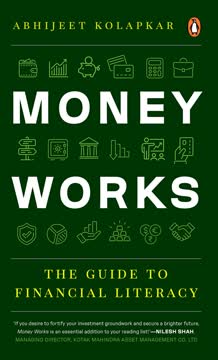
Key Takeaways
1. Master Your Money Mindset and Escape the Rat Race
The life you are living today could be an aspiration for someone somewhere else.
Evaluate your perspective. Your financial journey begins with understanding your money mindset and accepting your current reality without blame. Many people are trapped in a "rat race," constantly chasing more income to cover ever-increasing expenses, often driven by societal comparisons and a desire for instant gratification. This cycle prevents true financial progress, as income rises, so do lifestyle expenses, leading to zero savings and reliance on loans.
Break the cycle. To escape this vicious financial loop, it's crucial to distinguish between needs and wants. While money is a vital medium of exchange, it's not life itself; it's a tool to achieve your dreams, not the dream itself. By pausing to reflect on what truly brings satisfaction and focusing on controllable actions rather than external comparisons, you can begin to shift your financial trajectory.
Cultivate financial literacy. Financial literacy isn't about becoming wealthy overnight, but about understanding how money works to make informed decisions. It involves a continuous learning journey, encompassing income and expense management, budgeting, savings, debt control, insurance, and wise investing. This knowledge empowers you to build your fortune and live a prosperous, independent life, much like the "ignored heroes" who quietly achieve financial success.
2. Proactive Financial Planning is Your Blueprint for Prosperity
Financial planning is a way of achieving various goals in your life by properly managing your income.
Plan early, plan diligently. Financial planning is not a temporary fix for emergencies but a continuous, simple, and straightforward process that requires the right intention and diligence. Delaying this crucial step, especially until your forties, can lead to missed opportunities and compounded problems. The ideal time to start is as soon as you begin earning independently, laying a strong foundation for future financial stability.
Set SMART goals. Effective financial planning involves defining clear, prioritized goals, categorizing them into short-term, mid-term, and long-term objectives. These goals should be Specific, Measurable, Achievable, Relevant, and Time-bound. Discussing these goals with family members, especially your partner, fosters support and alignment, making the journey easier and strengthening relationships.
Beyond mere saving. Financial planning is more than just accumulating money; it's about spending the right amount at the right place, for the right reason, and at the right time. It involves a comprehensive strategy that controls expenses, facilitates savings, and guides investments towards specific objectives. Regularly reviewing your financial strategies—quarterly for mid-term goals, yearly for long-term—allows for necessary adjustments and keeps you motivated towards achieving your aspirations.
3. Build a Robust Emergency Fund and Understand Your Net Worth
A simple fact that is hard to learn is that the time to save money is when you have some.
Your financial safety net. An emergency fund is your true friend, a critical margin of safety in your financial life, designed to cover unforeseen misfortunes like job loss, health issues, or accidents. Unlike pre-planned expenses (e.g., children's education, home renovation), emergencies strike without warning, making a dedicated fund indispensable to avoid mental stress and reliance on high-interest loans.
How much is enough? Your emergency fund should ideally cover three to four months of essential expenses, including groceries, rent, EMIs, and healthcare. Saving too little renders it ineffective, while saving too much in low-return instruments can be a missed investment opportunity. This fund should be built gradually, perhaps using bonuses or salary raises, and invested in liquid options like savings accounts or ultra-short-term mutual funds, never to be used for non-emergencies.
Measure your financial health. Understanding your net worth—the total value of your assets minus your liabilities—is a crucial measure of your financial health. Calculating it regularly (every three to six months) provides a clear picture of your financial standing and guides decisions to increase assets or reduce liabilities. A negative net worth, though daunting, is merely a starting point for corrective action, motivating you to control expenses, save more, and repay debts faster.
4. Distinguish Good Debt from Bad Debt and Strive for Freedom
The decision to go into debt alters the course and condition of your life. You no longer own it. You are owned.
Not all debt is equal. Debt can be a powerful tool or a destructive trap, depending on its purpose. Good debt, like a home loan, education loan, or business loan, helps increase asset value or future income, potentially appreciating over time. However, even good debt carries risk, as future income and asset appreciation are not guaranteed.
Beware of the trap. Bad debt, conversely, facilitates extravagant purchases of depreciating assets or fleeting experiences, offering instant gratification at a high cost. Examples include:
- Vehicle loans (depreciating asset)
- Personal loans for non-essentials (high interest, no collateral)
- Credit card outstandings (exorbitant interest rates, often 36-42% annually)
The path to debt freedom. Becoming debt-free offers immense psychological and financial benefits, including increased income (by saving on interest), true ownership of assets, enhanced financial cover, and freedom from stress. To achieve this, list all debts, prioritize clearing high-interest ones, and actively seek to reduce interest rates. Avoid taking new loans to repay old ones, as this merely shifts the burden without solving the underlying issue.
5. Harness the Eighth Wonder: Compound Interest to Beat Inflation
Compound interest is the eighth wonder of the world. He who understands it, earns it . . . he who doesn’t . . . pays it.
Inflation erodes wealth. Inflation, the constant rise in the cost of goods and services, silently eats away at your hard-earned money, devaluing your savings over time. While savings accounts offer minimal returns, they often fall short of inflation rates, meaning your purchasing power diminishes. To truly grow wealth and achieve long-term goals like retirement or children's education, you must invest in options that outpace inflation.
The magic of compounding. Compound interest is the most powerful force in wealth creation, allowing you to earn interest not only on your initial principal but also on the accumulated interest. This exponential growth, often overlooked, is the secret to multiplying investments over time. The longer your money stays invested, the more dramatically compounding works its magic, turning small, consistent investments into substantial wealth.
Time is your greatest ally. Starting early is paramount to fully leverage compounding. Even small monthly investments made consistently over decades can yield significantly more than larger, later investments. The "Rule of 72" provides a quick estimate of how long it takes for an investment to double: divide 72 by the annual interest rate. This rule highlights the importance of seeking higher returns for investments and minimizing high-interest debt, where compounding works against you.
6. Invest Wisely Across Life Stages, Beyond Just Tax Savings
The main objective of any investment is to earn good returns.
Investment is strategic wealth creation. Investing is distinct from saving; it's about putting your hard-earned money to work to create more wealth, fulfilling medium- and long-term goals. While tax saving is a beneficial outcome, it should never be the sole or primary motive for investment. Blindly investing in schemes just to save tax, especially at the last minute, can lead to financial losses or lock up funds when needed.
Tailor investments to your life stage. Your investment strategy should evolve with your age and responsibilities:
- Young people (20s-30s): Focus on building an emergency fund, then invest aggressively in high-growth options like equity mutual funds and shares, leveraging time for compounding.
- Middle-aged adults (40s-50s): Balance growth with stability, considering children's education and marriage. Review insurance, diversify, and gradually shift towards less risky assets.
- About-to-retire adults (50s-60s): Prioritize capital preservation and stable income. Clear debts, reduce risk exposure in equities, and explore senior-citizen-specific schemes.
Diversify and stay informed. A balanced portfolio across various asset classes (equities, debt, gold, real estate) mitigates risk. Always research thoroughly, understand the underlying assets, and consult financial advisors. Remember, paying taxes on occasion might be a wiser decision than locking funds in unsuitable, low-return, tax-saving instruments that hinder your true financial objectives.
7. Demystify the Stock Market: Invest for the Long Term, Not for Quick Riches
The stock market is designed to transfer money from the active to the patient.
Beyond the headlines. The stock market, often portrayed as a place of extreme gains or losses, is a powerful wealth-creation engine for those who approach it with knowledge and patience. While news often highlights dramatic fluctuations, the Indian market has shown remarkable long-term growth, rewarding investors who stay invested through its ups and downs. Ignoring this asset class means missing significant opportunities for financial prosperity.
Investing is not gambling. True stock market investing involves thorough research into a company's business, management, financial performance, and competitive advantage, rather than relying on luck or unverified tips. Gambling, conversely, is blind speculation driven by emotion and a desire for quick riches. Legendary investors like Warren Buffett emphasize buying shares of wonderful companies with the intent to hold them forever, focusing on value rather than short-term price movements.
Golden rules for success. To navigate the stock market effectively, embrace these principles:
- Accept risk: Volatility is inherent; successful investors remain calm.
- Avoid daydreaming: Base goals on realistic returns, not unrealistic assumptions.
- Ignore baseless advice: Self-learn and verify information; beware of "stock gurus."
- Think long-term: Property prices don't fluctuate daily; neither should your view of stocks.
- Take informed decisions: Research company fundamentals, management, and market position.
- Diversify: Don't put all your eggs in one basket.
- Never invest with borrowed money: This amplifies losses and stress.
- Be disciplined: Patience and consistency are more valuable than a high IQ.
8. Leverage Mutual Funds and SIPs for Disciplined, Diversified Growth
Equity mutual funds are the perfect solution for people who want to own stocks without doing their own research.
Professional management for all. Mutual funds offer an accessible and professionally managed avenue for investors to participate in diverse asset classes like equities, bonds, and gold, without needing in-depth market knowledge or constant monitoring. By pooling money from multiple investors, mutual fund companies hire expert fund managers to make informed investment decisions, aiming to reduce risk through diversification across various companies and sectors.
SIP: The power of small, consistent investments. A Systematic Investment Plan (SIP) is a disciplined way to invest small, regular amounts (e.g., Rs 500-1000 monthly) into mutual funds. This approach:
- Automates saving: Fosters financial discipline.
- Averages costs: Mitigates market volatility by buying more units when prices are low and fewer when high.
- Leverages compounding: Allows even small sums to grow significantly over the long term.
- Offers flexibility: You can stop or adjust investments as needed.
Understand the nuances. While mutual funds offer numerous benefits—liquidity, transparency, and tax advantages (like ELSS for Section 80C deductions)—it's crucial to be aware of potential drawbacks. These include management expenses (expense ratio), exit loads for early withdrawals, and the risk of "di-worsification" if you invest in too many overlapping schemes. Always read scheme documents (SID, SAI, KIM) and understand the fund's objectives, manager's history, and associated costs before investing.
9. Guard Against Greed: Recognize and Avoid Financial Frauds
Greed is the root cause of all sins. It creates jealousy and being overly greedy leads to destruction.
Your first line of defense. Protecting yourself from financial fraud is a personal responsibility, as scamsters constantly evolve their tactics. The allure of quick, high returns often blinds individuals to obvious red flags, leading to significant losses. It's crucial to cultivate vigilance, skepticism, and a commitment to thorough research before making any financial commitment.
Beware of Ponzi and Pyramid Schemes. These fraudulent schemes promise unbelievably high returns with little to no risk, often relying on new investors' money to pay off earlier ones.
- Ponzi Schemes: Named after Charles Ponzi, they guarantee huge returns (e.g., 50-100% in 45-90 days) on investments that are never genuinely invested. They thrive on greed, blind faith, social pressure, and aggressive marketing, eventually collapsing when new money dries up.
- Pyramid Schemes: Often disguised as multi-level marketing (MLM), they focus on recruiting new members rather than selling genuine products or services. Members pay enrolment fees and earn commissions for bringing in more recruits, with only those at the top truly profiting. These schemes use motivational tactics and fake success stories to exploit aspirations.
Recognize red flags. Common indicators of fraud include:
- Unrealistically high, guaranteed returns.
- Claims of "no risk" or "one-of-a-kind" opportunities.
- Complex, opaque business models.
- Pressure to invest immediately or miss out.
- Unregistered entities or lack of verifiable information.
- Focus on recruitment over product sales.
Always verify a scheme's legitimacy with regulatory bodies like SEBI or RBI, research the company's background, and consult a trusted financial advisor. Your hard-earned money deserves careful, informed decisions, not impulsive gambles driven by greed.
Last updated:
Similar Books