


Plot Summary
The Camp at the Wall
Charlie, a soldier who has spent months away from his base, is travelling toward Tennessee with Hunter, his closest friend, and Edin, Hunter's monster partner. Near a raider camp, they meet Aury, a winged monster protecting the settlement, and learn the camp belongs to Anchor and Cat, its missing co-leader.
Charlie once shared a prison cell with Cat, who stayed behind when Hunter rescued him because someone else was still imprisoned. Hunter delivers Cat's message that he is alive. When the camp's lonely, sharp-tongued wanderer Moth volunteers to find him, Charlie offers to go too: he knows the prison and wants to repay Cat. Their uneasy partnership begins as Charlie postpones his return to the military.
The quest begins as a practical rescue but also gives Charlie a reason to delay a homecoming he already dreads. His loyalty to Hunter is real, yet he fears being left behind in the life Hunter has built with Edin. Moth's offer is similarly double-edged: he acts for Ghost, the raider he loves from afar, while keeping himself apart from the camp. Both men enter the journey wanting to help someone else, not admitting how much they need connection themselves.
A Sword in the Snow
As they leave camp, Moth rebuffs Charlie's attempts at conversation, suspicious of his military past and resentful that the raiders welcomed him so quickly. Charlie keeps trying, even as Moth insists they need not become friends. Their first real test comes when four armed scavengers demand their supplies.
Charlie shoots two attackers to stop them, but Moth draws his sword and swiftly cuts off limbs, leaving the assailants bleeding in the street. Charlie sees that the sword is no ornament and that Moth's violence is controlled, not hesitant. The encounter frightens him, yet Moth's willingness to protect their supplies gives Charlie a sharper measure of his companion than their prickly conversation has allowed.
Moth's sword makes visible the survival logic he has built around himself: threats are ended quickly, before anyone can exploit hesitation. Charlie's response is different. He uses force when necessary but remains disturbed by its consequences. Their contrast is not simply human restraint versus monster brutality; both know violence. What separates them is how readily each can turn it into a habit. The scene also exposes Moth's guardedness as more than bad manners. He expects danger from people and has learned to meet it before trust can form.
The Market's Closed Doors
When Moth steps into a nest of cheklas, the many-legged creatures swarm his boots. Charlie fights them off with his gun and knife, then pulls one from Moth's leg, giving the two men their first shared victory. They laugh over Charlie's crude name for the monsters, and Moth briefly relaxes. At an underground raider market, however, traders refuse to serve Moth because he is half monster; one spits at his boots.
Charlie defends him, then watches Moth endure the insults without complaint. Outside, Moth silently gives Charlie a warm scarf he bought for the snow. The small kindness complicates Charlie's picture of him: beneath the hostile manner is someone attentive enough to notice when another person is cold.
The chekla attack reverses their roles: the experienced wanderer needs help, and the soldier he distrusts provides it. At the market, Charlie sees the social danger Moth faces even when no one is attacking him. Prejudice is not an abstract force here; it determines who may trade, who is treated as a threat, and who must swallow humiliation to get supplies. Moth's scarf is a countergesture, a quiet form of care that does not demand gratitude or closeness. Their trust grows through practical acts rather than confessions.
The Empty Fighting Ring
The prison where Charlie once shared a cell with Cat stands abandoned beneath the snow. Inside, open cells, overturned furniture, and frozen blood show that something violent happened, but there are no bodies and no prisoners. Charlie finds the cell he shared with Cat, then turns back toward the entrance with Moth. In the storm, Moth disappears without footprints or explanation.
Charlie waits through the night, furious and afraid, until Moth returns, exhausted and unwilling to say what happened. Tracks the next morning seem to show Moth landing from above. He identifies Chicago as their likeliest lead: escaped prisoners may have sought shelter in the nearest city. Charlie chooses to keep travelling with him despite the breach of trust.
The deserted prison turns Charlie's past captivity into an unanswered question. Its empty cells offer no rescue target and no explanation, leaving the journey without its original certainty. Moth's disappearance deepens that instability: Charlie must decide whether to interpret secrecy as betrayal or as a danger his companion cannot yet share. He chooses neither blind trust nor abandonment. By staying, he accepts that care sometimes requires acting without complete knowledge, while still recognizing that Moth's silence has consequences.
Chicago's Back Alleys
Moth brings Charlie to a hidden safehouse above a deserted restaurant, where warmth and privacy let Charlie glimpse the monster features Moth usually conceals: scales, clawed feet, and a tail. Moth retreats beneath his clothes, embarrassed, but Charlie's attraction does not fade. In Chicago, they search bars and rooms in the city's poorest district for escaped prisoners.
A man claims he can lead them to Cat, then demands cash and attacks Charlie with a knife. Charlie twists free; the man falls against a dumpster and dies. Moth treats it as an accident, while Charlie struggles with guilt. Their search still yields nothing, and the city offers no comfort, only a growing awareness of how readily its people ignore suffering.
The safehouse makes privacy possible, but it does not immediately make Moth feel safe. His body is both the source of his difference and the thing he expects others to reject. Charlie's attraction challenges that expectation without erasing it. In Chicago, the accidental death unsettles Charlie because self-defense does not neatly resolve responsibility for him. Moth's calmer response reflects a life in which violence and neglect are ordinary. Their disagreement is a measure of different survival histories, not evidence that one man cares and the other does not.
A Room Between Them
After days of searching and sleeping in the same cramped rooms, Charlie rents separate rooms so Moth can refuse without feeling trapped. He tells Moth he is attracted to him and proposes a casual arrangement, acknowledging Moth's unreturned feelings for Ghost. Moth admits he wants him too, though he has never kissed anyone and fears Charlie will recoil from his body.
Charlie lets Moth watch as he pleasures himself; Moth joins him, and they share their first sexual encounter without rushing beyond what Moth wants. The next day, their search continues, but the distance between them has changed. They have not promised a relationship, yet Moth has experienced desire without disgust, and Charlie has begun to want more than a distraction.
Consent is the scene's central action, not a preliminary formality. Charlie gives Moth room to decline, while Moth's hesitant participation lets him test whether intimacy can coexist with his bodily difference. The encounter does not cure his insecurity, and it does not settle the question of love. It does, however, give him an experience that contradicts his expectation of disgust. Charlie's carefulness is an ethical response to Moth's vulnerability, but it also draws Charlie into an emotional attachment he had tried to keep outside their arrangement.
The City Goes Gray
In Chicago, Charlie and Moth overhear escaped prisoners describing a friend who weakened, vomited gray matter, and died. Charlie connects the illness to parasitic monsters he has heard about from Hunter. Soldiers block the district's exits and lower sealed containers into the street. When the containers open, forileuns spill out and attack the residents while the military keeps the district closed.
Charlie and Moth flee through a concealed door in the city wall; one creature claws Charlie's calf, leaving him in agonizing pain from its toxin. Moth gets him to shelter and tends the wound. As Charlie recovers, he admits he had planned to return to military service. Seeing its deliberate massacre, he decides he cannot go back.
The outbreak converts Charlie's private doubts about military service into witnessed evidence. The containers and barricades reveal that the institution he meant to rejoin can treat civilians as expendable and stage a monster attack to conceal its own choices. Charlie's injury makes the escape costly, while Moth's care shifts their intimacy from sexual exploration to practical dependence. His decision to leave the military is not a sudden rejection of all duty. It is a recognition that the institution's version of protection no longer matches what he has seen it do.
The First Unmasking
After leaving Chicago, Charlie and Moth take shelter in a large house while Charlie's wound heals. Their playful closeness gives way to sex, but Moth's first orgasm releases years of shame and loneliness: he breaks down crying, then worries he has ruined the encounter. Charlie comforts him and makes clear that Moth need not apologize or perform gratitude.
Later, Moth returns to Charlie's bed and holds him, only to disappear before morning. When he returns bruised, Charlie asks what happened. Moth explains that his scarred spine bears marks allowing his progenitor to summon him. The injuries came from the progenitor's guards, who punish him when he refuses their demands.
Moth's tears are not a reversal of pleasure but its emotional consequence. Intimacy has reached a part of him that has been protected by distance, and the sudden safety exposes how long he has gone without it. Charlie's response matters because he does not turn Moth's vulnerability into a debt. The summons then intrudes on the small refuge they have made together. Moth's body is not only stigmatized by others; it has been marked as a means of control, making closeness inseparable from the risk that someone else can claim him.
The Herald's Summons
Moth tells Charlie that his progenitor, the Herald, leads a cult of humans in the Wastes. The followers are forced to join or be killed and eaten; Moth was lured there as a desperate teenager, then branded and abused when he refused to become a missionary. His summons have repeatedly dragged him away to be beaten into obedience.
Charlie does not blame him for the cult or his parent, and Moth promises he will return if taken again. They continue toward New York, knowing that the Herald's power still hangs over Moth. Charlie also tells Moth he will not return to the military, abandoning the future he once expected and leaving both men to imagine a life outside the institutions that shaped them.
This revelation separates kinship from moral responsibility. Moth has been made to carry shame for both his ancestry and the Herald's crimes, while Charlie insists that neither determines what Moth chooses. The cult's coercion also echoes the military's control of people and information, though the two institutions operate differently. For Moth, refusing the Herald is an act of self-definition; for Charlie, refusing military service is a parallel choice. Their bond deepens because each sees the other's decision as a matter of conscience, not a failure to belong.
The Dome Bear's Weakness
While travelling east, Charlie and Moth hide in a barn as soldiers flee a cagin, a bear-sized monster with an armored back. A soldier shoots Charlie's shoulder while searching the hayloft, and the creature traps the remaining soldiers inside. Charlie's bullets cannot pierce its hide. Moth draws the cagin toward the ladder, provoking it until it loses balance and rolls onto its unarmored underside.
He drives his sword into its throat and opens its belly, killing it. Charlie is bleeding and exhausted, but Moth guides him from the barn and searches the wrecked military truck for food and supplies. Their survival now depends on each other in a way neither can disguise as a temporary convenience.
The cagin fight turns Moth's solitary expertise into a shared survival strategy. He reads the monster's weakness and uses the barn's structure to expose it, while Charlie contributes what he can despite his wound. Neither role is sufficient alone. Moth's violence here is purposeful and protective, rather than a performance meant to intimidate Charlie. The injured soldier and the crashed truck also keep the military present as a danger, even after Charlie has decided to leave it. Their journey moves forward through cooperation, not through either man's ability to dominate the landscape.
Cat Behind the Door
In New York, Charlie and Moth search crowded bars and lodging houses for prisoners who escaped the fighting prison. Moth spots Cat entering a room above a bar, and the former cellmates finally find him alive. Cat is startled to see them but will not return to Anchor's camp. The person he stayed behind for is a blue-skinned monster with one silver eye, hidden inside the room.
Cat says he has important work to finish before going home, but refuses to explain it. The monster recognizes Moth's stolen sword as his own, revealing that Moth took it years earlier while the creature was swimming. Cat closes the door, leaving Charlie and Moth with answers about his companion but no explanation for his mission.
Finding Cat resolves the original search while refusing the expected reunion. He is alive, but his loyalty now binds him to someone outside the camp, just as it once bound him to a prisoner inside the prison. His refusal complicates the idea that rescue means bringing someone back to familiar safety. The stolen sword supplies a comic, concrete link between Moth's isolated past and this new relationship, but it also shows how much of his history has unfolded without witnesses. Cat's closed door sends the story away from its initial goal and toward Moth's unfinished past.
Collateral in the Cells
Back in their New York room, Moth is summoned again, and Charlie grabs him rather than let him face the Herald alone. They arrive in the cult's mall, where the Herald orders Moth to find Gloam, the aytorin monster who escaped their control, and uses Charlie as leverage. Moth refuses to cooperate, so the Herald's guard drags Charlie to a basement cell.
There he meets Samson, a young man born into the cult who was imprisoned for helping someone escape. Samson confirms that the Herald's mark keeps followers from leaving. Moth is sent back to New York with a deadline and a written charm he cannot read, leaving Charlie locked below the cult and uncertain whether Moth can return.
Charlie chooses solidarity over safety when he takes hold of Moth during the summons, but the choice makes him collateral in a conflict he barely understands. The Herald's leverage is intimate: they know Moth cares for Charlie and convert that care into a means of control. Samson broadens the captivity beyond Moth's personal history, showing a system that traps people across generations. The unreadable charm sharpens Moth's isolation; the Herald offers control in a form he cannot even interpret, while Charlie waits inside the structure that has already shaped Moth's life.
Chuck Crosses the Wastes
Moth crosses the Wastes carrying both men's supplies, driven by the fear that Charlie will be harmed while he is away. Along the way, he kills three humans who are tormenting a small, spiky copicen. He shares crackers with the creature, which follows him and clings to his leg.
Moth names her Chuck and, for the first time, confides in someone about his childhood, his resentment of the name the Herald gave him, and his dawning realization that his feelings for Charlie are unlike his old longing for Ghost. Before he can reach the camp, the Herald summons him again. Moth tells them he has made no progress, demands proof Charlie is alive, and is taken to the basement to see him.
Chuck's attachment gives Moth an unplanned experience of being chosen rather than summoned or tolerated. He resists her at first, but eventually accepts her company and speaks aloud what he has hidden from people. His comparison of Ghost and Charlie marks a shift from longing for basic acceptance to wanting a particular person. Yet he does not mistake emotional insight for freedom: the Herald can still pull him away at will. The tenderness of the journey therefore exists beside its urgency, with care becoming one more reason Moth has to keep moving.
The Herald Falls
The Herald brings Moth to Charlie's cell, then expects him to report upstairs. A disturbance in the cult's great hall draws the guards away, leaving Moth alone with his progenitor. He attacks, but the Herald summons him in an attempt to stop him. Charlie grabs the Herald's hair through the bars, holding them within Moth's reach.
Moth beats the Herald to death, then finds the hidden keys and opens Charlie's cage. The men escape through a basement window before the guards return. As they run into the forest, Moth understands that the Herald can never summon him again. Charlie is free too, and the person who controlled Moth's movements has lost the power to dictate where he goes.
The climax turns the Herald's own system of control against them. Moth's scar can summon him, but it cannot make him submit; Charlie's grip on the Herald creates the opening for Moth to act. Their escape depends on reciprocal risk, not rescue performed from a distance. Moth's killing is brutal, and the text does not present it as a simple cure for his trauma. Its immediate consequence is specific: the summons end, the cell opens, and the two men can leave together under their own power.
A Home Chosen Together
After recovering on the road, Charlie and Moth return to Anchor's camp and report that Cat is alive but staying in New York. Charlie tells Hunter he will not return to military service. Moth, fearing Charlie will choose the homestead and leave him behind, announces he is leaving. Charlie admits he wants to go with him; Moth first says he is no longer in love with Ghost, then, when Charlie starts to walk away, tells him he loves him.
Charlie returns the confession. They choose Moth's safehouse as their home, take Chuck with them, and agree that Charlie will teach Moth to read. Ghost later apologizes for how he treated Moth, helping him recognize that his old attachment was not the love he has found with Charlie.
The final choice answers the opening's quiet fear: Charlie does not return to the institution he has outgrown or settle into a life where he feels peripheral. Moth, meanwhile, risks naming what he wants instead of pre-emptively abandoning it. Their public confession is awkward and exposed, which matters for someone who has spent his life hiding his body and feelings. The safehouse does not promise a conventional community, but it becomes a home by choice. Reading lessons and Chuck's companionship make that future concrete, built from shared time and care.
Analysis
Moth is built around the difference between being seen and being known. His appearance draws attention, but it often produces an instinctive recoil that leaves him isolated before anyone understands him. The Herald weaponizes that fracture by marking him as unwelcome among his own kind and summoning him whenever he refuses obedience. Charlie's care matters because it does not ask Moth to become less strange, less guarded, or more convenient. He remains capable of anger and violence; affection does not sand away those edges. Instead, intimacy gives him a context in which his body and choices are not treated as evidence against him.
Charlie faces a parallel problem of belonging. He has defined himself through military work and through his place beside Hunter, but the Chicago massacre makes continued service morally impossible, while Hunter's life with Edin leaves Charlie afraid of becoming incidental. The journey gives him a succession of choices: defend Moth at the market, remain with him after the unexplained disappearance, reject the military, and follow him into the Herald's world. Each choice replaces an inherited role with a chosen commitment.
The novel also refuses a simple division between humans as civilized and monsters as dangerous. The military can manufacture a disaster and disguise its violence as rescue; Moth can be brutal yet save an animal from torment; a monster's inherited powers can serve either care or control. The romance's central achievement is therefore not that love fixes prejudice or trauma. It creates a small relationship in which neither man has to pretend that violence, fear, or difference has vanished. Their shared home becomes meaningful because they choose it after learning what each has survived, and because its ordinary future includes practical promises: food, companionship, and teaching Moth to read.
Review Summary
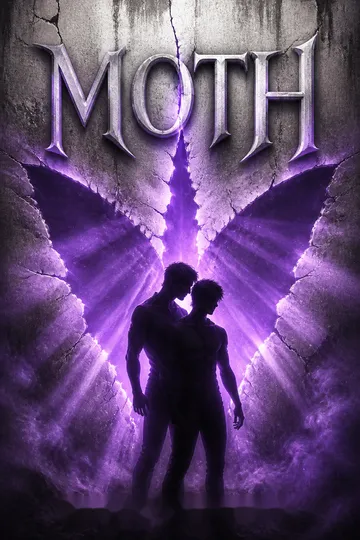
Moth by Lily Mayne receives overwhelming praise (4.6/5 stars) for its grumpy/sunshine romance between half-monster Moth and sunshine human Charlie. Readers love Moth's vulnerability beneath his prickly exterior and Charlie's patient, accepting nature. The relationship development is considered superior to previous series entries, with authentic progression and emotional depth. Fans appreciate Moth's tragic backstory, the dual POV narrative, Charlie's fierce protectiveness, and their communication. The steamy scenes and "inhuman anatomy" receive enthusiastic mention. Most reviewers rank this as their series favorite, praising improved writing and character development, though some found plot elements contrived or inconsistent.
People Also Read


Characters
Charlie
The loyal field partnerA thirty-one-year-old soldier and Hunter's best friend, Charlie is sociable, quick to joke, and prone to humming when nervous. His warmth is not naïveté: he can fight, track, and survive in the Wastes, but he questions the damage done in the name of security. He is especially attentive to people others dismiss, and he treats Moth's differences as part of the person rather than a problem to solve. His challenge is deciding what kind of life remains when military service no longer fits his conscience and his old place beside Hunter no longer feels like enough.
Moth
The guarded half-monsterA solitary wanderer with a sword, Moth is half human and half salyik, a monster species from the other world. His pale beauty, tattoos, scales, unusual feet, and tail mark him as different, and his defensive arrogance has grown from years of rejection and self-reliance. He watches people closely, trusts slowly, and follows a personal code that can turn frighteningly violent when he sees someone being harmed. Beneath the hard exterior is a deep hunger for safety and affection, complicated by his belief that neither humans nor monsters will welcome him.
Hunter
The stubborn best friendCharlie's closest friend and former military partner, Hunter is a guarded, short-tempered man whose loyalty shows more easily through action than tenderness. He leaves military life to build a home with Edin, but remains protective of Charlie and wary of people he does not trust. His bluntness can look like hostility, though it often conceals fear for the people he loves.
Edin
The tender purple giantA large, lavender isdernuc monster, Edin is Hunter's loving partner and a steady presence at their homestead. He mixes physical affection, boisterous humor, and a fierce capacity for loyalty. His history of capture makes him alert to the danger humans pose to monsters, but he remains open to friendship and is willing to revise his judgments.
Ghost
The wary camp scoutA quiet raider in Anchor's camp, Ghost is more comfortable observing than explaining himself. He is wary of outsiders and slow to trust, but he values the people who have earned a place beside him. His reserve makes him difficult for Moth to read, especially when affection and loyalty are not expressed in the same way.
Aury
The winged protectorA rycke with black wings, mournful eyes, and a gentle manner, Aury protects the Nebraska raider camp and is Ghost's partner. His quietness can make him seem fragile, yet he exercises firm control over dangerous abilities. He carries inherited memories of past harm and approaches others with humility rather than demanding that they forgive or trust him.
Cat
The missing camp leaderA tall, bearded raider with a scar at his temple, Cat helped build Anchor's settlement and serves as one of its leaders. Calm and protective, he has earned the camp's trust through years of shared work. He tends to make his own decisions about whom to protect, even when those choices frustrate people who are trying to help him.
Anchor
The camp's commanderA practical, determined leader, Anchor shares responsibility for the Nebraska camp with Cat. She is concerned with the survival of the community and willing to make difficult calls, but Cat's absence weighs on her. Her authority is built around people she knows well, which makes uncertainty about their safety especially hard to contain.
Rig
The camp's bright heartA warm, energetic raider, Rig is Gloam's human partner and one of the first people to welcome Charlie. His enthusiasm makes him a natural bridge between strangers and the camp. Beneath the cheerfulness is a determined protector, especially when someone he loves has been captured or mistreated.
Gloam
The freed aytorinA powerful, grey-skinned aytorin who carries a war hammer, Gloam is Rig's partner and a respected presence in the camp. He is physically imposing but gentle with those he trusts. His own history of captivity gives him insight into coercion, though he can still misread someone when fear and incomplete knowledge shape his judgment.
The Herald
The cult's false prophetA salyik who presents themself as a spiritual ruler, the Herald leads a cult in the Wastes and commands intense obedience from their followers. Their controlled, impassive manner masks a need for power. They treat other people as instruments, and their relationship with Moth is shaped by a refusal to accept his independence.
Samson
The captive dissenterA young man born into the Herald's community, Samson is imprisoned for helping someone escape. He is tired, hungry, and wary, but he has not surrendered his judgment to the cult. His quiet solidarity gives Charlie a human connection inside an unfamiliar and frightening place.
Chuck
The spiky little shadowA timid copicen with grey fur, a spiked tail, and a white streak around one eye, Chuck scavenges among the ruins and makes chirruping, hissing sounds. She is wary of most people but curious and clever. Her attachment to Moth grows from a small act of rescue, offering him companionship without asking him to explain himself.
Danny
The Soul Eater's partnerDanny is the human partner of the feared Soul Eater, Wyn. Friendly and open, he is comfortable around monsters and treats them as individuals rather than symbols of danger. His warmth contrasts with Wyn's intimidating presence and helps make the camp feel more hospitable to outsiders.
Wyn
The feared parasite hunterKnown to humans as the Soul Eater, Wyn is a frightening, hooded monster whose presence can silence a room. His work is tied to stopping parasitic creatures from spreading, though most people do not understand that purpose. With Danny, he reveals a fiercely protective private nature beneath the menace.
Lilac
The silent camp assassinA reserved raider who carries a machete, Lilac watches newcomers with unnerving stillness and rarely offers explanations. He is difficult to read, but his quiet presence is woven into the camp's daily life. His craft with wood and weapons suggests a patient, observant person beneath the intimidating silence.
Plot Devices
Moth's summoning scars
A body-bound summonsThe scarred symbols along Moth's spine let the Herald summon him across the Wastes. They turn his body into a channel of coercion, repeatedly interrupting his efforts to build a life of his own. The mechanism drives the central danger: Charlie can choose to accompany Moth, but he cannot simply prevent the summons. It also gives the climax its stakes, since ending the Herald's control means Moth can finally decide where he goes.
Hidden city entrances
A passage past the wallsSecret doors cut into the walls let raiders and other travelers enter military-controlled cities. Moth knows how to find and operate them, giving the pair access to Chicago and New York without using guarded gates. The entrances show that the military's boundaries are not as sealed as they appear, while providing a practical route through the search for prisoners. Their concealment also makes them useful during the Chicago outbreak, when Charlie and Moth need to escape the sealed district.
The parasite outbreak
A crisis behind the wallsParasites infect humans and can spread through their life cycle, leaving victims weakened before they expel eggs and die. Charlie recognizes the warning signs after hearing escaped prisoners describe a death in Chicago. The military's response, sealing a district and releasing monsters into it, forces Charlie to confront what its claims of protection conceal. The outbreak also gives the pair a reason to flee the city and makes their injuries and exposure part of the journey's physical stakes.
The unreadable charm
A threat disguised as helpThe Herald gives Moth a written charm and claims it can be used to control Gloam. Moth cannot read the paper and refuses to use it, so the charm offers no useful solution to the problem. Instead, it dramatizes how the Herald treats knowledge as another form of power: Moth is expected to obey instructions he cannot understand. His choice not to use it establishes that he will not simply trade one person's captivity for his own relief.
The fighting prison
A rescue turned mysteryThe prison forces captured humans and monsters into organized fights for an audience. Charlie's brief imprisonment there introduces Cat and gives him a personal reason to seek the Nebraska camp. When Charlie and Moth later arrive, the prison is empty, its cells open and its floors stained with blood. That unexplained evacuation redirects their search toward the cities and eventually brings them to Cat, who has escaped but chooses to stay away from camp for his own reasons.
Monstrous Series
About the Author
Other books by Lily Mayne



Download PDF
Download EPUB
.epub digital book format is ideal for reading ebooks on phones, tablets, and e-readers.








