

Plot Summary
Patricia Names the Wound
Mrs. March,1 a wealthy New Yorker who measures herself by other people’s approval, stops at her favorite patisserie for breakfast. Patricia,5 the friendly manager, praises George’s new novel and assumes its central character, Johanna, is modeled on his wife.1 The comparison lands harder when Patricia5 explains that Johanna is an unwanted prostitute, then points to their shared mannerisms and clothes.
Mrs. March1 denies the resemblance, abandons her food and the macarons for George’s2 book party, and flees into the street. Until this moment she has barely read the novel. Now the success of George’s book feels less like a shared triumph than a public judgment she has not yet seen for herself.
Patricia’s remark turns an ordinary social exchange into a crisis because Mrs. March treats other people’s perceptions as more authoritative than her own. Her first response is not to ask what George intended, but to imagine the neighborhood watching her. The novel becomes dangerous before she has read it: its power lies in the possibility that strangers can recognize her through a character she has not chosen. Her flight also reveals the pattern that will govern the story. Rather than risk a direct, uncertain conversation, she withdraws, then builds an increasingly elaborate private account of what other people think.
Johanna in the Study
While George2 is away, Mrs. March1 slips into his study and reads passages about Johanna: her fur, gloves, plainness, and humiliating efforts to appear respectable. She finds no dedication, unlike George’s2 earlier books, but the acknowledgments call his wife1 a source of inspiration. That phrase turns suspicion into injury.
Mrs. March1 tears apart one copy, scratches out George’s2 photograph, and hides the ruined pages in her stockings before burying them in the kitchen trash. She then replaces it with an intact copy, as though tidying the desk might undo what she has learned. The book’s degrading portrait now seems to expose her private habits to every reader, whether or not George2 consciously intended it.
The destruction is both protest and concealment. Mrs. March attacks the object that has made her feel visible, then carefully restores the room so that no one can see her anger. Her response echoes the polished domestic role she has learned to perform: disorder may be felt, but it must not leave evidence. The book’s ambiguous acknowledgment is especially potent because it offers no clear accusation, only a phrase she can interpret as proof. Feito makes literary influence feel intimate and ethically unstable. A writer can turn observed traits into fiction, while the person who recognizes herself in those traits may experience that transformation as exposure.
The Party's Open Secret
Mrs. March1 prepares an elaborate publication party, arranging flowers, food, furniture, and even the appearance of a casually tossed cashmere throw. At the crowded gathering, she watches Gabriella Lynne,15 a celebrated book-jacket designer, and steals the woman’s silver cigarette case when the guests turn away.
George’s agent14 and editor13 praise his novel, then joke about his next book, while Mrs. March1 struggles to join the laughter. From the kitchen she hears a guest ask whether she knows about Johanna; a platter of strawberries crashes to the floor.
Later, she confronts George,2 who says the character combines qualities from several women, including her. He leaves to sleep in his study, and she remains alone with the insult and the case hidden against her body.
The party makes Mrs. March’s private humiliation social, but not in the way she fears. Guests discuss the novel openly, and she cannot tell whether their laughter includes her. Her theft of Gabriella’s case gives her a brief, physical advantage over a woman she sees as effortlessly desirable. Yet the stolen object only increases her sense of exposure. George’s answer is plausible and emotionally inadequate: fiction draws on life, but he will not explain which traits he borrowed or acknowledge the effect on his wife. Their estrangement is no longer only her anxious interpretation. He retreats from the conflict, leaving her to make meaning without his participation.
Johanna Speaks Again
The morning after the party, Mrs. March1 rejects George’s2 invitation to make peace, then eventually joins him for dinner at Tartt’s. She loses track of the meal and retreats to the restroom, where an audiobook appears to describe a possession once stolen by Johanna. The passage names details from George’s novel so precisely that Mrs. March1 believes the story has followed her outside the apartment.
She rushes back to the table, where diners seem to watch her, and drinks heavily. At home, a cockroach sends her fleeing from the bathroom. The next day she visits a museum, where a portrait she once imagined as a childhood companion, Kiki,7 recalls the private double she created to endure loneliness.
The restaurant scene shifts the book’s central unease from social interpretation toward altered perception. Mrs. March hears a fictional voice as if it were addressing her directly, then reads the room’s ordinary attention as a jury. Her drinking offers temporary relief but also blurs the boundary between fear and evidence. Kiki’s reappearance gives that instability a history: Mrs. March has long used an imagined companion to make isolation bearable. The portrait is not simply a symbol of vanity. It is the first model for her habit of turning another face into a version of herself, a strategy that once soothed her and now threatens to consume her.
Kiki's Old Company
At the museum, Mrs. March1 revisits the portrait she once named Kiki,7 an imaginary friend she introduced to her family7 and used to express needs she could not voice herself. As a child, she destroyed a photograph of her maid Alma’s17 children because she could not tolerate sharing Alma’s17 affection; when Alma17 withdrew, Mrs. March1 bit and scratched her until her mother18 fired the maid.
Later, as a teenager on holiday in Cádiz, she followed an older man to the beach and experienced an encounter she has spent years remembering as though it happened to someone else. The museum visit leaves her facing the old portrait as a companion who now seems disappointed in her. These memories give her current fear a buried history.
Mrs. March’s childhood memories complicate her preferred self-image as merely timid and misunderstood. She was neglected, but she also acted possessively toward Alma and learned to hide harm beneath silence. The invented Kiki allowed her to communicate indirectly, preserving the appearance of a compliant child while giving her an audience of her own. The Cádiz memory is less settled: its blurred ownership reflects how thoroughly shame can divide a person from an experience. In adulthood, Mrs. March again displaces unbearable knowledge onto doubles and stories. The pattern does not excuse her conduct; it shows how avoidance can preserve pain while making it harder to recognize.
Sylvia in the Snow
After an exterminator treats the bathroom for roaches, Mrs. March1 sees a news report identifying the body of Sylvia Gibbler,8 a young woman missing from Gentry, Maine. George2 has saved a newspaper clipping about Sylvia8 and is about to travel to Edgar’s13 cabin nearby, so Mrs. March begins connecting facts that may have no connection.
The report describes a violent death, and her fear quickly supplies George2 as the culprit. Alone in the apartment, she receives a call from a man asking for Johanna, then sees what appears to be a bloodied woman with her own face across the courtyard. She cannot verify either experience, but the incidents make her afraid to call the police and increasingly certain that danger has entered her home.
The murder investigation gives Mrs. March’s anxieties a concrete object. A clipping, a hunting trip, and a dead woman become a chain of circumstantial evidence, while each missing link is filled by imagination. The phone call and bloody double deepen the uncertainty rather than clarify it. Crucially, the novel does not ask readers to treat every fear as fact or dismiss every fear as delusion. Mrs. March has real reasons to distrust the safety of her life, but her method of interpreting those reasons is collapsing. The result is a suspense built from competing possibilities, with the reader confined inside the same unstable field of evidence.
Santa Calls Her Johanna
Mrs. March1 takes Jonathan3 to a department store, hoping to shop for Christmas while he waits to see Santa. She leaves him in another mother’s11 care far longer than planned, then returns to find Santa addressing her as Johanna.
On the journey home she clutches Jonathan3 and watches reflections, strangers, and shop windows for further signs that the name has escaped the novel. A blizzard later traps the family indoors, cancels Christmas plans, and forces George2 to prepare dinner.
Mrs. March1 watches him handle the chicken with a disturbing intensity. After the storm, she learns that Jonathan3 has been suspended for an incident involving a girl at school. George2 scolds him; Mrs. March1 begins to imagine her husband passing some hidden violence on to their son.3
The Santa encounter is powerful because it turns a private literary fear into a public naming, though no one else confirms that anything unusual has happened. At the same time, Mrs. March’s strained care for Jonathan becomes visible in concrete failures: she leaves him waiting and grips him too tightly. Her suspicion of George then spreads into the family’s next generation. The novel links motherhood with surveillance, not uncomplicated devotion. Mrs. March once checked her infant son’s breathing compulsively, but now interprets his silence and misconduct through fear. Her concern is real, yet increasingly inseparable from her need to discover a culprit who can explain her own disorientation.
The Wrong George
After New Year’s, Jonathan3 explains that another boy, Alec Miller,12 dared him into the school incident, though George2 insists he accept responsibility. Mrs. March1 watches their resemblance at the dinner table and imagines a family line of menacing fathers and sons. As George2 prepares to travel to London, she begins to suspect that he is an impostor; a remembered Italian town name briefly convinces her he has passed a test.
She later hears him discuss Johanna on television, describing the character as vivid and compelling. In a separate episode, she enters a stranger’s townhouse and feels it mirrors her own home. These experiences make her doubt her senses, but they also sharpen her resolve to investigate the case herself.
The impostor theory shows Mrs. March converting emotional estrangement into a literal explanation. George’s familiar details no longer reassure her; they become evidence that someone has studied him well enough to impersonate him. The televised interview is a genuine source of injury, since George publicly discusses Johanna while his wife sits outside the conversation, but her response enlarges that exclusion into conspiracy. The stranger’s home extends the same instability into space: even private interiors seem exchangeable. Her mind is not simply inventing horror at random. It is transforming recognizable neglect, rivalry, and shame into a world where every resemblance might conceal a threat.
Mrs. March Goes North
Mrs. March1 lies to George2 and her sister Lisa,16 flies to Augusta, and uses the key she stole from his study to enter Edgar’s13 cabin. She searches the rooms, the garage, and an old Jeep for traces of Sylvia, finding only George’s2 books and hunting equipment. In town, she poses as a New York Times reporter to meet Sylvia’s friend Amy and visit the dead woman’s bedroom.
There she finds a signed George March2 novel, but Amy9 explains that it belonged to Sylvia’s father;9 Sylvia8 admired George2 yet never met him. Mrs. March1 returns the stolen handkerchief when Amy9 catches her taking it. After several fruitless days, she leaves Gentry without evidence, still convinced that George2 is guilty and that she has not looked hard enough.
The trip is Mrs. March’s first sustained attempt to test her theory against other people and physical places. She lies and trespasses, but she also gathers a fact that should weaken her suspicion: Sylvia had no contact with George. Instead of revising her conclusion, she treats the absence of proof as a reason to search more intensely. This is a crucial distinction between investigation and fixation. Investigation permits evidence to change the hypothesis; fixation makes every outcome confirm it. Her performance as a reporter also echoes her social life, where she adopts roles to secure attention and information while concealing her own needs.
Sylvia Takes Her Shape
Back in New York, Mrs. March1 visits a psychic, whose reading affirms that her instincts about danger are correct. She treats the vague reassurance as permission to continue. She buys Sylvia’s velvet headband, perfume, and a wig, then imitates the young woman in her bedroom, eating peaches and practicing expressions in the mirror.
She also watches George2 and questions a changed painting; he dismisses her concern. When Jonathan3 and Alec12 play a game involving a murderer and a family member, Mrs. March1 listens at the door, hearing her own fears reflected in their make-believe. That night she approaches George dressed as Sylvia and seduces him. For her, the encounter is an attempt to become the kind of woman she believes he would desire.
The psychic does not provide knowledge; she lends authority to what Mrs. March already wants to believe. The reading becomes a permission structure, allowing suspicion to feel like intuition rather than a conclusion in need of proof. Mrs. March’s imitation of Sylvia is more than disguise. She uses another woman’s appearance to test whether she can become visible to George, whose attention she experiences as scarce and conditional. The seduction briefly converts humiliation into agency, but only by making her body perform an identity borrowed from a dead stranger. The scene exposes the cost of a selfhood organized around being chosen: desire becomes a role she can rehearse, not a relation she can trust.
The Housekeeper Walks Out
Mrs. March1 finds violent drawings and Sylvia8 news clippings in Jonathan’s3 closet, along with her own notebook. She accuses him of being influenced by George,2 but Jonathan3 says Alec12 encouraged the drawings and knows his mother is upset about the novel.
Mrs. March1 cuts off the boys’ friendship and confronts Sheila,11 who says Jonathan3 has also frightened her. Soon Martha4 resigns, urging Mrs. March1 to seek help. At the dentist, sedatives and anesthetic leave Mrs. March1 disoriented; she imagines George2 with Sylvia8 before waking at home.
He then admits he has been having an affair with Jennifer, an intern at Zelda’s14 agency, and says the hunting trips covered some of their meetings. Mrs. March1 rejects this explanation and continues to accuse him of Sylvia’s murder.
The drawings make Mrs. March’s fear materially plausible without proving the story she tells herself. Jonathan has been exposed to violent imagery, but his explanation points toward Alec and toward adult gossip about George’s novel. Each person around Mrs. March offers an alternative account, and she cannot tolerate the uncertainty long enough to weigh it. Martha’s departure is especially consequential because it removes both practical support and a witness who can name the deterioration she sees. George’s confession finally explains his secret trips, but it does not settle the murder suspicion for Mrs. March. Truth arrives alongside deception, and her damaged trust makes the distinction almost impossible for her to maintain.
The Birthday Party Begins
After George2 admits the affair, Mrs. March’s1 anger and accusations erupt into a confused confrontation. She later wakes with no clear memory of what followed, only soreness and blisters on her hand. On George’s2 birthday, she assumes he has gone out and prepares a party alone, ordering food and arranging the apartment while guests approach.
When she enters the bedroom, she pulls back the sheets and finds George’s2 body. Memory returns: she stabbed him with the butcher knife she had hidden beneath her pillow. She vomits, hears the house and television distort around her, then composes herself as the waiters arrive. The book ends with guests knocking at the door and Mrs. March1 still inside the apartment with her dead husband.
The final discovery collapses the novel’s two kinds of uncertainty into one irreversible act. Mrs. March was wrong about George murdering Sylvia, but she has become a killer herself, and the gap between false suspicion and actual violence cannot be repaired by a clearer account of events. Her party preparations repeat the domestic performance with which the story began: every surface arranged to control how others will see her. Now the performance must continue beside a corpse. The ending refuses the relief of confession, arrest, or explanation. Its final horror is not simply that Mrs. March has killed George, but that the social scene she has spent the novel trying to master is about to enter the room.
Analysis
Mrs. March1 turns the domestic novel into a chamber of suspense by filtering nearly every event through a mind trained to treat appearance as evidence. Her social world rewards polish, tact, and self-command, yet those same habits prevent her from asking directly for reassurance or naming the injuries she experiences. She substitutes surveillance for intimacy: she studies George’s2 face, the guests’ laughter, a neighbor’s clothes, and eventually the geography of a murder investigation. Each observation feels precise, but her explanations grow less reliable as fear takes over.
George’s novel supplies the central ambiguity. Fiction draws on recognizable people, but it cannot prove that Johanna is a coded portrait of Agatha.1 That uncertainty exposes a real ethical problem without reducing the conflict to a simple accusation. Agatha1 experiences the book as public humiliation because her marriage has already left her unsure whether she matters to its author.2 Her terror is psychologically intelligible, even when the conclusions she builds from it are false.
The novel also refuses to make Agatha1 only a victim. Her memories of Alma,17 the imagined Kiki,7 and the encounter in Cádiz show how neglect and shame have shaped her, but they also reveal her capacity to injure, manipulate, and evade responsibility. Her treatment of Jonathan3 is correspondingly unstable: concern repeatedly becomes control, while his independent life feels like evidence against her. The final violence makes that pattern irreversible. Agatha’s1 suspicion of George2 does not uncover the crime she imagines; it becomes part of the atmosphere in which she commits a real one. The ending leaves the guests at the door, poised to enter a room where the performance of a successful marriage can no longer hold.
Review Summary
Mrs. March is a psychological thriller that follows the titular character's descent into madness after learning her husband's new book may be based on her. Reviews praise the atmospheric writing, complex characterization, and dark humor, comparing it to works by Hitchcock and Highsmith. Many found the ambiguous setting and unreliable narrator compelling, though some felt the pacing lagged in the middle. The book's exploration of identity, appearances, and mental health resonated with readers, who eagerly anticipate the upcoming film adaptation starring Elisabeth Moss.
Characters
Mrs. March, Agatha
A wife under observationAgatha March, usually called Mrs. March, is an affluent New Yorker married to the successful novelist George2 and mother to eight-year-old Jonathan3. She is observant, socially anxious, and intensely attentive to clothes, manners, and the small signs by which she thinks others judge her. Her careful hosting and polished appearance offer structure, but also conceal needs she struggles to state directly. A childhood marked by emotional neglect, possessiveness, and an imaginative inner life has left her practiced at turning discomfort into private stories. She longs to be noticed and valued, yet fears the exposure that genuine intimacy requires. The novel follows her increasingly unstable effort to decide which of her perceptions deserve trust.
George March
The celebrated novelistGeorge is a widely admired novelist whose success shapes the March household and its social world. He is intelligent, self-possessed, and absorbed in his work, often more comfortable with books and colleagues than with the emotional demands of home. His marriage to Agatha1 has lasted long enough for early courtship memories to coexist with silences and habits neither seems able to name. He can be warm and reassuring, but his indirectness leaves Agatha1 to interpret what he withholds. As a father, he expects Jonathan3 to behave responsibly, though he is not consistently present in the child’s daily life. George’s public reputation and private reserve make him both an object of admiration and a source of uncertainty.
Jonathan March
The watchful sonJonathan is Agatha1 and George’s2 eight-year-old son, a quiet child whose reserve often leaves his mother1 unsure what he is thinking. He enjoys games and has friendships beyond the apartment, but he rarely behaves with the demonstrative ease Agatha1 expects from a child. George2 sometimes calls him Poe because of his solemn appearance. Jonathan is not simply a passive recipient of his parents’ worries: he notices the adults around him, keeps some things to himself, and can speak plainly when pressed. His need for independence unsettles Agatha1, whose fear for him is tangled with the fear that she does not know him well enough.
Martha
The household's steady witnessMartha is the Marches’ practical, long-serving housekeeper, a broad-shouldered woman whose firm routines keep the apartment functioning. Agatha1 is intimidated by her directness and interprets it as judgment, while also depending on her competence. Martha does not indulge Agatha’s1 indecision, and her quiet attention to the household makes her one of the few people who sees its daily reality without the polish Agatha1 tries to impose. Their relationship is shaped by class and by an unspoken arrangement in which Martha manages the home while Agatha1 avoids the kitchen.
Patricia
The baker who recognizes JohannaPatricia manages the patisserie Mrs. March1 visits regularly. Warm, blunt, and generous with compliments, she treats Mrs. March1 as a familiar customer rather than a social performance. Her casual interpretation of George’s novel gives the book its first personal meaning for Mrs. March1. Patricia is not trying to wound her; her directness instead exposes how little control anyone has over the way a fictional character is connected to a living person.
Paula March
George's accomplished daughterPaula is George’s2 adult daughter from his first marriage and Jonathan’s3 older half-sister. She lives in London and works in fashion, enjoying a confidence and independence that Agatha1 finds difficult to admire without resentment. As a child, Paula competed for George’s2 attention and asked questions that made Agatha1 feel judged. Their relationship is shaped less by open conflict than by Agatha’s1 wish to control what Paula’s presence means within the family.
Kiki
The childhood imagined doubleKiki is the imaginary companion Agatha1 creates after becoming fascinated by a museum portrait. She gives Agatha1 a confidante who can share preferences and speak needs that the child cannot comfortably express to adults. The friendship grows from loneliness and imaginative intensity, but Agatha1 also uses Kiki to avoid acknowledging her own wishes. As an adult, Agatha1 rarely speaks openly about this childhood relationship, though its logic reappears in her habit of interpreting other women as doubles.
Sylvia Gibbler
The missing young shop clerkSylvia is a young woman from Gentry, Maine, whose disappearance draws public attention and becomes central to Agatha’s1 private investigation. She worked at a local gift shop, lived with her grandmother, and admired George March’s2 novels. People who knew her remember her as friendly and generous, while Agatha1, who never met her, gradually builds an imagined version of her from news photographs and fragments of testimony.
Amy Bryant
Sylvia's grieving friendAmy is Sylvia’s8 close friend and coworker in Gentry. Grieving and wary of strangers, she nevertheless lets Agatha1 into Sylvia’s8 home when Agatha1 poses as a journalist. Amy’s memories help establish the difference between Sylvia8 as a real person and the figure Agatha1 constructs from suspicion. Her guardedness reflects a small community’s wish to protect its own after a public tragedy.
Babka
Sylvia's devoted grandmotherBabka, whose name means grandmother, is Sylvia’s8 elderly Polish grandmother and the family member who raised her. She is hard of hearing but affectionate and determined to keep moving forward through grief. Her home preserves intimate traces of Sylvia’s8 life, which makes Agatha’s1 visit feel both like an investigation and an intrusion.
Sheila Miller
The confident upstairs motherSheila lives upstairs with her husband Bob and their son Alec12. She is an easygoing, attentive parent whose modern style and unforced confidence provoke Agatha’s1 comparisons. Sheila helps bring Jonathan3 home and offers him opportunities to spend time with Alec12. Her assumptions about the boys’ friendship eventually put her at odds with Agatha1, though she initially tries to preserve a civil relationship between the households.
Alec Miller
Jonathan's daring friendAlec is Sheila11 and Bob Miller’s son and Jonathan’s3 schoolmate. He is more openly energetic than Jonathan3 and often sets the tone when the boys play together. His influence becomes part of the competing explanations adults offer for Jonathan’s3 behavior. Through Alec, the novel shows how children’s dares and loyalties can be interpreted very differently by anxious parents.
Edgar
George's editor and hunting companionEdgar is George’s2 editor, a literary professional whose taste and approval matter to the novelist2. He is thin, formal, and uncomfortable company for Agatha1, who reads his manner as smugness. Edgar owns the cabin near Gentry where he and George2 hunt. His friendship with George2 gives Agatha1 a practical route into the Maine investigation and makes him part of her suspicions.
Zelda
George's hard-edged agentZelda is George’s2 literary agent, a chain-smoking professional who champions his book and knows how to move through the publishing world. Agatha1 sees her as formidable and suspects that her enthusiasm is more businesslike than personal. Zelda represents the machinery behind George’s2 success, a world in which Agatha1 feels present as his wife1 but not central to the work.
Gabriella Lynne
The coveted cover designerGabriella is a celebrated book-jacket designer and one of the most striking guests at George’s2 party. Her composed style and professional reputation fascinate and unsettle Agatha1, who measures herself against her appearance. Gabriella’s silver cigarette case becomes an object of brief, illicit possession for Agatha1, who is drawn to the ease and attention she imagines the designer commands.
Lisa Kirby
Agatha's composed sisterLisa is Agatha’s1 older sister, married to Fred19 and living in Maryland. Their mother18 often compared the sisters, and Agatha1 still watches Lisa for signs of superiority or decline. Lisa is more capable of caring for their mother18, who has dementia, and can raise questions about Agatha’s1 past that Agatha1 would rather leave unexamined. Their affection is real but shaped by lifelong rivalry.
Alma
The childhood maid and confidanteAlma worked in the Kirby household when Agatha1 was a child. Warm, candid, and openly comfortable with food and affection, she offered Agatha1 a kind of attention the girl did not receive from her parents. Agatha1 became possessive of her, unable to accept that Alma had children and a life beyond the household. Their bond remains a difficult memory because it combines genuine tenderness with Agatha’s1 hurtful attempts to keep Alma close.
Mrs. Kirby
Agatha's demanding motherMrs. Kirby is Agatha1 and Lisa’s16 mother, a socially polished woman who emphasizes discipline, appearance, and proper domestic behavior. She is emotionally distant from Agatha1 and often uses Lisa16 as a standard of comparison. Her later dementia leaves Lisa16 to manage much of her care. The mother’s rules help explain why Agatha1 learns to conceal need rather than express it.
Fred
Lisa's overbearing husbandFred is Lisa’s16 husband, a boastful traveler who enjoys displaying his experiences and opinions. Agatha1 finds him vulgar and condescending, particularly when he comments on her home or assumes the women should accept lesser wine.
Darren Turp
Agatha's first serious boyfriendDarren dates Agatha1 during college before she meets George2. He comes from a traditional, well-off family and is hurt when she ends the relationship without explanation. Their later encounter leaves Agatha1 sensitive to the possibility that her choices may be judged by people from her past.
Barbara March
George's attentive motherBarbara is George’s2 mother and Jonathan’s3 grandmother. She is warm toward her grandson3 and provides a family connection outside Agatha’s1 household. Agatha’s1 attitude toward her is colored by appearance and status, though Barbara’s affection for Jonathan3 is clear.
The March doorman
The silent building sentinelThe doorman manages the entrance to the Marches’ apartment building and observes the residents’ comings and goings. Agatha1 is acutely sensitive to his reserve, often interpreting his professional silence as personal contempt.
Plot Devices
George's novel about Johanna
A book becomes a mirrorGeorge’s2 bestselling novel gives Agatha1 an external object on which to fasten her fear of being unseen and judged. Patricia’s5 comparison, the novel’s descriptions, and George’s2 public discussion of its heroine make the question of resemblance recur in social settings. The book never provides a simple verdict about whether Johanna is based on Agatha1. Its ambiguity keeps the conflict alive, forcing readers to distinguish an author’s use of observed traits from a character’s fear that fiction has exposed her.
Kiki and the reflections
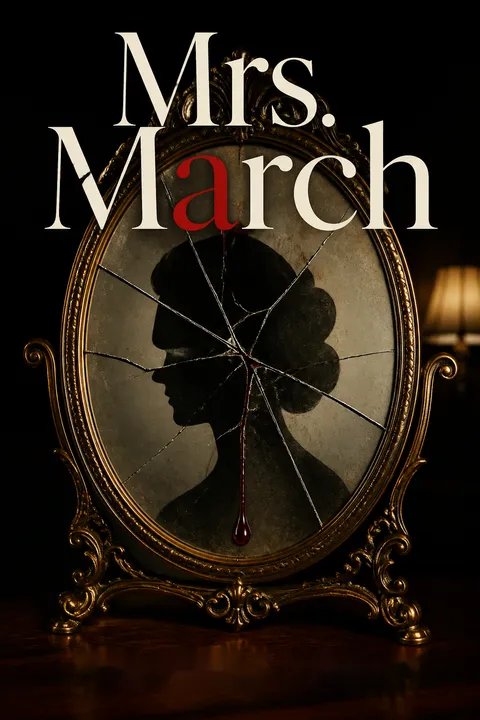
Doubles unsettle identityThe portrait of Kiki7 introduces Agatha’s1 childhood habit of making an imagined double, while later mirrors, windows, and imitations extend that motif into adulthood. These images let the novel dramatize how Agatha1 shifts between observing herself and experiencing herself as another person. Sylvia’s8 appearance becomes especially available for this kind of substitution. The doubles do not offer a supernatural explanation; they keep the reader close to Agatha’s1 unstable experience without confirming every vision as fact.
Sylvia's murder investigation
A false trail gathers forceNews reports, George’s2 saved clipping, his trips to Edgar’s13 cabin, and the geography of Gentry form the pieces of Agatha’s1 amateur investigation. She tests them through travel and interviews, but the information she finds also contradicts her assumptions: Sylvia8 admired George2 yet never met him. Because Agatha1 treats missing proof as another reason to keep looking, the investigation exposes the difference between checking a belief and protecting it. The device drives the mystery while also showing how obsessive interpretation can overtake evidence.
Cockroaches, blood, and rot
Fear takes bodily formInsects, stains, strange odors, and bodily discomfort recur as Agatha’s1 sense of control weakens. The cockroaches prompt her to call an exterminator; the bloodied figure at the window turns the fear of murder into an image of herself; later physical sensations blur with the aftermath of medication and exhaustion. These details keep psychological distress grounded in the apartment and the body rather than in abstract explanation. Their meaning remains uncertain because the novel filters them through Agatha’s1 perceptions.
The Marches' staged home
Domestic order hides ruptureThe Marches’ carefully set table, arranged rooms, party menus, and polished holiday rituals give Agatha1 a way to manage how others see the family. She repeatedly prepares the apartment for guests even when the marriage is strained and she is frightened. Martha’s4 routines support this appearance, while Agatha’s1 private disorder grows behind closed doors. The home’s surfaces therefore become part of the plot: each performance of normality raises the stakes when the household can no longer conceal what is happening inside it.
FAQ
0. Synopsis & Basic Details
What is Mrs. March about?
- A Woman's Unraveling: Mrs. March follows a seemingly ordinary Upper East Side housewife whose meticulously constructed world begins to crumble after a casual comment suggests she is the inspiration for the loathed, grotesque protagonist in her famous novelist husband George's latest book.
- Descent into Paranoia: As Mrs. March grapples with this unsettling idea, her perception of reality distorts, leading her down a path of intense paranoia, suspicion, and a desperate search for answers about her husband's true nature and her own identity.
- Psychological Thriller: The novel is a chilling psychological thriller that blurs the lines between truth and delusion, exploring themes of self-worth, societal expectations, and the dark corners of the human mind.
Why should I read Mrs. March?
- Masterful Psychological Suspense: Readers should delve into Mrs. March for its gripping, unsettling atmosphere and its deep dive into the psyche of an unreliable narrator. Virginia Feito crafts a narrative that keeps you constantly questioning what is real and what is a product of Mrs. March's unraveling mind.
- Sharp Social Commentary: Beyond the suspense, the novel offers a biting critique of societal pressures on women, particularly regarding appearance, domesticity, and the performance of a "perfect" life, making it a thought-provoking read.
- Unforgettable Protagonist: Mrs. March herself is a complex, often frustrating, but ultimately compelling character whose internal struggles and descent into delusion are rendered with such vivid detail that she stays with you long after the final page, prompting discussions on Mrs. March character analysis.
What is the background of Mrs. March?
- Contemporary Upper East Side Setting: The novel is set in the affluent, image-conscious world of New York City's Upper East Side, a backdrop that emphasizes Mrs. March's preoccupation with appearances, social standing, and the unspoken rules of her elite environment.
- Author's Distinct Voice: Virginia Feito, a Spanish author, brings a fresh, darkly humorous, and often unsettling voice to the psychological thriller genre, drawing comparisons to authors like Shirley Jackson and Patricia Highsmith for her exploration of female paranoia and domestic unease.
- Intertextual Echoes: The narrative subtly weaves in allusions to classic literature, such as Daphne du Maurier's Rebecca (a book Mrs. March reads), which explores themes of a second wife haunted by the first, and even Mary Shelley, adding layers of literary depth to the story's psychological underpinnings.
What are the most memorable quotes in Mrs. March?
- "But isn't this the first time he's based a character on you?": This seemingly innocuous question from Patricia, the shopkeeper, acts as the inciting incident, shattering Mrs. March's carefully constructed reality and launching her into a spiral of self-doubt and paranoia, a pivotal moment in Mrs. March explained.
- "Then why does it feel like she exists and I don't?": Uttered by Mrs. March to George, this poignant line encapsulates her profound identity crisis, revealing her struggle to reconcile her public persona with the grotesque character of Johanna, and her growing sense of non-existence outside of external validation.
- "You are retreating into your deepest, darkest places, or when you're hiding your deepest, darkest self from others.": The psychic's chilling assessment of Mrs. March's inner state directly addresses the novel's core psychological themes, highlighting her shame, self-deception, and the deformed "soul" she keeps hidden, offering a key insight into Mrs. March symbolism.
What writing style, narrative choices, and literary techniques does Virginia Feito use?
- Unreliable First-Person Narration: Feito masterfully employs an unreliable narrator, immersing the reader entirely in Mrs. March's subjective, increasingly distorted perspective. This narrative choice creates constant suspense, forcing readers to question the veracity of events and Mrs. March's perceptions, central to Mrs. March analysis.
- Darkly Humorous and Ironic Tone: The prose is often laced with a dry, sardonic wit and a keen sense of irony, particularly in Mrs. March's internal monologues and observations of others, which contrasts sharply with the escalating dread and psychological horror.
- Vivid Sensory Details and Symbolism: Feito uses rich, often unsettling sensory descriptions—from the "clammy bodies" in the patisserie to the "putrid smell" of bad meat—and recurring symbols like mirrors, gloves, and insects to externalize Mrs. March's internal decay and fragmentation, enhancing the novel's thematic depth.
1. Hidden Details & Subtle Connections
What are some minor details that add significant meaning?
- The Mint Green Gloves: George's gift of mint green kidskin gloves, a color Mrs. March would "never have picked out," symbolizes her desire to project a carefree, confident image that contradicts her true self. Her repeated removal and re-donning of them, and later her thought of licking her thumb after touching her burned earlobe (like a "pork rind"), subtly link her to the "ugly hands" and "coarse hands" attributed to Johanna, highlighting her deep-seated insecurities and the performative nature of her identity.
- Apartment Number 606: Mrs. March finds comfort in her "beautiful, round number" 606, contrasting it with "discomfiting" numbers like 123. This seemingly trivial detail underscores her desperate need for order, control, and aesthetic perfection in a life that is rapidly spiraling into chaos, reflecting her fragile mental state and the illusion of stability.
- The Bathing Women Painting: The painting in the guest bathroom, initially depicting "flirty, playful" bathing women, subtly transforms throughout the novel, first showing their backs, then their "rotted, sagging breasts, their mouths contorted, eyes bleeding." This shifting artwork visually represents Mrs. March's deteriorating mental state, her distorted perception of female beauty and vulnerability, and the grotesque reality she increasingly projects onto her surroundings, a key element in Mrs. March symbolism.
What are some subtle foreshadowing and callbacks?
- George's Hunting Comments: George's casual remark that "It's probably less of a hassle to hunt humans nowadays" when discussing hunting with Edgar, chillingly foreshadows the novel's violent climax. This throwaway line, initially dismissed by Mrs. March, later gains sinister weight as her suspicions about his involvement in Sylvia's murder intensify, hinting at George March's motivations.
- The "B.M." Busk in the Audiobook: During her dinner at Tartt's, Mrs. March overhears an audiobook describing a stolen "scrimshawed busk" with the initials "B.M." that belonged to another prostitute, not Johanna. This detail subtly foreshadows George's affair with Jennifer (whose initials are J.M., but the "B.M." could be a misdirection or a symbolic link to "Mrs. March" herself, or even a reference to her mother, Mrs. Kirby, whose maiden name is not given but could be B.M.), and the theme of stolen identity or possessions, linking to Mrs. March's own theft of Gabriella's cigarette case.
- Jonathan's "Murderer" Game: When Mrs. March overhears Jonathan and Alec playing "cop and criminal," with Jonathan choosing to be a "murderer" and asking if one would "turn in a murderer to the police... even if you knew 'em," it directly foreshadows the ultimate act of violence and Mrs. March's internal struggle with exposing George, highlighting the dark themes in Mrs. March.
What are some unexpected character connections?
- Alma and Kiki: Echoes of Childhood Cruelty: Mrs. March's childhood relationship with Alma, the maid she bit and tormented out of possessiveness, and her imaginary friend Kiki, whom she "killed" in the bathtub, reveal a pattern of control, jealousy, and suppressed aggression. These early experiences unexpectedly connect to her adult behavior, particularly her envy of other women and her eventual violent act, offering a deeper Mrs. March character analysis.
- Mrs. March's Mother's Influence: Her mother's constant criticism ("Why can't you behave? Look at Lisa"), her disdain for Mrs. March's "excessive imagination," and her emphasis on appearances ("a healthy marriage is built from the outside in") profoundly shaped Mrs. March's insecurities and her lifelong performance of a perfect facade. This deep-seated influence explains much of Mrs. March's adult paranoia and her desperate need for external validation.
- The Shared Vulnerability with Sylvia Gibbler: Despite Mrs. March's initial revulsion towards Johanna (and by extension, Sylvia), she eventually adopts Sylvia's persona, wearing her headband and perfume, and even contemplating her death. This unexpected connection reveals Mrs. March's subconscious identification with Sylvia as a victim, a woman whose identity was consumed or distorted by a powerful man, blurring the lines between her own reality and Sylvia's tragic fate.
2. Psychological, Emotional, & Relational Analysis
What are some unspoken motivations of the characters?
- George's Need for Validation Beyond His Wife: While George appears to be a successful author, his affair with Jennifer and his dismissive attitude towards Mrs. March suggest an unspoken need for fresh admiration and validation that his long-term marriage no longer provides. His "game-changing book" and the attention it brings seem to fuel a desire for new conquests, both literary and personal, revealing George March's motivations.
- Mrs. March's Quest for Control and Agency: Beneath her superficial concerns about social standing and appearances, Mrs. March is driven by a deep, unspoken desire for control over her own narrative and life. Her paranoia, her investigation into Sylvia's murder, and her eventual violent act are all desperate attempts to reclaim agency in a world where she feels increasingly invisible and defined by others.
- Martha's Quiet Disapproval and Self-Preservation: Martha's steadfast demeanor and eventual resignation, coupled with her subtle comments (e.g., about bloodstains on sheets), hint at an unspoken awareness of the dysfunction in the March household. Her motivation is likely self-preservation, choosing to distance herself from a situation she perceives as increasingly unstable and potentially dangerous, offering a subtle Mrs. March analysis of supporting characters.
What psychological complexities do the characters exhibit?
- Mrs. March's Identity Fragmentation and Projection: Mrs. March exhibits severe identity fragmentation, manifested through her imaginary friend Kiki, her adoption of Sylvia's persona, and the "Greek chorus of Mrs. Marches" at the climax. She constantly projects her own insecurities and perceived flaws onto other women (Patricia, Gabriella, Sheila, Lisa), while simultaneously envying their perceived strengths, highlighting her profound self-alienation.
- George's Narcissistic Self-Absorption: George, while outwardly charming, displays a deep-seated narcissism. His inability to truly see or understand Mrs. March's distress, his casual dismissal of her feelings, and his self-congratulatory attitude about his book and affair reveal a character primarily concerned with his own desires and image, contributing to the themes in Mrs. March about male ego.
- Jonathan's Suppressed Emotional Life: Jonathan, nicknamed "Poe" for his melancholy, is a quiet child whose "unusually so" reserved nature suggests a suppressed emotional life. His drawings of "birds pecking at the naked, bleeding bodies of women" and his game of "murderer" hint at a subconscious absorption of the dark atmosphere and unspoken tensions within his home, reflecting the psychological impact of his parents' relationship.
What are the major emotional turning points?
- Patricia's Comment and the Initial Shock: The moment Patricia asks if George's "whore" character is based on Mrs. March is the primary emotional turning point. It shatters Mrs. March's carefully constructed facade, triggering her initial spiral of self-doubt, humiliation, and the desperate need to read the book, marking the beginning of her psychological unraveling.
- The News of Sylvia Gibbler's Murder: The television report confirming Sylvia Gibbler's murder, particularly the details linking it to Gentry and George's hunting trips, shifts Mrs. March's emotional focus from personal humiliation to terrifying suspicion. This event transforms her paranoia from an internal identity crisis into an external investigation, fueling her dread and conviction of George's guilt.
- George's Confession of the Affair: George's admission of his affair with Jennifer, rather than a murder confession, is a devastating emotional turning point. It strips away Mrs. March's last vestiges of control and her carefully constructed narrative of George as a monster-murderer, replacing it with the mundane, yet equally shattering, reality of betrayal and inadequacy, directly leading to her final, violent act.
How do relationship dynamics evolve?
- Mrs. March and George: From Adoration to Violent Resentment: Their relationship begins with Mrs. March's adoration and self-effacing support for George's career, built on a foundation of her desire for external validation. This evolves into deep suspicion, fueled by his book and Sylvia's murder, culminating in a violent act born of betrayal and a desperate need to reclaim her identity, a complex Mrs. March relationship analysis.
- Mrs. March and Jonathan: A Struggle for Connection and Control: Initially, Mrs. March views Jonathan as a means to "prove to everyone she could rear an infinitely more gracious and sensitive child" than Paula. Her relationship with him is marked by a blend of possessiveness, neglect, and projection, evolving into a desperate, albeit misguided, attempt to "protect" him from George, while simultaneously using him as a pawn in her psychological games.
- Mrs. March and Her Mother/Sister: Lifelong Competition and Insecurity: The dynamic with her mother, characterized by constant criticism and comparison to her "perfect" sister Lisa, instills in Mrs. March a deep-seated insecurity and a competitive drive. This lifelong pattern of seeking approval and feeling inadequate shapes her interactions with other women and her relentless pursuit of a flawless facade, even in fantasy.
4. Interpretation & Debate
Which parts of the story remain ambiguous or open-ended?
- The Extent of Mrs. March's Delusion: The central ambiguity of Mrs. March lies in the unreliable narration, leaving readers to constantly question how much of Mrs. March's experience is real and how much is a product of her deteriorating mental state. Was George truly a murderer, or was this a delusion she constructed to cope with his infidelity and her own feelings of inadequacy? This is a core debate in Mrs. March explained.
- George's True Nature and Guilt: While George confesses to an affair, his earlier behavior—the newspaper clipping, his hunting trip to Gentry, his dismissive responses—could be interpreted as either genuine guilt for murder or simply the awkwardness of a man hiding an affair. The novel deliberately withholds definitive proof, allowing for multiple interpretations of George March's motivations.
- **The Reality of the "Other" Mrs
About the Author
Other books by Virginia Feito

Download PDF
Download EPUB
.epub digital book format is ideal for reading ebooks on phones, tablets, and e-readers.








