

Plot Summary
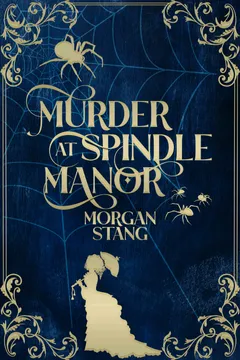
The Compass at Spindle Manor
Isabeau Agarwal1 arrives at the isolated manor during a violent storm, carrying a compass whose needle spins wildly near the creature she hunts. Three bodies have been found along the route to Lamplight, each skinned and missing its brain. She believes the killer has reached Spindle Manor, the last stop before the crowded city, and may be hiding in one of its rooms.
The guestbook lists ten current residents, giving Isabeau1 ten possible identities to investigate. She checks into room 304, notices her silent doll-like receptionist4 and the strange house around her, then opens her arsenal. Her hunt has reached its narrowest point: before morning, she intends to kill the monster or let it escape into Lamplight.
Isabeau begins with a method and a conclusion before she has examined the people in front of her. The spinning compass turns suspicion into something measurable, while the guestbook converts a sprawling city threat into a bounded puzzle. Yet her confidence already contains a danger: she is certain the monster is inside the house. Spindle Manor's isolation makes that assumption feel logical, but it also creates the conditions for tunnel vision. The storm traps everyone together, giving Isabeau control of the setting without guaranteeing control of what it means.
Angelica's Captive Circle
Isabeau's1 coachwoman, Evie Turnstall,2 joins her before dinner, curious about the spinning compass and the danger it signals. At the table, the guests emerge as a strained circle organized around Angelica Keystone,5 a wealthy socialite who needles her cousin Heloise Field7 and mocks Heloise's husband, Teddy.6
Angelica5 also humiliates Esmeralda Valdez,10 a former stage medium whose career collapsed after her tricks were exposed. Colonel Abigail Thrawl,8 a veteran with mechanical limbs, clashes with Angelica5 over military campaigns, while her anxious footman Spud9 watches closely.
Dr Victor Mulgrave11 discusses mesmerism beside his quiet servant Hector;12 the late-arriving Johnny Prescott13 smokes and guards his secrets. Coachman Clayton Homes15 drifts in drunk. Beneath the party's polished manners, almost everyone has reason to resent Angelica.5
The dinner introduces a social economy in which money, status, and humiliation bind people more tightly than affection does. Angelica's power comes not just from wealth but from her ability to decide who receives attention and who becomes its target. Heloise and Teddy depend on her generosity; Valdez depends on her patronage; Thrawl resists her influence for political reasons. Isabeau sees the group as a set of motives, but its cruelty also obscures genuine attachments. In this house, performance is not limited to mediums and mesmers. Everyone is playing a role for someone else's benefit.
Ten Faces, One Monster
When the guests press Isabeau1 about her business, she describes the murders of Vincent Pastore,18 Astrid Karth,19 and John Harris.20 The same predator stripped each victim's skin and consumed the brain so it could take the victim's appearance and memories. Isabeau1 names it a Doppelvyrm and explains that its killings have followed the road toward Lamplight.
The spinning compass, she says, confirms that the creature is close, and one person at the table must be an impostor. She refuses to single out Prescott13 or anyone else, then proves she is no ordinary investigator by shooting a cigarette butt from the air. Isabeau1 sends the guests to their rooms, expecting the frightened creature to make a mistake or attack her in desperation.
Isabeau's announcement changes the manor from a social gathering into a test of identity. The Doppelvyrm can reproduce memory and behavior, so ordinary evidence of familiarity becomes unreliable; even a spouse cannot be sure who shares the bed beside them. Isabeau counters this epistemic terror with authority and marksmanship, but her public challenge also pressures the creature to act. The scene's central tension is not simply whether a monster exists. It is whether love, fear, and personal history can distinguish a person from a convincing imitation.
Two Shots Upstairs
Isabeau1 returns to her room with Evie2 and waits for the guests to react to the threat. A gunshot interrupts their preparations. Isabeau's1 door will not open because her key has vanished, so she kicks it off its hinges and races downstairs with the others. In room 201, they find Johnny Prescott13 shot twice, his own concealed pistol lying away from his body.
Isabeau1 rules out suicide and notes that Prescott's13 corpse remains human, which makes him the one guest she can confidently exclude from being the Doppelvyrm. With the storm preventing anyone from reaching the city for police, Isabeau1 accepts responsibility for investigating the ordinary murder as well as the supernatural hunt.
The locked door makes Isabeau's first failure physical: the investigator who insists on controlling the night cannot even reach the crime scene promptly. Prescott's death also establishes a second kind of danger, one produced by human choices rather than a creature's appetite. Isabeau now has overlapping cases, and their evidence may interfere with one another. Her decision to act as detective is less a claim to expertise than a response to isolation: no outside authority can arrive, so the people trapped together must depend on the very person who has frightened them.
Prescott's Hidden Cargo
Searching Prescott's13 room, Isabeau1 finds his bedroom key missing, a hidden cache of opium in his luggage, and a Smithing pistol associated with the criminal Hammond Company Limited. A business card and a boast about possessing someone else's secret suggest Prescott13 may have been blackmailing a fellow guest.
Isabeau1 begins private interviews, exposing money troubles, grudges, and weak alibis. She catches Thrawl's8 footman Spud9 with her stolen key: Thrawl8 had planned to lock Isabeau1 away, not kill Prescott.13
That confession makes the Colonel8 look suspicious without proving murder. Meanwhile, Penny4 silently directs Isabeau1 to a hidden key for Suite 101. Landlady Marguerite Blanchet3 admits that a secret guest is staying there, but refuses to name the resident.
The investigation depends on separating suspicious behavior from proof. Thrawl really did sabotage Isabeau, but her hostility has a different cause from the killing; her deception is a diversion, not a solution. Prescott's opium and concealed weapon give him a criminal context, yet his own crimes do not explain who wanted him dead. Penny's wordless intervention marks her as more perceptive than the guests assume. The case keeps multiplying secrets, and each revelation changes the meaning of earlier behavior without erasing the need for evidence.
The Noble in Suite 101
Blanchet3 finally identifies the hidden guest as Lady Celestial Brilliance Constellation,14 a twelve-foot Noble and Isabeau's1 employer. Isabeau1 meets her privately and confirms that the Doppelvyrm is still believed to be among the residents.
The Noble14 refuses to help solve either mystery, leaving the hunt to Isabeau,1 but explains that the monster could kill thousands if it reaches Lamplight. She is present as a final safeguard: if Isabeau1 has not stopped the creature by morning, Constellation14 will destroy everyone in Spindle Manor rather than risk the city.
Isabeau1 leaves the suite shaken by the scale of that threat. Her investigation is no longer only a test of skill; every delay now places the lives of the guests, Penny,4 and herself at stake.
The Noble's intervention reveals the unequal moral arithmetic governing this world. Individual lives matter, but only within a hierarchy that places the survival of the city above the people in the manor. Isabeau is entrusted with judgment, yet the person who gave her that authority has already prepared a lethal fallback. The revelation sharpens her loneliness: she must act under orders from beings whose priorities she cannot change, while the people at risk are becoming more than names in a ledger.
A Séance Breaks Open
Penny4 leads Isabeau1 back to the guestbook, but the clue remains unclear. Isabeau1 instead asks the disgraced medium, Esmeralda Valdez,10 to contact Katherine Sharpe,17 the ghost said to haunt room 303. During the séance, the table rises and spins, the candles turn purple, and a violent force lifts Valdez10 into the air and tears her clothing.
Words appear cut into her skin, directing the guests to look beneath the apple tree. Valdez10 survives, though wounded. Blanchet3 confirms that an old apple tree stands behind the manor, and Isabeau1 orders the guests to fetch shovels. The séance proves Valdez's10 spiritual sensitivity is real, even if she once used stage tricks, and gives the investigation a physical destination.
Valdez's past fraud makes the séance a test not only of the dead but of whether a compromised person can still be trusted. The supernatural answer arrives through injury rather than spectacle alone: Valdez lends her body as a channel and pays for the message in blood. Isabeau's procedural world must make room for knowledge that cannot be verified by ordinary instruments. The message also binds the living to the house's older history, showing that the current crime is unfolding inside a place already shaped by unresolved violence.
Ashes Beneath the Apple
In the rain, Thrawl,8 Spud,9 Teddy,6 Hector,12 and Mulgrave11 dig beneath the apple tree until they uncover Katherine Sharpe's skeleton. Isabeau1 brings the bones to room 303 and burns them in the fireplace, giving the ghost a proper resting place. Katherine17 appears first as a decayed spirit, then as a young woman, and recounts how her husband Emery killed her during a storm and buried her under the tree.
Before leaving, she cannot identify Prescott's13 murderer or the Doppelvyrm, but directs Isabeau1 to someone who witnessed the shooting: the man living in the walls. The group turns on Blanchet3 for hiding a resident. She admits that a long-term lodger named Ralph16 lives in the attic, and Isabeau1 prepares to question him.
Katherine's story converts a gothic haunting into a record of domestic violence that the house has kept when human inquiry failed. Her release comes not from solving the present crime but from recovering and honoring her body. The distinction matters: some mysteries demand forensic explanation, while others require an act of care. Isabeau's help earns a clue, but not the certainty she wants. The ghost's final lead pushes the investigation toward a hidden human presence and further exposes Blanchet's habit of protecting the house's secrets.
Ralph Hears the Killer
Isabeau1 climbs into the web-filled attic with Evie2 and finds Ralph,16 a reclusive resident whose human form is joined to a huge spider's body. He speaks gently until he grows hungry and lunges, forcing Isabeau1 to fire her double-barreled shotgun and drive him back with light. Once subdued, Ralph16 explains that his poor eyesight kept him from recognizing Prescott's13 killer.
His exceptional hearing, however, lets him recall that the fugitive's steps made no sound on the creaking boards at the room's threshold. The clue excludes some heavier suspects but identifies no culprit. Isabeau1 promises Ralph16 a rat for his help and returns to the others with another narrow fragment of evidence, still short of a solution.
Ralph's loneliness echoes Isabeau's, but his retreat from the world has become a physical transformation that threatens anyone who enters his refuge. His request for company makes the encounter emotionally legible before it turns dangerous. The witness testimony is precise yet incomplete, a useful reminder that evidence has limits: excellent hearing cannot compensate for poor sight. Isabeau does not force Ralph into a neat role as monster or informant. She contains the danger, listens, and leaves him with a small promise of care.
Tea for a Dead Cousin
Back in the dining room, Teddy6 tries to make peace with Angelica,5 but she answers his kindness with another insult. Moments later she slumps face-first into her porridge and dies. Isabeau1 treats the death as murder and tests Angelica's leftover tea on the two rats from Penny's4 desk: one survives the porridge, the other dies after drinking the tea.
She checks Prescott's13 room again and finds his opium untouched, but later notices that a tin of tea has disappeared. In Angelica's5 bedroom, a phonograph has no recording cylinders, and a rock lies beneath a broken window without the expected glass scattered inside. These oddities suggest the recordings were thrown out rather than a stranger breaking in.
Angelica's death makes the dinner table's cruelty consequential, but it does not immediately tell Isabeau which grievance became motive. The rats provide a blunt, physical answer where testimony has failed. The absent cylinders are more elusive: their importance lies precisely in their absence. The scene turns the room into an archive of erased evidence, suggesting that someone tried to remove a story before it could be heard. Isabeau's patience with small inconsistencies begins to outperform her earlier reliance on the compass.
Spindle Manor Unmoored
A bell tied to Prescott's13 ankle rings from behind his locked door, and his corpse bursts out reanimated. Isabeau1 and Thrawl8 fight him off as the storm seems to awaken every supernatural presence in the manor: old ghosts dance through the halls, Angelica5 rises as another corpse, and Ralph16 crashes from the attic in a frenzy.
Heloise7 throws insect powder into Ralph's16 face, giving Isabeau1 the chance to kill him with her shotgun. Amid the chaos, Isabeau1 shoots the image of Dr Mulgrave11 and proves it is an astral projection. The real Mulgrave,11 an ancient and lecherous mesmer, is found hidden in a suitcase with Hector.12 His decades-long illusion explains his refusal to eat, drink, or exert himself.
The storm makes Spindle Manor's buried histories physically active, collapsing the distinction between past and present. The guests cannot remain spectators to Isabeau's investigation; Heloise's quick use of insect powder becomes essential to survival. Mulgrave's revelation supplies a human analogue to the Doppelvyrm: a constructed public identity maintained by skill and concealment. Yet unlike the creature, his deception is not a borrowed life but a long-running performance. The sequence overwhelms the investigator's orderly categories, forcing her to survive before she can interpret.
Evie Drops the Mask
After Isabeau1 exposes Mulgrave,11 she announces that one more person has lied throughout the night: Evie.2 The coachwoman admits she is an undercover Waxwick Yard officer assigned to observe the Hunt and learn how the Nobles operate. Isabeau1 had noticed Evie's2 unusual gait, her surprise at the manor's plumbing, her quick recognition of opium, and the expert way she handled a gun.
Prescott13 had also suspected her, mistaking her for a police officer at dinner. Evie2 produces her badge and takes charge of the murder investigation, but she still offers to work with Isabeau.1 The revelation changes their partnership without erasing its genuine warmth: Evie's2 questions and practical help were part of her real character, not merely her cover.
Evie's concealment complicates the book's opposition between authentic identity and disguise. Her official role is hidden, but her curiosity, humor, and emerging loyalty are not. Isabeau recognizes the difference between a false occupation and a false self, a distinction central to the larger mystery. Their cooperation also challenges the institutional boundary between police and Huntress. Each has been trained to distrust the other's authority, yet shared danger makes collaboration more useful than secrecy.
Heloise's Last Alibi
Isabeau1 connects the poisoned tea to Teddy's6 missing supply, whose tin bears the initials of Heloise's former name, Keystone. Prescott13 had stolen it in Blackmourne after discovering Heloise's7 plan to kill Angelica,5 then used that knowledge to threaten her. Heloise7 killed Prescott13 with his own pistol, recovered the poison, and later served it to Angelica.
Teddy's6 supposed alibi fails when Isabeau1 points out that he was still fastening his clothes after the shots, having been in the bathroom rather than beside Heloise.7 Heloise7 draws the pistol and admits Angelica5 had blackmailed her with phonograph recordings. Lady Constellation14 charges in, disarms Heloise,7 and throws her outside. Evie2 takes custody of her for the journey to Lamplight.
The solution depends on linking ordinary details rather than discovering a single dramatic confession: initials, a missing tin, a bathroom visit, and recordings destroyed in the rain. Heloise's motive is not simple greed or temper. Angelica's coercion made murder seem like the only remaining way to reclaim a life, but the act still carries a victim and a legal consequence. Teddy's false alibi had been an act of loving protection, which makes its collapse painful rather than merely useful. Constellation's intervention ends the immediate threat with the same overwhelming power that has shadowed the investigation.
The Needle Points North
With the storm passing, Isabeau1 tells Constellation14 that the Doppelvyrm has escaped into the woods. In truth, she has made Teddy6 disable the compass so its needle can appear to point north, sparing everyone in the manor from the Noble's14 promised destruction. Evie2 leaves with the other guests, then returns days later with news that Waxwick Yard and the Nobles are beginning a formal partnership.
Isabeau1 accepts her as a fellow hunting partner and finally tells her that monsters killed her parents, the reason she devoted herself to the Hunt. The confession draws Isabeau1 out of her habitual reserve, but it does not settle the creature's fate. She still believes it escaped, and the unfinished case keeps pulling her back toward Spindle Manor.
Isabeau's deception is an ethical break with the institution that trained her to value certainty and obedience. She chooses the lives in front of her over the Noble's risk calculation, accepting responsibility for a conclusion she cannot prove. Her admission to Evie shows a second change: she begins to treat companionship as more than a tactical arrangement. Still, the false compass preserves rather than resolves the mystery. The book makes that evasion costly, because a humane lie can protect people in the moment while leaving the actual danger untouched.
The Manor's Last Monster
Isabeau1 returns to the quiet manor to pay for repairs and reviews its guestbook. She realizes that John Harris,20 the Doppelvyrm's last known identity, signed in a day before the travelers arrived; the creature never needed to replace one of their party. The compass still reacts, and Blanchet's3 claim that the manor was only a temporary refuge cannot hide the truth: her deepest attachment to the house is genuine, while the creature can imitate affection but cannot feel love.
Blanchet3 sheds her human shape and attacks. Isabeau1 kills the Doppelvyrm with her shotgun, then drenches the building in kerosene and burns it. She takes Penny4 away from the ruined home, offering the living doll4 a place beside her rather than leaving her alone.
The final revelation exposes confirmation bias as the flaw beneath Isabeau's professional confidence: she forced the evidence to fit a monster traveling inside the guest party. Penny's repeated efforts to show her the ledger restore the overlooked fact and transform the silent doll into the story's most reliable witness. Love becomes both the creature's limit and the measure of human attachment. Isabeau destroys the house that sheltered the monster, but refuses to treat Penny as part of its wreckage. Her ending does not cure loneliness; it gives her a choice about how to meet it.
Analysis
Murder at Spindle Manor builds its mystery from a conflict between what can be measured and what can only be interpreted. Isabeau1 trusts the compass because it gives her a clear signal, then lets that signal harden into a theory about where the Doppelvyrm must be. The ordinary murder is solved through less spectacular evidence: a key taken from a body, tea missing from a suitcase, initials on a tin, and a bathroom visit that breaks an alibi. The contrast reveals the danger in Isabeau's1 profession. Training gives her powers of observation, but conviction can still make her ignore the evidence that does not fit.
The manor itself acts like a crowded archive. Its walls hold a buried murder, a hidden lodger, a secret guest, a living doll, and the energy of converging ley lines. These mysteries do not all mean the same thing. Katherine's17 haunting requires the recovery and burning of her body; Prescott's13 death requires legal accountability; Ralph's16 isolation calls for both caution and a gesture of kindness. Isabeau's1 work demands that she distinguish among them rather than reduce every strange presence to a target.
The book also tests the boundary between performance and personhood. Mulgrave11 constructs a public identity through mesmerism, Evie2 conceals her occupation, and the Doppelvyrm reproduces the memories and appearance of its victims. Yet the story does not treat all disguise as morally equivalent. A hidden identity may protect an observer or extend a self-serving illusion; the decisive difference lies in what the concealed person does to others. The Doppelvyrm can imitate love but cannot feel it, while genuine attachment appears in Penny's4 devotion, Teddy's6 care, and Isabeau's1 eventual choice to bring Penny4 with her.
Isabeau's1 final act does not prove that the institutions around her are wise. She lies to the Noble14 to save the people in the house, then returns to confront the danger she mistakenly believed had escaped. Her growth lies not in becoming certain, but in accepting that judgment carries responsibility even when certainty fails. By leaving the burning manor with Penny,4 she turns a solitary profession toward an imperfect but chosen companionship.
People Also Read


Characters
Isabeau Agarwal
The monster-hunting outsiderIsabeau is a disciplined Huntress employed by the Nobles to track dangerous supernatural creatures. Armed, observant, and wary of intimacy, she prefers evidence and preparation to the unpredictable demands of ordinary company. Her profession gives her authority but also narrows her world: she tends to sort people into risks, clues, and responsibilities. Beneath that reserve is a capacity for compassion that appears in how she treats vulnerable witnesses and those who cannot speak for themselves. The case at Spindle Manor tests both her investigative habits and her isolation, pushing her to question when certainty serves justice and when it merely protects her from uncertainty.
Evelyn Turnstall
The irrepressible coachwomanEvie is a lively, talkative young woman who drives Isabeau's1 coach and refuses to be treated as invisible. Her humor and curiosity irritate Isabeau1 at first, but they also keep the Huntress engaged with other people rather than sealed inside her work. Evie notices practical details, takes risks when the situation turns dangerous, and wants access to the truth rather than a place safely outside it. Beneath her chatter is a serious interest in how power works and who is allowed to wield it. Her growing bond with Isabeau1 rests on candor, persistence, and a willingness to meet reserve with warmth.
Marguerite Blanchet
The guarded innkeeperBlanchet is the elegant, watchful proprietor of Spindle Manor, a woman whose life is bound to the old building and its dwindling business. She values discretion and keeps the house's unusual residents and histories close, presenting hospitality as both a duty and a defense. Beneath her composure lies a melancholy kinship with people who feel stranded from ordinary life. She understands how much a home can matter when the world outside seems inhospitable, and she expects others to recognize that attachment without being told. Her guarded manner makes her difficult to read, even when she is offering genuine care.
Penny
The silent living dollPenny is Spindle Manor's living doll receptionist, a former human whose mouth is sewn shut and whose expression rarely changes. She also serves in the kitchen and elsewhere in the house, moving efficiently despite the assumptions others make about her limited abilities. Penny communicates through small gestures and purposeful actions rather than speech. Her quiet presence gives the manor a steady rhythm amid its theatrical guests, and she seems to notice more than people expect. Blanchet3 treats her as a valued companion, not merely an employee, while visitors often mistake her silence for lack of thought.
Angelica Keystone
The weaponized socialiteAngelica is Lamplight's celebrated socialite, wealthy, flamboyant, and skilled at making every room orbit her. She collects friendships and favors, but often treats affection as something she can grant or withdraw to control people. Her wit is sharpest when she finds another person's insecurity, and she uses wealth as leverage as readily as entertainment. Angelica's confidence can look like freedom from other people's judgment, yet her appetite for secrets reveals a need to command the stories they tell about themselves. Her relationships with her cousin Heloise7, Valdez10, and Thrawl8 expose different forms of dependence and resistance.
Theodore Field
The watch-minded husbandTeddy is a friendly accountant with an intense fascination for pocket watches and a gentle manner that makes him easy to underestimate. He is devoted to his wife, Heloise7, and tries to meet Angelica's5 needling with good humor, even when it wounds him. Money worries and a delicate stomach make him feel exposed in a circle that prizes status, but he rarely responds with cruelty of his own. Teddy's kindness is sincere, though his instinct to protect the people he loves can leave him vulnerable to misunderstanding and misplaced certainty.
Heloise Field
The dutiful cousinHeloise is Teddy's6 quiet, attentive wife and Angelica's5 cousin. She appears modest and accommodating, often stepping between her husband and Angelica's5 insults, but her reserve should not be mistaken for passivity. She has learned to manage her feelings carefully in a social circle where wealth can dictate what people tolerate. Her affection for Teddy6 is the clearest part of her public character, while her habit of keeping private needs hidden leaves others with an incomplete picture of her. Heloise's role reveals the strain of balancing loyalty, dignity, and dependence.
Abigail Thrawl
The iron-backed colonelColonel Thrawl is a decorated veteran whose brass limbs and steam-powered engine testify to the cost of her military service. Blunt, commanding, and fiercely proud, she thinks in terms of readiness and tactical advantage. She respects competence and understands the dangers of the supernatural, though her authority can make her impatient with people who move at a different pace. Her political conflict with Angelica5 is rooted in competing ideas about the military and the resources it protects. Thrawl's stern exterior conceals a personal life she is not accustomed to discussing openly.
Spud
The anxious footmanSpud is Colonel Thrawl's8 young, nervous footman. He is observant, deferential, and quick to shrink from attention, particularly when Thrawl's8 forceful manner fills a room. His position gives him little authority despite his proximity to a powerful employer. Spud's hesitation reflects the difficulty of distinguishing obedience from choice when dependence shapes every interaction. He is often overlooked by the other guests, who treat him as part of Thrawl's8 equipment rather than as a person with his own perspective.
Esmeralda Valdez
The fallen mediumValdez is a former theater medium whose public career ended after her methods were exposed. Sleepy, graceful, and proud, she refuses to accept Angelica's5 account of her as nothing but a fraud. She distinguishes spiritual sensitivity from the stage techniques she used to satisfy paying audiences, a distinction that outsiders may dismiss but that matters to her sense of self. Valdez carries humiliation and resentment without surrendering her connection to the dead. Her manner can seem distant, yet she is capable of fierce focus when a spirit finally answers.
Victor Mulgrave
The celebrated mesmerMulgrave is introduced as a successful mesmer and theatrical lecturer devoted to the science of animal magnetism. He speaks with polished confidence about the future of mesmerism, especially the possibility of projecting consciousness beyond the body. His interest in theory can make him seem detached from the people around him, while his social role places him among Lamplight's educated elite. He is a man of elaborate explanations and high ambition, convinced that the limits others accept are not necessarily real. His relationship with his servant Hector12 appears to be one of long-standing dependence.
Hector Fernand
The immovable valetHector is Mulgrave's11 large, quiet footman, a man whose few words and unreadable expression make him difficult to question. He handles the physical work others avoid and appears entirely at ease with being underestimated. His loyalty to Mulgrave11 is habitual, but the length and nature of their relationship are less clear than they first seem. Hector's stillness contrasts with the manor's anxious, talkative guests, and his presence gives Mulgrave11 a dependable companion who rarely draws attention to himself.
Johnny Prescott
The armed strangerPrescott joins the travelers late, carrying a concealed pistol and an air of guarded indifference. He smokes openly, answers questions with evasions, and seems more interested in what others are hiding than in earning their approval. His arrival unsettles the party because he is the one person whose history with the group is short and uncertain. Prescott understands the value of secrets and presents himself as someone who knows how to use them. The other guests find it easy to assume the worst about him.
Lady Celestial Brilliance Constellation
The remote NobleLady Constellation is a towering Noble whose presence carries the force of an authority beyond ordinary governments. Veiled and self-possessed, she speaks with confidence and treats large-scale human survival as her primary concern. Her perspective is distant from the private loyalties that shape the guests' lives, though she recognizes skill when Isabeau1 demonstrates it. The Noble's manner conveys both grace and danger: she rarely needs to raise her voice to make clear that her judgment can determine the fate of everyone under a roof.
Clayton Homes
The wandering coachmanHomes is an aging coachman who drinks heavily, tells rambling stories, and treats moments of crisis as invitations to practice amateur detective work. His misreadings often frustrate Isabeau1, but his outsider status lets him notice how the traveling party behaves. He drifts between comic distraction and useful observation, without seeming to know when he has crossed from one into the other. Beneath the buffoonery is a man shaped by years on the road and by the odd company that gathers around it.
Ralph
The hidden lodgerRalph is a secluded, long-term resident of Spindle Manor who avoids visitors and speaks of the outside world as a place best left behind. He is shy, formal, and hungry for companionship, though his needs can become dangerous. Ralph's isolation has shaped the way he sees himself and the people who approach him.
Katherine Sharpe
The woman in whiteKatherine is an enigmatic presence associated with room 303, where guests glimpse her in an old-fashioned white dress. She is quiet and difficult to approach, appearing most vividly during storms. Her long absence from ordinary conversation has made her part of Spindle Manor's accumulated history.
Vincent Pastore
The first reported victimPastore is a modestly successful fisherman whose death begins the chain of murders that brings Isabeau1 to Spindle Manor. He appears in the investigation through the sparse facts investigators can gather about his ordinary life.
Astrid Karth
The second reported victimKarth is a wealthy Portsmith socialite whose murder follows Pastore's18. The contrast between their backgrounds helps Isabeau1 recognize that the killer selects identities rather than victims from one social class.
John Harris
The third reported victimHarris is a poor laborer found dead in Blackmourne. His name in Spindle Manor's guestbook later proves more important than the assumptions Isabeau1 built around the traveling party.
Plot Devices
The spinning compass
Tracks the nearby creatureThe compass needle spins when a Doppelvyrm is close, giving Isabeau1 a practical tool for narrowing her search. Because she trusts its signal, she assumes the creature must be one of the guests. That assumption is wrong: the monster is on the grounds, not inside the traveling party. Later, Isabeau1 has Teddy6 disable the needle so she can convince Lady Constellation14 that the danger has passed. When she removes the obstruction on her return, the needle spins again and confirms that the creature is still near. The compass both guides the investigation and exposes the risk of mistaking a reliable instrument for a complete theory.
The Doppelvyrm's borrowed identity
Turns memory into disguiseThe Doppelvyrm kills a person, removes the skin, and consumes the brain, allowing it to reproduce the victim's body, memories, and behavior. This makes ordinary recognition unreliable, even among family members and spouses. Isabeau1 explains that the creature can imitate emotion but cannot truly experience love, offering a possible way to distinguish it from a human being. The creature's capacity for imitation drives the locked-room suspicion and makes the social secrets of the guests seem relevant to the Hunt. Its crucial limitation is not a physical tell but an absence of genuine attachment.
Spindle Manor's ley lines
Amplifies supernatural activityThe manor sits at the convergence of several ley lines, a hidden source of planetary energy that Blanchet3 has kept secret to protect her business. During the storm, the location's supernatural force appears to intensify: ghosts fill the halls, the dead move again, and Ralph16 becomes feral. The convergence connects the manor's separate mysteries, from the old haunting to the present danger, while also explaining why events become so unusually violent on this particular night. Blanchet's3 secrecy about the ley lines is part of a larger pattern of keeping the house's unsettling truths from its guests.
The séance and buried body
Turns haunting into evidenceValdez's10 séance allows Katherine Sharpe17 to communicate through the medium, first with a pendulum and table knocks, then through a violent supernatural manifestation. Katherine17 directs the guests to the apple tree, where they find her remains. Burning the bones releases her spirit and earns Isabeau1 a further clue about a witness in the manor. The device links two investigations: Katherine's17 unresolved death and the present murder. It also establishes that Valdez's10 spiritual abilities are real, complicating the easy assumption that exposure for fraud invalidates every claim she makes.
The tea and recordings
Connects two murdersA poisoned tin of tea links Prescott's13 murder to Angelica's5 death. The initials on the tin connect it to Heloise's7 earlier identity, while the dead rat test proves Angelica's5 tea was poisoned. A phonograph found in Angelica's5 room has no cylinders, and the lack of broken glass reveals that someone threw the recordings outside rather than throwing a rock in. The missing recordings explain the blackmail behind the crime. Together, the objects turn apparently unrelated details into a chain of motive, preparation, concealment, and proof.
Download PDF
Download EPUB
.epub digital book format is ideal for reading ebooks on phones, tablets, and e-readers.








