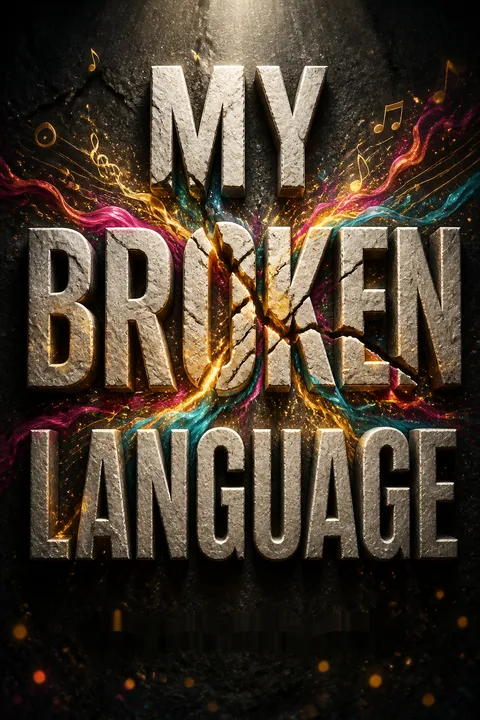


Key Takeaways
Treat inherited language gaps as a vocabulary, not a personal defect
More than fluency. Hudes grows up between her English-speaking father and her Puerto Rican mother, whose Spanish is pushed into private rituals and visits with relatives. Her memoir’s “broken language” means more than imperfect Spanish: it includes accents, silences, gestures, music, and inherited histories that do not fit comfortably into standard English. In kindergarten, classmates mock her name, Alegría, until she drops it from schoolwork. Her mother had chosen it to honor the scholar Ricardo Alegría and the Taíno history his work brought into public view.
Difference has consequences. The name contains a family history that Hudes cannot yet explain, while school teaches her to treat that history as an embarrassment. She grows up believing that fluent English might make her legible, even as it distances her from her mother and relatives. The memoir reframes this mismatch as a source of knowledge, not proof of cultural failure.
What's striking is how the memoir treats language as a social relationship, not a score of grammatical competence. Sociolinguistics often describes multilingual speakers as drawing on a repertoire of forms, rather than switching between sealed, separate languages. That view helps explain why Hudes's gestures, names, music, and silences matter as much as her Spanish. Yet reframing difference as richness should not erase the real penalty attached to accents and unfamiliar names in schools and workplaces. The memoir holds both truths together: inherited language can sustain a person, while institutions can make that inheritance costly.
Read a city’s geography as a lesson in who belongs
A train draws the boundary. As a child, Hudes moves from multilingual West Philadelphia to a horse farm in Malvern, a mostly white, English-speaking suburb. After her parents separate, she rides the R5 train between her mother’s city life and her father’s suburban home. The trip makes inequality visible: the stretch near Overbrook is marked by rubble and abandoned buildings, then gives way to the Main Line’s lawns and restored homes.
Belonging is uneven. Hudes also learns the rules of exclusion inside her father’s new family. At his wedding, his new wife tells her that a family portrait is not for her. Later, Hudes hears her father and stepmother describe “inner city” families through judgments about parenting and poverty. Her light skin gives her access to those private conversations, even as she recognizes the people being discussed as her own relatives.
The train functions as a lesson in spatial inequality: neighborhoods do not merely contain different resources, they shape which lives appear ordinary and which are treated as problems. Urban sociology uses the idea of spatial sorting to describe how housing, schools, and transportation can separate people while making the separation seem natural. Hudes makes that abstraction intimate through a child’s repeated commute. The memoir also resists a simple city-good, suburb-bad contrast. Its sharper point is that every place teaches codes of belonging, and those codes can be enforced through a polite family photograph as easily as through a neighborhood boundary.
Build services where excluded people can actually reach them
Access is more than information. Hudes’s mother learns that her mother, Abuela, was sterilized without being told the procedure was permanent. In the decades before the move to Philadelphia, Puerto Rico’s sterilization rate reached one-third of women, the highest in the world at the time, according to the memoir. Hudes’s mother turns this history into reproductive-health advocacy, but a hotline cannot help women who lack telephones or fear hospitals.
Bring help closer. She creates Casa Comadre, a neighborhood center where women can meet, learn about health, and find practical support. Block Ambassadors reach women reluctant to enter the center. The program arranges bilingual medical and legal help, rides to appointments, and support during hospital visits. It succeeds in reaching people the hotline missed, but its parent organization defunds it after eighteen months, despite community support.
Casa Comadre illustrates a basic principle of public-health design: a service is not accessible merely because it exists. Trust, transportation, language, cost, and fear all determine whether people can use it. The center responds to these barriers by putting relationships and practical help alongside medical information. That approach resembles community health work, where local knowledge can reveal obstacles that centralized programs overlook. The difficult limit is equally important: a successful neighborhood program cannot compensate indefinitely for unstable funding or coercive systems. Access requires both grassroots trust and durable institutional commitment.
Name the harm stigma hides before silence deepens it
Secrets multiply the damage. Several relatives die during the AIDS crisis, but explanations remain uncertain, coded, or contradictory. Hudes hears fragments about Guillo and Big Vic, while her cousin Tico leaves home after learning he is HIV-positive and dies alone in New York. The family’s silence reflects stigma around AIDS, drug use, and homosexuality, as well as the wish to protect loved ones from public shame. It also leaves the living without a shared account of what happened.
Public words offer a start. As a teenager, Hudes joins HIV-prevention work, helps make a school AIDS memorial, and speaks publicly about Tico and other relatives. Their names become part of a wider account of the epidemic. This does not undo their losses, and the family’s silence does not vanish. But naming makes it possible to mourn, educate, and recognize that these deaths were not isolated private misfortunes.
The memoir captures how stigma can operate like an information blockade. In public health, accurate information and the ability to discuss risk are essential to prevention; shame can obstruct both. Yet the family’s silence is not simply ignorance or moral failure. For people facing discrimination, concealment can feel like the only available protection. Hudes’s account is strongest when it preserves that tension: silence may shield a person from exposure while also preventing care, remembrance, and collective understanding. Speaking out is not a universal cure, but it can create conditions in which people no longer have to face a crisis alone.
Let bodies, music, and ritual speak when ordinary words fail
Knowledge has many forms. Hudes’s mother practices Lukumí, an Afro-Caribbean religious tradition rooted in Yoruba beliefs, and builds home altars for the Orisha, spiritual beings with distinct powers and responsibilities. As a girl, Hudes watches her mother enter possession, a ritual state in which a spirit is understood to speak through a person. She is frightened and excluded from some ceremonies, yet drawn to the music, offerings, and care surrounding them.
Feeling finds another medium. Hudes also discovers that Bach and Chopin can carry emotions she cannot express in English or Spanish. Touch, dance, food, and caregiving communicate across generational and linguistic divides. On a visit to Puerto Rico, Taíno petroglyphs carved into coastal rock make her see Indigenous people not only as a vanished past, but as makers who recorded the world around them.
This section broadens the idea of language without claiming that every meaningful experience can be translated into words. Embodied cognition studies how perception, movement, and feeling shape thought; Hudes’s account makes that connection vivid through music, touch, and ritual. Its insistence on cultural specificity matters: Lukumí is not a decorative metaphor for mystery, but a living religious practice with protocols and community. At the same time, the memoir remains honest about the daughter’s uncertainty. Respecting a tradition does not require pretending to understand every part of it, or treating spiritual interpretation as universally shared fact.
Treat literacy as a resource people are owed, not a measure of worth
A diploma can conceal exclusion. While helping her cousin Nuchi dye her hair, Hudes discovers that Nuchi cannot read the instructions. Nuchi explains that her school passed her along while she stayed at the back of the classroom. The revelation changes how Hudes understands their different lives: one cousin debates literature at a magnet school, while the other has been denied a basic tool despite receiving a diploma.
Books open doors unevenly. Hudes finds language and companionship in writers such as Ralph Ellison and Ntozake Shange, and at Yale she has access to Sterling Library, a vast collection she recognizes Nuchi will never explore in the same way. Her younger sister Gabi also struggles with reading and is mistakenly placed in an English-language support class. These experiences turn education from a personal achievement into a question of who gets support, recognition, and time to learn.
The contrast between Hudes and Nuchi challenges the familiar story that schooling rewards effort in a neutral way. Literacy is an individual skill, but it is also infrastructure: children need instruction, assessment, and support that respond to their actual needs. The memoir’s most uncomfortable question is not whether books matter, but why access to them is distributed so unevenly. There is also a limit to the author’s position. Literary fluency gives Hudes tools for understanding inequality, but it cannot by itself repair the institutions that produced it or make her cousin’s experience fully knowable.
Turn family memory into art without sanding off its contradictions
A story needs its own form. Hudes first pursues music, but a producer asks what her songs are about, and the question exposes how little she can say about her own perspective. Her mother reminds her that family histories are disappearing without being recorded. Hudes turns toward playwriting, drawing on memories of cousins, funerals, rituals, and songs that once seemed too private or confusing to explain.
Craft gives memory a stage. Her mentor Paula Vogel encourages her to write in the languages she actually has, including imperfect Spanish, and to treat writing as a skill strengthened through practice. Hudes builds plays from salsa rhythms, Lukumí imagery, family humor, and painful silences. The work does not make the family tidy or heroic. It gives people whose lives are often omitted from the cultural record a place to appear as complicated human beings.
The memoir presents artistic form as a way to hold contradictions that ordinary explanation tends to flatten. A play can place humor beside grief, or ritual beside skepticism, without forcing one to cancel the other. This resembles oral-history practice, where preserving a speaker’s uncertainty can be more truthful than imposing a clean chronology. There is an ethical tension, too: turning relatives’ lives into art risks exposing people who did not choose public attention. Hudes’s attention to their particularity helps counter that risk, but no writer can fully control how an audience receives a family story.
Make room for the bodies girls are taught to hide
A family offers another standard. Hudes grows up among women whose bodies are visible, ordinary, and unpolished: aging, scarred, soft, and varied. Outside the family, she learns that girls are expected to judge and correct their bodies. A relative even warns her not to grow up fat like her mother and aunts. Hudes rejects the word as a verdict on a person’s worth.
Sisterhood can interrupt shame. Her younger sister Gabi, at four, admires her own round belly before the world teaches her to feel otherwise. Hudes becomes her ally, praising her body and humor as Gabi faces bullying. The memoir connects this care to a larger inheritance: the Perez women carry their history in their bodies, their gestures, and their stories. Recording that inheritance gives future generations more than family anecdotes. It offers evidence that their lives deserve attention.
This closing vision links body image to cultural memory. Feminist scholarship often asks whose bodies are treated as neutral, beautiful, or worthy of public representation. Hudes answers through the particular bodies of her family, not through an abstract ideal of confidence. That specificity makes the celebration persuasive, while also leaving room for ambivalence: loving a body does not prevent illness, bullying, or shame from taking hold. The value of intergenerational affirmation is not that it makes girls invulnerable. It gives them counter-language, relationships, and examples that can complicate the narrow standards surrounding them.
Analysis
My Broken Language is a memoir shaped less like a straight path to self-discovery than like a series of translations. Hudes moves among Philadelphia, suburban Malvern, Yale, and the spiritual and historical worlds her family carries. Each setting changes what can be said, who is understood, and which version of the self feels acceptable. This structure makes the book’s central claim experiential: identity is not a single language to recover, but a shifting relation among speech, body, memory, place, and power.
Its most forceful achievement is refusing to separate intimate family life from public history. A child’s shame about her name sits beside colonial language policy. A relative’s illness sits beside AIDS stigma and unequal access to care. A cousin’s inability to read becomes evidence about schooling, not a judgment of intelligence. The memoir repeatedly shows how large systems enter a household through small events, including a commute, a missed explanation, or a family member left out of a photograph.
The book also declines a simple progress narrative. Hudes gains education and artistic fluency, but those gains sharpen her awareness of what relatives were denied. Her mother’s advocacy is visionary and exhausting; her spiritual world is meaningful and sometimes frightening to her daughter; family love coexists with loss, addiction, secrecy, and uneven opportunity. These tensions are not loose ends to be neatly resolved. They are the material from which the writer builds a form capable of holding multiple truths.
A useful question for readers is who gets to narrate a family, and at what cost. Making private histories public can preserve knowledge that institutions neglect, but it can also expose people who never volunteered to become symbols. Hudes’s layered storytelling answers partly through humor, uncertainty, and attention to individual detail. The result is both a personal archive and a challenge to the idea that only polished, fluent, officially documented lives count as history.
Review Summary
My Broken Language is a lyrical memoir that explores Quiara Alegría Hudes' journey of self-discovery as a biracial Puerto Rican woman in Philadelphia. Readers praise her poetic writing style, honest portrayal of family relationships, and exploration of cultural identity. The book delves into themes of language, music, and spirituality. While some found the non-linear narrative challenging, many appreciated the author's unique voice and insightful social commentary. Overall, the memoir is celebrated for its powerful storytelling and authentic representation of Latinx experiences.
People Also Read

Glossary
Broken language
Mixed inherited expressionHudes uses broken language to describe more than imperfect command of Spanish or English. It includes accents, code-switching, silence, gesture, music, ritual, and family knowledge that standard English does not easily contain. The term names both the harm caused by cultural and colonial language hierarchies and the creative ways people communicate across those fractures.
Lukumí
Yoruba-rooted religious traditionLukumí is an Afro-Caribbean religious tradition with roots in Yoruba spiritual practices carried across the Atlantic. In Hudes’s family, it includes reverence for the Orisha, ancestral relationships, altars, offerings, ceremonies, and practices such as spiritual cleansing and possession. The memoir presents it as a living tradition practiced in community, not simply as an individual belief or symbol.
Orisha
Spiritual powers and deitiesOrisha are spiritual beings honored in Yoruba-rooted traditions such as Lukumí. In Hudes’s account, each has distinct associations, powers, colors, and ritual practices. Her mother maintains altars and offerings for them, and ceremonies may involve drumming, prayer, or possession. The Orisha are part of a religious world and community, not merely figures in a personal metaphor.
aché
Spiritual force or powerAché is a spiritual force associated with the power to make things happen or take effect. Hudes’s epigraph describes words as carrying aché, linking speech to action, blessing, and spiritual energy. In the memoir, the term belongs to the religious and cultural vocabulary surrounding her mother’s practice, rather than serving only as a synonym for enthusiasm.
Casa Comadre
Neighborhood health centerCasa Comadre was a Philadelphia community center founded by Hudes’s mother to reach Latina women who could not readily use a telephone hotline. It offered health education and connections to bilingual medical and legal professionals, while Block Ambassadors helped build trust with women hesitant to enter. The program was eventually defunded despite support and reported successes.
Foraker Act
U.S. territorial lawThe Foraker Act established a U.S. civil government in Puerto Rico after the island became a U.S. territory. Hudes describes how English was imposed in government and education, disrupting Spanish-language institutions and cultural transmission. In the memoir, the act represents language policy as a tool of colonial power, with consequences for schooling, public life, and later generations.
FAQ
What's My Broken Language about?
- Personal Memoir: My Broken Language is a memoir by Quiara Alegría Hudes that explores her identity as a Puerto Rican woman growing up in Philadelphia. It delves into her experiences with language, culture, family, and the complexities of her heritage.
- Cultural Intersection: The book navigates the intersection of English and Spanish, highlighting how language shapes identity and belonging. Hudes reflects on her childhood in a multilingual environment and the significance of her family's "broken languages."
- Family Legacy: Hudes recounts her family's stories, including the struggles and triumphs of her mother and ancestors. The memoir emphasizes the importance of storytelling in preserving cultural heritage and personal history.
Why should I read My Broken Language?
- Rich Cultural Insight: The memoir offers a deep dive into the Puerto Rican experience in America, providing readers with a nuanced understanding of cultural identity. Hudes' storytelling captures the vibrancy and challenges of her community.
- Emotional Resonance: Hudes writes with raw honesty about her family's struggles, including loss, trauma, and resilience. Readers will find relatable themes of identity, belonging, and the search for self amidst chaos.
- Literary Craftsmanship: Hudes' lyrical prose and vivid imagery make the memoir a compelling read. Her ability to weave personal narrative with broader cultural commentary elevates the book beyond a simple memoir.
What are the key takeaways of My Broken Language?
- Language Shapes Identity: Hudes emphasizes how language influences personal and cultural identity. The interplay between English and Spanish in her life reflects the complexities of being a bilingual individual.
- Importance of Family Stories: The memoir highlights the significance of family narratives in shaping one's identity. Hudes illustrates how her family's history informs her understanding of herself and her place in the world.
- Resilience in Adversity: Hudes' experiences reveal the strength and resilience of her family in the face of challenges. The memoir serves as a testament to the power of love, community, and cultural heritage.
What are the best quotes from My Broken Language and what do they mean?
- “Words carry power; they have their own aché.”: This quote underscores the belief that language holds spiritual and cultural significance. Hudes suggests that words can shape reality and influence personal identity.
- “I am the gulf between English and Spanish.”: This statement reflects Hudes' struggle with her bilingual identity. It captures the tension and beauty of navigating two languages and cultures simultaneously.
- “Say it loud, say it proud, we are the keepers of their stories.”: This quote emphasizes the importance of storytelling in preserving cultural heritage. Hudes advocates for honoring and sharing family narratives as a means of empowerment.
How does My Broken Language explore the theme of identity?
- Bilingual Experience: Hudes navigates her identity through the lens of being bilingual, illustrating how language shapes her understanding of self. The memoir highlights the challenges and joys of living between two languages.
- Cultural Heritage: The book delves into Hudes' Puerto Rican roots, exploring how her family's history informs her identity. She reflects on the significance of cultural traditions and the impact of her ancestors' stories.
- Personal Growth: Hudes' journey of self-discovery is central to the memoir. She grapples with her mixed heritage and the complexities of belonging, ultimately finding strength in her unique identity.
What role does family play in My Broken Language?
- Source of Strength: Hudes' family serves as a foundation for her identity and resilience. Their stories of struggle and triumph shape her understanding of herself and her cultural heritage.
- Cultural Transmission: The memoir emphasizes the importance of storytelling within families. Hudes illustrates how her family's narratives are passed down through generations, preserving cultural traditions and values.
- Complex Relationships: Hudes explores the complexities of her relationships with family members, including love, loss, and conflict. These dynamics add depth to her narrative and highlight the multifaceted nature of family bonds.
How does My Broken Language address themes of loss and trauma?
- Personal Loss: Hudes recounts the deaths of family members and the impact of these losses on her life. She reflects on how grief shapes her understanding of identity and belonging.
- Cultural Trauma: The memoir touches on the broader cultural trauma experienced by Puerto Ricans in America. Hudes connects her personal experiences to the historical struggles of her community.
- Healing Through Storytelling: Hudes suggests that storytelling is a means of processing loss and trauma. By sharing her family's narratives, she seeks to honor their memory and find healing.
What is the significance of language in My Broken Language?
- Bilingual Identity: Language is a central theme in the memoir, reflecting Hudes' bilingual upbringing. She explores how navigating between English and Spanish shapes her identity and experiences.
- Cultural Connection: Hudes illustrates how language connects her to her Puerto Rican heritage. The use of Spanglish and cultural expressions enriches her narrative and emphasizes the importance of cultural identity.
- Communication Barriers: The memoir highlights the challenges of communication within her family. Hudes reflects on how language can create barriers, but also serve as a bridge to understanding and connection.
How does My Broken Language reflect the author's personal journey?
- Self-Discovery: Hudes' memoir chronicles her journey of self-discovery as she navigates her cultural identity. She reflects on her experiences growing up in a bilingual household and the impact of her family's history.
- Emotional Growth: The memoir captures Hudes' emotional growth as she confronts loss, trauma, and resilience. Her reflections reveal a deepening understanding of herself and her place in the world.
- Cultural Exploration: Hudes' exploration of her Puerto Rican roots is a key aspect of her personal journey. She seeks to understand her heritage and the stories that shape her identity, ultimately finding strength in her cultural legacy.
What challenges does the author face in My Broken Language?
- Navigating Bilingualism: Hudes grapples with the challenges of being bilingual, including the pressure to conform to one language or culture. This struggle shapes her understanding of identity and belonging.
- Family Dynamics: The complexities of her family relationships present challenges throughout the memoir. Hudes reflects on the impact of loss, conflict, and love within her family, adding depth to her narrative.
- Cultural Identity: Hudes faces the challenge of reconciling her mixed heritage and cultural identity. She navigates the tension between her Puerto Rican roots and her American upbringing, ultimately finding strength in her unique perspective.
How does Quiara Alegría Hudes explore her Puerto Rican heritage in My Broken Language?
- Cultural Narratives: Hudes weaves her Puerto Rican heritage throughout the memoir, sharing stories that reflect the richness of her culture. She highlights the traditions, values, and struggles of her family.
- Identity Formation: The memoir examines how her Puerto Rican identity shapes her worldview and artistic expression. Hudes reflects on the complexities of being a Boricua in America and the duality of her experience.
- Historical Context: Hudes situates her personal narrative within the broader historical context of Puerto Rican migration and identity. She addresses the impact of colonialism and the ongoing struggles faced by Puerto Ricans in the diaspora.
What is the significance of the title My Broken Language?
- Personal Reflection: The title reflects Hudes’ struggles with language and identity, particularly her experiences as a bilingual individual. It captures the complexities of navigating multiple languages and cultural contexts.
- Cultural Commentary: The phrase “broken language” speaks to the broader theme of cultural fragmentation and the challenges faced by immigrants. Hudes uses the title to highlight the beauty and struggle inherent in her linguistic journey.
- Emotional Resonance: The title evokes a sense of vulnerability and authenticity. It suggests that language, while imperfect, is a powerful means of expressing one’s truth and connecting with others.
Download PDF
Download EPUB
.epub digital book format is ideal for reading ebooks on phones, tablets, and e-readers.








