

Plot Summary
The Heir in Ambrose's Shadow
At seven, orphaned Philip Ashley watches his guardian and cousin, Ambrose, examine a hanged wife-killer at Four Turnings. Ambrose raises Philip as a son and heir in a house run entirely by men, and Philip builds his life around becoming his cousin’s double.
Years later, when damp Cornish weather worsens Ambrose’s health, he leaves for Italy to spend the winter among gardens. His letters first describe Rachel, a distant cousin raised in Florence and widowed young, then announce their marriage.
Philip, twenty-three and used to being Ambrose’s closest companion, cannot share the happiness of the news. His jealousy begins as shameful dependence, but it leaves him watching the post for evidence of a change in the only home and family he has known.
The opening makes inheritance emotional before it becomes legal. Philip has not merely been promised a house; he has learned to experience Ambrose’s attention as the structure of his world. The childhood sight of the condemned husband plants violence beside domestic life, while Ambrose’s instruction turns Philip’s imitation into a model of manhood. That model contains its own blindness: Philip knows how to inherit land and habits, but not how to share affection. His jealousy therefore arrives not as a conscious rivalry with Rachel, but as panic at losing the role that has made him feel secure.
Letters Turn Dark
At first Ambrose’s letters describe Rachel as intelligent, companionable, and devoted to English home life. He writes of gardens and of her help with his affairs, then of their marriage and honeymoon. Philip remains in Cornwall, resenting the new intimacy while pretending to neighbors that he welcomes it.
After months of silence, Ambrose’s letters change: he complains of headaches, loneliness, and Rachel watching him. His writing becomes disordered, and he claims he cannot trust the people around him.
Nick Kendall, Philip’s godfather, suspects illness of the brain, since Ambrose’s father died of a tumor. Philip prepares to travel to Florence, then receives a final, frantic appeal from Ambrose. It gives him a destination, but not enough time to reach his cousin before disaster.
The letters create an intimacy that is also a trap. Philip receives no direct access to the marriage, only Ambrose’s changing account of it, so every gap becomes material for fear. The same words can register as evidence of Rachel’s danger or of Ambrose’s illness, and Philip’s possessiveness makes him ready to choose the first interpretation. Kendall offers a medical explanation, but it cannot cancel the emotional force of a plea addressed to Philip alone. The journey begins under an unstable authority: Philip trusts the letter because it confirms a bond he already fears losing.
Florence Without Rachel
After a punishing journey, Philip reaches the Villa Sangalletti and learns that Ambrose died three weeks earlier. Rachel has left Florence, taking his belongings with her. The caretaker guides Philip through the rooms and shows him the bed where Ambrose died after fever, pain, and periods of confusion.
In the courtyard, a laburnum tree stands over the fountain where the couple once took their evening tisana. Signor Rainaldi, Rachel’s adviser, explains that doctors diagnosed a brain tumor and says Rachel nursed Ambrose devotedly.
Philip rejects the explanation, especially after Rainaldi describes Ambrose’s suspicions as symptoms of illness. In Florence’s cathedral, grief finally overtakes him. At the Arno, he swears that Rachel will suffer for what he believes she did.
Florence gives Philip physical scenes but no reliable verdict. The empty villa, stripped of Ambrose’s possessions, can look like proof of flight; the caretaker’s account of attentive nursing can look like proof of care. Even the laburnum, harmlessly present as part of a garden, acquires a threatening charge through Philip’s suspicion. His vow converts grief into a mission, but it also narrows what he can perceive. He does not arrive asking what happened. He arrives needing a guilty person, and Rachel’s absence allows his imagined version of her to grow without contradiction.
A Widow Comes Home
Back in Cornwall, Philip discovers that Ambrose left the entire estate to him, with no provision for Rachel. Nick Kendall explains that Philip must wait until his twenty-fifth birthday to control the property outright, and urges him not to spread his accusation.
Louise Kendall, Nick’s daughter and Philip’s childhood friend, entertains the possibility that Rachel had lovers and may have caused Ambrose’s death. Then Rachel arrives in Plymouth with Ambrose’s books and clothes, asking what should be done with them.
Nick offers her a room at his own home. Philip instead invites her to the Ashley estate, presenting the invitation as a chance to confront her. He prepares the neglected house for her arrival while imagining a woman he has never met, and insists that she will not take command there.
The will turns private bereavement into a structure of power. Rachel is Ambrose’s widow, yet the estate that might secure her place belongs to Philip, while his guardian controls it temporarily. Philip interprets his invitation as an act of judgment, but it also places Rachel in the house he believes is his alone. His fantasies of her appearance and behavior expose how little he knows her: he has already assigned her a role before she crosses the threshold. Louise’s suspicion offers company for his theory, while Kendall’s restraint asks him to distinguish proof from injury.
The Stranger Knows Home
When Philip finally meets Rachel, her small stature and quiet mourning clothes unsettle the formidable villain he expected. She remembers the childhood trick by which Ambrose gave Philip his dog, Don, and knows the names of the estate fields because Ambrose described them to her in Florence.
The next day Philip leads her on horseback around the Barton land; Rachel recognizes farms, tenants, and boundaries she has never seen. She explains that learning Ambrose’s home had become her own way of sharing his life.
Philip wants to tell her that he has visited the villa and spoken with Rainaldi, but cannot find the moment. Her knowledge makes the estate feel less exclusively his, while her evident pleasure in seeing it makes his prepared hostility harder to sustain.
Rachel’s knowledge unsettles Philip because it cannot be dismissed as theatrical charm. She has learned the estate through attention to Ambrose, the very intimacy Philip regarded as his private inheritance. The fields thus become a test of belonging: Philip owns them materially, but Rachel has already entered their meanings through stories and names. His silence about Florence shows the gap between his declared purpose and his actual response. He wants to interrogate her, yet he is increasingly occupied by the possibility that she understands his home, and Ambrose, in ways he cannot control.
The Accusation Softens
Rachel learns that Philip traveled to Florence and tells him she had left the city only the day before he arrived. He recounts finding Ambrose’s grave and hearing Rainaldi’s explanation. When she reads the last letters, she recognizes how completely Philip has hated her. Philip admits that the hatred began before the letters, when Ambrose married and redirected his affection.
Rachel describes Ambrose’s late awakening to love, followed by suspicion and illness; she says she cannot separate the disease from the damage their marriage suffered. Philip sees that she is not the monster he invented and asks her to remain beyond her planned weekend. Rachel agrees, and their talk ends in a kiss that makes the house feel newly shared.
The encounter changes the question from whether Rachel is guilty to what Philip needs her to be. By admitting jealousy, he locates the source of his certainty inside himself, though he does not yet abandon suspicion. Rachel’s account complicates the idealized Ambrose he has protected: a man capable of tenderness and of painful mistrust. Their kiss offers closeness, but not knowledge. Each has learned that the other has imagined a rival, yet their new intimacy rests on partial accounts and on Philip’s longing to keep Rachel within the home that once belonged emotionally to Ambrose.
Rachel Replants the Estate
Rachel works beside Tamlyn, the head gardener, reviving Ambrose’s imported plants and planning a camellia plantation and terraced walk. She visits the tenants with Philip, remembers family details, and treats their ailments with herbal remedies.
Her competence wins affection across the estate, while she also brings warmth and conversation to the household’s rigid routines. Philip learns that Ambrose’s will left her without income and worries when Rachel jokes about earning money by teaching Italian. He asks Nick to arrange a quarterly allowance.
Rachel initially feels humiliated, then accepts after Philip makes clear that the money is owed to her as Ambrose’s wife. Their days settle into domestic companionship, and Philip’s jealousy shifts from Rachel’s past to the growing ease with which she belongs among his people.
Rachel’s authority grows through work rather than declaration. She changes the house by feeding its routines, tending its plants, and remembering people whose names Philip already knows but whose needs he may overlook. The allowance reveals the asymmetry hidden beneath their easy companionship: Rachel has been welcomed into the estate while remaining financially dependent on its young male heir. Philip intends generosity, but his ability to grant it confirms the very power imbalance he wants to repair. Her expertise gives her practical independence, even as the legal arrangement leaves her exposed to his interpretation of what she deserves.
A Note Burns Unread
During a rainy spell, Philip and Rachel unpack Ambrose’s trunks together. His dressing gown and slippers bring Rachel close to tears, but they continue sorting his clothes and books. A loose note in one volume accuses her of reckless spending and warns that she may be untrustworthy. Philip burns it before she can read it, claiming it was only a fragment about household costs.
Rachel later confirms that Ambrose grew suspicious over money, questioned her purchases, and forced her to seek funds from Rainaldi for the servants’ wages. She says his illness made him fearful and changed their marriage, though she cannot tell how much came from the disease. Philip comforts her, but the fragment’s accusation remains unspoken between them.
The burned paper is a small act with large consequences. Philip believes he is protecting Rachel from pain, but he also removes evidence that might challenge his own preferred story. Rachel’s memories then supply a different account of Ambrose’s suspicion, one that does not erase his illness or her distress. The scene makes intimacy inseparable from concealment: Philip holds her while hiding the document, and she trusts him without knowing what he has withheld. In this novel, care can resemble control because both involve deciding what another person is permitted to know.
The Pearls Return to the Bank
For the estate’s Christmas dinner, Rachel prepares food and wraps a present for each tenant. Philip gives her the family pearl collar, once worn by Ashley brides, and she wears it happily while they distribute gifts.
Nick Kendall then tells Philip that Rachel has already overdrawn her allowance and relays travelers’ stories about her extravagant past. He demands the collar back because Philip is not yet legally of age and the jewels remain in trust. Rachel overhears and returns it herself, sparing both men a confrontation.
After the guests leave, Philip comforts her and resents Nick’s interference. The exchange leaves Rachel without the gift and Philip more determined to escape his guardian’s control, while the collar’s association with marriage sharpens his desire to claim a future with her.
The collar carries several kinds of ownership at once: family inheritance, a conditional gift, and a symbol that the household reads as marital. Nick treats it as an asset protected by law; Philip treats it as a gesture of love; Rachel’s return of it prevents her from appearing to exploit either man. Her restraint does not settle the rumors about money, but it makes the accusation harder to separate from the Ashleys’ power to define her. Philip responds by seeking greater control for himself, believing that authority will let him correct an injustice without seeing how possessive that remedy may become.
The Letter in Ambrose's Coat
In spring, tenant Sam Bate finds a sealed letter to Philip hidden inside the lining of an old coat given to him at Christmas. Ambrose’s letter describes a pregnancy Rachel lost, her subsequent distress, his fear of her spending, and his suspicion that Rainaldi was influencing her.
He says he has drafted a new will giving Rachel the estate for life, with Philip managing it, but has not signed it. Philip reads the letter alone, then buries it beneath Ambrose’s memorial stone rather than show Rachel.
Soon afterward he finds the unsigned will in her bureau and learns she kept it. Rachel confirms its existence but says Ambrose never explained why he left it unsigned. Philip now has evidence of both Ambrose’s distrust and his intended provision, and begins arranging a transfer of the estate to Rachel.
The recovered letter does not solve the mystery; it gives suspicion a more persuasive vocabulary. Ambrose’s account contains concrete claims, but it was written amid illness and fear, and Rachel’s experience of the same period differs. Philip’s decision to hide the letter protects Rachel from its cruelty, yet also makes him the sole keeper of information that could alter her choices. The unsigned will offers a legal form for his guilt, but not certainty about what Ambrose intended. Philip treats a partial document as moral instruction, turning unresolved history into a plan he can execute.
A Deed Before Dawn
After examining Ambrose’s unsigned will, Philip secretly asks an attorney to draft a deed transferring the Ashley estate to Rachel when he turns twenty-five. He adds restrictions preventing her from selling the land and requiring the property to return to him if she remarries.
Before the deed takes effect, Rainaldi arrives from Florence and stays at the house for a week. His polished manner and private Italian conversations with Rachel intensify Philip’s jealousy. Rainaldi warns Philip that Ambrose’s late love brought him trouble and encourages Rachel to return to Florence.
Philip dislikes the adviser but says nothing of the deed. As his birthday approaches, he believes the transfer will repay Rachel for Ambrose’s failure to provide for her and keep her tied to the Cornish home.
Philip’s generosity is real, but it is not free of possession. The deed grants Rachel wealth and the estate while limiting her ability to sell or remarry, so his attempt to undo one form of male control quietly establishes another. Rainaldi’s arrival makes Philip feel excluded from Rachel’s past and language, and the deed becomes his counterstroke: a way to secure her future before another man can direct it. The legal document turns intimacy into a settlement, exposing Philip’s assumption that love can be made safe by arranging the terms in advance.
All Fools' Midnight
At midnight on his twenty-fifth birthday, Philip climbs into Rachel’s bedroom and gives her the document transferring his estate, along with every family jewel he has retrieved from the bank. He treats the lavish gift as the answer to her financial vulnerability and asks, indirectly, for the one thing he believes he lacks.
Rachel responds with affection, and Philip concludes that she has accepted his proposal. The next morning she reads the deed and drives to Nick Kendall to clarify its conditions.
Philip waits at home, imagining their future together. When Rachel returns, she is composed rather than elated and says nothing that confirms a marriage. Philip’s legal generosity has taken effect, but the emotional promise he thinks accompanies it exists only in his interpretation.
The birthday scene turns Philip’s inheritance into a performance of devotion. He gives away land, money, and jewels in one extravagant gesture, as if material surrender can guarantee emotional reciprocity. Rachel’s response is affectionate but ambiguous; Philip’s certainty fills the space where an explicit agreement should be. The birthday’s fool motif is not simply a joke about his age. It marks the danger of treating desire as evidence. His deed gives Rachel genuine power, yet he mistakes that transfer for a bond she has not clearly promised.
The Proposal She Refuses
That evening Philip announces to Nick and Louise that Rachel is to be his wife. Rachel denies making such a promise and says he has misunderstood her gratitude. When they are alone, Philip insists that she agreed in the night; she rejects his account and tells him she will never marry him. He seizes her throat and demands that she never leave, then releases her when he sees the marks his hands have made.
Rachel locks herself away. The next day she brings Mary Pascoe to stay as a companion, explaining that she cannot safely be alone with Philip after his threat. Philip, distraught and chilled from a midnight swim, develops a severe fever and headache. His desire has become physical danger, and Rachel’s house now has a witness.
The violence exposes the coercion beneath Philip’s romantic self-image. He experiences Rachel’s refusal not as a boundary but as the destruction of a future he has already imagined, and his hands attempt to make that future compulsory. Rachel’s decision to bring Mary into the house is a practical act of self-protection, not a melodramatic punishment. Philip’s fever follows close upon the assault, but the novel does not let illness erase responsibility: his delirium may distort memory, while the marks on Rachel’s neck remain the consequence of his action.
A Marriage Invented by Fever
Rachel summons doctors when Philip’s illness worsens, and he drifts through delirium, mistaking the room for Ambrose’s death chamber and imagining that Rachel promises not to leave him. He later wakes in May, weak and bearded, with Rachel beside his bed. During convalescence he believes they married on his birthday, but Rachel tells him they did not.
The marriage existed only in his fevered mind. She has stayed to nurse him, yet continues to consider returning to Florence, where she has a home and friends. Philip, now legally owner of the estate he gave her, cannot make his imagined vow real. His recovery restores his body before it restores his certainty, leaving him dependent on Rachel while fearing her departure.
The false marriage is the bodily sequel to Philip’s earlier misreading. Fever converts an ambiguous exchange into the commitment he wants, allowing him to inhabit a fantasy of mutuality while Rachel cares for him in reality. Her nursing is genuine, but it does not amount to consent or a promise to stay. The distinction matters because Philip repeatedly treats affection as proof of ownership. Once awake, he must confront a relationship that cannot be secured by either a legal deed or a delirious memory.
Laburnum Seeds in the Drawer
As Philip recovers, Rachel speaks of returning to Florence and resumes private contact with Rainaldi, meeting him at the Rose and Crown rather than bringing him to the house. Philip follows her carriage and confirms the secret visits.
Searching Rachel’s bureau with Louise, he finds an envelope of laburnum seeds and a list of herbal and gardening notes. The seeds are poisonous, but the papers do not show that Rachel used them against Ambrose or Philip.
Rainaldi’s letter urges Rachel to return to Florence, yet also expresses concern for Philip; a drawing of Ambrose records Rachel’s wish to remember their happy times. Louise sees no proof of murder. Philip refuses Rachel’s tisana, but he cannot decide whether his caution is insight or another act of jealousy.
The investigation produces objects, not a verdict. Laburnum seeds connect the garden, the villa, and the possibility of poison, but Rachel’s interest in plants also has an ordinary, established purpose. Rainaldi’s letter can suggest an intimate alliance or a friend trying to bring Rachel home; Ambrose’s portrait carries grief rather than confession. Philip’s refusal of the tisana shows that suspicion has become a bodily discipline, yet he still lacks evidence. Louise’s presence offers a second judgment, but even she cannot turn uncertainty into knowledge.
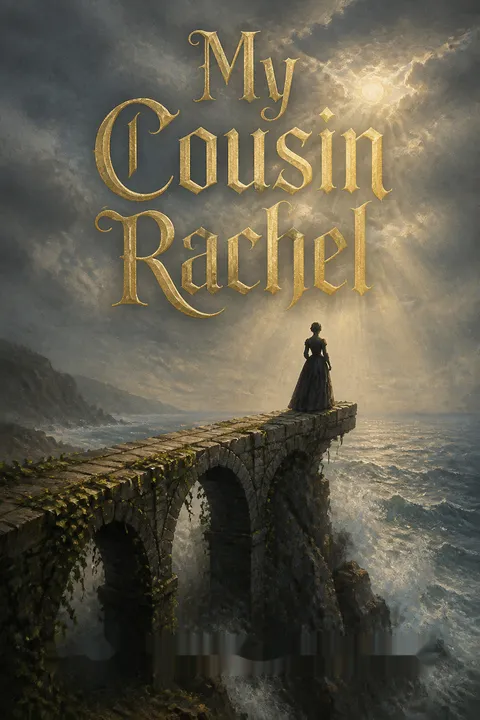
The Bridge Gives Way
On a Sunday after church, a foreman warns Philip that the bridge across the new sunken garden is unfinished and cannot bear weight. Back at the house, Rachel prepares tisana for Philip and Louise; he refuses his cup. Rachel then walks alone toward the terrace to consider a statue for the garden. Philip warns her to take care, but does not explain the bridge’s danger.
When she fails to return, he sends Louise to ring the house bell and runs to the construction site. Rachel lies among the broken timber and stone below the bridge. Philip holds her hands as she dies, and she mistakes him for Ambrose. The narrative returns to the gallows at Four Turnings, but the fall leaves no final proof of whether Rachel was innocent or guilty.
The ending converts the novel’s central uncertainty into a physical catastrophe without resolving it. The unsafe bridge is plainly introduced, Philip knows the danger, and Rachel walks toward it alone; what the text does not settle is whether the fall is merely accidental or whether Philip’s knowledge implicates him. Her final confusion joins Philip to Ambrose, completing the doubling that has shaped his identity. The return to the gallows frames the novel as an account of responsibility, but refuses the comfort of a verdict. Philip’s narration survives; certainty does not.
Analysis
My Cousin Rachel turns a murder mystery into a study of how people make evidence serve attachment. Philip’s narration invites confidence because it is vivid and emotionally immediate, yet his judgments are shaped by grief, sexual inexperience, and a childhood in which Ambrose supplied nearly every form of love. Rachel is never granted an independent narrative voice, so her actions arrive through Philip’s need to decide whether she is a victim, a threat, or a beloved companion. That limitation does not simply conceal a solution. It makes the act of interpretation part of the danger.
The novel’s property plot sharpens this problem. Rachel’s financial dependence is produced by a will that gives her no security, while Philip’s later generosity still comes with conditions about land and remarriage. Care and control share the same instruments: money, residence, inheritance, and the authority to decide what another person may know. Philip believes he is correcting Ambrose’s failure, but his claim over Rachel’s choices echoes the household’s older assumptions about male ownership.
The novel also refuses to make gendered suspicion a reliable guide. Rachel’s herbs can heal, and laburnum can poison; Ambrose’s letters may record genuine danger, but they are written during an illness that distorts his judgment. Rainaldi’s intimacy can look like conspiracy or loyal friendship. Each interpretation has evidence, yet none becomes a complete account. The unresolved fall at the bridge extends that uncertainty to Philip himself. He knows the structure is unsafe, but the narration never establishes what he intends or what caused Rachel to fall.
The result is not a puzzle with a missing answer so much as a tragedy in which certainty becomes an instrument of harm. Philip’s central mistake is not merely choosing the wrong theory. It is treating love as permission to possess, and suspicion as permission to act. The final return to the opening image places his story beside the old warning about violence within marriage, leaving readers to judge not only Rachel, but the narrator who has told us how to see her.
Review Summary
My Cousin Rachel is a masterful Gothic novel filled with suspense and ambiguity. Readers praise du Maurier's atmospheric writing and ability to keep them guessing about Rachel's true nature. The story explores themes of obsession, jealousy, and the dangers of rejected men. Many found it compelling and thought-provoking, though some felt it didn't quite match Rebecca. The open-ended conclusion sparked much debate among readers. Overall, it's considered a gripping psychological thriller that showcases du Maurier's talent for creating complex characters and maintaining tension throughout.
People Also Read






Characters
Philip Ashley
Sheltered estate heirPhilip is the young Cornish heir raised by his older cousin Ambrose after his parents die. He is physically imposing but socially inexperienced, more at ease among fields, tenants, and dogs than in conversation. His deepest attachment is to the home and to the man who formed his sense of self; he therefore experiences change as a threat before he can understand it. Philip values loyalty and plain dealing, yet his confidence in his own judgment is weakened by jealousy and by his dependence on Ambrose’s example. His first-person account draws readers close to his emotional reasoning while also limiting what they can know about the people he judges.
Rachel Ashley
The Cornish Florentine widowRachel is a distant Ashley cousin, raised in Italy and widowed after two marriages. She is educated in gardens and herbs, attentive to people across class boundaries, and adept at making herself at home in unfamiliar surroundings. Her humor can soften a tense room, while her reserve leaves others to interpret what she does not explain. Rachel has known financial insecurity and social dependence, experiences that shape her concern for dignity and self-direction. She moves between roles expected of women in her world, including widow, hostess, gardener, and dependent relation, without allowing any one role to explain her fully. The novel presents her through Philip’s limited perspective, so her motives remain difficult to separate from his expectations.
Ambrose Ashley
Philip's beloved guardianAmbrose is Philip’s older cousin, guardian, and model for how an Ashley should live. A reserved landowner with a passion for rare plants, he has built a household around male companionship and kept women at a distance. His affection for Philip is generous and formative, but his assumptions about women and family leave Philip poorly prepared for relationships beyond their private world. Ambrose is loving, shy, and capable of deep romantic feeling, yet the story reaches him through letters and other people’s memories rather than direct access. As a result, his account of his marriage is only one version of events, colored by illness, distance, and his own expectations.
Nick Kendall
Practical godfather and trusteeNick Kendall is Philip’s godfather, guardian under Ambrose’s will, and father to Louise. A careful, experienced man, he tries to protect Philip from legal and emotional mistakes. His trust in formal evidence gives him a steadier view than Philip’s, though his caution can feel cold to a young man acting from grief. Nick’s authority over the estate makes him both a family confidant and a reminder that Philip has not yet gained full independence.
Louise Kendall
Clear-eyed childhood friendLouise is Nick Kendall’s daughter and Philip’s longtime companion. Practical and observant, she knows his habits well enough to challenge the stories he tells himself. She is attached to Philip but does not let affection prevent her from judging his conduct or Rachel’s possible motives. Louise’s plainspoken intelligence contrasts with Philip’s sheltered certainty, while her own feelings complicate the role of trusted friend.
Signor Rainaldi
Rachel's worldly adviserRainaldi is an Italian lawyer and longtime adviser to Rachel, familiar with her family and her life before Ambrose. Polished, observant, and socially confident, he moves easily in settings where Philip feels out of place. He handles Rachel’s affairs and offers interpretations of Ambrose’s illness, but his manner also invites suspicion. His closeness to Rachel is clear; what that closeness means is filtered through Philip’s jealousy and limited knowledge.
Seecombe
Household's loyal stewardSeecombe runs the Ashley household and has served the family since before Philip’s adulthood. Formal, loyal, and deeply invested in household custom, he initially expects a woman’s arrival to disrupt the all-male routine. His pride in service makes him a guardian of continuity, but he is also capable of welcoming change when it appears proper and humane.
Tamlyn
Estate's devoted gardenerTamlyn oversees the Ashley gardens and works alongside Rachel when she restores the plants Ambrose brought home from Italy. He is skilled in practical cultivation, modest about the limits of his knowledge, and loyal to the estate. His respect for Rachel grows from her expertise rather than her social position.
Mary Pascoe
The rectory's gentle companionMary is one of the vicar’s daughters and a familiar presence in the local community. Mild and earnest, she accepts Rachel’s invitation to stay at the Ashley house without understanding the full strain between Rachel and Philip. Her presence changes the household’s privacy and gives Rachel company beyond the estate.
Giuseppe
Villa's faithful caretakerGiuseppe tends the Villa Sangalletti and recounts the illness and death he witnessed there. His concern for Ambrose and sympathy for Philip make him a humane source of information, though his account cannot explain the private tensions of the marriage.
Sam Bate
Tenant with a discoverySam Bate is an elderly tenant who receives one of Ambrose’s coats among the estate’s Christmas gifts. His careful treatment of the garment leads him to find a letter hidden in its lining, which he brings directly to Philip.
Plot Devices
Philip's retrospective account
A witness with blind spotsPhilip narrates the story after its central events, beginning with a childhood memory and repeatedly measuring Rachel against his changing memories of Ambrose. The first-person form supplies intimate access to Philip’s jealousy, grief, and uncertainty, but no independent view of Rachel’s thoughts. Readers receive scenes, letters, and reported explanations through his selection and interpretation. As his emotional state changes, evidence that once seemed conclusive can look different. The form therefore makes the mystery inseparable from character: the reader must assess not only what Philip reports, but why a particular interpretation comforts or threatens him.
Letters and missing papers
Distance becomes evidenceLetters carry news between Cornwall and Florence, but delays and gaps leave Philip unable to see Ambrose’s marriage directly. Ambrose’s increasingly troubled messages fuel Philip’s suspicion, while Rainaldi’s explanations and Rachel’s later account offer competing versions. A letter hidden in Ambrose’s coat eventually reveals that he had drafted a new will and feared poisoning, yet the letter’s illness and emotional strain complicate its authority. Philip’s decision to hide or destroy papers further narrows what others can know. Documents seem objective, but their survival, omission, and interpretation determine how much truth they can provide.
Wills and inheritance
Love measured in propertyThe Ashley wills establish who controls the estate, who can claim money, and who must depend on another person’s judgment. Ambrose’s valid will leaves everything to Philip and provides nothing for Rachel; his unsigned replacement suggests a different arrangement but has no legal force. Philip’s twenty-fifth birthday ends Nick’s guardianship, allowing Philip to transfer the estate to Rachel. The deeds give emotional choices material consequences, yet their restrictions also reveal how ownership can become control. Property is not merely background: it decides where Rachel may live, what resources she can use, and how Philip imagines securing their relationship.
Tisana and laburnum
Remedy shadows poisonRachel’s knowledge of herbs first appears as practical care. She gives remedies to tenants, brews tisana for Philip, and tends gardens in both Cornwall and Florence. Laburnum seeds, known to be poisonous, connect the Cornish plantation to the tree in the Villa Sangalletti courtyard and to Philip’s growing suspicions. Their presence in Rachel’s bureau seems incriminating, but her gardening work offers an ordinary explanation, and no document proves that she used them to harm anyone. The same botanical world can signify skill, comfort, or danger, making the reader share Philip’s difficulty in distinguishing care from threat.
The unfinished garden bridge
A danger left unresolvedPhilip and Rachel transform the estate grounds by building a terrace walk and sunken water garden. The bridge across the excavation is incomplete, and a foreman explicitly warns Philip that it cannot bear weight. Near the end, Rachel walks toward the terrace alone and falls among the broken timber and stone. Because Philip knows the danger but the circumstances of the fall are not explained, the construction site makes the ending physically legible without supplying a moral verdict. The garden project, once a shared act of renewal, becomes the place where the story’s uncertainty about responsibility reaches its final consequence.


Download PDF
Download EPUB
.epub digital book format is ideal for reading ebooks on phones, tablets, and e-readers.








