

Key Takeaways
Remember Anne as a friend before treating her as a symbol
A child before an icon. Hannah Goslar first meets Anne Frank in Amsterdam as a shy girl about five years old. They become neighbours and school friends, and their families, both refugees from Nazi Germany, grow close. Hannah remembers Anne as quick, funny, restless, and eager to lead games, while she herself is quieter and more cautious. Their friendship includes ordinary frictions, childhood parties, school, and shared jokes, not only the catastrophe that later defines Anne in public memory.
A friendship at the fence. In 1945, Hannah discovers Anne in Bergen-Belsen, not safely in Switzerland as she had believed. They speak through a barrier, and Hannah later brings her food. The encounter reconnects the childhood friend to the famous name, while showing how little either girl can control of what is happening to them.
What's powerful is the change in scale. The Holocaust can be approached through statistics and policy, but Hannah begins with a particular child whose lively contradictions resist being flattened into an emblem. That intimacy does not diminish Anne's public significance. It gives readers a fuller sense of what the symbol represents: a real person with friends, habits, and unfinished plans. The memoir also reminds readers that closeness does not mean complete knowledge. Hannah and Anne are separated for years, and each has to reconstruct the other's fate from fragments.
A border can offer refuge without offering a future
Safety was conditional. Hannah's family flees Berlin after Hitler takes power and settles in Amsterdam in 1934. They choose the Netherlands partly because it is neutral, nearby, and comparatively welcoming. Earlier, a job in London fell through when Hannah's father learned it required work on the Jewish Sabbath. Each move is a search for safety, but none guarantees permanent shelter. The family also hopes to reach Palestine, yet immigration rules and financial requirements make that route difficult.
The exits narrow. As Jewish refugees arrive in greater numbers, the Netherlands limits admission. The book reports that about 50,000 German Jews applied to enter, while only 7,000 were allowed in, often temporarily. The Franks, like the Goslars, try to secure visas elsewhere and encounter delays and refusals. In May 1940, German forces invade the Netherlands, turning the refuge into occupied territory.
The story separates two ideas often blurred together: escape from immediate danger, and a durable right to belong somewhere. Amsterdam gives the family years of friendship and relative stability, but its neutral status cannot protect it once Germany invades. The limits on visas also show that refuge depends on decisions made by governments far from the people seeking it. This is not a tale of foolish choices. The family acts on the information and possibilities available, while the political landscape changes faster than any individual can plan for.
Notice how exclusion becomes normal before it becomes total
Restrictions accumulate. After the occupation, Nazi authorities progressively isolate Jewish people from Dutch society. Jews lose access to cinemas, parks, public schools, shops, bicycles, trams, and eventually many ordinary freedoms of movement. Jewish children are pushed into separate schools, and families must wear yellow stars. Each measure is presented as a rule to obey, but together they redraw daily life around the imposed category of Jewishness.
Resistance has limits. In February 1941, German-backed violence in Amsterdam's Jewish quarter leads to the arrest and deportation of more than 400 Jewish men. In response, about 300,000 Dutch people join a general strike. German forces fire on crowds, killing nine and wounding more than 70. The strike demonstrates that solidarity was possible, but its repression does not stop the persecution.
The memoir makes persecution visible through the ordinary: a school seat, a tram ride, or a trip to the cinema becomes newly forbidden. This helps explain how state violence can reorganize a society without beginning with mass arrests on every street. Administrative measures train people to accept separation as routine. The strike is equally important because it prevents a simplistic account of Dutch society as uniformly passive. Public opposition existed and carried real costs, yet courage alone could not dismantle an occupation backed by overwhelming force.
Treat exemptions as time bought, not proof of safety
Paper offers a reprieve. Hannah's father and grandfather serve on the Jewish Council, and the family receives exemption stamps. Later, Paraguayan passports and Palestine certificates give them another form of protection, since some foreign passport holders might be exchanged rather than deported east. These documents help the family remain in Amsterdam longer and shape their hope that they will eventually reach Palestine.
The promise fails. In June 1943, during a sweeping roundup, German police ignore the family's exemption and force them from home. They are sent to Westerbork, a transit camp where prisoners face weekly deportation trains. Some official papers delay the family's next deportation, but cannot make them safe. Hannah's account describes how uncertain protection could become when authorities controlled both the rules and their enforcement.
The documents matter because they are neither meaningless nor dependable. They buy time, help the family stay together, and shape choices, but they do not confer control over the machinery that decides their fate. This is a useful distinction between protection as a practical advantage and protection as a guarantee. The family's reliance on papers is understandable, not naïve. Their story also cautions against judging people in constrained situations by outcomes they could not foresee.
Protect one another through small acts that preserve agency
Care becomes practical. After Hannah's mother dies giving birth, Hannah, then 13, takes increasing responsibility for her little sister Gabi. In Westerbork, she volunteers to clean the children's toilets partly because the job lets her see her father. She cares for Gabi while coping with the loss of her mother, home, and friends. Other people step in too. Mrs Abrahams takes Gabi in when Hannah is sick, and the Birnbaums care for children in Westerbork's orphanage.
Kindness cannot undo danger. At Bergen-Belsen, Gabi is too old for the extra milk ration given to younger children, but Rabbi Koretz's wife gives her milk anyway. Hannah believes it helps Gabi regain strength. These gestures do not make the camps humane. They help particular people endure inside conditions designed to strip away safety and dignity.
The memoir presents care as more than warmth. It is work, attention, and sometimes a risky refusal to follow a rule that harms someone. Hannah's routines for Gabi also give her a reason to keep acting when grief and fear could make action feel impossible. Still, care should not be mistaken for a substitute for medicine, food, or freedom. Its force lies in preserving a person's particular needs and relationships when an institution treats people as interchangeable.
The Lost Train ran 13 days; 568 of 2,500 prisoners died
A journey without a destination. In April 1945, as Allied forces approach, Bergen-Belsen prisoners are forced onto trains. Hannah and Gabi are among about 2,500 people sent on the train later known as the Lost Train. For 13 days, it lurches between stops amid fighting, hunger, thirst, illness, and death. Hannah is weak and feverish, yet keeps Gabi close. At one stop, she trades her grandmother's engagement ring with other women for a rabbit, then feeds Gabi some of the meat.
Freedom arrives unevenly. Soviet soldiers eventually find the abandoned train and tell the surviving prisoners they are free. Hannah and Gabi reach a nearby village, where they find food and shelter. Of those forced onto their train, 568 do not survive. Liberation comes, but it does not restore the dead or immediately provide health, safety, and a home.
The train compresses the difference between military victory and human recovery. A regime can be collapsing while its victims remain trapped in its last violent movements. The statistic gives scale, while Hannah's small decisions, keeping her sister close and bartering a ring for food, show what survival demands moment by moment. The account also avoids making liberation feel like a clean cinematic ending. The prisoners are free in a legal and military sense, but they emerge sick, grieving, and profoundly vulnerable.
Rebuilding a life does not mean the past has been repaired
Survival leaves losses behind. Hannah loses her mother, father, grandparents, and many friends. Her father dies on the day their family is scheduled for an exchange, which is then cancelled. Her grandmother dies a month later. After liberation, Hannah and Gabi return to the Netherlands and gradually reconnect with people who survived, including Otto Frank. Hannah later moves to Palestine, trains as a nurse, and works toward a life of her own.
The future is not a simple ending. Hannah marries, raises a family, and eventually reunites with Gabi in Israel. Yet the memoir also recounts renewed war after Israel declares independence in 1948, including the displacement of about 700,000 Palestinian Arabs. Hannah's new life is real and meaningful, but it does not erase what came before or turn history into a tidy story of redemption.
The postwar chapters resist the idea that resilience means returning to an earlier self. Hannah has to make choices while grieving, rebuilding relationships, and caring for her sister. Her new life is not a cure for the past; it is a life formed alongside it. The account's attention to the war surrounding Israel's founding also complicates a simple refuge narrative. A place can represent safety and belonging for one family while its political creation carries grave costs for others.
Make testimony restore names to lives reduced to statistics
Memory has a public task. Hannah eventually speaks about her experiences, including on an 18-city tour in the United States in 1957. Her connection to Anne brings audiences, but Hannah's testimony also tells what happened after Anne and Margot were arrested. She recalls friends such as Sanne, Ilse, and Alfred, who did not return, and gives their lives more than a final date or camp name.
The diary reconnects two friends. After the war, Otto Frank shares Anne's writing with Hannah. Reading it lets her encounter the friend she lost at 13 as a developing writer, not only the weakened girl she met behind the fence. Hannah continues speaking to audiences and students for decades, treating remembrance as a way to pass on both the crimes and the lives those crimes cut short.
Testimony can make mass violence legible without pretending that one person's account contains the whole event. Hannah's story is powerful partly because it joins intimate memory to letters, diaries, and other records, while remaining explicit about the limits of what she knew at the time. Remembering names, friendships, and ordinary ambitions counters the logic of reducing victims to categories. It also places a responsibility on listeners: preserving testimony requires attention, context, and a willingness to hear what cannot be neatly resolved.
Analysis
This memoir uses friendship as its narrative instrument. Anne Frank's public fame draws readers in, but Hannah Pick-Goslar's account shifts attention from a familiar symbol to the relationships and circumstances around her. Anne is a child in a neighbourhood, a classmate with a particular temperament, and a friend who shares games and family dinners. That perspective does not compete with Anne's diary. It supplies another vantage point, especially for the period after the hiding place is discovered and the diary falls silent.
The book's structure moves from remembered domestic life to increasingly constrained public life, then into camps and a difficult return. Its most consequential contrast is between intimate detail and administrative scale. A birthday party, a missing school friend, or a ration of milk makes visible what deportation lists and population counts cannot convey on their own. At the same time, the narrative situates those details in the policies, borders, and institutions that shaped the family's choices. Individual memory becomes a route into history rather than a replacement for it.
The memoir is also careful about uncertainty. Hannah's childhood recollections are presented alongside documents, letters, and accounts from others, a necessary approach when a narrator remembers events decades later and was a child during much of them. That method gives the story texture while inviting readers to distinguish what Hannah directly witnessed from what she learned afterward. The resulting perspective is powerful but necessarily partial. It cannot stand in for every Jewish experience under Nazi rule, nor does it claim to. Its particular strength is the sustained account of one refugee family, one friendship, and one survivor's long effort to keep the dead present without letting their deaths become the only story.
Review Summary
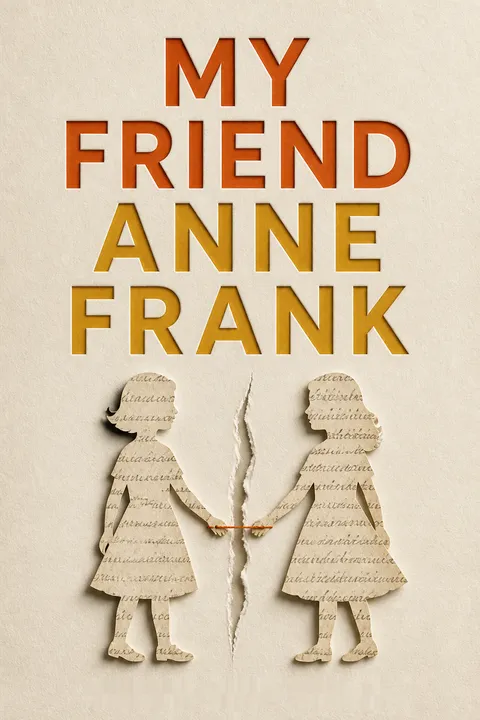
My Friend Anne Frank is a deeply moving memoir by Hannah Pick-Goslar, Anne Frank's childhood friend. Readers praise its powerful and heartbreaking account of their friendship, Nazi occupation, and Holocaust experiences. The book offers unique insights into Anne's life before and after hiding, filling gaps in her story. While some found the title misleading, most appreciated Hannah's compelling narrative, her resilience, and the importance of preserving Holocaust survivors' stories. Many reviewers were emotionally impacted and considered it a must-read, highlighting its historical significance and tribute to enduring friendship.
People Also Read





Glossary
Shoah
Nazi genocide of JewsA Hebrew word used in the book for the Nazi genocide of European Jewry. Hannah and others in Israel used it to name the catastrophe and its destruction of Jewish lives and communities. The term emphasizes the historical event and its victims, rather than reducing the period to a general wartime tragedy.
Westerbork
Dutch transit campA camp in the Netherlands that began as a detention centre for Jewish refugees and became a transit camp under Nazi occupation. Jews were held there before deportation to camps farther east. Hannah, her father, her sister, and her grandparents were imprisoned there, where weekly transports made survival feel precarious.
Sternlager Camp
Bergen-Belsen exchange sectionThe section of Bergen-Belsen where Hannah and her family were held as Jews considered potentially useful for exchange. Prisoners included people with foreign passports or documents connected to possible emigration. Their status offered certain limited privileges, but it did not protect them from hunger, disease, forced labour, or the camp's violence.
The Lost Train
Bergen-Belsen evacuation trainThe name given to the train carrying Hannah, Gabi, and about 2,500 other prisoners from Bergen-Belsen in April 1945. It travelled for 13 days amid fighting and repeated stops before Soviet soldiers found the surviving passengers. The book reports that 568 people from the train did not survive.
Lados passports
Passports used for protectionPassports obtained through a network of Polish diplomats and Jewish activists in Switzerland. The documents were intended to help Jews qualify for protection or exchange by presenting them as citizens of neutral countries. Hannah's family received Paraguayan and Honduran passports, but these did not provide permission to emigrate to those countries.
appell
Prisoner roll callThe daily roll call prisoners had to endure in Bergen-Belsen. People stood in rows to be counted, often for hours and in severe weather. Counts might be repeated if they did not match the guards' figures, and delays or punishment could follow. The ritual was both a means of accounting for prisoners and a source of intimidation.
pikuach nefesh
Preserving life takes precedenceA Jewish legal principle that preserving human life overrides many religious obligations. Hannah invokes it after liberation when she eats pork on a medical train, despite having kept kosher. In her circumstances, staying alive takes priority over dietary law.
lamedvovniks
Hidden righteous peopleA Jewish tradition, as Hannah describes it, holds that 36 exceptionally righteous people live in the world without being recognized. The world's fate is understood to rest on them. Hannah thinks of the term when reflecting on people whose quiet generosity, including Mrs Abrahams's care for her and Gabi, sustains others.
Israelite Press Association
Prisoner nickname for rumorsA camp nickname for the informal exchange of information among prisoners in Bergen-Belsen. With little reliable access to outside news, people passed along reports and rumours about the war and the approaching Allies. The name gave a playful label to an improvised information network whose accuracy could not always be confirmed.
Download PDF
Download EPUB
.epub digital book format is ideal for reading ebooks on phones, tablets, and e-readers.








