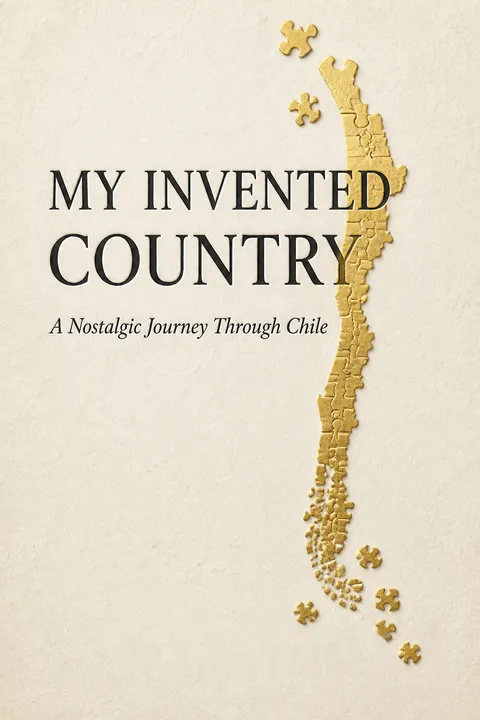


Key Takeaways
Exile makes a homeland portable, but memory keeps editing it
A homeland reconstructed. Allende was born in Peru, grew up in Chile, and spent much of her adult life elsewhere. After the 1973 coup, she left for Venezuela carrying soil from her garden. Chile traveled with her, but as memory: a landscape, family stories, and a cherished past that became more vivid than the country changing without her. In 1981, a letter to her dying grandfather became the beginning of her first novel, an effort to preserve the people and places exile threatened to erase.
Affection is selective. Allende admits that nostalgia edits its subject. She remembers Chile’s poetry, intimacy, and generosity more readily than its class prejudice, conservatism, or hypocrisy. The result is not a reliable map of Chile, but a personal country assembled from memory, emotion, and invention.
What's striking is that nostalgia appears here as both shelter and craft. The past is not simply retrieved; it is arranged into a story that lets a displaced person maintain continuity across changing homes. That resembles how autobiographical memory gives a life coherence, even when recollection is incomplete. The limit matters: a moving personal account can illuminate a nation without representing everyone in it. Allende's candor about omission helps readers hold both truths at once: her imagined Chile is emotionally real, and it is not the whole Chile.
Read Chile's geography as a source of pride and isolation
A country shaped by extremes. Chile stretches about 4,300 kilometers from the desert north toward the Antarctic south, with the Andes to the east and the Pacific to the west. Its regions range from mineral-rich desert and fertile central valleys to rainy forests, fjords, and islands. Allende recalls crossing the Atacama as a child: dust, thirst, abandoned settlements, and a night landscape made luminous by the moon. The terrain is not scenery alone. It is part of how Chileans describe themselves and their distance from the rest of the continent.
Distance breeds comparison. Allende jokes that Chileans imagine themselves the center of the world and measure themselves against Europe. Even in San Francisco, she first saw the hills and bay as reminders of Chile. That pride can become insularity, while the country's earthquakes and floods repeatedly remind people how precarious life is.
The landscape works as a character in the memoir: it supplies both the grandeur that feeds national pride and the barriers that encourage an inward gaze. Environmental history can explain why isolation feels plausible, but it cannot determine a culture's politics or temperament. The book is strongest when it treats geography as an influence rather than an excuse. Its recurring disasters also complicate the postcard view: beauty and danger occupy the same ground, and national identity grows from living with both.
Let family history anchor you without mistaking it for proof
A family becomes a lens. Allende's remembered Santiago is crowded with relatives, servants, animals, old houses, and family obligations. Her grandfather Agustín, stern and disciplined, taught her to observe nature, respect language, and take writing seriously. Her mother's family supplied a less orderly inheritance: eccentric characters, whispered scandals, and stories that blurred fact and legend. Allende draws on this clan not as a representative sample of Chile, but as material through which to explore its habits and values.
Stories preserve and distort. The family house that inspired the setting of her first novel had already disappeared, replaced by modern buildings. Some relatives' accounts contradicted one another, and Allende sometimes could not tell whether she remembered an event or had absorbed it through repetition. Still, those stories kept people present and gave her fiction its human raw material.
Family memory is a powerful kind of informal archive. It preserves details that official histories often overlook, such as domestic expectations, social taboos, and the ways relatives care for one another. It also selects, embellishes, and protects. Allende makes that instability part of the subject rather than pretending to offer a neutral record. Readers can borrow the method while keeping its limits in view: a family story may reveal how a community understands itself, even when it cannot establish exactly what happened.
Look beneath Chile's class etiquette for racial exclusion
Politeness can conceal hierarchy. Allende rejects the comfortable belief that Chile has no racism, arguing that prejudice is often disguised as class judgment. A mestizo graduate with a Mapuche surname, she recounts, was rejected by a prestigious law firm because he did not fit its image. Social position can be inferred from accent, appearance, surname, and even the resort a person visits. Allende calls the rapid sorting of a new acquaintance situating: the effort to place someone within Chile's finely divided social ranks.
The hierarchy has a history. Mapuche communities fought Spanish rule for centuries, then faced further loss of land and political power. Allende also notes the seizure of Mapuche territory to settle German immigrants, part of a policy that favored European ancestry. On Easter Island, Chilean neglect and outside exploitation brought slavery, disease, and devastating population loss.
The memoir's useful distinction is between the language a society uses to explain inequality and the effects of inequality itself. When exclusion is described as taste, polish, or social fit, it can appear natural rather than racialized. That insight travels beyond Chile, but the national examples keep it concrete. At the same time, broad claims about identity can flatten differences among Indigenous communities and individual experiences. Allende's account is best read as a challenge to a myth of racial innocence, not as a complete map of every group's history.
Measure women's strength against the patriarchy that spends it
Strength is not the same as power. Allende describes Chilean women as capable, resourceful, and central to family life, yet routinely expected to serve men and children. Women worked, managed households, and often supported their families, while men held most political and economic authority. In one popular comedy sketch, a model wife races through chores and even chases her husband's bus to deliver his forgotten briefcase. Women laughed, but many recognized the exhaustion beneath the joke.
Resistance begins in ordinary life. Allende herself was raised to expect a decorative job rather than higher education, then became a journalist and helped edit Paula, a magazine willing to address contraception, abuse, abortion, and other taboo subjects. She also recounts women organizing both for and against political change, including the movement Women for Life, which opposed dictatorship before dissolving after democracy returned.
The section avoids equating women's visible competence with emancipation. A person can hold a household together while having little control over the rules governing it. That distinction connects private labor to political power, a connection often lost when resilience is praised without asking who benefits from it. Allende also shows how women may reinforce expectations they have learned while challenging them in public. The account's historical explanations for machismo are less conclusive than its observations of daily practice, but the tension between agency and constraint remains sharply drawn.
Let folklore widen reality without confusing belief with proof
The supernatural is domestic. Allende grew up among Chileans who prayed to saints, consulted psychics, and told stories of spirits, witches, and miracles. Her grandmother held séances and believed that people had powers they neglected to develop. Allende cannot verify whether a bell moved by itself during one gathering, or whether repetition turned the story into a memory. The uncertainty does not trouble her as a writer. Her grandmother taught her to treat dreams, intuition, and imagination as ways of experiencing life, even when they cannot be measured as facts.
Wonder becomes a writing practice. Allende connects this inheritance to magical realism, the blending of ordinary life with marvelous or supernatural events. She describes approaching fictional characters as if they were delicate presences who might enter a story if treated with care. In this view, folklore does not prove that ghosts exist; it expands what a narrative can make emotionally possible.
The distinction between factual proof and imaginative meaning is essential here. A family may organize its experiences through spiritual beliefs that cannot be independently verified, yet those beliefs still shape relationships, fears, and art. Allende's method gives the reader permission to take such stories seriously without treating them as evidence of paranormal events. This is a productive balance: skepticism need not flatten cultural imagination, and openness need not require credulity. The book presents wonder as a literary resource, not a substitute for inquiry.
Map a society through its contradictions, not its national myths
One country, competing habits. Allende depicts Chileans as reserved and solemn, yet affectionate hosts who kiss guests, offer food, and welcome unexpected visitors. They complain constantly, prize regulations, and can spend years moving a simple request through bureaucracy. At family meals, the same relatives who argue furiously return the following Sunday because family duty is stronger than the quarrel. The dining table, piled with empanadas, soup, seafood, sweets, and wine, becomes a setting for both hospitality and conflict.
Disaster reveals another side. When floods struck in 2002, people carried blankets and food to shelters, artists performed for displaced families, and the defense minister joined relief efforts. Allende sees solidarity as especially visible during catastrophe, in a country accustomed to earthquakes, floods, and political shocks. But emergency generosity does not erase poverty or unequal protection. It shows what people can do together, not that the underlying problems have been solved.
Contradiction is more informative than a tidy national character sketch. The same habits can support care and control: family loyalty shelters people, but can also enforce silence; legal rules can restrain arbitrary power, but bureaucracy can obstruct ordinary life. Disaster solidarity is similarly double-edged. It demonstrates civic capacity while raising the question of why essential support is so often mobilized only after catastrophe. Allende's humor keeps the portrait lively, and her attention to inequality prevents affection from becoming uncomplicated praise.
Democratic confidence cannot substitute for defending democratic institutions
A stable past offered no guarantee. Allende recalls Chile's long democratic tradition and its citizens' confidence that soldiers would respect the constitution. Salvador Allende won the presidency in 1970 with 38 percent of the vote, then pursued a constitutional path toward socialism. His government faced serious shortages, rising inflation, political conflict, and opposition from within and outside the country. Allende's coalition was divided, and the government made mistakes. Allende nevertheless remained committed to constitutional rule, while opponents and the CIA worked to destabilize his government.
The coup shattered the assumption. On September 11, 1973, the military attacked the presidential palace, Allende died, and dictatorship replaced democracy. Repression, censorship, imprisonment, and torture followed. Allende acknowledges that the elected government was flawed, but rejects the idea that its failures justified military violence. Pinochet eventually lost the 1988 referendum that was meant to extend his rule, showing how even a constitution shaped by a dictator could become a route to his defeat.
The account resists two easy stories: that Allende's government was blameless, or that its failures made the coup inevitable or legitimate. That distinction matters because democratic breakdown is often explained after the fact as though it were unavoidable. Allende connects foreign intervention, domestic polarization, and institutional overconfidence without reducing the event to one cause. Her memoir is openly partisan and not a full political history, but its insistence on separating criticism of a government from permission to destroy democracy is a durable civic principle.
Build belonging across places instead of waiting to feel native
Exile and immigration feel different. Allende distinguishes forced departure from chosen migration. In Venezuela, she felt like a victim looking backward, desperate to return to Chile and unsure how to begin again. Years later, she moved to California by choice, drawn by love and open to building a life there. The contrast is not simply between two countries. It is between leaving under pressure and moving toward a future with some agency.
Home can expand. Allende learns English, adapts to California routines, and accepts that she will not become culturally indistinguishable from her neighbors. After returning to Chile in 1988, she unexpectedly feels that San Francisco is home. She continues visiting Chile, but no longer treats belonging as a single choice. Writing lets her carry family, landscape, and language between places, while participating in a new community gives her a life there too.
This distinction helps explain why adaptation cannot be reduced to individual effort. Forced migration begins with loss and constrained choices; voluntary migration can still be difficult, but it offers a different sense of authorship. Allende's account also resists the demand that migrants prove loyalty by choosing one home over another. Belonging can be layered, practiced through relationships and contribution rather than certified by cultural sameness. That flexibility is not equally available to every migrant, especially those facing legal or economic precarity, but it clarifies the emotional work involved.
Analysis
My Invented Country is less a portrait of Chile than a study of how a person makes a home out of remembered fragments. Its organizing movement runs from terrain and family, through national customs and political rupture, toward exile and writing. That sequence gives the book narrative momentum without forcing memory into a clean chronology. Allende's digressions are not incidental: their circling, return, and revision enact the way nostalgia works.
The memoir's central tension is between attachment and accuracy. Allende loves Chile intensely, yet repeatedly names its exclusions: class hierarchy, racism, machismo, and the violence concealed by civic pride. Her humor makes national self-criticism readable without making it harmless. The same comic voice that mocks elaborate meals or bureaucratic forms can pivot toward the dispossession of Indigenous people or the terror of dictatorship. This tonal range is one of the book's strengths, though it can also make sweeping statements about Chileans feel more definitive than a family-rooted memoir can establish.
The political narrative benefits from a related tension. Allende supports the democratic aspirations of Allende's government while acknowledging its failures, then draws a firm moral boundary around the coup and repression. That distinction prevents political disagreement from becoming an excuse for state violence. The account is openly subjective, and its value is not that it replaces historical scholarship. It shows how national events enter ordinary life: through fear, family division, censorship, and departure.
Ultimately, writing functions as a portable form of belonging. It does not restore the lost house or reverse exile; it gives memory a structure that can travel. The imagined country is neither a lie nor a substitute for Chile. It is an emotionally coherent place built from landscape, family, language, and chosen emphasis. The memoir asks readers to recognize that every account of home is shaped by what it remembers, what it omits, and what it needs to keep alive.
Review Summary
My Invented Country is a nostalgic memoir exploring Isabel Allende's life in Chile and her experiences as an exile. Readers appreciate Allende's engaging writing style, humor, and candid reflections on Chilean culture and history. The book provides insight into the author's family, the 1973 coup, and her journey to becoming a writer. While some found it meandering or overly critical at times, many praised its honesty and cultural insights. The memoir resonates with those who have experienced exile or longing for their homeland.
People Also Read


Glossary
situating
placing someone sociallyAllende's term for the quick social classification Chileans perform when they meet someone. They infer a person's position from cues such as accent, surname, appearance, mannerisms, and lifestyle. In her account, this process can locate not only broad class but also finer distinctions within the social hierarchy, and may include assumptions about a person's political history.
chaqueteo
pulling success downwardA Chilean term Allende uses for the social impulse to cut down someone who has risen conspicuously above peers. She describes it as resistance to local success: a person who achieves distinction at home may be resented or diminished, while the same achievement abroad can turn that person into a national source of pride.
patiperros
restless wanderersA colloquial Chilean term Allende applies to people compelled to follow roads and travel without a settled destination. Her description captures a tension she associates with Chileans: they are drawn to movement and adventure, yet often begin missing home as soon as they leave. The word evokes roaming rather than a particular legal or political status.
maestro chasquilla
improvising repairmanA Chilean label for a person who takes on practical repairs with improvised tools and limited resources. Allende says maestro can be an honorary title for someone capable of fixing nearly anything, while chasquilla adds a sense of scruffiness or rough-and-ready work. In her examples, such workers rely on ingenuity more than manuals or formal credentials.
FAQ
What's "My Invented Country" about?
- Memoir and Nostalgia: "My Invented Country" by Isabel Allende is a memoir that explores the author's reflections on her homeland, Chile, through the lens of nostalgia and memory.
- Cultural Exploration: The book delves into the cultural, social, and political aspects of Chile, offering a personal and historical perspective on the country's evolution.
- Personal Journey: Allende shares her personal journey of exile and immigration, detailing how these experiences have shaped her identity and writing.
- Invented Memories: The narrative weaves between reality and imagination, as Allende acknowledges the fluid nature of memory and how it influences her perception of Chile.
Why should I read "My Invented Country"?
- Insightful Perspective: The book provides a unique insight into Chilean culture and history from the perspective of a renowned author with a deep personal connection to the country.
- Rich Storytelling: Allende's storytelling is engaging and vivid, blending personal anecdotes with historical context to create a compelling narrative.
- Exploration of Identity: Readers interested in themes of identity, belonging, and the immigrant experience will find Allende's reflections thought-provoking and relatable.
- Literary Style: Fans of Allende's fiction will appreciate her lyrical prose and the way she brings her homeland to life through her evocative writing.
What are the key takeaways of "My Invented Country"?
- Nostalgia's Power: Nostalgia can shape our memories and perceptions, creating an "invented" version of our past that may differ from reality.
- Cultural Identity: Allende explores the complexities of cultural identity, particularly for those who have lived in multiple countries and cultures.
- Historical Context: The book provides a historical overview of Chile, including its political upheavals and social changes, offering context for Allende's personal experiences.
- Resilience and Adaptation: Allende's journey highlights the resilience required to adapt to new environments and the importance of maintaining connections to one's roots.
How does Isabel Allende describe her relationship with Chile in "My Invented Country"?
- Complex Relationship: Allende describes a complex relationship with Chile, marked by love, nostalgia, and a sense of alienation due to her long absence.
- Cultural Roots: Despite living abroad for many years, Allende feels a strong connection to Chilean culture and considers it a significant part of her identity.
- Sense of Exile: She often feels like an exile, both in Chile and abroad, as she navigates the changes in her homeland and her own evolving identity.
- Invented Memories: Allende acknowledges that her memories of Chile are partly invented, shaped by nostalgia and the passage of time.
What role does nostalgia play in "My Invented Country"?
- Central Theme: Nostalgia is a central theme in the book, influencing how Allende remembers and interprets her past and her homeland.
- Invented Memories: Allende explores how nostalgia can lead to the creation of "invented" memories that blend reality with imagination.
- Emotional Connection: Nostalgia serves as an emotional connection to Chile, allowing Allende to maintain a bond with her homeland despite physical distance.
- Reflection and Identity: Through nostalgia, Allende reflects on her identity and the impact of her experiences as an immigrant and exile.
How does Isabel Allende address the political history of Chile in "My Invented Country"?
- Historical Overview: Allende provides an overview of Chile's political history, including the rise and fall of Salvador Allende's government and the subsequent military dictatorship.
- Personal Impact: She discusses how these political events affected her family and her own life, leading to her eventual exile.
- Critical Perspective: Allende offers a critical perspective on the political forces that shaped Chile, including the influence of foreign powers like the United States.
- Legacy of Dictatorship: The book examines the lasting impact of the dictatorship on Chilean society and the challenges of reconciling with the past.
What are some of the best quotes from "My Invented Country" and what do they mean?
- "Nostalgia is a powerful feeling; it can drown out reality." This quote highlights the central theme of the book, emphasizing how nostalgia can alter our perception of the past.
- "I have constructed an idea of my country the way you fit together a jigsaw puzzle." Allende reflects on how she has pieced together her memories of Chile, acknowledging the selective nature of memory.
- "I am a writer because I was born with a good ear for stories." This quote underscores Allende's passion for storytelling and the role it plays in her life and identity.
- "My heart isn’t divided, it has merely grown larger." Allende expresses her ability to embrace multiple identities and cultures, finding a sense of belonging in both Chile and her adopted home.
How does Isabel Allende explore the theme of identity in "My Invented Country"?
- Cultural Identity: Allende examines her cultural identity as a Chilean living abroad, exploring how her experiences have shaped her sense of self.
- Exile and Belonging: The book delves into the feelings of exile and belonging, as Allende navigates her connection to Chile and her life in other countries.
- Invented Self: Allende acknowledges the fluid nature of identity, suggesting that it is partly invented and shaped by memory and experience.
- Literary Identity: Her identity as a writer is also explored, highlighting how storytelling allows her to connect with her roots and express her personal journey.
What is the significance of the title "My Invented Country"?
- Invented Memories: The title reflects the idea that Allende's memories of Chile are partly invented, shaped by nostalgia and imagination.
- Personal Interpretation: It suggests that the Chile Allende describes is a personal interpretation, influenced by her experiences and emotions.
- Cultural Exploration: The title underscores the book's exploration of cultural identity and the complexities of belonging to multiple places.
- Literary Creation: It also hints at the creative process of writing, as Allende constructs a narrative that blends reality with fiction.
How does Isabel Allende's writing style in "My Invented Country" enhance the narrative?
- Lyrical Prose: Allende's lyrical prose brings her memories and reflections to life, creating a vivid and engaging narrative.
- Personal Anecdotes: The use of personal anecdotes adds depth and authenticity to the narrative, allowing readers to connect with Allende's experiences.
- Historical Context: Allende skillfully weaves historical context into her storytelling, providing a comprehensive view of Chile's past and present.
- Emotional Resonance: Her writing style evokes strong emotions, capturing the complexities of nostalgia, identity, and belonging.
What challenges does Isabel Allende face as an immigrant, as described in "My Invented Country"?
- Cultural Adaptation: Allende describes the challenges of adapting to a new culture and navigating the differences between her homeland and her adopted country.
- Sense of Exile: She often feels like an exile, struggling with feelings of displacement and longing for her roots.
- Identity Conflict: Allende faces an identity conflict, as she balances her Chilean heritage with her experiences as an immigrant.
- Language Barrier: The language barrier is another challenge, as Allende writes and dreams in Spanish while living in an English-speaking country.
How does "My Invented Country" reflect Isabel Allende's broader body of work?
- Recurring Themes: The book reflects recurring themes in Allende's work, such as identity, memory, and the immigrant experience.
- Storytelling Style: Allende's storytelling style, characterized by lyrical prose and vivid imagery, is consistent with her other works.
- Personal Connection: Like many of her novels, "My Invented Country" is deeply personal, drawing on Allende's own life and experiences.
- Cultural Exploration: The book continues Allende's exploration of cultural and historical themes, offering insight into the complexities of Chilean society.
About the Author
Other books by Isabel Allende



Download PDF
Download EPUB
.epub digital book format is ideal for reading ebooks on phones, tablets, and e-readers.








