

Plot Summary
Candice Starts at A
English teacher Miss Bamford gives twelve-year-old Candice Phee an assignment: write about herself through the alphabet. Candice doubts that twenty-six paragraphs could contain a life, so she expands the task into a full account of the people who shaped hers. She is exacting, bookish, and often misunderstood at school; classmates call her Essen, a cruel reference to special needs, while Candice insists she simply sees things differently.
Her first letter to American penpal Denille lays out her habits and loneliness, but none of Candice’s letters receives a reply. She keeps writing anyway. The assignment begins as schoolwork, then becomes Candice’s chosen way to make sense of a family and a world that rarely explain themselves.
The alphabet gives Candice an orderly frame for experiences that resist neat explanation. Her precision is not merely a comic habit: it is a way of making social uncertainty manageable. The unanswered letters introduce the gap between the connection she hopes for and the response she receives. Rather than withdrawing, she keeps addressing an absent listener, turning narration itself into an act of persistence.
A House After Sky
Candice’s younger sister Frances, whom she calls Sky, died as an infant. Candice remembers their close bond and the night she found Sky unresponsive in the cot her parents had moved into her room. She knows the death was sudden and unexplained, yet the family’s grief has hardened into silence. Her mother, Vicky, later faces breast cancer and depression; her father, Jim, retreats to his computer work and remote-controlled plane.
Jim also resents his wealthy brother Brian, whom Candice calls Rich Uncle Brian. Their computer business collapsed after Brian patented successful software in his own name. Brian says he created it; Jim believes his ideas were taken. The brothers’ estrangement deepens a household already shaped by loss.
Candice rejects the idea that she caused Sky’s death, but she cannot make the family’s grief disappear by reasoning through it. Her parents’ withdrawal takes different forms: Vicky retreats into bed, while Jim seeks the control of code and a model aircraft. The business dispute gives the family’s sorrow a second structure, a conflict that can be argued over but not easily repaired. Candice’s wish to help grows from living among these separate silences.
The Fish and the Stranger
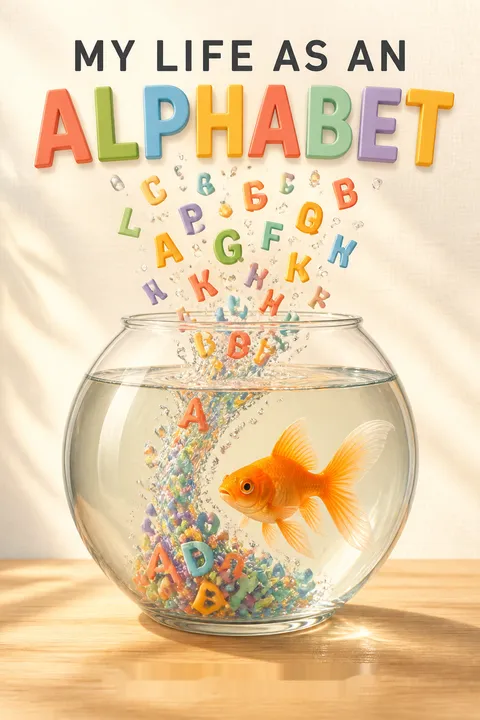
Months before meeting Douglas Benson, Candice chooses a goldfish over the fairground prize Rich Uncle Brian has won for her. She names the fish Earth-Pig Fish and studies its bowl as a sealed little universe, wondering how its occupant might interpret her face appearing beyond the plastic. At school, new student Douglas sits beside Candice because no one else will.
He calls himself an exile from another dimension and explains that gravity may connect parallel worlds. Candice cannot follow his theory, but accepts his friendship and invites him to the library. Douglas says he arrived after jumping from a tree and believes he can return the same way. His unusual certainty gives Candice a companion who is at least as strange as she is.
The fishbowl and Douglas’s theory give Candice two ways to imagine the limits of a world. She does not need to believe Douglas’s account to respond to his loneliness; friendship begins in her willingness to listen. Her questions about the fish also reveal an ethical anxiety: she worries that ordinary acts of care might seem supernatural to a creature with no wider frame of reference. Curiosity, for Candice, quickly becomes responsibility.
A Tree That Fails
At Douglas’s home, Candice meets the parents he dismisses as copies of the family he left behind. He shows her a tree he believes can carry him home, but his carefully timed jump ends on the ground. He thinks this world’s gravity is too weak and begins considering a higher leap. Alarmed by his fixation on a nearby ravine, Candice wants a bicycle so she can reach him quickly.
To secure private time with Rich Uncle Brian, she agrees to sail despite severe seasickness. On the yacht, Brian explains the brothers’ feud: he offered Jim money but refuses to falsely credit him as co-author. Candice learns that both brothers still love each other, though neither will surrender the point that matters most to the other.
The failed jump turns Douglas’s theory into a practical danger, while Candice’s response is characteristically concrete: she tries to arrange transport and stay close. The sailing trip also shifts her from guessing about the family feud to hearing Brian’s account directly. His refusal is not simple greed, and Jim’s grievance is not solved by money. Candice discovers that affection can survive a dispute even when neither person knows how to cross it.
Dinner in New Orleans
Candice begins trying small repairs. She gives Miss Bamford a pirate eye patch as a way to blunt students’ teasing about her wandering eye, and the teacher laughs at the bold solution. Then Candice remembers Vicky’s old wish to visit New Orleans. She cooks jambalaya, decorates the dining room, and persuades Jim to join her in a makeshift French-themed dinner.
The meal is awkward and her cooking is poor, but Vicky laughs, and Jim dances with Candice before the parents sway together after dinner. For a brief evening, the family shares a room instead of retreating into separate ones. Candice takes the laughter as proof that small gestures can change the atmosphere, even if they cannot undo what happened.
Candice’s interventions are improvised, not therapeutic programs. The eye patch answers a visible embarrassment with absurd generosity; the dinner answers Vicky’s fading dream with a sensory recreation. Neither solves illness or grief, but both create occasions for people to respond to one another. The scene distinguishes temporary relief from cure: laughter matters precisely because Candice knows it cannot reverse cancer, restore Sky, or settle the brothers’ dispute.
Rain at Sky’s Grave
On the anniversary of Sky’s death, Candice asks to bring Douglas to the cemetery, but Vicky insists the visit must remain family-only. Candice argues that Sky should be remembered with joy as well as sorrow. Vicky, overwhelmed, hurls a teapot at the wall, and Candice leaves for school without letting her mother see her tears.
The next day, Candice dresses brightly for the cemetery, but her parents arrive in their usual mourning clothes. Vicky kneels by the grave, Jim paces, and neither speaks. When rain begins, Candice opens a colorful umbrella and dances in the downpour. Her parents remain fixed in their grief as she tries to make room for a different response to Sky’s memory.
Candice’s dance is not a rejection of mourning. It is a refusal to let the cemetery dictate the only acceptable form of love. Her bright clothes and movement make her body answer the stillness around the grave, while her parents remain unable to join her. The teapot incident shows how grief can turn a request for connection into an injury. Candice’s courage is real, but so is the loneliness of acting alone.
The Marina Rescue
For her thirteenth birthday, Candice brings her parents and Douglas to Rich Uncle Brian’s marina, hoping a shared emergency will reunite Jim and Brian. She secretly jumps from the pier, expecting the brothers to rescue her together. Brian hits his head on a neighboring yacht; Jim strikes Brian while struggling into the water; both men are injured, and Vicky faints.
Douglas hesitates over Candice’s earlier instructions, then dives in after her. Underwater, Candice sees memories of her family and imagines Sky urging her back. She triggers the pressurized air attached to the artificial breasts Douglas made for her, which inflate and buoy her to the surface. She survives, but the rescue leaves the family more shaken, not reconciled.
Candice treats crisis as a tool because she believes ordinary conversation has failed. The plan exposes the danger in her otherwise generous instinct to manage other people’s pain: she converts herself into the instrument of a reconciliation she cannot control. The comic mechanics of the inflated prosthetics do not soften the physical risk. Her vision of Sky becomes a reason to survive, but it does not confirm anything supernatural; it records the force of Candice’s attachment to her sister.
No Simple Rescue
After the marina, Candice visits a lawyer hoping the threat of legal action will make her parents change, but he handles property transfers rather than custody cases. Douglas gives Earth-Pig Fish a companion, Skullcap-Fish, reasoning that another fish will make the bowl less like a world governed by one mysterious presence.
At dinner, Jim and Vicky ask Candice whether the plunge was deliberate. She explains that she wanted them and Brian united in saving her, not that she wanted to die.
She also tells her parents they have become strangers to her. Vicky breaks down; Jim admits he feels like a failure and has lost faith in his work. He suggests a family holiday, and Candice begins to see that honest conversation, unlike a staged emergency, can expose what needs attention.
The failed legal gambit and the failed rescue plan share a mistaken premise: Candice assumes a dramatic threat can force intimacy. The dinner is different because she names her motive and lets her parents answer in their own pain. Her bluntness wounds them, but it also makes their private despair discussable. The second fish reflects the same movement on a smaller scale: Candice tries to replace a one-sided relationship with companionship rather than more elaborate control.
Jen and the New Program
Relief teacher Miss Cowie pairs Candice with Jennifer Marshall for a biography exercise. Jen, usually cruel to Candice, admits in private that her home life is troubled and school feels hopeless.
Candice offers to help with homework, then presents Jen to the class as more than her looks or reputation; Jen’s own brief account of Candice is clumsy but sincere. Meanwhile, Jim asks Douglas about alternate dimensions. Candice retells Douglas’s theory, and Jim recognizes a way to build a social network that lets users explore computer-generated versions of lives they might have lived.
The idea gives him a new purpose, and Candice sees his old excitement return. Her attention has not repaired everything, but it has helped people reveal abilities and needs they had kept hidden.
Candice’s generosity is most effective when it makes room for another person’s account rather than deciding what that person needs. Jen accepts help only under conditions that protect her social standing, and Candice respects the bargain. Jim’s project arises through a similar act of attention: Candice cannot explain the science, but she preserves Douglas’s ideas well enough for her father to recognize their potential. She becomes a conduit between people who otherwise would not hear one another.
Gifts That Reach Too Far
On Vicky’s birthday, Jim gives her a certificate naming a distant star after Frances, hoping the family can remember Sky beyond the cemetery. Vicky cannot yet bear the gesture. Candice gives her a hotel booking, flights, and spending money for New Orleans, the trip Vicky once dreamed about.
Her parents refuse at first, uncomfortable with the expense and with Rich Uncle Brian’s money behind it. At school, Miss Bamford returns wearing Candice’s pirate patch; her eye operation had been scheduled long before, but she wears the patch as a personal gift to Candice.
That evening, Jim and Vicky celebrate at a local restaurant. Vicky accepts the birthday warmth, though neither the star nor the travel plans have yet settled the family’s disagreements.
These gifts expose the limits of symbolic repair. A named star offers Jim a way to place Frances in the sky, but Vicky is not ready for that meaning; a longed-for trip carries hope, yet its cost touches the brothers’ unresolved conflict. Miss Bamford’s patch works differently because it is modest and reciprocal: the teacher turns Candice’s comic suggestion into a gesture of affection. The contrast shows that care cannot dictate when another person is ready to receive it.
Brothers Share a Table
Candice arranges a lunch with Jim and Rich Uncle Brian, then reveals that she showed Brian her written account of Jim’s new software idea. Jim feels betrayed because he believed Candice had kept the project private. Brian answers with a business offer: Jim will retain the copyright and most of the profits, while Brian’s company supplies programmers, resources, and a route to the New Orleans social-networking convention.
Jim challenges the offer but finally shakes his brother’s hand. He has not forgiven Candice, and she points out that he still owes her the promised lunch. Later, Vicky joins Candice outside and asks where Sky is. Candice points to the star Jim named, and Vicky looks up with her.
The reconciliation depends on changing the terms of the original dispute, not pretending it never happened. Brian offers collaboration while leaving authorship with Jim, addressing the specific injury that money alone could not mend. Candice’s breach of trust remains consequential, even though it helps create the meeting; her father’s anger is not erased by the deal. Vicky’s question about Sky marks a small shift from rejecting the star’s symbolism to sharing a moment beneath it.
Two Letters Arrive
Douglas makes his carefully calculated jump from the tree, hits a branch, and wakes from the injury unable to recognize Candice. After recovering, he tells her the jump worked: he visited his original family, then returned because he wants Candice to travel with him.
He cannot yet offer a way past her fear of heights, so she refuses the tree route and asks him to find another. On her walk home, Douglas’s local mother, Penelope, delivers a long-awaited letter from Denille.
A neighbor had received Candice’s letters by mistake and only just returned them. Denille has read them, found Candice’s odd, candid voice engaging, and promises to write. Candice has finished the alphabet assignment, but the new replies and unfinished possibilities leave her ready to begin again.
Douglas’s account remains his own interpretation of an event that could also be read as an accident and a change in memory. The story preserves that uncertainty while making his return emotionally legible: he chooses to come back for Candice. Denille’s letter supplies a more ordinary explanation for a long silence, reminding Candice that apparent rejection can conceal a practical mistake. Both developments answer her desire for connection without resolving every uncertainty, leaving the ending open to further stories.
Analysis
The novel makes Candice’s difference a way of perceiving, not a problem to be solved. Her literal readings of language produce comedy, but they also expose how often adults use familiar phrases to avoid saying what hurts. She wants causes, definitions, and reliable procedures; grief, depression, love, and resentment refuse to behave like entries in a dictionary.
Candice repeatedly tries to repair relationships through action. She cooks the meal Vicky once dreamed about, gives Miss Bamford a comic patch, and stages a rescue meant to reunite Jim and Brian. The near-drowning marks the cost of turning care into control: Candice’s intentions are loving, but she cannot script other people’s responses without risking herself and them. The more durable shifts begin when family members speak plainly, listen to one another, or accept help on terms that preserve dignity.
The parallel-world motif sharpens the book’s concern with unrealized lives. Douglas imagines literal alternate worlds, while Jim’s software project offers simulated versions of paths people did not take. Candice’s family is haunted by its own alternate histories: the life before Sky’s death, before illness, and before the brothers’ rupture. Yet the story does not promise that imagining another life can erase this one. Its hope is smaller and more credible. A family can begin again through a shared meal, a business offer that respects authorship, or a mother and daughter looking at the same star. The final letter from Denille extends that hope beyond the household: a silence that looked personal had an ordinary explanation, and a connection can still arrive late.
Review Summary
My Life as an Alphabet by Barry Jonsberg is a heartwarming and humorous young adult novel about Candice Phee, a quirky 12-year-old girl who writes an autobiographical essay in alphabetical order. Readers praise Candice's unique perspective, honesty, and determination to help her dysfunctional family heal after tragedy. The book explores themes of friendship, acceptance, and finding happiness in difficult circumstances. Many reviewers found the story touching, funny, and suitable for both young readers and adults, with relatable characters and valuable life lessons.
Characters
Candice Phee
The literal-hearted observerCandice is a bright, observant twelve-year-old who prefers dictionaries, Dickens, written notes, and carefully arranged pencils to the social rituals her classmates take for granted. Her exactness can sound blunt, but it comes from a sincere effort to understand people rather than ridicule them. She notices what adults hide and assumes, often too confidently, that she can improve their lives through practical gestures. Her loyalty extends to her parents, her eccentric uncle, a fish, a difficult classmate, and a penpal who never answers. Candice’s humor comes from taking language seriously; her emotional strength comes from continuing to reach for people even when they do not know how to respond.
Jim Phee
The father chasing an ideaJim is Candice’s father, a skilled computer programmer whose current repair work does not satisfy his ambition. He withdraws into his shed and finds a rare sense of control in flying a model aircraft. His resentment toward his brother Brian is tied to authorship, dignity, and the collapse of their shared business, not simply envy of wealth. Jim loves his family but has become so absorbed by failure and grief that he struggles to show it. Candice’s interest in his work gives him a listener, while his eventual openness lets her glimpse the imagination beneath his silence. He remains imperfect, proud, and capable of renewed effort.
Vicky Phee
A grieving motherVicky is Candice’s mother, a woman once full of plans whose life has been reshaped by family loss and breast cancer. Depression keeps her in a darkened bedroom for long stretches, and even sunlight can hurt her eyes. She loves Candice, but grief makes ordinary requests feel like threats to the careful routines she uses to endure. Her memories of New Orleans reveal the imaginative, hopeful person she was before sorrow narrowed her days. Vicky’s responses are not predictable: she can laugh at Candice’s theatrical dinner and still be unable to accept a symbolic gift. Her struggle is presented as ongoing, not as something affection alone can cure.
Rich Uncle Brian
The wealthy, loyal uncleBrian is Jim’s brother and Candice’s generous uncle, nicknamed Rich Uncle Brian after a successful software patent brings him wealth. He enjoys boats, expensive gifts, nautical imagery, and looking after Candice, though his attempts at generosity sometimes intensify Jim’s resentment. Brian maintains that he designed the patented program himself and cannot accept a false account of its authorship, even when money might ease the conflict. Beneath his confidence, he is lonely and still attached to his brother. Candice’s direct questions reach him because she treats his feelings as real without taking either brother’s version as the whole truth.
Douglas Benson
The self-proclaimed dimension jumperDouglas is Candice’s first close school friend, an unusually intense boy with a fascination for theoretical physics and an elaborate account of life in another universe. He believes gravity can connect dimensions and treats his local family as copies of the parents he remembers elsewhere. His certainty often masks loneliness and frustration. He is awkward about affection, inventive in his gifts, and attentive to the details Candice shares, even when he misunderstands her. His ideas unsettle Candice but also give Jim a new creative direction. Whether Douglas’s explanation is scientifically true remains less important to their friendship than his determination to be understood.
Jennifer Marshall
The guarded classmateJen is admired for her looks and confidence, and she uses insults to keep classmates at a distance. Candice sees past the performance when Jen reveals that her home life is unstable and school feels beyond her reach. Jen is ashamed of needing help and carefully protects her standing among friends, yet she accepts Candice’s offer of private tutoring. Her first sincere words about Candice are awkward, but they matter because Jen rarely risks speaking without a social mask.
Frances, called Sky
Candice’s beloved sisterFrances is Candice’s younger sister, whom Candice names Sky after the intensity she sees in the baby’s gaze. Candice remembers helping care for her and feeling connected to her from the beginning. Sky remains central to how the Phee family understands its past, though each family member carries that memory differently. For Candice, her sister is not merely a source of sorrow but a vivid person whose place in the family deserves tenderness and joy.
Miss Bamford
Candice’s trusted teacherMiss Bamford is Candice’s favorite English teacher, a small woman whose wandering eye attracts cruel jokes from students. She recognizes Candice’s intelligence and gives her room to work in her own way. Their relationship is marked by Candice’s unexpected, literal-minded kindness and Miss Bamford’s ability to laugh without dismissing her student. She offers a rare adult connection in which Candice’s difference is met with curiosity rather than diagnosis.
Miss Cowie
The iron-spined relief teacherMiss Cowie is a stern relief teacher who commands Candice’s class through stillness and exact expectations. Beneath her intimidating manner, she notices when a student needs a different route into an assignment. After Candice explains her anxiety about speaking, Miss Cowie adjusts the presentation exercise rather than humiliating her. Her fairness earns Candice’s admiration, showing that strictness and compassion can coexist.
Denille
The distant penpalDenille is Candice’s American penpal, matched with her through a school cultural exchange. For most of the story, Candice knows her only through the letters she sends and the unanswered silence that follows. Candice imagines Denille’s life through American television and her own curiosity, sometimes making comic assumptions. The correspondence gives Candice a place to explain herself without having to speak face to face.
Penelope
Douglas’s patient motherPenelope is Douglas’s local mother, a postie who welcomes Candice into her home and treats her with warmth. She tries to understand her son’s unusual beliefs without sharing them. Her calm questions about Candice’s routines show a practical attentiveness, while her gratitude for Candice’s friendship reveals how much Douglas’s isolation worries her.
Joe
Douglas’s cheerful fatherJoe is Douglas’s local father, a smiling nurse who tries to include Candice in the household. His straightforward warmth contrasts with Douglas’s claims that he is only a substitute for another father. Joe remains patient with his son’s theories while offering ordinary family care.
Earth-Pig Fish
Candice’s bowl-bound confidanteEarth-Pig Fish is the goldfish Candice chooses at a fair instead of the oversized stuffed prize Brian has won. Candice studies the fish’s small, bounded world and speaks to it when she needs to think. The fish becomes a comic focus for her questions about faith, isolation, care, and whether another creature can understand the intentions of the person watching it.
Skullcap-Fish
The goldfish companionSkullcap-Fish is a second goldfish Douglas gives Candice to keep Earth-Pig Fish company. A dark mark on its head inspires its name. Candice welcomes the new fish but continues wondering how either animal interprets the small world of its bowl.
Plot Devices
The alphabet assignment
A life arranged in lettersMiss Bamford’s assignment asks each student to recount personal experiences through the alphabet. Candice expands it beyond the required twenty-six paragraphs because she believes the short form cannot contain her life or the people who shaped it. The structure gives the novel a natural way to move among family history, school, friendship, and reflective letters. It also suits Candice’s need for order without forcing her experiences into a simple chronology. The alphabet becomes both a school task and Candice’s self-chosen method of making an account that others might finally understand.
Letters to Denille
A one-sided bridgeCandice writes regularly to an American penpal who appears not to answer. The letters let her share personal details, test her assumptions about another culture, and ask questions she cannot comfortably put to people around her. For much of the story, the silence seems to confirm Candice’s fear that she is easy to overlook. The correspondence also creates a private audience for her reflections, complementing the alphabet assignment. Its eventual explanation reframes the silence as a delivery mistake rather than deliberate rejection.
The fishbowl
A miniature moral universeCandice’s goldfish bowl gives her a concrete way to imagine the limits of knowledge. She wonders what Earth-Pig Fish thinks when a human face appears beyond the plastic, and whether ordinary care might seem like divine intervention from inside the bowl. This speculation reflects Candice’s uncertainty about how other people interpret her actions. When Douglas adds a second fish, the bowl also becomes a small experiment in companionship: Candice hopes neither fish will be left alone with only her as its apparent point of contact.
Douglas’s tree portal
A leap between possible worldsDouglas believes that a tree, precise timing, higher-dimensional mathematics, and gravity can return him to the universe he came from. His repeated jumps create suspense because his theory may be true, delusional, or both in ways the story never fully resolves. The tree also gives Candice a practical problem to respond to: she worries he may injure himself and tries to remain close. Its final role connects Douglas’s longing for home with Candice’s fear of heights and her reluctance to leave the life she has begun repairing.
Inflatable prosthetics
An absurd rescue deviceDouglas makes Candice artificial breasts that can inflate through a pressurized air canister. Initially they are an awkward birthday gift, connected to Candice’s self-consciousness about her body. At the marina, when Candice is underwater and in danger, she triggers the device and its buoyancy helps carry her to the surface. The payoff turns an embarrassing object into a life-saving one without making Candice’s plan wise or safe. It also preserves the story’s particular blend of slapstick, practical invention, and genuine emotional peril.
FAQ
Synopsis & Basic Details
What is My Life as an Alphabet about?
- Alphabetical life exploration: The novel follows twelve-year-old Candice Phee, who uses an English assignment—writing an autobiography with a paragraph for each letter of the alphabet—as a framework to meticulously recount her life, thoughts, and observations.
- Quest to fix family: Driven by her literal-mindedness and a deep desire for harmony, Candice embarks on a series of earnest, often misguided, attempts to heal the emotional rifts and sadness plaguing her family, particularly the estrangement between her father and his wealthy brother.
- Navigating complex relationships: Through her unique perspective, Candice details her interactions with her depressed mother, withdrawn father, flamboyant uncle, quirky new friend Douglas Benson (who claims to be from another dimension), and even her goldfish, revealing the hidden complexities and unspoken feelings beneath the surface of their lives.
Why should I read My Life as an Alphabet?
- Unique narrative voice: Candice's distinct, literal, and often hilarious voice provides a fresh and insightful perspective on complex themes like grief, family dysfunction, and social connection, making the reading experience both moving and genuinely funny.
- Exploration of empathy and difference: The book celebrates neurodiversity and the power of seeing the world differently, showing how Candice's unique way of thinking allows her to connect with others and challenge conventional notions of "normalcy" and happiness.
- Heartfelt story of hope: Despite dealing with heavy subjects like death, depression, and family conflict, the novel maintains an underlying tone of hope, demonstrating how small acts of kindness, perseverance, and a refusal to give up on people can lead to unexpected healing and growth.
What is the background of My Life as an Alphabet?
- Australian setting: The story is set in the small Australian town of Albright, near Brisbane, providing a specific cultural and geographical context that contrasts with Candice's penpal's life in bustling New York City.
- Focus on contemporary issues: The narrative touches upon modern challenges such as family breakdown, mental health struggles (depression), serious illness (cancer), and the impact of technology and social media on relationships, viewed through Candice's unfiltered lens.
- Exploration of grief's long shadow: A central element is the lasting impact of sudden infant death syndrome (SIDS) on a family, portraying how unresolved grief can manifest years later and affect family dynamics.
What are the most memorable quotes in My Life as an Alphabet?
- "You sing your own song, Pumpkin, and you dance your own dance. You see the world differently from the rest of us.": Rich Uncle Brian's observation captures Candice's unique perspective and the novel's central theme of celebrating difference, highlighting her individuality as a strength.
- "Families are fragile. Mine did not die when Sky did, but it took a battering and came out bruised and limping.": Candice's stark, honest assessment of her family's state after her sister's death encapsulates the profound impact of grief and loss on their collective well-being.
- "I am stepped in blood so far that to go back would be as tedious as to go o'er.": Candice's adaptation of a Macbeth quote, though she notes she isn't literally covered in blood, reveals her growing determination and sense of being committed to her path of intervention, even when it's difficult or messy.
What writing style, narrative choices, and literary techniques does Barry Jonsberg use?
- First-person, literal narration: The story is told entirely from Candice's perspective, employing her highly literal, precise, and often tangential voice, which creates both humor and a unique window into her internal world and thought processes.
- Episodic, alphabetical structure: The A-Z chapter format allows for a non-linear exploration of Candice's life, jumping between past memories, present events, and philosophical musings, mirroring the way her mind processes information.
- Juxtaposition of humor and pathos: Jonsberg masterfully blends laugh-out-loud moments stemming from Candice's literal interpretations and social awkwardness with deeply poignant scenes addressing grief, depression, and family conflict, creating a rich emotional landscape.
Hidden Details & Subtle Connections
What are some minor details that add significant meaning?
- Dad's remote-controlled plane: Initially presented as a hobby, the plane symbolizes Dad's desire for control in a life where he feels powerless ("He says he enjoys the way he can control everything that it does. He says it is a welcome contrast to the rest of his life"). Its eventual crash after Candice's pointed question about families highlights the fragility of his carefully controlled world and the impact of her honesty.
- Candice's pencil case divider: Candice's insistence on separating pens and pencils ("I hate it if my pens come into contact with my pencils. It's upsetting.") is a small but telling detail of her need for order and structure in a chaotic world, a coping mechanism for her anxiety and literalism.
- The receptionist's picture: The detail that the lawyer's receptionist has a picture of a small child ("she had a picture on her desk of a small child smiling so I forgave her") subtly humanizes a seemingly indifferent character and reinforces Candice's ability to find empathy and understanding even in brief, awkward interactions.
What are some subtle foreshadowing and callbacks?
- Miss Bamford's lazy eye joke: Douglas's early comment about Miss Bamford's eye needing Ritalin ("Douglas Benson – he's my friend in English – once said that she might have one lazy eye, but the other is hyperactive and should be on Ritalin") is a seemingly throwaway line that foreshadows Candice's later, earnest attempt to "fix" the eye with an eye patch, leading to an unexpected moment of connection and laughter.
- Rich Uncle Brian's nautical metaphors: RUB's frequent use of sailing imagery ("sailed into this world on a sea of love," "weathering a storm," "docked in love") foreshadows the pivotal scene on his yacht where Candice confronts him about the family rift, and later, the disastrous marina incident.
- The dictionary's significance: Candice's constant reference to the dictionary, starting with "aardvark" and ending with "zucchetto," subtly structures her journey from basic understanding to a more complex view of the world, with the final words symbolizing completion and a return to the beginning with new knowledge.
What are some unexpected character connections?
- Candice and Miss Cowie's mutual understanding: Despite Miss Cowie's initially forbidding demeanor, Candice recognizes a kindred spirit in her need for routine and order ("you strike me as a person who also has routines"). Miss Cowie's subtle wink and accommodation of Candice's needs reveal a hidden compassion beneath her strict exterior, forging an unexpected bond based on mutual respect for individual differences.
- Jen Marshall's hidden vulnerability: The "cool girl" who teases Candice mercilessly is revealed to have a difficult home life and deep insecurities ("Mother, drunk a lotta the time. Dad, God knows where. Brother who's a retard. No offence."). This hidden pain creates an unexpected connection with Candice, who sees beyond the surface bravado and offers genuine help, leading to a tentative friendship.
- Dad's connection to Douglas's theories: Dad, the practical computer repairman, finds unexpected inspiration and hope in Douglas's abstract theories of multiverses and dimensions ("something passed over his expression... as if a switch had been flicked, a connection made, a live wire brushing and sparking against another wire"). This connection bridges the gap between Dad's technical world and Douglas's theoretical one, leading to a potential business partnership and healing with Rich Uncle Brian.
Who are the most significant supporting characters?
- Rich Uncle Brian: More than just a source of wealth, RUB represents the unresolved past conflict that poisons the present. His deep love for Candice and underlying desire for reconciliation make him a key player in her plans, ultimately leading to a potential healing of the family schism through a business venture with Dad.
- Douglas Benson From Another Dimension: Douglas serves as Candice's primary confidant and a catalyst for her philosophical musings. His belief in other dimensions acts as a metaphor for feeling different and searching for belonging, mirroring Candice's own journey. His presence also directly influences Dad's new software project, linking the personal and the scientific in the narrative.
- Miss Bamford: As Candice's favorite teacher, Miss Bamford provides a crucial space of acceptance and encouragement. Her assignment sparks the entire narrative, and her understanding of Candice's unique mind validates her way of being, demonstrating the profound impact a supportive educator can have.
Psychological, Emotional, & Relational Analysis
What are some unspoken motivations of the characters?
- Mum's withdrawal as self-preservation: Mum's frequent retreats to her bedroom ("Sometimes I don't see her until the morning when she makes me breakfast") are not just signs of depression but also an unspoken attempt to shield herself from the pain of her losses (Sky, her health, the family harmony) and the unresolved tension between her husband and brother.
- Dad's focus on the shed/plane as escape: Dad's dedication to his computer work and remote-controlled plane ("He says he enjoys the way he can control everything that it does. He says it is a welcome contrast to the rest of his life") is an unspoken coping mechanism, a retreat into controllable worlds to avoid confronting the chaos and disappointment in his real life and relationships.
- Rich Uncle Brian's generosity as atonement: RUB's eagerness to buy Candice expensive gifts and his willingness to fund her elaborate plans ("I'm happy to buy you a bike, Pumpkin. You don't have to go sailing with me to pay for it.") stem from an unspoken guilt or desire to compensate for the pain caused by the business dispute with his brother, using material wealth to bridge an emotional gap.
What psychological complexities do the characters exhibit?
- Candice's literalism and empathy: Candice's likely neurodivergence manifests as extreme literalism and difficulty with social cues, yet she possesses profound empathy and an intense desire to understand and alleviate the suffering of others, creating a complex interplay between her logical mind and emotional drive.
- Mum's cyclical depression: Mum's mental health is portrayed as fluctuating ("She has her good days and her bad days"), a complex and often unpredictable condition tied to unresolved grief and past trauma, highlighting the non-linear nature of healing from depression.
- Dad's pride and resentment: Dad is trapped by his pride over the business dispute ("What he wanted was the legal acknowledgement that he co-wrote it... I couldn't accept that. He didn't write it. I did.") and deep-seated resentment towards his brother, showcasing how past grievances can psychologically imprison individuals and prevent emotional progress.
What are the major emotional turning points?
- Sky's death: The death of Candice's baby sister is the foundational emotional turning point for the entire family, shattering their happiness and setting the stage for the subsequent years of grief, withdrawal, and conflict ("It was the start of when things fell apart.").
- Candice's dance in the rain: Candice's spontaneous dance at Sky's grave ("So I danced. I jumped in puddles. I swung the umbrella in swooping arcs. I smiled and held my head up to the crying sky, welcoming it.") is a pivotal emotional moment where she outwardly rejects the family's ritualized, silent mourning and chooses to celebrate life and connection amidst sadness.
- The restaurant confrontation: The explosive argument at Mum's birthday dinner, triggered by Candice's New Orleans gift and Dad's reaction to Rich Uncle Brian's involvement, forces long-simmering resentments and pain into the open, serving as a chaotic but necessary step towards potential healing.
How do relationship dynamics evolve?
- Mum and Dad's slow reconnection: Initially distant and communicating primarily through silence or brief exchanges, Mum and Dad gradually begin to reconnect through shared experiences orchestrated by Candice (the French dinner, the star gift) and eventually confront their pain, leading to moments of shared vulnerability and renewed connection ("Mum and Dad were dancing... Her head was pressed against his chest. Their eyes were closed, but their lips were smiling.").
- Dad and Rich Uncle Brian's shift from animosity to negotiation: Their relationship moves from complete non-communication and deep-seated resentment ("Dad never refers to Rich Uncle Brian as his brother... It's always 'your uncle.' They have a history.") to a tense but ultimately productive business negotiation, facilitated by Candice, suggesting that shared purpose can sometimes bridge emotional divides where direct reconciliation fails.
- Candice and Jen Marshall's unexpected bond: Their dynamic transforms from bully and victim ("Jen Marshall is not the sharpest tool in the shed... she is very, very pretty. So I like her.") to tentative allies and eventually friends, demonstrating how empathy, honesty, and shared vulnerability can break down social barriers and reveal hidden depths in seemingly superficial relationships.
Interpretation & Debate
Which parts of the story remain ambiguous or open-ended?
- Douglas Benson's dimension travel: The novel leaves it ambiguous whether Douglas is truly from another dimension or suffering from delusions following a head injury ("He hit his head about a year ago. Jumping out of a tree, of all things... now he seems to have these delusions..."). His final "flicker" during his jump is presented as a possibility ("Maybe I blinked. Or maybe I'd seen Douglas Benson From Another Dimension going home."), allowing readers to interpret his story literally or metaphorically.
- The long-term success of the family's healing: While the ending shows significant progress—Mum is less depressed, Dad is pursuing his dream with RUB, they are planning the New Orleans trip—it doesn't guarantee a perfect future. The "schisms" are beginning to mend, but the deep wounds of grief and resentment are complex and may require ongoing effort, leaving the ultimate outcome open to interpretation.
- Candice's future social integration: Candice has made significant strides in connecting with others (Douglas, Jen, Miss Cowie) and understanding social dynamics, but her core literalism and unique perspective remain ("I'm already thinking of my next chapter. 'A Is For Aardvark.'"). The story ends with her embracing her difference, suggesting her journey of navigating the social world will continue to be unique and potentially challenging, rather than conforming to typical expectations.
What are some debatable, controversial scenes or moments in My Life as an Alphabet?
- Candice's jump into the marina: Candice's deliberate act of throwing herself into the water to force a family reconciliation is a highly debatable moment. While stemming from a place of love and desperation, it is a dangerous and manipulative act that backfires spectacularly, raising questions about the ethics of her interventions and the limits of trying to "fix" others.
- Mum throwing the teapot: Mum's sudden, violent reaction to Candice's blunt honesty about Sky's death ("SHUT UP! I had no time to duck... The teapot missed my head... and smashed against the wall") is a shocking and potentially controversial moment, highlighting the raw intensity of her grief and depression and the volatile nature of suppressed emotions within the family.
- Candice's threat of legal action: Candice's attempt to "divorce" her parents, inspired by a movie, is presented with dark humor but involves a serious concept. Her literal interpretation of the movie's plot and her willingness to pursue legal means, however misguided, can be seen as a controversial approach to addressing family problems.
My Life as an Alphabet Ending Explained: How It Ends & What It Means
- Douglas's ambiguous departure: Douglas attempts one final jump from the tree at "Zero-Hour." Candice witnesses a possible "flicker" before he falls and hits his head. He wakes up seemingly disoriented and asks "Who are you?", suggesting either a successful return to his dimension (and this is the "other" Douglas) or another concussion causing temporary amnesia. The ambiguity reinforces the theme that some mysteries remain unsolved, and belief is a matter of perspective.
- Family healing and renewed hope: The ending shows significant positive shifts in the Phee family. Mum is taking medication and showing signs of recovery, Dad is pursuing his dream software project in partnership with Rich Uncle Brian (healing their rift through shared purpose), and they are planning the New Orleans trip Candice gifted them. This signifies that while Candice's dramatic interventions didn't work as planned, they acted as catalysts, forcing the family to confront their issues and choose a path towards healing and shared happiness.
- Candice's acceptance and continued journey: Candice receives a letter from Denille, finally breaking the silence and validating her efforts at connection. She accepts Douglas's potential departure and her own limitations (fear of heights). The completion of her alphabet autobiography marks a milestone, but her final thought ("I'm already thinking of my next chapter. 'A Is For Aardvark.'") signifies that her life, her unique way of seeing the world, and her journey of understanding and connecting with others are ongoing, ending on a note of self-acceptance and optimistic continuity.
Download PDF
Download EPUB
.epub digital book format is ideal for reading ebooks on phones, tablets, and e-readers.








