

Key Takeaways
Treat political capture as a system, not a collection of bad apples
Corruption can be systemic. The book’s central claim is that democracy is weakened not only by bribery or explicit deals, but also when government repeatedly favors private interests over the public good. The Founders worried about this broader decay: James Madison recorded the word “corruption” dozens of times during the Constitutional Convention, reflecting concern with how power could distort the system itself.
The consequences reach home. Campaign rules, financial regulation, drug pricing, food policy, and chemical safety all shape daily life. The authors argue that citizens cannot reliably solve these problems while powerful interests can steer the rules that govern them. Their answer is not to ban political advocacy, but to rebalance whose voices and resources count.
The distinction between individual misconduct and systemic bias is analytically useful: institutions can produce skewed outcomes without anyone making an illegal bargain. That shifts attention from scandal hunting to patterns, such as whose proposals advance and whose concerns remain unheard. Yet the system-level frame needs careful use. Not every policy that benefits a business proves capture, and expertise or organized advocacy can improve legislation. A strong diagnosis therefore asks whether access is reciprocal, whether competing evidence is heard, and whether public officials can explain decisions in terms broader than donor advantage.
Stop making representatives spend half their day asking wealthy donors for money
Fundraising crowds out governing. A 2013 model schedule given to new House Democrats allotted four hours to “call time,” meaning fundraising, and another hour to “strategic outreach,” also fundraising. The authors report that lawmakers can spend roughly half their time soliciting campaign cash, often from people outside their districts and from industries they oversee.
The cost is more than inconvenience. Fundraising competes with studying legislation, building relationships across party lines, and listening to constituents. Former senator Tom Harkin linked the loss of personal relationships among lawmakers to the disappearance of shared time: days once spent together became fundraising days. The authors do not argue that campaigns can run without money. They argue that the current financing model makes donor access a routine condition of political life.
This is a problem of institutional incentives, not simply individual virtue. When a politician’s survival depends on continual solicitation, attention predictably follows the people most able to contribute. The same logic appears in organizations where measurable revenue targets crowd out less quantifiable work. Still, fundraising time alone cannot establish that a donor has changed a vote. The more robust concern is opportunity cost: lawmakers have fewer hours for deliberation, constituent contact, and learning complex issues, while donors receive repeated access as a normal feature of the job.
Citizens United accelerated a decades-long shift toward unlimited political spending
The story began before 2010. The book traces campaign finance from corporate contributions in the late nineteenth century to the Tillman Act of 1907, post-Watergate reforms, and court rulings that increasingly treated political spending as protected expression. In 1976, Buckley v. Valeo limited some contributions but protected independent spending. Later, soft money and outside groups found new routes around restrictions.
Citizens United was a turning point, not the origin. The 2010 ruling protected independent political spending by corporations and unions. A related court decision, SpeechNow.org v. FEC, enabled super PACs to accept unlimited contributions for independent expenditures. Federal election spending rose from $1.6 billion in 1998 to $6.2 billion in 2012. The authors argue that subsequent rulings and weak enforcement helped intensify the trend.
The historical account prevents a misleading single-cause explanation. Legal change interacts with party fundraising strategies, campaign costs, disclosure rules, and enforcement capacity. The constitutional tension is real: government restrictions can burden political expression, while concentrated spending can magnify some speakers far beyond others. The book recognizes that media and advocacy organizations complicate any simple distinction between corporate speech and journalism. That complication does not settle the debate, but it points toward narrower questions about transparency, coordination, and the practical effects of spending on representation.
Track how political money bends markets toward connected companies
Influence can distort competition. The book calls this crony capitalism: firms use political access to win advantages that they could not secure through better products or services. The result can be protected incumbents, barriers for smaller competitors, and rules written to serve organized interests rather than broad economic needs.
The effects cross party lines. The authors point to economists and commentators from different political traditions who criticize corporate favoritism. Their example of the carried-interest tax preference shows the mechanism: hedge fund managers’ investment income was taxed at a lower rate than ordinary high earnings, while attempts to change the treatment faced industry opposition. The broader point is not that business influence always produces bad policy, but that political privilege can weaken both market competition and public confidence.
This argument connects democratic equality with market dynamism. Competitive markets depend on rules that prevent powerful firms from converting political access into durable advantage. When success hinges on regulatory navigation, entrepreneurs may invest in lobbying rather than innovation. However, market outcomes are not automatically fair, and regulation can protect consumers or stabilize markets. The useful test is whether a rule corrects a genuine public problem or creates a selective benefit for incumbents. That distinction keeps criticism of cronyism from collapsing into a blanket suspicion of government or business.
Follow financial lobbying from deregulation to foreclosures and unfinished reform
The 2008 crisis had a political history. The book describes decades of financial-sector pressure that weakened safeguards, including the 1999 repeal of Glass-Steagall, which had separated commercial banking from investment banking. In the crisis, financial interests spent heavily to shape the Troubled Asset Relief Program. The bailout did not include some proposed protections for homeowners, including allowing bankruptcy judges to reduce mortgage obligations on primary residences.
Relief was uneven. Dodd-Frank added consumer protections and oversight, but the authors argue that lobbying shaped its provisions and slowed implementation. They contrast banks’ rapid recovery with families facing millions of foreclosures and a voluntary mortgage-modification program that helped far fewer homeowners than intended. The chapter’s lesson is to examine not just what a law promises, but who can influence its design and enforcement.
The case shows why crisis response is a test of institutional balance: urgent legislation rewards actors already equipped with lobbyists, technical staff, and access. Financial regulation is genuinely complex, so policymakers need industry knowledge, but dependence on industry expertise can also narrow the menu of options. The contrast between rescuing institutions and assisting households raises a distributive question, not only a technical one. A fuller evaluation should compare who absorbed risk, who received relief, and whether rules changed incentives enough to prevent similar failures.
Measure drug policy by what patients pay, not by lobbyists’ promises
A law can embed industry priorities. In 2003, the Medicare prescription-drug benefit barred Medicare from negotiating prices directly with drug companies. The book describes how pharmaceutical lobbyist Billy Tauzin, previously a powerful congressman, helped shape policy and then became head of the industry’s trade association. During debate over the Affordable Care Act, the industry again negotiated to protect key interests, including resisting Medicare price negotiation.
Patients and employers absorb the bill. Bill Wildrick’s hepatitis C treatment with Sovaldi cost more than $1,000 per pill in the United States. Insurance covered most of it, but his family still paid thousands out of pocket, and his employer’s health costs rose. The authors also note that taxpayer-funded research helped create some medicines, while public programs and patients faced prices far above those in other countries.
The drug-pricing case exposes a difficult policy balance. High prices can fund research and reward genuinely valuable discoveries, but price alone does not reveal a medicine’s research cost, clinical value, or public contribution. Public investment in early science makes the division between private innovation and public subsidy especially important. A transparent system would let policymakers debate rewards and access using better evidence. The book’s examples are compelling, though individual drug stories cannot establish that every high price is unjustified; they show why the public needs bargaining power and clearer accounting.
Demand energy rules that protect communities instead of rewarding political access
A patchwork invites influence. The authors describe U.S. energy policy as a collection of industry favors rather than a coherent national plan. Coal interests resisted rules on mercury and other pollution, while natural-gas companies adopted similar tactics as fracking expanded. The Pennsylvania case shows how quickly state policy can become entangled with campaign contributions, industry-funded research, and revolving-door appointments.
The public pays for weak oversight. Pennsylvania’s governor, Tom Corbett, opposed a severance tax on gas extraction and received substantial industry support. Some companies had documented environmental violations, while local communities fought for control over drilling. The authors also point to utility opposition to third-party solar power in Florida. These examples connect political access to decisions about pollution, local authority, energy competition, and who receives the economic gains.
Energy policy makes the distributional stakes visible: extraction can bring jobs and revenue while imposing environmental risks on nearby communities. A fair account must hold both realities at once. Campaign money does not prove that any single appointment or rule was purchased, but disclosure of connections helps the public assess conflicts and decision-making. The deeper governance challenge is capacity: regulators need enough independent expertise to evaluate technical claims, and communities need a meaningful role where they bear the costs. National consistency can help, but local conditions still matter.
Protect public health when food companies and chemical makers shape the rules
Corporate influence can weaken prevention. In school nutrition, food companies and allied groups pushed back against federal standards for more fruits, vegetables, and whole grains. Lobbying helped preserve practices such as counting tomato paste on pizza as a vegetable and eased some limits on salt and whole grains. The book also describes beverage-industry campaigns against soda taxes, including front groups presented as citizen coalitions.
Delay can be a policy outcome. Chemical companies and their allies challenged evidence and pressed for further reviews of formaldehyde and arsenic, slowing government assessments and product rules. The book reports that most of the roughly 80,000 chemicals in commerce had not been tested or regulated. These cases show how industry can influence not only whether a rule passes, but also the science, timing, and implementation that determine whether protection reaches people.
Public health policy operates upstream, where small changes to marketing, school meals, or chemical standards can affect many people before illness appears. That preventive logic is politically difficult because benefits are diffuse and delayed, while compliance costs are immediate and concentrated. The book’s cases illustrate the resulting imbalance. Yet evidence and uncertainty deserve care: a contested study is not automatically suppressed science, and a voluntary guideline is not automatically effective. Independent review, transparent funding, and clear disclosure of uncertainty can distinguish legitimate scrutiny from strategic delay.
Pair small-donor funding with disclosure, ethics rules, and enforcement
No single reform is enough. The authors organize solutions around four aims: broaden participation, reveal political spending, apply commonsense rules consistently, and hold violators accountable. They favor citizen funding, which uses public funds to make small contributions more meaningful, while recognizing that money cannot be removed entirely from politics.
Local models show what is possible. Connecticut’s Citizens’ Election Program provided public financing to qualifying candidates, and 84 percent of winning candidates used it in 2014. New York City matched small donations, giving candidates a reason to seek support from constituents rather than relying chiefly on wealthy donors. The authors also call for prompt disclosure, tighter conflict-of-interest rules, and a capable election watchdog. Without enforcement, even well-written laws become optional.
The package works because its parts address different failures. Small-donor matching changes incentives, disclosure makes influence observable, ethics rules limit conflicts, and enforcement makes the rules credible. This is institutional design rather than moral appeal: instead of asking politicians to resist every inducement, it changes the environment in which they operate. The models still require safeguards against gaming, adequate public funding, and evaluation of who participates. Success should be measured not only by campaign totals, but also by donor diversity, candidate access, constituent contact, and the quality of policymaking.
Build reform through broad coalitions and visible local wins
Cynicism is an obstacle to organize against. The authors urge reformers to connect money in politics to concrete concerns such as mortgage losses, prescription costs, pollution, and children’s health. They argue that people are more likely to act when the problem is linked to household consequences and when workable solutions are visible.
Win where progress is possible. The book highlights cross-partisan support for local reform, including a Tallahassee initiative that combined contribution limits, an independent ethics commission, and citizen funding. It recommends building alliances among progressives, conservatives, business owners, public-health advocates, and civic groups, then using city and state victories to build momentum for federal change. The movement’s aim is not perfection, but a government more answerable to voters than to concentrated wealth.
Coalitions around fair process can bridge groups that disagree sharply about policy outcomes. Their shared interest is procedural: each wants a credible chance to be heard. Local victories can make abstract reform tangible, provide evidence about implementation, and cultivate organizers. But coalition breadth requires discipline. If reform is framed only as a partisan attack on a particular donor or industry, it loses the common ground the authors seek. Durable alliances need neutral standards, visible accountability, and a willingness to apply the same principles when politically inconvenient.
Analysis
The book’s strongest contribution is its insistence that campaign finance is not a niche procedural concern. It is a mechanism that can shape the rules governing health care, finance, food, energy, and environmental safety. Its narrative moves from constitutional ideals, through the historical growth of political spending, into industry case studies, and finally toward practical reforms. That structure turns an abstract concern into a causal argument: access and money influence the conditions under which laws are written, interpreted, and enforced.
The argument is most persuasive when it follows a specific chain from organized spending to a policy decision and then to a recognizable human cost. The Medicare drug benefit, failed mortgage relief, and delayed chemical standards make the consequences legible. Its less secure moments arise when the causal link between contributions and a particular outcome is implied more strongly than the evidence can establish. Lobbying can reflect ideological agreement, provide expertise, or represent ordinary groups as well as corporate interests. Contributions alone do not prove a quid pro quo.
That caveat strengthens rather than defeats the book’s systemic thesis. A democracy can be distorted without explicit bribery if one side has more time, expertise, access, and resources, and if public agencies lack the capacity to evaluate competing claims. The central question is therefore not only whether a donor bought a vote, but whether political institutions give citizens and organized interests meaningfully comparable routes to influence.
The proposed reforms follow this broader diagnosis. Public financing can change candidates’ incentives, disclosure can make influence visible, ethics rules can reduce conflicts, and enforcement can make all three consequential. None guarantees wise policy or equal outcomes. Together, however, they offer a more credible way to protect democratic contestation than either cynicism or a simplistic promise to remove money from politics. The book’s lasting challenge is to treat democratic accountability as infrastructure: something that requires maintenance before other public problems can be solved fairly.
Review Summary
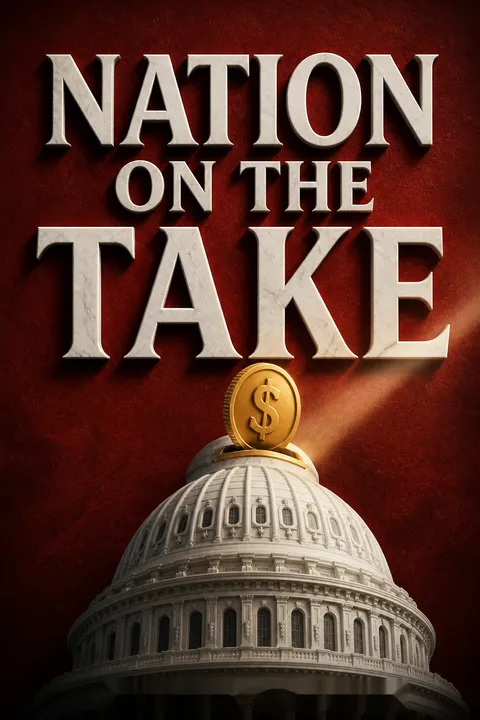
Reviews for Nation on the Take are largely positive, averaging 3.97/5. Readers praise its thorough examination of big money's corrupting influence on politics, covering industries like pharma, banking, and food. Many found it eye-opening and depressing, though appreciated the practical solutions offered in the final chapters. Common criticisms include perceived political bias, an overemphasis on Citizens United, and skepticism that proposed solutions are achievable. Several readers noted the book's broad scope while wishing for more balanced coverage of wealthy donors across the political spectrum.
Glossary
Systemic corruption
Public power bent toward private interestsThe book uses systemic corruption to describe the gradual distortion of government away from the common good and toward private advantage. It is broader than bribery or an explicit exchange of money for a vote. A system can be corrupted when unequal access, influence, and political financing repeatedly shape which interests receive attention and which policies become possible.
Dark money
Political spending with hidden sourcesDark money is political spending routed through organizations that are not required to disclose their donors. The book focuses especially on certain tax-exempt groups that can fund election-related communications while keeping the original sources of the money secret. The term concerns the lack of donor transparency, not all outside political spending.
Super PAC
Unlimited independent-spending committeeA super PAC is a political committee permitted to raise unlimited contributions from individuals, corporations, and unions to support or oppose candidates through independent expenditures. It is not supposed to coordinate spending with a candidate’s campaign. The book argues that close practical ties between candidates and supposedly independent groups can strain that boundary, especially when enforcement is weak.
Revolving door
Movement between government and lobbyingThe revolving door is the movement of former lawmakers, government staff, and regulators into lobbying or industry jobs connected to their public work, and the movement of industry figures into government. The book argues that this exchange can create conflicts of interest, preserve valuable networks for private clients, and encourage officials to view public service as a route to future employment.
Citizen funding
Public support for small-donor campaignsCitizen funding is the book’s preferred term for election-financing systems that help candidates rely on ordinary voters rather than chiefly on wealthy donors. Models discussed include fixed grants, matching funds for small contributions, tax incentives, and vouchers. These programs generally require candidates to meet eligibility conditions and aim to reduce fundraising pressure while widening participation.
Citizens’ Election Program
Connecticut candidate public financingConnecticut’s Citizens’ Election Program is a public campaign-financing system for qualifying candidates. Candidates gather a required level of support and, if eligible, receive public funds for their campaigns under program rules. The book presents its high participation among winning candidates as evidence that public financing can reduce reliance on large donors and give lawmakers more time to engage with constituents.
Matching funds
Public match for private donationsMatching funds are public dollars added to eligible private campaign contributions, often at a multiple and up to a set limit. The book describes New York City’s program, where a small contribution could receive a substantial public match. This design makes small donations more valuable to candidates and can encourage them to seek support from a wider range of constituents.
Crony capitalism
Political privilege replacing market competitionCrony capitalism describes a system in which businesses use political relationships to secure special advantages, protections, or rules unavailable through ordinary competition. The book links this practice to weaker competition, barriers for smaller firms, and declining trust in both markets and government. Its use is critical of selective favors, not of all regulation or cooperation between business and government.
Hill coverage
Share of Congress receiving an organization’s moneyHill coverage is a measure cited in the book for the percentage of incumbent members of Congress who received contributions from a particular organization over specified election cycles. It offers a rough indicator of how widely an interest group or company has distributed campaign support. It does not, by itself, prove that recipients changed their votes or acted on the donor’s behalf.
Testing Theories of American Politics
Study of policy responsiveness to wealthThis 2014 study by political scientists Martin Gilens and Benjamin Page compared policy preferences among average citizens, affluent Americans, and organized interest groups with subsequent policy outcomes. As summarized in the book, the researchers found that policy change was much more likely to align with affluent preferences than with majority opinion alone. The study is cited as evidence of unequal political responsiveness, not as proof that every individual policy is donor-driven.
Download PDF
Download EPUB
.epub digital book format is ideal for reading ebooks on phones, tablets, and e-readers.








