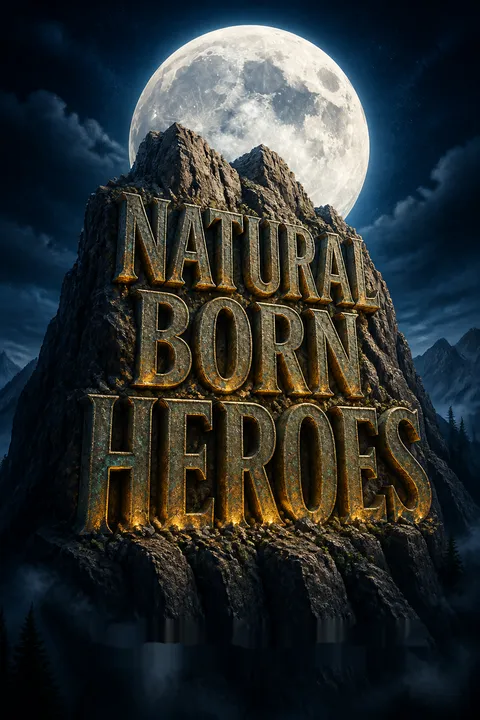


Key Takeaways
Use an enemy's expectations as cover for an improbable escape.
A kidnapping becomes misdirection. In April 1944, British agents Patrick Leigh Fermor and Billy Moss seized German General Heinrich Kreipe on Crete. Wearing German uniforms, they used the general's car and insignia to bluff through checkpoints, including those in Heraklion. The trick depended on the guards seeing the uniform and flags, not looking closely at the people inside. The Greeks called this kind of cunning mêtis: practical intelligence that finds an unexpected route around superior force.
Escape demanded more than a trick. The plan was meant to mislead German investigators while Cretan guides moved Kreipe across the mountains. The planted clues and forged letter could buy time, but the group's survival depended on local knowledge, stamina, and improvisation. The operation shows ingenuity at its most vivid, while its consequences for civilians complicate any simple celebration of the daring.
What's compelling is that the escape is not a contest between two exceptional men. It is a chain of small, coordinated deceptions, each made possible by people who understand the place and the enemy's habits. That is a useful model for problem-solving: locate the assumption the stronger party relies on, then change what that assumption means. The story also resists the lone-genius myth. The operation's cleverness belonged to a network, even when its most famous participants received the credit.
Train to protect people, not merely to impress them.
A hero is a protector. The book recasts heroism as a learnable capacity, not a rare personality trait. Its Greek ideal joins paideia, skill and practical learning; arete, physical excellence; and xenía, the responsibility to welcome and aid a stranger. Each matters: compassion without competence may fail, while strength without concern has no protective purpose.
Test the capacity, not the pose. The author offers two questions for judging heroic ability: would someone choose the action again, and could that person perform it again? The test separates a reproducible skill from a one-time impulse. Norina Bentzel, a school principal who fought off a machete-wielding attacker to protect children, becomes a modern example of action shaped by care and practiced competence, not a wish to appear brave.
This definition makes heroism more useful without making it less demanding. It asks whether concern for others can be matched by the preparation needed to help them. The three Greek ideas also correct one another: skill can become self-serving, strength can become domination, and compassion can become helpless sentiment if either is missing. The repeatability test is a sharp diagnostic, although it cannot capture every form of courage. Some emergencies are genuinely unprecedented, and a person may act well without having rehearsed the exact situation.
Rehearse useful responses before fear narrows your choices.
Fear follows familiarity. The book describes the amygdala as part of the brain's threat-response system, which uses past experience to help the body decide whether an action feels possible. In a sudden crisis, unfamiliar movement can contribute to freezing or panic. Rehearsal gives the body a known pattern to draw on when deliberate thought is difficult.
Bentzel found a response. When the attacker struck, she kept her arms up and moved backward, guiding him away from classrooms. Later, when he turned toward the children, she grabbed him and held on until he dropped the machete. The author interprets her actions as effective choices under pressure, not proof that any single technique guarantees safety. She was badly injured, and the episode was a desperate emergency, not a template for confronting armed attackers.
The strongest lesson here is not that instinct is always wise. It is that practiced actions can remain available when attention and judgment are under strain. That makes rehearsal valuable well beyond self-defense, from emergency procedures to difficult conversations. The account also deserves restraint: a survivor's explanation after an event cannot establish which movement caused survival, and other outcomes were possible. The useful takeaway is to build calm, adaptable responses, not to assume that confidence or a particular maneuver makes danger controllable.
Build an adaptable body, not a showpiece physique.
Elasticity matters alongside muscle. The book draws attention to fascia, the connective tissue surrounding and linking structures throughout the body. It presents this network as part of the body's spring-like capacity to store and return energy, helping movements connect rather than isolating each muscle. The practical point is coordination: whole-body actions can draw on posture, timing, and elastic recoil, not just brute force.
Train for more than appearance. The author points to Bruce Lee's short-range punch and human throwing as examples of power that travels through linked movements. He also contrasts athletic versatility with bodybuilding, arguing that a body able to climb, balance, carry, and adapt is more useful than one trained mainly to look muscular. These examples promote skillful movement, not a promise that connective tissue can replace strength training.
The shift from measuring isolated muscle to examining coordinated movement is a valuable change of perspective. It encourages attention to balance, timing, and how one part of the body supports another. The book's spring metaphor is memorable, but it can make fascia sound like a hidden power source operating apart from muscle. Its most defensible use is as a reminder that movement is integrated. A useful training ideal can be broad capability without turning one tissue or one technique into a universal explanation.
Let rough terrain teach balance, rhythm, and confidence.
Movement should meet the world. Georges Hébert's Natural Method, or Méthode Naturelle, trained practical actions outdoors rather than limiting exercise to fixed machines. The book describes running, climbing, jumping, swimming, carrying, and other adaptable movements as a way to prepare for real obstacles. Parkour, which the author presents as a modern relative, teaches practitioners to move through an urban landscape by vaulting, climbing, and landing with control.
Crete supplied the test. Shepherds and Resistance couriers crossed broken ground quickly, while British agents struggled to imitate their light, springy gait, called the Cretan Bounce. McDougall's own attempt to run down Mount Ida ended in a fall. The contrast captures the point: skill grows through contact with varied terrain, but confidence should not be mistaken for invulnerability.
Variable environments make movement a problem to solve, not just a motion to repeat. That can cultivate attention and adaptability in a way a predictable machine cannot. Hébert's model is also striking because it treats play and practical competence as compatible. Still, outdoor challenge has costs: falls, exposure, and injury are not signs of progress by themselves. Good practice scales difficulty to ability and makes room for recovery. The goal is not to imitate a wartime escape, but to become more capable in ordinary surroundings.
Build endurance patiently, and test fueling theories against your own response.
The book favors slow adaptation. Phil Maffetone argues that endurance athletes can train their bodies to rely more on stored fat and less on rapidly available carbohydrate. His 180 Formula estimates a maximum aerobic training heart rate by subtracting a person's age from 180, with adjustments for health and training history. He pairs low-intensity exercise with a two-week test that removes high-glycemic foods. The text says the body stores far more energy as fat than as carbohydrate, and presents Mark Allen's six Ironman victories as an illustration of the method's potential.
Progress begins below the red line. Maffetone's approach asks athletes to slow down when their heart rate rises too high, then gradually build speed while keeping effort controlled. The book reports that Dutch speed skaters improved while shifting toward more low-intensity training. These are arguments and examples from the book, not a universal diet prescription or a guarantee of results.
The durable insight is the value of patience: easy training can build a base that frantic effort cannot substitute for. The self-test also treats bodily response as information rather than moral failure. Nutrition claims need more caution than the book gives them. Endurance athletes differ, and carbohydrate can be important for demanding efforts; a restrictive diet may not suit every person or medical condition. The method is best read as a hypothesis to evaluate carefully, ideally with qualified guidance, rather than a rule that all bodies should follow.
Learn edible wild foods before treating weeds as food.
Local knowledge turns weeds into provisions. The Cretan Resistance relied on food that could be gathered in the landscape, including greens used in horta, a dish of cooked wild plants with olive oil and lemon. The book follows Leda Meredith, who teaches people to recognize edible plants in Brooklyn parks and shares the foraging knowledge passed down through her Greek family. In 2006, researchers analyzing a traditional Cretan fried pie found that its wild-green fillings had high levels of nutrients, and often more micronutrients than cultivated greens.
Identification comes first. A familiar plant is not automatically safe to eat. Meredith's practical starting point is to learn a few recognizable species at a time, rather than harvesting indiscriminately. For the book, foraging is both a nutritional resource and a way of seeing the overlooked abundance around people. Its benefits depend on accurate identification, clean growing conditions, and knowledge of preparation.
Foraging makes food knowledge concrete: the landscape becomes legible only after people learn its species, seasons, and uses. It also shows how cultural memory can preserve practical skills across generations. The caution is essential, not incidental. Similar-looking plants can differ sharply, and urban or roadside plants may be contaminated. The appealing idea that useful food is everywhere should therefore be paired with expert instruction and conservative identification. The deeper point is not to eat every weed, but to replace inattention with informed observation.
Build trust locally, because help rarely arrives from nowhere.
Hospitality is a survival system. Xenía is the Cretan and ancient Greek practice of receiving a stranger with food and shelter before asking questions. In the book, this tradition becomes more than politeness: villagers hide Allied soldiers, share scarce provisions, pass warnings, and guide fugitives through terrain outsiders cannot read. George Psychoundakis, a shepherd and Resistance courier, could cross the mountains with messages because a wide network supported his movements.
Help grows from obligation. Yiorgos Pattakos, a young villager, lent the only mule in his village to help move the captured general. Asked whether he would take that risk again, he explained that in a small community, people learn to help neighbors rather than wait for distant authorities. The network was not effortless or safe, but its trust and shared responsibility gave isolated individuals options.
The story makes social connection operational. Trust is not merely a warm feeling; it carries information, food, shelter, and coordinated action. That insight applies to emergencies in any community, where formal systems may be delayed or out of reach. Yet close-knit solidarity can also demand heavy sacrifices from people who did not choose the danger. The Cretan network's strength came with exposure to reprisals. Mutual aid is most ethical when its risks are recognized and shared, rather than romanticized as cost-free courage.
Count the civilians who bear the cost of daring operations.
Escape had a human price. Paddy and his companions tried to avoid bloodshed and explicitly warned German authorities not to punish Cretans for Kreipe's capture. But the operation unfolded under an occupation already marked by executions, hostage-taking, and village destruction. In August 1944, General Müller ordered Anogia razed, citing several acts of resistance and the abductors' passage through the town. More than a hundred people were murdered, and the village was destroyed.
Tactics do not control retaliation. The kidnapping succeeded, but its success did not make the surrounding population safe. Cretan families had chosen to help, yet many others were caught in a system of collective punishment they could not control. The ending complicates the heroic adventure: ingenuity and courage matter, but so do the consequences imposed on people who provide shelter, food, and routes through the mountains.
This is the necessary counterweight to the book's exhilaration. The captors' restraint during the seizure did not prevent an occupying force from retaliating against civilians, and the distinction between intended and actual consequences matters. At the same time, blaming the Resistance for atrocities committed by the occupiers would confuse agency and responsibility. A serious account can honor resistance while asking who bears the risk of its tactics. That question belongs in any celebration of daring, especially when success depends on people with less power than the planners.
Analysis
Natural Born Heroes is most persuasive when its historical adventure and its physical philosophy illuminate one another without pretending to be the same kind of evidence. The kidnapping of General Kreipe gives the book a narrative engine: a handful of British outsiders and Cretan guides confront an armed occupation by using disguise, local trust, terrain knowledge, and endurance. The fitness argument emerges from that story as a practical question: what can a body do when comfort, equipment, and specialist help disappear?
The book's most durable contribution is its definition of fitness as adaptable usefulness. It challenges a culture that often measures exercise by appearance, weight lifted, or distance completed, and instead asks whether a person can move, carry, climb, respond, and assist. Its emphasis on varied practice, low-intensity endurance, and learning from the environment gives readers a richer model than muscle size alone. The same principle applies socially: the Cretan network was not an accessory to physical skill, but part of the capacity to survive.
The book is less secure when it turns memorable examples into broad biological explanations. Its account of fascia can encourage attention to whole-body coordination, but it sometimes assigns connective tissue more explanatory power than the story establishes. Its arguments about fat as fuel and carbohydrate consumption are especially confident. Modern sports nutrition recognizes that fuel needs depend on exercise intensity, duration, health, and individual response; the book's dietary experiment should not be mistaken for a universal prescription. Likewise, dramatic accounts of courage cannot prove that a particular technique reliably produces survival.
The historical record also needs moral complexity. McDougall's own source note acknowledges that Paddy Leigh Fermor's memories sometimes diverged from other evidence. The tale remains compelling, but vividness is not identical to certainty. More important, the civilians who sheltered the rescuers faced consequences beyond the operation's control. The book's strongest synthesis is therefore not that everyone can become invulnerable, but that capability is built through practice, attentiveness, and relationships, and that those capacities carry obligations as well as power.
Review Summary
Natural Born Heroes receives mixed reviews, with ratings ranging from 1 to 5 stars. Many readers praise McDougall's storytelling and the book's diverse content, covering WWII history, fitness, and human performance. However, some find the narrative disjointed and the connections between topics forced. Fans of McDougall's previous work, "Born to Run," often express disappointment, feeling this book lacks the same cohesion and focus. Despite criticisms, many readers appreciate the fascinating historical accounts and thought-provoking ideas about human potential and heroism.
People Also Read



Glossary
mêtis
Practical cunningA Greek idea of resourceful intelligence: the ability to read a situation, anticipate obstacles, and find an indirect solution. In the book, mêtis is contrasted with biê, or brute force. Odysseus represents its heroic form, and the Kreipe kidnapping illustrates how disguise, timing, and deception can unsettle a stronger opponent.
paideia
Practical learningIn the book's Greek model of heroism, paideia means the knowledge and learned skills needed to act effectively. It is not simply schooling or abstract intelligence. It includes the capacity to understand a problem, choose a workable response, and keep learning from experience. Paideia is presented alongside physical excellence and care for others.
arete
Physical excellenceThe book uses arete for developed excellence of body and action, including strength, agility, endurance, and practical competence. It is not equivalent to muscular size or victory in sport. Arete matters because a protector must be physically capable, but it is meant to remain balanced with learning and compassion.
xenía
Hospitality to strangersAn ancient Greek and Cretan code of hospitality that treats a stranger as a guest entitled to food, shelter, and respectful treatment. In the book, the customary order is to provide food and a place to wash or rest before asking questions. The practice becomes a network of practical support for fugitives and travelers.
Natural Method
Outdoor practical trainingGeorges Hébert's approach to physical education, developed as an alternative to training that isolates muscles or relies mainly on indoor apparatus. It uses varied outdoor challenges to develop movement skills, strength, agility, and endurance. Hébert linked physical preparation to a moral purpose: becoming fit enough to be useful to others.
Cretan Bounce
Light, adaptive footworkThe springy, efficient way Cretan shepherds and Resistance couriers were described as moving over rough mountain terrain. It involved precise foot placement, rhythm, and rapid adjustment to uneven ground, rather than a conventional marching stride. British agents struggled to imitate it, revealing how much movement skill depends on practice in a specific environment.
Parkour
Movement through obstaclesA training practice in which people move through urban or natural surroundings by running, climbing, jumping, vaulting, and landing with control. The book connects its modern development to David Belle and the Yamakasi, and treats it as a way to learn adaptable movement by engaging directly with obstacles rather than exercising only on machines.
fascia
Bodywide connective tissueConnective tissue that surrounds and links muscles and other structures throughout the body. The book emphasizes its sensory role and its capacity to participate in elastic recoil, using the image of a spring-like network to explain coordinated movement. It presents fascia as one part of whole-body power, not merely a covering around individual muscles.
180 Formula
Aerobic heart-rate estimatePhil Maffetone's rule of thumb for estimating a person's maximum aerobic training heart rate: subtract age from 180, then adjust for health, injury, and training history. During exercise, the person slows down when the heart rate exceeds the estimate. The book presents it as a simple way to guide low-intensity aerobic training.
fat-adapted
Uses fat for enduranceA description of a body trained to rely more heavily on fat metabolism during prolonged, lower-intensity exercise. In the book, Phil Maffetone argues that reducing high-glycemic foods and keeping training intensity controlled can encourage this shift. The term reflects the book's endurance-training theory, not a claim that every athlete should follow one diet.
FAQ
What's Natural Born Heroes about?
- Exploration of Heroism: The book explores how ordinary individuals can rise to extraordinary challenges, focusing on Cretan resistance fighters during World War II.
- Historical Context: It intertwines historical events with personal narratives, particularly the kidnapping of German General Kreipe by British commandos and Cretan partisans.
- Physical Mastery: Emphasizes the importance of physical fitness and natural movement, drawing on ancient Greek practices and modern interpretations.
Why should I read Natural Born Heroes?
- Inspiring Stories: Filled with captivating tales of bravery and resilience, motivating readers to embrace their potential.
- Unique Perspective: Offers a fresh take on history by blending adventure, fitness, and philosophy.
- Practical Insights: Provides advice on improving physical abilities and understanding natural movement.
What are the key takeaways of Natural Born Heroes?
- Heroism is Learnable: Heroism is a skill developed through practice and experience, not an innate trait.
- Importance of Community: Highlights the significance of camaraderie and support in overcoming adversity.
- Natural Movement Philosophy: Advocates for using our bodies in ways that align with our evolutionary design.
What are the best quotes from Natural Born Heroes and what do they mean?
- “Anything which I have done...”: Reflects the importance of mentorship and legacy in shaping our paths.
- “Tradition carries a nasty wallop.”: Suggests challenging conventional wisdom and embracing innovative approaches.
- “You’ve got to put yourself...”: Emphasizes empathy and understanding different perspectives.
How does Christopher McDougall define heroism in Natural Born Heroes?
- Heroism as Skill: Defined as a skill that can be cultivated through training and experience.
- Physical and Mental Mastery: Mastering one’s body and mind is crucial for effective crisis response.
- Community and Support: Heroism often emerges in the context of community and collaboration.
What role does physical fitness play in Natural Born Heroes?
- Foundation of Heroism: Physical fitness is crucial for performing extraordinary feats.
- Natural Movement: Advocates for practices that enhance physical performance and health.
- Empowerment through Fitness: Improving fitness can boost confidence and resilience.
What is the significance of the Cretan resistance in Natural Born Heroes?
- Symbol of Resilience: Represents how ordinary people can stand against tyranny.
- Tactics and Strategy: Details clever tactics like using terrain and guerrilla warfare.
- Cultural Heritage: Fighters are portrayed as guardians of their culture and identity.
How does Natural Born Heroes connect to modern fitness concepts?
- Natural Movement Philosophy: Emphasizes functional fitness over traditional gym workouts.
- Fat as Fuel: Explores using fat as a primary energy source, relevant to endurance training.
- Mind-Body Connection: Highlights mental resilience and adaptability in physical training.
What lessons can readers learn from Natural Born Heroes?
- Embrace Adaptability: Encourages creative thinking and resourcefulness in challenges.
- Value Community: Stresses the importance of strong relationships and support.
- Pursue Functional Fitness: Advocates for fitness that prepares for real-life challenges.
How does McDougall incorporate the concept of endurance in Natural Born Heroes?
- Endurance as a Skill: Emphasizes endurance as a skill that can be developed.
- Historical Examples: Uses figures like Pheidippides to illustrate endurance's power.
- Connection to Heroism: Links endurance to heroism, defining a hero’s journey.
What methods does McDougall suggest for developing physical and mental resilience?
- Natural Movement Training: Engaging in activities like running and climbing enhances resilience.
- Mindfulness and Awareness: Being present helps respond effectively to challenges.
- Community Support: Surrounding oneself with supportive individuals fosters growth.
How does Natural Born Heroes challenge conventional views of fitness and heroism?
- Redefining Fitness: Challenges the notion that fitness is about aesthetics or traditional sports.
- Heroism Beyond the Battlefield: Expands heroism to include everyday acts of courage.
- Embracing Imperfection: Encourages recognizing that heroism is about striving to be better.
About the Author
Other books by Christopher McDougall

Download PDF
Download EPUB
.epub digital book format is ideal for reading ebooks on phones, tablets, and e-readers.








