

Plot Summary
The Eye on the Desk
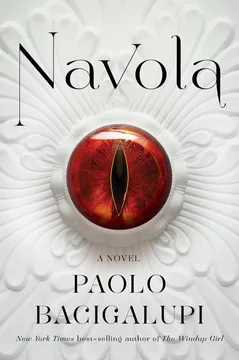
Davico grows up in the Regulai palazzo, where his father, Devonaci, keeps a dragon’s fossilized eye beside the instruments of banking and government. The family’s influence rests on contracts, loans, and promises that reach across the known world.
His tutor Merio teaches him to copy those contracts precisely, while the family’s history shows how generations of labor raised the Regulai from wool traders to one of Navola’s ruling houses. Devonaci’s eye for weakness and leverage unsettles Davico, who would rather play with his dog Lazy than master the bank.
Yet the artifact draws him with a force he cannot explain. One day, alone in the library, he reaches out and touches it, crossing from childhood curiosity into a mystery his father cannot control.
The eye introduces the novel’s central double vision: a relic that may be dead matter, yet seems to contain a scale of time beyond human politics. Devonaci uses it as a tool of authority, making other men swear upon it, while Davico experiences it as something that watches back. Their different readings establish a recurring conflict between symbolic power and lived perception. The family’s rise through contracts also makes inheritance more than wealth: Davico is being trained to become the human guarantee behind a far-reaching web of obligations. His touch marks the first time that this inherited role intersects with a force outside his father’s expertise.
The Balcosi Night
When the Callarino storms into Devonaci’s library furious at Tomas di Balcosi’s attempt to create an exclusive council for old noble families, Devonaci avoids a public execution and gives Balcosi responsibility for the harbor instead.
He then studies the man more closely, discovers that Balcosi has joined the hostile Speignissi, and sends Cazzetta to investigate. Regulai soldiers burn the Speignissi tower and seize the Balcosi household. Davico watches the family arrive terrified beneath his family’s victory fresco.
His father spares Tomas, exiling him to manage a tin mine, but keeps Tomas’s daughter Celia in the palazzo as a ward and a guarantee of her father’s obedience. Davico is ordered to make her welcome. His awkward tour ends in the stable, where Celia begins to feel safe beside Lazy and the horses.
The scene makes political violence intimate. Davico’s family does not merely defeat rivals; it rearranges the future of a girl who has lost her home, then calls that arrangement protection. His father’s mercy is real, but it is also strategic, which prevents kindness and control from separating neatly. The fresco above the captives turns family history into a present weapon, showing how images can discipline as effectively as guards. Celia’s first comfort comes not from the powerful adults who decide her fate but from animals and a boy who cannot yet understand the cost of his family’s decisions.
The Forest Answers Back
As Davico grows older, he becomes fascinated by the dragon eye’s apparent memories and asks the family physician, Maestro Dellacavallo, whether dragons truly die. The physician cannot confirm the relic’s power, but introduces Davico to older accounts of Firmos, the living network that joins animals, plants, land, and weather.
During a visit to the Romiglia, Davico follows mushrooms and herbs away from his escort, Aghan Khan, and becomes lost with his pony Stub. He spends a cold night beside a waterfall, where a shadow panther appears in the clearing.
Davico freezes rather than fight. The cat studies him, then leaves without attacking. At daylight, Davico finds its enormous tracks and eventually locates the trail back to the waiting search party.
Davico’s encounter with the panther does not grant him mastery of nature; it makes him feel his smallness within it. His choice not to kill the stag earlier and his instinctive closeness to plants mark a temperament at odds with the warrior and banker roles imposed on him. Firmos gives that difference a language, but the novel resists treating nature as harmless refuge: the panther remains dangerous, and Davico survives through an encounter he cannot control. The episode offers a counterweight to Navola’s human games, not an escape from vulnerability.
Women Read the Room
Celia grows into a bold, accomplished young woman, mastering weapons and lessons while Davico struggles to match her alertness. When Lady Furia’s armed procession blocks their ride through Navola, Davico sees a predator threatening their safety, but Celia answers the woman’s insults without shrinking.
Later, Davico secretly follows Celia to the courtesan Allezzia’s palazzo and wrongly assumes she is entering a life of sexual service. Celia explains that she and Ashia study how women survive male power, learning to read concealed motives and protect themselves.
She also admits that her visits are known to Davico’s father. Her explanation restores their friendship, while Davico’s demand that they never lie to each other reveals how badly he wants one relationship untouched by political calculation.
Celia’s education is not decorative refinement. It responds to the limits placed on women who cannot ordinarily wield armies, offices, or public authority. Her study of social performance gives her a form of strategic literacy that Davico does not possess, even as he assumes that his family’s methods are universal. Their promise of honesty is emotionally sincere but structurally fragile: both live in a world where concealment can be protective, and Davico asks Celia to make an absolute promise inside that world. The episode therefore deepens intimacy while quietly establishing the danger of treating trust as a guarantee.
The Heir Nearly Runs
As Davico’s name day approaches, Devonaci tests him at the plank, where he mishandles a negotiation with Merai’s first secretary, Count Dellamont, and leaves his father to secure the agreement. The mistake deepens Davico’s fear that he cannot inherit the bank.
At the same time, reports reveal that Merai’s young ruler faces a rebellion, while Devonaci begins imagining a wider alliance and expansion. Davico’s stomach pain grows severe, but he hides it rather than appear weak.
On the day of his Assumption, he tries to escape into the countryside with Lazy and Stub. Cazzetta intercepts him at the gate. Seeing himself reflected as a boy fleeing responsibility, Davico turns back. Ashia then insists that he attend his ceremony despite his illness.
Davico’s physical sickness registers a conflict that he cannot yet express openly. He interprets vulnerability as failure because the people around him treat competence as a condition of safety. His attempted flight is not simply cowardice; the forests offer a model of life he understands better than the bank’s intricate obligations. Yet Cazzetta’s intervention makes him recognize the cost of leaving without choosing a successor or protecting those tied to him. His return is a decision, but not a cure: he accepts the role before he has made peace with what it demands.
Blood at the Assumption
During the crowded Assumption celebration, Davico receives lavish gifts, including a dragon-claw dagger, while Lady Furia tests him with a necklace made from human finger bones. The festivities turn deadly when his friend Piero suddenly stabs him and armed conspirators attack the Regulai household.
Cazzetta saves Davico from a deeper wound, but household guards and servants fall around them. Celia and Davico flee with Cazzetta through a hidden stairway beneath the library. Davico refuses to leave the dragon eye behind and carries it into the catacombs.
When four assassins ambush them, the eye blazes, paralyzes the attackers, and lets Cazzetta kill them. Davico experiences each death through the relic, then collapses, horrified by the dragon’s appetite and the violence he has shared.
The attack collapses Davico’s distinction between family, friendship, and political threat. Piero’s betrayal is especially destabilizing because it makes trust seem not merely risky but epistemically unreliable: Davico cannot know which past intimacy concealed hostility. The dragon eye’s awakening offers survival, yet its power is not a clean gift. Davico feels the attackers’ deaths as his own and becomes implicated in an appetite he fears. The object thus answers a practical need while intensifying the question of who is acting through him. Protection and possession begin to overlap.
Mercy Turns to Ash
After the attack, Cazzetta hunts down the conspirators through informants, while the Callarino and the Lupari strip hostile families of property and standing. When Giovanni asks Davico to spare his cousin Vettino, who knew men involved in the plot, Davico refuses to decide and sends him to Cazzetta instead.
The evasion wounds his friend and leaves Davico ashamed. Cazzetta’s investigation eventually identifies the Avizzi family as the plot’s organizers. Davico rides with his father to their palazzo and watches the entire household killed, including children and servants.
He hides his horror from the others, then vomits alone. Meanwhile, he conceals the dragon eye’s continuing life from Devonaci and Cazzetta, keeping its power as his first private secret.
The purge teaches Davico how violence can become administrative: votes, property seizures, and targeted executions turn vengeance into the public machinery of order. His refusal to grant Giovanni’s cousin mercy is a smaller decision with a deeper personal cost. Davico is not yet capable of separating caution from moral retreat, so he lets fear make the choice for him. Concealing the dragon’s survival gives him a fragile private territory, but it also starts the transformation of secrecy from a skill imposed by others into a practice he chooses for himself.
Celia's Marriage Bargain
Reports from Merai show that its young ruler, Roulait, may turn to Cheroux for help against his uncle Ciceque. Devonaci reveals that the Regulai bank has borrowed heavily to support Merai and cannot afford to lose its influence there. With money and troops already committed, he decides to offer Celia as a bride to bind Roulait to Navola.
Davico realizes that his father is also separating him from the woman he loves. He refuses to help arrange the marriage, but Cazzetta takes him toward Merai regardless. On the journey, Davico learns that his father’s proposal has already been delivered. His anger cannot undo it, and Cazzetta presses him to see that Celia’s future is being negotiated as part of a larger political wager.
Celia’s marriage transforms a family relationship into diplomatic collateral. The contrast between Davico’s emotional attachment and Devonaci’s strategic reasoning is not a simple contest between love and greed: the bank’s exposure is real, and an alliance may protect many lives. Yet the plan also reveals how easily the language of care can obscure the use of a person as a guarantee. Davico’s resistance begins as possessiveness, but beneath it lies a moral recognition that Celia’s consent is absent from the bargain. He is right about the injury, though not yet equipped to change it.
The Parl's Dangerous Horse
In Merai, Davico meets Roulait, a young ruler who stages a test by asking him to approach Imperix, a warhorse trained to threaten strangers. Davico ignores the display of dominance and wins the horse’s trust with calm handling.
At dinner, he answers insults about Navola with unexpected confidence and attracts the attention of Allessana, a young noblewoman serving at court. The next day, Roulait tests him again during a reckless ride, then admits that he trusts Davico more than the courtiers surrounding him.
He also reveals that Celia has already been offered in marriage. Davico sees that his own attachment was meant to convince Roulait of Celia’s value. Despite his anger, he agrees to the match when Roulait promises to treat her honorably.
The horse scene offers Davico a kind of competence he has rarely found among people. He reads Imperix through attention rather than force, and the horse responds to a relationship not organized around domination. At court, however, Davico’s emotional transparency becomes a political instrument: the very love that makes him sincere helps sell Celia to Roulait. His agreement to the marriage is therefore double-edged. It recognizes a potentially safer future for her while accepting his father’s plan and suppressing his own desire.
The Last Night Together
Back in Navola, wedding preparations fill the palazzo, but Celia’s anger and Davico’s longing remain unresolved. On the night before her marriage, she invites him to her room. He tries to stop them, then gives in to their mutual desire, and they spend the night together before she leaves to marry Roulait.
Their intimacy is interrupted when Davico senses danger outside. They find Cazzetta murdered in the corridor, his head pinned to a door with a dagger. Before they can understand who killed him, bells sound and fighting breaks out across the palazzo.
The dead spymaster’s silence confirms that someone has penetrated the household’s defenses. Davico and Celia arm themselves and run toward the library, where they hope to use its hidden passage to escape.
The lovers’ night is both a genuine act of mutual choice and a moment shaped by political coercion: Celia is about to enter a marriage arranged without her consent, while Davico knows their relationship cannot safely become public. Their intimacy cannot repair the power imbalance that surrounds them, but it briefly offers recognition without negotiation. Cazzetta’s murder then destroys the illusion of privacy. The very corridor where Davico pursues a private bond becomes the place where the household’s political defenses fail, tying desire and danger together without making one a punishment for the other.
The Wolves Enter Palazzo
The attackers are Lupari soldiers, once Navola’s own mercenaries, and troops wearing Merai’s colors. The Callarino has opened the palazzo gates to them. Aghan Khan is trampled and killed, while Ashia and household servants die defending the family. Davico and Celia fight their way toward the library, but its doors are locked.
As the Parl and the Callarino corner them, Celia appears to turn against Davico. She cuts his cheeks with a slave’s three-and-three scars, then drives a blade into each of his eyes. Davico collapses and wakes captive. The attack has erased his family’s power, but Celia’s actions remain hard to interpret: her rage is real, and the invaders also use her performance to secure their victory.
The coup reverses the social order that Davico has taken for granted. The Lupari’s allegiance proves that money can purchase military loyalty but cannot guarantee it, while the Callarino’s betrayal reveals how apparent political dependence can conceal a route to power. Celia’s violence is the most difficult event to interpret because it contains both personal injury and political performance. Her family suffered under the Regulai, and she has been shaped by that captivity; at the same time, the invaders benefit from her actions. The novel withholds a simple distinction between revenge, survival, and complicity.
Fealty in the Callendra
The Callendra stages Davico’s trial as public entertainment. Merio, General Sivizza, Garagazzo, and the Parl testify that the Regulai plotted to sell Navola to Cheroux. Giovanni, forced to defend Davico, argues that he is no mastermind, but the vote still condemns him. The Callarino offers survival in exchange for the Regulai fortune. Davico kneels and swears fealty, hoping to live.
The Callarino then rejects the oath as insufficient and orders him branded as a slave. Guards strip and restrain Davico, pressing the three-and-three brands into both cheeks. The humiliation turns his survival into a public warning: the family that once made others swear on the dragon eye is now reduced to a captive whose body records the Callarino’s power.
The trial separates truth from procedure. Davico is not judged through evidence so much as assigned a role in a political spectacle designed to consolidate the new regime. Giovanni’s defense is painfully honest, but its accuracy cannot protect his friend because the chamber’s purpose is not adjudication. Davico’s fealty becomes another transaction, and the Callarino’s branding demonstrates that submission does not necessarily purchase safety. The ceremony also reverses the Regulai’s former use of visible marks: a cheek once represented a promise voluntarily given, while Davico’s scars make ownership legible without his consent.
Signatures for Survival
Because the Regulai fortune is spread across branches governed by shared banking laws, the Callarino needs Davico alive to reclaim it. Merio guides his hand as he signs documents, and the money begins flowing back to Navola. Davico is kept as a blind, branded ornament in the former Regulai palazzo, now occupied by the Callarino’s family.
When Filippo di Basca in Torre Amo refuses to surrender his branch’s wealth, the Callarino cuts off Davico’s little finger and sends it to Filippo as a threat. Filippo returns the severed finger on a gold chain and keeps resisting. The Callarino eventually throws Davico into a dungeon, where he is left without a chamber pot, food enough, or reliable sense of time.
The banking system becomes the hinge between Davico’s continued existence and his degradation. The Callarino cannot simply seize the international network by force; he requires the living signature of the legitimate heir. Davico is therefore preserved as a legal instrument while being denied almost every condition of personhood. Filippo’s refusal is a rare limit on the new regime’s reach, but it does not yet rescue Davico. The episode also exposes the difference between owning a bank’s visible assets and controlling the promises that make it function across borders.
The Blind Map
During a brief return to the palazzo, Davico learns to navigate by counting steps, reading breezes, and distinguishing people through sound and scent. He searches the stables for his pony Stub, hoping to escape, but discovers that the Callarino sold the Regulai horses.
The horsemaster Herges treats him with unexpected respect, and Lazy recognizes her former master, though Davico pushes her away to protect her from the household’s cruelty. The Callarino later summons Davico to the library and beats him when he reaches instinctively toward the dragon eye.
He orders another appeal to Filippo, who again refuses to release Torre Amo’s wealth. Davico is returned to the dungeon, now with a sharper understanding of his captivity and the senses he can use against it.
Blindness changes Davico’s relation to space rather than simply removing one faculty. He builds a practical map from memory, sound, smell, and touch, turning an imposed vulnerability into a discipline. Yet these gains do not erase dependence: he cannot find Stub, and protecting Lazy requires him to deny her affection. Herges’s kindness matters because it is not built on the political debt that governs most relationships in the palazzo. The Callarino’s beating shows that Davico’s emerging agency remains dangerous to his captors, especially when it connects him to the dragon eye.
A Spoon Against Stone
In the dungeon, Davico steals a spoon and sharpens it against the stone, hoping to attack Aqba, the keeper who starves and humiliates him. When Aqba enters, Davico wounds him but cannot kill him or escape. Aqba returns to his duties, and Davico spends another long stretch underground, losing track of time and slipping into an animal existence.
For the Callarino’s birthday, guards drag him out, wash and dress him, then seat him at the feast as a warning to guests. There Davico meets Allessana again, the young woman he encountered in Merai. She recognizes him and hears his account of the world’s cruelty, but he responds with bitterness and tells her that his enemies will use her too.
The spoon is a small tool, but it matters because Davico makes it himself from the conditions of his confinement. Its failure is not proof that resistance is futile; it shows how badly his strength and judgment have been damaged by isolation. The birthday banquet turns him into an exhibit, just as the earlier trial did, but his encounter with Allessana introduces a different kind of attention. His warning to her is both insight and self-protection: he has learned to see exploitation clearly, yet his suspicion risks making every possible ally appear only as another threat.
The Dragon's Second Claim
Back in the dungeon, Davico retreats into memories of the palazzo and eventually reaches the dragon eye through his inner senses. The dragon overwhelms him with its ancient life, but Davico rebuilds his mind from memories and traits taken from the people who shaped him, then forces the creature out and bargains with it.
Using the eye, he observes the Callarino and senses a chance to act. When Allessana comes to the library seeking help, Davico calls to her through the relic. She touches it and experiences his presence, then finds him in the dungeon. He offers her a hidden cache in Merai and the help of his agent Lugo if she frees him. Though she distrusts his motives, she finally agrees to help.
Davico’s survival now depends on a more troubling form of self-making. He does not simply recover the boy he was; he deliberately incorporates traits from the people who harmed, taught, and loved him. His alliance with the dragon mirrors that reconstruction: neither side is benevolent, but both accept a practical bargain. Allessana’s contact with the eye makes the link relational rather than purely personal. She sees Davico’s hunger and manipulation directly, yet still chooses a limited alliance, suggesting that trust can begin not in innocence but in clearly understood risk.
Out Through the Gate
Allessana returns to the dungeon with Aqba and pretends to share his desire to hurt Davico. While Aqba unlocks the cell, she strikes him with a poker and kills him. She frees Davico, then listens as he directs her toward Lugo and the hidden Regulai cache in Merai. Davico refuses to make her responsible for guiding him through the palazzo and sends her away to protect her.
Using the dragon eye to navigate, he reaches the stables, where Herges has kept Lazy. Davico leaves the dog behind, steals a horse, and kills the guard at the gate when the man recognizes him. He rides into the waking city and toward the Romiglia, leaving a letter for the Callarino that promises he knows where to find him.
The escape is not a restoration of the old Davico. He survives through violence, uses Allessana as a political ally, and leaves Lazy behind because affection would endanger her. These choices show both regained agency and the moral cost of becoming harder. Yet the ending also reconnects him to the landscape and sensory life that once offered him a refuge. His final letter reverses the Callarino’s earlier control of the story: Davico leaves not as a petitioner but as a threat whose location and intentions remain uncertain.
Analysis
Navola treats power as a system of promises that can protect a city, bind a family, or turn a person into collateral. The Regulai rise through contracts rather than royal blood, yet their wealth does not free them from violence. Instead, it makes them capable of shaping violence at a distance: buying mercenaries, influencing the Callendra, and converting political rivals into debtors or wards. Davico inherits this machinery without inheriting his father’s confidence in it. His preference for animals, directness, and the living landscape makes him seem unfit for Navola, but it also gives him forms of perception that the city’s strategists overlook.
The novel repeatedly asks whether seeing clearly is a moral advantage. Davico’s open face can expose him to manipulation, while the practiced masks of Devonaci, Celia, and Cazzetta permit survival. Yet concealment has costs: Celia is treated as a political guarantee, Giovanni’s friendship buckles under fear, and Davico’s own desire for certainty makes him misread people he loves. The dragon eye radicalizes this question. Its vision offers knowledge without human intimacy, a vast awareness that can consume the person who seeks it. Davico must therefore negotiate not only with political enemies but with a force that dissolves the boundary between his perspective and its hunger.
Firmos provides a competing model of relationship. The forest does not promise safety, but it places Davico among creatures whose needs are not disguised as civic virtue. His final escape toward the Romiglia is not a return to innocence. He has learned violence, manipulation, and strategic restraint, and he carries the dragon with him. The ending leaves him changed but not resolved: he has escaped captivity, yet the letter to the Callarino makes clear that his flight is also the beginning of a conflict he intends to choose for himself.
Review Summary
Navola is a Renaissance Italy-inspired literary fantasy following Davico di Regulai, reluctant heir to a powerful banking family. Reviews are largely positive, praising its rich worldbuilding, elegant prose, and complex political intrigue. Many compare it to Guy Gavriel Kay and Game of Thrones. Common criticisms include slow pacing, a passive protagonist, and underdeveloped fantasy elements—particularly the dragon's eye. Most agree the final quarter delivers dramatic payoffs. Readers seeking dense political storytelling will likely enjoy it; those expecting action-heavy fantasy may be disappointed.
Characters
Davico di Regulai
Banker's reluctant heirDavico is the only son of Devonaci di Regulai, raised among ledgers, family legends, and the subtle contests of Navolese politics. He is observant and compassionate, with a deep attachment to animals and the natural world, but he doubts his ability to inherit his father’s ruthless intelligence. His curiosity about the dragon eye and his connection to Firmos reveal a temperament that does not fit neatly into the family’s commercial and political machine. Davico wants directness and loyalty in a society built on masks, and that desire makes him vulnerable as well as morally distinct. His central struggle is not simply whether he can become powerful, but what kind of self he must become to survive power.
Devonaci di Regulai
Master of measured promisesDavico’s father is the brilliant head of the Regulai bank, a man whose influence reaches merchants, rulers, soldiers, and the elected government of Navola. He prefers quiet leverage to public humiliation and treats knowledge as the foundation of every successful bargain. His intelligence is formidable, but it does not make him emotionally transparent: he protects his son while also testing and training him for an inheritance Davico does not want. Devonaci combines genuine affection with strategic calculation, often assuming that what benefits the family also benefits the people he loves. His ambition reaches beyond the safety of the bank toward a political order large enough to secure Navola’s future.
Celia di Balcosi
Clever political wardCelia arrives in the Regulai palazzo as the daughter of an old noble family and quickly becomes Davico’s closest companion. She is lively, competitive, and intellectually quick, mastering swordplay, accountancy, and the social codes that govern men’s and women’s lives. Her confidence is not mere boldness: she has learned to read danger and to adapt her presentation to the people around her. Celia’s bond with Davico mixes sibling familiarity, friendship, and attraction, while her history gives her a perspective on the Regulai that he cannot share. She values agency, competence, and the right to understand the terms of her own life.
Cazzetta
Knife in the shadowsCazzetta is Devonaci’s stilettotore, a spy and assassin whose skill depends on silence, patience, and an exact reading of fear. He is cruel in his lessons, particularly with Davico, but his harshness is bound to a fierce loyalty to the Regulai household. Cazzetta distrusts sentiment when it clouds judgment and teaches that survival often depends on seeing what others try to hide. His own body bears the cost of a life spent in violence, and his sardonic manner conceals a more complicated attachment to the people he serves. He functions as both protector and warning: the kind of person Davico may need to become, and the kind he fears becoming.
Borsini Amoforze Corso
Navola's elected CallarinoThe Callarino is Navola’s elected leader, formally accountable to the Callendra but deeply entangled with the city’s powerful families. He is vain, quick to anger, and eager to command, yet he depends on Devonaci’s advice and financial reach more than he likes to admit. His public authority often exceeds his actual independence, and he resents the difference. Davico first sees him as a furious, theatrical figure whose moods his father can quietly manage. Beneath the bluster lies a man intensely sensitive to status and humiliation, with a long memory for perceived slights. He represents the unstable boundary between civic office and private ambition.
Merio Pevecho
The bank's exacting mentorMerio is the senior numerari who teaches Davico the daily disciplines of the Regulai bank, from perfect copying to the interpretation of ledgers and correspondence. Warm, witty, and proud of his Pardi origins, he often softens instruction with jokes about food and trust. He believes details are not clerical trivia but the foundation of power: a number, a term, or a mark can alter the fate of a family. Merio is one of Davico’s earliest teachers in how to listen beneath a person’s words. His practical intelligence offers a counterpoint to Devonaci’s grander strategy, though both expect Davico to learn the same demanding craft.
Ashia
Palazzo's guarded counselorAshia is Devonaci’s consort and the commanding presence of the Regulai household. She was born to a powerful family far from Navola, then enslaved and marked before she entered Devonaci’s home. Her elegance and authority coexist with the visible signs of her constrained status. Ashia understands diplomacy, courtly presentation, and the particular dangers women face in a world governed by men. She cares deeply for Davico, but her affection does not make her indulgent: she confronts his self-deception and insists that he prepare for the threats surrounding his inheritance. Ashia’s strength comes from reading power clearly without confusing survival with safety.
Aghan Khan
The household's swordmasterAghan Khan is the Regulai guard captain, a veteran commander who trains Davico in swordplay, hunting, and the discipline required to survive danger. His manner is direct, but his care for Davico is evident in the attention he gives to the boy’s safety and character. Aghan Khan values honor and loyalty without pretending that either makes a person invulnerable. His experience in distant armies gives him a wider view of power than Davico’s tutors can provide. He treats responsibility as a burden to be carried, not a privilege to be admired.
Maestro Dellacavallo
Physician of the wildThe family physician becomes Davico’s guide to plants, fungi, remedies, and the close attention required to heal. Dellacavallo delights in bees and the natural world, and he treats Davico’s questions seriously even when they stray beyond medicine. His teaching gives Davico a language for the living interdependence he later calls Firmos. Unlike the bank’s instructors, Dellacavallo encourages observation without turning every discovery into a contest for power. He sees in Davico a sensitivity that could serve a different life, though family duty stands between the boy and that possibility.
Lady Furia
Navola's feared archinomoLady Furia is a powerful archinomo known for her armed entourage, slave holdings, and cultivated reputation for danger. She openly mocks the etiquette that constrains other leaders and understands that fear can be made into a political instrument. Furia’s apparent cruelty is deliberate, but she is not easily reduced to the image she presents; she studies the people around her and weighs the consequences of every alliance. Her dealings with the Regulai mix rivalry, pragmatism, and an unusual candor. She is one of the few figures who can unsettle Davico while also recognizing the limits of his father’s judgment.
Roulait
The young Parl of MeraiRoulait inherits Merai’s ring while still young, with powerful relatives and advisers contesting his authority. He is energetic, proud, and drawn to horses and hunting, yet his confidence can shade into staged intimidation. Roulait wants to be treated as a ruler rather than a child, even as he depends on older men to hold his position. His encounters with Davico reveal a hunger for sincere connection beneath the display of command. He is also shaped by the unstable politics of Merai, where family ties and military power can turn swiftly against a young sovereign.
Count Dellamont
Merai's calculating secretaryDellamont is Merai’s first secretary, a military-minded statesman whose influence helps keep the young Parl in power. His broken features and composed manner suggest a man accustomed to danger and hard decisions. He bargains forcefully, understands the value of armies and credit, and is willing to use pressure when diplomacy fails. To Davico, Dellamont is a reminder that a ruler’s polished court may conceal a more brutal political culture. He is a skilled operator whose loyalty is tied closely to the survival and advantage of the regime he serves.
Allessana
A courtier seeking safetyAllessana is a young noblewoman from a lesser house who appears at Roulait’s court hoping to improve her family’s position. Davico remembers her as curious, graceful, and kind, though she lives under pressures that leave her little room to choose freely. She notices how power works on people who cannot command it, and her composure can conceal distress. Allessana’s courtesy is not naïveté; she watches carefully and weighs the risks of each possible ally. Her story brings into focus the vulnerable people who are used as instruments by rulers and families.
Giovanni
The scholar among friendsGiovanni is Davico’s studious friend, devoted to old texts, philosophy, and the laws of Leggus. He is gentler and less physically confident than Piero and Cierco, but his quietness should not be mistaken for passivity. Giovanni values careful argument and moral consistency, and he tries to preserve friendship even when politics makes that difficult. His relationship with Davico is founded on years of shared study and play, which makes their later encounters especially charged. He represents the life of the mind that exists beyond the bank’s pursuit of wealth and the city’s competition for status.
General Sivizza
Commander of the LupariSivizza commands the Lupari, Navola’s elite mercenary force, and has served the city long enough to understand both the honor and instability of paid loyalty. He is blunt, disciplined, and attentive to the responsibilities that come with military power. Sivizza respects Davico’s seriousness even when the young heir lacks confidence in himself. His perspective is practical: armies need preparation, food, and a reason to remain loyal. Through him, the story shows how professional force can protect a city while remaining vulnerable to changing incentives.
Filippo di Basca
Torre Amo's bawdy bankerFilippo manages the Regulai interests in Torre Amo, combining sharp commercial instincts with an extravagant appetite for jokes, wine, and pleasure. His manners often embarrass Davico, but Devonaci tolerates him because Filippo is effective and difficult to replace. He understands that influence does not always belong to the most respectable person in the room. Filippo’s irreverence masks a keen sense of leverage and a willingness to defy those who mistake decorum for control. He gives Davico an early lesson in the difference between being crude and being foolish.
Lugo Terrademezzo
Merai's scarred shadow agentLugo is a covert operative who watches the Regulai bank’s interests in Merai and moves easily through taverns, alleys, and hostile territory. His face is badly scarred, and his speech is blunt, often mixing humor with an underlying rage. Lugo has survived by accepting risks that more polished men avoid, and his loyalty is practical rather than sentimental. He shares with Cazzetta a life shaped by secrecy and violence, but he has a rougher, more openly physical presence. His knowledge of Merai’s hidden routes makes him a valuable contact for anyone forced to flee there.
Lazy
Davico's faithful houndLazy is Davico’s beloved dog, a steady companion through the palazzo and the countryside. She is affectionate, alert, and unusually responsive to Davico’s moods, following him even when others are occupied with business. Her presence gives him a form of uncomplicated loyalty in a household where most relationships are entangled with duty or advantage. Lazy also connects Davico to the sensory world he trusts: scent, movement, warmth, and shared routine. Her name reflects the boy’s humor more than her energy.
Herges
The independent horsemasterHerges is the palazzo’s horsemaster, a large, plainspoken man from Chat who judges people partly by how they treat animals. He is confident enough to challenge petty authority when he believes it wrong, and he recognizes Davico’s connection to the living world around him. Herges offers practical kindness without pretending that it can solve the political dangers of the palazzo. His respect for the older gods and for the horse Regna places him outside Navola’s official religious assumptions.
Garagazzo
Navola's high canon priestGaragazzo leads Navola’s religious establishment and wields influence through sermons, ceremonies, and the public language of virtue. He enjoys fine food and company, and his appetite often sits uneasily beside his moral authority. He is closely tied to the city’s political life, where religious approval can support a policy or intensify public pressure. Davico sees both the genuine power of belief and the self-interest that can hide behind sacred office.
Plot Devices
The Dragon Eye
A relic that sees beyond timeThe fossilized eye rests on Devonaci’s desk as a symbol of authority and a possible vessel for a dragon’s surviving awareness. Davico experiences its memories and hunger directly, while his father treats it as a powerful artifact whose meaning lies partly in ritual. During moments of violence, it gives Davico access to the perceptions of living things and eventually becomes the basis of a dangerous alliance. Its power does not function as a simple weapon: it threatens to overwhelm Davico’s sense of self, and he must learn to resist its appetite as well as use it.
Leggus's Banking Laws
Promises that outlive their ownersThe shared customs of banca mercanta let merchants move wealth across borders using contracts, letters of credit, trusted marks, and recognized legal procedures. Because these agreements are upheld across rival kingdoms, a bank’s value is not confined to its vaults or buildings. The Regulai fortune is spread among distant branches, and its recovery depends on a legitimate heir’s authority and signature. This system explains why the Callarino cannot simply seize every asset by force, and why Davico remains valuable even after his family’s political defeat.
Faccioscuro and Cartalegge
A game played through facesNavolese political life prizes controlled expression, concealed intentions, and the ability to read what others reveal unintentionally. The card game cartalegge models this world: players deceive, shift alliances, and interpret one another rather than simply calculate moves on an open board. Davico’s father, Cazzetta, and Celia all teach him different aspects of this skill. The device shapes negotiations, family relationships, and Davico’s growing suspicion, while testing whether he can remain honest without becoming easy to manipulate.
Firmos and Cambios
Nature against human strivingThe philosopher Soppros distinguishes the human world of deliberate change from Firmos, the interconnected fabric of living things that humans have fallen away from. Davico’s knowledge of herbs, his companionship with animals, and his experiences in the Romiglia make Firmos more than an idea to him. The concept provides a counterweight to banking and politics, where people constantly try to control one another. It also shapes how Davico understands the dragon’s ancient awareness and his own place in a world larger than Navola.
The Hidden Passage
An escape beneath the cityA concealed stairway behind a library shelf connects the Regulai palazzo to ancient catacombs and tunnels beneath Navola. Cazzetta knows the route and uses it when the household is attacked, bringing Davico and Celia below ground. The passage initially offers refuge, but its darkness also exposes Davico to the dragon eye’s power and to an ambush by pursuers. Its importance extends beyond one escape: it makes the city’s buried history a physical route through the political crisis above.
Download PDF
Download EPUB
.epub digital book format is ideal for reading ebooks on phones, tablets, and e-readers.








