

Key Takeaways
Use advertisements as evidence of change, not a census of society
A moving social record. The book reads Indian advertising as both a reflection of changing life and an attempt to shape it. Early campaigns often framed men through physical strength; later ones showed husbands cooking, doing laundry, and using grooming products. Women moved from the idealized home and wedding setting toward work, ambition, and greater control over family decisions. Mobile phones offer another telling shift: once an expensive status symbol, they became ordinary tools used across income groups.
A bigger audience. The growth of television widened the reach of these messages. The book contrasts just 55 licensed television sets when Nehru died in 1964 with television in more than 60 percent of Indian homes in 2014. Ads thus became a vivid archive of changing aspirations, family roles, and consumption, while also helping introduce products and habits.
What's valuable here is the double role assigned to advertising: it records social desire while trying to redirect it. That makes campaigns useful cultural evidence, especially when a new image of a father, worker, or consumer appears. But an advertisement is not a population survey. It shows what a brand believes will sell, or wants viewers to imagine, rather than what most people actually do. The gap between the aspirational scene and ordinary life is not a flaw in the archive. It is often the most revealing part.
Track household power by watching who earns, decides, and does the work
Roles are being renegotiated. A 1980s Prestige pressure-cooker ad tied a husband's love to buying a safer cooker for his new wife. Decades later, an Airtel ad showed a woman managing her husband at work, then preparing dinner for him at home. The contrast captures change, but also its unevenness: professional authority can shift faster than domestic labour. Ariel's later campaign asking husbands to share laundry makes that unfinished negotiation explicit.
Representation lags reality. In one study cited in the book, only three of 30 consumer-goods ads sampled from each of 1987, 1997, and 2007 showed working women. Meanwhile, the urban share of nuclear households rose from 35 to 45 percent over two decades, changing who held influence inside the home. The ads register new possibilities, but not necessarily equal burdens.
The most useful lens is not simply whether an ad looks modern. It is whether authority, care work, and choice move together. A woman shown as a manager may still be made responsible for the evening meal, while a man doing one household task can be presented as exceptional. This distinction helps readers separate symbolic inclusion from a redistribution of labour. The campaigns can make new arrangements easier to imagine, but repeated images alone do not establish that those arrangements have become common.
Treat children as household influencers, not merely cute props
Children shape the shopping list. The book traces the rise of child-centred ads from nutrition brands such as Complan and the beloved Rasna girl to Maggi noodles, whose promise of a quick meal spoke directly to a parent's busy moment. Children could request inexpensive snacks, but they also influenced choices in toothpaste, clothing, and technology. Their opinions could even act as a veto, though they had less power over major purchases such as cars.
A specialized marketing term. Pester Power describes children's ability to influence household purchases by repeatedly asking for products. The book notes that this influence grew as children gained access to television, English, and product information. By the 2010s, research portrayed some eight-year-olds as unusually informed, fashion-conscious, and eager to imitate adult behaviour. The same trend makes marketing to children a matter of responsibility, not just creative technique.
Children are not passive targets in this account. They carry product knowledge between media, shops, schools, and family conversations, making them influential even when they do not control the household budget. That insight explains why a campaign can address a parent through a child's enthusiasm. It also sharpens the ethical question: the very mechanism that helps a family discover a product can turn affection or guilt into pressure. Attention to children's influence should therefore include attention to the limits placed on marketing aimed at them.
Make a new food habit fit the old Indian plate
Habit change starts at the edge. The book argues that food customs are unusually resistant to advertising because they are woven into household routines and regional tastes. Santosh Desai's thali theory offers a useful model: the thali is a complete meal eaten as a coordinated whole, so it is easier to change what sits at its edges than to replace its centre. Packaged pickles or papads can gain acceptance more easily than ready-made rotis or vegetables.
Work with existing routines. Dalda used cooking demonstrations to address suspicion about a substitute for ghee. Maggi found a foothold as a quick snack and meal for children, rather than demanding a complete change to the family dinner. Captain Cook atta made packaged flour seem credible by showing a farmer's household using it. The lesson is to connect novelty to a familiar need, occasion, and taste.
Food is not simply a product category. It is a bundle of skills, family roles, regional identity, and expectations about what counts as a proper meal. The thali image helps explain why convenience alone may not displace familiar cooking practices. It also suggests a practical strategy: enter through a manageable part of the routine before asking for a complete substitution. Still, the metaphor should not flatten India's diverse food cultures into one plate. What counts as the centre or the edge varies across households and regions.
Remove practical barriers before asking consumers to adopt a new service
Access can be the innovation. When mobile phones arrived in India, high prices and complicated monthly billing kept them out of reach for many people. Prepaid service separated the handset from a fixed contract, let small retailers sell recharge cards, and made spending easier to control. Free incoming calls and per-second billing further changed the economics of use. The book reports that more than 90 percent of Indian mobile subscriptions were prepaid by 2014.
Reach rural customers on their terms. Rural marketing faces four linked challenges: affordability, availability, awareness, and acceptability. Sachet packs, village markets, local sales agents, television, and mobile phones helped brands address them. One campaign offered rural users free entertainment after a missed call, then included brand messages in the returned call. The book reports 12 million users and more than 50,000 missed calls a day, showing how service design itself can become a channel.
This account makes a strong case for treating business models, distribution, and communication as one design problem. A persuasive message cannot compensate for a product that is unaffordable, unavailable, or difficult to use. Prepaid telecom succeeded because it changed the conditions of access, not merely the image of the phone. The same principle applies to rural markets: tailoring a pack or channel is not evidence that customers want an inferior offer. The sharper test is whether the design removes friction while preserving meaningful value.
Turn familiar rituals into bridges for unfamiliar brands
Brands borrow social meaning. Weddings, festivals, and family gatherings give advertising ready-made emotional settings. A 1980s Pan Parag ad used a tense meeting between two families before a wedding to turn a familiar ritual into a product story. A later Tanishq campaign depicted a bride entering a new marriage with her daughter, using a traditional Hindu ceremony to show a less conventional family. Manyavar, meanwhile, sold Indian formalwear through a wedding celebration that mixed regional styles and social expectations.
Consumption joins celebration. The book also traces how Diwali, Karva Chauth, Valentine's Day, and local festivals became occasions for buying gifts, clothes, jewellery, and travel. These campaigns can make a brand feel culturally at home, while also expanding what people consider a reason to shop. The ritual supplies recognition; the brand attaches itself to that recognition.
Rituals are powerful because they compress a great deal of shared knowledge into a few visible cues: clothing, food, family roles, and ceremony. An ad can use those cues to communicate quickly across a large audience. Yet cultural fluency is not the same as cultural neutrality. Turning a festival into a shopping occasion can reinforce belonging, but it can also narrow the meaning of a tradition to what can be purchased. The strongest campaigns seem to make room for a new social story without pretending the old one was simple.
Make a brand memorable through characters, stories, and sound
A story can outlast a product claim. The book shows how recurring characters and memorable situations made Indian campaigns part of popular culture. Amul's butter girl commented on current events; the character gave a simple product a continuing voice. A Cadbury campaign used a young woman celebrating a cricket boundary to invite adults into a brand once strongly associated with children. In another bold move, Britannia used the villain Gabbar Singh from the film Sholay to sell glucose biscuits, relying on viewers' familiarity with the character.
Recognition has many forms. Titan's use of a Mozart composition, the recurring Amul character, and the pug in Vodafone's network campaign all created distinctive memory cues. Celebrity endorsements can bring attention, but the book argues that stars work best when placed inside a story rather than used as a bare recommendation. The character, action, and sound help audiences remember what the brand is doing.
These examples show that advertising can create cultural objects, not just short-lived sales messages. A familiar character or sound reduces the effort needed to recognize a campaign, while a story gives the brand a role in the viewer's memory. But memorability is not proof of persuasion. A famous face can attract attention while leaving the product's actual value unclear. The creative challenge is to make the entertaining element carry the brand's meaning, rather than letting the entertainment become the only thing audiences remember.
Give invisible services a human problem consumers can recognize
Make the abstract concrete. Insurance, banking, and employment services are difficult to dramatize because their benefits are often delayed or intangible. LIC made life insurance familiar through a long-running promise of protection during life and after death, supported by a large network of agents. Banks translated unfamiliar services into simpler ideas: an ATM became a way to get money at any time, while an unfixed deposit made it easier to understand that some savings could be withdrawn without breaking the whole deposit.
Show the person, not the paperwork. Air Deccan's story of an illiterate carpenter receiving a ticket from his son made a first flight emotionally legible. Naukri.com made job searching relatable through a young employee's conflict with an unreasonable boss. Quiz programmes such as Kaun Banega Crorepati connected knowledge with opportunity. Across these cases, the service becomes understandable when it is attached to a recognizable need, relationship, or turning point.
A human story helps audiences interpret a service whose value may be invisible at the moment of purchase. It converts an unfamiliar contract, interface, or institution into a situation people can evaluate through their own experience. That is more than simplification: it gives the service a social meaning. The limitation is that emotional clarity can conceal technical complexity. A memorable insurance story should invite understanding, not replace it; trust ultimately depends on whether the real terms deliver what the story leads customers to expect.
Let language and music signal who belongs in the audience
Form carries cultural meaning. Indian advertising has moved among English, Hindi, regional languages, and Hinglish, the informal mixture of Hindi and English. Uncle Chipps made that mixture central to a widely remembered campaign. The book also describes how ads were written separately for different language communities rather than simply translated, as with early Dalda advertising. In rural campaigns, even details such as how a farmer tied a dhoti could affect whether a scene felt locally credible.
Sound can be a signature. Campaigns have used reggae for a milk-promotion jingle, Baul folk music for a Fevicol story, and classical music for Titan watches. These choices connect products to moods and cultural associations beyond the spoken claim. An analysis in the book found that the average number of words in a 30-second consumer ad rose from 41 to 53 between the 1980s and the 2010s, even as music and visuals continued to carry meaning.
Language and sound do not merely decorate a message. They tell audiences whether a brand recognizes their world, and they can make a campaign feel either intimate or imported. Local adaptation therefore requires more than swapping words; it depends on clothing, music, rhythm, and social context. At the same time, more words do not automatically mean more understanding. The rising word count described here raises a useful question about whether increasingly crowded ads inform new consumers or simply compete harder for their attention.
Use advertising's social reach responsibly, and measure what it cannot fix
Messages can support public change. The book credits advertising and mass communication with helping spread health messages, including vaccination campaigns against polio. It also highlights Tata Tea's campaigns against corruption and its call for women to participate in elections. Such work shows that brands can use commercial reach to bring a public issue into everyday conversation.
Attention creates accountability. Advertising has also provoked legal and cultural disputes. A Tuffs shoe ad featuring nude models led to a court case that lasted more than a decade, while the self-regulatory body ASCI was created to address complaints and standards in advertising. Later, social media gave audiences a faster route to challenge campaigns. These episodes underline the book's central tension: advertising can help shift what people see as acceptable, but it can also reproduce discrimination, exploit attention, or mistake visibility for real change.
The civic examples make a persuasive case that commercial communication can mobilize attention at scale. Yet awareness is only one link in a chain that also requires accessible services, institutional capacity, and sustained public action. A campaign can encourage vaccination, but it cannot replace clinics or reliable delivery. The same distinction applies to representation: showing a confident woman can widen the imaginable, but it does not by itself redistribute opportunity. Responsible advertising pairs cultural ambition with humility about what a message alone can accomplish.
Analysis
This book is best understood as a cultural history told through commercial artifacts. Its chapters move from people to products, services, and advertising techniques, but the deeper structure is a recurring question: how does a rapidly changing society learn to want, use, and interpret new things? The answer is not simply that advertisers mirror consumers. Campaigns borrow familiar symbols, propose new identities, and sometimes make an unfamiliar behaviour feel ordinary. Advertising functions at once as record, persuasion, and rehearsal.
That three-part role is why the examples are more illuminating than a catalogue of famous slogans. The pressure cooker ad links affection to a household purchase; prepaid mobile service changes the practical conditions of access; the working woman in a campaign signals a possible social arrangement. In each case, meaning and material conditions interact. A brand may introduce an image, but its acceptance depends on price, distribution, family negotiation, infrastructure, and the audience's interpretation. Creative persuasion is therefore only one part of social change.
The book's strongest method is comparative. By setting older and newer campaigns beside one another, it exposes changes in gender roles, childhood, ageing, language, food, clothing, and public life. Its limitation is also clear: advertising is a selective archive. It documents the audiences companies wanted to reach, often urban and increasingly affluent, more reliably than it represents everyone. Aspirational portrayals can be mistaken for everyday reality, and commercial success can be mistaken for social progress. The author's own examples often reveal this gap, especially where modern imagery coexists with conventional domestic expectations.
The most productive way to use this history is as a diagnostic tool. When an ad changes, ask what new behaviour it assumes, what old convention it borrows, who is invited to act, and who remains responsible for the work. When a product succeeds, ask whether persuasion, affordability, distribution, or a better service design did the most work. Those questions turn advertising from background noise into evidence about how markets and social imagination shape one another. The book ultimately argues that India is not moving in a straight line toward a single modernity. Its consumers combine inherited rituals, new aspirations, and practical compromises, often within the same household and even the same advertisement.
Review Summary
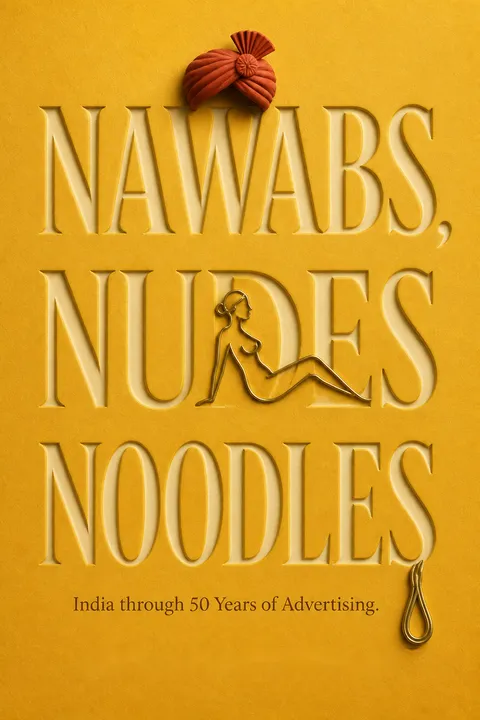
Nawabs, Nudes, Noodles offers a nostalgic journey through Indian advertising history, appealing especially to those who grew up in the 80s and 90s. Readers appreciate the book's insights into the evolution of Indian society and consumer behavior. While some find it repetitive or dated, many praise its engaging storytelling and cultural analysis. The book is particularly valuable for marketing students and professionals, providing a comprehensive overview of iconic campaigns and industry trends. Some critics note the author's pro-advertising bias and occasional fact-checking issues.
Glossary
Pester Power
Children's purchase influenceA marketing term for children's ability to affect household buying through requests and repeated appeals to parents. In the book, it helps explain why brands use children to sell snacks, drinks, and household products. Children's influence varies by category: they may strongly shape small purchases, while their say over expensive items such as cars is more limited.
thali theory
Food change at the edgesSantosh Desai's way of describing how Indian meals are organized and how food habits change. A thali presents several foods together as a coordinated meal. The book uses this idea to suggest that it is easier to introduce branded items at the edge of the meal, such as pickles and papads, than to replace central staples such as rotis or cooked vegetables.
Mind & Mood
Immersive consumer researchA research approach described in the book in which agency teams spend extended time with consumers in homes and workplaces. They talk with people and probe their habits, behaviour, and attitudes rather than relying only on short interviews. The resulting studies aim to capture the emotional and social context behind consumer choices.
WomanMood
Study of changing womenA series of FCB Ulka studies examining the attitudes and lives of urban Indian women over time. The book compares findings from 2001 and 2015, including shifts in decision-making, work, family responsibilities, self-development, and the desire for personal time. It is presented as a way to track changing aspirations rather than as a universal portrait of every Indian woman.
Lifestage Marketing
Marketing around life transitionsA marketing approach that targets people when a change in life circumstances may alter their needs or choices. Examples in the book include moving from student to worker, becoming part of a couple, having children, changing jobs, or moving homes. Financial companies use such transitions to identify moments when customers may reconsider their services.
Productization of Services and Servicization of Products
Products and services convergeA concept attributed in the book to Venkat Ramaswamy. It describes the growing overlap between products and services. A physical product may depend on ongoing services for much of its value, while a service may be packaged, sold, or renewed through a tangible object. Mobile phone service sold through prepaid recharge cards is the book's central example.
Diffusion of Innovation
Stages of adoptionEverett Rogers's framework for describing how people adopt an innovation at different rates. The book outlines groups including innovators, early adopters, early and late majorities, and laggards. It notes that research on farmers' adoption of hybrid seeds helped establish this model, which marketers later used to think about the spread of products and ideas.
sonic branding
Distinctive brand soundThe deliberate use of music, sound effects, or a short musical identity to make a brand recognizable across different settings. The book describes how a musical signature can appear in advertisements, retail spaces, websites, or telephone systems. Titan's recurring use of a Mozart composition and the signature sounds of mobile brands illustrate this approach.
New Consumer Classification System (NCCS)
Shared consumer classificationA system adopted by Indian marketers to classify households using the education of the chief wage earner and the number of durable goods owned. Unlike the earlier systems described in the book, it applies across rural and urban India. Its purpose is to make consumers more comparable without treating place of residence as the defining measure of socioeconomic status.
Download PDF
Download EPUB
.epub digital book format is ideal for reading ebooks on phones, tablets, and e-readers.








