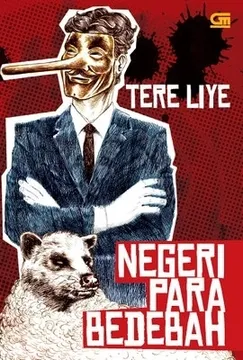


Plot Summary
A Forecast Above London
On a flight from London to Singapore, financier Thomas1 gives journalist Julia2 a blunt account of the global credit crisis. He argues that banks inflated paper assets through risky lending, then spread the losses across markets until a local failure could shake entire economies.
His warning is personal as well as professional: he earns his living advising wealthy institutions, yet distrusts the machinery that enriches them. Julia2 challenges his contradictions and presses him to explain why he cares.
Thomas1 cuts short the discussion because he has another appointment in Jakarta, a private boxing match at a secret club. The interview leaves Julia2 irritated but curious, while Thomas1 returns to the practical world he knows best: reading people, calculating risk, and acting before others decide what is possible.
Thomas's opening authority is built on a contradiction he does not resolve: he can diagnose the financial system's greed because he is skilled at serving it. That double position makes his economic lecture more than exposition. He understands that markets are sustained by shared belief, and that panic can become more powerful than the underlying numbers. Julia's questions expose the personal cost of his confidence. He treats her as an audience to manage, but her skepticism resists his usual control. The collision between an abstract global crisis and his urgent private appointment quietly establishes the novel's method: financial theory will soon become a tool for physical survival.
The Fight He Couldn't Miss
Thomas's1 close friend Theo11 brought him into Jakarta's clandestine boxing club, where executives, officials, and professionals shed their public status inside a red ring. Thomas1 developed from a novice into one of its strongest fighters, with only Rudi,5 a senior club member and immigration official, still matching him.
Before Thomas's1 bout with Rudi,5 Randy12 reveals that he deliberately delayed Thomas1 at the airport for two hours, hoping the exhausted fighter would forfeit and ruin their bets. Theo11 stops Thomas1 from hitting Randy12 in the changing room.
Thomas1 refuses to withdraw, enters the ring, and defeats Rudi,5 settling their rivalry and earning Randy's12 promise to do him a favor. The victory matters beyond the club: Thomas1 has secured a debt of honor from a man who controls airport immigration.
The boxing club offers Thomas a rare space where rank is suspended, but it is not free of power. Randy uses his government authority to manipulate a supposedly private contest, bringing the outside world into the ring before the larger crisis begins. Thomas's refusal to withdraw reveals a defining preference: he would rather act while disadvantaged than allow someone else to determine the outcome. The club's code of respect gives him leverage later, though that leverage depends on people choosing to honor their word. By making a sporting victory produce a practical favor, the novel links bodily risk to political and bureaucratic maneuvering.
The Bank's Last Weekend
After the fight, Thomas1 returns to his hotel expecting sleep, but Ram,7 a senior aide to his uncle Om Liem,3 arrives with news that police have surrounded the family home. Bank Semesta has failed to settle an interbank clearing obligation, triggering panicked depositors and a likely Monday shutdown.
Investigators are already examining the bank's dubious transactions, and influential officials appear unusually eager to seize its assets. Thomas1 has spent years avoiding Om Liem,3 whom he blames for his parents' deaths, yet learns that his aunt has collapsed and is asking for him.
At the house, he finds her under medical care and Om Liem3 facing imminent arrest. When the family runs out of ordinary allies, Thomas1 chooses intervention over distance and takes command of the remaining minutes.
The crisis makes kinship an obligation before it becomes affection. Thomas's estrangement has protected him from a family empire he regards as corrupt, but the threatened arrest forces him to confront the difference between rejecting a system and abandoning vulnerable relatives within it. Ram's account also complicates the official narrative: Bank Semesta may be culpable, yet the speed and intensity of the investigation suggest that other interests are at work. Thomas does not need to believe Om Liem innocent to believe the process is compromised. The weekend deadline converts this moral uncertainty into a tactical problem, allowing action to precede reconciliation.
An Ambulance Changes Course
Thomas1 learns that the police are waiting for his aunt to recover before taking Om Liem3 away. He orders the doctor and nurses to stage a medical emergency, hides Om Liem beneath blankets and equipment on a gurney, then pushes him through the police cordon in an ambulance.
When officers discover the trick, Thomas1 drives toward the airport and creates false ambulance calls to scatter the pursuit. He uses Randy's12 promised favor to get Om Liem3 past immigration, but recognizes that a direct flight abroad is exactly what the police will expect.
Thomas1 gets them off the plane, plants misleading travel possibilities, and takes his uncle3 instead to Opa's4 secluded house beside Waduk Jatiluhur. The escape buys two days, but Thomas1 knows the ambulance itself may leave a digital trail.
Thomas's escape is a demonstration of expertise under pressure, but it also shows the fragility of improvisation. Each successful disguise produces a new exposure: the ambulance can be tracked, the flight plan is predictable, and the family home is no longer safe. His decisions are not expressions of faith in Om Liem. They are attempts to preserve time and prevent powerful officials from controlling the evidence. The shift from airport to lakeside refuge also gives the story a temporary domestic pause, where the estranged family can meet without yet having repaired its history. Safety here is always provisional, a matter of buying minutes.
The Burned Childhood
At Thomas's1 office, Julia2 reveals that she has traced him to the Liem family and threatens to expose his role in Om Liem's3 escape. Police arrive to arrest him before she can finish the confrontation. Julia2 triggers a building fire alarm, and the evacuation gives them a way out.
On the highway, Thomas1 tells her what he has concealed: when he was ten, a failed trading scheme and a shipload of burned goods left his family unable to repay investors. Police officer Wusdi13 and prosecutor Tunga14 took the family's property papers, then withdrew protection as a mob burned the house.
Thomas's1 parents died in the fire. He was sent to a boarding school under a stripped-down identity, and spent years blaming Om Liem3 for the catastrophe. Julia2 chooses to help him rather than publish first.
The childhood revelation changes Thomas's apparent cynicism into a disciplined form of revenge. He has not merely rejected the family business; he has feared inheriting the very talent that made its operators dangerous. His parents' deaths arose from a chain of financial failure, official corruption, and collective violence, so the source of his anger cannot be reduced to one guilty relative. Julia's decision to assist him is also a shift in her professional role. She does not stop being a journalist, but she accepts that immediate disclosure could serve the same powerful actors she means to scrutinize. Their alliance rests on risk and incomplete trust.
A Ring Becomes an Exit
Thomas1 and Julia2 reach Opa's4 house, only to find Rudi's5 armed police unit waiting inside. Rudi5 has been ordered to capture them, but recognizes Thomas1 as a friend and fellow fighter. He stages a brutal beating to convince his officers that Thomas1 is subdued, then helps Thomas1 free the others and seize a speedboat in a violent storm.
They escape across the reservoir and transfer to a laundry van, which carries them to Opa's4 yacht, Pasifik. There, Julia2 questions Om Liem3 about the bank's clients and learns how it sheltered money from bribery, corruption, illegal logging, and other crimes. Thomas1 arranges for Opa4 and Om Liem3 to hide at sea with Kadek,9 the yacht's capable caretaker, while he returns to Jakarta to work the crisis.
Rudi's choice shows that the club's ethic can outlast institutional command, but only through personal risk. His staged violence is a performance designed for surveillance, turning the language of force against the people who ordered it. The escape also widens the moral field: Om Liem's bank is not simply a victim of predatory investigators. It has knowingly protected criminal wealth, even while the family itself may be targeted unfairly. Thomas must therefore defend a compromised institution without pretending it is clean. The laundry van and yacht extend the book's recurring motif of laundering, where concealment can protect the innocent and enable the guilty.
Paper Becomes a Weapon
Maggie,6 Thomas's1 resourceful assistant, uncovers records showing that Erik, Thomas's fellow consultant and boxing-club member, helped Om Liem acquire Bank Semesta six years earlier. Erik's10 assessment and a bank-central official's concealed data kept a failing bank alive.
Thomas1 confronts Erik10 with the documents and forces him to persuade that official to report a smaller rescue estimate, making a bailout easier for the government to consider. He also boards a flight beside the central bank governor and the head of the deposit insurer, provoking a debate that lets them explain why contagion might justify saving a small bank.
Meanwhile, Thomas1 asks Ram7 to summon the largest individual depositors, warning that deposits above the protection limit could vanish. Every conversation becomes an intervention in the decision still to come.
Thomas's preferred instrument is not simply information, but information placed at the point where someone must act. The altered estimate may open political room for rescue, yet it repeats the very manipulation that contributed to the crisis. His strategy is ethically unstable by design: he tries to avert a systemic collapse through selective distortion, believing that the larger consequence justifies the means. The scene with the financial officials is more subtle. Rather than openly demanding agreement, he makes them defend the logic of intervention themselves. In this world, persuasion works less by changing convictions than by arranging the conditions under which existing convictions lead somewhere new.
A Cell Bought Open
Before Thomas1 can gather the major depositors, armed officers seize him at the airport and deliver him to Wusdi13 and Tunga.14 The two officials torture him for information about his identity and Om Liem's3 overseas assets.
Thomas1 pretends to be a self-interested consultant willing to sell them the asset list, but they take the information and send him to prison without keeping their bargain. In the cell, he bribes the night guards with a large bank transfer, then secretly reverses nearly all of it after they release him.
At the same time, Kadek9 discovers that Opa4 has collapsed because the yacht has run out of insulin. He signals a nearby naval vessel, whose doctor treats Opa.4 Thomas1 reaches Pasifik before dawn and learns his family is safe, while the arrest leaves his plans badly delayed.
The prison episode makes Thomas's fluency with money both his escape route and his moral danger. He survives by treating a corrupt institution as a market, then uses the bank's ability to reverse a conditional transfer to cheat the guards in turn. His method is effective because he understands what others value, but it steadily blurs the distinction between opposing corruption and practicing it. Kadek's rescue of Opa supplies a counterweight. His practical calm, learned from Thomas's own advice, protects a life without leverage or deceit. The contrast suggests that competence can take forms other than manipulation.
The Depositors' Third
On Sunday morning, anxious Bank Semesta depositors crowd the headquarters demanding Om Liem.3 Thomas1 confronts them directly, first smashing antique vases to stop their angry outburst, then explaining that he is trying to prevent the bank's closure.
He asks them to surrender a third of their deposits as the cost of rescue, rather than risk losing everything above the government guarantee. The clients agree to consider the bargain. In the lobby, Thomas1 meets Tuan Shinpei,8 an old business associate of his father who is also among the bank's large depositors.
Shinpei8 recalls Thomas1 as a child and appears to trust his plan, while admitting that his own property business is under strain. Thomas1 leaves for his appointment with the finance minister,15 unaware that Shinpei's8 interest in the bank reaches far beyond his deposit.
The depositors' bargain turns abstract systemic risk into a concrete choice between partial loss and total loss. Thomas does not promise justice or even a clean rescue; he asks wealthy clients to price their own survival. His violent opening gesture breaks the room's performance of helpless outrage, but the resulting agreement depends on persuasion rather than force. Shinpei's warm recognition creates a second, more intimate form of trust. The older man connects Thomas to a family past, while Thomas sees an ally with resources. That apparent familiarity later proves dangerous, illustrating how memory and kinship can make a concealed agenda look like loyalty.
Two Doors for the Minister
At the finance minister's15 office, Julia2 asks about the imminent committee meeting, while Thomas1 tries to learn whether the minister15 favors letting Bank Semesta fail. The minister15 insists that fiscal discipline matters more than saving a poorly managed bank and regards losses among wealthy, uninsured depositors as their own risk.
Thomas1 presents records showing that eight state-owned companies have nearly a trillion rupiah in deposits at Bank Semesta. A closure would therefore expose public institutions to a damaging, politically visible loss.
Before they can build on this pressure, police threaten Maggie6 at Thomas's1 office and demand his surrender. Thomas1 disguises himself as a pizza courier and carries a poisonous flower in the food, but the officers refuse to eat. Rudi5 appears instead, and he and Thomas1 overpower the guards in the lift and free Maggie.6
The minister's resistance is principled, not merely personal, so Thomas cannot defeat it with a single appeal to fear. He shifts the decision's frame by revealing that nonintervention also carries a public cost. The records do not erase the bank's failures; they make the supposedly clean choice of letting it collapse harder to defend. The failed poisoning scheme is a darkly comic reminder that Thomas's ingenuity can outrun his judgment. Rudi's timely intervention, by contrast, depends on solidarity rather than calculation. Maggie's rescue turns the campaign from a financial argument into a personal obligation, sharpening the cost of Thomas's increasingly dangerous tactics.
The Prisoner Flies to Bali
Police seal the Jakarta airport as Thomas1 tries to reach a meeting with the ruling party's heir.16 Rudi5 disguises him as a shackled prisoner being transferred between cities, using the ordinary procedures of criminal transport to slip through a search.
The men reach the aircraft, but a special unit takes over the Bali airport and waits for Thomas1 to disembark. Rudi5 persuades the pilot to slow the plane near the far end of the runway; he and Thomas1 jump onto the grass before it reaches the terminal, then escape through a damaged perimeter fence.
At the party convention, a powerful fundraiser speaks with Thomas1 about money, political patronage, and a possible public offering of state assets. Thomas1 finally meets the heir16 and makes his case. The committee later votes to rescue Bank Semesta, though the deeper cost of the bargain remains hidden.
The prisoner disguise works because it exploits the state's own routines rather than defeating its surveillance outright. Rudi understands that a conspicuous suspect can be concealed inside an unremarkable administrative process, while Thomas learns to accept help without controlling every detail. Their jump from the plane is a literal wager on timing, echoing the book's repeated interest in choosing when to move. The party convention exposes a less theatrical system of power: political influence is discussed openly as a market of money, access, and reciprocal protection. The bailout is a victory in policy terms, but it does not resolve whether Thomas has rescued the bank or strengthened the network that feeds on it.
Ram's Hidden Stake
After the committee's decision, Julia2 sends Thomas1 a confidential report tracing ownership through layers of offshore companies. It shows that four of Bank Semesta's largest debtor firms belong to Shinpei,8 while Ram7 holds a minority interest in them.
Thomas1 realizes that Shinpei8 has reason to make the bank fail: its collapse would erase those firms' debts and weaken the Liem businesses, leaving properties available for purchase. Ram7 has been feeding the plan from inside the family company.
Thomas1 calls Kadek9 and orders Pasifik toward Singapore, but the yacht has already taken a longer route, following Opa's4 memories of escape from China. At the Singapore marina, Thomas1 finds Wusdi13 and Tunga14 aboard with armed local officers, Ram,7 and his family bound in the cabin. The bailout has saved the bank, but it has not broken the conspiracy.
The offshore ownership chain converts an apparent banking dispute into a coordinated asset raid. The document's power lies in making indirect relationships legible: a debtor, a hidden owner, and an insider's stake become parts of one motive. Ram's betrayal is especially damaging because he has served as Thomas's conduit to the family business, making trust itself a source of exposure. Opa's altered route adds a different kind of inheritance, an emotional attachment to migration that complicates Thomas's demand for control. Even after winning the public decision, Thomas discovers that a policy victory cannot secure the people or evidence on which it depends.
The Sea Keeps Score
On Pasifik, Thomas1 turns the bailout announcement into a moment of distraction and attacks Wusdi,13 while Kadek9 fights the remaining guards. Wusdi13 and Tunga14 eventually force Thomas1 to steer toward Hong Kong, where they hope to seize the Liem family's overseas assets.
During the voyage, Ram7 serves them poisoned tea, kills both officials, and takes command for himself. He throws Opa4 overboard with a life vest, then shoots Thomas,1 unaware that Rudi's5 bulletproof vest protects him, and pushes him into the sea. Opa4 and Thomas1 survive until Kadek9 finds them and brings them aboard another yacht.
Thomas1 has secretly redirected Pasifik toward a notorious blank patch in the navigation charts, leaving Ram7 adrift with dwindling fuel. With Opa4 safe, Thomas1 orders Kadek9 back toward Jakarta to confront Shinpei.8 The larger reckoning is still ahead.
The climax strips away the hierarchy of the conspirators: each man assumes he can use betrayal as a final instrument, until Ram applies it to Wusdi and Tunga as they applied it to others. Thomas's survival depends on contingencies prepared earlier, especially Rudi's vest and Kadek's judgment, not on invulnerability. Opa's choice to leap rather than remain under Ram's control echoes his history of flight and endurance. Thomas's diversion of Pasifik turns the sea into a delayed judgment, not a courtroom verdict. The ending restores motion toward the original antagonist, but with no clean triumph: the bank is rescued, some enemies are gone, and Shinpei remains to be faced.
Analysis
Negeri Para Bedebah turns financial crisis into a thriller about who gets to define an emergency. Bank Semesta is not innocent, and Thomas1 knows it. Its involvement with dubious money and its history of regulatory manipulation make a simple rescue difficult to defend. Yet closing it during a panic could harm depositors, state companies, and other banks. The novel refuses the comfort of a clean choice. Thomas's1 rescue campaign is built from ethically compromised tools: he pressures an old colleague, promotes selective information, bargains with depositors, and courts political power. His actions expose a tension between preventing immediate harm and reinforcing the networks that produced it.
The family plot gives that dilemma its emotional charge. Thomas's1 parents died after the earlier collapse of the family business, when public officials converted their authority into private advantage. He has spent years separating himself from Om Liem,3 but the new crisis forces him to recognize that refusal is also a choice with consequences. His return is not simple forgiveness. He acts for his aunt, Opa,4 and the possibility of stopping another predatory seizure. The past does not disappear; it becomes the evidence he uses to understand the present.
The novel also contrasts systems of loyalty. Financial institutions speak in rules and risk models, while the boxing club relies on a personal code, and Opa's4 stories transmit knowledge through lived experience. Neither institution nor personal bond guarantees virtue. Rudi's5 loyalty saves lives, while Ram's7 trusted position makes betrayal especially effective. Thomas's1 gift is to read incentives, but the story repeatedly asks whether insight can be separated from manipulation. His survival depends on other people's judgment as much as his own schemes. The ending's return toward Shinpei8 leaves that question open: winning one institutional decision may buy time, but it cannot by itself repair the family or dismantle the machinery that harmed it.
People Also Read


Characters
Thomas
The Reluctant FinancierThomas is a gifted financial consultant whose fluency with markets, institutions, and human motives makes him useful to the wealthy people he privately distrusts. As a child, he lost his parents in a fire caused by a business collapse and official corruption, then grew up under a reduced identity and at a distance from his family. He presents himself as controlled, irreverent, and self-sufficient, but his sharpness often conceals grief and fear of becoming like the relatives he resents. Boxing gives him a code based on direct physical risk, unlike the opaque bargains of finance. His central drive is to control the terms of danger, even when his attempts to do so implicate him in the same manipulations he condemns.
Julia
The Relentless ReporterJulia is a young economic journalist who arrives determined to test Thomas's1 polished explanations rather than accept his reputation. Her curiosity is investigative and personal: she researches his family history, notices gaps in his public biography, and follows clues that more experienced reporters might dismiss. She can be stubborn, proud, and quick to anger, but her ambition is balanced by a willingness to reconsider what a story will do to the people caught inside it. As Thomas's1 reluctant partner, she contributes access to sources, information, and journalistic judgment while resisting his attempts to manage her. Her skepticism gives the novel a counterweight to Thomas's1 certainty, and their developing trust remains lively with friction.
Om Liem
The Ambitious BankerOm Liem is Thomas's1 uncle and the powerful head of a family business empire built on appetite, speed, and a readiness to bend rules. He is shrewd enough to recognize opportunity before others do, but his ambition has entangled the family bank with questionable transactions and influential clients. His relationship with Thomas1 is marked by a long estrangement, rooted in a childhood tragedy that neither has fully faced. He can be stubborn about responsibility and reluctant to flee, yet his concern for his wife and extended family remains unmistakable. Om Liem embodies the complicated distinction between loving one's family and causing harm through the systems one builds to protect it.
Opa
The Family's Old NavigatorOpa is the family elder, a Chinese immigrant who crossed the sea as a boy and built a modest life through persistence, trade, and adaptation. He prefers music, stories, and practical lessons to formal authority, and his memories often arrive in familiar, repeated tales. Beneath the humor is a keen observer of risk and human nature. He teaches Thomas1 through experience, whether the lesson concerns a boat, a choice under uncertainty, or survival in a dangerous situation. His affection for Thomas1 is patient rather than demanding, allowing the younger man to remain distant without giving up on him. Opa's stories supply the family's history and a moral vocabulary that Thomas1 gradually learns to use.
Rudi
The Boxer in UniformRudi is a senior member of the clandestine boxing club and a police officer trusted with armed teams. In the ring he is Thomas's1 formidable rival; outside it, he values the club's code of respect. His position gives him access to force and procedure, but also places him under commands that conflict with his private loyalties. He is blunt, physically confident, and willing to gamble on people he judges honorable. Rudi's friendship with Thomas1 is expressed less through sentiment than through decisive acts and shared risk.
Maggie
The Unflappable AideMaggie is Thomas's1 sharp, resourceful assistant, able to gather documents, coordinate contacts, and anticipate what he will need next. Her competence is often disguised by teasing complaints about his demands, but she understands his working habits unusually well. She is loyal without being meek, and her humor lets her retain a sense of self in the pressure of his crisis. Maggie's practical intelligence keeps Thomas's1 elaborate plans connected to the people and records that make them possible.
Ram
The Trusted ExecutiveRam is a senior business aide who has served the Liem family for years and understands its companies, staff, and financial arrangements. He appears composed and dutiful, presenting himself as a reliable source of updates when Thomas1 returns to the family crisis. His long service gives him credibility with both Om Liem3 and the business organization. Ram's position also makes him a figure through whom the novel explores how proximity to power can create ambition, dependence, and divided loyalties.
Tuan Shinpei
The Old Business AssociateTuan Shinpei is a wealthy businessman and longtime associate of Thomas's1 family, with commercial interests in Indonesia and abroad. He remembers Thomas1 as a child and carries the ease of someone who has known the family through several generations. His polished warmth sits alongside a practical understanding of debt, property, and business advantage. Because he has been present during both the family's rise and its crises, his perspective can seem reassuring, but his broader interests are not immediately clear.
Kadek
The Resourceful CaptainKadek manages Opa's4 yacht, serving as captain, cook, mechanic, and caretaker. He is a capable sailor who learned much of his craft through practice rather than formal training. Kadek's calm under pressure and willingness to act without demanding explanations make him an indispensable ally. His loyalty is practical: he watches the people entrusted to him, adapts when plans fail, and makes decisions that preserve life.
Erik
The Compromised ConsultantErik is a senior banker and consultant who belongs to Thomas's1 boxing circle and professional world. He is ambitious, socially connected, and accustomed to treating business relationships as negotiations. His earlier work on Bank Semesta gives Thomas1 leverage over him, exposing how a consultant's technical opinion can shape a company's fate. Erik's pragmatism makes him useful, but it also raises questions about where professional flexibility ends and complicity begins.
Theo
Thomas's First Club FriendTheo is Thomas's1 close friend and the person who introduces him to the private boxing club. He is a steady presence who understands the club's rules and tries to keep Thomas1 from wasting anger on provocateurs. Through Theo, Thomas1 finds a community built around physical challenge rather than financial status.
Randy
The Immigration GatekeeperRandy is a senior immigration official and an established member of the boxing club. He enjoys provocation and betting, sometimes using his official influence to tilt a contest. His club ties create obligations that can reach beyond sport, revealing how private loyalties travel through public institutions.
Wusdi
The Police Power BrokerWusdi is a senior police official whose career has grown alongside his command of investigations and armed units. He is forceful, calculating, and comfortable treating official authority as a personal instrument. His history intersects with the Liem family's past, giving his actions a private dimension beneath the language of law enforcement.
Tunga
The Prosecutorial OperatorTunga is a senior prosecutor and a longtime associate of the officials surrounding the Liem family. He is socially smooth and practical, presenting coercive bargains as reasonable solutions. His career reflects the novel's concern with institutions whose public duties can be bent by private interests.
The Finance Minister
The Fiscal GatekeeperThe finance minister is a disciplined decision-maker responsible for national economic policy during a widening crisis. She values consistency, public accountability, and the limits of government intervention. Her blunt manner makes her difficult to charm or intimidate, and her choices carry consequences far beyond the individual bank under review.
The Party Heir
The Political SuccessorThe party heir is a young political figure surrounded by the machinery of a powerful organization. Access to him depends on intermediaries, donors, and party events, making his position a window into how influence is brokered. He represents a route to political authority that Thomas1 cannot reach through financial expertise alone.
Julia's Editor
The Deadline BrokerJulia's editor is a senior journalist whose professional relationship with the finance minister15 helps secure an urgent meeting. He represents the access and institutional credibility that Julia2 can mobilize when the story becomes consequential.
Plot Devices
The Boxing Club
A code of favorsThe secret club gives influential Jakarta professionals a place to fight without their public titles, but it also creates bonds that survive outside the ring. Thomas's1 win over Rudi5 earns him a promised favor from Randy12, while his friendship with Rudi5 later becomes a reason to resist police orders. The club's code does not make its members morally pure; rather, it gives them a personal standard that can compete with institutional obedience. This device converts a seemingly recreational subplot into practical access, trust, and rescue at crucial moments.
Bank Semesta's Crisis
A countdown with consequencesThe bank's failed clearing obligation and the threatened Monday shutdown create the novel's deadline. Thomas1 argues that interconnected financial markets can spread panic from one institution to others, while Om Liem's3 questionable practices make a rescue morally complicated. Depositor guarantees, state-company funds, altered estimates, and political decisions become parts of a single contest over whether to close or save the bank. The crisis lets the book translate financial mechanisms into immediate stakes: jobs, savings, power, and the survival of a family business.
Hidden Ownership Records
A paper trail turnsFinancial reports, acquisition files, depositor lists, and offshore ownership records repeatedly change Thomas's1 understanding of the crisis. The documents reveal how consultants and officials shaped Bank Semesta's past, help Thomas1 pressure Erik10, and later expose financial interests behind the effort to make the bank fail. Their importance is not merely evidentiary. The records show how power hides inside layers of legal ownership and apparently technical decisions. A spreadsheet can become as dangerous as a weapon because it changes who can credibly accuse whom.
Disguises and False Trails
Time bought through misdirectionThomas1 escapes through a succession of improvised disguises and decoys: Om Liem3 becomes a patient on a gurney, an international flight is abandoned, ambulances are sent on false calls, and Thomas1 later poses as a courier and a prisoner in transfer. These tactics exploit predictable expectations, crowded public spaces, and bureaucratic routines. They do not defeat the pursuit permanently; each escape creates another risk, including tracking devices and renewed searches. The device keeps the action moving while showing Thomas's1 belief that a well-designed false impression can temporarily redirect institutional force.
Opa's Sea Lessons
Memory becomes navigationOpa's4 stories and practical lessons seem repetitive or eccentric to Thomas1, but they supply methods and images he later uses under pressure. Lessons about probability encourage him to change course rather than follow an expected escape route. Stories of dangerous plants inform a desperate attempt to distract police, while Opa's4 migration memories connect the family to the sea as both refuge and threat. The novel treats inherited knowledge not as a command to imitate the past, but as material Thomas1 can reinterpret. Memory becomes a working instrument, sometimes useful and sometimes emotionally costly.

Download PDF
Download EPUB
.epub digital book format is ideal for reading ebooks on phones, tablets, and e-readers.








