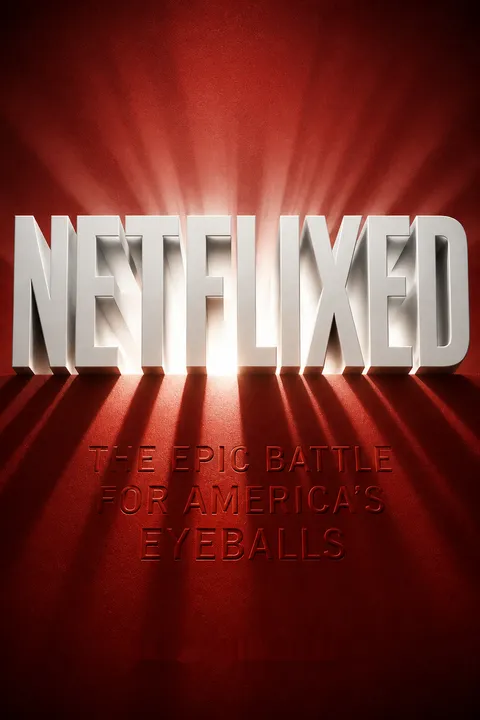


Key Takeaways
Netflix beat Blockbuster by making the customer relationship its real product.
More than mail-order movies. Netflix began as Marc Randolph’s idea for selling online, shaped by his fascination with direct marketing: make the offer personal, observe how customers respond, then improve it. Reed Hastings brought mathematical discipline and technical ambition. Their company joined those strengths in a service built around selection, simple ordering, convenient returns, and recommendations that helped people find films they might otherwise miss.
The familiar story that a late fee for Apollo 13 inspired Netflix was a useful explanation of its no-late-fee appeal, not the actual origin. Randolph and Hastings began by testing whether a compact disc could survive a trip through the mail. That small experiment led into a much larger contest over who could make home movie rental feel easiest and most personal.
What's notable is how the book shifts the definition of a product. Netflix was not merely a website attached to a warehouse. The product was the entire relationship: discovery, ordering, delivery, and the sense that the service understood a viewer's tastes. That framing helps explain why better software alone could not guarantee success for rivals. The relationship also depended on people, including Randolph's customer-centered instincts, and on operational systems customers never saw. The story cautions against reducing a business to its most visible technology.
Make delivery speed and fulfillment part of the product.
The post office mattered. Before launch, Netflix employees mailed test DVDs across the country, altered envelope designs, and studied how postal machinery damaged or delayed them. Operations chief Jim Cook learned how mail moved through postal facilities and developed a way to bypass sorting equipment that could crush discs. The resulting mailer doubled as a return envelope, reducing work for customers and the company.
Netflix kept refining its distribution network as subscribers grew. Tom Dillon used postal data to choose locations and built a system that could adjust those locations as customers moved. Tests revealed that fast delivery could attract new subscribers: when Netflix recreated next-day delivery in Sacramento, sign-ups rose. By 2009, the company reported that 97 percent of deliveries arrived within one business day.
The story makes a useful distinction between a feature customers can describe and a capability they simply experience. Subscribers might praise the website, but an envelope arriving quickly was what made the promise credible. Fulfillment was not a back-office concern; it shaped referrals, satisfaction, and the cost of serving each member. The less glamorous lesson is that visible innovation often rests on patient process design. Yet a finely tuned physical network can also become an asset that is difficult to abandon, so operational excellence needs to support the strategy rather than dictate it.
Turn customer convenience into recurring economics, even when sales look safer.
A business model emerged through testing. Netflix initially charged per rental and also sold DVDs. That plan brought in some revenue, but customers often failed to return after using free-rental coupons, and DVD sales would become vulnerable once large retailers entered the market. Randolph's team tested alternatives, including a monthly plan with no due dates, automatic replacement shipments, and a customer list of desired films called the Queue.
Customers responded best to those ideas combined. The resulting subscription offered a predictable monthly fee, several films at a time, and a simple cycle of returning one disc to receive another. Hastings chose to end rentals by the title, despite the objections of colleagues and the risk of losing the company's only profitable activity. The subscription gave Netflix a steadier relationship with customers and a clearer focus for its resources.
The pivot was not a triumph of vision over evidence so much as a disciplined attempt to discover what customers would repeatedly pay for. A subscription also changed the company's incentives: keeping members satisfied mattered more than maximizing the margin on a single rental. But recurring revenue can disguise a poor experience if customers are slow to cancel or do not use the service often. The case therefore supports a sharper question for subscription businesses: does the model make the customer's life easier, or merely make the company's revenue more predictable?
Test what customers do, because stated preferences miss the real friction.
Evidence corrected assumptions. Netflix treated its website as a place to run experiments, not just take orders. In an A-B test, two groups saw different versions of a feature and the company measured the difference, changing one variable at a time so the result stayed interpretable. Home visits and customer interviews added context to the numbers. This research helped reveal that early subscribers were disproportionately young, affluent men with strong computer skills, not the mainstream audience Netflix needed.
Testing also exposed behavior that intuition missed. Netflix had assumed overnight delivery would improve retention, but its tests initially showed no clear link. Later, marketing research connected next-day delivery in a particular region with more sign-ups. The company also used customer ratings to build Cinematch, a recommendation system that grouped viewers with similar tastes and suggested films they had not yet tried.
The strongest research practice here is the combination of behavioral measurement and direct observation. Clicks can show where people hesitate; a home visit can suggest why. The book also shows why a result is only as useful as the sample behind it. Netflix's earliest customers were a narrow slice of the public, so their preferences could not automatically stand in for everyone else's. Good testing does not remove judgment. It helps decision-makers see which assumptions deserve another test and which have been mistaken for facts.
Incumbents lose ground when internal priorities protect yesterday's profit.
Blockbuster saw the threat, then struggled to act. Its leaders understood that online rental and digital delivery could change the industry. But the company's stores, franchisees, debts, and corporate departments pulled strategy in different directions. An early online test, Film Caddy, gave executives an incomplete picture: it ran too briefly to capture customers who paused and resumed subscriptions, and it underestimated how much online word of mouth could drive growth.
Blockbuster did launch its own online service, but it had to navigate resistance from store operations, limited access to customer lists, and technology that was difficult to integrate. Later, chief executive Jim Keyes shifted attention back toward stores, merchandise, and kiosks even as store revenue declined. The company entered bankruptcy in 2010. Its story is not simply that a giant failed to notice a new technology. It repeatedly struggled to align its organization around the change it had noticed.
Blockbuster's predicament resembles a coordination problem more than a shortage of intelligence. Each group had a defensible local interest: store managers wanted store traffic, franchisees feared cannibalization, and leaders had to satisfy lenders. Together, those interests made a coherent transition difficult. The distinction matters because advice to disrupt an existing business often ignores who loses when the old model shrinks. Netflix had fewer internal constituencies to reconcile. The account also resists an easy morality tale: Blockbuster's leaders did recognize the shift, and some of their experiments were genuinely bold.
Blockbuster's store-and-mail bundle nearly beat Netflix's better technology.
Convenience beat polish. Blockbuster's Total Access plan combined online DVD selection with free exchanges at its stores. Customers could browse at home and still get a movie in person, a benefit Netflix could not match. After the launch, Blockbuster added 750,000 subscribers in six weeks, and the offer briefly reversed the companies' usual share of new online subscribers. Netflix's superior website and accumulated technical experience could not erase the appeal of the bundle.
The offer was expensive. A store exchange cost Blockbuster money, and the company had heavy debt and declining store revenue. Still, Netflix took the danger seriously. Hastings offered to buy Blockbuster Online's subscribers, first at about $200 each and later prepared to pay more. Blockbuster rejected the offer. Its next chief executive, Keyes, cut the marketing and weakened the program, giving Netflix room to regain momentum.
Total Access is a reminder that customers compare complete experiences, not isolated technical specifications. Netflix had spent years making online rental work smoothly, but Blockbuster temporarily joined broad selection to immediate local access. The strategic weakness lay in the economics and the company's ability to sustain the offer, not in its appeal. That distinction is important: an unsustainable strategy can still be a serious competitive threat, especially if it changes customer expectations or buys a rival time to build scale.
Open a measurable problem to outsiders when internal progress stalls.
A contest widened the search. Netflix's recommendation system, Cinematch, had improved over years of work by its engineers and mathematicians. To push it further, the company announced the Netflix Prize in 2006: a $1 million award for the first team to improve the system's prediction accuracy by 10 percent. Contestants received a large set of anonymized subscriber ratings and could track their standing on a public leaderboard.
More than 40,000 teams from 186 countries registered. Researchers, programmers, and amateurs developed methods that uncovered subtle patterns in viewing ratings. Teams combined their approaches, and BellKor's Pragmatic Chaos reached the target in 2009. The contest showed that expertise could be organized around a clearly defined challenge without requiring every useful idea to originate inside the company.
The prize worked because the problem could be stated precisely, tested against data, and ranked by a shared measure. That structure made it possible for people with different backgrounds to contribute and build on one another's work. It also put a boundary around what success meant: more accurate predictions of ratings, not necessarily a better overall viewing experience. Open competitions are most useful when their measurable target is a meaningful proxy for the larger goal, and when the data can be shared without exposing the people behind it.
Build for the next medium before its economics become comfortable.
Streaming began as a limited bet. In 2007, Netflix launched instant viewing with only about 1,000 titles. Downloads were still slow, broadband access was incomplete, and rights to many films belonged to other distributors. Rather than wait for a perfect catalog, Netflix worked to make streaming easy to use and available on more devices. It partnered with Roku, Xbox, televisions, and other hardware makers, while its content team negotiated deals with studios and television networks.
The approach helped Netflix make streaming a normal part of its service. Within eighteen months of launch, half of subscribers were using it. The company built on its existing subscriber base and customer goodwill while the technology and content library developed. The book presents this as a deliberate transition: keep the DVD service running while shifting investment and attention toward delivery through the internet.
Netflix's advantage came from treating streaming as an ecosystem problem. A working player was not enough; customers needed compatible devices, content rights, and a simple path from choosing a title to watching it. Partnerships helped fill gaps faster than a single company could have done alone. The transition also carried real risk: a small library could disappoint customers, while expensive content deals could become liabilities. The case suggests that entering early is valuable when the company can learn and improve during the imperfect first phase.
Treat customer trust as infrastructure, not a public-relations accessory.
The Qwikster decision broke continuity. In 2011, Netflix raised prices for customers who wanted both streaming and DVDs, then announced that the DVD-by-mail service would become a separate business called Qwikster. Customers would need separate accounts, billing, and queues. Hastings saw a need to focus resources on streaming, but subscribers experienced the change as a sudden loss of convenience and a failure to listen.
The reaction was severe: about one million subscribers canceled, and the stock price fell from a peak near $305 to about $65. Netflix canceled Qwikster and returned DVD rentals under its own umbrella. The episode contrasted with the company's earlier reputation for studying customers carefully. Its technical logic did not make the transition feel fair or understandable to the people paying for the service.
Trust is accumulated through repeated, ordinary proof: the service works, the offer is clear, and customers are not surprised by avoidable friction. That makes trust an operating asset, not a slogan. Qwikster shows that a sound strategic direction can be damaged by poor sequencing and communication. The split might have served an internal purpose, yet requiring people to manage two accounts and queues made the company's reorganization their problem. A more customer-centered transition would explain the reason while preserving as much of the familiar experience as possible.
Analysis
Netflixed is most persuasive as a history of execution under uncertainty, not a simple tale of a visionary defeating a foolish incumbent. Netflix benefited from a fortunate opening: DVD adoption accelerated, major chains initially neglected the format, and the postal system made a small, mail-based service viable. Yet opportunity did not guarantee survival. The company nearly failed before the subscription model, lower inventory costs, and a workable distribution network turned growth into a durable business.
The rivalry with Blockbuster makes the causal story richer. Blockbuster had a powerful brand, thousands of stores, and leaders who recognized online rental as a threat. Its failure came from the difficulty of coordinating a legacy organization, not from an inability to imagine change. Total Access briefly demonstrated that a strong customer proposition could overcome Netflix's technical lead. Blockbuster lost its momentum when financial pressure and a change in leadership redirected the company toward stores. Netflix's advantage was therefore strategic focus, but also the rival's repeated inability to sustain its own better offer.
The book's most revealing tension is between customer-centered design and managerial control. Netflix's early strength combined Randolph's attention to the customer relationship with Hastings's appetite for engineering, data, and focus. Those capacities reinforced one another when the service improved delivery and recommendations. They clashed when leadership treated customers' frustration as a communication problem rather than evidence about the experience. The Qwikster episode suggests that data and technical conviction cannot substitute for listening, especially when a brand has trained customers to expect a personal relationship.
The narrative is told with substantial insider detail, but the author notes that Hastings did not participate in the book and that some accounts depended on former employees and reconstructed conversations. That matters when interpreting motives and disputed decisions. Even so, the broader pattern is robust within the account: markets reward neither size nor foresight by themselves. They reward organizations that can turn a changing technology into a coherent, affordable, dependable experience, then keep adapting without making the customer carry the cost of internal change.
Review Summary
Netflixed is praised for its detailed account of Netflix's rise and Blockbuster's fall. Readers appreciate the insider perspectives and business strategies revealed. Many find the Blockbuster story particularly fascinating. Some criticize the book for being dry at times and lacking recent Netflix history. Overall, reviewers consider it an informative read about the video rental industry's transformation, though opinions vary on its depth and engagement level. The book's focus on the Netflix-Blockbuster rivalry is both a strength and limitation for different readers.
People Also Read







Glossary
Cinematch
Netflix recommendation systemNetflix's system for predicting which films a subscriber might enjoy. Early versions used customer ratings to find groups of viewers with similar tastes and recommend titles those viewers liked. The system also considered inventory and helped direct demand toward films beyond the most popular releases. Its development became the focus of the Netflix Prize.
collaborative filtering
Recommendations from similar tastesA recommendation method that identifies customers who have rated many of the same films similarly, then uses the group's preferences to suggest titles an individual has not yet rated or rented. Netflix used this approach in Cinematch, shifting from attempts to match films by visible traits such as actors or genre toward patterns in customers' actual ratings.
Queue
A ranked list of desired filmsThe personalized list on a Netflix account where subscribers stored and prioritized films they wanted to receive. It supported the subscription service by letting Netflix send another title when a customer returned one. The Queue also gave the recommendation system information about members' interests and became a central part of the DVD-by-mail experience.
Netflix Prize
Recommendation-system research contestA competition Netflix announced in 2006, offering $1 million to the first team that improved Cinematch's prediction accuracy by 10 percent. Contestants used a large dataset of anonymized subscriber ratings and submitted results to a public leaderboard. The winning team reached the target in 2009 after researchers from different groups combined their methods.
Total Access
Online rentals with store exchangesBlockbuster's hybrid subscription program, launched nationally in 2006. Subscribers could rent DVDs online and exchange them at Blockbuster stores, combining the online catalog with the immediacy of a physical location. The offer attracted customers quickly and put Netflix under pressure, but the free exchanges and marketing costs made the program expensive to sustain.
throttling
Slower service for heavy rentersA practice Netflix used when DVD inventory was tight: customers who rented frequently could receive lower priority than lighter users. Subscribers noticed delays and discussed them on HackingNetflix, and the issue led to a lawsuit. The term captured a conflict between the company's cost and inventory management and the expectations of its most active customers.
Qwikster
Proposed separate DVD businessThe name Netflix gave its planned 2011 spin-off of DVD-by-mail rentals. Under the proposal, subscribers who wanted both DVDs and streaming would manage separate accounts, billing, and queues. Customers reacted angrily to the added friction, and Netflix canceled the spin-off before launch, bringing DVD rentals back under the Netflix brand.
FAQ
What's Netflixed: The Epic Battle for America's Eyeballs about?
- Netflix's Rise: The book chronicles Netflix's journey from a startup to a leader in the online movie rental industry, focusing on co-founders Reed Hastings and Marc Randolph.
- Industry Disruption: It highlights how Netflix disrupted traditional video rental models, shifting from physical stores to online rentals through technological innovations.
- Cultural Insights: The narrative contrasts Netflix's corporate culture with Blockbuster's, providing insights into the decisions that shaped their trajectories.
Why should I read Netflixed?
- In-depth Case Study: The book offers a comprehensive case study on entrepreneurship and innovation in the tech industry, with lessons on resilience and adaptability.
- Understanding Market Dynamics: It provides a detailed look at rapid market shifts, especially in technology-driven sectors, and how to respond to competitive threats.
- Engaging Storytelling: Gina Keating's narrative style makes complex business concepts accessible, with anecdotes and character-driven storytelling.
What are the key takeaways of Netflixed?
- Importance of Innovation: Continuous innovation is crucial for survival in competitive markets, as demonstrated by Netflix's adaptability in technology and customer service.
- Customer-Centric Approach: Understanding and prioritizing customer needs was key to Netflix's success, setting it apart from competitors.
- Strategic Partnerships: The book illustrates how strategic partnerships and collaborations can enhance business growth, as seen in Netflix's early deals.
What are the best quotes from Netflixed and what do they mean?
- Strategic Competition: “We’re small enough that we don’t want to incite World War II or World War III with the incumbents.” This reflects Netflix's cautious approach to competition.
- Founding Story: “The genesis of Netflix came in 1997, when I got this late fee, about $40, for Apollo 13.” This highlights how personal experiences can drive innovation.
- Careful Consideration: “We have to digest this a bit before we can make a comment.” This underscores the importance of strategic thinking in business decisions.
How did Netflix disrupt the video rental industry according to Netflixed?
- Elimination of Late Fees: Netflix's model allowed customers to keep DVDs without late fees, addressing a major pain point for traditional rental stores.
- Online Convenience: The shift to online rentals made it easier for consumers to browse and rent movies from home, a game-changer as internet usage grew.
- Innovative Technology: Netflix's recommendation system personalized movie suggestions, setting it apart from competitors relying on traditional retail methods.
What challenges did Netflix face in its early years as described in Netflixed?
- Competition from Blockbuster: Netflix faced significant challenges from Blockbuster, a well-established brand with a vast network of stores.
- Financial Viability: The company struggled with profitability, often operating at a loss while building its subscriber base, requiring strategic pivots.
- Market Skepticism: Investors and analysts were initially skeptical about Netflix's business model, and overcoming this skepticism was a constant battle.
How did Netflix's corporate culture contribute to its success according to Netflixed?
- Emphasis on Innovation: Netflix's culture encouraged creativity and innovation, fostering a sense of ownership and accountability among employees.
- Data-Driven Decisions: The company relied heavily on data analytics to inform strategies, optimizing operations and improving customer satisfaction.
- Adaptability: Netflix's ability to pivot quickly in response to market changes allowed it to stay ahead of competitors and refine its business model.
What role did technology play in Netflix's growth as outlined in Netflixed?
- Recommendation Algorithms: Netflix's sophisticated algorithms recommended movies based on viewing history, enhancing user engagement and retention.
- Efficient Distribution: The company optimized its distribution network for quick DVD delivery, crucial for customer satisfaction.
- Scalable Infrastructure: Netflix invested in scalable technology infrastructure to handle increasing traffic and user demands, supporting rapid growth.
How did Netflix's business model evolve according to Netflixed?
- From DVDs to Streaming: Netflix transitioned from DVD rentals by mail to streaming, recognizing the changing landscape of media consumption.
- Subscription-Based Model: The flat-fee subscription model allowed unlimited rentals, fostering customer loyalty and reducing churn.
- Data Utilization: Netflix's business model relied on data analytics, particularly through its Cinematch recommendation engine, to personalize user experiences.
How did Netflix utilize customer feedback according to Netflixed?
- Listening to Customers: Netflix actively monitored customer feedback to understand user preferences and inform product development.
- Feature Adjustments: Changes based on feedback, like the Profiles feature, enhanced user satisfaction and loyalty.
- Community Engagement: Netflix encouraged discussions and feedback through platforms, creating a sense of belonging among subscribers.
How did the competitive landscape change for Netflix over time?
- Emergence of New Rivals: Netflix faced competition from new entrants like Redbox and digital platforms like Amazon, each bringing unique challenges.
- Shift to Streaming: The industry's shift towards streaming changed competitive dynamics, with Netflix's early investment positioning it favorably.
- Content Wars: Competition for content rights intensified, with Netflix navigating complex negotiations to secure exclusive content.
What lessons can businesses learn from Netflixed?
- Adaptability is Key: Businesses must adapt to changing market conditions and consumer preferences to avoid obsolescence.
- Customer Engagement Matters: Engaging with customers and responding to feedback is essential for building loyalty and trust.
- Data-Driven Decisions: Leveraging data analytics can provide insights into consumer behavior and inform strategies that drive growth.
Download PDF
Download EPUB
.epub digital book format is ideal for reading ebooks on phones, tablets, and e-readers.








