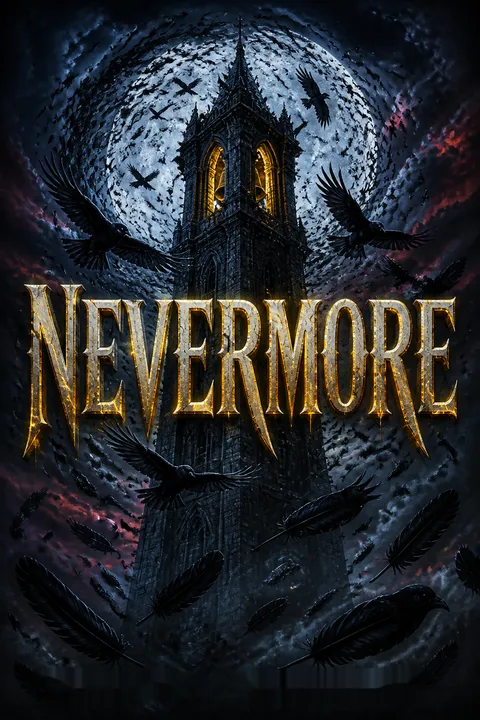


Plot Summary
Poe’s Murders Begin
Marc Reyes is found sealed inside a Bronx basement wall, though he was killed on the full moon, November 5. A week later, Fordham students John Soeder and Kevin Bayer walk home and find an orangutan tearing through garbage. It charges them, beats John down, and kills Kevin by throwing him against a fence. John dies too, unable to make sense of the attack.
The killer has drugged the animal, then tranquilizes it and leaves the scene. Burned wormwood and the choice of night matter to the murderer, who believes he is completing a ritual. In the city’s ordinary record of violence, two strange deaths look unrelated. Their likeness to Edgar Allan Poe stories will bring Sam and Dean Winchester to the Bronx.
The novel opens by making the grotesque both physical and procedural. Kevin’s death is sudden, senseless violence for John, while the killer treats it as a carefully scheduled step in a design. That mismatch establishes the story’s central danger: people can be reduced to symbols by someone who mistakes private conviction for moral permission. Poe’s fiction supplies the pattern, but the victims are not characters in a story to them. They are young men simply walking home.
Two Jobs, One City
Sam and Dean Winchester are already fugitives when a call from hunter Ellen Harvelle sends them to New York to help her friend Ash’s acquaintance, musician Manfred Afiri. Sam has separately noticed the Bronx killings: one resembles Poe’s The Cask of Amontillado, the other The Murders in the Rue Morgue.
The moon phases and the victims’ locations near Poe’s former home make him suspect a ritual, so the brothers agree to investigate both cases. At the Bronx Zoo, they interview orangutan handler Clare Hemsworth.
She explains that the animal was drugged before its escape and that its blood tests confirmed amphetamines. That evidence changes the attack from an inexplicable animal rampage into a deliberate crime, though the perpetrator remains unknown.
The brothers’ arrival binds two kinds of uncertainty: Sam sees a literary pattern, while Manfred reports an immediate, recurring disturbance in his home. Sam’s research habit is not mere bookishness; it is how he makes the impossible legible. Dean, by contrast, is drawn to Manfred’s music and warmth, revealing how easily personal appetite can compete with the hunt. Clare’s account narrows the mystery through mundane evidence, reminding the brothers that supernatural cases still leave ordinary traces.
A Ghost Wants Love
Manfred explains that a woman’s screams disturb his home after Scottso plays at the Park in Rear, so he has been staying away until morning. The brothers attend the band’s show, then return with shotguns loaded with rock salt. The house shudders, objects crash from shelves, and a transparent blond woman appears, laughing and demanding affection.
Sam and Dean fire, dispersing her long enough to restore silence. The spirit wears a Queensrÿche shirt, but Manfred cannot identify her among the many women he has brought home. The brothers learn the haunting is tied to the band’s late-night return, yet their first attack does not destroy the spirit. The woman gathers herself again, leaving a question that neither music nor salt can answer.
The haunting turns Manfred’s comfortable, cluttered home into an unstable space where memory has become noise. The ghost’s demand for love sounds intimate, but her inability to explain herself makes it frightening rather than romantic. Rock salt offers a practical pause, not a cure, and the brothers’ uncertainty is important: competence in hunting does not guarantee understanding. The Queensrÿche shirt is a small, concrete clue, linking the supernatural disturbance to a social world of old relationships and unfinished business.
The Bronx Becomes a Sigil
Sam finds the Poe Cottage and hears how Virginia Poe died there, then checks the two murder sites. Dean searches their father’s journal and discovers a resurrection ritual attributed to Percival Samuels, a fraudulent nineteenth-century spiritualist.
Sam plots the cottage’s original location and the crime scenes on a map: together they trace points of a sigil, with each point timed to a different moon phase. The brothers realize that another killing is likely on the new moon.
While checking the bricked-up house, they meet Detective Marina McBain, a cop who knew their father and quietly assists hunters. Dean’s recurring nightmares about being ordered to protect Sam, even if it means killing him, sharpen their conversation about their father’s secrecy and the cost of his protectiveness.
The map converts scattered violence into a system, which is both an investigative breakthrough and a chilling loss of individuality: the victims have been selected for their positions in a design. The ritual’s supposed resurrection promise gives the killer’s actions a motive, but not a justification. McBain also complicates the brothers’ inherited isolation. Her knowledge of their father exposes how much he kept from them, while Dean’s nightmare reveals that his deepest burden is not merely grief but a command that makes love feel like a future threat.
Roxy’s Name Emerges
Manfred remembers that his former acquaintance Roxy Carmichael disappeared after a weekend when guitarist Aldo Emmanuelli was supposed to house-sit. Sam checks with McBain and learns Roxy was reported missing, but the band’s fractured memories obscure what happened.
Rather than burn a suspected body and destroy evidence, Sam proposes confronting the musicians together. During the gathering, he uses a summoning spell to make the spirit appear. Roxy rushes at bassist Eddie Grabowski, who blurts out that she is dead and buried in Manfred’s yard.
He then admits they argued after sex and says she fell down the stairs, claiming her death was accidental. Aldo attacks Eddie, but Dean restrains him so the confession can be heard. The haunting is now a homicide case as well as a supernatural one.
Roxy’s case forces the Winchesters to decide whether ending a haunting is enough. Their usual solution, salt and fire, could silence the spirit while erasing evidence of a crime. Sam’s choice to preserve the body gives Roxy a chance at legal recognition, not just supernatural release. Eddie’s confession also exposes the difference between an explanation and accountability: calling a death accidental does not undo the choices that preceded it, nor the concealment that followed.
The Scholar’s Fourth Crime
On the new moon, Sam and Dean watch the predicted sites while McBain covers the other location. Dean breaks into a garage and finds Arthur Mackey, the Poe enthusiast who writes online as Arthur Gordon Pym, attempting a ritual of his own. Mackey insists he is trying to stop the killer.
In a nearby apartment, the brothers discover Sarah Lawrence’s chopped-up remains beneath newly lifted floorboards, a recreation of The Tell-Tale Heart’s climactic reveal. The murderer escapes before they can identify him.
At Fordham, Professor Ross Vincent dismisses the apparent connection between the crimes, even though he had earlier written about Samuels’s ritual. Mackey confirms Vincent has been contacting him to insist the murders are coincidence. The evidence redirects suspicion, but the final ritual site is still ahead.
The third murder teaches the investigators to read Poe’s stories by their decisive moments, not by their most obvious violence. The corpse’s discovery, rather than the killing itself, marks the relevant scene. This interpretive shift is a test of attention: the killer hides behind scholarship and ritual detail, while the brothers must notice what the pattern actually demands. Mackey’s interference complicates the hunt, but his warning about Vincent helps convert an abstract suspect list into a human one.
Bells Above the Bronx
When Mackey disappears, McBain traces his broken phone to the final ritual area. Sam connects the church bells at St. Nicholas of Tolentine with Poe’s poem The Bells, and the line about fire suggests the killer intends to burn a victim while ringing them. The three investigators enter the church and climb toward the bell tower, where they find Vincent holding Mackey at gunpoint.
Vincent admits he has been killing people to complete Samuels’s ritual and resurrect Poe, hoping to learn the truth about the author’s life and death. Gasoline spills down the stairs during the standoff. Dean ignites it to disrupt Vincent’s plan, then uses a fire extinguisher to put out the flames and subdue him. McBain arrests Vincent and calls for medical help.
Vincent’s motive is intellectual hunger turned predatory. He treats Poe’s unknowable biography as a problem that justifies sacrificing real people, confusing access to truth with entitlement to obtain it. The church makes that confusion literal: a site of ritual and scholarship becomes a trap where knowledge is pursued through violence. Dean’s dangerous improvisation stops the final murder, but the fire also echoes his personal trauma, making the rescue an act of courage performed in the presence of an old fear.
Justice Leaves the Yard
With Vincent in custody, the last ritual is stopped, and Sam and Dean alert McBain to Roxy’s likely burial place. Eddie is left to face the murder investigation rather than being hidden by a quick supernatural solution. The Winchesters cannot stay to help: Dean remains wanted, and the police will soon be searching Manfred’s home.
McBain gives them a folder about unexplained deaths near Cedar Wells, Arizona, reported in two cycles forty years apart. The brothers accept the lead and head west in the Impala. Their case has ended with a killer arrested, another suspect exposed, and Roxy’s story placed in human hands. They depart without certainty that her spirit is gone, but without dismissing what she has asked them to recognize.
The resolution refuses a clean division between supernatural closure and legal justice. The brothers stop Vincent, but they do not erase Roxy’s remains or decide on her behalf that silence is the same as peace. Their departure is practical, not triumphant: the work continues because the world keeps producing dangers and institutions cannot always meet them. McBain’s case folder also offers a modest counterweight to the brothers’ isolation, showing that help can be accepted without surrendering their independence.
Epilogue
After the Winchesters leave, federal agent Victor Hendrickson questions McBain about them. She denies knowing the brothers, and her supervisor drives Hendrickson away before he can press her further.
Meanwhile, Roxy watches police take Eddie into custody and feels that, at last, someone has paid for what happened to her. She does not leave Manfred’s house, but she stops frightening him and settles into a quieter presence. Her future remains uncertain; for now, she has been heard.
The epilogue gives both forms of pursuit a human scale. McBain risks her standing to protect the Winchesters, while Hendrickson’s investigation shows that their fugitive status will not disappear with this case. Roxy’s quiet ending is deliberately less absolute than an exorcism: justice has altered her fixation, but it has not supplied a neat afterlife or erased her attachment to the house. Her silence now signals choice and relief rather than helplessness, closing the case on recognition instead of supernatural force.
Analysis
Nevermore makes interpretation an ethical act. Vincent and the killer read Poe as a locked archive whose secrets justify extraordinary measures; Sam reads the stories as evidence, then asks what the evidence means for actual people. That difference separates inquiry from possession. The novel’s map and moon phases give violence a seductive order, but structure does not make violence meaningful or necessary. It merely lets the killer mistake repetition for truth.
The Roxy subplot presses the same question from another direction. A ghost can be dispersed, but that does not establish that justice has been done. Sam’s resistance to burning evidence recognizes that the living systems of accountability matter, even when they are slow and imperfect. Roxy’s demand for love is not treated as a simple supernatural riddle; it grows out of a life shaped by addiction, recovery, and other people’s unreliable memories.
The brothers’ work is inseparable from family inheritance. Dean’s nightmare transforms his father’s protective command into a burden that threatens his relationship with Sam. Sam, meanwhile, understands his education and independence not as a rejection of the family but as resources their father helped him retain. Their disagreements are productive because neither brother possesses the whole truth. McBain’s assistance offers a model of trust that does not require intimacy or obedience: she helps them while keeping her own judgment. The novel’s resolution is therefore deliberately partial. Vincent is arrested, Eddie faces investigation, and Roxy becomes quiet, but the Winchesters leave for another case. What they achieve is not perfect closure, but a more responsible way to carry uncertainty forward.
Review Summary
Nevermore receives mixed reviews from readers. While some fans of the Supernatural TV series enjoy the book as an extension of the show, others criticize it for poor characterization of Sam and Dean Winchester. Many praise the Edgar Allan Poe references and find the story entertaining, though some feel the plot is weak. The book's tone and humor are generally well-received, but readers are divided on whether it captures the essence of the TV characters. Overall, it seems to appeal more to devoted fans of the series than casual readers.
Characters
Sam Winchester
Younger brother, lore hunterSam is a gifted researcher and hunter who prefers evidence, history, and careful reasoning to Dean’s improvisation. His years at Stanford represent a life he once tried to build outside the family’s work, but he now sees the value of his knowledge in protecting others. He often challenges Dean when instinct or habit threatens to flatten a complicated case. In the Bronx, he recognizes the Poe pattern, maps the ritual, and argues that Roxy’s remains should be preserved as evidence. Sam’s empathy is practical: he looks for ways to protect victims without allowing the supernatural explanation to erase the human crime.
Dean Winchester
Older brother, field hunterDean is Sam’s older brother, a resourceful hunter whose confidence, humor, and loyalty make him effective under pressure. He is a skilled driver, fighter, and improviser, but his ease can mask the strain of carrying family obligations. Their father’s final instruction to protect Sam, even at terrible cost, has left Dean with recurring nightmares and a fear he struggles to share. He gravitates toward music, practical action, and keeping emotional conversations short. In the Bronx, his instincts help the brothers survive dangerous encounters, while his bond with Sam repeatedly pulls him toward trust and cooperation.
Marina McBain
Hunter-friendly city detectiveMcBain is an NYPD detective who understands that some crimes have causes beyond ordinary police work. She maintains contacts among hunters and knows the Winchesters’ father from earlier cases, but she remains committed to her own city and responsibilities. Direct, sharp-witted, and cautious, she helps the brothers without pretending that their fugitive status is harmless. Her practical knowledge of police procedure gives the investigation a bridge to the official world, while her willingness to protect the Winchesters reflects a hard-earned judgment about when the law alone is not enough.
Manfred Afiri
Musician with a haunted homeManfred is a Bronx carpenter and the frontman of Scottso, a cover band devoted to classic rock. He is generous with his home, his coffee, and his stories, though his memory is unreliable and his habits are loose. His house offers the Winchesters a rare place to stay, but its personal history draws them into the band’s hidden tensions. Manfred’s easygoing manner can conceal how little attention he has paid to the people around him. He cares about his friends and family, even when he struggles to remember what has happened between them.
Roxy Carmichael
Missing woman, music devoteeRoxy is a Queensrÿche fan whose life has included addiction and recovery. She moves through the same small music scene as Manfred and the members of Scottso, where old loyalties and romantic entanglements overlap. Her past is known unevenly by the people around her, and their imperfect memories complicate any effort to understand her choices. Roxy’s attachment to music and to being loved gives her a vivid identity beyond the role others assign her. Her story asks whether people will treat her as a person with claims of her own, rather than as someone else’s forgotten history.
Arthur Mackey
Poe scholar and researcherMackey maintains a website devoted to Edgar Allan Poe under the name Arthur Gordon Pym. He is meticulous, opinionated, and deeply invested in historical and occult research, though not naturally suited to dangerous fieldwork. His knowledge of Samuels’s ritual and his correspondence with other Poe scholars make him a useful source when the Winchesters need to understand the pattern. Mackey believes evidence matters, but his confidence in his own research can lead him into situations he cannot control. He is also a husband and father, attachments that shape his reluctance to treat danger as an academic exercise.
Ross Vincent
Fordham Poe specialistVincent teaches nineteenth-century literature at Fordham and has a particular interest in Poe’s life and work. He is an academic with a forceful personality, impatient with careless research and confident in his own interpretations. His expertise connects the modern killings to the scholarship surrounding Samuels and Poe, placing him within the investigation’s intellectual landscape. Vincent’s insistence that some historical questions cannot be answered gives him a recognizable scholarly position, while his intensity makes it difficult for the Winchesters to know what he is withholding.
Aldo Emmanuelli
Recovering guitaristAldo is Scottso’s lead guitarist, a talented musician and a longtime friend of Manfred. He is in recovery and takes his sobriety seriously, a discipline that contrasts with the loose, often chaotic life of the band. His relationships with Roxy and the other musicians are complicated by old hurts and incomplete explanations. Aldo’s quick temper reflects how strongly he reacts to perceived betrayal, but his loyalty to his friends is just as powerful. He provides the Winchesters with a view into the band’s private history.
Eddie Grabowski
Scottso’s quiet bassistEddie plays bass in Scottso and is known for his reserved stage presence and preference for keeping to himself. His place in the band gives him access to its friendships, rivalries, and shared history. He rarely draws attention, which makes him easy for others to overlook until his connection to Roxy becomes relevant. Eddie’s guarded manner and understated presence contrast with the louder personalities around him, contributing to the difficulty of reading him.
John Soeder
Fordham student and editorJohn is a Fordham history student and coeditor of the university’s alternative paper. He is sociable, quick with a joke, and eager to enjoy college life, including an upcoming party. His walk home with his roommate Kevin becomes the first direct encounter with the Bronx killer.
Kevin Bayer
John’s roommate and coeditorKevin is John’s roommate and fellow editor of Fordham’s alternative newspaper. He is more cautious about his classes and obligations, often grounding John’s impulsiveness with practical concerns. Their friendship is shown in teasing conversation as they walk home from work.
John Winchester
Hunter father and family guideJohn is Sam and Dean’s father, a former Marine who trained his sons to hunt supernatural threats. His discipline, secrecy, and insistence on family duty continue to shape their choices even when he is absent from the investigation. He taught the brothers practical survival skills but left them to discover parts of the hunter world on their own. His relationship with Sam and Dean is defined by fierce protection and difficult communication, leaving each son to interpret what his decisions meant.
Jennifer
Bartender and single motherJennifer tends bar at the Park in Rear, where she knows Manfred and the regulars. A single mother who shares childcare with a friend, she is frank about the limits of casual romance and unafraid to tease Dean. Her brief connection with him offers a glimpse of the steadier life he cannot easily promise.
Plot Devices
Poe story reenactments
Fiction mapped onto streetsThe killer stages crimes that echo Poe’s stories, turning the Bronx into a physical reading of the author’s work. Sam recognizes that each location corresponds to a point in a larger pattern, while the precise event recreated from each story determines when a ritual step is complete. The device gives the Winchesters a way to predict where the next attack may occur, but it also misdirects them: knowing the literary reference is not enough unless they identify the story’s decisive moment. Poe’s fiction becomes both a clue and a tool the killer uses to disguise his violence as scholarship.
Samuels’s lunar ritual
Moon phases set the timetableA resurrection ritual attributed to Percival Samuels requires four locations and four stages tied to the moon’s phases. The murders occur in places that can be connected on a map, and the changing lunar calendar lets the Winchesters anticipate the next likely attack. The brothers initially question whether the ritual can work, since Samuels appears to have invented it as a con. That uncertainty matters: the killer’s belief in the rite is real even if the rite itself is not. The ritual organizes the plot’s countdown and reveals how an obsession can turn false knowledge into deadly action.
Hunter detection tools
Salt scatters spirits brieflySam and Dean use an EMF reader to detect supernatural activity and shotguns loaded with rock salt to disperse spirits. These tools make their work concrete and repeatable, but they do not automatically identify a ghost or resolve the human cause of a haunting. Salt can buy time; the brothers still need to learn whose spirit they encountered and why it is attached to a place. In Roxy’s case, treating the haunting as a problem to eliminate could destroy evidence of a crime. The tools therefore test the limits of the hunters’ usual methods as much as they help them survive.
Supernatural Series Series
Download PDF
Download EPUB
.epub digital book format is ideal for reading ebooks on phones, tablets, and e-readers.








