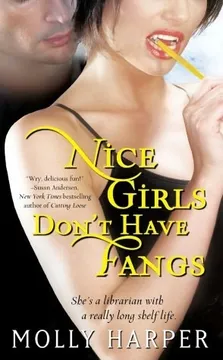


Plot Summary
A Deer in the Headlights
Jane Jameson, a twenty-seven-year-old children’s librarian in Half-Moon Hollow, loses her job when her supervisor replaces her with an inept relative. At Shenanigans, drowning her humiliation in cocktails, Jane meets Gabriel Nightengale, a composed stranger who keeps her company and walks her to her car.
When the car breaks down, Jane sets off along the road alone. A drunken hunter, Bud McElray, mistakes her for a deer and shoots her. Gabriel finds her dying in the ditch. He asks whether she wants to live, and Jane manages to agree before he drains her blood and gives her his own. She dies, beginning a new life she never wanted and cannot undo.
The transformation begins with two forms of disposability colliding. Jane has just been dismissed from the work that gave her identity, and then Bud treats her body as an animal target. Her new life is not a reward for hidden greatness but a response to an absurd, preventable death. Gabriel’s offer preserves her choice in a moment when choice has almost vanished, though survival carries a cost he cannot make ordinary. The sequence establishes the novel’s comic method: Jane can make a joke about humiliation, but humor does not cancel the violence or the grief underneath it.
Three Days Gone
Jane wakes in Gabriel’s house after three days of death, horrified to discover that her altered reflection is real and that she is now a vampire. Remembering Gabriel’s blood in the ditch, she rejects his care and races through the woods to River Oaks, the old family home she inherited from her great-aunt Jettie.
Her longtime friend Zeb Lavelle arrives and becomes the first human she nearly attacks, because thirst overwhelms affection. Gabriel stops her and offers his own blood instead. The intimate feeding steadies Jane and gives her flashes of their earlier conversation. After Gabriel takes Zeb home, Jane’s grief and exhaustion bring another surprise: Jettie, dead for months, appears as a ghost and can finally speak to her.
Jane’s first undead choices define the moral problem more clearly than any rulebook could. She flees the person who saved her, then discovers that love for Zeb cannot by itself protect him from her hunger. Gabriel intervenes before a friendship becomes an irreversible injury, using his own body as both food and reassurance. Jettie’s return complicates death rather than reversing it: Jane gains a confidante, but not the living aunt she lost. The sequence makes supernatural power feel less like uncomplicated wish fulfillment than a sudden expansion of appetite, responsibility, and access to what grief has kept out of reach.
The Welcome Basket
Jane hides her new condition from her worried parents, then receives a pink gift basket from Missy Houston, a local vampire realtor who welcomes new arrivals with supplies and a handbook. Jane learns that ordinary food now tastes repellent and that synthetic blood can keep her from hunting.
Gabriel sends Andrea Byrne, a human blood surrogate, to help with Jane’s first live feeding. Jane initially refuses, then feeds carefully when Andrea assures her that she consents.
At the Cellar, a vampire-friendly bar, Andrea introduces Jane to an unexpectedly ordinary undead crowd and tells her how an exploitative vampire once used her as a companion. Jane begins to see that survival among vampires involves choices and unequal relationships, not simply hunger and fangs.
Food becomes a test of values rather than a background detail. Jane’s refusal to treat human beings as prey is sincere, but it cannot erase her physical need, so Andrea’s consent offers a compromise that exposes how consent can coexist with economic vulnerability. Andrea’s history also prevents the vampire community from appearing uniformly liberated: immortality does not cure exploitation, and a supernatural bond can reproduce familiar power imbalances. Missy’s polished welcome suggests that institutions can make a frightening transition manageable, while Jane’s awkwardness keeps her from mistaking social inclusion for trust. Her new ethics have to be practiced, not merely declared.
Trouble at the Cellar
When Jane returns to the Cellar with Andrea, she interrupts Walter, a violent vampire, as he shakes Norm, the human bartender, for money. Walter punches Jane and nearly crushes her skull before Richard Cheney, an old vampire with a sharp tongue, restrains him and forces him to leave. Jane drives Andrea home, then discovers that her purse is missing.
The next night, Gabriel brings it back with news that Walter has been found burned to death, his body and Jane’s belongings discovered together. The council now has reason to suspect Jane. Her first attempt to enter vampire society has turned into a threat to her freedom, and the council summons her to explain why Walter died.
Jane’s instinct to defend Norm is both a moral decision and a practical risk: she acts before understanding the rules governing vampire conflict. Richard’s intervention saves her from Walter, but it cannot protect her from what happens afterward. The purse creates a blunt material link between Jane and a death she did not cause, showing how quickly an outsider’s actions can be rewritten as evidence. Her healing body gives her physical resilience, not legal protection. The episode also introduces Richard as a counterweight to Gabriel: he helps Jane without claiming the authority to define what is best for her.
The Council’s Cracker Barrel
Gabriel takes Jane to the local vampire council, where the members question her in a crowded Cracker Barrel. Sophie, a council member whose gift lets her search for truth, grips Jane’s wrist and probes her memories painfully.
Sophie confirms that Jane believes her account of the fight, but the council warns that it will keep investigating and could punish Andrea if Jane lied. Outside, Jane confronts Gabriel for letting the council hurt her; their argument turns into a fierce kiss.
At home, her father, John, arrives with pizza and meets Gabriel, whom Jane introduces as a friend. Gabriel later returns Walter’s unwanted belongings to Jane, and his visit ends with their attraction more openly acknowledged, though Jane is still wary of his control.
The council’s violence is disguised as procedure, and the ordinary restaurant setting makes that coercion more unsettling, not less. Jane is required to submit her private experience to a supernatural authority that can punish both her and a human witness. Gabriel’s failure to prepare her damages the trust he wants to build, even as their physical desire pulls them closer. John’s visit offers a contrasting form of scrutiny: he asks questions as a protective parent, but he also accepts Jane’s judgment. In one section, the book distinguishes care from control by showing that good intentions do not excuse withholding information.
Gabriel’s False Death
Unable to wait for Gabriel to explain himself, Jane researches his name and finds him in her father’s local-history book. Born into a wealthy Kentucky family in 1858, Gabriel vanished at twenty-one; his family claimed a sea lion killed him, while vampire records reveal that his sire abandoned him to rise alone.
He eventually returned to claim his inheritance and learned to survive by moving between assumed identities. Jane also studies vampire abilities and the rules that bind the undead, including the power to influence human memory.
The discoveries explain Gabriel’s reserve without making it disappear. Jane keeps asking questions, insisting on understanding the life she has entered instead of letting her sire turn mystery into authority.
Research is Jane’s way of reclaiming agency. She approaches Gabriel as she once approached a library problem, assembling records and comparing versions until the gaps become meaningful. His invented death and repeated identities reveal the cost of surviving in a world that once required secrecy, but they also show how withholding can become a habit long after its original danger has passed. Jane’s curiosity is not a cute eccentricity here; it is a defense against being managed. The section places knowledge beside intimacy and refuses to treat either as a substitute for the other.
Zeb’s Other World
As Jane struggles with empty nights and no job, Zeb admits he has been attending Friends and Family of the Undead, a support group for people close to vampires. There he met Jolene, an affectionate woman he is dating. Jane’s new mind-reading ability catches Zeb’s earlier evasions and exposes how deeply their friendship is changing.
At a meeting, Jane learns that Jolene is a werewolf from a family wary of vampires, and that she once lost a vampire friend named Tessie. Jolene and Zeb are serious about one another, while Jane is forced to imagine a future in which her oldest friend builds a life that does not revolve around her. She agrees to meet Jolene on her own terms.
The support group reverses the usual perspective of supernatural fiction: the living are not merely an audience for the vampire’s transformation but people managing fear, grief, and altered intimacy. Zeb’s attendance shows that friendship includes seeking help beyond the person one loves. Jane’s telepathy gives her information, but it does not spare her the emotional work of accepting Zeb’s independence. Jolene’s history with Tessie links the two women through loss before their friendship can grow. The supernatural divide is real, yet the scene locates its consequences in ordinary questions of loyalty, privacy, and whether affection can survive a changed balance of attention.
A Job with Fangs
Jane applies to Greenfield Studios expecting office work, then discovers the job is telemarketing for dubious family portraits and anti-vampire products. She quits after an evening of hostile calls and overhearing her coworkers’ fear of vampires.
Someone paints an insult in deer blood across her car. Jane later finds an unadvertised occult bookstore run by Gilbert Wainwright, sorts its disordered stock, and persuades him to hire her. The job restores her sense of usefulness. Soon afterward, she catches the smell of antifreeze in Fitz’s water bowl and prevents her dog from drinking it.
Worried about leaving him alone, she asks Zeb and Jolene to watch him, only to learn that they are engaged. Jane reacts with alarm before recognizing that her fear of losing Zeb is not a reason to reject his happiness.
Work is not simply a source of income for Jane; it is the structure through which she recognizes herself. Greenfield asks her to sell products that exploit fear, so leaving is an ethical refusal as well as a career decision. The bookstore offers a better fit because her habits of sorting, reading, and helping customers become valuable again. But the poisoned bowl shows that her private safety has become vulnerable, while Zeb’s engagement exposes a different fear: that her friend’s future will leave her behind. Jane’s growth begins when she learns to separate a real threat from the discomfort of no longer being someone’s central person.
Rumors in the Stacks
At the bookstore, council member Ophelia tells Jane that vampires are spreading stories that she had affairs with Walter and Richard, then killed Walter in jealousy. Because the council must appear to investigate, Ophelia urges Jane to avoid giving anyone more material. Jane recognizes that the claims could isolate her, though she still does not know who is behind them.
Soon her mother, Sherry, and sister, Jenny, arrive at River Oaks, pressing her about money and the house. Jane conceals her vampire life and invents a cocktail party as an excuse to escape the visit. Missy has invited her to that party, so Jane chooses to face the hostile vampire circle rather than let rumors dictate where she can go.
Gossip functions here as an informal court, shaping who is believed before any evidence is assessed. Ophelia’s warning reveals the council’s limits: it can recognize a false story and still feel compelled to perform an investigation for political legitimacy. Meanwhile, Jane’s family presses on the vulnerabilities created by her unemployment and inheritance, without understanding the danger around her. Her lie about the party repeats her habit of delaying painful disclosure, but the choice to attend marks a small change. She is no longer hiding solely because she lacks courage; she is beginning to test the social world that has already judged her.
Shots at the Mixer
At Missy’s polished vampire mixer, Jane hears guests turn the false stories about her and Richard into sexual jokes. Hadley Wexler openly treats her as a murderer. Missy adds pressure to sell River Oaks, presenting the move as a way for Jane to fit into vampire society. Jane refuses and leaves. Outside, a hidden shooter fires into her and Big Bertha.
The bullets wound her but cannot kill her; the guests remain inside, laughing beneath the house lights, while Jane struggles to reach her car. She drives home alone, bleeding and shaken. The attack confirms that the hostility is not confined to gossip, yet Jane still has no proof of who is targeting her or why.
The party makes social exclusion physically legible. Jane is not merely disliked; she is encouraged to trade her inheritance for acceptance, then shot when she refuses. Missy’s offer appears hospitable on its surface, but it narrows Jane’s choices to conformity or isolation. The guests’ failure to help after the gunfire intensifies the cost of belonging to a community whose members value reputation over solidarity. Jane survives because her body repairs itself, but the old terror of being shot returns. Immortality has changed the consequences of violence, not its emotional force.
Gabriel’s Answer
Gabriel finds Jane washing blood from her skin and learns that she has been attacked before: someone watched her house, vandalized her car, and poisoned Fitz’s water. Jane identifies Bud, the hunter who shot her, as a possible suspect. Gabriel shows her a newspaper report that Bud died weeks earlier when a tree stand collapsed. Jane realizes Gabriel arranged the death.
He says he waited, then killed Bud because the man had left her to die. Jane is horrified that Gabriel has chosen vengeance for her without asking what she wanted. Their argument turns into a violent struggle and then into sex, which neither resolves their conflict. Afterward, Jane tells Gabriel to leave and refuses his attempt to move her into his house.
Gabriel’s retaliation makes protection morally unstable. He believes his act answers an injury and prevents future harm, but he has substituted his judgment for Jane’s and made her complicit in a death she would not have chosen. Their physical intimacy does not reconcile that difference; it occurs alongside anger, desire, and Jane’s uncertainty about her own response. This is important because the novel does not treat sex as proof that conflict has vanished. Jane can want Gabriel and still reject his moral authority. Her demand for distance is the first clear boundary she sets against the protective logic of her sire.
The Trailer Burns
After receiving a late message from Richard, Jane goes to his trailer. An explosion throws her across the yard and leaves her badly burned. She wakes chained in a vampire holding cell, where Ophelia suspects her of setting the fire and possibly killing Richard. The council prepares a trial, but Richard appears alive: a hidden fireproof compartment saved him.
He secures Jane’s release and tells her that Missy has been buying land around River Oaks for years, with plans to build a vampire development across Jane’s property. Jane realizes the attacks and rumors may serve a larger scheme. Before she can act on the discovery, Missy telephones from River Oaks and reveals that she has Jane’s parents tied up.
The explosion turns Jane’s growing suspicion into a crisis of confinement. The council again treats circumstantial proximity as enough to strip her of ordinary protections, while Richard’s survival exposes how little the investigators know. His discovery shifts the apparent motive from romantic jealousy to land acquisition, connecting social rumor, property pressure, and physical violence. Jane’s first response is still to distrust everyone, including the person offering help, which is understandable after repeated betrayals. Missy’s call collapses the distance between public dispute and private life: Jane’s family is now directly endangered by the scheme.
River Oaks Under Siege
Jane goes to Missy’s home and finds her parents bound on the deck. Jenny arrives, having joined Missy’s scrapbooking circle and shared information about Jane without understanding the danger.
Missy reveals that she wants River Oaks demolished as the centerpiece of Half-Moon Meadows, a gated vampire community, and admits to framing Jane, planting rumors, poisoning Fitz’s bowl, shooting her, and burning Richard’s trailer. She intends to kill Jane and her family, then claim the land.
Jane insults Missy to draw her away from the hostages, but Missy kicks her through a deck railing. Richard, Gabriel, and Zeb arrive. Missy insists that their previously declared trial by battle must proceed, leaving Jane to face her enemy without their direct intervention.
The reveal converts a string of apparently disconnected injuries into a coherent economic plot. Missy’s polished community-building language conceals a plan to erase the family home and the people who stand between her and the land. Jenny’s role is painful because her cooperation grows from ordinary resentment and social ambition, not a full grasp of the danger. Jane’s taunts are a tactical act: she uses the voice that has often made her seem unserious to move Missy away from her parents. Yet strategy cannot remove the physical imbalance, so the scene makes the coming fight depend on Jane’s own capacity rather than rescue alone.
The Realtor’s Last Sign
Gabriel lends Jane his blood to strengthen her before the fight, while Richard distracts Missy and the others watch. Missy overwhelms Jane until they crash into a shed and knock loose a stack of realtor signs. Jane grabs one of the wooden stakes, drives it into Missy’s heart, and kills her.
With the immediate threat gone, Jane leaves Jenny tied and tells her parents that she is a vampire, explaining how Gabriel saved her and how she plans to live. John takes her hand; Sherry remains frightened and angry, and Jenny’s grievance continues.
Later, the council clears Jane in Missy’s death and rules her uninvolved in Walter’s, while she rejects her old library job, continues at Wainwright’s shop, and learns she will inherit Missy’s surrounding land.
Jane’s victory is both bodily and ethical: she kills Missy to stop an immediate threat, not to settle a private grievance or claim power. The ordinary realtor sign becomes the means of defense, turning the language of property into a weapon against the person who tried to use property as a weapon against her. The aftermath is deliberately less tidy than the fight. John offers contact, Sherry cannot yet accept Jane’s condition, and Jenny remains estranged. Jane’s professional future is also chosen rather than restored: she declines the library’s belated offer and stays among books on her own terms.
Analysis
Nice Girls Don’t Have Fangs treats vampirism as a sudden change in the conditions of ordinary life, not as an escape from it. Jane loses a job, fears disappointing her parents, struggles to keep a friendship intact, and searches for work that suits her. Her immortality intensifies those problems rather than replacing them. The practical comedy of fake blood, awkward feeding, and vampire shopping gives bodily specificity to a deeper question: what responsibilities remain when one’s needs become dangerous to other people?
The novel repeatedly distinguishes care from control. Gabriel saves Jane and gives her essential knowledge, yet his protective instincts lead him to decide what justice should look like for her. Jane’s parents offer food, advice, and security, but their love can become pressure to surrender her independence. Zeb’s support group models a healthier adjustment because it acknowledges fear without making Jane solely responsible for everyone else’s feelings. Across these relationships, affection is not sufficient by itself. It must make room for boundaries and for the other person’s account of what happened.
Community is equally double-edged. The vampire council promises order, but its investigations can become public performance. Missy’s social welcome offers newcomers a route into professional life, yet the language of belonging can conceal a demand to give up Jane’s home. The supernatural world reproduces familiar structures of gossip, real-estate ambition, family entitlement, and workplace exploitation. The point is not that vampires are secretly just humans, but that power and self-interest survive a change in species.
Jane’s humor is her tool for keeping humiliation from defining her, though it sometimes helps her postpone difficult truths. Her development does not require becoming solemn or conventionally polished. She learns to act decisively, choose work that reflects her abilities, protect those she loves, and tell her parents what she has been hiding. The ending offers no instant repair of every bond. Instead, Jane claims a future that can contain uncertainty, conflict, and affection at once. Her new life becomes hers not when she masters every vampire rule, but when she stops treating other people’s expectations as the only available map.
Review Summary
Nice Girls Don't Have Fangs is a humorous vampire romance that blends wit, sarcasm, and paranormal elements. Readers enjoy Jane's quirky personality and the entertaining supporting characters. The book offers a fresh take on vampire tropes, with many finding it laugh-out-loud funny. While some critics felt it lacked depth or originality, most appreciated the light-hearted tone and clever writing. The romance subplot received mixed reviews, but overall, readers found it an enjoyable, fun read that left them wanting to continue the series.
People Also Read
Characters
Jane Jameson
Unruly vampire librarianJane is a quick-thinking, self-deprecating librarian whose memory for odd facts sits beside a stubborn refusal to live by her family’s preferred script. She values books, her inherited home, her dog, and the long friendship she shares with Zeb; she is less practiced at asking directly for what she needs. Her jokes help her survive embarrassment, but they can also delay honesty when a conversation feels dangerous. Becoming a vampire forces her to examine the difference between appetite and permission, protection and control, and belonging and submission. Jane’s intelligence is practical rather than grand: she researches, notices details, and makes choices under pressure. Her defining strength is not fearlessness but the capacity to act while frightened and reconsider herself afterward.
Gabriel Nightengale
Jane’s guarded sireGabriel is an old Kentucky vampire who survived his turning without guidance and has spent much of his long life concealing himself behind assumed identities. He is observant, educated, and deeply protective, but his protection often takes the form of deciding what others need before asking them. Jane’s restless mind and irreverence unsettle his habitual reserve, while his age and knowledge make him both mentor and potential source of pressure. He is drawn to Jane as a person, not simply as the vampire he created, though he struggles to express attachment without invoking responsibility. His history makes his secrecy understandable, not automatically justified. Gabriel’s central tension is between genuine care and the possessive instincts he has learned to treat as natural.
Zeb Lavelle
Jane’s lifelong friendZeb has been Jane’s best friend since childhood, sharing her humor, her hometown history, and the ease of a relationship that has never needed romantic performance. He is a kindergarten teacher with a goofy streak and a compassionate instinct that leads him to seek support when Jane’s transformation frightens him. His loyalty does not mean he can remain unchanged; he builds a life and relationships beyond Jane, a development she finds harder to accept than she expects. Zeb’s honesty can be awkward, but it gives their friendship room to adjust instead of freezing it in childhood. He offers Jane a living example of care with boundaries: he loves her while acknowledging that her new nature affects him too.
Missy Houston
Vampire realtor and hostessMissy is a polished local realtor whose pink suits, bright hospitality, and gift for social organization make her a welcoming presence among newly turned vampires. She understands that newcomers need practical help as well as company, and she knows how to move comfortably through Half-Moon Hollow’s professional circles. Her confidence is backed by a sharp sense of opportunity, especially where property and community development are concerned. Missy’s charm can make an invitation feel like an obligation, and she is skilled at presenting ambition in appealing language. She gives Jane an early glimpse of how undead life can be organized, social, and commercially minded.
Andrea Byrne
Human blood surrogateAndrea is a poised human who willingly provides blood to vampires for companionship and income. Her rare blood type makes her sought after, but her history with an older vampire who shaped her life and then discarded her leaves her alert to unequal affection. She is gracious without being passive, and she helps Jane navigate vampire spaces while maintaining her own standards. Andrea’s experience challenges Jane’s assumptions about feeding: a donor’s consent matters, but money, loneliness, and social dependence can complicate the meaning of choice. She becomes one of Jane’s first bridges into the undead community and a friend whose humanity is not reducible to her usefulness as food.
Richard Cheney
Irreverent vampire allyRichard, usually called Dick, is an old vampire with a roving history, a taste for mischief, and a talent for appearing when trouble has already started. His jokes can be vulgar, but he is observant and often more straightforward than the vampires who cloak their motives in ceremony. His long, antagonistic history with Gabriel gives Jane an early view of vampire grudges and the ways pride can preserve them. Richard treats Jane as an adult rather than a project, although his flirtation and provocations test her patience. Beneath his restless manner is a real willingness to intervene when someone is being threatened.
Jolene
Werewolf and Zeb’s partnerJolene is a warm, exuberant werewolf who belongs to a large family and carries the physical appetites and instincts associated with her nature. She met Zeb through a support group for people connected to vampires, after losing her friend Tessie and finding little understanding at home. Her openness can overwhelm Jane, especially when her friendship arrives with hugs, food, and serious commitment to Zeb. Jolene is nevertheless perceptive about the difficulty of living between supernatural and human communities. She wants Jane’s acceptance without asking her to pretend that vampires and werewolves have no history of distrust.
Jettie Belle Early
Jane’s ghostly great-auntJettie was the independent great-aunt who gave Jane a home, a love of books, and permission to be different from the rest of their family. She left River Oaks to Jane and remains there as a mischievous ghost, able to offer comfort, commentary, and occasional interference. Jettie’s humor keeps grief from becoming solemn, but her presence also makes clear that Jane has not simply recovered the aunt she lost. She is a guardian who cannot fully protect the living and knows it. Her bond with Jane is built from shared memories, practical affection, and the freedom to tease one another.
John Jameson
Jane’s patient fatherJohn is a history professor who raised Jane through books, curiosity, and steady affection. He often serves as a calm counterweight to his wife’s intense attempts to manage their daughters’ lives. He is perceptive enough to recognize when Jane is hiding something, though he does not force every answer from her. His interest in local history gives him an unexpected connection to Gabriel’s past. John’s instinct is to keep loving Jane even when he does not understand what has happened to her.
Sherry Jameson
Jane’s anxious motherSherry is a devoted, energetic mother who expresses concern by arranging solutions, providing food, and trying to steer Jane toward a conventional secure life. Her care is genuine, but it often becomes intrusive when Jane refuses the help on offer. She worries about her daughter’s employment, independence, and romantic future, and she can mistake control for reassurance. Sherry’s relationship with Jane is marked by affection and friction in equal measure. She needs time to make sense of a daughter whose life no longer fits the categories she trusts.
Jenny Jameson
Jane’s competitive sisterJenny is Jane’s older sister, a practical, polished woman who has built the family life their mother admires. She can be competitive and possessive about family property, and she tends to measure security through conventional milestones and material plans. Her history with Jane includes old sibling resentments that never fully disappeared. Jenny’s confidence can obscure how little she understands the consequences of her choices, especially when social ambition and family loyalty collide.
Ophelia Lambert
Young-looking council judgeOphelia is a vampire council member whose youthful appearance contrasts with her authority and impatience. She is direct, observant, and willing to enforce the council’s rules, even when those rules seem arbitrary or severe to Jane. Ophelia understands that the vampire community depends on appearing accountable to itself, but she also recognizes how often that performance puts individuals at risk. Her manner is dry and unsentimental, with occasional hints of humor that she rarely allows to soften her decisions.
Walter
Violent vampire regularWalter is an immature vampire who lives with his mother, sells pirated DVDs, and repeatedly robs the Cellar. His aggression makes him dangerous despite his lack of sophistication, and his assault on Norm draws Jane into vampire law and conflict.
Bud McElray
Drunken local hunterBud is a local hunter whose reckless drinking and poor judgment have consequences far beyond his own life. His mistake on a dark road changes Jane’s future and places violence at the beginning of her story.
Mrs. Stubblefield
Jane’s former supervisorMrs. Stubblefield is the rigid library supervisor who values order and propriety, often more than the work that makes the library welcoming. Her decision to dismiss Jane begins the upheaval that sends Jane into the night.
Gilbert Wainwright
Occult bookstore ownerGilbert is a gentle, eccentric bookseller whose shop collects rare and obscure works on supernatural subjects. He welcomes Jane’s instinct to organize the chaotic shelves and gives her a chance to return to the work she loves. His curiosity about vampires is scholarly rather than fearful, and he treats Jane’s unusual needs as practical facts.
Sophie
Council truth seekerSophie is a vampire council member whose supernatural ability lets her probe a person’s thoughts for truth. Her manner can be charming, but using her gift on Jane is painful and coercive, revealing the cost of the council’s investigative power.
Plot Devices
The Great Coming Out
Vampires enter public lifeAfter a vampire wins a workplace discrimination lawsuit, the undead become publicly known and begin negotiating legal, economic, and social space with humans. The revelation supports a world in which vampires buy synthetic blood, work night shifts, and use dedicated services, while prejudice and violence persist. For Jane, this public history means vampirism is not a hidden curse isolated from ordinary institutions. It is also a contested identity, shaped by employment rules, community fears, and the question of whether humans will treat vampires as neighbors or threats.
Blood and Turning
Survival changes the bodyA vampire creates another by draining a dying person and giving that person the sire’s blood. The new vampire dies for three days, then wakes with heightened strength, speed, senses, and a need for blood. Feeding can be consensual and controlled, but it can also become predatory when thirst overrides judgment. Jane’s first days make this mechanism both practical and ethical: Gabriel feeds her to prevent her from harming Zeb, while Andrea offers a willing human source. Blood also carries intimacy and, at times, memory or strength, connecting physical survival to emotional dependence.
Supernatural Senses
Hidden motives become perceptibleJane’s changed body lets her hear, smell, move, and heal beyond human limits. She can detect emotional states through scent and gradually forms mental images from Zeb’s thoughts. These abilities help her survive attacks and notice that ordinary explanations do not fit, but they do not provide complete knowledge. Her emerging telepathy is unreliable, and heightened perception can overwhelm her in crowded rooms. The powers therefore work as investigative tools with limits, not automatic solutions. Jane still has to interpret what she senses and decide whether the information justifies action.
Vampire Council
Undead law governs conflictThe World Council and its local representatives regulate vampire disputes, investigate deaths, and discipline the newly turned. Its procedures sit uneasily beside human law: Jane is questioned through a supernatural truth-seeking ability and can be summoned to trial by battle. The council’s authority makes vampire society more than a collection of predators, but its concern with appearances can make justice provisional and political. Jane’s repeated encounters with the council demonstrate how an institution can both constrain violence and use vulnerable newcomers as examples for the wider community.
River Oaks
Inheritance anchors Jane’s choicesRiver Oaks is the old family home Jane inherits from Jettie, a physical record of childhood, kinship, and the life Jane chose rather than the one her mother planned. Its land makes Jane responsible for maintenance and family claims, but it also gives her a place that belongs to her. The home’s value becomes a source of pressure from Jenny and from vampire real-estate interests. More than a valuable property, River Oaks represents Jane’s ability to remain rooted in Half-Moon Hollow while her body and social identity change around her.
About the Author
Other books by Molly Harper

Download PDF
Download EPUB
.epub digital book format is ideal for reading ebooks on phones, tablets, and e-readers.








