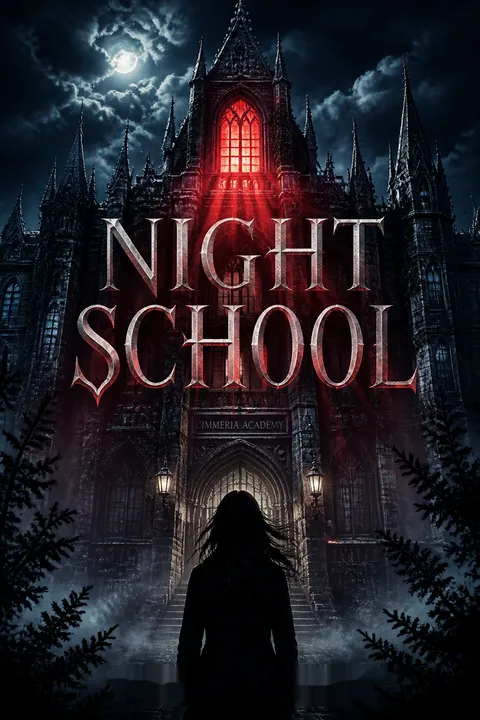


Plot Summary
A Third Arrest Sends Allie Away
At sixteen, Allie Sheridan1 is caught spray-painting her headmaster’s office after two earlier arrests in the same year. Her father20 collects her from the police station in exhausted silence, and the next morning her parents20 announce that another school is about to expel her. They have arranged a place at Cimmeria Academy, far from London and her friends.
Allie1 argues, but the decision is final: her phone and computer are taken, and she must leave that afternoon. Before getting into the car, she studies the family home, already feeling its ordinary familiarity slipping away. She knows the family has been changed by her brother Christopher’s8 disappearance, though she has not yet told anyone how deeply that loss has shaped her.
Allie’s delinquency is both rebellion and self-protection. Her parents interpret the arrests as a threat to her future, while she experiences their decision as another abandonment in a family already hollowed by Christopher’s disappearance. The abrupt transfer removes her familiar means of contact and control. Cimmeria begins not as an adventure she chooses, but as a consequence imposed on a girl who has learned to make trouble when grief leaves her feeling powerless.
Cimmeria Closes Behind Her
A forest road and iron gates deliver Allie1 to a vast Gothic school where headmistress Isabelle le Fanult5 welcomes her, then asks her parents20 to leave her at the threshold. Her small room contains uniforms, three formal gowns, and a thick handbook of rules. Prefect Jules13 explains that students have no phones, computers, or television, and that strict curfews govern the grounds.
At dinner, history teacher Zelazny16 publicly warns Allie1 for arriving moments late. She also meets Sylvain,3 a courteous French student, and Carter West,2 a watchful boy who studies her from the common room. That night Allie1 wakes from a recurring nightmare to hear movement above her window. In the morning, the window stands open, though she remembers closing it.
Cimmeria’s beauty and discipline arrive together. The school gives Allie a bed, meals, and a new identity, but its restrictions make her feel less like a student than someone being contained. Her uncertainty about the window matters because it unsettles her confidence in her own memory, already vulnerable to grief and panic. The school’s unexplained nighttime activity gives its order a second face: rules are visible, but the people who enforce them seem to keep secrets.
Jo Becomes Her First Ally
Jo Arringford4 befriends Allie1 and takes her to a walled garden, where Allie1 finally explains that Christopher,8 once her closest companion, vanished after leaving a cruel note. His disappearance wrecked her schoolwork and family life; arrests, drinking, and self-harm followed as she tried to feel anything at all.
Jo4 listens without judgment and urges her to treat Cimmeria as a possible home. Their confidence is tested when something crashes through the garden after dark.
Allie1 and Jo4 run, but Gabe,7 Jo’s boyfriend,7 and Sylvain3 pull them into hiding before the unseen presence reaches them. The boys refuse to identify what they heard, and Sylvain3 discourages Allie1 from reporting it. Her first new friendship has brought comfort, but also a mystery everyone else seems to recognize.
Allie’s confession gives her grief a history rather than reducing it to a streak of misconduct. Jo offers a form of recognition Allie’s parents have not managed: she can hear the pain without demanding that it become tidy or inspirational. Yet the garden incident complicates that safety. The boys’ practiced response suggests the school has rehearsed its silences. Allie is welcomed into a community whose intimacy depends, in part, on deciding which truths a newcomer is allowed to hear.
Carter Guards the Forbidden Floor
Zelazny16 assigns Allie1 a dawn detention for tardiness, where she is paired with Carter2 to rake the old chapel graveyard. Carter2 apologizes for making her feel unqualified to attend Cimmeria, then reveals that the grounds are his only home: his parents once worked there and are dead.
Their brief understanding breaks when Allie1 touches his arm and he snaps at her. Later, exploring the upper classroom floor, she hears shouting and a crash before Carter2 catches her and hustles her away.
He insists that the third floor is reserved for advanced students and Night School, a program she is forbidden to investigate. Allie1 now has two reasons to distrust the school’s rules: they conceal rooms and activities, and even Carter2 seems frightened of what happens when she crosses them.
Carter’s apology opens a narrow path toward trust, while his grief closes it again as soon as Allie approaches too directly. Their friction is not simple hostility: both guard pain by controlling how much another person can know. The forbidden floor turns that dynamic into a plot question. Allie has learned that the rules do more than regulate behavior; they sort students into circles of knowledge, and her outsider status is becoming a source of danger.
The Woods Spill Blood
The next evening, Ruth10 rushes into the common room to report that Gabe7 and Phil are hurt and that something has gone wrong. Allie1 pulls the stunned Jo4 through the rain toward the summerhouse, where Carter2 and Gabe7 emerge from the woods carrying an unconscious Phil.
Carter’s2 forehead is cut, Gabe’s7 wrist is bleeding, and Sylvain3 soon arrives with teachers to take Phil for treatment. Allie1 bandages Gabe7 while the others direct her back inside.
Isabelle5 calls the injuries the result of a rough game, and Carter2 later tells Allie1 to keep Ruth’s10 warning secret rather than explain what the students were doing. The school soon restricts access to the grounds and piles on extra homework. Allie1 recognizes a cover-up, but every answer she gets creates another question.
The injuries make secrecy tangible. Allie can see blood, torn clothing, and the urgency with which the older students act, yet the adults recast the event as ordinary mischief. Her practical first aid briefly gives her agency, but it does not give her access to the cause. Cimmeria’s social hierarchy is now legible through who may act, who may ask, and who is expected to accept a reassuring explanation.
A Chapel, A Kiss, A Ball
As the school grounds reopen, Jo4 defies Gabe’s7 attempts to keep her inside and takes Allie1 to the old chapel. Its painted walls preserve poems, religious scenes, and a motto whose meaning unsettles Allie.1 Carter2 arrives to escort them back, but Jo4 races off alone, leaving Allie1 to return and secure the chapel door.
In the dark, Allie1 glimpses movement inside, then hears someone following her through the woods. She falls, injuring her knee, and Sylvain3 carries her back to the infirmary before kissing her outside the dormitory.
He later asks her to the Summer Ball, and she accepts, buoyed by the schoolwork she is beginning to master and the friendships she is building. Carter’s2 warnings about Sylvain3 remain unexplained, so Allie1 chooses the warmth she can see over a suspicion she cannot yet understand.
Allie’s growing attachment to Cimmeria is measured in small acts of participation: she explores, studies, and lets herself anticipate a dance. That happiness is real, but it also makes her more vulnerable to anyone who offers certainty or affection. Her choice of Sylvain is not foolishness so much as a response to the evidence available to her. Carter’s warnings sound like jealousy because he has not yet earned the trust required to make them persuasive.
Carter Pulls Her from the Pond
On the night before the ball, Jo4 leads Allie1 and Lisa11 into the woods for the school’s illicit midnight swim. The crowded, dark pond overwhelms Allie;1 she loses sight of her friends, panics, and sinks beneath the water. Carter2 finds her, gets her breathing again, and lends her clothes before walking her back to school. Allie1 thanks him, and the guarded space between them briefly gives way to tenderness.
The next day, she struggles through classes and an English discussion about concealed feelings, while Carter’s2 responses seem aimed at her. Still, she prepares for the ball with Jo4 and Lisa11 and goes with Sylvain.3 His charm and attention leave Allie1 eager to believe that her new life might include romance as well as safety.
The pond strips away Allie’s defenses in a way conversation cannot. Carter’s competence matters because he helps without demanding that she perform gratitude or trust; he simply keeps her alive until she can breathe. The rescue changes the emotional terms between them, but it does not erase the social story Allie has built around Sylvain. Her choices remain divided between the person who makes her feel desired and the person whose care is most visible in a crisis.
The Ball Ends in Fire
At the Summer Ball, Sylvain3 teaches Allie1 to dance and repeatedly replenishes her champagne. When he takes her outside, he pins her against a wall and ignores her attempts to stop him. Carter2 intervenes, forcing Sylvain3 to release her.
Screams and a sudden fire draw the boys away; Allie1 stumbles over Ruth’s10 body in the dark, her hands bloodied by the girl’s wounds. Inside, students fight smoke and flames while Jo4 helps Allie1 search for Lisa.11 They find Lisa11 unconscious in the entrance hall beneath a fallen candleholder, injured but alive.
Staff move the students into the dining room, where Isabelle5 calls the death a suicide and the attack an accident. Allie1 knows the scene she witnessed does not fit the explanation, but Cimmeria is already organizing the lie.
The ball’s polished rituals collapse into coercion, violence, and smoke. Sylvain’s attention, once a source of validation, becomes a means of overriding Allie’s refusal; the episode exposes the danger of confusing charm with care. The official suicide story then repeats the same violation at an institutional scale: the school asks witnesses to distrust what they saw. Allie’s isolation begins when her knowledge becomes inconvenient to people with authority.
The School Blames Its Witness
After the fire, Allie1 and Jo4 help account for students while the Night School members remain absent. The school announces Ruth’s death as suicide and keeps the police away. Soon Jo,4 drunk and distraught, climbs onto the roof, accusing everyone of hiding the truth. She hints that she knows who killed Ruth,10 then slips down the tiles.
Allie1 and Carter2 catch her by the wrists and haul her back to safety. Katie14 turns the episode against Allie,1 spreading the claim that Allie pushed Jo and may have killed Ruth. Jo,4 confused and ashamed, withdraws from her. Carter2 stays beside Allie1 through a panic attack and promises to help her find answers. Rachel6 becomes another ally, though Allie1 is left unsure which confidences are safe to share.
The crisis exposes how trauma can make people both vulnerable to manipulation and capable of harming those they love. Jo’s roof episode is not evidence against Allie, but Katie makes it serve that purpose by exploiting Jo’s memory gaps and the school’s secrecy. Carter’s steady presence offers Allie a counterweight to public accusation. Still, friendship is no longer a refuge by itself; in this school, trust has to survive both grief and strategic rumor.
A File Opens the Bloodline
Carter2 explains that Night School is training students for a lifelong organization whose members hold influence across governments, business, and the military. Allie1 then persuades him to break into Isabelle’s5 office.
Ruth’s10 file is missing, but Allie finds her own: it contains her mother’s Cimmeria records, a letter from a woman named Lucinda ordering Allie’s protection, and a warning that a man called Nathaniel may threaten her as he threatened Christopher. Carter2 discovers a separate message from Nathaniel9 demanding control of the school.
They also learn that students are whispering that Allie killed Ruth and caused Jo’s fall. Carter2 rejects the rumors as a campaign to drive her out. Allie’s1 family history is no longer merely private; it appears tied to the struggle inside Cimmeria.
The file transforms Allie’s sense of self from a personal puzzle into an institutional one. Her mother’s secrecy now appears connected to an older conflict, while the missing record and threatening note show that information itself is being managed. Night School’s promise of power is also a promise of lifelong obligation. Allie’s determination to investigate marks a shift from resisting the school’s control to insisting that she be included in decisions affecting her own safety.
Nathaniel Names His Price
Allie1 and Carter2 follow Isabelle5 to a midnight meeting at the chapel, where Nathaniel9 waits across a stream with a German shepherd. He demands that Isabelle5 admit she was wrong and hand him control of Cimmeria. Isabelle5 refuses, accusing him of setting the ball-night fire and killing a student.
Nathaniel9 denies responsibility for Ruth’s10 death, though he accepts that he used the attack to send a message. Afterward, Allie1 and Carter2 overhear Gabe7 questioning Carter’s2 unscheduled patrol, then speaking as if Carter’s2 standing in Night School is precarious.
A letter found in Isabelle’s5 office has already warned of another confrontation, and the students begin round-the-clock drills. Nathaniel9 is a real threat, but his denial leaves the murder unsolved, while Gabe’s7 anger adds a new uncertainty close to home.
The parley reveals that Cimmeria’s conflict is not simply a school’s response to a criminal outsider. Nathaniel and Isabelle share a history and a political dispute about who should control the organization behind Night School. His denial of Ruth’s murder breaks the easy explanation Allie wanted, widening the danger rather than resolving it. Meanwhile, Gabe’s hostility toward Carter suggests that institutional loyalties may fracture inside the student group itself.
Christopher Carries the Torch
After Sylvain3 warns that someone may target Allie,1 a stranger climbs through her window while she sleeps. Isabelle5 orders Carter2 and Sylvain3 to guard her, but when fires break out across Cimmeria during Nathaniel’s9 next confrontation, Allie1 refuses to wait safely in the hidden grotto.
She and Katie14 wake the girls and lead them down a concealed stairway to the cellar exit. In the smoke-filled library, Allie1 searches for missing prefect Jules,13 then sees a torch-bearing attacker on the stairs.
His face is Christopher’s.8 He recognizes her and runs before she can reach him. Allie1 returns to the dormitory, helps carry the unconscious Jo4 out, and joins Rachel6 and Katie14 in searching for Jules.13 Sylvain3 finds Allie1 collapsed in the smoke and resuscitates her.
Christopher’s appearance turns Allie’s oldest wound into an immediate danger, but the scene withholds the explanation she has spent the book seeking. Recognition is enough to make the past physically present, not enough to make it intelligible. Allie’s choice to leave the shelter is reckless and courageous at once: she acts because other students are trapped, even though the people protecting her have asked her to stay put. Her agency now carries real cost.
Jo Finally Names the Killer
Recovering from smoke inhalation, Allie1 learns that Jo4 has been carrying a secret since the ball. Jo4 tells her that Gabe7 killed Ruth10 after Ruth10 threatened to reveal what she knew about Night School; he also warned Jo4 that Allie1 could be next.
Isabelle5 hears Jo’s4 account and begins searching for Gabe,7 but he has disappeared. Jo4 admits that her guilt and grief helped make her vulnerable to Katie’s14 lies, then apologizes to Allie.1 Allie1 asks Isabelle5 what her family means to the conflict and learns that her absent grandmother leads the organization Nathaniel9 wants to control.
Rather than accept another promise of protection, Allie1 asks to join Night School and learn to defend herself. Isabelle5 agrees to support her, then sends her home to speak with her mother20 before the next term.
The final revelations connect the murder, Allie’s family, and Cimmeria’s power struggle without making the danger feel finished. Jo’s confession restores a measure of trust, but it cannot undo the damage of her silence or Gabe’s escape. Allie’s request for Night School is a decisive change in posture: she no longer wants safety purchased through ignorance. Leaving for home is not a return to the life she fled. She goes back with questions, new loyalties, and a claim on her own future.
Analysis
Night School begins as a story about a troubled teenager being sent away, then steadily reveals that the institution receiving her has its own troubled past. Allie’s1 early acts of vandalism and flight are responses to a family crisis she cannot explain, but Cimmeria does not simply rehabilitate her. It places her inside another family system, one governed by inherited loyalties, hidden records, and rules that distribute knowledge unevenly.
The novel’s central tension is epistemic as much as physical: Allie1 is endangered because she does not know what others know, yet the adults around her defend secrecy as protection. The official account of Ruth’s death, the false alarms, and the rumors about Allie1 each show how institutions can manage people by controlling which version of events is credible. Allie’s1 growth therefore comes through learning to test claims, observe behavior, and choose whom to trust without pretending that trust is certainty.
The romantic plot sharpens this question. Sylvain’s3 visible charm initially offers belonging, while Carter’s2 abrasive warnings offer little emotional comfort. Their actions gradually complicate those impressions. The book treats attraction not as proof of character but as a force that can blur judgment, especially when power is uneven. Carter’s2 rescues matter, yet his secrecy also frustrates Allie;1 care becomes meaningful only when it begins to include honesty.
Grief links the personal and political plots. Allie’s1 unresolved loss of Christopher8 leaves her vulnerable to any explanation of why he disappeared, while Cimmeria’s larger conflict turns family membership into a source of power and danger. The ending does not solve the school’s conflict or restore the family she lost. Instead, Allie1 refuses to remain a protected object. By asking to train, she chooses participation over enforced ignorance, turning survival into the beginning of agency.
Review Summary
Night School received mixed reviews. Many praised its intriguing mystery, well-developed characters, and engaging writing style. Readers enjoyed the boarding school setting and unexpected plot twists. However, some found the pacing slow and criticized the love triangle and clichéd elements. The book's genre confusion caused disappointment for those expecting paranormal elements. Despite these criticisms, many readers were eager to continue the series and uncover more secrets about Cimmeria Academy and Night School.
Characters
Allie Sheridan
The restless newcomerA sixteen-year-old Londoner sent to Cimmeria after repeated arrests, Allie carries grief over her brother Christopher’s8 disappearance and anger at parents20 she believes have stopped seeing her. She uses risk, sarcasm, and movement to keep helplessness at a distance, while panic attacks reveal how fragile that control can be. At school she discovers that she can study, make friends, and imagine a future beyond the one her family’s loss seemed to dictate. Her central psychological struggle is not simply whether she can behave, but whether she can trust others without surrendering judgment. Allie grows more capable as she learns that asking questions and accepting care need not cancel her independence.
Carter West
The guarded protectorCarter grew up at Cimmeria, where his parents worked, and the school is the closest thing he has to home. His sharp intelligence and blunt manner make him seem arrogant, but he is also observant, skilled, and unusually alert to danger. He distrusts the institution he is being trained to serve, yet fears losing the only stable place in his life. With Allie1, he moves from suspicion and control toward honesty and tenderness, though jealousy and fear can still make him defensive. His instinct is to protect by withholding information; the relationship challenges him to see that safety without trust can become another form of confinement.
Sylvain
The polished heirA wealthy French student with effortless charm, Sylvain is one of Cimmeria’s most admired pupils and a prefect. He welcomes Allie1 when others leave her isolated, and his attention makes her feel newly visible. His confidence and social power help him navigate the school’s old hierarchies, but those same qualities can blur the boundary between generosity and entitlement. Sylvain believes he understands how Cimmeria works and expects others to trust his judgment. His connection with Allie1 exposes the difference between being desired and being respected, while his rivalry with Carter2 reveals how much of his identity depends on status and control.
Jo Arringford
The bright, fragile friendJo is a lively, affectionate student whose humor makes Allie1 feel welcome at Cimmeria. Her wealthy, distant family has left her hungry for dependable attention, and she has a history of emotional crises that she works hard to keep hidden. She loves her friends fiercely, but grief and fear can overwhelm her judgment. Jo understands Allie’s1 pain because she knows what it is to feel unwanted, and their friendship offers both girls a temporary family. Her vulnerability is not weakness alone: she is capable of generosity and, when she can face the consequences, of telling a difficult truth.
Isabelle le Fanult
The watchful headmistressIsabelle leads Cimmeria with warmth, intelligence, and a careful command of its traditions. She offers Allie1 kindness without pretending the school is ordinary, but her loyalty to old agreements makes her selective about what she reveals. As headmistress, she is responsible for students whose families and futures are entangled with forces beyond the classroom. She tries to protect Allie1 while respecting the wishes of Allie’s mother20, a balance that repeatedly puts care in conflict with honesty. Isabelle’s authority is humane but not neutral: she knows that the school’s system can harm people even as she works to preserve it.
Rachel Patel
The perceptive confidanteRachel is a gifted, science-minded student who often keeps her distance from Cimmeria’s popular social circles. She listens closely, gathers information, and understands how gossip moves through the school. Her humor and candor make her an unusually steady friend for Allie1, though her family connections to the school’s powerful board complicate the question of whom she can safely trust. Rachel’s emotional reserve comes partly from earlier rejection and a wish to avoid being made vulnerable again. She offers Allie1 practical support without demanding instant closeness, and her willingness to become involved grows from a strong sense of loyalty.
Gabe
Jo’s attentive boyfriendGabe is an older student, a capable member of the Night School circle, and Jo’s4 devoted boyfriend. He is affectionate and protective in ordinary moments, but his secretive work repeatedly puts distance between them. Gabe is accustomed to responsibility and tends to decide what others should know or do, a habit that can feel like care to him and control to the person receiving it. His relationships place him at the junction between private loyalty and Cimmeria’s hidden obligations. To Allie1, he initially appears to be one of the school’s reassuring, dependable figures, though his guardedness makes it difficult to know what he is doing when the group’s secrets take priority.
Christopher Sheridan
The absent brotherChristopher was once Allie’s1 closest companion, an older brother who helped with schoolwork and made their busy parents’20 absences easier to bear. Before disappearing, he became withdrawn and difficult to reach, leaving Allie1 with unanswered questions and a sense of personal rejection. His absence shaped her grief and behavior long before she arrived at Cimmeria. For Allie1, he is both a loved person and an unfinished story, which makes memories of their closeness painful to hold alongside the finality of his departure.
Nathaniel
The rival power brokerNathaniel is a former member of the organization connected to Cimmeria and a determined opponent of Isabelle’s5 leadership. He speaks with measured confidence and treats intimidation as a negotiating tool, believing that control of the school and its training system should pass to him. His conflict with Isabelle5 is political as well as personal, rooted in a history the students do not fully understand. Nathaniel’s presence turns the academy’s traditions into instruments of power. He is not merely an intruder on the grounds; he represents an alternative vision of what the organization should become and how far its leaders may go to enforce their choices.
Ruth Janson
The athletic truth-tellerRuth is a direct, athletic student who moves comfortably among Cimmeria’s close-knit groups. Her friendship with Gabe7 and the other Night School students places her near information that ordinary pupils are not meant to hear. She is not easily reduced to the school’s polished social types; she has her own opinions and is willing to act on them. Her presence matters because she embodies the cost of living in a community where knowledge is restricted and loyalty is tested.
Lisa
The gentle classmateLisa is a quiet, thoughtful student whose kindness helps make Allie’s1 new circle feel less intimidating. She is close to Jo4 and cares about the people around her, though she often seems hesitant beside louder personalities. Her reserve should not be mistaken for passivity: she notices emotional shifts and offers sincere sympathy. Lisa’s presence gives Allie1 a glimpse of friendship based on steadiness rather than spectacle.
Lucas
The easygoing connectorLucas is a sociable older student who connects Allie1 to the wider group and shares a long, complicated history with Jo4 and Rachel6. His jokes make him easy to approach, but he can be dismissive when someone’s distress feels familiar or inconvenient. He belongs naturally to Cimmeria’s social world and understands its habits, which makes his casual remarks valuable as well as revealing. His loyalty is real, though not always perceptive.
Jules
The exacting prefectJules is Allie’s1 prefect, a composed and academically accomplished student who knows Cimmeria’s rules and expects others to follow them. Her polished manner initially reads to Allie1 as judgment, but Jules sees responsibility as a form of care and wants younger students to ask for help before they endanger themselves. Her friendship with Katie14 complicates her role, yet she is willing to challenge behavior she considers unfair. Jules offers a portrait of authority at student level: disciplined, imperfect, and more compassionate than appearances suggest.
Katie Gilmore
The privileged rivalKatie is a brilliant, wealthy student accustomed to being admired and accommodated. Her sharp comments and social confidence make her an early obstacle for Allie1, whom she sees as an outsider disturbing Cimmeria’s established order. Katie’s behavior is shaped by privilege, but she is not simply a shallow antagonist; she is clever, ambitious, and conscious of the influence her family holds. Her rivalry with Allie1 reveals how quickly social status can turn rumor into a weapon.
Eloise Derleth
The keeper of recordsEloise is Cimmeria’s librarian and historian, cheerful in manner and deeply knowledgeable about the school’s building and records. She guides Allie1 through its hidden study chambers, where old paintings preserve a story no one can fully explain. Eloise’s curiosity makes her a bridge between the academy’s present rules and its obscured past. She is also connected to the older students who serve the school beyond ordinary academic life.
August Zelazny
The strict disciplinarianZelazny is Cimmeria’s severe history teacher and self-appointed guardian of its rules. His punctuality demands and punishments make him seem hostile to Allie1, but his strictness is consistent rather than personal. He believes order matters, especially when students treat the grounds as a playground. His formal manner hides a role in the school’s more serious responsibilities.
Jerry Cole
The humane science teacherJerry teaches biology with an absent-minded warmth that contrasts with Zelazny’s16 severity. He notices students’ abilities, gives Allie1 room to learn, and becomes a practical presence when injuries require attention. His kindness is direct and unshowy.
Bob Ellison
The grounded groundskeeperBob Ellison maintains Cimmeria’s grounds and supervises student detentions involving outdoor work. His calm humor and straightforward manner offer Allie1 a rare encounter with an adult who neither judges her nor hides behind school ceremony.
Lucinda
The unseen authorityLucinda is an offstage figure whose written instructions carry unusual weight within Cimmeria’s network. Allie1 encounters her only through documents, so her character is first defined by authority and absence rather than personal warmth. Her influence suggests that the school answers to powers beyond its visible teachers and students.
Allie’s parents
The grieving parentsAllie’s mother and father are loving but overwhelmed by Christopher’s8 disappearance and Allie’s1 escalating trouble. They send her to Cimmeria believing distance and structure may help, yet their silence leaves her feeling discarded. Their decisions are shaped by grief and fear, but their protective intentions do not erase the harm caused by withholding the family’s history.
Rajesh Patel
Rachel’s influential fatherRajesh Patel is Rachel’s father6, a security expert with a place on Cimmeria’s board and connections to the larger organization. He is an important source of information, though his daughter cannot persuade him to reveal everything he knows.
Plot Devices
The Rules
A map of forbidden knowledgeThe handbook lists curfews, restricted areas, limits on leaving the grounds, and the existence of Night School. Its formal instructions help Allie1 navigate an unfamiliar boarding school, but they also mark the boundaries around the secrets she is not supposed to see. Rules about the third floor, the woods, and nighttime activity repeatedly foreshadow events that challenge the official version of Cimmeria. The handbook becomes especially significant when Jo4 later defaces it, turning a tool of institutional order into a visible expression of her anger and distrust.
Night School
A school within the schoolNight School is an invitation-only program for selected students, with training in strategy, combat, patrols, and secrecy. Carter2 explains that it connects to a lifelong organization whose members occupy influential positions in public life. Its existence gives a reason for restricted classrooms, nocturnal activity, and students’ practiced responses to danger. It also creates competing loyalties: students are asked to protect one another while obeying a system whose purpose and leadership remain only partly disclosed. Allie’s1 outsider status makes the program a mystery, then a possible means of gaining the skills and knowledge she needs.
Allie’s school file
A buried family historyWhen Allie1 and Carter2 search Isabelle’s5 office, they find Allie’s file among student records. It contains evidence that her mother20 attended Cimmeria, a protective instruction from Lucinda19, and a reference to threats against both Allie1 and Christopher8. The file makes the school’s interest in Allie1 more than an act of charity or discipline. It also creates a distinction between what Allie1 remembers of her family and what adults have documented without telling her. Her discovery turns personal identity into an investigative problem, while leaving the full history unresolved.
The hidden passages
Secret routes through CimmeriaCimmeria’s disguised doors, concealed stairs, roof ledges, cellar exits, and locked rooms let students move through the school outside ordinary sight. These spaces first invite Allie’s1 curiosity and later become essential during nighttime investigations and the fires. The architecture makes the academy feel less like a neutral setting than a participant in the plot: it can hide people, preserve old records, and provide escape when visible entrances fail. Each passage also reflects the divide between the school students are shown and the institution operating behind it.
The official cover stories
Silence protects the powerfulAfter Ruth’s10 death, Cimmeria labels it a suicide, keeps the police uninformed, and explains injuries as accidents or rough games. At the same time, rumors portray Allie1 as unstable and dangerous. These competing narratives prevent students from agreeing on what happened and isolate the people most likely to challenge the school’s account. The cover stories do not erase evidence; they make speaking about it socially costly. As Allie1 learns to compare what she saw with what she is told, skepticism becomes a survival skill.
Night School Series
Download PDF
Download EPUB
.epub digital book format is ideal for reading ebooks on phones, tablets, and e-readers.








