

Key Takeaways
Shift from doing the work to enabling others to deliver it.
The job changes at promotion. Before becoming a manager, success often means completing tasks personally. As a leader, success comes through other people: the manager's central work is helping them produce results. Robbins illustrates the shift with a mountain guide. A capable climber may reach the summit alone, but a guide is responsible for helping clients climb safely and effectively. On Mt. Sajama, guide Osvaldo had to attend to exhausted climbers rather than simply pursue the summit himself.
Authority magnifies responsibility. Robbins calls this influence from a manager's role "weighted relationships": direct reports tend to give their manager's words and behavior unusual importance. In one authority study cited in the book, 42 percent of pedestrians followed a request from a casually dressed man, compared with 92 percent when he wore a security uniform. A manager's example, mood, and feedback can therefore shape employees' daily experience, for better or worse.
The guide metaphor makes a useful distinction between technical excellence and leadership effectiveness. Expertise can help a manager earn credibility, but it does not automatically teach the manager to delegate, coach, or notice when a team is struggling. The authority evidence also points to an ethical asymmetry: a manager's casual remark may land as an evaluation, even when it was intended as conversation. That makes humility practical, not decorative. Still, influence is not omnipotence. Managers shape working conditions, but budgets, staffing, and organizational policy also constrain what their teams can achieve.
Reserve nine Monday minutes to keep people, not just tasks, on your radar.
Protect attention with a ritual. Robbins argues that managers get absorbed in urgent tasks, much like the pilots of Eastern Airlines Flight 401, who focused on a faulty landing-gear light while the aircraft descended unnoticed. The story is a warning about losing sight of the work that matters most: guiding people. His proposed safeguard is a brief weekly planning session devoted to leadership rather than routine task lists.
Make the practice manageable. The session reviews nine employee needs: care, mastery, recognition, purpose, autonomy, growth, connection, play, and a model to follow. Robbins recommends starting with the first four for a month, then adding the others gradually. Managers choose a small action for the week, such as giving useful feedback or checking on a new employee. The point is not to manufacture extra chores, but to keep people visible amid the workload.
A recurring planning ritual functions like a cognitive prompt: it brings important but non-urgent responsibilities back into view before the week fills up. That is a strong design choice because managers rarely fail from lack of awareness alone; competing demands make follow-through difficult. The nine-minute limit also lowers the threshold for beginning. Its weakness is that a calendar ritual cannot fix understaffing or conflicting incentives. If leaders are rewarded only for short-term output, people-focused actions may still be crowded out. The practice works best when the organization treats leadership as part of the job, not an optional extra.
Make care visible before asking people to trust your leadership.
Trust has three sources. Robbins describes character, competence, and caring as the main foundations of trust. Character means consistency between words and conduct. Competence means being able to lead people effectively, not having every technical answer. Caring means showing employees they matter beyond the work they produce. The book cites a survey of more than 90,000 employees in which genuine interest from senior management ranked as a leading driver of engagement.
Use ordinary contact well. A manager can learn what matters in an employee's life, ask how a difficult situation is going, or take a short walk around the workplace to talk without turning every exchange into a status update. Robbins calls this a "walkabout." One manager, Paul, began setting aside time to talk with staff and later learned that a talented employee stayed despite a higher-paying offer elsewhere because she valued working for him. Personal interest should be genuine, not surveillance disguised as warmth.
The practical force of this advice lies in small acts that signal attention: remembering a family concern, listening without immediately redirecting to a deadline, or recognizing an employee's interests. Such behavior can make a workplace feel safer and improve communication, because people are less likely to assume every interaction is transactional. The boundary matters, though. Caring does not mean prying, becoming a counselor, or expecting employees to disclose private details. Respectful curiosity gives people room to share or decline. Trust grows when attention is paired with reliability, fairness, and competent decisions.
Give people a climb with clear goals, stretch, and immediate feedback.
Build the conditions for engagement. Robbins uses "mastery" for the desire to take on a challenge, struggle with it, and improve. Psychologist Mihaly Csikszentmihalyi's concept of "flow" describes deep absorption in an activity. The book says flow is more likely when goals are clear, the task is challenging but within reach, and feedback arrives consistently. A task that is too easy invites boredom; one that seems impossible can provoke anxiety.
Turn routine into progress. On Mt. Sajama, Osvaldo revived two exhausted climbers by replacing the distant summit with a nearer ridge as the next target. At work, a manager can break a large objective into visible milestones and define what success looks like. Feedback then gives employees a way to judge progress. Robbins urges managers to ask who needs feedback that week, including specific information about what is working and what needs adjustment.
The flow model is useful because it treats motivation as partly a property of task design, rather than a personality trait that employees either possess or lack. Clear standards and timely feedback reduce ambiguity, while calibrated difficulty invites learning. The balance is dynamic: a task that once stretched an employee may become routine as skill grows, so challenge needs periodic adjustment. Targets also require care. Narrow metrics can encourage gaming or neglect of unmeasured work. Good feedback therefore combines concrete indicators with judgment about quality, context, and unintended consequences.
Make praise specific enough to show exactly why someone's work mattered.
Recognition answers a human question. Employees want to know whether their contribution is valued. Robbins distinguishes a tangible reward, such as money or a gift, from recognition, such as naming a person's achievement, effective behavior, or useful personal quality. He calls this meaningful appreciation the "Midas touch." The book cites a study in which employees rated personal congratulations from a manager as highly motivating, even though many said they rarely received them.
Say what happened and why it counts. Instead of offering vague praise, a manager can identify the behavior, explain its effect, and connect it to a person or goal it helped. For instance, a thorough report might help a team make a decision with less uncertainty. Recognition is strongest when it is timely and specific. It can reinforce good work without relying on expensive incentives, which may be forgotten or may shift attention from the work itself to the prize.
Specific recognition does more than make someone feel good. It clarifies what quality looks like and gives useful information about which actions are worth repeating. That makes appreciation a form of feedback, not simply a social nicety. The caution is that praise can become manipulative if it is used only to extract more effort, or corrosive if it is distributed according to favoritism. It should be accurate, proportionate, and connected to contribution. Public recognition may energize some employees and embarrass others, so the form of appreciation should fit the person and the situation.
Connect each paycheck to the human problem the work solves.
Purpose makes effort meaningful. Robbins calls the link between pay and a sense of contribution the "second paycheck." It is the knowledge of whom the work serves and what difference it makes. In a study described in the book, university fundraisers who read letters from scholarship recipients doubled their pledges and raised more than twice the previous amount. A group given information about personal benefits from the job showed no comparable increase.
Make the impact concrete. Managers can ask three questions: Who benefits from this work? What problem is the product or service actually solving? How does this employee's role make a difference? A cosmetics team, for example, can understand its work not only as selling products, but as helping customers feel confident. Stories, testimonials, and specific numbers can make an abstract mission visible. Purpose should clarify the real value of the work, not serve as a slogan pasted over poor conditions.
Purpose is most convincing when employees can trace a credible line from their actions to another person's benefit. That connection can increase persistence because work becomes more than a sequence of assigned tasks. Stories help by making beneficiaries and outcomes imaginable, but they need to represent reality rather than oversell it. Not every role produces an immediately visible social good, and some jobs involve conflicting interests or routine maintenance. Managers can still explain how the work enables others to act, while acknowledging costs and limits. Honest significance is stronger than inflated mission language.
Offer meaningful choices so effort feels owned, not imposed.
Autonomy means self-direction. Robbins uses the term for an employee's sense of having control over how work is done. The book contrasts this with external motivation based on rewards and punishments. In Edward Deci's puzzle experiment, students paid to solve Soma puzzles were less likely to keep playing during free time than students who had not been paid, suggesting that an external incentive can weaken an activity's original appeal.
Give control where possible. Managers can offer choices about methods, invite input before making a decision, or assign someone greater responsibility. When a task must be done a particular way, explaining the reason can help employees understand and accept the constraint. Robbins also warns against asking for suggestions and then ignoring them repeatedly. Autonomy does not mean the absence of standards; it means giving people appropriate room to exercise judgment within them.
Choice can increase ownership because it lets people experience themselves as contributors rather than instruments. The distinction is especially important for knowledge work, where rigid control can suppress initiative and local expertise. Yet autonomy is not identical to unlimited discretion. Safety-critical work, legal requirements, and coordination across teams can make uniform procedures necessary. The leadership challenge is to separate genuine constraints from habitual control. Even when the destination is fixed, employees may have room to shape the route, sequence, or method. That distinction often determines whether a rule feels legitimate or arbitrary.
Develop people through small challenges, support, and visible progress.
Growth needs a process. Robbins organizes employee development around clarity, challenge, support, and feedback. First identify where a person needs to improve, whether in knowledge, technical ability, career skills, or work habits. Then assign a stretch that is demanding but not overwhelming. Support can come from observing a model, recalling past successes, or receiving a manager's confidence and practical coaching. Feedback makes progress easier to see.
Coach in small doses. Robbins describes learning gymnastics from a coach who watched an attempt, offered one focused correction, and returned to help again later. The lesson for managers is that development need not require a major course or long meeting. A brief, well-timed coaching moment can help someone take the next step. Employees should also have a voice in choosing growth goals, including ways to build on their strengths rather than focusing only on weaknesses.
This approach treats development as a sequence of supported experiments. A manageable stretch creates a chance to succeed, learn, and build confidence before the next increase in difficulty. It also makes coaching part of ordinary work instead of an annual event detached from performance. The model depends on managers noticing progress and making time for useful feedback. It should not imply that every employee must constantly advance or accept stretch assignments. Growth can mean deeper expertise, greater reliability, or a better-fitting role, and employees' own ambitions should help define what progress means.
Build teams around shared purpose, candor, and fair accountability.
Teams need more than proximity. Robbins describes a "sticky team" as one held together by shared purpose, trust, and ownership. Members need a common goal, respect to disagree about the work, and clear responsibilities. A team that avoids all disagreement may be withholding useful ideas; a team that tolerates gossip or contempt is eroding trust. Fair accountability matters because a slacker whose behavior goes unaddressed can make others feel foolish for carrying their share.
Protect the group deliberately. Robbins identifies harmful patterns such as chronic complaining, bullying, and volatile behavior, and recommends addressing observable conduct, its consequences, and the needed change. New employees also need help connecting with their manager, teammates, role, and organization. For remote workers, regular one-to-one contact and explicit goals replace some of the informal cues that an office provides. Team building, in this view, is less an off-site event than repeated attention to how people work together.
The focus on both cohesion and accountability avoids a common mistake: treating team harmony as the same thing as team health. Shared purpose can help members tolerate disagreement, while clear ownership makes cooperation more credible. Addressing behavior rather than labeling a person also leaves room for improvement and keeps feedback actionable. However, managers should not pathologize dissent or label every complaint as negativity. Persistent criticism may reveal a real process failure. A healthy team protects respectful challenge while intervening when conduct repeatedly harms colleagues or obstructs the work.
Use play to relieve strain, strengthen bonds, and renew attention.
Fun has a workplace function. Robbins interviewed a funeral-home director who considered enjoyment important even in work surrounded by grief. Appropriate humor can offer relief from emotional strain, help colleagues connect, and interrupt the monotony of routine tasks. The book also links laughter with communication and creativity, and argues that managers set the tone by signaling whether lightness is acceptable.
Keep humor safe and proportionate. Fun does not require a manager to become a comedian. A shared lunch without work talk, a light moment in a meeting, or laughing at one's own mistake can be enough. Robbins advises avoiding jokes that target identity or make colleagues uncomfortable. Play should respond to the team's conditions, especially after an intense stretch of work. It is not a substitute for fixing excessive workload, unfair treatment, or other sources of chronic stress.
Play can act as a social reset: shared amusement reduces status distance and gives people a low-stakes way to reconnect. That makes it particularly valuable after sustained pressure, when communication can become brittle. Still, fun is not universally experienced. A manager's joke can feel like a demand to perform cheerfulness, and humor that punches down can make a workplace less safe. The strongest form is inclusive and optional. The book's practical emphasis is well placed: lightness can improve the experience of work, but it cannot compensate for conditions that are persistently unreasonable.
Model the behavior your team needs in today's conditions.
People look for cues. Robbins uses social psychology studies to show that people often hesitate in uncertain situations when others appear inactive or conform to a group. A leader who acts with courage can make action easier for colleagues. The book identifies examples of inspiring behavior: upholding high standards, bringing energy, and demonstrating how to respond to setbacks. Employees also notice a manager's mood and conduct, so hypocrisy or blame can quickly weaken trust.
Choose the example deliberately. Robbins calls a mental image of the leader one wants to be an "avatar." It might be a role model, a symbol, or a short guiding phrase that helps a manager act consistently. The appropriate example depends on the moment: a period of uncertainty may call for steadiness, while a stalled project may require persistence. In the Mt. Sajama story, Osvaldo kept exhausted climbers moving and credited them for the summit. His belief and practical judgment helped them do what they doubted they could do.
Modeling works partly because it reduces ambiguity: employees can observe what a standard looks like in action rather than infer it from a poster. A leader's conduct also gives permission, especially when speaking up or taking responsibility carries social risk. The idea of an avatar adds a useful pause between impulse and behavior, prompting a manager to ask what the situation requires. No single style fits every terrain, however. Courage can become recklessness, optimism can become denial, and high standards can become pressure without support. The model must match the need and remain credible.
Analysis
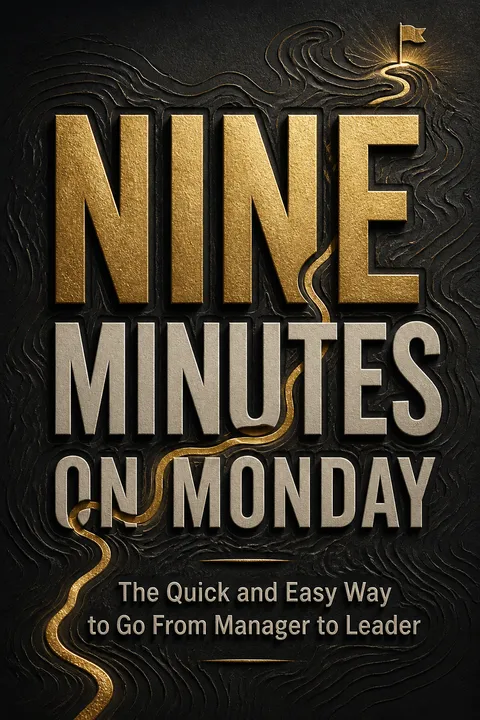
Nine Minutes on Monday is a practical leadership manual built around a simple reversal: managers create results by improving the conditions in which other people work, not by personally doing more. Its mountain-guide stories make this shift memorable, while the nine employee needs translate it into observable weekly actions. The strongest contribution is the implementation design. A short Monday ritual gives attention to people a place in the calendar, and small commitments reduce the gap between agreeing with leadership advice and using it.
The framework also combines several distinct motivational channels. Care and connection address belonging; mastery and growth address competence; autonomy protects agency; recognition and purpose make contribution legible; play and modeling shape the emotional and social climate. This breadth is useful because disengagement rarely has one cause. A person may lack feedback, trust, meaningful discretion, or a sense of impact, and a manager needs more than one lever.
The model is best understood as a diagnostic map, not a universal formula. Its implied mechanism is that meeting needs tends to support engagement, but the book's studies and anecdotes do not prove that every practice causes higher productivity in every setting. Individual preferences differ, and managers cannot personally repair inadequate staffing, compensation, or organizational design. Caring questions can feel intrusive, recognition can become performative, and goals can narrow attention if measured poorly.
The most durable reading is therefore neither that managers can motivate anyone at will nor that small gestures solve structural problems. Rather, managers have meaningful influence over everyday conditions and should use it responsibly. The nine-minute practice can expose which conditions are missing, prompt one concrete experiment, and help a leader notice its effect. It is a modest system for sustaining attention, not a substitute for judgment, employee voice, or fair work.
Glossary
Nine Minutes on Monday
Weekly leadership planningA weekly practice in which a manager spends a short period planning specific actions to support employees. The session reviews nine workplace needs and turns them into manageable commitments, such as giving feedback or recognizing a contribution. Robbins presents the ritual as a way to protect people-focused leadership from being displaced by urgent tasks.
Nine needs of employee engagement
Workplace motivation needsThe book's framework of nine recurring needs that managers can support: care, mastery, recognition, purpose, autonomy, growth, connection, play, and a model to follow. Robbins groups care, mastery, recognition, and purpose as primary needs, with the other five completing the framework. The needs are treated as ongoing conditions, not boxes checked once.
Weighted relationships
Authority magnifies influenceRobbins's term for the extra influence a manager has over direct reports because of the authority attached to the role. Employees may give a manager's words, moods, and actions more weight than similar behavior from a peer. The concept frames leadership authority not merely as power, but as responsibility for its effects on employees.
Trinity of trust
Three sources of trustRobbins's grouping of character, competence, and caring as the main sources of employee trust in a manager. Character concerns integrity and consistency, competence concerns the ability to lead effectively, and caring signals that employees matter as people. Together, these qualities help create the safety and confidence that make influence possible.
Flow
Deep task engagementA state of strong concentration and absorption in an activity, discussed through the work of psychologist Mihaly Csikszentmihalyi. In the book, flow is more likely when goals are clear, challenge matches a person's perceived skill, and feedback is available. Excessive challenge can create anxiety, while too little challenge can lead to boredom.
Second paycheck
Purpose behind the payRobbins's label for the sense of significance employees gain when they understand whom their work serves and how it makes a difference. Managers can connect routine tasks to customers, colleagues, or a broader beneficiary through concrete examples and stories. The idea supplements financial compensation with a visible account of the work's human impact.
Midas touch
Specific employee recognitionRobbins's term for recognition that helps an employee feel valued by identifying what they did, the quality or behavior behind it, and why it mattered. Unlike a tangible reward, recognition can be expressed through timely, specific words. The method aims both to affirm contribution and to show which effective actions should be repeated.
Walkabout
Informal employee check-inA manager's planned time to move among employees and show interest in them without turning each encounter into a work-status conversation. It may include asking about an important personal event or checking on a burden an employee has mentioned. Robbins presents it as a simple way to make care visible and improve everyday communication.
Sticky team
Cohesive, accountable teamRobbins's term for a team whose members are held together by shared purpose, trust, and ownership. Such teams have a common objective, can disagree respectfully about the work, and understand individual responsibilities. Managers build stickiness by strengthening these bonds and addressing behaviors that undermine morale or fairness.
Avatar
Chosen leadership modelA mental representation a manager uses as a guide for behavior. It may be an admired person, a symbolic character, or another image that embodies a quality needed in a particular situation. Robbins suggests that deliberately choosing such a model can help leaders respond consistently instead of leaving their example to chance.
Deci's Soma puzzle experiment
Reward and motivation studyEdward Deci's experiment, described in the book, used Soma puzzles to examine how external rewards affect intrinsic motivation. One group of participants received money for solving puzzles, while another did not. When later given free time, the paid group was less likely to continue playing, a result Robbins uses to explain how rewards may weaken an activity's independent appeal.
Adam Grant's call-center study
Purpose and performance studyA study described by Robbins in which university fundraisers were divided into groups. One group read material about personal benefits from their jobs, while another read letters from scholarship recipients describing the effect of donations. The recipients' letters were followed by a major increase in pledges and funds raised, illustrating how direct evidence of beneficiaries can make work feel significant.
Download PDF
Download EPUB
.epub digital book format is ideal for reading ebooks on phones, tablets, and e-readers.








