

Key Takeaways
Treat blood as living infrastructure, not a simple red fluid
A busy living tissue. Blood carries oxygen, nutrients, hormones, heat, and waste; it fights infection and forms clots. Bone marrow makes about two million red cells every second, while each red cell circulates for roughly 115 days. A donation can be separated into components for different patients, but red cells remain usable for only weeks. The same material is medicine, a perishable supply, and a tradable commodity.
Biology shapes identity. Blood types are determined by antigens on cells and antibodies in plasma. A mismatch can provoke dangerous clumping, yet the familiar ABO system is only one of dozens of recognized groups. Blood can also reveal illness and risk, and it has long been burdened with beliefs about ancestry, character, and purity. Its scientific story remains unfinished.
What's striking is how blood makes infrastructure intimate. A hospital's supply chain is not moving an abstract commodity, but living cells with narrow storage limits and precise compatibility requirements. That makes the material a useful case study in systems thinking: biology, logistics, and public trust all constrain one another. The promise of blood tests also raises a familiar problem in predictive medicine. A measurable signal is not automatically a reliable forecast, and tests that suggest risk can create anxiety or discrimination before they improve care.
Build blood systems around trust, logistics, and repeat donors
A service had to be invented. In 1921, Percy Lane Oliver began organizing unpaid, screened volunteers who could be summoned by hospitals. His home-based register eventually became a model for organized donation. In the 1930s, hematologist Janet Vaughan saw that wartime hospitals could not rely on finding a donor at a patient's bedside. Drawing on a Spanish blood service, she planned depots that collected, stored, and transported blood. When war began, her team converted the plan into a working network.
People make the system work. Donors, drivers, nurses, and technicians kept supplies moving through bombed cities. Today, repeat donors reduce testing and recruitment burdens. In Sweden, a simple message telling donors their blood had reached a hospital made donation feel consequential and improved donor loyalty. The lesson is that reliable systems depend on both careful operations and human connection.
The blood service illustrates a broader principle from disaster planning: resilience is built before the crisis, through routines, spare capacity, and relationships that can be activated quickly. Vaughan's work also shows how technical innovation often depends on people whom formal institutions initially underestimate. Yet the donor's warm feeling cannot replace a sound system. Gratitude helps retain participation, but safety still requires screening, traceability, trained staff, and honest communication about what happens to donated blood.
Keep useful old medicine, but demand evidence and safeguards
A remedy can return for a reason. For centuries, doctors used leeches to remove blood, often under the mistaken theory that illness came from an excess of bodily fluids. Nineteenth-century physician François Broussais prescribed them with reckless enthusiasm, sometimes in enormous numbers. Modern medicine revived the leech for a very different purpose: its saliva prevents clotting and helps drain congested tissue after delicate reconstructive surgery.
A living tool needs supervision. In 1985, surgeons used European medicinal leeches to restore circulation to a three-year-old boy's reattached ear after standard treatment failed. Leeches are now used to help save threatened fingers, ears, and tissue flaps. They can also transmit infection, move away from the intended site, and must be killed after use. Their value lies in a specific, monitored clinical role, not in broad claims that they cure unrelated illnesses.
This history is a compact lesson in how evidence changes the meaning of a treatment. A practice can be revived without reviving the theory that originally justified it. That distinction matters in debates over traditional medicine, where dismissing an old technique as primitive can obscure a real mechanism, while romanticizing it can excuse weak evidence. The leech's modern use is narrow and supervised. Its success does not validate expansive wellness claims, and clinical benefit must be weighed against infection risk, staffing demands, and patient consent.
A blood supply is only as safe as its institutions
Access is uneven. The World Health Organization reported 112.5 million donations in 2013, but high-income countries collected almost half despite having only 19 percent of the world's population. In India, patients often have to find relatives or friends to replace blood used for treatment. That system leaves migrants and people without social networks especially exposed. Volunteers such as Baba-ji and his friends donate for strangers, but informal generosity cannot substitute for a dependable national supply.
Recruitment reflects social trust. Payments, coercion, and poorly managed mass donation can undermine safety or waste blood. In India, illegal brokers have sold blood collected from impoverished men, and some donors were repeatedly bled under dangerous conditions. By contrast, a public system can test donations, separate components, and trace them through delivery. Safety is therefore not a property of blood alone. It is produced by regulation, access, and accountable institutions.
The contrast between a formal blood service and a family-replacement system shows how health care can quietly reward social privilege. A patient with relatives nearby has an advantage over someone who is isolated, even when the medical need is identical. This is a structural problem, not a failure of individual kindness. At the same time, centralized systems are not automatically equitable or trustworthy. Public oversight matters only when it is transparent, well funded, and responsive to communities whose blood needs are overlooked.
When blood becomes a commodity, ask who bears the risk
Plasma has a second market. Plasma is the pale liquid portion of blood, rich in proteins used to make treatments such as clotting factors and immunoglobulins. Unlike ordinary blood donation, source plasma is often collected from paid sellers through machines that return their blood cells. The United States became the world's largest plasma exporter, with clinics often located in poor communities where payment can be hard to refuse.
A lifesaving product became a hazard. In the 1970s and 1980s, Factor VIII concentrate transformed life for people with hemophilia, but it was made from pools of plasma from thousands of donors. Contaminated products transmitted HIV and hepatitis C to hemophiliacs, including children. Some companies delayed withdrawing unsafe stock, and records and explanations were often missing. The scandal shows how profit, weak oversight, and institutional denial can turn a medical breakthrough into mass harm.
The central ethical question is not whether every paid donation is unsafe. The book distinguishes the modern safety of processed products from the conditions under which plasma is acquired and the history that shaped public distrust. Payment can widen supply, but it can also shift physical burdens onto people with the least economic choice. This is a classic problem of externalized cost: patients receive valuable medicines, while sellers may face health risks and communities inherit mistrust. Good policy must scrutinize both product safety and the fairness of procurement.
Treat HIV as a social network problem, not just a virus
Treatment changed the prognosis. Combination antiretroviral therapy can suppress HIV to undetectable levels, allowing many people to live normal life spans and making them effectively noninfectious. Yet South Africa still has one of the world's largest HIV epidemics. In Khayelitsha, the virus spreads through overlapping relationships, including older men who have sex with young women, who may then pass it to partners their own age. Poverty, sexual violence, stigma, and limited access to care shape those networks.
A prescription is not the whole intervention. Young people may hide medication, struggle with unpleasant formulations, or stop treatment when they feel well. Men may avoid testing or clinics because work takes priority and missing a day means lost wages. Programs that offer youth groups, testing outside clinics, and supportive peer networks respond to these realities. Drug access matters, but so do safety, trust, and the practical conditions for taking medication consistently.
The chapter resists a common mistake in public health: treating behavior as if it were independent of power and circumstance. Advice to use condoms or stay on medication has limited force when someone cannot negotiate sex safely, fears disclosure, or loses income by attending a clinic. Network thinking adds a useful layer because it links individual risk to the structure of relationships. Still, structural explanation should not erase personal agency. Effective prevention needs both tools people can control and institutions that make those tools realistically usable.
Challenge menstrual shame as a system of exclusion
A biological process becomes a social rule. In western Nepal, girls who menstruate may be barred from their homes, kitchens, temples, or normal food. Some sleep in small sheds where cold, smoke, snakes, and sexual violence pose real dangers. The practice, called chaupadi, persists even though it is illegal. Women may enforce it themselves, having learned that menstruation can pollute relatives, animals, or sacred spaces.
Silence makes the rules harder to challenge. In India, many girls first learned what menstruation was only after seeing blood. Some feared cancer; others believed that menstrual blood could spoil pickles or nail polish. Such beliefs are not evidence of ignorance alone. They are reinforced by family custom, euphemism, and thin scientific attention to women's health. The result can be shame, restrictions, missed schooling, and pain that is dismissed rather than investigated.
The idea of impurity often works less like a hygiene rule than a social boundary: it marks who may enter a room, handle food, or claim authority. That insight connects menstrual stigma to other systems that turn imagined contamination into real exclusion. The chapter also wisely avoids treating education as a magic switch. People may understand the biology and still comply because family pressure, safety, and belonging matter. Change requires credible information, but also alternatives that do not make dissent costly or dangerous.
Pair honest education with affordable, locally controlled menstrual tools
Design around actual constraints. Arunachalam Muruganantham noticed that his wife used hidden cloths because commercial pads were too expensive. After a long, often humiliating effort to understand the product, he built a small, partly manual machine that turns wood pulp into low-cost pads. Local groups can operate it, create their own brands, and sell pads in quantities and absorbencies suited to users. Thousands of machines spread beyond India, making production local rather than dependent on a distant corporation.
Information belongs beside the product. In Bangladesh, HERproject trained factory workers to share health information and helped workplaces sell subsidized pads. Absenteeism fell in participating factories, while workers became more comfortable discussing health with managers. The chapter cautions that evidence linking menstrual products alone to school attendance or infection prevention remains limited. Affordable tools help, but clean toilets, privacy, disposal options, and frank teaching are part of the solution too.
Muruganantham's invention is notable not simply because it is cheaper, but because it changes who can make and adapt the product. Local production can create income, reduce dependence on centralized distribution, and let users specify what they need. This resembles appropriate technology: successful design is measured by fit with local materials, skills, and maintenance, not by sophistication. The limits matter, however. A pad cannot by itself remove stigma or guarantee sanitation, and programs should evaluate health outcomes rather than assume that product distribution automatically produces empowerment.
For catastrophic bleeding, restore clotting, not just liquid volume
Shock is more than an empty tank. Severe injury can overwhelm the body's clotting system. Blood leaks out, oxygen delivery falters, the body cools, and clotting worsens. These interacting failures are called the lethal triad. For decades, emergency teams often poured clear fluids into bleeding patients to restore volume. Trauma surgeon Karim Brohi explains why that can backfire: fluids dilute the components needed for clotting and may raise pressure against the leak.
Carry blood to the patient. Military experience helped revive early blood transfusion practices. London's air ambulance began carrying red blood cells in 2012, allowing treatment before hospital arrival. In the Royal London case described in the book, a cyclist received massive transfusions and emergency surgery, but died. Her case illustrates both the limits and progress of trauma care. Modern protocols aim to replace red cells, plasma, and platelets in balanced proportions while controlling the source of bleeding.
This is a case where a familiar metaphor can mislead: a bleeding patient is not simply a container that needs refilling. The lost material performs specific jobs, and adding fluid without restoring clotting capacity can worsen the underlying failure. The shift toward balanced blood products shows how military medicine can generate lessons for civilian care. Yet resuscitation research is difficult because patients arrive without the time or capacity for ordinary consent-based trials. Protocols must therefore remain open to revision as better evidence emerges.
Use transfusions selectively, and treat laboratory blood as promise, not miracle
More blood is not always better. A major critical-care trial found that patients did no worse when transfusion was delayed until hemoglobin fell to 7 grams per deciliter rather than the traditional 10. This helped strengthen patient blood management, which seeks to prevent blood loss and avoid transfusions that are unlikely to help. Jehovah's Witnesses, whose beliefs prohibit whole blood, also prompted clinicians to develop methods such as cell salvage, clotting drugs, and careful surgical technique.
Replacement remains difficult. Researchers have grown red cells in laboratories and are exploring blood tests that detect disease, but neither synthetic blood nor large-scale lab-grown supplies are close to replacing donations. The book also examines claims that young plasma can reverse aging, which remain unproven and commercially charged. Blood science is advancing, but the responsible stance is to distinguish a promising experiment from a demonstrated treatment.
The chapter's strongest contribution is a shift from reverence for transfusion to disciplined judgment. A treatment can be lifesaving in one setting and unnecessary in another, so the right question is not whether blood is good, but for whom, when, and in what form. That logic is central to evidence-based medicine, which compares benefits against harms rather than relying on inherited habit. Emerging technologies deserve investigation, but dramatic promises about rejuvenation or disease reversal require controlled trials, independent review, and a clear account of who profits.
Analysis
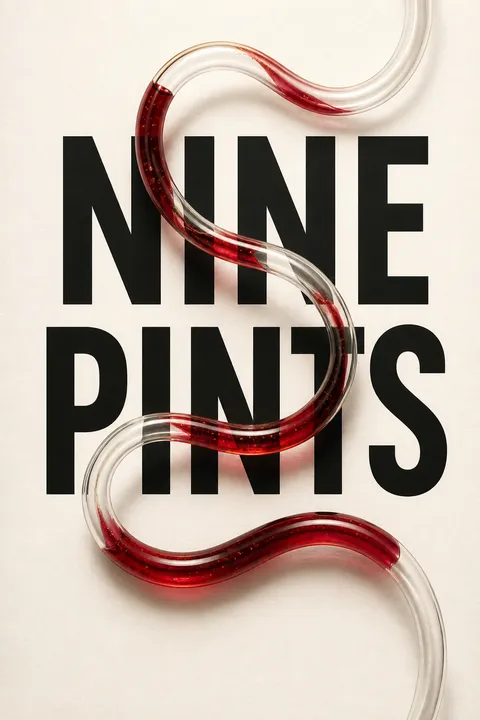
Nine Pints is a braided work of science, history, reportage, and memoir. Its subject is not blood as an isolated biological substance, but blood as a point where bodies meet institutions: donors and recipients, clinicians and patients, markets and regulators, gender norms and public health. The structure moves from the author's own donation through leeches, wartime blood services, HIV, commercial plasma, menstruation, trauma, and speculative science. Each episode changes the meaning of the same red material.
The strongest through-line is that blood's apparent naturalness hides immense human organization. A safe transfusion depends on typing, screening, storage, transport, donor recruitment, and trust. That trust can be earned through public systems and lost through secrecy, discrimination, or commercial incentives. The book's historical portraits make this argument concrete. Janet Vaughan and Percy Oliver do not merely discover a medical technique; they create the logistics and social expectations that make routine donation possible. The contaminated-factor scandal shows the reverse: technical progress without adequate accountability can magnify harm.
The book also tests how societies classify bodies. Menstrual blood is treated as contaminating, while transfused blood is normalized as medicine. The difference is not biological alone. It reflects power, gender, poverty, and which bodily needs institutions choose to recognize. Muruganantham's machine demonstrates that practical innovation can redistribute control, while the HIV chapters show why medical tools fail when people lack safety, time, privacy, or stable access to care.
A useful caution is that the narrative's vivid cases can feel more conclusive than the underlying evidence. The author generally marks uncertainty, especially around menstruation research, plasma risks, and emerging treatments, but readers should preserve that distinction between compelling testimony and settled causal proof. The central achievement is a durable mental model: blood is both substance and system. Its value depends not only on what it can do inside a body, but on who collects it, who controls it, who receives it, and who is left out.
Review Summary
Nine Pints explores the science, history, and cultural significance of blood through nine chapters covering topics like transfusions, leeches, HIV, menstruation taboos, and plasma donation. Readers praised George's engaging writing style and fascinating facts, though some found the structure disjointed. Many appreciated the chapters on menstruation and women's health issues. While some readers wanted more scientific depth, others enjoyed the blend of medical information and human stories. Overall, reviewers found the book informative and thought-provoking, despite occasional unevenness in content.
People Also Read

Glossary
chaupadi
menstrual seclusion practiceA practice in parts of Nepal in which menstruating women and girls are separated from ordinary household life. Restrictions can include sleeping outside the home, avoiding kitchens, temples, or shared water, and eating separately. Although Nepal made the practice illegal, it persists through family custom and beliefs that menstruation can pollute people, animals, or sacred places.
source plasma
plasma collected for medicinesPlasma collected directly from donors, often through plasmapheresis, in which a machine separates plasma from whole blood and returns the remaining blood cells. It is processed into medicines such as immunoglobulins and clotting-factor products. This differs from recovered plasma, which is separated from a whole-blood donation made primarily for transfusion.
component therapy
transfusion of blood partsA medical approach in which donated blood is separated into components, such as red blood cells, plasma, platelets, and cryoprecipitate, so that a patient receives selected products rather than whole blood. It expanded with improved storage and separation technology and serves patients with different needs, though some trauma specialists argue whole blood may be preferable in severe hemorrhage.
acute traumatic coagulopathy
injury-related clotting failureA severe disturbance in blood clotting that can arise soon after major trauma. The patient's clotting system becomes ineffective, including impaired platelet function, so bleeding may continue despite the body's normal defenses. It contributes to a worsening cycle involving blood loss, reduced oxygen delivery, cooling, and acidosis.
lethal triad
three worsening trauma failuresA trauma-care term for the mutually reinforcing conditions of hypothermia, acidosis, and coagulopathy. Severe bleeding reduces oxygen delivery and can cool the body and increase acidity. Cooling and acidosis impair clotting, which permits further blood loss and deepens the cycle. Recognizing this interaction helps explain why rapid hemorrhage control matters.
damage control resuscitation
early bleeding-focused trauma careA strategy for treating severe hemorrhage that prioritizes stopping blood loss and preserving clotting function rather than simply infusing large volumes of clear fluid. It can include early blood products in balanced proportions, rapid transport, and procedures to control the source of bleeding. The approach grew from military and civilian trauma experience.
storage lesion
changes during blood storageThe collection of changes that occur in stored red blood cells over time. Stored cells may retain oxygen but become less effective at delivering it to tissues, according to research discussed in the book. The exact clinical importance remains debated, but the term captures the fact that stored blood is biologically altered rather than unchanged.
parabiosis
surgically joined circulationsAn experimental procedure in which two animals are surgically connected so that they share a circulatory system. Researchers have used it to study whether factors in the blood of a younger animal affect an older one. The work has inspired commercial claims about young plasma, but evidence for rejuvenation in people remains unproven.
menotoxin
discredited menstrual toxin theoryA proposed substance supposedly emitted by menstruating women and blamed for effects such as wilting flowers or poorly rising dough. The idea was promoted by early twentieth-century physician Béla Schick and drew on older menstrual taboos. The book describes it as a false theory that gave scientific-looking support to superstition.
90-90-90
global HIV treatment targetsA UNAIDS target framework calling for 90 percent of people living with HIV to know their status, 90 percent of those diagnosed to receive antiretroviral treatment, and 90 percent of those treated to achieve viral suppression. The book notes that real lives do not follow a neat sequence, because poverty, work, stigma, violence, and treatment fatigue disrupt care.
About the Author
Download PDF
Download EPUB
.epub digital book format is ideal for reading ebooks on phones, tablets, and e-readers.








