

Key Takeaways
Stop treating Japanese and American as halves that cannot make a whole
Identity begins at home. Monica Sone grows up in her parents’ Seattle hotel, thinking of herself simply as a local child. At six, she learns that she has Japanese ancestry and that this means attending Japanese school after her regular classes. The news feels less like a discovery of heritage than a sudden loss of playtime. She is a Nisei, a US-born child of Japanese immigrants, and learns to move between cultures that do not always welcome her equally.
Two inheritances can fit. The memoir’s final insight is not that she must choose Japan or America. Her parents, her Japanese heritage, her Seattle childhood, and her American civic identity all belong to the same person.
What's striking is how identity arrives first as an obligation imposed by adults, then becomes a resource the narrator can claim on her own terms. This resembles a broader distinction in identity research between labels assigned from outside and meanings built through lived experience. The memoir resists the tidy idea that bicultural people simply combine two harmonious traditions. Her two inheritances sometimes clash, and the freedom to integrate them depends partly on whether others grant her equal standing.
Keep cultural fluency without mistaking obedience for belonging
Two daily selves. Sone attends an American public school, then goes to Japanese school, where posture, formal bows, and quiet discipline matter as much as language. She feels herself changing behavior between classrooms, yet neither setting makes her completely at home. Her parents are Issei, first-generation Japanese immigrants; their customs and authority shape family life even as their children grow up American.
Difference has many forms. Sone’s mother writes Japanese poetry and encourages the children’s education, while strict schoolmaster Ohashi tries to mold them into an idealized model of Japanese conduct. A classmate, Kazuo, is a Kibei, a US-born child sent to Japan for schooling who returns more Japanese in language and manners. His difficulty fitting in shows that heritage is not a single, uniform experience.
The school scenes make cultural adaptation visible as practice: speech, posture, and etiquette change with the setting. That resembles code-switching, the adjustment of language or behavior to different social contexts. Such flexibility can be a real competence, not evidence of confusion. But the memoir also exposes its cost: children are asked to satisfy competing standards, while the power to define what counts as properly American or Japanese rests largely with others.
Read exclusion as a system, not a string of personal rejections
A closed door repeats. When Sone and her mother search for a summer cottage near Alki Beach, landlords evade them until one bluntly refuses to rent to Japanese people. A community member explains that the district has long barred Japanese residents. The family eventually finds a welcoming landlord elsewhere, but the beachside housing barrier is not solved by that kindness.
Work is restricted too. Later, a vocational school counselor tells Sone that Japanese American graduates are difficult to place in downtown offices and asks her to secure a job promise before enrolling. The pattern is larger than a few rude encounters: housing, education, and employment opportunities are narrowed by racial exclusion. Sone’s mother answers the insult with a lesson in human dignity, not shame.
The episodes show how discrimination can operate through routine gatekeeping rather than spectacular violence. Housing rules and hiring practices distribute opportunity while allowing each decision-maker to present a refusal as merely practical. That distinction matters: changing one person’s attitude may ease one encounter, but it cannot by itself undo a pattern built into institutions. The memoir also avoids reducing every white character to prejudice, making the contrast between exclusion and genuine welcome more credible.
Japan made ancestral identity vivid, but Seattle still felt like home
A homeland can feel unfamiliar. As children, Sone and her siblings travel to Japan to meet their elderly grandfather. They encounter customs, landscapes, and family expectations they know only partially. In a village, local children taunt them as Americans; the siblings eventually fight back. The visit makes ancestry tangible, but it does not make them feel wholly Japanese.
The return carries grief. Sone’s younger brother Kenji becomes ill with dysentery and dies during the visit. The family returns to Seattle mourning him and leaving their grandfather behind. Sone later understands that the 1924 immigration restriction meant he could not simply join them in the United States. As the ship approaches Puget Sound, Seattle feels like home, not because Japan means nothing, but because her life and attachments are rooted there.
The journey complicates the assumption that ancestry automatically determines where someone belongs. Belonging often grows from ordinary ties, familiar places, friendships, and shared memories, not only from descent. The grandfather’s inability to migrate also shows how immigration law can divide a family across generations and oceans. The return home is emotionally persuasive precisely because it does not erase Japan: affection, grief, and alienation coexist.
Build practical options when prejudice narrows the future
Preparation has a purpose. Sone hopes to attend university, but her father worries about war and wants her to gain an office skill that could make her financially independent. She reluctantly enters business school and completes its two-year program in one year. A counselor’s warning about the scarcity of jobs for Japanese American women soon makes the value of that training clear.
Adaptation is not approval. Sone later works as a dental assistant in Chicago, where her employer piles on duties and scolds her after she faints. She quits, then receives an opportunity to attend college in Indiana. Her father’s practical advice helps her build choices, but the circumstances requiring such caution are discriminatory. The story honors resourcefulness without suggesting that individuals should have to compensate for unfair barriers alone.
This is a useful distinction between agency and responsibility. Building skills can increase a person’s room to maneuver, especially when institutions are unreliable, but it does not make exclusion deserved or inevitable. The father’s advice is protective because it responds to a specific labor market, not because business training is inherently the right path for every daughter. The episode invites a two-level response: strengthen individual options while challenging the structures that make those options unusually necessary.
In wartime, ancestry can replace evidence unless institutions resist fear
Suspicion enters the home. After Japan attacks Pearl Harbor, FBI agents arrest prominent Japanese community members, including businesspeople and a school principal. Families hear of raids and prepare for the possibility that Sone’s father will be taken. Fearing that Japanese books and objects will be treated as evidence of disloyalty, the family burns treasured possessions, including schoolbooks, music, and a toy sword.
Fear leaves its own damage. Sone’s family is never given a clear reason to believe that its members are guilty, yet they live under surveillance and dread. The memoir reports that officials had found no Japanese American sabotage on the mainland during the attack or afterward. The destruction of family objects is therefore more than precaution: it shows how suspicion can make people erase parts of themselves before the state even arrives.
The account reveals a classic danger in emergencies: uncertainty encourages authorities and the public to treat group identity as a shortcut for individual evidence. That shortcut feels efficient, but it converts fear into collective punishment and makes ordinary cultural objects appear incriminating. The family’s destruction of cherished belongings also illustrates a less visible harm of state pressure: people may police and diminish themselves in anticipation of coercion. Security measures need evidence and limits precisely when public fear is strongest.
Citizenship fails when government punishes ancestry without individual proof
Removal becomes policy. Executive Order 9066 authorized military removal from designated areas; it did not name Japanese Americans, but the West Coast orders were applied to people of Japanese ancestry, citizens and noncitizens alike. Sone and her family must leave Seattle with only limited baggage. In April 1942, they are taken to Puyallup, a temporary detention site called Camp Harmony, then transferred to Minidoka in Idaho.
The fence answers the question. In Puyallup, the family lives in a single room with a dirt floor, leaks, and a wood stove, surrounded by barbed wire and armed guards. Sone asks what her American citizenship means when she cannot leave and has received no individual hearing. The memoir makes the constitutional point concrete: rights on paper offer little protection when government substitutes ancestry for proof of wrongdoing.
The central distinction is between individualized accountability and collective suspicion. The memoir’s account of mass removal makes clear that citizenship is not self-enforcing; institutions must apply it consistently, especially to unpopular minorities. A democratic state may face genuine security threats, but that does not make ancestry a reliable measure of personal guilt. The episode is strongest when read not as a claim that every wartime decision is simple, but as a warning that emergency powers require scrutiny, evidence, and meaningful review.
Create ordinary life together, but do not romanticize confinement
People improvise a community. At Camp Harmony, Sone’s father salvages lumber and nails to build tables, shelves, and platforms for the family’s suitcases. In Minidoka, evacuees staff mess halls, schools, hospitals, and other services. Sone works as a secretary for sixteen dollars a month; doctors and other professionals earn only slightly more. A wedding becomes a communal achievement, with a borrowed organ, handmade decorations, and a reception that mixes American and Japanese expectations.
Adaptation is not consent. These scenes preserve humor, skill, and affection amid cramped rooms, dust storms, mud, cold, and restricted movement. The family’s ability to make a home from scraps demonstrates resilience, but the camp remains a place they did not choose and could not freely leave.
The memoir refuses the false choice between recognizing resilience and naming injustice. Community, humor, work, and ceremony can protect dignity under coercive conditions, but they do not transform confinement into a voluntary experiment. This distinction is important in writing about displacement: celebrating survival without describing the force that made survival necessary risks turning endurance into an excuse for the original harm. The wedding’s cultural misfires also show that community is made through negotiation, not perfect agreement.
Loyalty under pressure can be sincere without making the test just
Service becomes a dilemma. When the War Department seeks Nisei volunteers for a separate combat unit, many in camp resent being asked to prove loyalty after their families have been removed from their homes. Some worry that a separate unit reinforces segregation; others fear that refusing service will strengthen calls to deport Japanese Americans. Sone’s brother Henry decides to volunteer, while their parents struggle with the decision.
One letter explains a choice. George Sawada, a Nisei who serves and is killed in Italy, writes to his father that the older man’s faith in America helped him remain a loyal citizen after evacuation. His account does not make the incarceration fair. It shows how one person can choose service and civic commitment while still having suffered a profound injustice.
The episode avoids treating patriotism as a simple verdict on character. The volunteers’ choices are shaped by love of country, family history, fear of further exclusion, and a desire to claim public recognition. Those motives can coexist. The ethical burden, however, belongs chiefly to the state that created the test, not to people forced to demonstrate loyalty after being denied equal treatment. Service can express agency without retroactively legitimizing the conditions under which it was demanded.
Let welcoming people enlarge your world without erasing its injuries
A new region changes the view. In 1943, Sone leaves Minidoka for Chicago after a church connection helps arrange a job and a place to live. The Richardson family welcomes her, and she finds that many Midwesterners mistake her for Chinese but respond with curiosity rather than hostility. Her first dental job is exploitative, yet the Richardsons help her return to college in Indiana, where she studies psychology and finds a wider circle of friends.
Welcome matters, but it is not repair. Sone’s relationships show that individual kindness can make a real difference, especially when public prejudice has taught someone to expect rejection. They do not erase the incarceration or make opportunity equal everywhere. Her identity grows more integrated through education, friendship, and a broader experience of America.
The narrative gives interpersonal contact its due without asking it to carry more weight than it can. A welcoming household can interrupt isolation and create tangible opportunities; it cannot replace fair laws, jobs, or public accountability. Sone’s experience also shows that moving beyond a familiar, exclusionary environment can reveal that local prejudice is not the whole nation. Still, hospitality remains uneven and contingent, which is why personal generosity and institutional equality must be treated as complementary rather than interchangeable.
Turn private injury into public memory and a demand for repair
The story outlasts its final page. In the 1979 preface, Sone describes Japanese Americans organizing to challenge the legality of wartime removal and seek redress. By then, the ten incarceration camps that held about 120,000 people have closed. President Gerald Ford rescinded Executive Order 9066 in 1976 and called the mass incarceration a national mistake. In 1978, the Japanese American Citizens League held a Day of Remembrance in Seattle.
Remembering is civic work. Sone argues that the story must be told so future generations understand that people were confined without charges or trials. She connects redress to a broader democratic obligation: a wrong must be acknowledged and addressed, not merely allowed to fade from public memory.
The memoir’s public afterlife changes the scale of the narrative. A family story becomes evidence in a civic argument about constitutional limits, racialized policy, and government responsibility. Collective memory can help correct official silence, but remembrance alone does not guarantee repair; it must be connected to institutions and action. The book’s insistence on telling the story also resists a common temptation to treat past injustice as settled simply because the emergency has ended.
Analysis
Nisei Daughter is a memoir of identity, but its central pressure is political: what does belonging mean when a person is culturally marked as foreign, legally American, and still treated as suspect? Sone’s narrative answers through scenes rather than abstract argument. A child resists Japanese school because it takes away play; a young woman is refused housing and restricted from employment; an adult citizen is confined without an individual accusation. The scale widens gradually, so the wartime injustice lands not as an isolated reversal but as the most violent form of a prejudice already shaping ordinary life.
The book’s humor is essential to that structure. The hotel’s eccentric residents, family rituals, mistaken social encounters, and improvised camp celebrations preserve the narrator’s liveliness without softening the coercion around her. Comedy makes the people more than symbols, while the material details of fences, tags, barracks, and rationed space keep the story from becoming a simple tale of resilience. The result is a useful tension: people adapt, but adaptation is not consent.
Sone’s changing sense of self also avoids a false resolution. She does not become less Japanese in order to feel American, nor does ancestral connection make Japan her home. Her final integration depends on lived relationships, education, and a stronger understanding of citizenship as both a right and a responsibility. That conclusion is hopeful, but not complacent. The 1979 preface returns the reader to unfinished public business, showing that personal reconciliation cannot substitute for institutional acknowledgment. The memoir’s lasting contribution is to make democracy intimate: its promises are tested in homes, schools, jobs, courts, and the ordinary freedom to remain where one belongs.
Review Summary
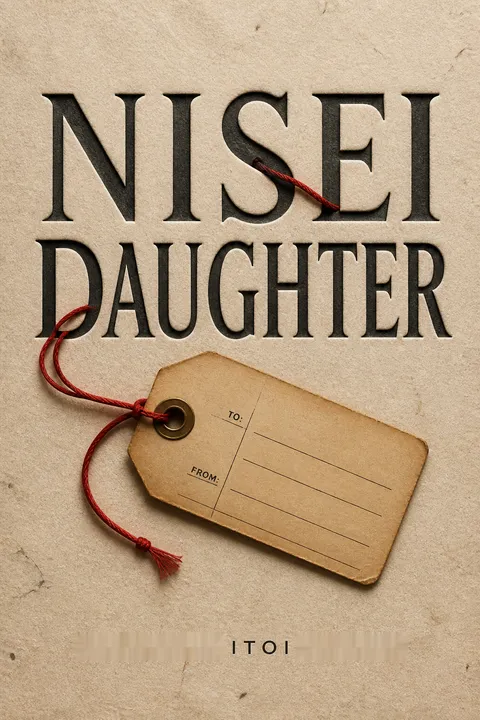
Nisei Daughter is a beloved memoir about growing up Japanese-American in pre-WWII Seattle. Readers praise Sone's engaging writing style, humor, and ability to capture cultural nuances. The book offers insights into Japanese-American life, Seattle history, and internment camp experiences. While some critics note a lack of bitterness towards injustices faced, most appreciate Sone's balanced perspective. Readers found the book educational, touching, and valuable for understanding this period of history. Many recommend it for its personal account of a complex time in American society.
People Also Read



Glossary
Issei
First-generation Japanese immigrantsIssei refers to the first generation of Japanese immigrants who came to the United States. In Sone’s account, they are her parents’ generation, shaped by Japanese language and customs while building lives in America. Many Issei were legally barred from becoming US citizens during the period described.
Nisei
US-born children of Japanese immigrantsNisei means second-generation Japanese Americans, generally people born in the United States to Issei parents. They were US citizens by birth but often faced exclusion from broader American society. Sone’s memoir explores the tension of growing up culturally influenced by Japanese parents while identifying as American.
Kibei
US-born, educated in JapanKibei describes a US-born person of Japanese ancestry who was sent to Japan for education and later returned to the United States. The term distinguishes people such as Sone’s friend Kazuo, whose schooling and manners made him more familiar with Japanese culture than many Nisei, while leaving him awkwardly placed in both societies.
Nikkei
People of Japanese descent abroadNikkei is a broad term for people of Japanese ancestry living outside Japan, including immigrants and their descendants. In the 1979 preface, Sone uses it for the Japanese American community organizing to bring public attention to wartime incarceration, challenge its constitutionality, and seek redress.
Executive Order 9066
Wartime military removal authorityExecutive Order 9066, issued in 1942, authorized military authorities to designate areas from which people could be removed. It did not explicitly name Japanese Americans, but subsequent orders used it to exclude people of Japanese ancestry from the West Coast, including US citizens, and to confine them in camps.
Camp Harmony
Puyallup temporary detention siteCamp Harmony was the government’s name for the temporary incarceration site at the Puyallup fairgrounds in Washington. Seattle-area Japanese Americans, including Sone’s family, were taken there in 1942 before transfer to more permanent camps. The cheerful name contrasted with muddy ground, cramped barracks, guards, and restricted movement.
FAQ
1. What is Nisei Daughter by Monica Itoi Sone about?
- Autobiographical memoir: Nisei Daughter is Monica Itoi Sone’s personal account of growing up as a second-generation Japanese American (Nisei) in Seattle before, during, and after World War II.
- Cultural and historical context: The book explores her family’s experiences with discrimination, forced evacuation, and life in internment camps, set against the backdrop of Japanese American history.
- Themes of identity and resilience: Sone’s narrative follows her journey of self-discovery, the blending of her Japanese heritage with her American identity, and her family’s endurance through adversity.
2. Why should I read Nisei Daughter by Monica Itoi Sone?
- Firsthand historical perspective: The memoir offers a rare, personal glimpse into the Japanese American internment experience, a significant but often overlooked chapter in U.S. history.
- Insight into bicultural identity: Readers gain an understanding of the challenges faced by Nisei individuals balancing Japanese traditions with American upbringing, including issues of acceptance and prejudice.
- Inspiring story of resilience: Monica’s candid storytelling highlights courage, hope, and the power of community in overcoming injustice and adversity.
3. What are the key themes and takeaways from Nisei Daughter by Monica Itoi Sone?
- Identity and belonging: The central theme is the Nisei’s struggle to find a sense of self amid conflicting cultural expectations from Japanese immigrant parents and American society.
- Discrimination and resilience: The book documents the prejudice faced by Japanese Americans and their determination to maintain dignity and cultural pride.
- Generational and cultural divide: Sone explores the gap between Issei (first generation) and Nisei (second generation), shaped by language, culture, and legal status, affecting family and community dynamics.
4. What does the term "Nisei" mean in Nisei Daughter and why is it important?
- Definition of Nisei: "Nisei" refers to second-generation Japanese Americans—children of Japanese immigrants (Issei) born in the United States.
- Cultural significance: Nisei were American citizens by birth but often felt caught between their parents’ Japanese traditions and the American society they grew up in.
- Identity conflict: This dual identity is a central issue in the book, shaping the Nisei’s experiences of acceptance, belonging, and cultural negotiation.
5. How does Monica Itoi Sone describe the Japanese immigrant community in Seattle in Nisei Daughter?
- Organized ethnic enclave: The Seattle Japanese community was tightly knit, with its own business district, newspapers, cultural associations, and religious institutions.
- Preservation of traditions: The Issei maintained Japanese customs, language, and social hierarchies, emphasizing respect for elders and formal etiquette.
- Generational subcultures: The Issei and Nisei formed distinct but related subcultures, with the Nisei more Americanized yet still influenced by Japanese heritage.
6. What role does the Japanese Language School (Nihon Gakko) play in Nisei Daughter by Monica Itoi Sone?
- Cultural preservation: The Japanese Language School was central to teaching Nisei children Japanese language and customs, reinforcing ethnic identity.
- Discipline and tradition: The school emphasized strict discipline and respect for Japanese etiquette, contrasting with American schools.
- Bicultural experience: Attending Nihon Gakko required Nisei children to navigate between their American and Japanese personas, highlighting their dual existence.
7. How does Monica Itoi Sone portray her family dynamics and parental relationships in Nisei Daughter?
- Atypical Issei parents: Her parents were intellectually and culturally sophisticated, with her father aspiring to legal training and her mother being a poet and Christian minister’s daughter.
- Mother-daughter bond: Monica had a close, companionate relationship with her mother, which deepened her understanding of Japanese language and culture.
- Traditional values: Family life was shaped by Japanese values of obligation and respect, though these were often implicit rather than openly discussed.
8. What challenges and discrimination do the Nisei face in Nisei Daughter by Monica Itoi Sone?
- Employment and housing barriers: Nisei faced limited job opportunities and were often barred from renting or buying homes in certain neighborhoods due to racism.
- Social exclusion: Despite being American citizens, Nisei were often isolated from mainstream society and subjected to systemic prejudice.
- Psychological impact: These experiences led to a profound identity crisis and a sense of being outsiders, which Sone conveys with emotional depth.
9. How does Nisei Daughter by Monica Itoi Sone describe life in the internment camps?
- Harsh living conditions: Families lived in cramped, bare barracks with poor sanitation and minimal privacy, enduring mud, discomfort, and monotony.
- Community adaptation: Despite adversity, internees created a semblance of normal life with schools, churches, and social events, building furniture and organizing activities.
- Emotional resilience: The camps were places of spiritual trial but also of hope and solidarity, with faith and community support helping families endure.
10. How did the attack on Pearl Harbor and World War II impact the Japanese American community in Nisei Daughter?
- Immediate fear and suspicion: The attack led to shock, fear of arrest, and suspicion toward Japanese Americans, with many Issei men detained by the FBI.
- Government actions: Executive Order 9066 forced mass removal and internment of Japanese Americans, including Sone’s family, who lost their homes and freedom.
- Destruction of heritage: Families destroyed Japanese books and objects to avoid suspicion, highlighting the deep impact on cultural identity and security.
11. What is the significance of the Nisei combat unit in Nisei Daughter by Monica Itoi Sone?
- Proving loyalty: The War Department formed a segregated combat unit for Nisei volunteers, offering a chance to demonstrate allegiance to the U.S. despite internment.
- Mixed community reactions: Many Nisei felt conflicted—resenting segregation but recognizing the need to prove loyalty and secure future rights.
- Turning point: The formation of the unit marked a shift from bitterness to active participation in the war effort, symbolizing hope for acceptance.
12. What are the most memorable quotes from Nisei Daughter by Monica Itoi Sone and what do they mean?
- On dual heritage: “It’s really nice to be born into two cultures, like getting a real bargain in life, two for the price of one.” This reflects Monica’s eventual pride in her blended identity.
- On resilience and sacrifice: “For the good of many, a few must suffer. This is your sacrifice. Accept it as such and you will no longer be bitter.” This quote highlights the acceptance and strength found in enduring hardship.
- On democracy and responsibility: “Her ideas and ideals of democracy are based essentially on religious principles and her very existence depends on the faith and moral responsibilities of each individual.” Monica emphasizes the importance of personal responsibility in upholding democratic values.
Download PDF
Download EPUB
.epub digital book format is ideal for reading ebooks on phones, tablets, and e-readers.








