

Key Takeaways
Replace the lone-hero story with disciplined skill and loyalty to the team
Skill beats spectacle. The book opens with the loss of forty friends and teammates, names still saved in the author's phone. One, Ray, was killed when a helicopter was shot down. Owen recalls him not as a superhero, but as a steady teammate whose judgment and training had helped others learn. In one mission, an explosion collapsed the roof beneath Ray, dropping him among armed fighters. He escaped through a window, warned his teammates, and used a grenade to stop the threat. The episode became material for an After Action Review, so others could study what happened.
The team carries the cost. Owen rejects the public image of SEALs as extraordinary beings. He describes performance as basic skills practiced relentlessly, honest correction, and commitment to the people nearby. The opening frames every later lesson as a legacy of teammates, including those who did not return.
What's striking is how the book uses a heroic action to argue against hero worship. The story's practical value lies not in celebrating individual daring, but in showing how one person's decisions become shared knowledge. This echoes high-reliability professions, where teams depend on practiced routines and candid reporting rather than exceptional individuals. The framing also corrects a common distortion: success is visible, while preparation, coordination, and loss are less so. Still, refusing the hero label does not erase the exceptional demands of the work. The useful distinction is between admiring courage and pretending courage makes people invulnerable.
Choose a purpose strong enough to shape costly decisions
A goal becomes real through sacrifice. Growing up in a remote Alaskan village, Owen fixated on becoming a SEAL. A black SEAL T-shirt felt like a symbol of that ambition, but a SEAL he met told him he had not earned the right to wear it. The embarrassment sharpened his resolve: the shirt could represent achievement only after he did the work.
Commitment changed his choices. Owen left Army ROTC, despite giving up a possible scholarship, because it was not the path he wanted. When enlisting in the Navy, he chose a seven-week fallback school rather than an eighteen-month nuclear program, prioritizing an earlier chance at BUD/S. His parents had modeled purpose through missionary work in difficult conditions. Their example taught him that meaningful goals often require choosing hardship deliberately.
Purpose here is not a vague sense of inspiration. It acts as a decision rule: when two attractive paths compete, the chosen aim clarifies which cost is worth paying. That resembles identity-based motivation, in which people persist when effort feels consistent with the person they are trying to become. The shirt story also usefully distinguishes aspiration from entitlement. Yet a powerful purpose can become a trap if identity hardens into a single acceptable future. Its best use is not to silence doubt, but to make tradeoffs visible and chosen rather than accidental.
Confidence grows when repeated tests turn fear into remembered capability
Evidence builds confidence. In BUD/S, Owen feared a fifty-meter underwater swim. He was not a natural swimmer, and the test required crossing a pool underwater in one breath. He slowed his strokes, concentrated on the distance, and reached the wall close to losing consciousness. Passing did not make him fearless; it gave him evidence that he could function while afraid.
Training compounds experience. BUD/S progresses from early physical tests to diving, firearms, and explosives. Owen describes each passed challenge as a building block. Later, in icy Alaska, he and a partner navigated a dark harbor to plant training devices, despite his dislike of diving. The earlier test had not made the operation safe. It had helped him trust his ability to focus and keep moving through uncertainty.
This is a concrete account of mastery-based confidence: belief grows from remembered performance, not from repeating affirmations. In learning science, practice works best when a challenge is difficult enough to demand attention but structured enough to support success. The SEAL example makes the role of progression vivid. Its limits matter, though. A near-faint underwater test is not a model for ordinary self-improvement, and confidence can outrun competence if feedback is poor. The transferable principle is to build capability through graduated practice, with safeguards and honest assessment, not to seek danger for its own sake.
Shrink attention to the next controllable move when fear takes over
Bring focus within reach. While climbing in Red Rock Canyon, Owen froze high on a sheer rock face. He was calculating the fall, looking toward the distant Las Vegas Strip, and losing his grip. His instructor told him to attend only to the small area he could affect: the next handhold, foothold, and piece of climbing protection. Owen resumed climbing one decision at a time. He called this focus the three-foot world.
Procedure restores judgment. On a night parachute jump, discomfort and anxious thoughts contributed to a bad exit and an uncontrolled spin. Once Owen focused on the malfunction and emergency procedures, he cut away the main parachute and deployed his reserve. He later rehearsed jumps mentally and made sure his gear fit consistently. Preparation gave him useful actions when panic threatened to narrow his thinking too far.
The three-foot world is a practical form of attentional control: redirect attention from imagined outcomes to the next relevant action. It has kinship with mindfulness, but its emphasis is operational rather than contemplative. The parachute story adds an important point: focus works best when paired with rehearsed procedures and reliable equipment. It is not a promise that people can control outcomes by thinking correctly. Some risks remain outside anyone's reach. The model is strongest when it distinguishes what can be influenced from what must simply be monitored or accepted.
Assess, prioritize, then act when stress floods the room
Speed needs sequence. In S&T, a training exercise called the hooded box placed an operator inside a marked space with a covered head. When instructors removed the hood, he faced a staged, unfamiliar scenario and had to make rapid decisions. Owen shot a hostage taker but failed to scan the whole room carefully enough. He dealt with some men behind him, then missed a woman who had drawn a pistol. He failed the exercise.
Break overload into tasks. Owen connects the drill to an early firefight in Iraq, where noise, smoke, and multiple threats made it hard to notice that a gunman had hidden nearby. He describes a better process: take in the situation, rank immediate threats, and handle them in order. Repetition can make that sequence feel instinctive, but the point is not to shoot faster. It is to avoid acting before understanding what is happening.
The scene captures a core problem in cognitive psychology: acute stress consumes working memory, making it harder to track several pieces of information at once. A simple sequence can reduce that load and help teams coordinate. The distinction between urgency and haste is especially valuable; quick action without a full scan can create new danger. Still, a checklist cannot anticipate every ambiguous situation, and rigid priority rules can fail when circumstances change. The skill is therefore not rote execution, but practicing a stable decision process that remains open to new evidence.
Trust expertise across rank, and speak up when the pattern looks wrong
Authority needs field knowledge. In Afghanistan, Owen's team questioned a planned raid on a compound that looked deserted. A stationary phone signal, no ordinary activity, and the absence of security made the target suspicious. Their warnings were dismissed by a Ranger colonel, and the team was ordered to proceed. Inside, they found a bomb beneath cardboard, rockets in another room, and wires connected to the gate. The compound had been prepared as a trap.
Trust runs both ways. Owen argues that rank alone cannot create confidence. Leaders must trust experienced operators to report what they see, while operators still have to carry out lawful orders. After the team escaped, its leaders waited until tempers cooled, then explained calmly why the decision had been dangerous. That approach, he suggests, was more likely to build credibility than an angry confrontation.
The episode illustrates the danger of an authority gradient, the social distance that can discourage people with local knowledge from challenging a superior. In aviation and medicine, similar concerns have made speak-up practices central to safety. The account also avoids a simplistic rule that frontline judgment is always right: expertise deserves serious attention, not automatic obedience. A healthy organization needs both upward challenge and downward accountability. Trust is less a feeling than a pattern of observable behavior: listening, explaining decisions, and responding constructively when someone raises a credible concern.
Turn failed missions into changed plans, not blame rituals
Review the work honestly. An After Action Review, or AAR, is a structured discussion of what happened during an operation, what worked, and what needs to change. After a mission in Afghanistan failed to capture fighters who fled into the mountains, the team reviewed its approach, the terrain, and restrictions on air support. The discussion became heated, but it exposed a practical problem: arriving by helicopter warned the target, while a full foot patrol with partner forces would be too slow.
Change the next attempt. A month later, Owen's team used a different plan. A small group walked in and took positions along likely escape routes before the main force arrived by helicopter. When fighters tried to flee, the team was ready. In a separate AAR, a junior teammate also called Owen out for publicly checking whether he had remembered his own ladder. Owen accepted that he had micromanaged him.
The AAR is more than a debrief. It is a mechanism for converting individual experience into organizational memory. Its strength depends on separating blame from accountability: people must be able to describe mistakes without being humiliated, while still owning their decisions. This resembles the learning practices of teams that review near misses, not just successes. The revised plan also shows why analysis needs to lead to a changed procedure. A meeting that produces insight but no behavioral adjustment is theater. A useful review ends with a testable change and a way to see whether it works.
Choose a peer who will challenge you and stay beside you
A partner is a safeguard. In BUD/S, trainees are paired with a swim buddy, someone who checks their safety and stays close. Owen extends the idea beyond physical protection: a good buddy is a peer who can question a bad plan, tell the truth, and remain supportive after a mistake. The relationship works only if both people listen as well as speak.
Rapport affects the mission. During a complicated operation near Tora Bora, Owen was separated from his usual partner and assigned to work with a CIA officer. The officer offended local hosts by making demands about bedding and food, and his behavior made it harder for Owen to build cooperation. Owen contrasts that experience with trusted teammates who understood the mission and each other's responsibilities. A formal pairing alone did not create the trust the work required.
The swim buddy makes accountability relational rather than bureaucratic. Peer feedback can be unusually powerful because a colleague often sees behavior that supervisors miss, while sharing enough context to understand its consequences. The Tora Bora story adds cultural humility: cooperation is built through ordinary signals of respect, not just formal authority or technical skill. Yet the lesson is not that every disagreement should be settled privately or that a buddy replaces leadership. In high-risk work, peer candor needs routes to escalate concerns when the stakes exceed the pair's authority.
Practice discomfort in small steps before conditions become brutal
The mission will not wait. On a winter operation in Afghanistan, Owen's team walked for hours through deep snow and bitter cold to reach a Taliban group. They had to wait while commanders checked whether the target was inside a mosque, then pursue fighters who moved again. Owen kept attention on the next stage rather than the full miserable night: reach the area, carry out the task, and return.
Small goals preserve effort. Owen traces this habit to BUD/S, where he focused on getting through the next meal instead of trying to mentally endure the entire training course at once. The book's principle is not that discomfort is noble by itself. It is that useful preparation, repeated practice, and manageable milestones can keep fatigue from consuming attention when conditions become difficult.
Breaking a demanding task into near-term goals is a classic way to protect motivation and reduce the mental burden of imagining the whole ordeal. The story makes that strategy tangible without pretending the cold was merely a mindset problem. Equipment, planning, and teammates also mattered. Stress exposure can build familiarity when it is progressive and purposeful, but unmanaged exhaustion can degrade judgment and safety. The distinction is crucial: preparation should expand a person's capacity, not teach an organization to treat avoidable suffering as proof of character.
Treat small clues as lessons earned through repetition
Experience changes what stands out. On a mission in Afghanistan, Owen entered a small room where shoes were piled outside two doors. Men's shoes, including a style he associated with Taliban fighters, were beside one door. Children's and women's shoes were beside the other. He inferred which room held the fighters and entered it. A newer teammate chose the other door and found the women and children.
Feedback sharpens perception. Owen calls attention to details like these a product of repeated exposure, mistakes, and learning. His broader argument is that teams must adapt as opponents change tactics, rather than assuming yesterday's approach will keep working. By his thirteenth deployment, planning and coordination had become far more practiced than during his first missions. The shoes were a clue in that setting, not a universal rule for identifying danger.
The scene shows how expertise can appear intuitive while actually depending on accumulated examples. In cognitive science, pattern recognition is often understood as rapid matching against learned experience. That can make experts fast, but it also creates a risk of seeing familiar patterns where they do not apply. Owen's experience makes the cue meaningful within a specific operational context; it should not be detached from that context and treated as proof. Good expertise combines noticing with verification, then updates its expectations when the evidence disagrees.
Compartmentalize for the mission, but do not mistake silence for recovery
Functioning has a cost. After a combat mission, Owen and a teammate admitted they were barely sleeping. They had received extensive training in weapons, parachuting, and tactics, but little preparation for the emotional aftermath of combat. Owen describes compartmentalizing: setting distress aside to perform a task and keep it separate from life at home. At times, this helped him continue working.
Suppression is not resolution. He also recounts seeing a young child beside a dead fighter and a cat licking blood, an image that stayed with him. A required thirty-minute meeting with a psychologist felt like a box to check, and Owen recognized himself in a list of stress symptoms. He says those symptoms persisted even after leaving the Navy. The book presents his coping strategy honestly as personal, imperfect, and not right for everyone.
Compartmentalization can be useful in the moment, when attention must stay on an immediate responsibility. The danger comes when a temporary boundary becomes the only available way to handle distress. Contemporary trauma-informed practice emphasizes choice, trust, and continuing access to support rather than assuming toughness makes people unaffected. Owen's account is valuable because it separates functional performance from well-being: a person can keep working and still carry symptoms. The memoir does not offer a treatment plan, and its candor should not be mistaken for evidence that silence is a reliable cure.
Leave an identity deliberately, then carry its fundamentals into new work
A career can become a self. After fourteen years in the Navy and thirteen combat deployments, Owen chose to leave rather than commit to six more years for a pension. He felt exhausted and uncertain about life outside the SEAL teams, where his hard-won skills seemed to have little civilian value. The decision meant giving up a role that had organized his adult life, not simply changing employers.
Methods can travel. When news of his first book brought unexpected attention, Owen used familiar habits: identify what he could affect, prioritize immediate tasks, and keep the rest from hijacking the work at hand. Writing became a new form of service, sharing lessons and honoring teammates. The book's closing claim is practical: the transferable assets are not combat techniques, but preparation, communication, learning from mistakes, and commitment to others.
The transition gives the memoir a second arc: a person can outgrow a role without disowning what it taught. Career research often distinguishes occupational identity from portable capabilities, but people may struggle to recognize the latter when they are strongly fused with a title or community. Owen's example offers a useful translation: move from asking which old skills still apply to asking which underlying processes can be rebuilt elsewhere. The transition is not presented as effortless, and that matters. Purpose can be renewed, but leaving a highly demanding identity also requires room for grief, uncertainty, and deliberate experimentation.
Analysis
No Hero is a memoir organized around lessons, but its evidence is narrative rather than experimental. The author moves from an Alaskan childhood and an earned ambition through increasingly complex military work, then toward the more uncertain task of leaving the SEAL community. Its central argument is that performance comes less from exceptional individuals than from fundamentals practiced collectively: purpose, preparation, attention, communication, honest review, and trust. The fallen teammates in the opening give that argument moral weight. Skill is not framed as a route to glory, but as an obligation to the people beside you.
The book's best teaching device is the mistake. A failed jump, an overlooked threat, a dubious target, or a poorly chosen plan becomes memorable because the reader sees both the consequences and the correction. The AAR concept ties these episodes together, turning private error into group learning. The narrative also makes expertise visible as attention: with experience, a small signal such as a pattern of shoes can become legible, though never infallible.
The military context limits how broadly some lessons can be transferred. A combat team operates under unusual stakes, selection processes, shared training, and strict command structures. Civilian teams cannot simply import its intensity, nor should they romanticize suffering or equate commitment with self-neglect. The more portable insights are procedural and relational: rehearse important actions, focus on the next controllable step, invite informed dissent, and review outcomes without confusing accountability with humiliation.
The memoir is also strongest when it complicates its own ideal of control. Combat skills do not prevent grief, stress symptoms, or the disorientation of losing an identity. Owen's account of silence and compartmentalization is candid, but it is not a general prescription for recovery. That tension keeps the book from reducing resilience to toughness. Its most durable message is that disciplined fundamentals can support action, while human limits still require recognition, support, and adaptation.
Review Summary
No Hero receives mixed reviews, with an overall positive rating. Many readers appreciate Owen's honest account of SEAL life, training, and missions. They find the book inspiring and insightful, particularly regarding teamwork and personal growth. Some praise Owen's humility and focus on learning from failures. Critics note the book's repetitive nature and lack of emotional depth. A few readers express discomfort with the portrayal of combat and enemy dehumanization. Despite these concerns, most reviewers recommend the book for its unique perspective on special operations and military life.
Glossary
Three-foot world
Focus on controllablesOwen's term for directing attention toward the immediate actions a person can affect, rather than distant outcomes, imagined dangers, or distractions. While climbing, he applies it to the next handhold; during a parachute malfunction, it means following emergency procedures. The idea narrows attention enough to support action without claiming that every outcome can be controlled.
After Action Review (AAR)
Structured operational debriefA team discussion after a mission that examines planning, execution, communication, and results. Participants describe what happened, identify effective and ineffective choices, and determine what should change. In Owen's account, an AAR is meant to include honest criticism across roles and ranks, so that lessons from one operation can improve later work rather than becoming private regrets.
Swim buddy
Trusted peer and safeguardA partner assigned during SEAL training and retained as a model for professional accountability. A swim buddy watches for safety, checks decisions, and offers candid feedback without being a supervisor or subordinate. Owen emphasizes that the relationship is reciprocal: the partners must speak honestly, listen, and remain supportive when one makes a mistake.
Hooded box
Unscripted stress drillA training exercise in which an operator stands inside a marked area with a hood covering the head. When instructors remove it, the operator must assess an unfamiliar scenario and make rapid decisions under observation. Owen describes the exercise as a test of judgment, threat assessment, and composure under pressure, rather than a test of physical endurance.
Tactical patience
Wait for better evidenceThe judgment to delay an operation when the available information is suspicious or insufficient, instead of moving simply because a target has been identified. In Owen's account, his team wanted more time to monitor a compound that appeared deserted and potentially dangerous. Their concerns proved justified when the compound was found rigged with explosives.
Shoot, move, and communicate
Three team capabilitiesA SEAL shorthand for core operational abilities: using weapons safely and effectively, moving tactically with teammates, and communicating clearly enough for others to coordinate. Owen describes the capabilities as interdependent. A team may have individual technical skill, but shared experience and clear communication help members anticipate one another's actions when plans change.
FAQ
What's "No Hero: The Evolution of a Navy SEAL" about?
- Author's Journey: The book is a memoir by Mark Owen, a former Navy SEAL, detailing his experiences and evolution within the SEAL teams.
- Lessons Learned: It focuses on the lessons Owen learned throughout his career, both in training and in combat.
- Personal Stories: The narrative includes personal stories from Owen's deployments, highlighting the challenges and triumphs he faced.
- SEAL Culture: It provides an insider's look at the SEAL culture, emphasizing teamwork, resilience, and the mental and physical demands of the job.
Why should I read "No Hero: The Evolution of a Navy SEAL"?
- Insightful Perspective: The book offers a firsthand account of the life and mindset of a Navy SEAL, providing insights into their rigorous training and operations.
- Inspirational Lessons: Readers can draw inspiration from Owen's experiences and the lessons he shares about perseverance, leadership, and overcoming fear.
- Real-Life Combat Stories: It includes gripping stories from real combat missions, offering a raw and unfiltered look at the realities of war.
- Personal Growth: The book emphasizes personal growth and evolution, making it relevant for anyone interested in self-improvement and facing challenges.
What are the key takeaways of "No Hero: The Evolution of a Navy SEAL"?
- Mental Toughness: The importance of mental resilience and staying focused under pressure is a recurring theme.
- Teamwork and Trust: Owen highlights the critical role of trust and teamwork in achieving success in high-stakes environments.
- Adaptability: The ability to adapt and evolve in response to changing circumstances is essential for survival and success.
- Purpose and Commitment: Having a clear sense of purpose and being fully committed to one's goals are vital for overcoming obstacles.
How does Mark Owen describe the SEAL training process in "No Hero"?
- Intense and Rigorous: SEAL training is described as extremely challenging, both physically and mentally, designed to push candidates to their limits.
- Building Resilience: The training focuses on building mental toughness and resilience, preparing SEALs for the demands of combat.
- Team Dynamics: Emphasis is placed on teamwork and the importance of relying on one's teammates in high-pressure situations.
- Continuous Learning: Training is an ongoing process, with SEALs constantly learning and adapting to new challenges and environments.
What are some of the most memorable missions described in "No Hero"?
- Helicopter Crash in Afghanistan: Owen recounts the emotional impact of losing teammates in a helicopter crash, highlighting the dangers of standby missions.
- Combat in Iraq: The book details various missions in Iraq, including intense firefights and the challenges of urban warfare.
- Ambush in Afghanistan: Owen describes a mission where his team narrowly avoided an ambush, showcasing the importance of quick thinking and adaptability.
- Rescue Operations: The narrative includes stories of rescue missions, emphasizing the SEALs' commitment to saving lives and completing their objectives.
What lessons does Mark Owen emphasize about leadership in "No Hero"?
- Lead by Example: Owen stresses the importance of leading by example and earning the respect of one's team through actions.
- Communication is Key: Effective communication is crucial for successful operations and maintaining team cohesion.
- Trust and Accountability: Building trust within the team and holding each other accountable are essential for mission success.
- Adaptability in Leadership: Leaders must be adaptable and open to feedback, constantly evolving to meet the needs of their team and mission.
How does Mark Owen address fear and stress in "No Hero"?
- Three-Foot World Concept: Owen introduces the concept of focusing on one's immediate surroundings and tasks to manage fear and stress.
- Compartmentalization: He discusses the importance of compartmentalizing emotions and stress to maintain focus during missions.
- Training and Preparation: Rigorous training helps SEALs prepare for and manage fear and stress in high-pressure situations.
- Mindset Shift: Owen emphasizes the need to shift one's mindset from fear to action, using stress as a motivator rather than a hindrance.
What role does trust play in the SEAL teams according to "No Hero"?
- Foundation of Teamwork: Trust is the foundation of effective teamwork, allowing SEALs to rely on each other in life-and-death situations.
- Building Trust: Trust is built through shared experiences, open communication, and consistent performance.
- Trust in Leadership: Leaders must earn the trust of their team by demonstrating competence, integrity, and commitment.
- Trust in Decision-Making: Trusting one's teammates and leaders is crucial for making quick, effective decisions in combat.
What are the best quotes from "No Hero: The Evolution of a Navy SEAL" and what do they mean?
- "The only easy day was yesterday." This SEAL motto emphasizes the constant challenges and the need for continuous improvement.
- "Stay in your three-foot world." This advice highlights the importance of focusing on immediate tasks and not getting overwhelmed by the bigger picture.
- "At what level are you willing to participate?" This question challenges individuals to fully commit and engage in their roles and responsibilities.
- "Trust is the bedrock of any relationship." This quote underscores the critical importance of trust in building strong, effective teams.
How does Mark Owen describe the transition from military to civilian life in "No Hero"?
- Challenging Transition: Owen describes the difficulty of leaving the SEAL teams and finding a new purpose in civilian life.
- Reinventing Identity: He emphasizes the need to redefine one's identity and goals after leaving the military.
- Applying SEAL Lessons: Owen discusses how the lessons learned in the SEALs can be applied to civilian challenges and opportunities.
- Emotional Impact: The transition is emotionally challenging, requiring adaptation and resilience to navigate a new environment.
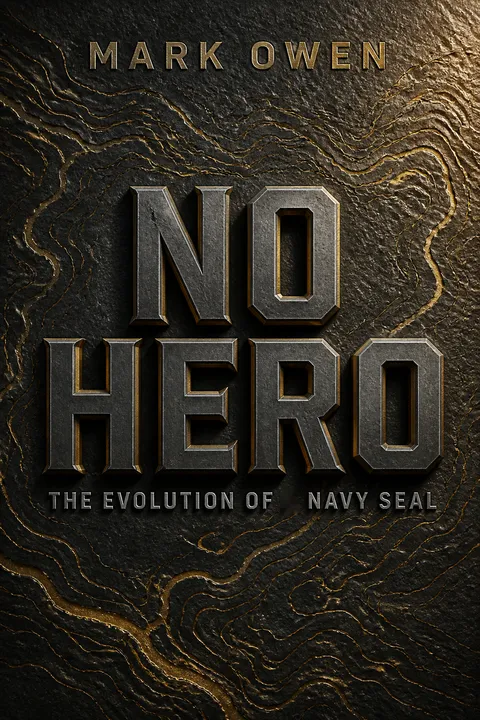
What is the significance of the title "No Hero: The Evolution of a Navy SEAL"?
- Humility and Teamwork: The title reflects Owen's belief that SEALs are not superheroes but committed individuals who work as a team.
- Personal Growth: "Evolution" signifies Owen's personal growth and development throughout his SEAL career.
- Shared Experiences: The book highlights the collective experiences and sacrifices of the SEAL community, rather than focusing solely on individual achievements.
- Inspiration for Others: The title suggests that the lessons and stories shared are meant to inspire and guide others, both within and outside the military.
How does "No Hero" compare to Mark Owen's previous book, "No Easy Day"?
- Focus on Lessons: While "No Easy Day" focuses on the mission to kill Osama bin Laden, "No Hero" emphasizes the lessons learned throughout Owen's career.
- Broader Scope: "No Hero" covers a wider range of experiences and missions, providing a more comprehensive view of Owen's evolution as a SEAL.
- Personal Insights: "No Hero" offers deeper personal insights and reflections on the challenges and growth Owen experienced.
- Complementary Narratives: Both books complement each other, with "No Easy Day" providing a detailed account of a specific mission and "No Hero" offering broader lessons and experiences.
Download PDF
Download EPUB
.epub digital book format is ideal for reading ebooks on phones, tablets, and e-readers.








