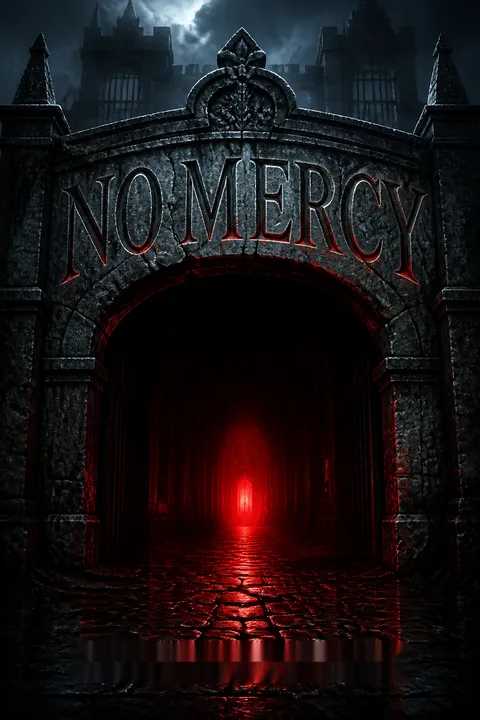


Plot Summary
Prologue
At Culver Institute, psychiatrist Mason Winters approaches the locked Ward 11 to question its most dangerous patient. A security camera has gone dark, and guards Larry Makin and Gary Jenkins are missing. Winters finds both men butchered inside the patient’s room, then realizes the fugitive is still hiding there.
The patient imitates the dead guards’ voices to draw Winters close, takes his radio, and attacks him. As Winters struggles toward the exit, the killer catches him and promises more deaths. The escape begins not with a clean break from confinement, but with a calculated assault on the people and systems meant to hold him.
The prologue establishes the story’s central uncertainty through an encounter in which performance becomes a weapon. The patient can reproduce other people’s voices, making the guards’ absence feel present and their deaths feel like a trap. Winters’s professional confidence also erodes as he tries to convert clinical authority into personal trust. His notes and questions cannot protect him once the patient controls the scene. The ward’s locked doors promise security, yet the institution’s routines leave gaps that the killer exploits. This opening frames expertise as necessary but insufficient: the investigators will need to distinguish a genuine fracture from a persona designed to mislead.
A New Unit, A Fugitive
FBI agent Valerie Law is called into Quantico early and expects reprimand for a recent arrest that went wrong. Instead, Deputy Assistant Director Jackson Weller promotes her and her tracking partner, Charlie Carlson, into a new Criminal Psychopathy Unit.
Their first fugitive is Blake Harlow, the patient who escaped Culver Institute after killing staff. Weller knows Harlow from a past operation that cost him a partner, and warns that the killer has a history of brutal murders, including the death of his adoptive mother.
Valerie sees the assignment as a rare chance to recover from her failure to catch the Clawstitch killer. She and Charlie accept, though Valerie’s morning call has already stirred the family pain she keeps hidden from her boyfriend, Tom.
The assignment gives Valerie both professional opportunity and psychological exposure. She is recruited because her reading of behavior has helped save a kidnapping victim, yet her confidence remains shadowed by the Clawstitch failure. That history makes the new unit more than a promotion: it is a test of whether she can trust her judgment under pressure. Weller’s personal connection to Harlow adds institutional urgency, while the unit’s hurried creation shows how organizations often build capacity only after catastrophe. Valerie begins by converting private doubt into work. That strategy is effective, but the story signals that her emotional avoidance will shape what she notices and what she cannot face.
Blood Behind Ward Eleven
At Culver Institute, board member Harold Binkley worries more about public scandal than the dead. Valerie studies Winters’s mutilated body and reads the violence as an attack on both a psychiatrist’s knowledge and his voice. A bloodied notebook in the doctor’s pocket has pages torn out, suggesting Harlow wanted something concealed.
Forensic psychiatrist Will Cooper arrives with notes from Winters’s sessions, earning Valerie’s respect by challenging Binkley over ignored security complaints. Cooper shares Harlow’s remark that his presence at Culver felt like a meaningful coincidence.
Because the institute lies near Bristlewood Orphanage, where Harlow once lived, Valerie predicts he may return there. She sends Charlie to alert local authorities, and the team drives toward the orphanage before they know whether the fugitive has already arrived.
The crime scene turns profiling into an act of interpretation, but each interpretation remains provisional. Valerie reads the damage to Winters as symbolic, while Cooper contributes the patient’s own fragment about coincidence. Together, these clues redirect the investigation from escape logistics toward biography. Binkley’s concern with reputation exposes a competing institutional motive: protecting the facility can take precedence over protecting people. Cooper’s willingness to confront him makes the new team’s balance visible. Valerie supplies field judgment, Charlie supplies practical tracking, and Cooper supplies clinical context. None is sufficient alone, and their first lead depends on treating a killer’s cryptic self-description as a map rather than mere noise.
The Wrong Man at Bristlewood
Headmistress Miss Armstrong resists Valerie’s questions and rejects a visible police presence, insisting the children’s routine must not change. Valerie sees more concern for the institution’s reputation than for the children and forces a limited security compromise.
Charlie then reports that Harlow may already be inside, but his call abruptly ends. Following fresh blood and Charlie’s abandoned pistol through the neglected corridors, Valerie finds a man restraining a frightened girl. She charges in, is struck with metal pipe, and tells the child to run.
Charlie joins the fight, and together they subdue the attacker, only to discover he is Mark Derrickson, not Harlow. The girl, Sarah-Anne, reveals that Derrickson had been secretly beating children in a disused part of Bristlewood, while Armstrong had tolerated his role as an unofficial disciplinarian.
The mistaken identity creates danger, but it also exposes a second system of violence beneath the case’s central pursuit. Valerie’s instinct that Bristlewood is hiding something proves accurate even though her assumption about the intruder is wrong. Her decision to follow Harlow before securing backup nearly costs her and Charlie their lives, revealing how personal urgency can distort sound procedure. Yet the rescue gives the investigation a concrete account of abuse that official routine had concealed. The children’s fear is not simply background to Harlow’s past; it is an active consequence of adults preserving order through intimidation. Bristlewood’s polished self-image cannot survive contact with its unused corridors.
A Father Left Waiting
A local officer reports Harlow near the home of his adoptive father, Mark Harlow. Valerie and Charlie arrive before the patrol car and find Mark alive, isolated, and drinking heavily.
He refuses protective custody but explains that Harlow’s violence began in childhood, worsened after a harsh reform school, and culminated in the murder of his wife, Jessie. Mark gives the agents his old revolver and admits that he blames himself for sending Harlow away. After they leave, another report brings them to a Scout hall, where former leader Alfredo Stanley has been murdered.
Valerie identifies him as another adult from Harlow’s youth and notices his face was mutilated and a finger removed. The pattern expands beyond family: the fugitive may be revisiting people who once held authority over him.
Mark’s house gives Valerie a human account of what the case file reduces to criminal history. His grief has hardened into neglect, but he still tries to protect himself without accepting help, as if dependence would expose another failure. Valerie recognizes his pain partly because it echoes her own estrangement from her mother, though she keeps that recognition private. Alfredo’s murder then gives the investigation a broader pattern: Harlow’s past contains several institutions and authority figures, not a single grievance. The officers must distinguish a meaningful behavioral sequence from coincidence. Mark’s account also complicates easy causation. He describes damage and loss, but explanation cannot erase Harlow’s responsibility for the people he has harmed.
Arthur's Quiet Warning
At Arthur Harlow’s carefully secured home, Valerie and Charlie meet Blake’s adopted brother, who has built a life apart from their alcoholic father. Arthur says he visited Blake at Culver on psychiatrist Winters’s advice, but their meetings produced little.
He recalls Blake’s cruelty at school and suggests the orphanage as a likely destination, then writes down places from their childhood. Before leaving to check on his father, Arthur gives Valerie old letters from Blake.
At a motel, Cooper recounts how David Bannister once posed as an intellectually impaired witness while secretly being a serial killer. The case makes Cooper wonder whether Harlow’s fragmented behavior is partly an act. The team now has reason to question its profile, but no proof of deception.
Arthur enters the investigation as a source of family history, yet his calmness makes his knowledge difficult to assess. His account gives Valerie a route through Harlow’s past while offering no immediate way to test what he says. Cooper’s Bannister story sharpens that uncertainty: a seemingly impaired person may be manipulating the very experts assigned to understand him. The anecdote also reveals Cooper’s lingering guilt over failing to press his suspicion sooner. By the end of the section, each investigator carries a different vulnerability into the case: Valerie fears another misread, Charlie trusts field evidence, and Cooper fears repeating an old mistake. Doubt becomes useful only if it generates questions rather than paralysis.
The Bed Made a Shrine
Before dawn, Harlow slips back into Bristlewood and kills Miss Armstrong in an unused dormitory. Valerie wakes to the news and returns with Charlie and Cooper. Blood has been spread across a bed, and the team concludes Harlow placed Armstrong there deliberately, perhaps linking the killing to his own childhood room.
During interviews, a frightened boy named Thomas admits he heard a man crying through the wall. The voice seemed childlike and repeated that he could not return, then mentioned a storm at a school. Thomas says the man looked frightened and apologized for hurting people.
Valerie and Cooper take the reference as a possible lead to Harlow’s reform school. The murder confirms that he can reach his old haunts despite police surveillance, while Thomas’s account undermines the idea of a consistently cold, calculating killer.
The bed changes the meaning of the murder scene. Armstrong’s body is not merely evidence of revenge; its placement suggests Harlow is staging an encounter with an earlier version of himself. Thomas’s testimony introduces a competing emotional register: fear, remorse, and a childlike voice coexist with deliberate violence. That contradiction tempts the investigators toward diagnosis, but it cannot establish whether Harlow is dissociating or performing. Valerie’s care in interviewing Thomas matters because the boy is not treated as a disposable witness. He is frightened by the same culture of silence that allowed Bristlewood’s abuse to continue. His small observation becomes a bridge between present crime and concealed institutional history.
Cells Beneath Stevenson
At Stevenson Reform School, custodian Chester Quill shows Valerie, Charlie, and Cooper a sealed basement corridor containing rusted cell doors. Old records reveal that Harlow was repeatedly placed in solitary confinement as a boy, sometimes for weeks, and the team finds marks suggesting he was chained to a wall.
Quill condemns the former staff’s secret methods, though Harlow was already showing disturbing behavior before arriving. Valerie argues that confinement may have shaped his fear and instability; Cooper and Charlie point to the calculated attacks and earlier cruelty as evidence of deliberate choice.
Their disagreement matters when Valerie also challenges the idea that Harlow is following a tidy revenge list. They leave with a clearer account of his suffering, but no reliable prediction of where he will strike next.
The basement makes institutional history physically legible: confinement was not an abstract policy but a room built to isolate children from human contact. The evidence complicates any clean division between innate cruelty and social damage. Harlow’s early acts suggest agency, while prolonged solitary punishment offers a credible source of further psychological injury. The investigators’ disagreement reflects a real ethical problem in criminal psychology: causal understanding can prevent simplistic judgment, but it can also slide into excuse-making. Valerie resists both fatalism and formula. Her insistence that Harlow may be more erratic than strategic is not yet proven, but it keeps the team from treating a neat narrative of revenge as established fact.
Night Was His Shelter
Back at FBI headquarters, Valerie uses an immersion exercise to imagine what Harlow sought when he returned to Bristlewood. Rather than assuming Armstrong’s murder was planned revenge, she sees the childhood dormitory as a rare place where he could feel warm and unobserved.
That idea connects with the timing of the killings, all committed at night, and with his apparent disorientation in familiar places. Valerie proposes that Harlow is drawn not only by vengeance but by a lost sense of shelter.
She redirects the team toward the house where he lived with his adoptive family, instead of the father’s current home or the reform school. Charlie and Cooper follow her lead. They reach the address to find the front door open and signs that Harlow has already entered.
Valerie’s insight comes from treating behavior as an attempt to recover a state, not simply to complete a list of targets. The distinction between revenge and comfort is psychologically consequential: the same location can represent danger, refuge, and the possibility of returning to a self that existed before violence. Her immersion technique carries risk because it asks her to borrow a killer’s organizing logic, a practice that unsettles her already fragile boundaries. Yet it also allows her to revise the team’s assumptions rather than defend them. The open door at the old home tests the theory immediately. Her intuition has supplied a direction, but the evidence waiting inside will be irreversible.
Two Bodies, One Arrest
Inside the old family house, Valerie and Charlie find Helen and Fred Ramirez dead and Harlow crouched beside them, soaked in blood. He insists that the couple do not belong there and asks where his parents and Arthur are.
Valerie lowers her weapon and tries to reach him through the confusion, but Harlow suddenly attacks. Charlie and Valerie fight him at close range; Charlie is cut, and Valerie turns Harlow’s momentum against him, driving the knife into his shoulder. They cuff him before he can rise again.
His apparent disorientation unsettles Valerie more than the arrest relieves her. He has killed the Ramirez couple, but his fear and confusion do not fit the escape from Culver, which required planning. Valerie refuses to call the case solved.
The capture delivers the immediate goal but intensifies the interpretive problem. Harlow’s confusion appears genuine enough to affect Valerie’s tactics, yet his successful escape required coordination and foresight. The Ramirez couple’s deaths show the cost of arriving one step late, while Charlie’s injury makes that cost bodily rather than abstract. Valerie’s choice to lower her gun briefly is both an act of empathy and a tactical risk; it reflects her belief that understanding a person may create an opening force cannot. The arrest therefore functions as a false ending. The fugitive is in custody, but the investigators still do not know who engineered the escape or whether Harlow’s crimes have been correctly attributed.
The Brother's Hidden Hand
During Valerie’s interview, Harlow admits to killing the Ramirez couple and Miss Armstrong but denies killing the Culver guards. He insists someone else is responsible. Charlie then reports that Arthur never reached their father after leaving his house.
The team searches Arthur’s home and finds a disabled security system, a hidden scrapbook filled with drawings of a woman, and a bloodied Culver guard uniform concealed behind furniture. A missing eye in a painting of an alcoholic mother connects the clues to the Harlow brothers’ biological mother, Elmira Phillips.
Valerie concludes that Arthur used Blake’s volatility as cover: he helped arrange the escape and let the public blame his brother for the murders he committed. The scrapbook’s address points to Elmira, and the team races to her home.
The evidence reverses the case’s apparent structure. Harlow’s denial had sounded like another manipulation, but the missing uniform and scrapbook make it a testable claim. Arthur’s role transforms the brothers’ relationship from background history into an instrument of concealment: one man’s visible instability can hide another’s controlled violence. The painting matters because it joins an ordinary domestic object to a pattern of deliberate damage, demonstrating how a perpetrator can leave evidence in plain sight for those who know what to notice. Valerie’s conclusion is an inference, not a confession, so urgency replaces certainty. The team must act before their new interpretation can be verified through another victim.
A Mother in the Chair
Valerie and Charlie reach Elmira’s house to find her beaten and trapped in a rocking chair with Arthur, knife at her throat. Arthur speaks like a child while demanding the mother he believes abandoned him. Valerie recognizes the pull between longing and rage and risks lowering her gun to tell him how her own mother’s illness led to violence against her and her sister.
She urges Arthur to choose a life beyond injury, and Elmira tries to explain why she gave up her sons. Arthur briefly lowers the knife, then lifts it again. He attacks Valerie and Charlie, breaking Valerie’s wrist and knocking Charlie unconscious. Will strikes Arthur with a vase, and gunfire follows. Arthur dies before he can kill Elmira.
The climax makes Valerie’s personal history an intervention rather than a confession for its own sake. She uses a carefully chosen disclosure to interrupt Arthur’s fantasy of childhood reunion, hoping that recognition can separate his need for care from his demand for revenge. The attempt briefly changes his behavior, but it cannot undo the danger or guarantee his choice. That limit keeps the scene from treating empathy as a cure. Valerie’s broken wrist and Charlie’s injury preserve the physical stakes, while Will’s sudden action shows the team functioning beyond its formal expertise. Arthur’s death ends the immediate threat but leaves Elmira alive with the consequences of a family history no one can repair in a single encounter.
The Case Opens Another Door
After surgery for her broken wrist, Valerie spends her birthday with Tom, Charlie, Cooper, and Weller. The final report explains how Arthur used a concealed phone, a guard disguise, and a loosened ventilation route to help Blake escape.
Weller also gives Valerie and Charlie priority access to the Clawstitch case, crediting their work on the Harlows. The recognition should feel like vindication, but Valerie remains troubled by the victims and by the brothers’ uncertain histories.
She wonders whether Arthur manipulated Blake’s memories and whether Blake’s earlier crimes were all his own. At the gathering, Valerie finally admits to Cooper that her mother remains a source of fear and guilt. She is not ready to explain everything, but she knows she can no longer keep every family door shut.
The resolution grants Valerie professional recognition without offering emotional closure. The Clawstitch assignment returns her to the case that wounded her confidence, but the Harlow investigation has shown that competence does not eliminate uncertainty or grief. The brothers’ histories remain only partly knowable, and the report’s mechanical explanation of the escape cannot settle questions of responsibility. Valerie’s conversation with Cooper marks a smaller, more personal shift: she allows a colleague to see the wound beneath her discipline. Her movement toward family is tentative, not triumphant. The book closes its criminal pursuit while leaving the protagonist’s deeper conflict active, making the next step a choice to risk contact rather than another effort to outrun memory.
Epilogue
Valerie visits her sister, Suzie, in a psychiatric hospital after learning she has been moved to a secure ward. Suzie resents Valerie’s long absence and says their mother has left papers meant for her. The sisters argue, and Suzie asks Valerie to leave, but she gives her the papers before the nurse escorts Valerie out.
In the elevator, Valerie studies their erratic handwriting and realizes she must see her mother. Tom waits downstairs, and the two leave together in the rain. Valerie has not repaired the family, but she has crossed the threshold she spent years avoiding.
The epilogue turns Valerie’s professional insight back toward her own family without pretending that insight can resolve it. She arrives expecting to support Suzie, but the visit reveals that her sister has experienced another crisis and still carries resentment over being left to manage their mother’s illness. Suzie’s papers create a new reason for Valerie to return to the source of her fear, while her refusal to reconcile immediately preserves the cost of the years apart. Tom’s presence offers support without taking control. The final movement is not healing but consent to encounter what she has avoided, a fragile form of agency after a case dominated by people trapped in the past.
Analysis
No Mercy builds its thriller around the instability of explanation. Harlow’s violence can be read through several frames: innate cruelty, institutional abuse, dissociation, strategic deception, or some combination that the investigators cannot neatly separate. The novel’s strongest structural choice is to make each frame produce different predictions. Valerie’s work is not simply identifying a killer; it is testing whether her account of another person’s motives can survive contact with new evidence. The revealed role of Arthur makes this problem literal. Harlow’s visible instability conceals a second, more controlled intelligence, so a profile that appears persuasive can still be incomplete.
The institutions in the story do not serve as simple explanations for violence. Bristlewood hides abuse behind routine, and Stevenson’s basement makes punishment tangible, but Harlow’s history does not absolve him of the murders he commits. The narrative asks readers to hold causal understanding and moral accountability together, a difficult balance that Valerie also struggles to maintain. Her immersion method offers insight, but it blurs the boundary between professional empathy and personal identification. She is drawn toward Harlow’s pain partly because it resembles the childhood fear she has never resolved.
The family subplot gives the investigation an intimate counterpoint. Valerie has spent years helping other people confront danger while avoiding her mother and sister. Mark Harlow’s grief, Arthur’s apparent separation from his father, and the brothers’ entanglement make family loyalty look neither automatically healing nor easily discarded. Valerie’s visit to Suzie does not repair their relationship, and the papers from her mother do not promise simple reconciliation. Instead, the ending measures progress as a willingness to return. The case closes with deaths, injuries, and unresolved questions, but Valerie has begun to recognize that professional competence cannot substitute for personal honesty. Her next act of courage will not be another arrest. It will be listening to what her family has been trying to tell her.
Review Summary
No Mercy received mixed reviews, with an average rating of 4.03 out of 5. Readers praised the engaging plot and fast-paced action, but criticized editing issues and underdeveloped characters. The book follows FBI agent Valerie Law as she pursues an escaped psychopathic killer. Some enjoyed the psychological aspects and twists, while others found the writing style repetitive and dialogue unrealistic. Despite flaws, many readers found it entertaining and looked forward to continuing the series.
Characters
Valerie Law
Haunted FBI profilerValerie is an FBI agent whose ability to read behavior has earned her a place in a new unit devoted to violent offenders. She is disciplined, observant, and unusually willing to challenge an accepted profile when the evidence feels wrong. That independence is also a pressure point: an earlier failure has made her wary of trusting herself, while her habit of burying personal pain leaves her vulnerable to cases that echo her childhood. She cares intensely about victims and often experiences a missed lead as a personal debt. Valerie’s strength lies in revising her theories; her danger lies in believing that relentless work can keep private grief at a safe distance.
Blake Harlow
Fractured escaped killerBlake is a violent fugitive whose shifting manner makes it difficult to tell when he is confused, calculating, or both. His past includes an adoptive family, a childhood at Bristlewood, and severe punishment at a reform school. He can be brutally deliberate, yet witnesses and investigators also see fear and childlike distress in him. That instability makes him a difficult subject for profiling, but it does not erase the harm he causes. Blake’s presence forces Valerie to separate psychological explanation from moral absolution: his history matters, while the people he injures remain more than evidence in a case.
Charlie Carlson
Valerie's tracking partnerCharlie is Valerie’s trusted FBI partner, an experienced tracker with sharp senses, physical confidence, and a dry wit. He helps ground her theories in what the evidence can support and is willing to disagree when he thinks she is overlooking facts. Their partnership rests on familiarity earned over many cases, but it is not blind agreement; Charlie’s doubts sometimes push Valerie to explain her reasoning more carefully. He is protective without treating Valerie as incapable, and his loyalty becomes most visible when danger arrives. Charlie balances her psychological focus with practical field judgment, though his courage can also draw him directly into harm.
Will Cooper
Forensic psychiatristWill is a respected psychiatrist whose experience comes mainly from studying and interviewing incarcerated offenders, not chasing them in the field. His academic caution and willingness to confront institutional failures make him a valuable counterweight to Valerie and Charlie. He is intellectually confident, yet his earlier failure to recognize a killer’s deception has left him carrying guilt. Will is compassionate toward patients and reluctant to reduce people to diagnoses, but the Harlow case forces him to test his theories against immediate danger. His combination of curiosity, humility, and occasional bravery helps turn him from an outside consultant into a genuine member of the investigative team.
Arthur Harlow
Blake's estranged brotherArthur is Blake’s adopted brother, a guarded man who has built a stable life away from the family damage surrounding his sibling. He remains connected to that history through visits to Blake, old letters, and memories of their childhood. Arthur presents himself as more controlled than his brother and speaks with apparent certainty about Blake’s cruelty. His distance from their father is both protective and painful, suggesting how survival can require separation without ending attachment. Arthur’s role in the story invites questions about what siblings know, what they choose to disclose, and how a shared past can bind people even after they have tried to leave it behind.
Jackson Weller
Valerie's demanding chiefWeller is Valerie and Charlie’s FBI supervisor, a veteran leader whose personal history with Harlow gives the case added weight. He supports Valerie’s promotion but also faces pressure from senior officials to produce quick results. His directness can feel like doubt to Valerie, especially when he urges her not to second-guess herself. Beneath the institutional demands, he wants his agents protected and trusts their abilities. Weller represents the tension between careful investigation and the political appetite for a rapid, visible resolution.
Tom
Valerie's patient boyfriendTom is Valerie’s boyfriend, affectionate and hopeful, but increasingly frustrated by how often her work displaces their relationship. He wants a future with her and tries to make room for difficult conversations, even when she postpones them. His steadiness offers a life outside the FBI, though he cannot make Valerie disclose what she is not ready to face. Tom’s role is not to solve her private history but to show the emotional cost of keeping every part of her life separate.
Suzie Law
Valerie's younger sisterSuzie is Valerie’s younger sister, shaped by the same frightening family history but by a different response to it. She has stayed more involved with their mother and feels abandoned by Valerie’s long withdrawal. Her anger is not simple hostility; it carries exhaustion, hurt, and the burden of handling family crises largely alone. Suzie’s own mental health struggles complicate their reunion, requiring Valerie to listen rather than assume that affection will repair the damage. She represents the sibling bond Valerie wants to recover and the accountability she cannot avoid.
Mark Harlow
Blake's adoptive fatherMark is Blake and Arthur’s adoptive father, now living in isolation and drinking heavily after the death of his wife, Jessie. He carries guilt about sending Blake away for help and grief over the violence that followed. Though weakened by alcohol and loss, he remains stubbornly protective and refuses the agents’ offer of custody. Mark’s home shows how a family can continue living inside a past catastrophe long after the immediate violence has ended.
Jessie Harlow
The murdered adoptive motherJessie was Mark Harlow’s wife and the adoptive mother of Blake and Arthur. She believed in Blake’s capacity for good and resisted sending him away, even as his behavior frightened the family. Her death remains a defining loss for Mark and a central wound in the brothers’ history. Jessie is remembered through other people’s grief rather than through her own point of view.
Elmira Phillips
A woman from the Harlow pastElmira is an older woman whose decisions in the Harlow family’s early history continue to shape the present. She lives quietly and carries regret over the life she left behind, though fear and shame have kept her from confronting it directly. Her vulnerability is sharpened by the knowledge that a violent family past may reach her home. Elmira embodies the difference between remorse and repair: regret may be sincere, but it cannot restore years of lost relationship or remove the consequences others now bear.
Miss Armstrong
Bristlewood's rigid headmistressMiss Armstrong runs Bristlewood Orphanage with rigid rules and a strong concern for its public standing. She presents discipline as necessary care, but her coldness toward the children and defensiveness under questioning reveal a more self-protective outlook. She resents interference from Valerie and resists changes that might expose the institution to scrutiny. Armstrong represents an authority that confuses control with nurture, leaving vulnerable children to bear the cost of preserving order.
Mark Derrickson
Bristlewood's hidden disciplinarianDerrickson works around Bristlewood’s neglected spaces and has been allowed to discipline children beyond ordinary oversight. He is volatile and physically dangerous when Valerie and Charlie encounter him. His actions expose how cruelty can persist when an institution values quiet routines over children’s safety.
Thomas
A frightened young witnessThomas is a boy at Bristlewood who is wary of adults and afraid that speaking up will bring punishment. Valerie earns his trust with patience and a small kindness, allowing him to share what he heard near the unused dormitory. His account is incomplete but important, showing how a child’s careful observation can matter even when he cannot understand the larger events. Thomas retains a sense of compassion despite living in a place where help has often been scarce.
Sarah-Anne
A child in dangerSarah-Anne is a young girl at Bristlewood whom Valerie finds restrained in a disused room. Frightened and isolated, she becomes the first child to reveal that hidden abuse has been taking place in the orphanage. Her rescue turns the investigation toward the adults who have failed the children in their care.
Chester Quill
Stevenson's remorseful custodianQuill manages Stevenson Reform School and helps the FBI examine Harlow’s damaged records. Unlike officials who prioritize reputation, he shows visible remorse for the school’s former practices, even though he was not responsible for them. His honesty gives Valerie access to the hidden basement cells and the institutional history they preserve. Quill represents an attempt to acknowledge inherited wrongdoing rather than defend it.
Harold Binkley
Culver's reputation-minded trusteeBinkley is a Culver Institute board member who worries about scandal and public criticism after the murders. His instinct is to protect the institution’s standing, making him an obstacle to Valerie’s urgent work. He illustrates how concern for an organization’s survival can eclipse attention to the people harmed within it.
Mason Winters
Harlow's psychiatristWinters is the Culver psychiatrist assigned to interview Harlow. He hopes to establish enough trust to learn about the fugitive’s crimes, but the patient’s manipulative behavior leaves him with little progress. His notes become an early source of clues for the FBI and reveal that the institute had not acted on all of his security concerns.
Helen and Fred Ramirez
Residents of the old Harlow homeHelen and Fred are a married couple living in the house once occupied by the Harlow family. Their ordinary domestic life makes the danger of Harlow’s return especially stark. Their home becomes the point where Valerie’s theory meets the consequences of arriving too late.
Plot Devices
Competing psychological profiles
Uncertainty as evidenceThe team repeatedly weighs two explanations for Harlow’s behavior: a fractured, childlike state that causes impulsive violence, or a calculated performance designed to mislead clinicians and investigators. Valerie, Charlie, and Cooper each bring different evidence to the debate. Thomas’s account of a frightened, apologetic voice supports one reading, while the escape’s careful timing supports another. The uncertainty matters because each profile predicts a different next move. Rather than treating diagnosis as a final answer, the device keeps the investigators revising their assumptions and makes the reliability of observation part of the mystery.
Childhood institutions
Past made physicalBristlewood Orphanage and Stevenson Reform School turn Harlow’s history into locations the investigators can revisit. Bristlewood hides abuse behind routine and public respectability, while Stevenson’s basement preserves the material evidence of solitary confinement. These settings connect present crimes to remembered experiences without proving that trauma alone caused them. They also reveal that institutional authority can injure the children it claims to correct. Each return to an old building produces new evidence and raises the same question: is Harlow pursuing specific people, reliving a formative place, or seeking a lost state of safety?
Valerie's immersion method
Thinking from insideValerie uses an immersion exercise to imagine the motives and emotional needs organizing a killer’s behavior. She looks beyond a sequence of victims and asks what Harlow may be seeking when he returns to familiar places. The method helps her identify nighttime and the childhood home as possible sources of comfort, redirecting the team toward the Ramirez house. It is not a supernatural insight or a guaranteed technique; it depends on Valerie’s interpretation and carries personal risk because she already fears how easily she can inhabit a violent person’s perspective. The device advances the investigation while exposing the psychological cost of her work.
The staged escape
A hidden hand revealedThe apparent one-man escape from Culver becomes a two-person operation when the team finds a bloodied guard uniform and a hidden scrapbook at Arthur’s home. The evidence explains how Blake could appear dangerously fragmented while someone else handled the planning. A concealed phone, a disguise, and a loosened ventilation route turn the institution’s security system into part of the escape plan. This device reclassifies earlier evidence: Blake’s denial about the guards was a clue, and Arthur’s calm account of his brother’s past was not neutral background. It reveals that the investigation has been following a visible killer while overlooking a more controlled participant.
The mother's papers
Personal history reopenedThe papers passed from Suzie to Valerie at the end of the hospital visit create a final bridge from the Harlow case to Valerie’s family. Their erratic handwriting suggests that their mother has information she wants Valerie to hear, but neither sister can yet explain what it means. The papers do not solve the family conflict; instead, they force Valerie to decide whether to approach the person she has avoided for years. Their function is both practical and emotional: they provide a reason to return, while making that return an act of vulnerability rather than duty alone.
Valerie Law Series


Download PDF
Download EPUB
.epub digital book format is ideal for reading ebooks on phones, tablets, and e-readers.








