

Key Takeaways
Schedule twenty protected minutes before resentment becomes your weekly meeting.
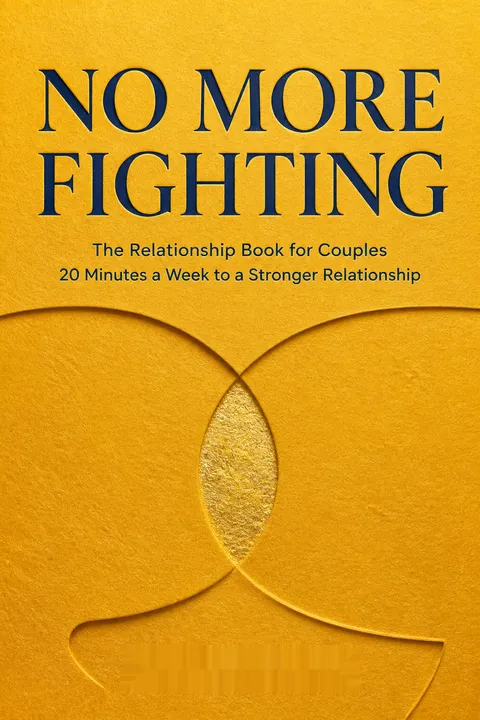
Make practice ordinary. Muñoz turns relationship care into a weekly habit: the book offers 52 challenges, each with a short exercise, and recommends setting aside at least 20 minutes. Partners agree on a regular place, a timer, and equal turns speaking and listening. The goal is not to solve a year’s worth of conflict in one sitting. It is to make room for honest contact before distance hardens into the default.
Safety comes first. The exercises can be adapted for one person, but they are not a substitute for professional help when addiction, aggression, or untreated mental illness threatens safety. The case stories are simplified starting points, not universal diagnoses. The central promise is incremental: small, repeated acts of attention can help partners learn how they get stuck and practice a different response.
A scheduled conversation lowers the activation energy of difficult communication. Couples do not have to wait for a crisis, or rely on one partner to guess when the other is ready. The timer also limits the feeling that every vulnerable disclosure will become an endless trial. The structure is useful precisely because it is modest. Still, a ritual cannot make an unsafe relationship safe by itself. A time limit and equal turns support communication only when both people can participate without coercion or fear.
Care for yourself before asking a partner to rescue your unspoken needs.
Overgiving can conceal need. Saul cooks, cleans, manages the finances, and arranges dates, yet resents his busy partner Hanako for not caring for him. When she tries, he dismisses her efforts as unnecessary or badly timed. His caretaking leaves little room to receive the care he says he wants. Muñoz suggests that self-care is not selfishness: tending to one’s own needs can make mutual care more possible.
Boundaries build trust. Arjun’s reflexive yes to family and colleagues comes from a childhood pattern of keeping others calm through compliance. With a new baby at home, his yes to hosting his parents becomes costly. Practicing small refusals helps him hold a boundary, even when his mother is disappointed. Susan begins trusting his commitments more when his yes is no longer automatic.
The useful distinction is between generosity and self-erasure. Caretaking can be loving, but it can also become a covert contract: give without being asked, then hope the other person repays the sacrifice in exactly the desired form. Direct self-care interrupts that bargain. At the same time, personal responsibility should not excuse an unfair division of labor. A partner who names their needs still deserves a serious conversation about shared work, not merely a reminder to look after themselves.
Treat your partner’s motives as hypotheses, not facts.
Feelings carry information. Janice sees her husband’s shoes in the hallway and initially treats the issue as a task to correct. When she slows down, she notices anxiety beneath her insistence on order. Recognizing feelings does not mean obeying every impulse; it means understanding what is shaping a reaction.
Stories can masquerade as evidence. After surgery changes their sex life, Gabriella assumes Jack cares only about sex and that his time alone means she does not matter. Naming this as a story she is telling herself lets her describe its emotional impact and notice how it fuels her anger and withdrawal. The Imago Dialogue offers three practices: reflect a partner’s words, show how their reasoning makes sense from their perspective, and make careful guesses about their feelings, checking whether those guesses fit.
This approach treats listening as a discipline rather than a personality trait. Reflecting back slows the leap from an ambiguous event to a confident accusation, while checking an emotional guess keeps empathy from becoming mind-reading in a nicer outfit. The same logic appears in cognitive therapy, where examining an interpretation can loosen its grip without denying the feeling underneath it. The method can sound scripted at first. Its value depends on genuine curiosity, not on reciting a formula while preparing a rebuttal.
Ask clearly for care instead of testing whether love can read minds.
Make the need visible. Luke is hurt that Gerald does not visit his restaurant or attend an event celebrating his work. He believes Gerald should already know these moments matter. When Luke explains that being noticed at work helps him feel important, he connects the request to a childhood in which few people showed up for him. The specific request gives Gerald a fair chance to respond.
Own the inner experience. Psychological ownership means acknowledging one’s own feelings, behavior, or assumptions instead of treating a partner as their sole cause. Abigail first describes herself as exhausted while helping Yolanda move in. Then she names the fear underneath: trusting that they are now a family feels risky. Owning that fear does not guarantee comfort or agreement, but it gives her partner something real to understand.
Clear requests are a form of relational design: they turn a vague hope into an action that can be accepted, declined, or negotiated. That is more respectful than setting a hidden test and scoring a partner for failing it. Ownership also protects both people’s agency, since one person can disclose a fear without claiming control over the other’s response. Its limit matters: requests are not entitlements, and vulnerability does not erase a partner’s right to say no or to raise their own needs.
Build connection with small rituals, not grand gestures.
Attention needs repetition. Felice and Randy share an impressive home and an active family life, yet feel emotionally distant. Brief daily check-ins help them exchange what they are feeling, anticipating, or trying to set aside. Muñoz calls such deliberate connection practices Love Rituals. Other examples include acknowledging a partner’s return home, making space for a warm goodbye, and expressing appreciation without hiding criticism inside the compliment.
Translate love into action. The five Love Languages describe common ways people give and receive affection: acts of service, gifts, quality time, physical touch, and words of affirmation. Caleb shows love by handling practical tasks, while Viola values shared attention and thoughtful gifts. A short list of specific caring actions helps each partner try forms of affection the other can actually recognize.
Rituals make attention observable. In behavioral terms, a repeated cue, such as a reunion or bedtime, becomes an opportunity to enact care rather than drift into autopilot. The Love Languages framework can help couples generate ideas, but it should be treated as a conversation starter, not a fixed personality test. Needs change with stress, health, and life stage. The deeper test is not whether a partner memorizes a category, but whether both keep asking what care means now.
Interrupt contempt and shutdown before the argument becomes the relationship.
Conflict has recognizable patterns. Relationship researcher John Gottman’s Four Horsemen are criticism, defensiveness, contempt, and stonewalling. Shane recognizes contempt and withdrawal in his interactions with Elena, and his admission shifts the conversation from blame toward responsibility. The book encourages partners to notice these patterns early, use gentler openings, acknowledge their part, and take a pause when either person is overwhelmed.
Anger is data, not permission. Elena and Shane suppress anger until it erupts, including in a car with their children present. A trigger log helps them connect an event to bodily sensations, thoughts, and reactions. If an argument becomes too heated, partners can pause and agree when to return. A repair can also involve reenacting a hurtful moment with a more respectful response. Remorse and forgiveness require time, not forced closure.
Naming a destructive pattern creates a small gap between impulse and action. That gap is where a couple can choose a different behavior. The advice to pause is strongest when the pause has a clear return plan; otherwise, one person’s regulation break can feel like the other person’s abandonment. Anger can identify a neglected boundary or unmet need, but it does not establish who is right. Its information becomes useful only when expression remains safe and accountable.
Translate differences into agreements, not verdicts about character.
Different lenses can help. Sean worries about risks; Candace expects things to work out. Their contrasting outlooks become useful when each can understand what the other contributes: preparation on one side, openness to possibility on the other. Similar differences surface in social energy, money, career priorities, parenting, gender expectations, and relationships with family. Treating these differences as information makes discussion more productive than labeling one partner careless or controlling.
Make expectations explicit. Shawntall and Logan are at odds about career, marriage, and decision-making. Naming their values helps them understand why the tension is substantial and why postponing a wedding may be wiser than pretending agreement. Couples can also clarify financial arrangements, family boundaries, parenting rules, and how decisions get made. An agreement is not a verdict that one worldview wins; it is a negotiated plan that can be revisited as circumstances change.
A couple is not a single mind, and its strongest decisions often require more than one risk model. This is especially important when a disagreement reflects culture, race, gender, or unequal power, not merely temperament. Calling both views equally valid can become false balance if one person bears most of the consequences. The practical question is who has authority, who carries the cost, and whether the agreement remains fair when tested in daily life.
Make intimacy safer by naming desire, inhibition, and personal boundaries.
Closeness has different tolerances. Lloyd experiences intense discomfort during eye contact, while Janice finds it pleasurable. Their mismatch becomes easier to navigate when they discuss what closeness feels like instead of assuming one response is correct. Jack, whose work exposes him to traumatic scenes, needs time to shift from emotional numbness into connection at home. A short decompression period helps him make that transition without treating distance as rejection.
Desire has brakes and accelerators. Sex therapist Emily Nagoski’s model distinguishes the Sexual Excitation System, which responds to personally relevant erotic cues, from the Sexual Inhibition System, which responds to threats or distractions. Stress, shame, fear of judgment, and interruptions can inhibit arousal. Talking about conditions that support desire, as well as differences in preferred touch or erotic interests, helps partners explore with consent rather than interpreting mismatch as proof of lost love.
This account usefully moves sexual difficulty away from simple blame and toward context, body, and safety. It also resists treating desire as a stable measure of attraction. However, named models of arousal and erotic preference are maps, not diagnoses; people may not fit neatly into a category, and their needs can shift. The most reliable practice remains negotiated consent, honest communication, and respect for a no, even when a couple hopes to change its sexual pattern.
Choose relationship structures through honest agreements, not inherited scripts.
Trust needs visible terms. Affairs, addiction, and concealed debt can destabilize a relationship because they damage both safety and shared reality. The book describes affair recovery as a process of facing the crisis, understanding how the rupture happened, and deciding what future the couple wants. That process does not require staying together. Addiction also calls for support beyond a self-guided couples exercise.
Monogamy is an agreement, not a mind-reading test. Peggie and Victor discover that unspoken expectations about parenting, travel, and personal freedom no longer fit their lives. A resilient monogamy agreement makes boundaries explicit and revisable. Polyamory requires the same honesty, plus sustained negotiation around desire, jealousy, and emotional risk. Transparency cannot prevent every hurt. It does make it possible to respond to what is actually happening rather than to assumptions.
The emphasis on explicit agreements is valuable because relationship labels often conceal different assumptions about fidelity, privacy, and autonomy. A written or spoken agreement can expose those assumptions before a rupture does. Still, honesty is not a guarantee of compatibility, and a person should not consent to nonmonogamy merely to prevent a breakup. Likewise, repair should not be confused with obligation to forgive or remain. The relevant standard is informed, freely given participation and a credible commitment to safety.
Accept imperfect care and deliberately celebrate what is already alive.
Perfection can block reception. After Radcliff’s affair, Dahlia sees how her constant corrections and judgments had obscured the imperfect care he offered. Recognizing her part does not excuse his betrayal; it lets her examine the full relationship rather than reduce it to a single role of offender and injured partner. The distinction is essential: accepting imperfect love is not the same as accepting abuse or ongoing disrespect.
Joy needs practice too. Elly and Sebastian discover that celebration can feel uncomfortable when happiness is tangled with guilt. They begin marking ordinary pleasures without treating joy as a reward they must earn. The book’s closing claim is practical: appreciation, play, and shared celebration help partners notice what remains good while facing what needs repair. Love is not a finished state. It is sustained through choices small enough to repeat.
Gratitude can correct the mind’s tendency to give negative events disproportionate attention, while play can restore a sense of partnership beyond logistics and conflict. Yet appreciation must not become a tool for silencing legitimate grievances. A useful celebration makes room for reality, including grief and disappointment. The most durable optimism is not forced positivity; it is the capacity to register what is nourishing without denying what is harmful.
Analysis
Muñoz’s central contribution is a shift in scale. Rather than promise that couples can eliminate conflict, she makes relationship health a practice of noticing, naming, and repairing small ruptures before they define the whole bond. The book’s 52 challenges create a broad map, but its method is deliberately repetitive: slow down, attend to bodily and emotional signals, speak from personal experience, listen without immediately rebutting, and make a concrete request. The recurring fictional couples show how one visible dispute, about clutter, sex, money, or family, can conceal grief, shame, fear, or an unmet need.
That structure is persuasive because it joins emotional insight to behavioral rehearsal. Concepts such as psychological ownership and the Imago Dialogue are not left as abstractions; readers are asked to try them in brief, bounded conversations. The exercises can help make implicit expectations discussable and give partners a repeatable route out of familiar exchanges. The book also recognizes that couples are shaped by work, parenting, culture, gender, race, and family history, resisting the idea that every problem is simply a communication failure.
Its breadth is both strength and limitation. Fifty-two topics allow readers to locate themselves, but the short case examples cannot establish which intervention fits a particular couple or distinguish ordinary conflict from dynamics requiring specialized care. Some frameworks, including Love Languages and Erotic Blueprints, are best used as prompts for curiosity rather than evidence-based classifications. The book’s clearest safeguard is its recognition that self-guided exercises are inappropriate when safety is compromised. Its most durable lesson is therefore not that every relationship can be repaired, but that sustainable connection requires both practical habits and honest judgment about whether the conditions for mutual care exist.
Review Summary
Readers generally praise "No More Fighting" for its practical advice on improving communication and resolving conflicts in relationships. Many find the exercises and techniques helpful, even when applied individually. The book is lauded for addressing diverse relationship types and providing real-life examples. Some readers appreciate its applicability to both romantic and professional relationships. A few criticisms include unrealistic dialogue examples and perceived gender bias. Overall, most reviewers recommend the book for couples seeking to enhance their relationship skills and reduce arguments.
Glossary
Couples Spot
Agreed space for connectionThe physical or psychological setting partners choose for their regular relationship conversations. It may be a place at home, a virtual meeting space, or a consciously adopted state of openness. Its purpose is to distinguish intentional couple work from rushed or reactive discussion elsewhere.
Couples Time Container
Agreed time for practiceA mutually chosen, bounded period for a relationship exercise. Partners decide how long it lasts, how they will divide speaking and listening, and how to end the session. A timer and clear boundary can make emotionally difficult conversations feel more manageable and predictable.
Imago Dialogue
Structured listening practiceA communication process associated with Imago Relationship Therapy. One partner speaks about an agreed topic while the other reflects the message, shows how the speaker’s reasoning makes sense from their perspective, and offers tentative guesses about the speaker’s feelings. Partners switch roles so each has a chance to speak and listen.
Relationship horror stories
Distorting relationship assumptionsMuñoz’s term for painful interpretations people repeatedly apply to a partner or relationship, such as assuming that a delayed reply proves abandonment or that a mistake means one is unlovable. Naming an interpretation as a story can help distinguish it from known facts and invite direct questions.
Psychological ownership
Acknowledging inner experienceThe practice of admitting one’s own feelings, actions, traits, and assumptions, including qualities one may find uncomfortable. Instead of making a partner responsible for the entire emotional situation, a person describes their contribution and experience, which can make honest discussion and clearer boundaries possible.
Love Rituals
Repeated acts of connectionSmall, intentional practices partners use to create connection in ordinary life. Examples include daily emotional check-ins, warm greetings after time apart, and sincere appreciations. Their value comes from being repeatable and adapted to the couple, rather than from being elaborate or reserved for special occasions.
Four Horsemen
Four destructive conflict patternsJohn Gottman’s label for criticism, defensiveness, contempt, and stonewalling in couple interactions. The terms describe attacking a partner’s character, deflecting responsibility, expressing disdain, and withdrawing from engagement. Recognizing these patterns can help partners interrupt escalation and attempt a more respectful response.
Dependency Distortions
Fear-driven beliefs about dependenceMuñoz’s term for assumptions that can arise when a person fears losing someone they depend on. Examples include believing that closeness requires control, that abandonment is inevitable, or that one must constantly earn love. These beliefs can intensify pursuit, suspicion, or efforts to prevent a partner from leaving.
Resilient monogamy
Explicit, revisable monogamy agreementA couple’s clearly discussed understanding of monogamy, fidelity, privacy, autonomy, and related boundaries. Unlike an assumed arrangement, it can be revisited as life circumstances and needs change. Its resilience depends on honest discussion and mutual agreement, not on avoiding difficult subjects.
Sexual Excitation System (SES)
System responding to erotic cuesIn Emily Nagoski’s model, the system that responds to stimuli a person interprets as sexually relevant. Those cues vary by individual and context. A partner, sensory experience, memory, or situation may support arousal for one person and have no such effect for another.
Sexual Inhibition System (SIS)
System responding to sexual threatsIn Emily Nagoski’s model, the system that detects factors that may inhibit sexual arousal. Perceived threats can include distraction, fear of judgment, stress, or concern about unwanted consequences. The model helps couples consider what is getting in the way of desire, rather than assuming desire is simply a matter of will.
Erotic Blueprints
Map of erotic preferencesA framework developed by sexologist Jaiya that groups patterns of erotic preference into Energetic, Sensual, Sexual, Kinky, and Shapeshifter types. Muñoz presents it as a vocabulary for discussing touch, stimulation, variety, and erotic interests. It is a conversation aid, not a clinical diagnosis or a fixed identity.
FAQ
What's "No More Fighting: The Relationship Book for Couples" about?
- Focus on Relationships: The book by Alicia Muñoz is designed to help couples strengthen their relationships by dedicating just 20 minutes a week to focused exercises and discussions.
- Structured Approach: It provides a structured approach to addressing common relationship challenges, offering practical exercises and real-life examples.
- Comprehensive Coverage: Topics range from communication and intimacy to self-esteem and parenting, making it a comprehensive guide for couples.
- Sustainable Love: The ultimate goal is to foster sustainable love by improving communication, understanding, and connection between partners.
Why should I read "No More Fighting: The Relationship Book for Couples"?
- Practical Exercises: The book offers practical, easy-to-follow exercises that couples can integrate into their weekly routine to improve their relationship.
- Real-Life Examples: It includes relatable stories of couples facing various challenges, providing insights and solutions that readers can apply to their own lives.
- Expert Guidance: Written by a licensed professional counselor, the book is grounded in psychological theories and therapeutic practices.
- Focus on Growth: It encourages couples to embrace imperfections and work together towards growth and deeper connection.
What are the key takeaways of "No More Fighting: The Relationship Book for Couples"?
- Communication is Key: Effective communication is essential for resolving conflicts and building a strong relationship.
- Self-Care Matters: Taking care of oneself is crucial for maintaining a healthy partnership.
- Understanding Differences: Recognizing and respecting each other's differences can lead to a more harmonious relationship.
- Regular Check-Ins: Consistent check-ins and love rituals can help maintain connection and intimacy.
How does Alicia Muñoz suggest couples handle conflicts in "No More Fighting"?
- Imago Dialogue: The book introduces the Imago Dialogue, a communication tool that involves mirroring, validation, and empathy to improve understanding.
- Gentle Startups: It emphasizes the importance of starting conversations gently to avoid triggering defensiveness.
- Taking Responsibility: Couples are encouraged to take responsibility for their actions and emotions rather than blaming each other.
- Re-Dos: The concept of "re-dos" allows couples to revisit and improve upon past interactions that didn't go well.
What is the Imago Dialogue mentioned in "No More Fighting"?
- Communication Tool: The Imago Dialogue is a structured communication tool designed to help couples understand each other better.
- Three Steps: It involves three steps: mirroring (repeating back what the partner says), validation (acknowledging the partner's perspective), and empathy (understanding the partner's feelings).
- Focus on Connection: The goal is to create a safe space for open and honest communication, fostering deeper connection and understanding.
- Widely Used: Developed by Harville Hendrix and Helen LaKelly Hunt, it's a widely used technique in relationship therapy.
How does "No More Fighting" address intimacy issues?
- Intimacy Tolerance: The book discusses the concept of intimacy tolerance, which is the capacity to be known and to know one's partner.
- Vulnerability: It emphasizes the importance of vulnerability as a gateway to intimacy, encouraging couples to share their fears and desires.
- Exercises: Practical exercises are provided to help couples explore and expand their comfort levels with intimacy.
- Understanding Differences: Recognizing and respecting each other's intimacy needs and boundaries is crucial for a healthy relationship.
What role does self-care play in "No More Fighting"?
- Foundation of Balance: Self-care is presented as the foundation of a balanced relationship, essential for both partners to thrive.
- Individual Responsibility: The book encourages individuals to take responsibility for their own well-being rather than relying solely on their partner.
- Practical Tips: It offers practical tips and exercises for incorporating self-care into daily life, such as setting boundaries and prioritizing personal needs.
- Impact on Relationship: By taking care of themselves, individuals can contribute more positively to the relationship.
How does "No More Fighting" suggest couples manage stress?
- Identifying Stressors: The book helps couples identify different kinds of stress and understand their impact on the relationship.
- Eustress vs. Distress: It distinguishes between eustress (positive stress) and distress (negative stress), encouraging couples to manage both effectively.
- Mindfulness Practices: Techniques like mindfulness and relaxation exercises are recommended to help couples cope with stress.
- Communication: Open communication about stressors and their effects can lead to better support and understanding between partners.
What are Love Rituals in "No More Fighting"?
- Regular Practices: Love Rituals are regular practices that couples can incorporate into their routine to maintain connection and intimacy.
- Examples: Examples include check-ins, appreciations, and gratitude exercises that help partners express love and appreciation for each other.
- Strengthening Bonds: These rituals are designed to strengthen the emotional bond between partners and create a sense of safety and security.
- Flexibility: Couples are encouraged to adapt these rituals to fit their unique relationship dynamics and needs.
How does "No More Fighting" address the concept of monogamy?
- Resilient Monogamy: The book introduces the concept of resilient monogamy, which involves creating flexible and explicit agreements that evolve with the relationship.
- Open Discussions: It encourages open discussions about needs, boundaries, and expectations to ensure both partners feel fulfilled.
- Avoiding Assumptions: Couples are advised to avoid making assumptions about monogamy and instead engage in ongoing conversations about their relationship structure.
- Personalized Agreements: The goal is to create personalized agreements that reflect the unique needs and desires of both partners.
What are some of the best quotes from "No More Fighting" and what do they mean?
- "You can be right or you can be in relationship." This quote emphasizes the importance of prioritizing the relationship over being right in conflicts.
- "Loving imperfectly is a revolutionary act." It highlights the value of accepting and embracing imperfections in oneself and one's partner.
- "Our romantic choices hold tremendous potential." This quote encourages couples to recognize the potential for growth and transformation in their relationship.
- "Celebrate life together." It underscores the importance of celebrating the joys and successes in life as a couple, fostering a positive and supportive partnership.
How does "No More Fighting" suggest couples handle parenting challenges?
- Parenting Styles: The book discusses different parenting styles and encourages couples to align their approaches for consistency.
- Consultant Parenting: It advocates for consultant parenting, which involves setting firm limits while allowing children to learn from their choices.
- Blended Families: Challenges specific to blended families are addressed, with strategies for creating harmony and connection.
- In-Laws: The book also covers managing relationships with in-laws, emphasizing the importance of setting boundaries and maintaining loyalty to the partner.
Download PDF
Download EPUB
.epub digital book format is ideal for reading ebooks on phones, tablets, and e-readers.








