

Key Takeaways
Stop treating abstinence as a down payment on guaranteed great sex.
A promise with fine print. Wagner defines purity culture as the teachings, assumptions, and practices evangelicals used to promote traditional sexual ethics in reaction to the sexual revolution. It stressed abstinence before marriage, sexual fulfillment within heterosexual marriage, and the expectation that obedience would bring blessing. Its most seductive promise was a reliable payoff: wait now, enjoy a happy marriage and satisfying sex later. Wagner calls this the sexual prosperity gospel, because it turns self-restraint into an investment meant to secure future pleasure.
His own marriage shows the promise can fail. He and Shelby waited until marriage, yet trauma, shame, and pressure made early sex painful and confusing. He retains a traditional sexual ethic, but argues that abstinence cannot guarantee a spouse, pleasure, or freedom from suffering.
The distinction between an ethic and its sales pitch matters. A practice may have moral or relational reasons without functioning as a contract that guarantees happiness. When leaders attach promised outcomes to obedience, people whose lives diverge from the promise can blame themselves or lose trust in the faith. The same dynamic appears in other forms of success-oriented religion: suffering gets interpreted as evidence of personal failure. A stronger account explains why a practice is valued while admitting that faithful lives remain vulnerable to illness, trauma, infertility, loneliness, and disappointment.
Define manhood by whether your power protects people, not consumes them.
Power creates responsibility. Wagner defines toxic masculinity as a way of thinking and acting that dehumanizes men or others. He links it to embodied male advantage, his term for the general physical strength advantage adult male bodies have over female bodies. That advantage is not itself sinful. The harm begins when men use power, status, or privilege for selfish ends, or when communities excuse the damage as natural male behavior.
Purity culture could reinforce that excuse by depicting men as nearly helpless before sexual desire. It dehumanized women by reducing them to sexual stimuli, and men by portraying them as sex-driven creatures unable to govern themselves. Wagner argues that men are responsible moral agents, not machines whose impulses women must manage.
This framing avoids two easy errors: treating male biology as destiny, and pretending bodily power never shapes social risk. It places responsibility where it belongs without declaring every man dangerous by nature. The concept is strongest when paired with attention to institutions, since power is not only physical. Authority, money, reputation, and control over a complaint process can also determine whose account is believed. The framework should not flatten differences among men, either. Race, disability, class, and sexuality affect how power is held and experienced.
Read sexual struggle as a formation problem, not proof men are broken.
Behavior has a history. Wagner distinguishes guilt, the sense that a person did something wrong, from shame, the belief that the person is bad or damaged. Shame can drive secrecy and isolation, making change harder. He argues that harmful sexual habits are learned and reinforced by family, culture, experience, and choices. They can become second nature, but that does not make them an unavoidable part of male nature.
Jordan's story makes the point sharply. Abused as a child, he was given scripture drills and group accountability without meaningful help processing his trauma. He later acted out and harmed others, for which he remained responsible. Wagner's conclusion is not that spiritual practices are useless, but that they cannot replace care suited to the actual problem. Therapy, safe relationships, and spiritual support may all matter.
A formation lens improves on both moral scolding and blanket excuse-making. It asks what sustains a behavior while preserving accountability for its effects. Trauma-informed care is especially important when an early experience involved coercion or abuse, since treating a survivor as simply rebellious can deepen injury. At the same time, trauma should not become a single explanation for every compulsive behavior. Loneliness, habit, stress, access, and learned expectations can interact in different ways. Good care investigates the individual story instead of prescribing one universal cure.
Read Scripture in context, not through a purity-only lens.
Purity means more than sex. Wagner argues that evangelical teaching often attached sexual meanings to biblical words and passages that were addressing broader questions. Psalm 119's instruction about keeping a young person's way pure is not specifically a command to preserve virginity. The biblical language of purity also concerns integrity, justice, faithfulness, and care for people in need. Narrowing it to sexual conduct can obscure those demands.
He also challenges assumptions about male desire and marriage. Song of Songs gives women an active voice in erotic longing, complicating the claim that desire is essentially male. In Wagner's reading of 1 Corinthians 7, spouses owe one another mutual care, not sexual access on demand. David's story with Bathsheba warns against a powerful man's coercion, while Joseph's story shows that men can resist temptation.
Contextual reading can expose how a community's anxieties become mistaken for biblical commands. It also makes interpretation more accountable: readers have to explain how language worked in its setting, not only how a familiar verse sounds in a modern slogan. Some of Wagner's readings, especially on contested sexual ethics, remain open to theological debate. That makes careful argument more important, not less. His broader point stands: passages about holiness, desire, and marriage should not be reduced to a narrow toolkit for regulating teenagers or excusing adult entitlement.
Teach boys about bodies before pornography becomes their sex educator.
Protection is not preparation. Wagner describes how boys may encounter explicit material before they understand sex, consent, or what they are seeing. Pornography can offer immediate, anonymous access to erotic images, but it is a poor guide to human intimacy. He sees it as dehumanizing because it separates arousal from relationship, turns bodies into consumable content, and often depicts violence. He also stresses that viewers cannot reliably know whether performers' consent was informed and freely given.
Avoidance tools may help, but they cannot guarantee that children will never encounter sexual material. Parents and leaders can also use accurate names for body parts, teach respect for privacy, and talk about curiosity without treating it as shameful. When exposure happens, a boy needs guidance and care, not disgust or silence. The goal is to form judgment and empathy, not merely hide every screen.
Children need both safeguards and a vocabulary for making sense of what they encounter. Silence leaves peers, advertising, and online media to supply the explanation, often in ways that confuse attention with intimacy. Accurate, age-appropriate education can give children a way to ask for help and recognize boundary violations. Wagner's condemnation of pornography also raises a useful ethical test: consent matters, but it may not answer every question about objectification or exploitation. Still, adults should avoid assuming every young person's exposure produces the same effects or response.
Make church accountability protect people, not the institution's reputation.
Safety outranks appearances. Wagner describes a recurring response to abuse in Christian settings: protect the leader, preserve the organization, and keep the allegations quiet. The result can be a community that polices women's clothing and relationships more fiercely than men's conduct. His wife's account of being told to cover her shoulders during church service shows how even ordinary rules can make women responsible for men's attention.
He calls for taking allegations seriously, involving women in decisions, and using church discipline alongside legal accountability where appropriate. Safeguards such as software and rules against private meetings may help reduce risk, but they cannot substitute for mature conduct. Accountability groups can also fail when they reward concealment, normalize harmful behavior, or make confession the whole of discipleship. Friendship and honest attention to people's lives matter too.
Organizations face a built-in conflict when allegations threaten leaders, finances, or public standing. Independent reporting routes, transparent procedures, and outside investigation can reduce that conflict while protecting everyone from arbitrary judgment. The emphasis on believing those who report harm should never be twisted into requiring survivors to disclose publicly or repeatedly retell traumatic events. Nor should forgiveness be confused with removing consequences. A community demonstrates its values less through its written policies than through what happens when a respected person is accused.
Treat marriage as a possibility, not the finish line of adulthood.
Romance is not a salvation plan. Wagner's own teenage relationships were weighed down by rules that made dating feel like a spiritual hazard. He argues that the Bible offers wisdom about love and conduct, not one required dating system. Relationships can bring heartbreak, but fear of pain is not a reason to avoid all intimacy. Parents and mentors can set age-appropriate boundaries while offering patience and support rather than shame.
Marriage, he insists, is a possibility rather than a guaranteed reward for abstinence. Jesus was single, so Christian maturity cannot depend on acquiring a spouse. Wagner also rejects treating single people as incomplete, including LGBTQ+ Christians who may live celibately within a traditional sexual ethic. Churches need forms of friendship and belonging that do not reduce community to couples and families.
This challenges the subtle status hierarchy in which marriage is treated as the adult destination and singleness as a waiting room. That hierarchy can make people rush into relationships or feel peripheral when they remain single. A broader account of kinship recognizes friendship, shared care, and community as real forms of commitment. Wagner's pastoral welcome to LGBTQ+ Christians is significant, although his traditional sexual ethic still sets boundaries that some readers will reject. Naming that tension honestly is better than pretending dignity requires doctrinal agreement.
Build marital sex around mutuality, not a husband's presumed entitlement.
Consent is a floor. Wagner and Shelby had sex for years before understanding how her childhood trauma shaped her experience. She often agreed out of love and obligation, while he assumed marriage made sex a normal expectation. Their counselor helped them see that sex was not a survival need. They shifted toward intimacy that Shelby genuinely desired, even though that meant sex happened less often.
Wagner reads Paul's teaching about spouses' bodies as reciprocal, not a license to demand access. A healthy sexual relationship asks about both partners' comfort, interest, and pleasure. Pregnancy, illness, stress, trauma, or exhaustion can affect desire, and a spouse's refusal does not excuse coercion or infidelity. He encourages husbands to ask what their wives want and to stop treating housework, kindness, or emotional care as a way to earn sex.
The distinction between consent and mutuality adds depth to a consent-centered ethic: a freely given yes matters, but it does not automatically make a relationship healthy if pressure, obligation, or unequal power shapes the choice. This insight applies beyond marriage. Still, mutual desire should not become a new performance standard that shames people with mismatched libidos or complicated histories. The practical test is whether partners can speak honestly, decline without fear, and seek care without having to manage the other person's self-control.
Practice masculinity as life-giving care, whether or not you become a father.
Maturity means rehumanizing. Wagner's positive vision begins with Jesus: a male, embodied, unmarried person who did not need a wife or sexual conquest to count as a true man. He calls the mature expression of sexuality chastity, a virtue involving self-control, joy, and regard for the dignity of self and others. It is a lifelong formation, not a status lost through one mistake.
Wagner connects male sexuality to fatherhood, but not only to biological parenthood. He uses fatherhood to describe responsibility for nurturing, teaching, protecting, repairing, and creating good in the world. A man can embody that vocation in care for children, colleagues, neighbors, or a community. He retains a traditional Christian sexual ethic, yet insists that its purpose is not guaranteed pleasure. The aim is a more human, self-giving life shaped by Christ.
The fatherhood metaphor usefully redirects masculinity away from dominance and toward care, including for men who are single or childless. It also makes responsibility visible: sexual choices can create obligations to children and partners that do not disappear when pleasure ends. The language of fatherhood can, however, risk making men seem valuable only when they nurture or provide. Wagner's account resists that conclusion by presenting Jesus as the model of manhood without biological fatherhood. The broader test is whether a vision of masculinity grants every person dignity without prescribing one life path.
Analysis
The book's central move is to replace a purity scoreboard with a developmental account of masculinity. Its target is not abstinence itself, but a subculture that made abstinence carry impossible promises, treated male lust as biological destiny, and often trained women to manage men's impulses. Wagner's personal narrative gives this argument unusual force: his marriage does not reward him with effortless sexual fulfillment, and his wife's trauma reveals how good intentions can still produce pressure. That story makes the gap between consent, mutuality, and genuine intimacy concrete.
The book is strongest when it links private behavior to institutional patterns. Shame, pornography, gender stereotypes, and abuse are not presented as identical problems, but as parts of a culture that can dehumanize both men and women. Its insistence on male responsibility avoids the familiar move of making women's clothing, availability, or testimony the central problem. Its call for churches to involve women and accept external accountability follows directly from that diagnosis.
The proposed alternative remains explicitly Christian and traditionally sexual, not a neutral compromise between conservative and progressive views. Chastity, imitation of Jesus, and fatherhood as a vocation supply the book's moral center. That coherence is also a limit for readers who do not share its theology, and its account of fatherhood can invite debate about how strongly male sexuality should be linked to reproduction. The book's stories illuminate mechanisms and consequences, but they do not establish how common each experience is across evangelical communities. The most durable insight travels beyond that setting: rules cannot create maturity when they teach people to fear their bodies, excuse unequal power, or expect institutions to protect themselves first. Healthy sexual ethics require both personal formation and systems that make harm harder to hide.
Review Summary
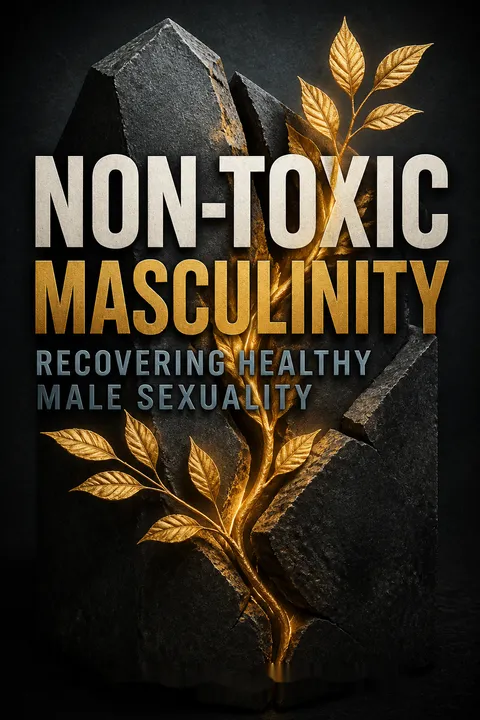
Non-Toxic Masculinity offers a thoughtful critique of purity culture and its impact on male sexuality. Zachary Wagner provides a compassionate, nuanced perspective on healthy masculinity, addressing issues like porn addiction, shame, and the dehumanization of both men and women. While some readers found certain arguments lacking or controversial, many appreciated Wagner's vulnerability and his efforts to reframe male sexuality in a more positive light. The book's focus on sexuality as the primary aspect of masculinity was criticized by some, but overall, it was praised for its contribution to discussions on Christian sexual ethics and gender roles.
People Also Read







Glossary
Purity culture
Evangelical sexual-purity subcultureWagner uses this term for the theological assumptions, teaching materials, events, and rhetoric used to promote traditional Christian sexual ethics in response to the sexual revolution. It is broader than the 1990s and 2000s Purity Movement. Its characteristic emphases include premarital abstinence, sexual fulfillment in heterosexual marriage, and expectations that obedience will bring blessing.
sexual prosperity gospel
Sexual obedience promises rewardsA promise that abstaining from sex before marriage will earn a desirable spouse, satisfying marital sex, and lasting relationship fulfillment. Wagner compares this reasoning to prosperity teaching that promises material rewards for religious obedience. His criticism is that it turns sexual restraint into a transaction and leaves people vulnerable to shame when marriage, pleasure, or sexual ease does not follow.
toxic masculinity
Masculinity that dehumanizesWagner's working definition describes a way of thinking, living, and acting as a male that dehumanizes oneself or others. It includes using physical, social, or institutional power for selfish ends, and can normalize entitlement, aggression, emotional repression, or sexual objectification. The term does not mean that being male is inherently harmful or that all men behave toxically.
embodied male advantage
General male physical advantageWagner's term for the general pattern that adult male bodies tend to have greater size and physical strength than female bodies. He treats this as a bodily difference, not proof that men are superior or destined to dominate. The concept highlights a source of power that men can either use responsibly or turn toward coercion and harm.
sexual exceptionalism
Sex treated as overriding sinA tendency to regard sexual wrongdoing as uniquely corrupting or spiritually decisive compared with other moral failures. In the book, pornography use can become a measure of a believer's worth or relationship with God, while anger, greed, racism, or pride receive less scrutiny. Wagner argues that this disproportionate focus makes sex seem like the whole of Christian discipleship.
chastity
Mature, honoring sexual virtueWagner uses chastity for the healthy expression of embodied sexuality through self-control, joy, and regard for oneself and others. It is not simply virginity or a condition preserved until marriage. Like other virtues, chastity is developed over time and applies to single and married people alike. Its aim is sexuality that serves human dignity rather than self-gratification.
Download PDF
Download EPUB
.epub digital book format is ideal for reading ebooks on phones, tablets, and e-readers.








