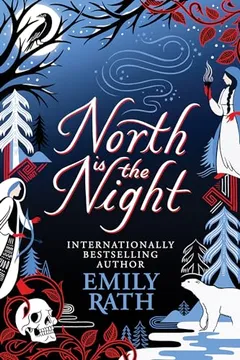


Plot Summary
Kalma Takes Aina
On Lake Päijänne, Siiri and Aina salt the fish their families need for winter while worrying over the young women disappearing from nearby villages. Their teasing about marriage exposes a difference neither can quite name: Aina hopes for a family, while Siiri wants their shared life to stay unchanged.
Then a horned woman appears on the beach beside a red-eyed wolf. Siiri attacks the creature and draws it away from Aina, but Kalma, goddess of death, throws her against a tree. Aina refuses to flee alone and lets Kalma seize her instead. Siiri wakes among her family, bruised and bereft, while Aina has been carried into the realm of the dead.
The abduction makes the friends’ emotional imbalance physical. Aina’s instinct is to protect Siiri through self-sacrifice; Siiri’s is to protect Aina through force. Neither can control the other’s choice, and both discover that devotion without consent can leave the beloved feeling powerless. Their ordinary argument about marriage also plants the story’s central problem: Aina is expected to choose a conventional future, while Siiri fears any change that might take her away.
A Promise Northward
Siiri’s grandmother, Kaisa, believes the missing girls are alive in Tuonela, though Siiri’s father, Jari, wants the village to grieve quietly rather than provoke Swedish Christians. After Siiri tells Aina’s mother, Milja, that she will find a way to bring Aina home, she confronts a priest who calls the abduction punishment for sin.
Her public defense of Aina alarms Jari, who strikes her and orders an apology to protect the family from reprisals. Kaisa helps Siiri escape instead, supplying travel clothes, food, her mother’s cap, and silver bracelets for the gods. Siiri heads north on the reindeer Halla, determined to find the legendary shaman Väinämöinen and enter the underworld.
Siiri’s quest begins as private grief but immediately becomes political. The priest turns Aina’s disappearance into an argument for Christian authority, while Jari’s fear reflects the real danger of answering that authority openly. Siiri mistakes restraint for surrender, yet Kaisa’s warning that survival sometimes requires retreat complicates her idea of courage. Her departure is an act of love, but it also marks a refusal to let either men or institutions define which losses deserve resistance.
The Feast Is Rot
Aina wakes in a locked chamber where enchanted bread gives her one nourishing bite before turning foul. A raven visits her window, and his magic eventually supplies real food and clothing, though he cannot open the door. When the door finally does open, Aina follows a frightened captive, Helmi, into a grand hall and meets five other young women.
Their welcoming feast becomes a display of mold, maggots, and skulls when the glamour falls away. Tuonetar reveals herself as the Witch Queen and confirms that the women are alive, not guests but captives. She assigns them labor under threat. Aina is sent to weave for Loviatar, the blind goddess of illness, and learns that silence may be her best protection.
The false feast turns hospitality into a weapon. Tuonetar offers food, shelter, and ceremony, then uses the girls’ hunger and fear to make captivity resemble generosity. Aina counters this by watching before she eats and by treating other captives as people rather than rivals. Her first survival skill is not force but attention. That habit will let her gather knowledge in a place designed to keep its victims confused.
A Shrine Defiled
At the sacred grove, Siiri finds a Christian cross planted on the Finns’ offering stone. Tellervo, daughter of the forest god, blames mortals for abandoning the old gods and stripping the land. Siiri argues that the gods’ silence helped drive people away, and that Väinämöinen might restore their faith. Tellervo refuses to guide her, but another mysterious goddess returns Siiri’s weapons and gives her supplies.
She tells Siiri to keep going north and watch for a bear, which will lead her to the shaman. Before leaving, Siiri breaks the cross from the offering stone. Her defiance restores the grove to its old purpose, but it also sharpens the conflict between Finnish tradition and the expanding Christian presence.
The grove is both a religious site and a contested piece of land. The cross is not merely an insult to a goddess; it signals an organized claim over Finnish memory and practice. Tellervo’s anger prevents the easy assumption that the old gods are benevolent allies. Siiri must persuade even the powers she hopes to enlist, and her willingness to admit that human faithlessness has consequences hints at a deeper balance than simple loyalty to one side.
The Hunt Turns Cruel
Tuonetar’s daughters drive the captive women into a forest and order them to hunt for food. Aina and Satu find bodies of earlier captives, then discover that the witches have transformed some women into animals for the others to hunt. Lilja has shot Inari, believing her to be a deer. Inari is dying, and Aina ends her suffering with a swift cut rather than let her linger.
The witches then restore Inari as a walking corpse and threaten the survivors with more games. Aina refuses the offered feast and chooses to return to her room hungry rather than help the witches control her friends. She begins to suspect the chaos in Tuonela serves a hidden purpose beyond cruelty.
Aina’s mercy is not passive. She chooses the timing and manner of Inari’s death because the alternatives have been taken away. That choice leaves her with guilt, but it also establishes a boundary against the witches’ spectacle. The transformed hunt exposes the captives’ forced complicity: the regime makes victims harm one another, then calls the result entertainment. Aina’s refusal of food becomes a refusal to accept the terms on which Tuonetar offers it.
The Bear Returns
Siiri frees a trapped brown bear by dropping a cut birch tree into its pit and offers it dried fish before moving on. Days later, two trappers steal her bow and Halla’s lead, then threaten to assault her. Siiri uses a concealed knife to kill the taller man when he forces her to the ground.
She returns to the camp for her supplies, where the second trapper pins her and threatens her with an axe. The bear charges from the trees and kills him. Siiri recognizes the animal as the one she rescued, names him Kal, and accepts his help in following the goddess’s instruction north. The life debt between them gives her a guide, though the killings leave her shaken.
The bear’s return makes reciprocity more than a moral ideal: Siiri’s earlier choice to help a vulnerable creature creates a bond that saves her life. Yet the trappers’ deaths complicate the heroic pattern. Siiri survives because she can act decisively, but she cannot pretend that violence leaves her unchanged. Her cut hair is a practical rejection of a vulnerability the men exploited, and a visible sign that the journey is already reshaping her.
A Bride for Death
Working beside Loviatar, Aina learns that Tuonela is no longer the peaceful resting place described in Finnish stories. Tuonetar has imprisoned Tuoni, the god of death, and uses the captive girls to torment him. Loviatar reveals that only a wife can break his binding, then leads Aina through a hidden passage to an alder tree that has grown around him.
Aina recognizes her raven, Jaako, as Tuoni’s freed soul. She agrees to marry him only after securing promises that the other girls will be released, her family will be protected, and he will treat her kindly. Using a silver knife and their blood, she binds herself to him. Fire consumes the tree, and Tuoni steps free.
Aina does not enter this marriage through romance or simple surrender. She negotiates terms while facing a god who cannot answer her in words, making the ritual a fragile exercise in mutual consent under extreme pressure. Her conditions protect other people before they protect her, an extension of her habitual selflessness. The scene also recasts Jaako: the companionship that sustained her was real, but its unequal knowledge leaves Aina with fresh reasons to be wary.
Lumi’s Burning Pursuit
After Siiri reaches a Sámi settlement, its leader, Lumi, drugs her with fumes, binds her to a post, and cauterizes her infected throat wound without permission. Lumi wants the bear because she believes it can lead her to Väinämöinen. When Kal attacks the settlement to rescue Siiri, Lumi sets huts burning and searches for him with wolves.
Siiri escapes through the chaos but cannot recover Halla or her supplies. She and Kal flee across a frozen lake as Lumi’s sled wolves close in. Kal breaks the ice to stop their pursuers, but the floe traps Siiri beneath the water. An old hunter pulls her out and carries her to his hut, where she discovers he is Väinämöinen.
Lumi’s treatment of Siiri mirrors the coercion Siiri has seen elsewhere, though it is framed as practical care. Her willingness to heal a wound does not make her trustworthy when she also drugs and restrains the patient. The pursuit strips Siiri of her equipment and nearly her life, forcing her to depend on others without abandoning judgment. The shaman’s appearance arrives as a rescue, but his weariness signals that the legend has not survived unchanged.
The Dead Crowned Queen
Once free of the alder tree, Tuoni reveals that Aina’s blood marriage has restored his power. He takes her to his palace, where his presence changes the rooms from skull-lined darkness into a warm, living hall. Aina refuses to let him punish Tuonetar without regard for the daughters who remain attached to their mother, so she secures a place for the imprisoned queen at supper even while Tuoni confines her.
Tuoni then honors his oath: he sends Helmi, Satu, and Riina back to the living with horses, provisions, and protection. Aina stays in Tuonela as its queen, asking the survivors to tell her family and Siiri that she is alive and at peace.
Aina’s power becomes visible not through conquest but through the terms she sets for it. She can command the dead, yet her first political instinct is to preserve a bond between mothers and daughters, even when that bond is difficult. Tuoni’s return improves the palace, but it does not erase the cost of his absence. Aina’s decision to stay is both a sacrifice and an act of authority: she chooses the shape of her captivity rather than letting Tuonetar choose it for her.
The Queen’s Prophecy
Tuoni tries to make their marriage a partnership, teaching Aina about Tuonela and giving her room to explore the palace. She begins to claim a stronger identity as Ainatar, but the sisters’ violence keeps the danger close. A released death spirit shatters her shoulder, and Tuoni heals her with a song.
At her coronation, Mielikki delivers a prophecy about a son of life and death who may master both. Tuoni admits that he once saw a vision of a mortal wife holding a child. Aina realizes she may be pregnant and fears the gods will kill her child. When Tuoni refuses to free the baby, she resolves to escape with it.
Ainatar’s new title offers a language for power, but it cannot make her safe. The attack on her body demonstrates that Tuoni’s protection is limited by divided loyalties and by a realm still full of hostile forces. The prophecy intensifies that vulnerability by turning a private marriage into a political crisis. Aina’s decision to flee is not a rejection of love; it is her attempt to keep love from being used as a claim over her child.
A Shaman Reassembled
Väinämöinen refuses Siiri’s demand to enter Tuonela, but her persistence persuades him to teach her shamanic practice. He explains the three parts of the soul and trains her to release her luonto as a bird, then her itse as a traveling version of herself. The first time Siiri sends her itse home, she discovers her family believes she died.
A Christian priest and Onni try to stop a traditional bear funeral, confirming that religious pressure has become a direct threat. Back in the north, Siiri persuades Väinämöinen to heal the wounded bear. He draws the bear’s hidden soul out: it is his own lost itse. The two halves reunite, restoring the shaman’s full identity.
Shamanic knowledge is presented as discipline and shared responsibility, not a private supernatural gift. Siiri earns access through observation, practice, and a willingness to accept bodily risk. The revelation that the bear was Väinämöinen’s own wandering self makes her earlier kindness unexpectedly consequential, but it does not turn her into a predestined hero. Her return home also reveals that magical travel cannot shield her community from political consequences.
The Door to Tuonela
Väinämöinen explains how the Witch Queen cursed him and teaches Siiri to tether her soul with runes, drums, and a coat that has crossed into Tuonela. Siiri enters the underworld as her itse and searches the palace grounds for Aina. She sees Aina walking beside Tuoni and nearly attacks him, but remembers that her friend may have changed during captivity.
Under a willow tree, she reveals herself. Aina first mistakes her for an impersonating witch, then recognizes her. Their reunion turns painful when Aina admits she married Tuoni and is pregnant. Siiri insists on taking her home; Aina says she must protect her child. They agree to flee together, though neither can restore their former life.
The reunion tests whether love can recognize a person who has been remade by survival. Siiri’s first impulse is to rescue the Aina she remembers; Aina’s account forces her to face the choices made in her absence. Their conflict is not a failure of affection but evidence of different experiences. The soul journey makes their bond literal without making it simple: Siiri must accept Aina as a person with her own loyalties, not as the object of a quest.
Names and Knitting Needles
Loviatar finds the women near the palace garden and refuses to help until Aina promises not to bring her hidden daughter back to Tuonela. Siiri strikes Loviatar unconscious when she threatens Aina, then they use the goddess’s secret tunnel beneath the weaving room. Vammatar catches them and attacks Siiri, while Aina commands the dead guards and uses a knitting needle to blind one.
The fight tumbles into the passage. Aina orders the guard to defend Siiri and attack Vammatar, giving her friend an opening to wound the witch. Loviatar recovers and disables Vammatar with illness magic. She then reveals her daughter’s name, Toivotar, and agrees to guide the fugitives toward the river.
Domestic objects become tools of resistance: the loom hides an escape route, and the knitting needle becomes a weapon. Aina’s authority over the dead is no longer abstract, while Siiri’s instinct to protect her still risks overriding her judgment. Loviatar’s name bargain makes trust concrete. Aina does not accept an apology in place of accountability; she asks the goddess to surrender knowledge she has guarded for generations.
The River’s Last Defense
At the river, Tuonetar intercepts the fugitives and tries to kill Aina before the prophecy can be fulfilled. Aina draws on Tuonela’s magic, shields Siiri and Loviatar, and calls the dead women Tuonetar tortured to rise against her. They seize the Witch Queen and take her wand.
Aina breaks it, but Surma’s howl summons a wave of weapons that threatens to sweep across the river island. Tuoni arrives and builds a wall of fire to hold it back. He tells Siiri to take Aina across, even as the flames consume his body. Aina crosses with Siiri, leaving Tuoni on the far bank. He lets them go, and Aina leaves wearing her crown.
Aina’s authority is earned through collective memory: the dead she calls are not anonymous forces but women whose suffering Tuonetar tried to erase. Breaking the wand dismantles the instrument of the Queen’s control, but it cannot end danger by itself. Tuoni’s final intervention makes love costly in a different way: he protects Aina by releasing her, accepting that care may require surrender rather than possession.
The Shaman’s Final Choice
Siiri and Aina return to the living just as Lumi sets fire to Väinämöinen’s hut and surrounds it with wolves. Siiri fights beside the shaman while Aina uses a bow to keep the wolves from reaching them. Lumi wounds Väinämöinen, and he tells Siiri that the only way to keep his magic from Lumi is to accept his chosen death.
Siiri drives a sword through him, then claims his departing soul and power. With the strength of the legendary shaman, she defeats Lumi. Rather than let the wounded witch die slowly, Siiri grants her a swift death when Lumi asks for one. Väinämöinen’s body is burned on a pyre, while his wisdom now rests in Siiri.
The inheritance is deliberately painful. Siiri cannot become Väinämöinen by admiration or training alone; she must accept the burden he chooses to pass on and take responsibility for his death. Her decision echoes Aina’s earlier mercy toward Inari, but the stakes differ: Siiri kills a mentor who asks her to do so. Sparing Lumi’s suffering afterward shows that power does not require repeating the violence that created it.
Hope Comes North
After Siiri and Aina burn Väinämöinen, the goddess Toivotar arrives and confirms that the shaman intended Siiri to inherit his role. She gives Aina a wooden soul bird Tuoni made for their future child, so the boy can find his father. Toivotar then conjures a homestead in place of the burned hut, giving the women food, shelter, and time to recover.
Siiri accepts that returning south will mean resisting Swedish religious expansion, not simply restoring old songs. Aina remains beside her, still connected to Tuoni but choosing life with Siiri. Their refuge is temporary, yet it gives them the material means to prepare for the wider struggle.
Hope here is not a promise that suffering will disappear. Toivotar gives the women a house, a token of connection, and a clearer sense of what comes next, but no guarantee of victory. The soul bird bridges the living and the dead without erasing their separation. Siiri’s inheritance also changes the scale of the story: recovering Aina has become inseparable from helping a threatened people recover the knowledge they need.
Väinämöinen Returns Home
Siiri sends her itse south to speak with her family and Milja. She learns that priests searched the homestead, fined Jari, and took cattle after accusing Kaisa of witchcraft. Helmi, one of the freed captives, is living with Milja and plans to marry Siiri’s brother Aksel. Siiri confirms that Aina is alive and pregnant, then explains that she has become Väinämöinen’s successor.
To prove her power, she fills Milja’s house with flowers and water lilies through song. She tells her family that she and Aina will return from the north to unite the Finns against the Swedish invaders. Her family receives not a simple homecoming, but a promise of difficult work ahead.
The home visit makes the cost of Siiri’s quest visible in the lives of those who stayed behind. Her family paid fines and lost animals because authorities pursued her, so her return cannot be celebrated without reckoning. She uses magic to demonstrate legitimacy, but her declaration is also an invitation to shared responsibility. The flowers in Milja’s house offer renewal without disguising the coercion that threatens the village.
A Raven’s Promise
Aina gives birth to a son after a long labor, with Siiri helping her through it and welcoming the baby into her arms. Days later, Tuoni sends Kalma in raven form with a letter. He agrees that their son will grow up in the living world, provided Aina brings him to Tuoni at the solstices.
Aina tells the raven that she still loves Tuoni, but that her soul belongs with Siiri and cannot survive in Tuonela. She asks Siiri to name the child, and Siiri chooses Kalev, called Kal, after the bear who first led her north. The family remains divided between worlds, yet the child has a name, a home, and a path back to his father.
The ending refuses to treat love as a single exclusive allegiance. Aina can love Tuoni and still choose the living world; Siiri can share a life with her without erasing that earlier bond. The solstice visits make separation an ongoing practice rather than a clean break. Naming the child after Kal ties the future to the first act of compassion that set the quest in motion, suggesting that the new family will be shaped by care freely offered.
Analysis
North Is the Night makes the struggle over Finnish religion inseparable from the intimate struggle between two women who cannot bear to lose one another. Siiri’s first instinct is to protect Aina by acting for her; Aina’s is to protect Siiri by surrendering herself. Both acts are loving, and both risk turning love into control. Their eventual reunion matters because neither can simply resume the old arrangement. Each must acknowledge what the other chose while absent.
The novel also treats power as a question of who can define the meaning of suffering. Tuonetar calls cruelty hospitality and punishment justice. The priests call conquest salvation. Tuoni imagines a peaceful underworld, but his desire for a wife and heir risks reproducing the very possessiveness he opposes. Aina’s insistence on conditions, mercy, and the right to leave offers a third political language, neither chaotic violence nor total control. Her authority begins when she stops mistaking kindness for compliance.
Siiri’s transformation follows another route. Her strength is not simply fearlessness: she is frightened, makes mistakes, and sometimes kills. She becomes capable of carrying Väinämöinen’s knowledge only after learning that skill must serve others. The bear’s rescue, the drum’s shared teaching, and the shaman’s chosen death all make inheritance relational rather than proprietary. A person’s power is measured by what it enables others to do.
The ending offers no complete victory over religious persecution or death. Siiri and Aina prepare to return to a threatened homeland, while Tuoni remains in the underworld and the child belongs to both worlds. That unfinishedness suits the book’s moral imagination. Balance is not a settled peace but a practice of holding opposing needs without erasing either one. Love survives not because it abolishes grief, but because the characters keep making choices that leave room for another person to live.
Review Summary
Reviews for North is the Night are mixed, averaging 3.71/5. Positive readers praised its rich Finnish mythology, atmospheric world-building, and compelling dual-POV characters. Critics raised significant concerns, most notably the misrepresentation of Sámi indigenous people as villains, misleading sapphic marketing (the F/F romance is minimal), underdeveloped world descriptions, and weak prose. Many felt the book read more like a series setup than a standalone story. The Aina/Tuoni relationship divided readers, with some finding it compelling and others viewing it as problematic.
Characters
Siiri
Relentless forest-born shamanA skilled hunter from Lake Päijänne, Siiri trusts action more readily than patience. She is quick-witted, fiercely protective, and suspicious of any authority that asks her to accept suffering quietly. Her devotion to Aina gives her courage, but it also exposes her fear of being left behind and her tendency to mistake protection for control. The journey tests her physical endurance and her assumptions about the gods, death, and the people she loves. Siiri’s resourcefulness is practical: she reads tracks, forages, fights, and learns by doing. Beneath her bravado, she is grieving, and the work of becoming a shaman asks her to carry that grief without letting it harden into indiscriminate violence.
Aina
Merciful heart, fierce survivorAina is Siiri’s closest friend, a patient listener and a careful observer who often notices what more forceful people miss. She wants a family and a home, but her kindness is not the same as passivity. In danger, she shares what little she has, learns the habits of her captors, and uses patience to gather leverage. Aina’s instinct is to protect others, sometimes at the expense of her own wishes. Her challenge is to recognize that compassion can include anger, boundaries, and self-preservation. She is drawn to stories, craft, and ordinary domestic comforts, yet those qualities become sources of strength rather than limits on her courage.
Tuoni
Lonely lord of deathTuoni rules the Finnish underworld and carries a vision of death as a place of rest rather than punishment. His power is immense, but his isolation has made him vulnerable to desperate choices and to the belief that affection can be secured through destiny. He is curious about mortal life and longs for companionship, yet he must learn that protection can become possession when another person has no freedom to refuse. His tenderness and his capacity for control coexist uneasily. Tuoni’s relationship with Aina forces him to confront the difference between being loved and being needed, and the cost of loving someone whose life belongs elsewhere.
Väinämöinen
Exiled shaman of legendThe legendary shaman has spent years in the north, hiding from the consequences of an old journey into Tuonela. He is learned, irritable, funny, and tired in ways his stories do not reveal. Väinämöinen treats knowledge as something meant to be shared, even while his own history has made him reluctant to trust anyone with it. His students must contend with both his formidable skill and his fear that surviving another impossible trial will only prolong his pain. His character unsettles the heroic ideal: wisdom does not make a person immune to shame, loneliness, or the wish to stop suffering.
Loviatar
Blind goddess and weaverLoviatar, goddess of illness, is a blind weaver whose hands know cloth by touch and whose speech is guarded by long experience. She values silence, but Aina’s company gradually draws her into conversation. Loviatar is neither a simple mentor nor a reliable protector; she can offer shelter while withholding crucial information, and her choices are shaped by grief as much as strategy. Her severity reflects a life spent among powerful relatives who treat vulnerability as something to exploit. She understands the danger of attachment and tries to conceal her own. Aina’s insistence on trust challenges Loviatar to face the difference between protecting someone and using them.
Tuonetar
Witch Queen of TuonelaTuonetar is the death queen, a master of glamour, fear, and theatrical cruelty. She turns the customs of hospitality into traps and treats suffering as both entertainment and political leverage. Her vanity makes her eager to conceal her decay, while her appetite for control makes her hostile to any future she cannot command. Tuonetar’s rule harms mortals and immortals alike, but she is not merely a force of random evil: she believes chaos is essential and sees order as a threat to her existence. Her conviction makes her dangerous even when her power is constrained.
Kalma
Death witch and raven guideKalma is the skeletal goddess who gathers the dead, accompanied by Surma, a monstrous wolf. Her silent manner and rotting appearance make her an object of terror to the living. She is difficult to read, and her methods can be brutal even when her loyalties are sincere. Kalma acts with a deep, single-minded devotion to her family, but she rarely explains herself or considers the damage her schemes inflict on others. Her presence forces Siiri and Aina to confront the gap between intention and consequence: love may motivate an action without making that action merciful.
Lumi
Sámi witch and pursuerLumi is a powerful northern witch who has spent years pursuing Väinämöinen and the magic she believes he possesses. She is intelligent, skilled in combat, and capable of treating a wound, but her ambition makes her willing to drug and restrain Siiri. Lumi’s pursuit is driven by a private need to prove herself, not simply by a desire for power. She is most dangerous when she mistakes persistence for destiny and cannot imagine a future beyond the one she has chosen.
The hooded goddess
Mysterious guide northAn elusive goddess appears to Siiri at moments when despair threatens to stop her. She offers encouragement, supplies, and cryptic instructions rather than a full explanation of the path ahead. Her refusal to solve Siiri’s problems for her preserves the mortal’s agency, even as her interventions quietly redirect the journey. She is associated with hope, but her guidance does not promise safety or success.
Tellervo
Angry forest goddessTellervo, daughter of the forest gods, guards the trees and grieves the damage mortals inflict on her father’s sacred grove. She is quick to condemn human beings as exploiters, yet Siiri’s willingness to acknowledge the gods’ own withdrawal unsettles her certainty. Tellervo embodies a wounded relationship between people and land, where neglect and resentment reinforce each other. She does not give Siiri easy help, but her refusal makes clear that the old gods have reasons to distrust those who invoke them.
Vammatar
Goddess of evilVammatar, goddess of evil and misfortune, delights in instability and sees other people’s pain as an opportunity. She is clever enough to read motives, but her vanity and appetite for disorder make her difficult to bargain with. Unlike a conventional loyalist, she is drawn to whatever promises the most disruption. Her presence warns that a shared enemy does not automatically produce shared values.
Kivutar and Kiputyttö
Twin goddesses of painThe twin goddesses personify suffering and pain. Kivutar stirs mortal misery, while Kiputyttö can inflict pain through a stone turned in her hand. They serve Tuonetar’s regime and help make its cruelty systematic, directing punishment rather than simply witnessing it. Their closeness to their mother complicates any easy separation between family affection and complicity.
Toivotar
Goddess of hopeToivotar is an elusive goddess whose rare appearances offer direction when Siiri has exhausted her own plans. Her presence is connected to renewal and possibility, but she does not remove the risks facing the people she helps. She represents hope as a force that must be acted upon rather than a guarantee that events will turn out well.
Kaisa
Siiri’s steadfast grandmotherKnown affectionately as Mummi, Kaisa raises Siiri on Finnish stories and refuses to dismiss the old gods when danger makes belief inconvenient. Her courage is quieter than Siiri’s: she provides food, a route, and counsel, then accepts the risk of helping her granddaughter leave. Kaisa understands that survival sometimes requires patience, but she does not confuse caution with cowardice. Her love gives Siiri both a home to leave and a place to return to.
Jari
Siiri’s fearful fatherJari has moved his family north to escape Swedish expansion and religious pressure. He wants to keep his children alive, so he prizes secrecy and restraint over open defiance. His fear is rooted in experience rather than indifference, but it can make him hurt the daughter he is trying to protect. Jari’s conflict with Siiri reflects a genuine disagreement over how a vulnerable community can survive.
Aksel and Onni
Siiri’s divided brothersAksel is a practical hunter who helps Siiri survive in the wilderness and remains tied to the community she leaves behind. Onni, by contrast, is drawn toward the Christian priest’s promise of certainty and authority. Their different responses to religious change show how one family can be divided by fear, loyalty, and the need to believe in a future.
Liisa
Siiri’s sharp little sisterLiisa is the youngest child in Siiri’s family, observant and stubborn enough to ask the questions adults would rather avoid. Her bond with Siiri is affectionate but not sentimental; she notices when her sister has changed and demands honest answers.
Milja
Aina’s grieving motherMilja is Aina’s mother and the village’s wisewoman. She shares Siiri’s belief in the old gods, but grief initially makes hope feel too dangerous to entertain. Her care for Siiri bridges the two families, and her practical generosity helps keep the village connected when outside pressure tries to isolate it.
Taavi
Aina’s devoted fatherTaavi is a woodworker and Aina’s father. He is a grieving parent whose uncertainty reflects how thoroughly the disappearances have shaken the village. His craft links him to the Finnish custom of making soul birds for the dead.
Helmi
Captive seeking belongingHelmi is one of the young women taken to Tuonela. Fear and injury make her dependent on others at first, but she remains emotionally open and forms strong bonds with the other captives. She has lost the family support that might have welcomed her home, making belonging as important to her as survival.
Lilja
Defiant captive and hunterLilja is blunt, practical, and unwilling to make peace with captivity. Her knowledge of old stories helps the other women understand the threats around them, while her anger sometimes pushes her into danger. She represents the survival instinct in its most openly rebellious form.
Satu
Gentle captive and singerSatu is frightened by violence but retains tenderness toward the women around her. Her knowledge of songs allows her to comfort others during a death that cannot be prevented. She is a reminder that courage may appear as care, not combat.
Riina
Practical captive and survivorRiina is alert, skeptical, and quick to recognize that the witches’ hunting task is a trap. She helps the other captives resist the pressure to obey and survives by judging danger before acting. Her clear-eyed pragmatism balances Lilja’s defiance and Aina’s compassion.
Inari
Quiet captive caught in a trapInari is a reserved young woman among Tuonetar’s captives. Her fate in the witches’ forest game becomes a turning point for Aina, who must decide whether mercy means preserving life at any cost or ending unbearable suffering.
Kukka
Aina’s silent attendantKukka is a dead handmaid assigned to Aina in Tuonela. Her broken gait and vacant expression conceal a quiet, dependable presence. Aina gives her a name and treats her as a companion, challenging the idea that the dead are merely servants or instruments.
Plot Devices
The three-part soul
Shamanic travel and returnFinnish shamanic practice divides the soul into henki, the life force that keeps a person alive; luonto, a bird-shaped guardian embodying strong traits; and itse, a traveling self that can act and speak beyond the body. A drum helps release these parts, while tattoos based on its runes tether them so they can return. Siiri’s lessons turn this cosmology into plot mechanics: she first learns to fly as her luonto, then sends her itse to her family and finally into Tuonela. The magic carries serious risk. If a soul part stays away too long or loses its tether, the traveler may never return.
The blood marriage
A vow that alters powerAn old marriage rite joins two people through blood, vows, and a shared bond. In the story, Aina uses it as a desperate bargain, setting conditions before binding herself to Tuoni. The rite frees Tuoni from the alder tree and gives Aina authority within Tuonela, but it also connects their emotions and complicates any attempt to separate. The bond does not settle whether Aina consents to every consequence of the marriage. Instead, it makes her ongoing choices more consequential, as love, obligation, and political power become difficult to disentangle.
The shaman’s drum
A map of life and deathA shaman’s drum carries runes for the living world, the underworld, its gods, and the drummer’s own identity. Its rhythm helps the shaman enter a trance and release a soul part. The markings also reveal what matters to the drummer and help tether a traveler across realms. Väinämöinen teaches Siiri to make and read a drum, so her route through Tuonela is grounded in accumulated knowledge rather than spontaneous power. The instrument gives the story a portable map, a ritual tool, and a record of personal bonds.
The bear life debt
Kindness becomes a guideSiiri frees a bear from a pit and offers it food instead of treating it as a threat. When the animal later saves her from two trappers, she understands their relationship as a life debt and accepts its guidance north. The bear is also connected to Väinämöinen’s hidden history, so this early act of compassion becomes essential to finding the shaman. The device links practical survival with reciprocal obligation: Siiri gains help because she first helped a creature when there was no reward in sight.
Prophecy and the soul bird
A future held between worldsMielikki’s prophecy identifies a child connected to life and death whose power may alter the underworld. Tuoni’s earlier vision and the prophecy shape the gods’ conflicts around Aina’s pregnancy, while the wooden soul bird gives the child a tangible link to his father. The prophecy is not a simple guarantee of a happy outcome. It becomes a point of contention because Tuoni, Aina, and the other death gods interpret the child’s future differently. The soul bird offers a quieter counterweight: connection across distance without forcing mother and child to remain in Tuonela.
About the Author
Other books by Emily Rath






Download PDF
Download EPUB
.epub digital book format is ideal for reading ebooks on phones, tablets, and e-readers.








