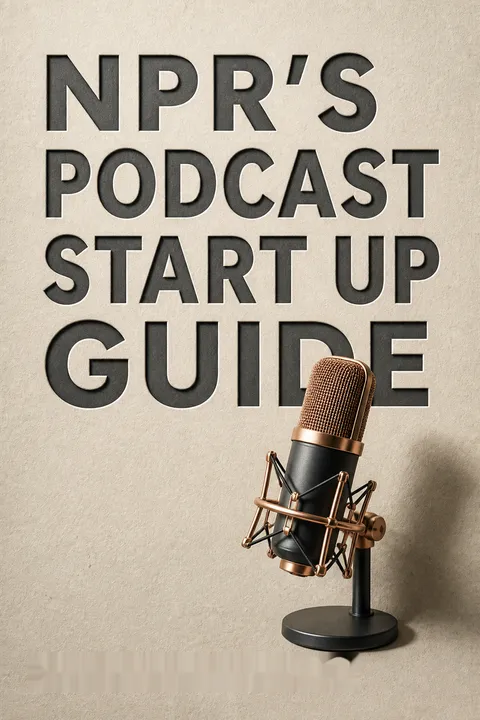


Key Takeaways
Define the listener before you decide what the podcast is about
Start with the audience. A podcast is not just a subject you enjoy discussing. It is a promise of information, entertainment, or companionship to someone who chooses to listen. Identify a primary audience, then nearby secondary audiences. Ask what they need, wonder about, or enjoy, and what the show offers that existing podcasts do not. A broad topic such as history needs a distinctive angle; an extremely narrow one needs enough scope for more than a few episodes.
Make the promise concrete. Study where those listeners spend time and what content they respond to. This is market research, but its purpose is not to imitate them. It helps creators make a show that feels relevant and gives potential listeners a clear reason to press play.
What's useful here is the shift from creator-centered enthusiasm to audience-centered design. It resembles product research: the aim is not to ask people to invent the show, but to understand the needs and habits a good show can serve. A defined audience also sharpens editorial judgment, because each proposed episode can be tested against a real listener. The caution is not to mistake a target audience for a rigid demographic stereotype. Shared interests, situations, and questions often predict a show's appeal better than age or location alone.
Earn the first seconds with a clear promise, not a slow preamble
Attention is fragile. The book reports that 20 to 35 percent of an episode's audience may leave within its first five minutes. In NPR One listening data, the strongest intros lasted no more than 22 seconds. Streaming listeners may decide even faster, as they sample from a crowded feed. An opening should quickly establish what the episode explores and why it matters, using a question, a surprising detail, a scene, or a useful idea.
Promise, then deliver. A dramatic cold open can work, but only if listeners soon understand the stakes. A teaser that exaggerates the story may win a click and lose trust. Intros and episode descriptions should invite curiosity without concealing the subject or promising revelations the episode cannot support.
The opening functions like a compact contract: it gives listeners enough context to judge whether to invest attention. That is especially important in audio, where people often listen while doing something else and cannot scan backward as easily as a reader can. The book's timing figures are useful benchmarks, not universal laws. A quiet opening may suit a deliberately intimate show, while a high-energy hook can feel manipulative if it misrepresents the episode. The real test is whether the opening creates informed curiosity.
Scale the format to your time, budget, and staying power
Use the resource equation. The book's Time + Money + Passion Equation is a planning tool: assess how much time, money, and sustained interest the show requires, then adjust the design to match what is available. Narrative reporting often demands research, interviews, location sound, scripting, and extensive editing. Interviews and roundtables can be simpler to produce, though both still need preparation and editorial direction.
Protect reliability. Start shorter, publish less often, or narrow the subject rather than making more than the team can finish well. Track both production tasks and publication dates, and plan backward from release. The book recommends completing several episodes before launch and keeping backup ideas ready. Listeners value a dependable schedule more than an ambitious one that repeatedly slips.
This is a useful antidote to treating ambition as a production plan. In project management, the critical path is the chain of tasks that determines when a project can ship; podcast formats differ sharply in how long that path is. A simpler format can preserve a show's core promise while removing costly steps. There is a tradeoff: making a show too small may strip away what makes it distinctive. The practical question is not simply what can be produced, but what can be repeated without exhausting the people who make it.
Turn a subject into a story with stakes, change, and discovery
Give information a journey. A topic is not yet an episode. A story needs a question, a person or idea to follow, something at stake, and a change in what the audience understands. The book calls small discoveries or turns in that journey story beats. They keep listeners oriented while giving them reasons to continue. An episode can use a chronological sequence, a three-part arc, a problem-and-complication structure, or an investigation that follows evidence toward an answer.
Build with audio. Voice, sound, and music are the medium's basic materials. Interviews and narration carry ideas; active sounds suggest what is happening; ambience establishes a place. Because listeners hear one thing at a time, use short sentences, repeat essential names, explain unfamiliar sounds, and introduce information in manageable pieces. Music can deepen a scene, but it cannot substitute for a thin story.
The key distinction is between a subject and a change in understanding. A story gives facts a sequence and consequence, which helps listeners remember how pieces relate rather than merely collecting isolated details. This connects to learning science: information is easier to organize when attached to causal structure and specific people or events. Yet narrative shape can also oversimplify. An editor should make the arc legible without forcing messy evidence into a neat resolution. In responsible nonfiction, uncertainty and unresolved questions may be the truthful ending.
Prepare interviews deeply, then let curiosity interrupt the plan
Do the homework. A preinterview helps establish whether a guest has relevant experience, communicates clearly, and contributes something the audience needs. Research the person, their work, and the questions already asked about them. Prepare open-ended prompts that explore how events unfolded, what choices people faced, and how they felt. Questions about process often produce specific scenes and explanations instead of polished summaries.
Stay present. Preparation should make room for listening, not turn the interview into a checklist. If a guest gives a brief answer, wait before filling the silence. A revealing response may arrive after a pause, or an unexpected emotion may change the conversation. Treat the guest with respect, explain how the recording will be used, and do not steer them toward words they did not choose.
Good interviewing combines two capacities that can seem opposed: structure and receptivity. Research gives an interviewer enough context to recognize a surprising answer, while active listening allows that answer to redirect the conversation. This resembles skilled clinical interviewing, where prepared questions guide attention but the patient's own account remains important. Silence can help, but it is not a universal technique; some guests experience it as pressure. The interviewer must read the person and the context, rather than treating a dramatic pause as a guaranteed route to candor.
Record clean sound now; editing cannot rescue every mistake
Fix the room first. A good microphone cannot cancel an echoey room, a refrigerator hum, or music playing behind an interview. Choose a quiet space with soft furnishings, test the setup, and monitor the recording on headphones. Put the microphone close to the speaker, slightly off to one side to reduce bursts of air, and record each voice on a separate track when possible. Separate tracks make it easier to repair a cough, interruption, or uneven level.
Collect the setting too. Ambience is the background sound that gives a place its audible character. Record at least a minute of it at the same microphone position used for the interview. Capture useful actions and transitions, but do not fabricate sounds that never occurred. A test recording and a quick playback before leaving can prevent a whole session from becoming unusable.
The emphasis on recording quality is also an argument about resource allocation. Preventing a problem at capture is usually cheaper than repairing it, a principle shared by software testing, medicine, and manufacturing. Separate tracks, headphones, and a brief sound check are forms of redundancy: they make failures easier to detect before they become expensive. Technical clarity does not require studio perfection, though. A rough edge can suit a show; persistent unintelligibility cannot. The relevant standard is whether the sound helps listeners stay with the story.
Edit for clarity and momentum without making the truth misleading
Separate sound from story. Production improves the audio itself, while story editing shapes the sequence and meaning of what listeners hear. Both processes should serve clarity, naturalness, fairness, and forward motion. Remove digressions, confusing transitions, and repeated points, but preserve moments that reveal character or emotion. Ask outside listeners where they lost interest or became confused, then revise the actual problem rather than polishing every second indiscriminately.
Keep the edit honest. Check facts, names, dates, and claims, and represent interviewees fairly. Do not add birdsong to a scene where no birds were present or rearrange an exchange so it changes what someone meant. Copyrighted music and clips generally require permission unless a use qualifies as fair use, a context-dependent legal exception. Recording-consent rules also vary, so get consent and seek legal advice when the situation warrants it.
Editing is not merely a technical cleanup; it is an exercise of editorial power. Removing repetition can make a person's meaning clearer, but selective cuts can also distort what they said. This makes transparency and review practices especially valuable in nonfiction, where listeners may mistake a seamless sequence for an unmediated one. The book's pairing of craft with legal and ethical caution is important: a compelling edit should be defensible as a fair representation, not just persuasive as a story. Smoothness is a means, not proof of truth.
Treat launch as production: build a reliable pipeline and distribution
Prepare before publishing. A listening session with people outside the production team can reveal whether the episode is confusing, dull, or emotionally different from what its makers intended. Fix major problems, but do not let small preferences delay release forever. Have several episodes completed before launch so the first releases do not consume all the time needed to make the next ones.
Make the files findable. The book describes converting high-quality WAV recordings into smaller MP3 files for distribution. A podcast-specific RSS feed carries episode information to directories and apps; metadata such as titles, descriptions, categories, and artwork helps services identify and display the show. A hosting service can manage storage and distribution, but compare its limits, analytics, terms, and ability to move your files before committing. Transcripts and useful show notes improve access and offer additional ways to discover the work.
Launch readiness is best understood as operational readiness, not a single promotional event. The show must be able to travel through a technical chain, from a correctly prepared file to a feed, a directory, and a listener's device. Each handoff can fail, so checklists and test releases are sensible safeguards. A transcript also changes who can use the work and how its ideas can be searched. Still, discoverability is not equivalent to value: metadata can help the right audience find a show, but it cannot make an unclear episode compelling.
Grow by serving a niche, not by treating downloads as the only prize
Market as a contribution. The book frames marketing as sharing something relevant, not repeatedly demanding attention. Build a useful presence where the intended audience already gathers, maintain an email list with permission, and share material related to the show's subject. Relationships with compatible podcasters can create guest appearances, ad swaps, and recommendations. These efforts work best when they offer value between episode announcements, rather than turning every interaction into a pitch.
Measure what matters to you. Downloads show trends, but do not prove that an episode was heard all the way through. Feedback, repeat listening, email clicks, and audience participation offer different clues. Revenue is uncertain, so define success in advance: income, community, professional credibility, or support for a related business may each justify a show. A small, engaged audience can be more useful than a large, indifferent following.
The book's strongest marketing insight is that audience growth is relational, not merely numerical. A listener who trusts a host may recommend the show, buy a related service, or contribute to a community; those behaviors can matter more than raw reach. This resembles the distinction between vanity metrics and measures tied to an actual goal. But intimacy should not excuse weak evidence about performance. Creators still need to learn whether promotion reaches new people and whether the show serves them. Trust is built through usefulness and consistency, then tested through response.
Analysis
The book's central claim is that podcasting is a listener relationship built through craft, not simply a recording uploaded to the internet. Its structure traces a project from idea through planning, production, publication, and growth. That sequence is practical because it exposes the dependencies hidden by the apparent simplicity of pressing Record. Audience definition affects format; format shapes staffing, cost, and schedule; reporting and recording determine what can be edited; editing and metadata influence whether a listener can understand and find the finished work.
The most valuable tension is between authenticity and preparation. A compelling host should sound like a real person, but spontaneity alone rarely produces a focused episode. Research, outlines, recording technique, and editing create the conditions for naturalness. This is a broader lesson in creative work: process need not erase personality. It can make distinctive choices audible by removing avoidable confusion. The book also makes a consequential ethical point: production choices alter meaning. Sound, sequence, music, and cuts do not merely decorate evidence. They can clarify it, but they can also misrepresent it.
The guide is strongest when it treats constraints as design inputs. A creator short on time can shorten episodes, publish less often, choose a less demanding format, or collaborate. This is more useful than presenting professional equipment or a large team as prerequisites. Its NPR perspective, however, naturally emphasizes polished audio storytelling and journalistic practices. Some successful shows depend on other forms of intimacy, humor, improvisation, or deliberately rough production. Those alternatives do not negate the book's standards, but they show that quality is not identical to polish. The durable test is whether the production choices serve the show's promise, respect the people represented, and reward the time listeners give it.
The final business lesson is similarly grounded: audience size alone cannot define success. A podcast may function as a community, a creative practice, or a route to other work even when advertising revenue is modest. That makes the initial purpose question essential. Without it, creators can mistake platform growth for artistic progress or invest heavily in monetization that listeners do not want. The book's approach therefore links strategy, storytelling, ethics, and sustainability into one discipline: make something specific, make it well, and make it possible to keep making.
Review Summary
NPR's Podcast Start Up Guide receives overwhelmingly positive reviews, with readers praising its practical advice, approachable style, and comprehensive coverage of podcasting essentials. Many found it helpful for both beginners and experienced podcasters, appreciating its balance between technical information and creative guidance. Readers highlighted the book's value as a reference guide, its entertaining writing style, and its applicability to various audio media projects. Some noted its usefulness for understanding the podcast industry's professional standards and improving their existing shows. A few mentioned the audiobook version as particularly effective in demonstrating audio concepts.
People Also Read


Glossary
Time + Money + Passion Equation
A resource-planning toolA planning framework for matching a podcast's ambition to the creator's available time, budget, and sustained interest. A shortage in one resource may be managed by adjusting the format, episode length, publishing frequency, or division of labor. Passion matters because production requires repeated effort, while time and money determine what the creator can realistically deliver.
story beats
Small moments of discoveryThe significant turns, revelations, or new pieces of understanding that move an audio story forward. Beats give listeners reasons to stay engaged while helping them assemble the story gradually. They may come from a new fact, a change in a character's thinking, a surprising sound, or a shift in what is at stake.
actuality
A recorded non-narrator voiceAn actuality is recorded speech from someone other than the reporter or narrator, usually captured in an interview or on location. Producers select and arrange actualities alongside narration, ambience, and music to construct an audio story. The term can also refer to a particular clip of that recorded speech.
ambience
The sound of a placeAmbience is the surrounding sound that gives a location its audible character, such as traffic, wind, room noise, or activity in a workspace. Recorded separately, it can orient listeners, establish a scene, and cover seams between edited clips. Room tone is the quieter indoor form recorded where an interview or event takes place.
RSS feed
An episode distribution pipelineA podcast-specific RSS feed is a stream of episode files and descriptive information that directories and listening apps use to list and deliver a show. Its metadata can include the podcast title, episode descriptions, artwork, and categories. Listeners who follow a show can receive new episodes through the feed. A faulty or inaccessible feed can disrupt distribution.
fair use
A limited copyright exceptionFair use is a legal doctrine that can permit limited use of copyrighted material without permission in some circumstances. Courts consider the purpose of the use, the nature of the original work, the amount used in relation to the purpose, and the effect on the original's market. No specific clip length automatically qualifies, so a particular use may require legal review.
audio callout
A listener participation requestAn audio callout is a direct invitation for listeners to contribute information, opinions, experiences, or responses to a podcast. It can help creators gather material and build audience engagement. A useful callout gives a clear prompt and tells listeners how to respond, such as through a website, email, social media account, or phone line.
FAQ
What's NPR's Podcast Start Up Guide about?
- Comprehensive Resource: The book is a detailed guide for creating, launching, and growing a podcast on any budget, drawing from NPR's expertise in audio storytelling.
- Structured Approach: It is divided into four main sections: Imagine, Plan, Create, and Share, each focusing on different stages of the podcasting process.
- Emphasis on Storytelling: The guide highlights the importance of storytelling in podcasting, offering insights on engaging listeners effectively.
Why should I read NPR's Podcast Start Up Guide?
- Expert Insights: Written by Glen Weldon, an NPR editor and podcaster, it provides insider knowledge and best practices from a leading audio journalism organization.
- Practical Tools: The book includes exercises, checklists, and worksheets to help readers develop their podcast ideas and refine their storytelling techniques.
- Avoid Common Pitfalls: It addresses common mistakes new podcasters make and provides strategies to avoid them, ensuring a smoother podcasting journey.
What are the key takeaways of NPR's Podcast Start Up Guide?
- Thorough Planning: Emphasizes the importance of planning before recording, including defining your audience and determining your podcast's purpose.
- Quality Execution: Highlights that while the barrier to entry is low, the quality of execution is vital for success in a crowded market.
- Engagement Techniques: Offers techniques to engage listeners, such as compelling storytelling, sound design, and effective interviewing strategies.
What are the best quotes from NPR's Podcast Start Up Guide and what do they mean?
- "Your podcast must, should—and will—sound like you.": Stresses the importance of authenticity in podcasting, as your unique voice will resonate with listeners.
- "Execution matters.": Highlights that a great idea alone isn't enough; the quality of production and storytelling determines success.
- "Getting and keeping audience attention is serious business.": Underscores the competitive nature of podcasting and the need to hook listeners quickly.
How do I get started with podcasting according to NPR's Podcast Start Up Guide?
- Define Your Audience: Identify who your podcast is for and what they care about to shape your content and approach.
- Develop a Concept: Create a clear and compelling concept that addresses a specific need or interest within your target audience.
- Plan Your Content: Outline episodes, including potential guests and topics, to ensure a cohesive flow.
What are the essential elements of a podcast as described in NPR's Podcast Start Up Guide?
- Voice: The narrator's voice should be engaging and relatable to maintain listener interest.
- Sound: Active and ambient sounds enhance storytelling, creating a vivid audio landscape.
- Music: Music sets the mood and tone but should complement the story rather than distract from it.
What specific methods does NPR's Podcast Start Up Guide recommend for interviewing?
- Preinterview Preparation: Conduct preinterviews to establish rapport and clarify expectations with guests.
- Open-Ended Questions: Ask open-ended questions to encourage in-depth responses and dynamic conversations.
- Active Listening: Emphasizes the importance of active listening to respond naturally and follow up on interesting points.
How does NPR's Podcast Start Up Guide address audio quality?
- Technical Setup: Provides advice on setting up recording equipment, including microphone placement and soundproofing.
- Editing Techniques: Discusses editing techniques like equalization and compression to enhance audio quality.
- Sound Design Importance: Highlights the role of sound design in storytelling, using ambient sounds and music to enhance the experience.
What are some common pitfalls to avoid when starting a podcast, according to NPR's Podcast Start Up Guide?
- Poor Sound Quality: Overlooking sound quality can lead to listener drop-off; investing in good equipment is crucial.
- Lack of Focus: Warns against having a vague podcast concept; a clear theme and target audience are essential.
- Neglecting Promotion: Emphasizes the importance of marketing your podcast effectively to avoid low visibility.
How can I effectively tell a story in my podcast?
- Use a Clear Structure: Organize your podcast with a clear beginning, middle, and end to guide listeners.
- Incorporate Sound Elements: Utilize active sounds and music to enhance the storytelling experience.
- Focus on Character and Stakes: Develop relatable characters and establish clear stakes to draw listeners in.
What equipment do I need to start podcasting?
- Basic Setup: A computer or smartphone, a good microphone, and sound editing software are essential for recording and editing.
- Upgraded Gear: Consider investing in headphones, portable recorders, and mixers to enhance sound quality.
- Accessories: Pop filters and mic stands improve audio quality and ease of use during recording sessions.
How can I effectively promote my podcast after launching it, based on NPR's Podcast Start Up Guide?
- Utilize Social Media: Leverage platforms to share updates, engage with listeners, and promote new episodes.
- Email Marketing: Maintain an email list to keep your audience informed about new content and special promotions.
- Networking Opportunities: Attend podcasting events and network with other creators for collaboration and cross-promotion.
Download PDF
Download EPUB
.epub digital book format is ideal for reading ebooks on phones, tablets, and e-readers.








