

Key Takeaways
Use the numbers as questions about character, not verdicts about fate
A practice of attention. Johari presents numerology as a way to examine personality through number symbolism linked to planets. Its purpose, in his account, is not merely to predict: careful observation should help a reader notice strengths, weaknesses, and patterns in relationships. He urges practitioners to listen, develop intuition, and resist judging people by a number. He also calls numerology incomplete, and says experience matters more than simply memorizing descriptions.
A symbolic worldview. The book treats numbers as signs of cosmic energy, not as independent objects. Readers are invited to test the system against their own observations rather than accept its claims blindly. That approach makes the book part reference guide, part spiritual practice, and part method for talking about human differences.
What's valuable is the instruction to treat a profile as a starting point for attention rather than a final diagnosis. In psychology, self-descriptions can shape what people notice about themselves, so a flexible prompt may encourage reflection while a fixed label can narrow it. The Barnum effect, the tendency to experience broad descriptions as uniquely accurate, is a useful caution here. Observations should be checked against specific behavior and revised when they do not fit. That preserves the book's invitation to curiosity without requiring its cosmic explanation to be accepted as established fact.
Read your day, full birth date, and public name as three distinct signals
Three different lenses. The psychic number comes from the day of birth and is meant to describe how a person sees themselves and what they want. The destiny number comes from adding every digit in the full birth date; Johari presents it as a pattern shaping how life unfolds and how others see the person. The name number comes from the numerical values assigned to the name used publicly, especially in work and official life.
One worked example. Johari was born May 12, 1934. His day reduces from 12 to psychic number 3; the full date totals 25, then 7, making his destiny number 7. He gives his popular name, Harish Johari, a name number of 7. He says psychic influence is strongest through roughly age 35 to 40, while destiny becomes more prominent with age.
The three-part scheme is more nuanced than assigning a person one all-purpose label. It separates private self-image, life circumstance, and social identity, distinctions also used in sociology and personality research. The name number adds an especially interesting claim: identity is partly shaped by how a person is recognized in public. Still, the book's rules for calculating letters and interpreting outcomes are part of its symbolic system, not independently demonstrated measures of personality. The useful question is whether these three perspectives prompt distinct, testable observations, rather than whether every detail can be made to fit.
Keep the birthday's compound number before reducing it to a single digit
Reduction loses texture. Johari says dates from 10 to 31 carry both a single-digit root and the influence of their component digits. The first digit is especially important because it identifies the series. Thus, 12 and 21 both reduce to 3, but the book treats 12 as more influenced by 1 and 21 as more influenced by 2. Their shared root does not erase their different symbolic combinations.
Some combinations are emphasized. Johari calls certain compounds exalted when their combined planetary influences are thought to produce a more balanced or forceful expression. For example, 28 reduces to 1 and is singled out as an especially strong version of that number. He also assigns zero an inauspicious influence in birth dates, although it has no standalone numerical value in his system.
This is a reminder that a summary statistic can hide meaningful variation. The idea resembles mixture models, where a shared outcome may arise from different contributing factors. But the book's specific meanings for compounds, and especially its claims that zero brings hardship, are symbolic assertions rather than demonstrated causal effects. A careful reader can still use the compound as a prompt to ask how contrasting tendencies coexist, without treating a date as a forecast of misfortune. That distinction keeps interpretive richness while avoiding fatalism.
Treat nine planetary numbers as archetypes, not isolated personality labels
A planetary vocabulary. Johari links each number from 1 to 9 with a celestial ruler in the Indian system: the Sun for 1, Moon for 2, Jupiter for 3, Rahu for 4, Mercury for 5, Venus for 6, Ketu for 7, Saturn for 8, and Mars for 9. These links supply the book's personality language. In broad strokes, 1 suggests authority, 2 changeability, 3 counsel and discipline, 4 disruption, 5 quickness, 6 sensuality, 7 intuition, 8 endurance through difficulty, and 9 forceful action.
Each has a shadow. The descriptions are not meant to rank people. A number can express useful traits or troublesome ones, and its meaning changes according to whether it is psychic, destiny, or name number. Johari also says astrology gives more detail because a planet's interpretation depends on its position in a birth chart.
Archetypes can help people discuss complex traits in memorable language. Their strength is compression: a planetary image gathers several tendencies into a single interpretive handle. Their risk is reification, the mistake of treating a metaphor as a fixed property of a person. The book's insistence that each number has favorable and difficult expressions helps resist simple ranking, while its broad categories still invite selective confirmation. Used well, the archetypes generate questions about conduct and context. Used carelessly, they turn a colorful vocabulary into a verdict.
Use the Vedic Square to see number patterns, especially the stubborn nine
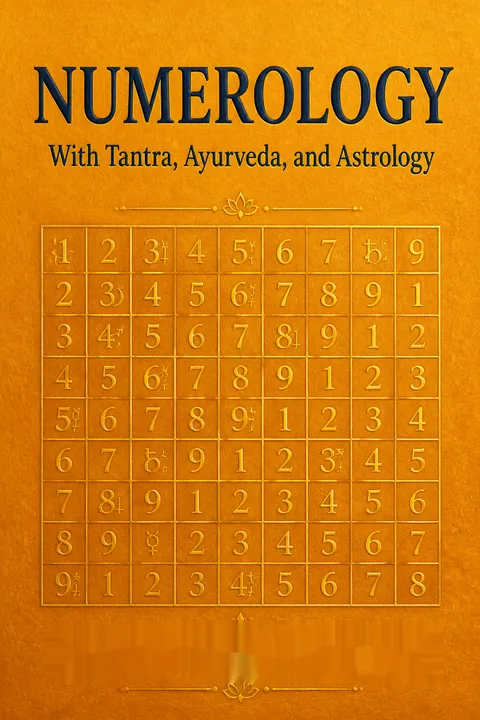
A grid of reduced products. The Vedic Square is an 81-cell multiplication table built from the numbers 1 through 9. Each product is reduced by adding its digits, so 7 times 6 becomes 42, then 6. The resulting patterns show repetitions and visual relationships among numbers. Johari reports that 9 appears 21 times, 3 and 6 appear 12 times each, and every other number appears 6 times.
A visual aid, not a full explanation. The square makes 9 distinctive because multiples of 9 reduce back to 9, while adding 9 to another number leaves that number's reduced value unchanged. Johari also points to paired patterns, such as 1 and 8, as visual opposites. He cautions that geometry cannot explain all the meanings attributed to numbers.
The square provides an unusually concrete bridge between arithmetic and the book's symbolic claims. Repeated patterns are visible and reproducible, which gives readers something to inspect rather than simply accept. That mathematical regularity, however, does not establish that the numbers govern personality. The move from a property of digit reduction to a claim about cosmic meaning is interpretive. The square is strongest as a meditation tool or pattern-finding exercise, where visual comparison can spark questions, not as evidence that a numerical sequence predicts human behavior.
Choose relationships for what their friction teaches, not just easy similarity
Compatibility means interaction. The book compares people by matching like categories, such as psychic number with psychic number. It derives compatibility from the supposed relationships among ruling planets and from whether numbers are odd, even, friendly, or opposed. A striking twist is that the author sometimes treats opposing numbers as energizing: tension may make people more alert, while easy similarity can invite passivity.
A case from the system. The Sun's number 1 and Rahu's number 4 are described as opposites that attract. In Johari's account, a 1 may bring direction and energy to a 4, while the 4 offers a different perspective. The book's many pairings vary by context, including friendship, business, romance, and marriage, rather than offering one universal match list.
The idea that useful relationships involve difference has parallels in team research: complementary skills can help groups solve problems that similarly skilled members might miss. But difference is not automatically productive. It can also create unequal labor, chronic conflict, or one-sided benefit, all of which the book's pairings sometimes acknowledge. Number-based advice risks obscuring the actual indicators that matter in a relationship, such as trust, reciprocity, and shared expectations. The framework works better as a prompt to examine how people affect one another than as a rule for choosing partners.
Use numerology to plan reflectively, never to control another person's choices
Apply the map cautiously. Johari extends number readings beyond personality to names, houses, streets, cities, dates, and timing. He suggests that a person can compare a residence number with a destiny number, or consider a number when planning a job or enterprise. The practical aim is to choose conditions that feel supportive and avoid wasting effort through poor timing.
Ethics are central. The book explicitly warns against using numerology to gain power over others or treating it primarily as a way to make money. Its ideal practitioner listens patiently, observes individuals closely, and develops an understanding from experience rather than forcing a stock interpretation. Even within the system, a number is only one influence among birth circumstances, environment, and individual differences.
This ethical limit is important because predictive systems can become tools of authority. A confident reading may influence someone's housing, work, or intimate life even when its basis is uncertain. A reflective use is less coercive: it can help someone articulate preferences, clarify a decision, or discuss an overlooked concern. Decisions should still rest on practical evidence, such as costs, safety, and the people involved. The book's emphasis on attention and humility is more defensible than its promise that number-based timing reliably saves energy.
Treat gemstones, fasts, and dosha advice as tradition, not medical care
A healing system accompanies the numerology. Johari connects number and planet profiles to Ayurveda's three bodily humors, called the Tridoshas: vata, pitta, and kapha. He recommends traditional practices associated with particular numbers, including fasting, mantras, meditation, colors, and gemstones. In his account, these practices aim to balance a person's inner and outer environment, while the planetary associations help explain differences in temperament.
Separate symbolism from treatment. The book makes health claims about bodily chemistry, disease tendencies, and gem powders, but the provided text does not establish those claims as medical evidence. Its specific fasting and remedy instructions should therefore be understood as part of its spiritual and cultural framework, not as diagnosis or treatment. Symptoms and health decisions call for qualified medical care.
The combination of numerology, ritual, and Ayurveda shows how the book seeks to make cosmic ideas tangible in daily life. Rituals can provide structure, meaning, and a sense of agency, benefits that do not depend on a gemstone changing body chemistry. The boundary matters most when a symbolic practice is presented as a cure or disease-prevention method. Readers can respect a tradition while asking what kind of claim is being made: spiritual, experiential, or biomedical. Those categories require different standards of evidence.
Use the yearly number as a reflection prompt, not a promise of events
A simple annual calculation. Johari's method adds the birth month, birth date, last two digits of the target year, and a number assigned to the weekday on which the birthday falls that year. For his example, May 12 in 1991 fell on Sunday, assigned 1: 5 plus 12 plus 91 plus 1 equals 109, which reduces to 1. The resulting year number is then associated with broad themes.
General themes, not precision. A year numbered 1 is linked with fresh plans, progress, and recognition; other numbers receive their own general descriptions. Johari acknowledges that this offers only a broad view and says astrology is more suited to detailed forecasting. The method is presented as a way to orient attention toward possible themes, not as a complete account of what will happen.
Annual themes can function like planning prompts: a person might use them to review ambitions, relationships, or unfinished tasks. The method's arithmetic is transparent, but the interpretation remains open-ended. Broad forecasts are especially easy to confirm selectively because ordinary years contain both setbacks and progress. A useful discipline is to write down what a forecast specifically leads someone to expect before the year begins, then compare it with events afterward. That turns an impression of accuracy into a more honest test, while leaving room for symbolic reflection.
Analysis
Johari's book is best understood as a symbolic reference system joined to a practice of interpersonal attention. Its architecture is cumulative: first reduce dates and names to numbers, then interpret those numbers through planetary personalities, compounds, and relationships, and finally apply the scheme to timing, health, and daily choices. The central design choice is to make a complex worldview portable. Three personal numbers, a planetary key, and the Vedic Square let a reader carry an interpretive vocabulary without constructing a full astrological chart.
The system's strongest contribution is not its predictive certainty but its insistence that people are mixed, context-dependent, and not reducible to one trait. The distinction between self-image, public identity, and life circumstance can prompt useful reflection. Its ethical appeal to listen before interpreting is also stronger than the more deterministic recommendations scattered throughout the text.
The core limitation is evidential. The book offers no controlled tests establishing that birth dates, name totals, planetary rulerships, or numerical compatibility reliably predict personality, health, or outcomes. Broad character descriptions are vulnerable to confirmation bias and the Barnum effect, in which general statements feel personally precise. The claims about gemstones, disease, and bodily chemistry require particular caution, as do prescriptions that could replace medical advice. Relationship guidance also includes dated gender assumptions that should not be treated as neutral fact.
A careful reader can preserve the book's reflective value without accepting its causal claims. Numbers can serve as prompts for questions about temperament, social identity, and decision-making. Their interpretations should be tested against observable behavior, revised when contradicted, and never used to override another person's agency or sound practical evidence. The distinction between symbolic usefulness and empirical truth is the key to reading the book both generously and critically.
Review Summary
Numerology by Harish Johari receives mixed reviews, with an average rating of 3.97 out of 5. Many readers find it informative and interesting, praising its comprehensive approach to numerology and its incorporation of Vedic concepts. Some appreciate its insights into self-improvement and relationships. However, critics argue it's too generic or culturally specific to India. A few readers warn about becoming obsessed with numbers after reading. Overall, it's considered a solid reference for those interested in numerology, though some caution against taking it too literally.
Glossary
Psychic Number
Birth-day personality numberThe single digit obtained by reducing the day of the month on which a person was born. Johari associates it with self-image, desires, habits, and mental temperament. For example, someone born on the 12th has a psychic number of 3. The book says this influence is especially prominent in the earlier part of life.
Destiny Number
Full-date life numberThe single digit produced by adding the digits of a person's complete birth date and reducing the total. Johari associates it with life circumstances and the way a person is seen by the world, and links it to karmic inheritance. He says its influence becomes more prominent after roughly age 35, while acknowledging that numerology offers only a broad reading.
Name Number
Public-name numberA number calculated by assigning values to the letters of the name by which a person is popularly known. Johari treats the name used in public and professional life as especially significant, while first name and family name totals may matter in their respective social settings. He associates this number with social relationships and public recognition.
Compound Numbers
Two-digit number influencesThe double-digit numbers from which a reduced single digit is derived, especially birth dates from 10 to 31. Johari argues that the compound retains an influence distinct from its root number. Thus, two dates that reduce to 3 may be interpreted differently because their component digits and their order differ.
Vedic Square
Reduced multiplication gridAn 81-cell table formed by multiplying the numbers 1 through 9 and reducing each product to a single digit. Johari uses its repeated and mirrored patterns as a visual aid for considering relationships among numbers. The square displays arithmetic regularities, including the repeated digital root of 9, but the book says it cannot explain every claimed symbolic meaning.
Tridoshas
Three Ayurvedic bodily humorsThe Ayurvedic model of three humors or bodily principles: vata, associated with wind; pitta, with bile; and kapha, with mucus. In Johari's framework, planetary and number influences relate to temperament through these humors. The book applies the model to personality and health recommendations, but those applications should not be mistaken for established medical diagnosis.
Samskaras
Impressions from past actionsJohari uses this Sanskrit term for vibrational patterns attributed to actions in past incarnations. In his account, samskaras shape a person's destiny and the consequences of present circumstances. The concept belongs to the book's Hindu spiritual framework and is not presented as an experimentally verified explanation of life events.
Yantra
Sacred energy diagramA diagram, often arranged as a geometric pattern or magic square, associated with a deity or planetary force. Johari describes planetary yantras as tools for meditation and as symbolic representations of energy. In the book's numerological practice, they complement colors, mantras, and other ritual methods.
Japa
Repeated mantra recitationThe repeated recitation of a mantra, often a prescribed number of times and within a specified period. Johari includes japa among the practices associated with each planetary number, presenting it as a way to focus attention and engage with that planet's symbolic influence.
Number of Exaltation
Favored compound-number pairingA compound number that Johari considers especially strong or balanced when reduced to a particular single digit. For instance, he identifies 28 as an exalted route to 1. The idea depends on interpreting the two component digits as planetary influences whose combination is thought to produce a distinctive expression.
FAQ
1. What is "Numerology: With Tantra, Ayurveda, and Astrology" by Harish Johari about?
- Comprehensive guide to numerology: The book explores numerology as a key to understanding human behavior, personality, and destiny, integrating it with the principles of Tantra, Ayurveda, and Vedic astrology.
- Vedic and holistic approach: Johari presents numerology from a Vedic perspective, linking numbers to planets, body types, and cosmic energies, and showing their influence on various aspects of life.
- Practical and spiritual applications: The book offers practical advice for self-discovery, relationship compatibility, health, and spiritual growth, using numbers as tools for personal transformation.
- Integration with other sciences: It uniquely combines numerology with Ayurvedic body types, astrological influences, and Tantric practices, providing a multidimensional view of self-understanding.
2. Why should I read "Numerology: With Tantra, Ayurveda, and Astrology" by Harish Johari?
- Holistic self-understanding: The book helps readers gain deeper insight into their own nature, strengths, weaknesses, and life patterns through the lens of numbers.
- Practical guidance: It provides actionable advice on relationships, career, health, and timing of important events, based on numerological calculations.
- Unique integration: Johari’s integration of numerology with Ayurveda, astrology, and Tantra offers a rare, comprehensive approach not found in most Western numerology books.
- Spiritual and personal growth: The book encourages self-reflection, intuition, and acceptance, making it valuable for those seeking both practical and spiritual development.
3. What are the key takeaways from "Numerology: With Tantra, Ayurveda, and Astrology"?
- Three core numbers: Understanding your psychic, destiny, and name numbers is essential for self-knowledge and navigating life’s challenges.
- Numbers as cosmic agents: Each number is linked to a planet and represents a specific energy, influencing personality, health, and destiny.
- Compatibility and harmony: The relationships between your core numbers and those of others affect compatibility in love, friendship, and business.
- Practical remedies: The book offers Ayurvedic and Tantric remedies—such as fasting, gemstones, colors, and mantras—to balance energies and improve well-being.
4. How does Harish Johari’s method of numerology differ from Western numerology systems?
- Vedic planetary associations: Johari’s system assigns numbers to planets based on Hindu astrology, with some differences from Western traditions (e.g., 4 = Rahu, 7 = Ketu).
- Integration with Ayurveda: The method connects numbers to Ayurvedic body types (vata, pitta, kapha), offering health advice based on numerological analysis.
- Emphasis on experience and intuition: Johari encourages readers to use intuition and direct observation, not just rote calculation, for deeper understanding.
- Spiritual and ethical context: The book stresses that numerology should be used selflessly, not for personal gain or control over others, aligning with yogic and Tantric ethics.
5. What are the three main numbers in Harish Johari’s numerology system, and how are they calculated?
- Psychic number: Calculated from the day of birth (e.g., born on the 12th = 1+2 = 3), it reflects your self-image, desires, and personal inclinations.
- Destiny number: Found by adding the full date of birth (day, month, year) and reducing to a single digit, it represents your life path and what the world expects from you.
- Name number: Determined by assigning numerical values to the letters of your full name and reducing to a single digit, it influences your social interactions and public image.
- Distinct influences: Each number affects different areas of life, and their harmony or disharmony shapes your experiences and relationships.
6. How are numbers linked to planets, and what are the characteristics of each number in Johari’s system?
- Number-planet associations: Each number from 1 to 9 is ruled by a specific planet (e.g., 1 = Sun, 2 = Moon, 3 = Jupiter, 4 = Rahu, 5 = Mercury, 6 = Venus, 7 = Ketu, 8 = Saturn, 9 = Mars).
- Personality traits: Each number/planet combination imparts distinct behavioral qualities (e.g., 1 = kinglike, 2 = queenlike, 3 = spiritual, 4 = rebellious, 5 = intelligent, 6 = romantic, 7 = mystical, 8 = laborious, 9 = warlike).
- Health and temperament: Numbers are also linked to Ayurvedic body types and health tendencies, influencing physical and mental well-being.
- Good and bad sides: Every number has both positive and negative aspects, and their effects vary depending on combinations and context.
7. What is the significance of compound numbers and how do they affect personality in Johari’s numerology?
- Compound numbers explained: Birthdates after the 9th (e.g., 10, 12, 28) are compound numbers, combining the influences of two digits before reducing to a single number.
- Mixed planetary effects: The first digit determines the series, while the combination of both digits brings a unique blend of planetary energies and personality traits.
- Numbers of exaltation: Certain compound numbers (e.g., 28 for 1, 29 for 2) are considered “exalted” and bring special force or success.
- Deeper analysis: Understanding compound numbers allows for more nuanced and accurate personality assessments beyond single-digit interpretations.
8. How does "Numerology: With Tantra, Ayurveda, and Astrology" address compatibility and relationships?
- Number compatibility: The book details which numbers are harmonious or antagonistic in friendships, romance, marriage, and business.
- Role of planetary relationships: Compatibility is based on the relationships between ruling planets of each number (e.g., Sun and Moon, Mars and Venus).
- Practical advice: Johari provides specific guidance for choosing partners, friends, and even house numbers based on numerological compatibility.
- Impact of disharmony: Incompatible numbers can lead to misunderstandings, struggles, or lack of fulfillment, while harmonious numbers foster support and growth.
9. How does Harish Johari integrate Ayurveda and health advice into his numerology system?
- Ayurvedic body types: Each number is associated with a dominant Ayurvedic humor (vata, pitta, kapha), influencing physical and mental tendencies.
- Health risks and remedies: The book outlines common health issues for each number and offers Ayurvedic remedies, such as specific foods, fasting, and herbal treatments.
- Gemstone therapy: Johari recommends gemstones and gem powders for each number to balance energies and support healing.
- Holistic well-being: The integration of numerology and Ayurveda provides a comprehensive approach to maintaining health and harmony.
10. What practical tools and rituals does Johari recommend for balancing the energies of each number?
- Fasting and diet: Specific fasting days and dietary guidelines are given for each number to purify and balance the body and mind.
- Gemstones and colors: Wearing certain gemstones and surrounding oneself with favorable colors enhances positive planetary influences.
- Mantras and meditation: Each number has associated mantras and meditation practices to strengthen beneficial energies and reduce negative effects.
- Yantras and rituals: The use of yantras (mystical diagrams) and ritual observances is advised to connect with planetary energies and promote well-being.
11. How does "Numerology: With Tantra, Ayurveda, and Astrology" help with timing and predicting future events?
- Yearly projections: Johari provides a method for calculating the numerological number of any given year for an individual, offering general predictions for that year.
- Timing of actions: The book advises on the best dates, days, and periods for starting new ventures, making decisions, or taking important actions based on your numbers.
- Strong and weak periods: Each number has specific months and periods when its influence is strong or weak, affecting success and well-being.
- Practical planning: Using these timing tools helps readers align their actions with favorable cosmic energies for better outcomes.
12. What are the most memorable quotes from "Numerology: With Tantra, Ayurveda, and Astrology" by Harish Johari, and what do they mean?
- “All numbers are both good and bad. No one number is superior to any other.” This emphasizes the non-judgmental, holistic approach of the book, encouraging acceptance of all aspects of oneself and others.
- “Numerology is a method of linking the microcosm with the macrocosm.” Johari highlights the spiritual dimension of numerology, seeing it as a bridge between individual life and universal forces.
- “Information alone is not knowledge; direct experience must be added before information becomes knowledge.” The book values personal observation and intuition over mere theoretical learning.
- “The purpose of working with numbers is to save energy.” Numerology is presented as a practical tool for making life more efficient, harmonious, and fulfilling by understanding the right timing and relationships.
Download PDF
Download EPUB
.epub digital book format is ideal for reading ebooks on phones, tablets, and e-readers.








