

Key Takeaways
Ask clearly for the next step, then let the silence work
Make the request plain. The book’s central discipline is asking directly for the appointment, information, decision, or next action needed to move a sale forward. An assumptive ask expresses a clear request with the expectation that a yes is possible, rather than softening it with hesitant language. The author reports that confident requests succeeded 50 to 70 percent of the time in tracked interactions, compared with 10 to 30 percent for hesitant requests. These are his observations, not guaranteed rates for every sales context.
Stop after asking. Richard, a persistent software seller, made 71 calls and sent 18 emails over five months before winning a meeting. During the sale, he listened to the buyer’s concerns, offered a practical way to reduce the burden, then asked for the purchase. The lesson is not to talk someone into agreement. It is to make a relevant request, then give the other person room to answer.
The useful distinction is between assertiveness and pressure. A clear request reduces ambiguity, while silence prevents the seller’s anxiety from filling the space with extra claims or premature concessions. This resembles good interviewing: an open pause often earns more information than a second question delivered too quickly. Confidence, however, is not proof of value. A buyer should be able to decline without being punished or cornered. The strongest version of the advice pairs directness with a genuine willingness to hear no, making the ask efficient without turning it into a compliance tactic.
Treat an objection as information, not a verdict on your worth
Separate the signal from the sting. An objection is a concern, question, or hesitation within a decision. Rejection is a refusal of the request, sometimes delivered personally or harshly. They can feel alike because anticipated and perceived rejection trigger real distress. The author recalls a prom date first accepting, then withdrawing, a painful experience that made later rejection feel personal. In sales, that same emotional alarm can make a routine concern feel like proof of failure.
Buy time to choose. A ledge is a prepared phrase or question that creates a brief pause before responding. A calm acknowledgment or request for clarification gives the salesperson time to regain composure. Jia Jiang practiced making unusual requests to strangers over 100 days, gradually becoming less controlled by the fear of hearing no. The book also recommends self-awareness, useful self-talk, rehearsal, sleep, and physical activity.
This framing helps distinguish an event from the meaning attached to it. Research on social exclusion supports the general point that rejection can be distressing, but the book’s biological explanations sometimes simplify complex brain systems into tidy parts. The practical implication does not depend on every neuroscience claim being exact: strong emotion narrows attention, and a rehearsed pause can interrupt an impulsive response. Exposure can also build confidence, but it should be gradual and purposeful. Repeatedly subjecting oneself to humiliation is not the same as learning to recover from ordinary professional setbacks.
Resolve the fear beneath resistance before presenting more logic
Change feels risky. Buyers often hesitate not because they cannot understand a proposal, but because switching threatens a familiar arrangement. The book describes status quo bias, the pull toward leaving things as they are, and safety concerns about what might go wrong. Past investment can deepen resistance: one prospect kept an underperforming training vendor after investing heavily in the relationship, despite a successful pilot from a competitor. The seller had assumed the stronger evidence would make the decision simple, but emotional attachment and perceived risk mattered more.
Lower uncertainty first. The author argues that debating a buyer’s concern can provoke resistance rather than resolve it. Instead, build trust through discovery, small steps, clear explanations, and evidence from comparable customers. Keep proposals manageable, especially when a complex offer could overwhelm the decision. Help buyers describe both their current problems and the future they want, then show how the proposed change connects the two.
This is a useful application of behavioral decision research: people often weigh potential losses more heavily than comparable gains, and familiar options can feel safer even when they perform poorly. The seller’s job is not to label the buyer irrational, but to make uncertainty discussable and the consequences of each choice visible. Still, caution is not always bias. A buyer may have valid implementation, budget, or political constraints. Trust grows when the seller investigates those constraints instead of treating every delay as a psychological obstacle to defeat.
Bring hidden concerns into daylight before they ambush the deal
Ask without cornering. Buyers may conceal their real concerns to avoid conflict, and direct questions about who holds authority can invite an inaccurate answer. The book recommends asking about the organization’s approval process, who else contributes, and what happens after agreement. It also names five common stakeholder roles as BASIC™: buyers who authorize or fund, amplifiers who identify the problem, seekers who gather information, influencers who affect the decision, and coaches who share internal knowledge.
Listen below the words. The self-disclosure loop describes how an interested listener and open-ended questions can encourage someone to reveal more about their needs and concerns. Give the buyer attention, avoid interrupting, allow silence, and ask follow-up questions about what they have said. Mapping stakeholders and listening for emotional cues can uncover a hidden veto before a proposal is complete, rather than discovering it at the closing meeting.
Stakeholder mapping is a practical answer to a common weakness in complex decisions: the person who speaks most often may not control the budget, carry the operational risk, or have the final vote. The approach also fits qualitative interviewing, where neutral prompts tend to reveal more than leading questions. There is an ethical boundary, though. Encouraging disclosure should serve mutual understanding, not exploit personal information or manufacture intimacy. The goal is a more accurate account of the decision, including reasons the seller may ultimately need to respect.
Prepare for the few prospecting objections that make up most calls
Sort the response accurately. Prospecting replies often fall into three groups, called RBOs: reflex responses, brush-offs, and genuine objections. A reflex response is an automatic line such as saying a service is not needed. A brush-off postpones the conversation without a firm commitment. A genuine objection gives a more specific reason, such as an existing contract or unavailable budget. The book’s rule of thirds is a rough field estimate: about one-third of prospects say yes, one-third mean no, and one-third offer a maybe or objection.
Rehearse, then ask again. List the few responses heard most often and prepare natural replies. The turnaround method is to steady oneself with a prepared pause, disrupt the expected sales script with a relevant response, and make the request again. If the prospect remains resistant, move on rather than argue. Scripts can reduce the mental load of a fast call, but they work best when tailored and practiced rather than recited mechanically.
The framework treats prospecting as a repeatable skill rather than a test of personal charm. Rehearsal can help people retrieve language under pressure, much as checklists support performance in other high-demand settings. The rule of thirds is best understood as a coaching heuristic, not a universal law: industries, lead sources, and timing change response rates. Persistence also has a boundary. When someone clearly opts out or asks not to be contacted, respecting that request is more important than trying to turn every no into another opportunity.
Acknowledge distractions without surrendering control of the sales conversation
Do not chase every detour. A red herring is an issue that pulls a conversation away from its purpose. In one account from the book, a software seller was challenged about cost before a scheduled demonstration. He answered defensively, disclosed pricing without context, and spent the meeting arguing about fees. The demonstration never meaningfully began, and trust deteriorated.
Pause, then choose. PAIS is the author’s method for handling a distracting concern: pause, show that it has been heard, then decide whether to address it now or save it for a more suitable point. A clear meeting opening can help: agree on the time, explain the objective, ask what the buyer wants covered, and describe how the conversation will proceed. A concern that is urgent or material deserves attention; a passing comment need not derail the meeting.
The strongest insight is that control does not require dominance. A shared agenda makes the conversation legible to both parties, while a pause prevents a challenge from dictating the entire meeting. Yet the red-herring label can become a convenient way to dismiss uncomfortable criticism. The seller should first test whether the concern is substantive, especially when it involves cost, safety, or prior service failures. The disciplined move is not automatic deflection. It is choosing when and how to address the issue without letting anxiety take over.
Make every meeting end with a dated, mutual next step
Momentum needs a calendar. Micro-commitments are small actions that move a buyer and seller through the process, such as arranging a demonstration, sharing relevant information, or including another stakeholder. The author argues that they test engagement and make a later decision less abrupt. He estimates that a lack of firm next steps explains 80 percent or more of stalled opportunities, and says roughly one in five requests for a small commitment draws an objection.
Show why the step matters. Buyers are more likely to agree when they see a personal benefit, such as less uncertainty, useful insight, or a concrete deliverable. A next step should name both parties’ actions and a specific meeting date. If the buyer resists, explain how the step improves their decision rather than simply advancing the seller’s pipeline. A vague promise to reconnect is not a commitment, and often leaves the seller chasing.
The calendar entry functions like an implementation intention, a plan that links an action to a time and place. Such specificity reduces the gap between intention and execution. The book’s emphasis on mutual commitments is useful when it protects both parties from ambiguity. It becomes less sound when small steps are treated as a way to trap a buyer through accumulated effort. Each commitment should remain voluntary and proportionate, with a clear benefit to the buyer rather than serving as a disguised pressure ladder.
Turn buying hesitation into collaboration by clarifying before persuading
Understand the real concern. At a buying decision, the book recommends first acknowledging the buyer’s point of view, then asking what else is worrying them and what they mean by the objection. A price concern might actually be uncertainty about a setup fee; a request to think might conceal a contract risk. Do not answer the first objection before checking whether it is the only or most important one.
Reconnect the choice to evidence. Once the concern is clear, relate the proposal to the buyer’s stated priorities, earlier agreements, deadlines, and relevant customer examples. Then ask for the decision again. In the book’s example, a buyer’s deadline and a 60-day implementation plan made a further two-week delay consequential. If agreement still is not possible, seek a useful alternative, such as a scheduled review or a smaller step. Strong discovery makes this process credible; skipped steps create objections that a closing technique cannot repair.
This method resembles collaborative problem solving: define the problem jointly before proposing a solution. It is stronger than rebuttal because it uses the buyer’s own criteria, not a generic pitch, to evaluate the decision. Evidence and social proof can reduce uncertainty, particularly when they come from a comparable organization. However, a deadline should clarify real consequences, not be exaggerated into artificial urgency. The seller’s credibility depends on making the trade-offs explicit, including costs and implementation risks, and accepting that a well-informed buyer may still choose not to proceed.
Improve the odds with a full pipeline, measured ratios, and rehearsal
Track the whole path. The book calls the number of attempts required to produce a yes the yes number. Track conversion ratios across the process, from prospecting through proposals and closed deals, then improve the weakest link without ignoring the rest. One company celebrated a better proposal-to-close rate, but falling lead volume meant revenue still did not grow. A single impressive ratio had obscured the larger funnel.
Prepare for what can go wrong. Before a call, identify what is already known, what must be learned, the meeting’s objective, and the intended next step. For high-value deals, murder boarding means deliberately listing the people, objections, competitors, and assumptions that could kill the opportunity. Rehearsal helps prepare responses and alternatives. Stephen King’s early rejection letters, collected as he kept writing, give the book a final image of persistence before a publisher accepted his novel Carrie.
The probability lens turns vague confidence into a process that can be examined and improved. It also guards against a classic measurement error: optimizing one stage while starving another. This resembles systems thinking, where local efficiency does not guarantee better overall output. A full pipeline can reduce desperation, but volume alone is not a virtue if qualification is poor. Likewise, the Stephen King story inspires persistence but is not a forecast of success for every rejected project. Persistence is most useful when paired with feedback, adaptation, and evidence that the opportunity remains viable.
Analysis
The book’s central proposition is that objections are not primarily a contest of verbal cleverness. They are moments when a salesperson must regulate personal fear, understand the buyer’s uncertainty, and choose a process move that keeps the decision honest. Its best contribution is the integration of emotional discipline with sales mechanics: direct asks, discovery, stakeholder mapping, clear next steps, and review of conversion ratios. Each technique reduces a different kind of avoidable ambiguity.
The structure moves from the seller’s experience of rejection to the buyer’s resistance, then organizes responses by sales stage. That progression gives the practical advice a psychological rationale. The stories make the argument memorable, particularly Richard’s persistence and the expensive loss to an incumbent vendor. The book also cautions against universal scripts, a useful counterweight to its many named methods. The frameworks are most valuable as prompts for attention, not as magic sequences.
Several claims deserve careful boundaries. The book sometimes presents neuroscience in simplified, mechanistic language, and its numerical estimates are practitioner observations rather than universal benchmarks. More importantly, persistence can conflict with buyer autonomy. A clear request and a considered follow-up are different from continuing after an explicit request to stop. Similarly, managing a red herring should not mean evading a legitimate concern, and micro-commitments should not be used to make disengagement psychologically costly.
Read as a toolkit for ethical sales, the core standard is straightforward: lower confusion, surface real constraints, make the next decision easier to evaluate, and accept the answer. The seller’s emotional control matters not because it guarantees agreement, but because it permits better judgment under pressure. Winning is partly a probability problem. Trustworthiness is a conduct problem, and it remains necessary even when the probability points toward a sale.
Review Summary
Objections receives mostly positive reviews, with readers praising its insights on handling sales objections and rejection. Many appreciate the book's focus on emotional resilience and psychology in sales. Some reviewers find it repetitive or too long, but most consider it valuable for sales professionals. Readers highlight the book's practical frameworks, strategies, and emphasis on understanding the difference between objections and rejections. Several mention it as a worthwhile addition to Blount's other sales books, particularly for those looking to improve their objection-handling skills.
People Also Read








Glossary
Assumptive ask
Direct, confident requestA request made plainly and with a positive expectation that the other person may agree. It contrasts with hesitant phrasing that obscures what the seller wants. In the book, the ask is paired with preparation, a calm delivery, and silence afterward, so confidence does not become an excuse to pressure the buyer.
Ledge
Prepared pause before respondingA memorized statement, acknowledgment, or question used when an objection or challenge triggers an emotional reaction. It gives the salesperson a moment to regain composure and listen before answering. The ledge is designed to be easy to recall under pressure, not to solve the objection by itself.
BASIC™
Five stakeholder rolesA stakeholder-mapping model naming Buyers, Amplifiers, Seekers, Influencers, and Coaches. Buyers can authorize or fund a purchase; Amplifiers emphasize a problem or opportunity; Seekers gather information; Influencers affect the decision; and Coaches provide internal guidance. One person can fill more than one role, and complex deals may involve people in each.
Self-disclosure loop
Conversation that encourages revealingThe process by which open-ended questions, attentive listening, and pauses encourage someone to share progressively more about their views and situation. The book connects this behavior to research suggesting that talking about oneself can feel rewarding. In sales, the aim is to learn the buyer’s real needs and concerns, not to coax personal disclosures unrelated to the decision.
RBOs
Three prospecting response typesAn abbreviation for reflex responses, brush-offs, and objections encountered during prospecting. Reflex responses are automatic replies, brush-offs postpone or deflect a conversation, and genuine objections offer a more specific reason for declining or delaying. Distinguishing among them helps a seller decide whether to clarify, ask again, gather information, or move on.
PAIS
Method for handling detoursA response method for red herrings: pause, acknowledge the issue, then ignore it for now or save it for a more relevant point. The pause helps the seller avoid reacting defensively. Acknowledgment shows the buyer was heard. The choice to defer should follow judgment about whether the concern is material and urgent.
Micro-commitments
Small steps toward a decisionLow-risk actions that advance a sales process before a final buying decision, such as attending a demonstration, sharing information, or meeting with another stakeholder. They can maintain momentum and reveal engagement. The book stresses securing a specific next step with responsibilities for both parties, rather than relying on a vague promise to reconnect.
Pattern painting
Unexpected response that gains attentionA way of responding that departs from the buyer’s familiar script for sales interactions. Instead of delivering a predictable rebuttal, the seller offers a relevant acknowledgment or question that may invite renewed attention. The purpose is to make conversation more distinctive, not to surprise a buyer merely for effect.
Yes number
Attempts needed for agreementThe book’s term for the relationship between sales attempts and successful outcomes. It can be measured at multiple stages, including contact-to-appointment and proposal-to-close. Tracking these ratios helps identify where process changes may improve results. The number varies by product, prospect, sales cycle, and context rather than functioning as a fixed universal rate.
Murder boarding
Exercise for finding deal risksA structured review of the ways an important sales opportunity could fail. Participants identify risky assumptions, unengaged stakeholders, likely objections, competitors, and weaknesses in the proposal. The exercise is meant to counter overconfidence, expose gaps in knowledge, and prepare alternatives before a high-stakes meeting.
Obstacle immunity
Resilience built through practiceThe capacity to face an emotionally difficult task without allowing fear to dictate behavior. The book develops this through gradual exposure to challenging requests, reflection on emotional reactions, and repeated practice. It does not mean becoming indifferent to rejection; it means recovering more effectively and continuing to act with judgment.
Five-Step Buying Commitment Objection Turn-Around Framework
Process for handling buying concernsA sequence for responding when a buyer hesitates at the purchase decision. The seller relates to the concern, discovers and clarifies the full issue, reconnects the choice to the buyer’s priorities and evidence already established, asks for a decision, and seeks a practical alternative if agreement is not reached. Its effectiveness depends on sound discovery and trust built earlier.
FAQ
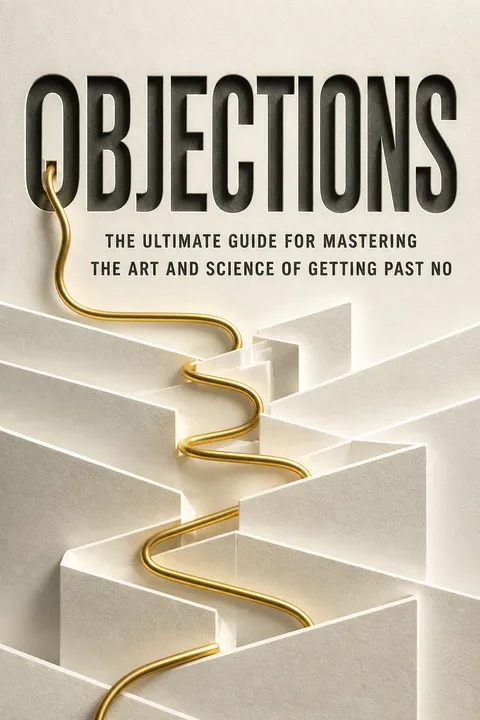
What's "Objections: The Ultimate Guide for Mastering The Art and Science of Getting Past No" about?
- Sales Objections Focus: The book by Jeb Blount is a comprehensive guide on handling sales objections, emphasizing both the art and science of overcoming the word "no" in sales.
- Frameworks and Techniques: It provides frameworks and techniques to help sales professionals manage objections effectively, reduce resistance, and increase their chances of closing deals.
- Emotional and Psychological Insights: The book delves into the emotional and psychological aspects of objections, helping readers understand the underlying reasons behind them.
Why should I read "Objections" by Jeb Blount?
- Improve Sales Skills: It offers practical advice and strategies to improve your ability to handle objections, a critical skill for any sales professional.
- Understand Buyer Psychology: The book provides insights into buyer psychology, helping you understand why objections occur and how to address them effectively.
- Increase Closing Rates: By mastering the techniques in the book, you can increase your closing rates and overall sales performance.
What are the key takeaways of "Objections"?
- Asking is Crucial: The book emphasizes that asking for what you want is the most important discipline in sales, and objections are a natural part of this process.
- Emotional Control: Managing your emotions is crucial when dealing with objections, as it helps you maintain control and influence the buyer's emotions.
- Frameworks for Success: The book provides specific frameworks for handling different types of objections, including prospecting, micro-commitment, and buying commitment objections.
What are the best quotes from "Objections" and what do they mean?
- "Go for no." This quote highlights the importance of embracing rejection as a part of the sales process and using it as a stepping stone to success.
- "In every sales conversation, the person who exerts the greatest amount of emotional control has the highest probability of getting the outcome they desire." This emphasizes the power of emotional control in influencing sales outcomes.
- "Success is paid for in advance." This quote underscores the idea that hard work, persistence, and overcoming rejection are necessary to achieve success in sales.
How does Jeb Blount suggest handling objections in sales?
- Use Frameworks: Blount provides specific frameworks for handling objections, such as the Five-Step Buying Commitment Objection Turnaround Framework, which includes steps like relating, isolating, and minimizing objections.
- Emotional Control: He stresses the importance of maintaining emotional control to effectively manage objections and influence the buyer's emotions.
- Practice and Preparation: Blount advocates for thorough preparation and practice to anticipate objections and develop effective responses.
What is the "Five-Step Buying Commitment Objection Turnaround Framework"?
- Relate: Start by relating to the buyer's point of view to show understanding and empathy.
- Isolate: Identify and isolate the true objection to ensure you're addressing the real issue.
- Clarify: Ask clarifying questions to fully understand the buyer's concerns and objections.
- Minimize: Minimize the objection by highlighting the benefits and value of your proposal.
- Ask Again: After addressing the objection, confidently ask for the commitment again.
How does "Objections" address the fear of rejection in sales?
- Biological and Emotional Roots: The book explains the biological and emotional roots of the fear of rejection, helping readers understand why it occurs.
- Rejection Tactics: Blount provides tactics for managing rejection, such as developing self-awareness, positive visualization, and managing self-talk.
- Obstacle Immunity: The book introduces the concept of obstacle immunity, encouraging readers to face rejection head-on to build resilience.
What role does emotional intelligence play in handling objections according to Jeb Blount?
- Emotional Awareness: Emotional intelligence involves being aware of your emotions and how they affect your interactions with buyers.
- Emotional Control: It emphasizes the importance of controlling your emotions to maintain composure and influence the buyer's emotions positively.
- Building Relationships: Emotional intelligence helps in building stronger relationships with buyers by understanding and addressing their emotional needs.
How can sales professionals use "Objections" to improve their closing rates?
- Master Frameworks: By mastering the objection handling frameworks provided in the book, sales professionals can effectively address and overcome objections.
- Increase Confidence: The book's emphasis on emotional control and preparation can boost confidence, leading to more successful closes.
- Continuous Practice: Blount encourages continuous practice and role-playing to refine objection handling skills and improve closing rates.
What is the significance of "micro-commitments" in the sales process?
- Testing Engagement: Micro-commitments help test the buyer's engagement and willingness to move forward in the sales process.
- Building Momentum: They create momentum by securing small agreements that lead to the final buying commitment.
- Reducing Objections: Consistently gaining micro-commitments can reduce the likelihood of major objections at the closing stage.
How does Jeb Blount suggest dealing with "red herring" objections?
- Avoid Chasing: Blount advises against chasing red herring objections, which are distractions that can derail the sales conversation.
- Use PAIS Framework: He suggests using the PAIS framework (Pause, Acknowledge, Ignore, Save) to manage red herrings effectively.
- Stay Focused: The key is to stay focused on the main objectives of the sales call and not get sidetracked by irrelevant issues.
What strategies does "Objections" offer for prospecting objections?
- Rule of Thirds: Blount introduces the rule of thirds, where one-third of prospects will say yes, one-third will say no, and one-third will present objections.
- Three-Step Turnaround Framework: The book provides a three-step framework for handling prospecting objections: Ledge, Disrupt, and Ask.
- Confidence and Persistence: Confidence and persistence are crucial in overcoming prospecting objections and turning maybes into yeses.
About the Author
Other books by Jeb Blount








Download PDF
Download EPUB
.epub digital book format is ideal for reading ebooks on phones, tablets, and e-readers.








