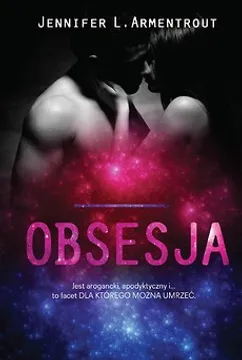


Plot Summary
Mel’s Last Warning
Serena Cross, a young school counselor, meets her best friend Mel Dockshire at a bar after Mel describes seeing Senator Vanderson’s sons, Phillip and Elijah, glow with unnatural light. Mel also recalls their argument about Daedalus, a secret project, and children held in Pennsylvania. Serena doubts her, though Mel’s fear is unmistakable.
In the parking garage, Serena spots a handsome stranger who vanishes and reappears beside Mel’s car. The lights burst, blue-white energy engulfs the vehicle, and the explosion kills Mel while throwing Serena to the concrete. The warning Serena treated as a friend’s panic becomes the only explanation for a murder no ordinary investigation can account for.
The opening turns friendship into a fragile instrument of knowledge. Mel sees what Serena cannot yet accept, while Serena’s instinct to comfort her remains stronger than her belief in the story. That gap is not simple skepticism: it is the mind protecting its ordinary map of reality. The explosion destroys that map in a single physical event, leaving Serena alive but burdened by the knowledge that her first response was disbelief. Mel’s death therefore begins both the external mystery and Serena’s private reckoning with what it means to trust someone before evidence becomes undeniable.
A Witness Becomes Prey
At the police station, Serena repeats what she saw while grieving Mel and learning that only fragments of her friend’s body were recovered. Detective Jones treats the account as trauma, but officers Zombro and Richards from the federal government press her about the senator’s sons, Daedalus, and Project Eagle.
Their questions reveal that Mel’s words have reached people who understand their significance. Elsewhere, Hunter, an Arumian operative who despises his government handlers, is diverted from another assignment.
Zombro explains that a Luksjan killed Mel and that Senator Vanderson wants Serena silenced. Hunter is ordered to protect her and recover what she remembers. When Serena returns to the garage for her car, Hunter appears, warns her away, and leaves her unsure whether he is rescuer or threat.
Serena’s account is first treated as a symptom, then as intelligence, and that change exposes the unequal value institutions assign to testimony. The federal agents do not need to believe her emotionally; they need to assess what her memory might cost them politically. Hunter enters this machinery as an unwilling instrument, not a conventional guardian. His contempt for orders complicates the protection offered to Serena: safety is being negotiated by organizations that view her less as a person than as a liability, while she still assumes that explanation and procedure can lead to justice.
The Shadow Saves Her
Serena reaches her apartment and finds the same pale stranger from the parking garage waiting inside. He smashes her phone, stops a toaster in midair, and attacks her with invisible force. As he chokes her, a mass of shadow crashes through the balcony doors and takes human shape as Hunter.
The two nonhuman men fight with powers Serena can barely follow: the attacker wields light and energy, while Hunter becomes darkness and drives a hand into his opponent’s chest to drain him. The Luksjan dies on Serena’s floor. Hunter explains that both men are aliens and that she must leave before police arrive. He takes her to his home in West Virginia, feeding on her energy during the escape and leaving her unconscious for two days.
The rescue is deliberately morally unstable. Hunter saves Serena by using the same bodily intimacy and predatory power that make him frightening; survival does not restore her control over what happens to her. The scene also makes the supernatural legible through consequences rather than exposition: a broken phone, a ruined room, a dead attacker, and Serena’s lost time. Her dependence on Hunter begins under coercive conditions, so attraction cannot be treated as uncomplicated consent or instant trust. The book asks the reader to hold gratitude and alarm together, as Serena must.
A Refuge With Teeth
At Hunter’s secluded house, Serena learns that Luksjans are beings of light and Arumians are their shadowy natural enemies; deposits of beta quartz hide the local Luksjans from Arumian senses. Hunter admits the government uses his kind to police aliens, though he does not consider himself a hero.
Feeling trapped, Serena slips outside and wanders into a nearby enclave. She sees an Arumian embrace a human woman, then realizes the place is populated by beings like Hunter. A group led by Raz notices her.
Hunter finds her before they can exploit her vulnerability, carries her back, and makes clear that the woods, roads, and settlement are all dangerous. His blunt protection frustrates her, but Serena recognizes that flight without a plan will not restore her freedom.
The refuge complicates the familiar division between safe home and dangerous outside. Hunter’s house protects Serena from immediate pursuit, yet its isolation also confines her, and the surrounding community turns her into a vulnerable curiosity. The enclave offers evidence that intimacy across species is possible, but not that it is safe or equal. Serena’s escape is an assertion of agency made without adequate information; Hunter’s rescue prevents harm while reinforcing his authority over her movements. Their conflict is therefore not merely temperamental. It is a struggle over whether protection can exist without control.
Light Beneath the Skin
As Serena presses for answers, Hunter explains that Arumians consume energy and that their war with the power-wielding Luksjans began long before either race reached Earth. Their home planets were destroyed, and the government now restrains Arumians with opal devices while using them as weapons.
Serena asks to see Hunter’s real body. He transforms into a towering figure of black shadow, communicates directly into her mind, and lets her touch his cold, smooth skin before resuming human form.
Later, he cooks with her and admits that Luksjans killed his parents and that he lost his sister in the same conflict. Serena shares how her mother was murdered during a robbery. Their stories create a rare exchange of grief, even as Hunter’s appetite and desire remain dangerous.
Hunter’s transformation shifts alien difference from spectacle to embodied fact. Serena does not merely hear a taxonomy; she touches the body that contradicts her human categories, then chooses curiosity over reflexive disgust. Their shared bereavements create an ethical bridge without erasing the asymmetry between them: Hunter can physically dominate her and feed on her, while Serena’s power lies chiefly in attention, refusal, and interpretation. His willingness to disclose loss signals an emerging capacity for vulnerability, but the scene refuses to equate disclosure with safety. Understanding him is not the same as neutralizing his danger.
The Note in Mel’s Mail
Hunter’s brother Sin arrives and needles him about his estrangement from their third brother, Lore, and his withdrawal from the war. Outside, Hunter snaps Sin’s neck during their quarrel, but Sin reforms, making their exchange a violent argument rather than a death.
Sin warns that anyone obstructing Hunter’s return to the conflict could be removed. After he leaves, Hunter tells Serena how his sister abandoned feeding and fighting, built a human life, and was killed beside her human partner in retaliation for an Arumian attack.
Serena offers comfort by connecting his loss to her mother’s murder. Their growing intimacy helps Serena recall that Mel wrote down what she overheard and left the paper in her mailbox. The memory gives them a concrete reason to return to Colorado, despite Hunter’s warning that it is dangerous.
This section links private grief to collective violence without pretending the losses are identical. Hunter’s sister tried to step outside inherited conflict, yet the war reached her through retaliation; Serena’s mother was killed by ordinary human violence. Both stories unsettle the idea that danger belongs exclusively to the alien world. Sin’s confrontation makes family a rival form of obligation: Hunter is pulled toward ancestral revenge even as his new attachment asks him to protect one person. Mel’s written note converts mourning into a task, giving Serena a way to act that is neither denial nor passive remembrance.
The Government Turns
In the night, Zombro and Richards arrive at Hunter’s house and reveal that the government has agreed to let Senator Vanderson’s side resolve the problem of Serena’s testimony. They intend to kill her and make her disappearance appear ordinary. Hunter refuses. He kills Richards first, then crushes Zombro’s throat, choosing Serena over the agency that employed him.
She wakes to the bodies and learns that Hunter, not the Luksjans, killed them. Horrified, she demands a reason; he can only admit that he felt compelled to protect her. With the authorities now pursuing them and the safe house compromised, Serena chooses to believe him. They pack, leave the bodies behind, and flee in a car supplied by Hunter’s friend Dex.
The betrayal removes the last institutional refuge Serena might have imagined. The government’s language of security collapses into a decision to erase a witness, while Hunter’s violence becomes the only barrier between her and that decision. Yet the narrative does not make his choice morally clean: he kills two men, one of whom Serena had tolerated, and asks her to trust a creature she has seen kill repeatedly. Her decision is not certainty but a calculated commitment under pressure. Trust here is an action performed without guarantees, not a feeling that cancels fear.
Opal and a Price
Hunter and Serena reach a clandestine club where Arumians and Luksjans coexist under a no-killing rule. They meet Luc, a sharp-tongued teenage power broker, and Paris, a Luksjan who manages the club.
Luc knows about Senator Vanderson’s retaliation and agrees to help because Hunter once settled a debt involving Sharpe. He gives Hunter an opal, which lets Arumians retain energy and control their abilities, but insists Hunter will owe him a future favor. To make the stone effective, Hunter feeds on a willing Luksjan.
Serena struggles with the transaction even though the donor consents. Luc also lends them money and a car for the drive to Colorado. Hunter and Serena leave with new power, a debt, and no assurance that the senator has stopped hunting them.
Luc’s club operates as a provisional political order where enemies can share space because violence has been regulated, not reconciled. The opal makes that distinction material: it offers Hunter control, but only after he takes energy from another being. Serena’s discomfort registers the moral cost that Hunter’s survival logic tends to compress into necessity. Luc’s help is generous and transactional at once, creating a future obligation rather than a pure rescue. The episode broadens the world beyond a simple human-versus-alien conflict, showing how power circulates through favors, consent, and managed risk.
The Mailbox Ambush
Back in Colorado, Hunter and Serena reach Mel’s post office and search the neglected pile of mail in her box. Serena finds the page Mel left behind and learns that Project Eagle is a Luksjan plan to bring more of their kind to Earth, countering Daedalus and potentially overwhelming human control. The note also mentions children or outcasts held at a Daedalus facility, though it gives no explanation.
Before Hunter can return from checking a nearby Arumian presence, a Luksjan attacks Serena and knocks her unconscious. Hunter kills the Arumian outside, then fights several Luksjans and feeds on one to learn where she was taken. The attackers have delivered her to Senator Vanderson, leaving Hunter to pursue her into the senator’s stronghold.
Mel’s note converts an intimate act of record-keeping into evidence of a threat on a planetary scale. Its fragmentary nature matters: Serena learns enough to understand the stakes, but not enough to solve the conspiracy or persuade an institution already compromised. The post office, a mundane place built to preserve and deliver messages, becomes the point where knowledge is both recovered and violently punished. Hunter’s separation from Serena repeats the story’s central vulnerability, but this time his feeding yields actionable information. The rescue plot is now driven by a specific destination and a clear political danger.
The Senator’s Last Stand
Senator Vanderson holds Serena in a warehouse and explains that he let her recover Mel’s note because he expected her to return for it. He burns the page, boasts that Luksjans will eventually outnumber humanity, and has his followers restrain and assault her while demanding to know who else has heard the information.
Serena refuses to give him anything. Hunter storms the compound, defeating the guards and killing the Luksjans between himself and Serena. The senator uses her as a shield and forces Hunter to kneel, but then throws her aside to escape.
Hunter catches her, pursues Vanderson, and drains his energy, killing him. With the senator dead and Serena alive, Hunter admits that he loves her; she accepts him even in his shadowed true form.
The climax makes Serena’s refusal as consequential as Hunter’s strength. Vanderson can destroy the paper, but he cannot extract a confession or make her endorse his hierarchy of lives. Hunter’s violence saves her, yet it also confirms that the political order cannot be repaired through evidence alone: the senator’s death is an extrajudicial resolution, not a verdict. The emotional revelation follows that act rather than cleansing it. Serena accepts Hunter with full knowledge of his capacity for harm, while his declaration marks a change in what he believes himself capable of feeling.
A Future in Georgia
Hunter drives Serena to his estranged brother Lore’s home near Atlanta, where Lore welcomes them and listens to the account of the senator, the Project, and the federal betrayal. Serena argues that the threat cannot simply be ignored. Lore offers to contact a trusted person inside the Department of Defense, a cautious first step rather than a promise that the agency will act.
Hunter agrees to stay with Serena and help face what comes, instead of returning to his former role or sending her away alone. They share their love and begin to imagine a life beyond immediate flight. The senator is dead, but the note is destroyed, Daedalus remains powerful, and the larger Luksjan plan is unresolved. Their refuge is a beginning, not a cure.
The ending resolves the intimate question more firmly than the political one. Serena and Hunter choose mutual attachment, but their safety depends on concealment, a family refuge, and a contact whose influence is uncertain. Lore’s offer prevents the conclusion from collapsing into private romance alone: the danger remains collective, and someone must still carry knowledge toward an institution that has already betrayed Serena. The story resists a total victory because its central systems cannot be dismantled in one confrontation. What changes is the pair’s relationship to uncertainty. They face it together, with affection as a commitment rather than a guarantee.
Analysis
Obsesja makes the question of who deserves protection more difficult than a simple contest between humans and aliens. Serena’s first instinct is to comfort Mel, but her disbelief costs her the chance to recognize the danger before it becomes irreversible. Afterward, every institution that might restore order instead converts her into a problem: police doubt her, federal agents exploit her testimony, and the senator’s influence turns the government toward silencing her. The conspiracy is frightening not only because aliens possess extraordinary abilities, but because political power makes their violence administratively convenient.
Hunter embodies the story’s central contradiction. He is literally built to consume the enemy, trained as a weapon, and capable of killing without the hesitation Serena associates with moral choice. Yet his attachment to her makes restraint imaginable. The novel does not claim that love makes him harmless; rather, it shows care as a practice that interrupts his inherited logic. Serena, meanwhile, is not transformed into a fighter who can match him physically. Her agency lies in insisting that knowledge matters, returning for Mel’s note, and refusing to let fear turn into silence.
The romance and the conspiracy therefore develop on separate but connected scales. Serena and Hunter can choose one another, and Hunter can kill the immediate architect of their persecution, but neither act resolves the larger structure of secrecy, Daedalus, or Project Eagle. The destroyed note leaves them with knowledge but without secure proof, while Lore’s possible contact offers only a tentative route toward action. This unfinished political horizon is deliberate: private trust can make survival meaningful, but it cannot substitute for public accountability. The novel’s most durable claim is that intimacy does not erase danger. It gives the characters a reason to confront it without pretending that one rescue, one death, or one declaration of love can repair a world built to conceal its violence.
Review Summary
Obsesja is a spin-off of the Lux series, following Serena, a human woman protected by Hunter, an Arum alien, after witnessing her best friend's murder. Most reviewers praised the witty banter, steamy romance, and Hunter's arrogant yet captivating personality. The book challenges readers' perceptions of good versus evil within the Luxen-Arum conflict. Some critics noted issues with pacing, shallow character development, and a controversial scene involving non-consensual touching. Overall, it earned a strong 4.09 rating, with fans particularly appreciating its adult tone compared to the YA Lux series.
Characters
Serena Cross
The stubborn witnessSerena is a twenty-three-year-old school counselor whose reflective, observant nature initially makes her cautious about Mel’s extraordinary claims. She values loyalty and practical care, often trying to calm a crisis before deciding what she believes. Her mother’s murder has already taught her that violence can arrive without reason or warning, but it has not made her cynical. Serena is drawn to explanations because understanding lets her act, and her work with students reflects a habit of seeing people as more than their worst choices. Faced with political and alien power, she continues to insist that testimony, memory, and individual lives matter.
Hunter
The weapon learning restraintHunter is a powerful Arumian who has worked for the Department of Defense, hunting Luksjans under government orders. Blunt, dominant, and impatient, he has built his identity around strength and survival rather than social bonds. He is skilled with his hands, especially in woodwork, and more observant than his abrasive manner suggests. His skepticism toward institutions comes from experience: he knows the government values him as a weapon, not as a person. Serena unsettles that certainty by drawing out curiosity, care, and vulnerability he does not know how to name.
Mel Dockshire
Serena’s fearless confidanteMel is Serena’s closest friend, a lively and impulsive woman who has been part of her life since childhood. She enjoys attention and adventure, but her curiosity also makes her notice what others overlook. When she witnesses Phillip Vanderson’s transformation and overhears a troubling argument, she turns to Serena despite fearing that she will sound unstable. Mel’s trust in her friend is central to the story’s emotional stakes. Her habit of writing down important details, born partly from her own distractibility, gives Serena a way to continue acting on her friend’s warning.
Senator Vanderson
The polished power brokerA prominent senator and father of Phillip and Elijah, Vanderson is accustomed to moving through public life with charm and authority. He presents himself as a composed political figure, but his ambition and instinct for control shape his decisions. He treats reputation as a resource and expects institutions to serve his interests. His connection to the powerful circles surrounding Daedalus places him at the intersection of public office and hidden conflict, making him an influential figure in Serena’s ordeal.
Phillip Vanderson
The senator’s volatile sonPhillip is one of Senator Vanderson’s twin sons and Mel’s recent romantic partner. He is accustomed to privilege and has a reputation as a charming, resilient playboy. Beneath that polished surface, he is entangled in serious disputes with his brother and their father. Mel’s glimpse of his private behavior makes him the first visible connection between Serena’s ordinary social world and the hidden political conflict.
Elijah Vanderson
The uneasy twinElijah is Phillip’s twin brother and the more openly troubled participant in their private arguments. Mel hears him object to a dangerous project and warn that its consequences could reach their family. His concern suggests a conscience at odds with the privilege surrounding him, though Serena initially receives only fragments of what he knows. Elijah helps establish that the Vanderson family is divided over more than ordinary sibling rivalry.
Sin
Hunter’s combative brotherSin is one of Hunter’s identical triplet brothers, forceful, provocative, and committed to the Arumian war against the Luksjans. He tests people through mockery and physical confrontation, believing that strength and loyalty to the species are inseparable. His contempt for Hunter’s retreat from the conflict exposes a deeper divide over family, duty, and revenge. Sin is not simply a villainous foil; he represents the inherited cause Hunter is trying to leave behind.
Lore
The brother who withdrewLore is Hunter’s third triplet brother, estranged from Sin and living quietly in Georgia. Like Hunter, he has stepped back from the war, though his withdrawal takes the form of a stable home and a quieter life. His welcome is warm, and he is willing to use his connections carefully rather than trust institutions blindly. Lore offers a model of family life that does not depend on fighting, while recognizing that old conflicts can still threaten it.
Luc
The teenage power brokerLuc is a sharp, irreverent teenager who controls a club frequented by aliens and knows more about their political networks than his age suggests. He speaks lightly while negotiating serious debts, favors, and access to scarce resources. Luc distrusts the Department of Defense, Arumians, and Luksjans alike, yet helps when a bargain or personal obligation moves him. His unusual authority makes him difficult to categorize and gives him influence beyond the room he occupies.
Dex
Hunter’s dependable friendDex is an Arumian friend of Hunter who offers practical help, including a fast car and assistance during danger. He is partnered with Eliza and takes their relationship seriously, showing a capacity for attachment that Hunter initially dismisses as an unfamiliar human weakness. Dex’s teasing manner softens his blunt advice, but he is perceptive about Hunter’s choices and warns him to treat Serena carefully.
Eliza
Dex’s human partnerEliza is Dex’s human partner. Though she appears only indirectly, her relationship with Dex represents a bond across species that Hunter first regards with suspicion. Dex’s concern for her gives Hunter a concrete example of attachment as a source of restraint rather than weakness.
Paris
The club’s Luksjan hostParis is a Luksjan associated with Luc’s club, a place where rival species observe a rule against killing. He is elegant, self-assured, and inclined to tease Hunter, but he does not turn every encounter into a fight. His presence demonstrates that hostility between Arumians and Luksjans does not prevent all practical cooperation. Paris also helps make the club feel like a functioning community, not merely a backdrop for Hunter’s dealings.
Raz
The rival Arumian leaderRaz leads a group of Arumians who value dominance and see Serena as an easy target when she wanders into their territory. He resents Hunter’s authority and treats strength as a public performance. His confrontational presence shows that Serena faces danger even among Hunter’s own species.
Zombro
The hard-edged federal agentZombro is a senior federal operative who assigns Hunter work and interrogates Serena about what she witnessed. He is rigid, suspicious, and accustomed to issuing orders. His manner reflects an agency culture that treats secrecy and control as more urgent than a witness’s sense of safety.
Jonathan Richards
The uneasy agentRichards is Zombro’s younger partner, more tactful and visibly uncomfortable with conflict. He conveys condolences to Serena and often tries to soften Zombro’s approach. His attempts at sympathy coexist with his role in an institution whose decisions can put witnesses in danger.
Jael
A predatory ArumianJael is an Arumian aligned with Raz’s group. She uses flirtation and menace to unsettle Hunter, then becomes part of the threat surrounding Serena. Her behavior reflects the group’s assumption that power grants permission to take what they want.
Colec
Raz’s watching accompliceColec is an Arumian in Raz’s circle who watches rather than intervening at first. His presence reinforces the group’s predatory, dominance-driven culture and the danger of being isolated among them.
Detective Jones
The skeptical investigatorDetective Jones interviews Serena after the garage explosion. He recognizes that she is traumatized but initially interprets her account through the familiar language of shock and confusion. His questions show how conventional investigation struggles when the witness describes something the authorities cannot publicly acknowledge.
Plot Devices
Mel’s written note
Memory made into evidenceMel writes down what she overhears about Phillip and Elijah, Daedalus, and Project Eagle, then leaves the page in her mailbox. Serena remembers the note only after Hunter tells her about the cost of the conflict and she recalls Mel’s habit of recording details. Retrieving it sends them back to Colorado and confirms that the danger involves more than Serena’s eyewitness account. The paper is eventually burned, but Serena has read its contents, so knowledge survives the destruction of its physical proof.
Opal restraint
Power under a leashOpal lets an Arumian retain energy and extend his strength, speed, and control without feeding as often. The Department of Defense uses opal devices to restrain and track its Arumian operatives, making the stone both a practical tool and a symbol of governmental ownership. Hunter destroys his tracking device when he rejects the agency’s order to kill Serena. He later obtains another opal through Luc, but it does not erase the need to feed.
Beta quartz
A shield for hidden aliensBeta quartz alters the detectable energy signature of Luksjans, making them harder for Arumians to identify. Large deposits in the mountains near Hunter’s West Virginia refuge conceal the nearby Luksjan community. Paris also imports the mineral to protect his property, demonstrating how alien communities use geology and technology to manage their visibility. The stone explains why Hunter can hide near dangerous neighbors, but it cannot protect Serena once political enemies learn where she is.
Energy feeding
A hunger with consequencesArumians draw energy from living beings, especially Luksjans, to replenish their strength and abilities. Feeding on humans is possible but can leave a person unconscious or kill them if the Arumian takes too much. Hunter’s need for energy drives his relationship with Serena into dangerous physical territory and shapes his need to find a willing Luksjan once he loses his opal. The mechanism is both a biological necessity and a recurring test of restraint, consent, and the difference between desire and predation.
Project Eagle
A concealed invasion planProject Eagle is the plan Mel hears discussed by the Vanderson brothers. Her note links it to Daedalus, children or outcasts held in a Pennsylvania facility, and a plan to contact Luksjans still beyond Earth. Serena understands that the project could bring a much larger Luksjan population to the planet and threaten human control. The details remain incomplete, and the note is destroyed before it can be handed to officials. The project therefore expands the stakes beyond one murder without resolving the wider threat.
Download PDF
Download EPUB
.epub digital book format is ideal for reading ebooks on phones, tablets, and e-readers.








