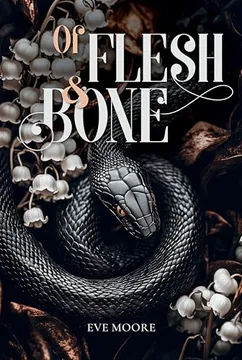


Plot Summary
A Drink, Then a Collision
At Eden University, first-year volleyball player Eve Mason keeps her head down while her teammates treat her as a nuisance. After practice, she finds the dark-haired athlete Adam Davenport holding her strawberry-banana drink and reclaims it without flinching. The next day, she sprints late to class and crashes into him in a marble hallway.
Adam is Eden’s celebrated football captain, but Eve knows none of that; she calls him a fool and walks on. In Professor Stalk’s advanced mathematics class, Adam watches her solve a difficult problem mentally and earn an exam exemption before anyone else. Her refusal to perform for attention, and her startling ability, leave him determined to learn who she is.
The opening makes Eve’s guardedness visible through conduct rather than explanation: she hides in a hoodie, avoids her teammates, and still asserts herself when Adam takes her drink. Her intellectual feat complicates the narrow identity imposed on her by the volleyball team. Adam’s interest begins in the tension between what others think they know about Eve and what he sees when he watches closely. The collision is comic, but it also establishes a pattern: Eve’s body acts before she has time to manage how others perceive her.
The Library Refuses Distance
Adam follows Eve to the library, where she is browsing a book about people who work among the dead. He blocks her path, challenges her judgment of him, and insists on lunch despite her suspicion that he is dating teammate Ada Davenport. Eve refuses his car, so he abandons his expensive sports car and rides with her.
At the restaurant, he orders in Italian and chooses food for her; she surprises him by feeding him a bite. When they touch, both feel an unfamiliar physical jolt. Eve leaves the meal with more questions than answers, but Adam follows her to her apartment and persuades her to watch her favorite film. She falls asleep beside him, making their first shared night less a seduction than an unexpected surrender to comfort.
The library exchange turns attraction into a contest over agency. Adam presses past Eve’s refusals, while Eve keeps naming what she distrusts and negotiating the conditions of their meeting. Their physical response arrives before either can make sense of it, giving the romance a fated quality without erasing the imbalance in their behavior. The first night matters because Eve sleeps beside him before she has chosen a relationship. For Adam, who is accustomed to controlling every encounter, remaining near her becomes more compelling than winning a quick conquest.
Lessons Beyond the Classroom
Adam wakes beside Eve and discovers that she has never shared a bed with anyone. His possessive teasing gives way to caution when she explains that she is a virgin and asks to slow down. The pair visit a juvenile detention center where Eve tutors teenagers in mathematics and plays games with them.
Adam watches her patiently draw a guarded boy, Agustin, into a card game, and the boy’s brief handshake leaves Adam visibly moved. Eve also learns that the intimidating stranger is a two-time Heisman-winning quarterback, a fact everyone else at Eden seems to know.
Back at home, Adam’s planned seduction becomes a gradual series of firsts. Eve chooses him, and their first intercourse is both painful and intimate, while his keepsake painting makes their union feel startlingly permanent.
Eve’s volunteer work reveals a form of care that is practical rather than sentimental. She meets each teenager at the level he can manage, and Adam’s attention to Agustin shows that Eve’s influence is already altering what he notices. Their sexual relationship carries the same conflict as their courtship: Adam’s certainty can become coercive, while Eve’s growing desire does not erase her need to set limits. The painting made with their blood turns intimacy into a claim of permanence. It is romantic to Adam, but the scene also plants the question of how love differs from possession.
A Sister Misread as Lover
When Adam’s sister Ada arrives unexpectedly and finds him in bed with Eve, Eve believes the teammate she feared is his girlfriend. She leaves without hearing an explanation. Adam and Ada search for her, finding her at a volleyball court, where Adam carries her away and Ada admits she is his sister.
Ada apologizes for joining the team’s cold treatment of Eve, but Eve refuses to forgive her immediately. Later, Ada seeks her out in class, makes a genuine effort to know her, and accepts Eve’s sharp humor without asking her to become more outgoing.
Eve gradually lets Ada closer. Meanwhile, Adam learns that Eve’s only trusted friends are her roommates, Vaughn Webb and Eli Washington, and that she has spent months believing the people she admired at Eden wanted nothing to do with her.
The mistaken identity exposes how little Eve feels entitled to ask of other people. Rather than risk hearing another rejection, she leaves first. Ada’s apology matters because it is followed by repeated effort, not an instant demand for absolution. Eve’s guardedness is not simply an obstacle to intimacy; it is a strategy formed by experience, and the people who earn her trust do so by remaining present after she pushes back. Adam’s protectiveness helps her feel chosen, but Ada’s friendship gives Eve a separate relationship that is not mediated by him.
The Mark Beneath Her Hair
As their relationship deepens, Adam notices the extensive scars on Eve’s body, including a crude word carved between her shoulder blades. Eve tells him she was found alone at fourteen, injured and unable to explain where she had been. She passed through several foster homes before the Masons adopted her, and later developed severe anxiety around groups and unwanted touch.
She has no clear memory of the years before she was found. Adam responds with anger at whoever harmed her, but Eve resists being treated as fragile. She has been seeing psychologist Nathan Miller since her adoption and trusts him as both clinician and friend. Her account gives Adam pieces of her history, but the carved mark and missing memories remain unexplained.
The scar functions as evidence without a narrative: Eve’s body records harm that her conscious memory cannot supply. Her history of disrupted care helps explain why she both longs for belonging and guards herself against dependence. Adam’s anger is emotionally legible, yet his impulse to protect can easily turn into control, especially when Eve insists she is not broken. Nathan’s long-standing role appears reassuring here, which makes the later discovery of his misconduct more disturbing. The section asks the reader to distinguish support from authority, and to notice how easily a trusted relationship can shape a vulnerable person’s account of herself.
The Team Room Goes Dark
Adam brings Eve into the football house to introduce her to his teammates. The crowded room overwhelms her, and when one player makes a crude remark about her, Adam and Cal Ashford attack him. Amid the brawl, Eve’s expression empties. She takes a kitchen knife and moves toward another player, but Cotton stops her before she can stab him.
Cotton and Adam get her upstairs, wash off the blood, and keep the other men from seeing her dissociated state. Once Eve returns to herself, she remembers little of the incident. Adam tells her to avoid crowds, while Eve insists she needs to keep living her own life. Her therapist, Nathan, also blames Adam for putting her in the situation instead of focusing on her lost time.
The episode makes Eve’s anxiety more than social discomfort: under pressure, she experiences a break in continuity and reacts as if immediate physical danger is present. The men around her respond with different forms of protection, but their actions also narrow her choices. Adam’s instinct is to prevent future exposure; Eve’s is to reject a life organized around avoidance. Nathan’s response initially appears professionally concerned, yet his focus on Adam rather than Eve’s missing memory hints at a deeper failure of care. The crisis turns her private symptoms into a question about who gets to define what help should look like.
A Home Chosen Together
Adam takes Eve to view houses and assumes they are choosing a permanent home together. She falls for a spacious property with a pool, a family-sized kitchen, and a treehouse, then worries that accepting it would leave her financially dependent. Adam tells her he has already decided not to enter professional football; after graduation, he intends to work at Davenport Financial Group and build a quieter life with her.
Eve admits that she wants to finish her degree, raise children, and adopt children from the foster system. Adam embraces that future rather than treating it as a threat to his plans. Their agreement does not erase their arguments over money or control, but the chosen house gives their shared future a physical shape.
The house brings the couple’s private certainty into practical territory: money, work, education, and care. Eve’s wish to mother adopted children connects her own history of unstable placement to a deliberate future of dependable attachment. Adam’s decision to leave the professional draft reveals that his ambition is not limited to public success, though his confidence still leaves little room for negotiation. Their future is emotionally sincere but asymmetrical: he tends to announce what will happen, while she must insist that her preferences count. The home becomes both a promise and a test of whether that promise can accommodate her independence.
Nathan's Trust Fractures
Eve arranges a hypnosis session with Nathan during his visit to Austin, hoping it will help explain her missing memories. Adam learns she is meeting a man at a hotel and arrives with Cal and Cotton. When he finds Nathan kissing her, Eve pushes him away and strikes him twice with her elbow.
The confrontation leads Adam’s friends to search Nathan’s laptop and files. They discover that Nathan deliberately strengthened Eve’s fear of crowds during hypnosis because he wanted her isolated and dependent on him until she became an adult.
Eve confronts the betrayal, then asks Adam not to retaliate against Nathan. Adam promises, reluctantly, to honor that request, while the couple begins to question the treatment that has shaped Eve’s life for two years.
Nathan’s abuse is especially damaging because it converts therapeutic trust into a tool of confinement. He did not invent Eve’s past trauma, but he redirected her fears to serve his own desire, making genuine symptoms harder for her to interpret. Eve’s decision to strike him and then forbid revenge demonstrates a crucial distinction: she can defend herself without surrendering control of what happens next. Adam’s promise matters because it is a rare limit she places on his violence. The discovery forces Eve to reconsider her diagnosis while also showing that suspicion alone cannot replace the careful work of rebuilding trust.
Eve Fights Back Alone
While Adam is away on a team retreat, Eve joins Vaughn, Eli, and their friends to celebrate Eli’s return from military service. The crowded bar overwhelms her, so she steps outside alone. A stranger approaches, then grabs her and tries to pull her away. Eve drops low, traps his leg, bites through his clothing, and keeps fighting until a passerby calls the police.
She kicks the attacker unconscious before officers arrive. Instead of treating the episode only as another danger, Eve recognizes that she stayed focused and defended herself. When Adam returns, she tells him what happened. He praises her courage but wants to take responsibility for protecting her, renewing their argument over whether safety means support or control.
The attack gives Eve a different experience of fear: she is frightened, but not erased by it. Her athletic training and quick assessment become tools for survival, and the encounter complicates the belief that she is helpless outside familiar spaces. Her pride is not bravado; it marks a shift from seeing herself only as someone who must be guarded to someone capable of acting. Adam’s reaction remains loving and possessive at once. The conflict is not resolved by proving that Eve can protect herself, but by forcing both partners to ask whether care can coexist with her right to take risks.
Paul Pays for the Attack
After Eve identifies her attacker as Paul Hastings, Adam anonymously posts bail and lures him back to his home. With Cal and Cotton assisting, Adam tortures and kills Paul, then conceals the crime. The police later tell Eve that Paul has made bail and may threaten her, unaware that he is already dead. Adam keeps the truth from her, insisting only that Paul will never bother her again.
Eve accepts his assurance but remains uneasy when a stranger appears to be watching their new house. The concealed murder and the official warning leave the danger unresolved in Eve’s mind. Adam believes he has removed a threat; his secrecy instead helps create the false impression that someone is still pursuing her.
Adam’s retaliation is framed by his devotion, but its secrecy turns protection into unilateral judgment. He removes Paul from the world without allowing Eve to decide what justice should mean for her. The police’s mistaken warning then extends the threat psychologically, showing that violence can end a person while leaving fear intact. Eve’s trust in Adam is strong enough that she does not demand details, but that trust also leaves her exposed to decisions made in her name. The section sharply separates the two protagonists’ moral instincts: Eve wants to survive and move forward, while Adam treats danger as something he is entitled to destroy.
Blood at the Banquet
Ada helps Eve prepare for Eden’s sports banquet, and Vaughn encourages her to go despite her fear of crowds. At the event, Eve tries unfamiliar drinks and begins to enjoy herself. Nadia, a woman from Adam’s past, confronts her and claims a status with him that Eve believes he concealed. Nadia shoves her, then attempts to strike her.
Eve catches the blow and beats Nadia unconscious, continuing until Cotton pulls a heavy glass away from her. Adam carries Eve out, but she has already dissociated. The next morning, blood-red beer spilled across Ada’s head at a game triggers Eve’s memory: Ada is the girl she once attacked in a hidden room. Eve apologizes, realizes the danger she poses to those she loves, and runs.
The banquet stages Eve’s progress and vulnerability in the same room. She enters a crowd, shares a new ritual, and enjoys herself until a perceived betrayal and unwanted touch activate her survival response. Her violence is not presented as simple empowerment; she continues after Nadia is helpless, and Cotton must stop her. The red drink at the next game makes the connection between present blood and buried history unavoidable. Eve’s apology to Ada carries the weight of recognition, but the impulse to flee shows how quickly shame can turn into self-exile. Her memories are returning through the body before she can organize them into a coherent story.
Paintball and Permanent Ink
Believing Adam has hidden an engagement from her, Eve borrows Eli’s customized paintball gun and shoots Adam, Cal, and Cotton. The men initially think she has used a real firearm, then learn that she acted from a painful misunderstanding about Adam’s past. Once they explain that the supposed engagement was false, Eve recognizes how quickly fear of betrayal overrode the trust she had built.
Adam does not punish her; instead, he takes her to a tattoo artist, where she agrees to cover the scar on her back with a design he drew. The tree, phoenix, lily, and viper frame their initials and her resilience. Adam receives a matching tattoo. Their shared ink turns the mark of past harm into a chosen emblem, though it cannot erase what happened.
The paintball incident translates Eve’s fear into action while keeping the consequences reversible enough for repair. She does not simply apologize and return to normal; the couple has to confront how secrecy and possessiveness feed each other. The tattoo offers a deliberate alternative to the scar, replacing an imposed mark with one Eve chooses to carry. Yet the design remains Adam’s creation, so the act is both a reclamation and a romantic claim. The scene’s emotional force lies in that ambiguity: Eve participates willingly, while the relationship continues to negotiate how much of her story belongs to her alone.
A Face Torn from Home
Eve and Adam move into the house they chose, where their friends bring gifts, including a one-eyed rescue dog named Mulligan. The warmth of the housewarming cannot quite settle Eve’s unease. Adam notices that the blood painting made after their first intercourse has vanished from Eden House. Later, Eve finds the photograph of herself with Vaughn and Eli missing from her bedroom.
At the new home, the frame reappears outside with Eve cut from the picture. Someone has entered their private spaces and left a message without words. Adam tells Eve it was not Paul, but refuses to explain how he knows. Their new home, meant to embody safety and family, now carries evidence that a stranger knows where to find them.
The stolen objects are intimate because each represents a different form of belonging: the painting records Eve and Adam’s sexual bond, while the photograph holds her chosen family. Removing Eve from the image makes the threat feel personal without identifying its author. Adam’s refusal to explain protects his own secrets at the very moment Eve needs reliable information, repeating the novel’s central tension between care and control. The house is not simply a sanctuary; it is a place that can be entered, watched, and violated. Domestic security has to be earned rather than assumed.
The Basement Comes Back
At a football game, Ada falls and her red-dyed beer spreads around her head. The sight tears open Eve’s missing past. She remembers being held underground by a man who called her his slayer, told her the outside air was poisonous, and forced her to kill captives for money through filmed violence.
When Ada was brought down, Eve attacked her with a whip and a blade, believing she was fighting an enemy. Adam and his friends later broke into the house and found Ada, while Eve escaped through a door to the night outside. She stole a car, crashed in traffic, and was found at fourteen. Back in the present, Eve recognizes Ada, apologizes, and runs before anyone can stop her.
The recovered memory overturns Eve’s understanding of her own violence. She was not born with an inexplicable appetite for danger; she was trained and deceived by a captor who made survival indistinguishable from obedience. That explanation does not erase the harm she inflicted on Ada, which is why recognition brings guilt as well as relief. The story also reframes her lost childhood as deliberate captivity rather than a blank space. Her flight in the present follows the logic she learned under coercion: when she believes she is dangerous to others, she removes herself before they can choose whether to stay.
The Slayer Returns
Eve’s father arrives at the new house with an armed accomplice and demands the return of the girl he trained. He shoots Adam and Cal, then holds Ada at gunpoint while Cotton tries to keep the wounded men alive. Eve slips into the house, frees Ada’s path to escape, and kills the accomplice with a blade.
She finds her father searching the library, wounds his hand, and drags him back toward the others. He admits that the killings were staged and sold as snuff films. Eve rejects his claim to her, then kills him before police arrive. Adam, Cal, Cotton, and Ada survive, but Eve sees their blood and realizes they now know what she was made to do.
The climax gives Eve the agency that the past denied her, but it refuses a clean conversion from victim to hero. She returns to protect people she loves, uses the skills imposed on her, and chooses how the confrontation ends. Her father’s confession strips his ideology of its last defense: his talk of training and survival concealed profit and control. Eve’s victory is therefore both physical and moral, yet it cannot instantly settle her relationship to herself. The people who witness her violence are also the people whose acceptance matters most, making the aftermath as consequential as the killing.
Home Is a Chosen Bond
At the police station, Eve will not speak to Adam and later packs to leave Austin, convinced her past makes her dangerous to Vaughn, Eli, Ada, and the rest. Adam is released from the hospital and finds her at Vaughn’s apartment. When she says she is leaving, he ties her wrists and ankles and carries her back to their house.
There, Eve finally explains that she believes she cannot be fixed and must protect everyone by disappearing. Adam tells her he wants to love her as she is, not repair her into someone else. Eve breaks down in his arms, allowing her friends and partner to remain with her. Their reconciliation does not cure her trauma, but it ends her attempt to face it alone.
The resolution brings the romance’s ethical tension into sharp focus. Adam’s restraint and tenderness coexist with a coercive act when he binds Eve and carries her home; the narrative presents this as his refusal to lose her, not as a model of healthy negotiation. The emotional repair comes only when Eve names her shame and Adam answers without demanding that she become harmless or whole. Her friends’ continued presence matters as much as his declaration. Belonging is no longer a reward for being easy to love; it is a relationship she must learn to accept while remaining accountable for her past.
Epilogue
Eden wins the national championship, and Adam proposes to Eve on the field before a crowd and television cameras. She is overwhelmed by the attention but says yes. Adam explains that the public spectacle was for his satisfaction, then proposes again at home in the quiet she would have preferred, offering a silver locket filled with photographs of their chosen family.
Surrounded by lily-of-the-valley flowers, Eve accepts the private gesture too. Their future remains intense and unconventional, but it now includes the friends who helped them survive the worst of their past.
The double proposal distills the couple’s central conflict into two contrasting settings. Adam’s public gesture declares possession before an audience; Eve’s discomfort makes clear that his preferred proof of love is not automatically hers. The private locket corrects the imbalance by honoring her need for intimacy and including Vaughn, Eli, Ada, Cal, and Cotton in the image of home. The ending does not make Adam less possessive or Eve less scarred. Instead, it gives their devotion a wider social frame, suggesting that lasting attachment requires more than two people claiming one another.
Analysis
Of Flesh & Bone builds its romance around a difficult distinction: devotion can make a person feel protected while also threatening to replace her judgment with someone else’s certainty. Adam’s possessiveness is not softened into ordinary courtship. It remains forceful, sometimes coercive, and bound to his fear of losing Eve. The novel asks readers to hold that danger beside the tenderness he offers, rather than treating either as the whole truth.
Eve’s story is equally resistant to simple absolution. Her violence begins as a survival skill imposed by a captor, but her recovered past does not erase the injuries she inflicted. Her apology to Ada and her decision to confront the man who controlled her make accountability part of recovery. The distinction between being shaped by trauma and being free of responsibility becomes central to her development.
The book also treats memory as something the body can retain when the conscious mind cannot. Eve’s scars, reflexes, and reactions to blood reveal history in fragments. Nathan’s abuse complicates the usual authority of professional explanation: he exploits the language of treatment to preserve the condition he claims to manage. Eve must therefore reclaim not only her memories but the right to decide which interpretations she trusts.
Finally, the novel locates healing in a wider circle than the romantic pair. Vaughn, Eli, Ada, Cal, and Cotton offer different forms of loyalty, challenge, humor, and practical care. The ending does not promise that trauma disappears or that Adam becomes gentle in every respect. It offers a more limited, credible resolution: Eve stops treating isolation as the only way to keep others safe, and her chosen family remains present while she learns what survival can mean beyond escape.
Characters
Eve Mason
Guarded, brilliant survivorEve is an eighteen-year-old volleyball star at Eden University who would rather be overlooked than misread. Her mathematical brilliance, dry humor, and commitment to tutoring detained teenagers reveal a generous, observant person beneath her practiced indifference. She has few friends, avoids crowds, and is uncomfortable with most people touching her, yet she is not passive: she challenges Adam, resists decisions made for her, and fights fiercely when she senses danger. Her fractured memories and scars suggest a past she cannot explain. She is driven by a need for safety and belonging, but also by the conviction that dependence can become a trap. Her growth involves learning to accept care without surrendering her judgment or responsibility.
Adam Davenport
Possessive football captainAdam is Eden’s formidable quarterback, a two-time Heisman winner whose confidence and intelligence have made success feel ordinary. He expects control in most areas of his life and initially treats attraction as permission to pursue Eve on his terms. Her refusal to be intimidated unsettles him, while her humor and compassion draw out feelings he has rarely allowed himself to experience. Adam’s devotion is intense, protective, and often coercive; he is capable of tenderness, but he also mistakes certainty for consent and safety for control. His central drive is to keep Eve close and build a permanent life with her. Loving her challenges him to recognize that commitment does not give him ownership of every choice she makes.
Vaughn Webb
Eve's fierce best friendVaughn is Eve’s roommate, an aspiring novelist, and a bartender with a sharp tongue and a protective streak. She offers practical comfort rather than pity, using jokes and fierce loyalty to help Eve through difficult days. Her relationship with Eve is familial from the start, though she sometimes worries that protecting her friend has meant avoiding the hard conversations that might help her grow. Vaughn is also devoted to Eli, whose military service keeps them apart for long stretches. She wants a shared future with him but hesitates to ask him to give up work that matters to him.
Eli Washington
Steady friend, devoted partnerEli is Vaughn’s loving partner and Eve’s other closest friend. A large, warm presence with a strong protective instinct, he has served in the military and is often away on deployment. He balances Vaughn’s volatility with patience, humor, and loyalty, while his own strength makes clear that his gentleness is a choice rather than a lack of capacity. Eli treats Eve as family and takes her safety seriously, but he also respects her independence and celebrates her ability to handle herself.
Ada Davenport
Eve's teammate and allyAda is Adam’s younger sister and a talented volleyball player whose confidence makes her influential among Eden’s athletes. Eve admired her before arriving at the university, which makes Ada’s early coldness particularly painful. Ada is socially skilled, funny, and accustomed to being liked, but she is capable of recognizing when she has used that influence carelessly. Her effort to repair her relationship with Eve grows from genuine regret and affection for her brother. Beneath her polished ease is a sister who loves Adam deeply and wants him to be happy.
Cal Ashford
Joking teammate, loyal friendCal is one of Adam’s closest friends and a teammate whose size contrasts with his playful, impulsive manner. He jokes constantly, enjoys provoking people, and often uses humor to soften tense rooms. His loyalty is not merely comic: he is willing to step into danger for Adam and Eve, and he takes their safety personally. Cal’s easy affection makes him one of the first people outside Eve’s household who helps her feel included.
Cotton
Quiet, perceptive teammateCotton is Adam and Cal’s close friend, a thoughtful football player with an interest in forensic psychology. He watches carefully and notices patterns others miss, especially when Eve’s behavior changes under stress. His calm judgment helps the group respond to crises without making them worse. Cotton is protective without being loud about it, though his understanding of other people can sometimes make him seem unsettlingly perceptive.
Nathan Miller
Trusted psychologistNathan is a clinical psychologist who has worked with Eve since she joined the Mason family. He specializes in hypnotherapy and presents himself as a familiar, reassuring adult in her life. Eve trusts him enough to treat him as a friend as well as a professional, which makes his place in her emotional world unusually important. His role raises questions about the boundaries between care, authority, and a young client’s dependence on a therapist.
The Man from Eve's Past
A shadow from childhoodA man connected to the unexplained years before Eve was found, he represents the danger and missing history that shape her life at the story’s beginning. His presence is defined by secrecy, manipulation, and a claim over Eve that she does not understand. He is not part of her chosen family, and his influence appears first through the injuries and memories she cannot explain.
Paul Hastings
Violent local predatorPaul is a local man whose approach to Eve turns a night out into a fight for survival. He is physically threatening and accustomed to evading consequences. His presence tests Eve’s ability to act under pressure and reveals how differently she and Adam understand protection.
Nadia
Jealous figure from Adam's pastNadia is a soccer player who once had a casual relationship with Adam. She resents his abrupt withdrawal and carries a distorted account of their connection into the sports banquet. Her antagonism toward Eve turns old romantic history into a public confrontation.
Professor Stalk
Eden's demanding mathematicianProfessor Stalk teaches Eden’s advanced real analysis course and offers exam exemptions to students who solve exceptionally difficult problems. He recognizes Eve’s ability early and gives her an academic opportunity that confirms her intelligence extends well beyond athletics.
Plot Devices
The Carved Mark
A wound that remembersThe scar across Eve’s back is visible long before she can explain it. It establishes that her body carries evidence her memory cannot access, making it both a mystery and a source of vulnerability. Adam’s discovery prompts Eve to describe being found injured at fourteen, but the full meaning of the mark only becomes clear when her buried memories return. The eventual tattoo does not erase the scar’s history; it places a chosen image over an imposed one.
Dissociation and Blood
The past breaks throughWhen crowds and apparent danger overwhelm Eve, she sometimes loses her present sense of self and reacts as if survival depends on immediate violence. These episodes initially seem tied only to anxiety, but the blood-red beer at the football game connects them to a buried memory. The device allows the narrative to show trauma before Eve can consciously explain it. It also makes her violence frighteningly legible without excusing the harm she causes.
The Blood Painting
Love made into evidenceAfter Eve and Adam’s first intercourse, Adam presses their bloodied handprints onto a canvas and displays it as a private declaration of belonging. To him, the painting makes their bond permanent; to Eve, it is both erotic and unsettling. Its disappearance later signals that someone has entered their home and handled an intimate object. The painting links the novel’s romantic language of possession to the external threat that reaches into the couple’s private life.
The Family Tattoo
A chosen mark replaces harmAdam designs a large image for Eve’s back, combining a tree, phoenix, lily, viper, and their initials. The design covers the scar she has carried since before she can remember, while its symbols connect survival, danger, renewal, and their relationship. Adam receives a matching tattoo on his arm. The act is at once an attempt to reclaim Eve’s body and a declaration of their bond, preserving the story’s tension between her agency and his possessive love.
The Missing Photograph
A threat without a faceThe disappearance of Eve’s photograph with Vaughn and Eli, followed by its return with Eve cut out, makes an unseen intruder tangible. The missing picture is more than a clue: it isolates Eve from the family she chose and turns the new home into a place of uncertainty. Alongside the missing blood painting, it suggests that someone knows the couple’s private spaces and is deliberately targeting the bonds that make Eve feel safe.
Download PDF
Download EPUB
.epub digital book format is ideal for reading ebooks on phones, tablets, and e-readers.








