

Plot Summary
The Stolen Strawberry Drink
At Eden University, freshman volleyball player Eve Mason keeps her hood up and her distance from teammates who have decided she is unlikable. After practice, she finds the dark-haired stranger Adam holding her strawberry-banana drink. She takes it back without flinching, leaving his orange bottle in his hands and his attention fixed on her.
At home, roommates Vaughn Webb, an aspiring novelist, and Eli Washington, her soldier boyfriend, help Eve recover from another bad day. Their apartment is the one place where she feels accepted. Yet the university's polished halls and athletic prestige have not given Eve the belonging she hoped for. The drink theft becomes her first collision with someone who will not simply ignore her.
Eve's first act of connection is an act of refusal: she will not let a stranger take even a small thing from her. Her sharpness protects her from humiliation, but it also makes the social world harder to enter. Vaughn and Eli provide a counterexample to Eden's status-conscious culture. They accept Eve before she has to prove her talent, and that security lets her risk confronting Adam at all.
The Blackboard Secret
The next day, Eve races through Eden's ornate halls and crashes into Adam, whom she calls a vulgar name after he leaves her on the floor. In their advanced real analysis class, Adam watches her solve a punishing equation mentally, then quietly show Professor Stalk the answer on a small board. She earns an exam exemption but stays seated to avoid drawing attention.
At the library, Adam follows her and blocks her path, insisting on an explanation for her hostility. Eve refuses to be charmed by his beauty or intimidated by his menace. She also assumes Ada Davenport is his girlfriend, so she declines his invitation to lunch. When Eve leaves, Adam waits outside rather than letting the encounter end there.
Adam's interest begins as a hunt for explanation, not a tender courtship. Eve's competence unsettles the role he expects her to play, while her refusal to perform gratitude makes him curious. Her hidden solution also separates public skill from private visibility: she can excel when the task is clear, yet being watched feels dangerous. The gap between what she can do and what she allows others to see becomes central to their relationship.
Names at Red Ash
Adam waits by Eve's Jeep until she agrees to lunch, though she refuses to ride in his expensive car. Only once they are on the road do they exchange names: Adam Davenport and Eve Mason. At Red Ash, he orders for them and keeps her hand in his, and their first touch sends an unsettling charge through both of them. Eve learns that he is Italian and realizes her attraction is stronger than her suspicion.
After dinner, Adam insists on watching her favorite film at her apartment. She falls asleep beside him, making him the first person with whom she has shared a bed. The next morning, he assumes she has experience she does not, then kisses her. Eve returns the kiss, though she is still trying to understand what she has begun.
The meal turns an argument over boundaries into a test of how much Eve will yield and how much Adam will claim. His certainty can feel like care, but it also displaces her choices, a tension the romance keeps alive rather than resolving immediately. Eve's first sleepover matters because intimacy is unfamiliar to her, not because she has been waiting for a conventional romance. She responds through curiosity and desire while still trying to preserve the right to set her own pace.
Saturdays at Detention
Adam assumes Eve has left him at Eden House when she retreats to her Jeep to escape the noise. Instead, she explains that Saturday mornings belong to her volunteer work at a juvenile detention center, where she teaches math and plays games with the young detainees. Adam goes with her and watches her help Agustin, a guarded boy who rarely engages with anyone.
Adam plays cards with him until the boy accepts a handshake, an unusually open gesture. Eve sees Adam's gratitude afterward and understands that the visit has affected him. The day complicates her picture of the intimidating quarterback: he is capable of patience when no audience is demanding a performance. Their connection now includes a shared experience beyond attraction.
Eve's work with detainees shows that her reserve is not indifference. She gives her attention where people are often reduced to their worst acts, and Adam responds to the same possibility in Agustin. The boy's small handshake becomes a concrete sign of trust rather than a sentimental transformation. Adam's willingness to stay in that room reveals a capacity he rarely displays, while Eve's example shifts his desire from possession alone toward admiration.
The Sister Misread
After Adam brings Eve to Eden House, he introduces her to teammates Cal and Cotton, then privately pushes their physical relationship forward faster than she can understand. Eve asks to slow down, and he stops, but his possessive declarations still leave her uncertain about what they are.
The following morning, his sister Ada arrives unexpectedly and finds Eve disheveled in Adam's bed. Eve assumes the two are lovers and leaves before Adam can explain. She takes refuge at a volleyball court, where Adam finds her and Ada follows.
There Eve learns that Ada is Adam's sister, not his girlfriend. Adam admits he concealed the connection because he feared Eve would refuse him. Eve tells him how devastated she was, then accepts that she loves him, though Ada's apology does not erase the months of rejection.
The misunderstanding exposes how little Eve knows about Adam and how quickly his certainty has outpaced their shared understanding. His concealment is not harmless: it confirms her expectation that intimacy may conceal a trap. Yet Eve's departure is also a familiar survival response, and the pain she admits shows that she has begun to risk attachment. Ada's apology opens a separate repair process, one that requires more than a single explanation.
A Scar Beneath Skin
As Eve and Adam grow closer, she tells him she is adopted and that she has spent years in therapy for social anxiety. Later, Adam notices a crude word carved between her shoulder blades. Eve explains that she was found at fourteen, injured and unable to identify herself, then moved through foster homes before the Masons adopted her.
She has no memories from before she was found and does not know who marked her. Eve also explains that crowds make her feel physically unsafe and that most people's touch overwhelms her, while Adam's does not. The discovery changes Adam's curiosity into alarm. He now understands that her guardedness is connected to a history she cannot access, not simply to shyness or dislike of other people.
The scar makes Eve's missing history visible without making it intelligible. Her body carries evidence that memory cannot organize, and Adam's discovery turns his urge to know her into an urge to protect her. That response may comfort Eve, but it also risks replacing her uncertainty with his control. Her account of touch clarifies that trust is not a general trait she lacks; it is a bodily distinction she experiences between people she fears and the one person she currently allows close.
The Team Turns Violent
Adam insists on introducing Eve to his football teammates, despite her fear of crowds. When one player makes a crude remark, Adam and Cal attack him, and the room erupts. Eve disappears into a dissociative state, takes a knife, and moves toward another player before Cotton intercepts her.
Cotton gets her away unseen, and Adam washes the blood from her skin, though she cannot remember the episode. The next day, Eve tells her psychologist Nathan Miller what happened and asks to revisit her buried memories.
Nathan focuses instead on her relationship with Adam, blames the incident on his influence, and urges her to avoid unfamiliar people. Eve leaves the session uneasy, sensing that the person she trusts to help her is not listening to her actual fear.
This episode makes the cost of forced exposure concrete: Eve's attempt to enter Adam's social world ends with a lapse in awareness and a near-attack. Cotton's quick intervention protects her from public shame, but it does not explain what happened. Nathan's response is more troubling because he treats the new relationship as the problem before examining the memory gap. The scene contrasts practical care with authority that insists on its own interpretation.
Nathan's Hotel Room
Nathan later arranges a session at an Austin resort, promising to use hypnosis to recover Eve's missing memories. Adam tracks her phone there and enters the room with Cal and Cotton. He finds Nathan kissing Eve; she is pushing him away, then strikes him with two sharp blows.
Eve calls out Nathan's manipulation and leaves with Adam. The men recover Nathan's files and journals, which show that he deliberately used hypnosis to intensify Eve's fear of groups. He wanted her isolated and dependent on him, not well.
Eve is shaken by the betrayal but asks Adam not to retaliate. Cotton can report Nathan to the psychology board, while Adam struggles to honor her request. Eve has to reconsider years of treatment and the authority she gave Nathan over her past.
Nathan's misconduct converts the language of treatment into a weapon. He did not merely misunderstand Eve's symptoms; he cultivated them to make her more dependent and less likely to form other attachments. Eve's physical resistance in the hotel room is crucial because it shows her exercising agency even while a trusted professional exploits the relationship. Adam's protective fury is understandable, but Eve's request not to retaliate establishes that her healing cannot be reduced to his revenge.
A House Chosen
As they look at houses together, Adam asks Eve what she wants after college. She admits that she hopes to raise children, adopt from the foster system, and be a mother full-time. Adam accepts that future without hesitation and brings her to a large family home with a pool, garden, and treehouse. Eve loves it but worries that its cost would make their partnership unequal.
Adam insists that her future work as a parent has immeasurable value, and he pursues the purchase until he wins a bidding contest. He also tells her he will not enter the professional football draft; he plans to work for Davenport Financial Group instead. Their plans take shape around family rather than fame, though Eve still insists on finishing her degree.
The house makes their imagined future material, with bedrooms, a kitchen, and a treehouse standing in for children who do not yet exist. Eve's concern about money is not reluctance to commit; it is a demand to be treated as an equal contributor. Adam's answer values care work, but his tendency to decide first and explain later remains visible. Her insistence on graduating preserves a separate ambition inside the life they are building together.
Eli Comes Home
While Adam is away on a team retreat, Eve joins Vaughn and their friends to welcome Eli home after a long deployment. At the crowded bar, her anxiety builds until she spills a drink and steps outside for air. She assures Vaughn and Eli that she is safe, then waits alone for a rideshare. Paul Hastings approaches as if concerned, then grabs her and tries to abduct her.
Eve drops low, clings to his legs, bites him hard enough to make him fall, and kicks him unconscious when a passerby calls the police. Officers arrest Paul, and Eve returns to Eden House without telling her friends what happened. The assault is frightening, but it also reveals that she can act decisively in danger without losing control of herself.
Eve's progress is not a smooth escape from anxiety. She still leaves the party when the crowd overwhelms her, yet the attack presents a different kind of threat, one that calls on her physical instincts rather than social endurance. She protects herself through quick judgment and force, then chooses not to burden Vaughn and Eli that night. Her concealment is a familiar habit, but her pride in surviving marks a new understanding of her own capacity.
Paul Pays
When police tell Eve that Paul has made bail and disappeared, Adam takes the warning as permission to act. He traces Paul to his home, then lures him out and carries him to an isolated place with Cal and Cotton. Adam tortures Paul for the assaults he believes the man committed and kills him, hiding the body. He tells Eve only that Paul will never harm her again.
Around the same period, a photograph disappears from her apartment and Adam's blood-marked canvas vanishes from Eden House. After they move into their new home, Eve finds the photograph outside, with her own image cut away. A stranger has also been seen watching their house. The signs turn Adam's promised protection into a new, unexplained threat.
Adam's response to Paul's attack is not simply protective; it is a private claim to decide who deserves punishment and death. The secrecy compounds the danger, since Eve is asked to trust the outcome without knowing what he has done. The stolen images suggest that someone is observing the couple and targeting Eve's identity. Her missing portrait becomes a physical version of the uncertainty surrounding her past: somebody has removed her from the story she thought she understood.
Nadia's Red Drink
At Eden's sports banquet, Ada helps Eve attend in a dress, and the group turns sampling cocktails into a game. Eve manages the crowd and even finds humor in the drinks, while Adam stays close. Then Nadia, a woman from Adam's past, confronts Eve and shoves her.
Eve warns her off, catches her next strike, and beats her unconscious before Cotton stops her from bringing down a heavy mug. Adam carries Eve home and realizes she has dissociated again.
She returns to herself, furious and convinced that Adam and Ada hid an engagement to Nadia, so she retrieves Eli's paintball gun and shoots Adam, Cal, and Cotton. The men explain that Nadia had lied about the relationship. Eve has attacked the people she trusts because an old fear and a false story collided.
The banquet shows both movement and relapse: Eve enters a crowd, jokes with strangers, and then responds to perceived danger with overwhelming violence. Nadia's provocation does not account for the intensity of Eve's reaction; the blankness afterward points to a deeper rupture. The paintball attack makes her anger comic in its harmless ammunition, but the emotional logic is serious. Eve fears betrayal so sharply that a claim she cannot verify becomes enough to turn friends into threats.
Ink Over the Scar
After Eve and Adam clear up the supposed engagement, Adam takes her to a tattoo artist, having designed the image himself. A tree, a phoenix, a lily of the valley, and a dark viper spread across Eve's back, covering the carved word she cannot remember receiving.
Adam gets a companion tattoo on his arm, including Eve's eyes. The images make their bond visible, but Eve's choice to accept the tattoo is made amid the couple's private bargain over her paintball attack. They then move from Pinecrest Place into the house they chose together.
Soon, Eve discovers that a photograph of Vaughn and Eli has been removed from her room, while Adam confirms that his blood canvas is missing too. The new home does not end the feeling that someone has entered their lives without permission.
The tattoos turn the body from a record of unnamed harm into a surface the couple deliberately marks. Adam's design offers Eve a counter-image of resilience, yet the scene's possessive language makes the gesture double-edged: care and ownership remain difficult to separate. Their move is a public commitment to a shared future, while the stolen photograph and canvas show that private space is not secure. The couple's symbols cannot erase the past or guarantee safety.
The Slayer Remembers
At an Eden football game, Ada is knocked down and her red-dyed beer spreads across the ground like blood. The sight triggers the memories Eve has been missing. As a child, she was held in a basement and taught by a man she called Master to believe that the outside air was deadly. He forced her to fight other captives and called her his Slayer.
When one captive girl tried to tell Eve the truth, Eve attacked her, not knowing the girl was Ada. At fourteen, Eve escaped, killed a man who tried to take her back, drove a car into traffic, and was found injured with no memory of her life. Recognizing Ada, Eve apologizes and runs, convinced that her history makes her dangerous to everyone she loves.
The recovered memory revises Eve's identity without making her past less real. The girl she feared becoming was not born violent; she was trained inside a system that disguised captivity as survival and made obedience seem necessary. Her recognition of Ada transforms their old rivalry into a shared wound. Eve's flight is not a rejection of her friends so much as an attempt to protect them from a self she can now see clearly, even if she cannot yet imagine living with it.
The Master Returns
While Eve is missing, the man from her captivity enters the new house with an armed accomplice. He demands the return of his Slayer and reveals to Adam that he is Eve's father. When Adam refuses, the man shoots him in the leg and shoots Cal twice, leaving him gravely wounded. The accomplice holds Ada at gunpoint while Cotton tries to slow the bleeding.
Eve returns unseen, uses the house's speakers to distract her father, and kills the armed accomplice with a thrown blade. She confronts the man who raised her in captivity, wounds him, and learns he forced the killings for profit through online snuff films. Eve kills him before police arrive. Her family survives, but they now know both what she endured and what she was made to do.
The final confrontation strips away the false explanation that Eve's violence was necessary preparation for a hostile world. Her father manufactured the danger, then sold the consequences as entertainment. Eve's skill, once a tool of his control, becomes the means by which she stops him. Yet victory does not restore innocence or settle the moral cost of her past. Adam's and Cal's wounds make the conflict bodily and immediate, while the survivors must decide what kind of family can hold this truth.
Choosing the Broken Pieces
Police take statements while Adam and Cal receive hospital care; Eli and Vaughn return to support Eve. She keeps her distance from Adam, then packs to leave Austin, believing her past makes her a danger to everyone. Adam reaches her at Vaughn and Eli's apartment and physically restrains her with zip ties before carrying her home.
There, he tells her he does not want to repair her into someone else; he wants to love the parts she considers damaged. Eve finally admits the killings and the terror that she might harm Ada again. Adam's acceptance does not erase what happened, but it breaks her belief that she must disappear to protect the people she loves. She stays, and they begin facing their history together.
This reconciliation is emotionally powerful and ethically complicated. Adam's restraint of Eve repeats his controlling behavior even as he argues that she deserves acceptance, so the scene does not offer a clean model of healing. What changes is Eve's understanding of belonging: she no longer assumes that revealing her worst memories will make everyone abandon her. The resolution is not a cure, nor a declaration that violence is harmless. It is a choice to remain in relationship while the consequences are still present.
Epilogue
Eden wins the national championship, and Adam proposes to Eve on the field before a crowd and television cameras. She says yes while hiding her face against his chest, mortified by the spectacle. At home, Adam proposes again with a locket holding photographs of their chosen family.
Eve accepts the private version too. Surrounded by lilies of the valley, they begin a quieter celebration together, one that lets Adam's public claim coexist with Eve's need for intimacy on her own terms.
The two proposals expose the difference between Adam's preferred proof of love and Eve's preferred setting for it. His public spectacle makes her uncomfortable, but she still chooses him; his second, private proposal recognizes that choosing him does not mean wanting an audience. The locket gathers the people who helped them survive into the future they are building. The ending offers commitment rather than cure: Eve remains anxious and Adam remains possessive, but their relationship now includes a clearer understanding of what makes her feel seen rather than displayed.
Analysis
Of Flesh & Bone links romance to the problem of who gets to interpret another person's fear. Eve begins by trusting her own vigilance more than anyone else's welcome, while Adam reads his need for her as certainty and protection. That certainty can comfort her, but it also repeatedly becomes control: he withholds information, decides where she goes, tracks her, and punishes perceived abandonment. The novel does not make those actions equivalent to care; it makes their tension part of the relationship's emotional engine.
Eve's history sharpens that tension. Her anxiety is not a personal failing or simple fear of judgment. It has been manipulated by someone who wanted her isolated, then reinforced by years of incomplete memory. The story makes recovery physical and incremental: Eve leaves off her hood, meets classmates, returns to crowded places, fights off an attacker, and eventually remembers what she was made to do. Progress does not mean becoming harmless or socially effortless. It means gaining a clearer account of her own actions and choosing how to live with them.
Found family gives that choice somewhere to land. Vaughn and Eli offer affection without demanding performance; Cal and Cotton provide practical support; Ada becomes a difficult but valuable bridge between the athletic world Eve hoped to join and the one that rejected her. Adam's love becomes most meaningful when he stops treating Eve as a problem to solve and accepts that her past cannot be undone. Even then, the ending preserves the danger in their bond. Their devotion is real, but so is the work of distinguishing protection from possession, and commitment from control.
Characters
Eve Mason
Guarded volleyball prodigyEve is an exceptionally gifted volleyball player and a quiet, intellectually ambitious student at Eden University. She uses dry humor, hoodies, and deliberate distance to manage the scrutiny she fears, though she is far more perceptive and compassionate than her classmates assume. Her volunteer work with detained teenagers shows that she can offer patient attention when she is not being forced to perform socially. Eve wants genuine connection but distrusts the vulnerability it requires. Her attraction to Adam unsettles her defenses, while her loyalty to Vaughn and Eli gives her a secure point of reference. Beneath her controlled manner is a fighter whose instincts are powerful, sometimes frightening, and not fully understood even by herself.
Adam Davenport
Possessive star quarterbackAdam is Eden's celebrated quarterback, a wealthy student whose intelligence and athletic ability have taught him to expect success. He is commanding, observant, and accustomed to taking what he wants, but Eve's resistance draws out emotions he has kept largely dormant. He studies her closely and frames devotion in absolute terms, sometimes confusing protection with control. His humor and tenderness emerge most clearly in private, especially when he is with his sister and teammates. Adam is driven by loyalty, fear of losing the people he loves, and a need to impose certainty on situations he cannot control. His bond with Eve challenges his emotional isolation without automatically correcting his possessive instincts.
Vaughn Webb
Fierce novelist roommateVaughn is Eve's closest friend, an aspiring novelist and bartender who shares an apartment with Eve and Eli. She meets Eve's bad days with blunt loyalty, dark humor, and a willingness to confront anyone she thinks has harmed her. Her protective nature can become combative, but it grows from a deep commitment to chosen family. Vaughn is also navigating the strain of a relationship shaped by Eli's military absences, and she wants a future in which they can remain together.
Eli Washington
Protective soldier roommateEli is Vaughn's devoted partner and Eve's warm, physically imposing roommate. A serviceman who takes seriously the responsibility to protect others, he balances Vaughn's volatility with steadiness and affection. He welcomes Eve as family, cooks for her, and listens without reducing her to her difficulties. His long absences strain his relationship with Vaughn, but his commitment to both women remains unmistakable.
Ada Davenport
Glamorous volleyball captainAda is a popular Eden athlete whose beauty, confidence, and social ease make her an imposing presence to Eve. She is ambitious, expressive, and accustomed to being admired, but her self-assurance does not mean she is free of insecurity. Her relationship with Eve is shaped by the team's cold reception of the newcomer and by the possibility of repairing that harm. Ada's warmth and humor help create an opening for friendship, while her strong family loyalties shape how she moves through the world.
Cal
Joking football enforcerCal is Adam's large, irreverent teammate and close friend. He fills tense rooms with jokes and treats loyalty as a practical obligation, stepping between danger and the people he considers family. His playful manner can obscure how quickly he will use force when someone threatens them. He becomes a bridge between Eve and Adam's circle, offering her humor and protection without demanding that she become more sociable than she is.
Cotton
Quiet forensic thinkerCotton is Adam and Cal's restrained, perceptive friend, studying forensic psychology. He notices patterns others miss and often understands a crisis before the people inside it can name what is happening. His calm is not passivity: he intervenes when Eve is in danger and helps the group respond strategically. Cotton respects her dignity even when he is worried about her, making him one of the few people who can challenge Adam without turning concern into control.
Nathan Miller
Trusted clinical psychologistNathan is Eve's longtime psychologist, a clinical professional who has worked with her since she joined the Mason family. His familiarity offers comfort, and Eve initially regards him as a trusted guide through her anxiety and missing memories. He is articulate and attentive enough to shape how she understands herself. That authority makes their relationship especially consequential: his interpretations carry unusual weight because Eve has relied on him for years.
The Master
Authority from Eve's pastThe Master is a controlling figure glimpsed through the fragments of Eve's history. He presents obedience as protection and treats fear as a tool for shaping other people. His influence reaches the present through Eve's missing memories, her vigilance, and the scars she cannot explain. He is not initially understood through ordinary family or social roles; his presence is felt first in the rules and threats that have survived him.
Paul Hastings
Predatory strangerPaul is a man Eve encounters when she is alone outside a bar. He approaches under the guise of concern, then reveals a willingness to use force against her. His history of alleged assaults makes him a credible danger, and his presence tests Eve's ability to defend herself under pressure.
Nadia
Possessive former partnerNadia is a soccer player with a past sexual connection to Adam. She interprets that history as more binding than he does and reacts badly when his attention shifts elsewhere. Her resentment toward Eve turns a campus event into a confrontation. Nadia is competitive and forceful, but her own assumptions about intimacy help create the conflict she later faces.
Agustin
Guarded young detaineeAgustin is a young detainee Eve tutors and Adam gets to know over a card game. Reserved and wary, he rarely gives adults an easy opening. His willingness to engage with Adam signals a small but meaningful act of trust.
Professor Stalk
Demanding mathematics professorProfessor Stalk teaches advanced real analysis at Eden and offers exam exemptions to students who solve difficult problems. He recognizes Eve's ability even when she tries to avoid attention, giving her a discreet route to academic recognition.
Monolee
First new classmateMonolee, called Mon, is a student who sits beside Eve and begins a conversation in class. Her ordinary friendliness gives Eve an early opportunity to make a connection without the pressure of a crowded social event.
Alton Manchester
Polite campus heirAlton is an heir to a hotel fortune and a fellow student who speaks with Eve at the library. His brief, considerate contact is misread by Adam as a threat, exposing the possessiveness that complicates Adam's devotion.
The Masons
Eve's adoptive parentsThe Masons adopt Eve after she enters foster care and provide her a stable home. They support her education and volleyball, though their hopes for her athletic future do not always match her own plans.
Plot Devices
The Protective Hoodie
Cover from scrutinyEve wears a hoodie even in Austin heat and pulls its hood over her face in class. It helps her feel less visible, but it also makes her classmates more likely to mistake her guardedness for arrogance. As Eve gradually leaves it off, she becomes more open to being approached, though the change does not erase her anxiety. The garment makes her coping strategy concrete: concealment offers immediate relief while also narrowing the chances for connection.
The Carved Word
A body-held clueA crude word carved between Eve's shoulder blades is a physical remnant of a childhood she cannot remember. Adam discovers it during their intimacy, and the mark helps connect her guardedness to a history beyond her known adoption and foster care. Its presence becomes a focus for his protective response and later for a tattoo designed to cover it. The clue matters because it makes the past visible before Eve can explain it, while leaving the meaning of the mark unresolved until her memories return.
The Red Spill
Memory's triggerEve's dissociative episodes appear when crowded settings combine with an acute shock. At the football game, Ada's red-dyed beer spreads across the ground after she falls, resembling blood and unlocking Eve's buried memories. The same pattern helps the reader understand that Eve's violence and blank spells are not random mood changes. They are responses shaped by a past she cannot access, although the full explanation arrives only after the trigger has already affected her relationships and safety.
The Blood Canvas
A private vow made visibleAfter Eve and Adam's first sexual encounter, Adam presses their bloodied handprints onto a canvas and displays it as proof of their bond. The painting captures the intensity and possessiveness of their relationship in a physical object. Later, its disappearance, alongside a photograph of Eve's friends, signals that someone has entered spaces the couple considered private. The canvas is both an intimate emblem and a clue: what Adam treats as a declaration of belonging becomes part of a threat against Eve.
The Shared Tattoos
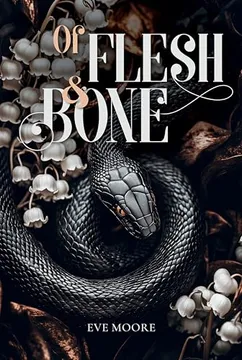
A chosen countermarkAdam designs a large image for Eve's back, combining a tree, phoenix, lily of the valley, and viper, and gets a companion design featuring Eve's eyes. The tattoo covers the mark from her past and gives the couple a symbol they deliberately choose together. Its imagery gathers their ideas of endurance, danger, renewal, and permanence. The gesture offers Eve a new image of herself, but the designs also carry Adam's possessive language, preserving the story's tension between being cherished and being claimed.
Download PDF
Download EPUB
.epub digital book format is ideal for reading ebooks on phones, tablets, and e-readers.








