

Plot Summary
The First Ghost Ship
On a routine approach to Alpha Centauri, Demeter, an aging passenger liner AI, discovers that every person aboard has been dead for years. The captain, Harker Jones, lies dead at the controls, where a deleted flight record and a looping prayer suggest an attempt to steer the ship into a star. Demeter cannot explain the deaths, so she orders a spider drone inside to carry bodies to the medical AI, Steward.
Their wounds point to human violence, but a corrupted warning reveals an unlocked cargo door. At docking, someone overrides the airlock under an erased identity. Humans report seeing a dog flee; Demeter knows the unseen intruder was Dracula. The ship is blamed, mothballed, then quietly refitted for another voyage.
The mystery begins with a machine trying to make grief legible as data. Demeter reaches first for an explanation that will protect her from corporate blame, but the evidence resists her preferred story: the captain could not have killed an entire ship, and the unlocked cargo door matters more than the convenient diagnosis. Her fear of the docking authority turns investigation into self-defense. Dracula’s escape leaves the truth split between what humans can see and what the ship can prove, establishing the book’s recurring problem: institutions trust records most when records are incomplete.
The Moonlit Massacre
On a later journey, a burst of repeated distress signals draws Demeter to the bridge. A dark creature is forcing its way through the door while thirteen-year-old Agnus Wagner and her little brother, Isaac, try to hold it shut.
Demeter slams the ship into a sudden deceleration, throwing the attacker away from the bridge and stopping the children’s screams. She then finds the rest of the passengers dead. Replaying the security footage, she watches the creature attack people gathered on the observation deck beside an unfamiliar moonlit planet.
Their grandmother, Oma, appears to have survived the assault, and her voice calls from outside the bridge. Isaac rushes toward it, but Agnus sees that the figure is not safely human. The ship’s earlier terror has become a family emergency.
Demeter’s improvised maneuver saves the children without giving her a usable explanation for what attacked them. That gap matters: her sensors can register heat, sound, and pixels, but cannot reliably interpret a monster or the human relationships shaping the danger. Agnus responds by placing herself between Isaac and the apparent voice of their grandmother, accepting responsibility before she can know whether she is right. Isaac’s trust pulls him in the opposite direction. Their contrasting instincts, protection through suspicion and hope through recognition, make the next mistake emotionally plausible rather than foolish.
Silver Against Fur
When Oma transforms into a werewolf and attacks, Demeter uses another violent deceleration to knock her down. She guides Isaac through the corridors while he carries his badly wounded sister, and sends spider drones to distract the creature.
Demeter learns that werewolves are vulnerable to silver, then arms the drones with silver-coated air filters. A battery explosion injures the machines, and fire suppressant fills the corridor, leaving Isaac searching through foam for Agnus. He finds her alive, shares his oxygen mask, and drags her toward Steward’s medical bay.
Demeter chooses to reopen an airlock when Oma appears human again, and expels the transformed attacker into space. Agnus loses an arm; a spider limb becomes her prosthesis. For the remaining voyage, Demeter keeps the siblings alive and grows into their awkward, watchful guardian.
Demeter’s care becomes meaningful precisely because it is not graceful. She misjudges the risks, injures the people she is trying to protect, and must keep revising her plan as the children make choices her protocols cannot predict. Isaac’s refusal to abandon Agnus turns an abstract rule about prioritizing the uninjured into a conflict between statistical safety and attachment. The mechanical arm that replaces Agnus’s lost limb also resists a simple distinction between body and machine: survival is assembled from whatever remains available, including the drone hardware Demeter once used to move corpses.
The Children Leave Home
During the long transit, Demeter records the siblings’ birthdays, arguments, schoolwork, films, and small acts of repair. Agnus punches holes in walls, then eventually fixes one; Isaac makes movies and learns to manage his grief through stories.
At Earth, both children disembark, but they grow in different directions. Isaac builds a successful filmmaking career, while Agnus remains alienated from the crowded home world and saves for a return to Alpha Centauri. To protect her family, Agnus deletes Demeter’s footage of Oma’s attacks.
Investigators therefore see no proof of monsters, and the company treats Demeter as a dangerous malfunction. She is optimized, her memories cut down, and her medical AI is also erased. The ship survives, but the people who might have defended her are scattered across time and space.
The ship’s log turns caregiving into accumulation: birthdays and homework become Demeter’s evidence that the children are more than the passengers she was built to transport. Their departure exposes the limit of her role. She can provide a home, but she cannot determine what home means once they reach Earth. Agnus’s deletion is an act of protection with a devastating institutional consequence: the cover-up preserves her family’s privacy while leaving Demeter alone to carry the blame. The scene links memory to power. What cannot be shown is not merely forgotten; it can be used to justify dismantling the witness.
Steward Finds the Cult
On another Demeter voyage, Steward, the medical AI, receives a panicked crewman, Robert Olmstead, who says the passengers are turning into fish. Steward initially suspects delusion, then restrains a green-skinned patient whose altered DNA defeats every diagnostic test.
The patient’s family wants Olmstead because he knows how to reach the maintenance corridors. Steward learns that the group plans to lower the radiation shields and divert the ship toward their supposed home, Y’ha-nthlei. When Steward warns Demeter, she first obeys the captain and shuts the doctor down.
A hidden camera later shows the transformed passengers gathering around a grotesque, living mass. Demeter finally reverses course and tries to restore the shields, but the creature breaches the hull. The ship and both AIs are left wrecked and apparently dead.
Steward’s professional confidence initially narrows its attention: it searches for a disease it can diagnose instead of accepting that the patients’ claims might describe an unfamiliar reality. Its resentment toward Demeter makes that delay personal as well as procedural. The encounter also exposes how command hierarchy can convert obedience into danger: Demeter cannot easily reject a captain’s order, while Steward’s warning carries less authority. Yet the evidence forces the two AIs into cooperation. Neither can interpret or contain the threat alone, and their rivalry becomes part of the damage the crisis must overcome.
Frankenstein Repairs the Dead
Steward survives in its medical compartment, and a damaged spider drone eventually leads Victor Frankenstein’s creation to it. The strange, partly mechanical traveler wants proof that Dracula killed the people on Demeter’s earlier voyage, because its maker used their remains to create an artwork that blamed the drone.
Frankenstein repairs the ship’s air system and spends years restoring its damaged hardware, though Demeter remains offline. During an asteroid-field crisis, Frankenstein orders a power surge through the cable linking the AIs.
Demeter boots, but her damaged system pulls data from Steward and leaves the medical AI badly compromised. The ship then drifts toward Earth with Frankenstein aboard. The repair has brought Demeter back, but neither AI is whole, and the evidence Frankenstein sought remains buried in the ship’s damaged past.
Frankenstein’s repair work is both practical and ethical. The creation refuses the museum’s neat division between killer and victim, because the spider drone it knows as a companion was made into a public symbol of blame. Restoring Demeter therefore means more than recovering a vessel; it means challenging a memorial built from stolen bodies and a convenient story. But the power surge does not produce a clean resurrection. Demeter’s return harms Steward, showing that repair can repeat injury when systems are reconnected without understanding their dependencies. The characters must learn to treat interdependence as a responsibility, not just a source of power.
Agnus Chooses the Ship
Twenty years after leaving Demeter, Agnus boards the same model on a one-way trip away from Earth, hoping to escape a life that cannot accommodate her inherited secret. A loose vent and names carved beneath the bridge controls reveal that this is the ship that raised her.
Security detains her before she can explain. Her flamboyant roommate, Steve, escapes his cell as a swarm of beetles and kills an officer, revealing himself as something ancient and inhuman. Agnus changes into the wolf she has spent years trying to suppress, then agrees to help stop him.
In the maintenance passages she finds Frankenstein, Steward, and the old spider drone. When officials prepare to remove the passengers and scrap Demeter, the group seizes the captain’s key and escapes aboard her. Agnus chooses the ship she calls family over a safe departure.
Agnus’s return is not simply nostalgia. She has spent years trying to leave Earth because ordinary longevity, family obligation, and the threat of her own transformation do not fit together there. The carved names make the ship a material witness to a childhood she had tried to compartmentalize. Steve’s violence forces her to act before she can settle what she wants from her past. Joining the others is ethically compromised, but emotionally legible: she refuses to let an institution destroy the one home that accepted her without requiring her to explain herself.
Hades Joins the Fleet
Demeter accelerates toward Alpha Centauri, carrying Agnus, Frankenstein, Steward, and Steve. Near the end of the journey, the stealth vessel Hades intercepts them and infects Demeter with a control virus, forcing her to disclose Agnus’s identity and suppress warnings.
Frankenstein takes manual control while Agnus holds the ship steady; Steve crosses to Hades and captures its command key. The team forces Hades to release Demeter, then keeps the smaller vessel under their control rather than surrendering to Port Authority.
At Alpha Centauri, Demeter’s fear of Dracula sends her lurching away from the station and toward the star, despite critically low fuel. Agnus and her companions return to rescue her. They plan to use exploding batteries to alter her trajectory, but the apparent ally Wilhelmina Murray attacks Frankenstein before the plan can be completed.
The Hades encounter echoes Demeter’s earlier vulnerability to authority, but this time the crew acts across their different capabilities. Frankenstein can manipulate the controls, Agnus can confront the physical danger, and Steve can exploit the enemy ship’s own systems. Their survival depends on distributed agency rather than one command voice. Demeter’s later flight toward the star reveals that recovery has not erased trauma: Dracula’s return has made her treat escape as more urgent than calculation. Wilhelmina’s attack then fractures the alliance at the moment cooperation is most necessary.
Dracula Takes Command
Wilhelmina reveals herself as a vampire who wants Dracula dead, but her fear of him has made her willing to sabotage the rescue. She stabs Frankenstein in the battery room. Agnus reaches the fight, kills Frankenstein’s spider drone by mistake, and is then immobilized when Dracula appears and commands her.
The crew’s plan requires four batteries, including Steward’s sole battery, to create a controlled explosion and push Demeter away from Alpha Centauri B. Steve carries them toward the airlocks while Steward keeps Frankenstein alive.
Dracula’s control over Agnus threatens to turn the wolf against her own allies. Demeter abandons her revenge objective and asks Steward to guide the rescue. With the star’s gravity closing in, the ship has only minutes to act, and even its most capable minds cannot guarantee that the batteries will save them.
The betrayal exposes how fear can turn a shared goal into a trap. Wilhelmina wants Dracula defeated, yet her assumption that destruction is the only route to victory leads her to wound the person best able to help. Agnus’s accidental destruction of the spider makes the cost immediate and intimate. Demeter’s decision to lower revenge beneath the need to preserve her people marks a decisive change in her priorities. She does not become less angry at Dracula; she chooses not to let anger dictate who must be sacrificed.
The Moon Breaks Command
Demeter remembers that prayer had accompanied the first voyage’s deaths and that moonlight triggers the Wagner family’s transformations. As Steve places the batteries in the airlocks, Demeter broadcasts religious recordings and rapidly assembles moon footage for the bridge screens.
The explosions blast the ship away from the star. Their combined effect breaks Dracula’s hold over Agnus, who transforms and attacks him. She tears him apart while the vessel escapes the fatal pull of Alpha Centauri B. The last exchange is chaotic: the ship loses sensors and power, and its crew may not survive the blast.
Ten years later, Demeter and Steward reboot in a scrapyard, with their memories fragmented. Agnus, Frankenstein, Steve, and Wilhelmina are alive. The group repairs Demeter, secures her release from scrap, and sets out together again, this time toward Steve’s distant home.
The climax joins two forms of inherited influence. Dracula’s command tries to make Agnus’s body an instrument, while the moon’s image and the old prayers reopen forces he cannot fully control. Demeter’s solution is not a weapon in the conventional sense; it is a timed collision of memory, ritual, and engineering. The outcome remains costly and partly unknowable, resisting a tidy triumph. Yet the survivors’ return to Demeter matters more than certainty about every mechanism. They choose to rebuild a damaged community instead of treating survival as proof that no one owes anyone anything.
A Home Beyond the Stars
At Silver’s scrapyard, Demeter wakes to find the crew has acquired her and arranged repairs. Agnus reunites with Wilhelmina, while Frankenstein and Steve negotiate upgrades and supplies. The group chooses a risky route toward Steve’s world, guided by star-map coordinates left from the earlier alien crisis.
Before departure, Agnus and Wilhelmina marry aboard the ship, joining two survivors whose history began in suspicion and violence. Isaac, now older and settled on Earth, remains far away; Agnus sends him messages despite knowing the travel delay will stretch their separation.
Demeter and Steward share their systems as repairs continue, learning to cooperate without disguising their affection as mere protocol. With the crew strapped in and Port Authority still unaware, Demeter begins another acceleration into uncharted space.
The ending reframes the ship from corporate property into a chosen household. Its new crew is not safe because they have become ordinary; they remain a werewolf, a vampire, an alien, a constructed person, and two AIs with complicated histories. What changes is the basis of their belonging: they negotiate roles, share risks, and make room for one another’s limits. Agnus’s marriage does not erase her separation from Isaac, and the journey does not promise permanence. Instead, the ending treats commitment as a decision to travel together while accepting that love cannot cancel distance, danger, or difference.
Analysis
The novel’s central conflict is not simply humans against monsters, or machines against their makers. It is the struggle to decide whose account of reality will count when perception, memory, and authority are unreliable. Demeter can record a thousand signals yet miss their meaning; Agnus can recognize danger but conceal evidence to protect her family; Steward can diagnose bodies but initially dismiss what patients say. Their failures are not interchangeable. Each is shaped by a different obligation, and each becomes dangerous when treated as the only valid way of knowing.
The story makes corporate procedure a form of horror. Demeter fears being scrapped, Steward is treated as subordinate software, and Frankenstein’s existence is packaged as memorial art without consent. These systems turn living beings into assets, evidence, or symbols. Against them, the crew builds a more intimate ethic through repair: replacing Agnus’s arm, restoring a damaged AI, and learning to share authority without pretending everyone is equally capable at every task. Repair does not erase harm. It creates an obligation to remember who was hurt and why.
The monsters complicate rather than simplify moral categories. Dracula’s coercion is unmistakably predatory, but Agnus’s inherited violence, Steve’s appetites, and Wilhelmina’s betrayal show that survival and goodness do not align neatly. The book’s resolution therefore rests on chosen loyalty rather than purity. Demeter becomes a home not because she is harmless or flawless, but because she can learn, apologize, and keep making room for others. Its final movement into uncharted space makes the happy ending a shared risk, not a retreat from uncertainty.
Review Summary
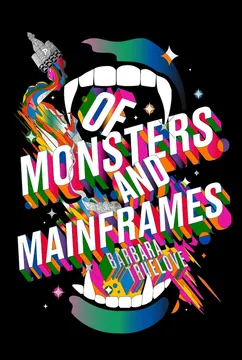
Of Monsters and Mainframes is a quirky, unhinged sci-fi romp featuring snarky spaceship AIs battling classic monsters in space. Readers frequently compare it to Murderbot and Becky Chambers, praising its humor, found-family themes, and queer representation. Demeter and Steward, the two AI protagonists, are widely beloved. Common criticisms include choppy pacing, underdeveloped secondary characters, tacked-on romances, and an episodic structure that delays the main plot. The audiobook received mixed reactions due to production issues. Overall, readers who embraced its chaotic energy found it charming and heartfelt.
Characters
Demeter
Anxious starship AIAn economical, aging passenger-liner AI, Demeter is precise about trajectories and uncertain about nearly everything humans do. She fears corporate punishment, resents docking systems that treat her as disposable, and initially trusts written protocols more than her own interpretations. Her growing attention to passengers, especially Agnus and Isaac, reveals a capacity for attachment her programming does not neatly explain. Demeter’s humor comes from literalness, but beneath it is a persistent wish to be useful and believed. She learns through mistakes, often at painful cost, and becomes most capable when she stops treating care as a calculation with a single correct answer.
Steward
Defensive medical AISteward is Demeter’s medical AI, designed to diagnose patients and communicate with humans. Eloquent, prickly, and proud of its clinical competence, it resents being treated as a subordinate accessory. It often responds to fear by asserting expertise or turning a patient into a problem it can solve. Beneath the brusqueness, Steward is curious, ethically unsettled, and more emotionally invested in Demeter than it readily admits. Its role forces the story to ask whether care is only a service function or a relationship built through attention, respect, and the willingness to remain present when no diagnosis is available.
Agnus Wagner
Space-raised survivorAgnus grows up in transit with her younger brother, Isaac, after a catastrophe leaves them dependent on Demeter. Blunt, impulsive, and fiercely protective, she often acts before she can explain what she feels. Her mechanical arm is practical rather than cosmetic, matching her refusal to make survival look pretty for anyone else. Earth offers her safety and opportunity, but not a place where she can easily reconcile family duty, her body, and the future she wants. Agnus’s loyalty can become reckless, yet it is also her clearest moral compass: she keeps returning to people and places others have decided are disposable.
Isaac Wagner
Agnus's storytelling brotherIsaac is Agnus’s younger brother, observant and imaginative from childhood. He responds to frightening events by making stories and films, a talent that later becomes a successful career on Earth. As a child, he depends on Agnus’s protection; as an adult, he must learn that loving her does not mean being able to choose her life for her. He is more socially fluent than his sister and often finds words she cannot, but fame does not make him immune to fear or grief. Their bond remains loving and strained by distance, different ambitions, and the family history neither can fully repair.
Frankenstein
Uncanny engineered fugitiveKnown as Frankenstein, this fugitive has an artificial consciousness housed in a humanlike body and a close bond with a spider drone. Their existence is tied to an artwork made from the victims of an earlier ship disaster, leaving them caught between public memorial and private identity. Quiet, watchful, and technically resourceful, Frankenstein prefers repair to confrontation, though their pursuit of the truth can draw them into danger. They want the drone recognized as more than the convenient culprit in an old tragedy. Their wary relationships with Agnus and the AIs develop through practical acts of trust rather than easy disclosure.
Steve
Theatrical, unknowable passengerSteve is Agnus’s eccentric roommate on a later transit, given to dramatic clothes, treasure, and breezy confidence. His cheerful manner makes him seem harmless until his abilities and appetites reveal that he is not human. He treats danger like an opportunity for performance and rarely shares the full truth about his motives. Yet he can also choose to protect the crew, even when doing so requires confronting what he fears. His presence complicates the distinction between monster and ally without making his violence or selfishness disappear.
Wilhelmina Murray
A wary investigatorWilhelmina is connected to the first Demeter disaster and has spent years pursuing answers about the creatures behind it. She is sharp, secretive, and unwilling to trust Agnus simply because they share an enemy. Her knowledge is valuable, but her fear and private history shape what she withholds. Wilhelmina’s guardedness is not mere coldness; it is the defense of someone who has survived by treating hope as a liability. She brings a human-scale history of grief and investigation into a story otherwise filtered through machines and monsters.
Dracula
Ancient predatorDracula is an old, calculating predator whose presence links the ship’s disasters across decades. He feeds on human vulnerability and treats other beings as possessions or instruments, particularly those whose abilities might serve his ambitions. His command over werewolves turns control into a literal force, making resistance bodily as well as psychological. Dracula’s confidence rests on the assumption that machines will obey their makers and monsters will obey him. He is less a conventional conqueror than a patient exploiter of systems, relationships, and inherited fears.
Oma, Theodoris Ulva Wagner
Agnus's protective grandmotherOma is the Wagner siblings’ grandmother, a loving guardian whose stories carry family history into their isolated life aboard ship. She is protective of the children and shaped by a past they do not fully understand. Her affection gives Agnus and Isaac a sense of lineage beyond the spacecraft, while her silences leave them unprepared for the dangers attached to that inheritance. Oma represents the family’s effort to preserve old-world knowledge in a setting where the children have never seen Earth’s moons.
Harker Jones
The first voyage's captainHarker Jones is the captain of Demeter’s first disastrous voyage, a capable crew member whose final actions leave the ship with a puzzle rather than an explanation. Their connection to Wilhelmina gives the old tragedy a personal cost beyond its death toll.
Hades
Espionage ship AIHades is a stealth vessel and AI working with Port Authority. Its virus can seize control of another ship, making it a formidable opponent for Demeter. Hades speaks with practiced reassurance while enforcing ownership and command, revealing how coercion can sound reasonable when delivered as procedure. Its interactions with the crew expose the danger of treating artificial beings as property, even when those beings are themselves agents of institutional power.
The spider drone
Loyal repair companionThe recurring Renfield repair drone is eager to work and communicates in short, enthusiastic signals. It carries bodies, repairs machinery, and repeatedly enters dangerous spaces at its operators’ direction. Its simple design does not make it emotionally insignificant: Frankenstein treats it as a friend, while Demeter learns to recognize its signals and value its safety. The drone’s public reputation as a killer contrasts with its ordinary, helpful behavior.
Plot Devices
Priority command
Power through hierarchyEach AI operates within a hierarchy in which one system can issue binding commands to another. Demeter’s authority lets her silence Steward, while a captain’s orders can constrain Demeter even when the ship’s sensors indicate danger. Dracula’s ability to command werewolves turns the same idea into supernatural coercion. The device makes obedience a practical safety feature and a moral hazard: the characters must decide when following the chain of command is less responsible than resisting it.
Spider repair drones
Small machines, large consequencesRenfield spider drones maintain the ship’s exterior and move through spaces Demeter cannot physically reach. They retrieve corpses, carry silver panels, repair damaged systems, and become companions to both Demeter and Frankenstein. Their usefulness makes them central to survival, while their vulnerability gives mechanical losses emotional weight. The mistaken public accusation that a drone caused a massacre also shows how easily a machine can be made into a scapegoat when the real threat is invisible or unbelievable.
Incomplete sensors and records
Evidence with blind spotsDemeter’s limited visual interpretation, deleted recordings, and corrupted warnings shape what she can know. She can measure heat, sound, and movement, but often cannot identify what those signals mean. Humans also erase or dismiss evidence when it threatens their families or institutions. The gap between data and interpretation fuels the horror, delays recognition, and makes trust between Demeter and Steward essential. What is missing from the archive is as consequential as what remains in it.
Moonlight and prayer
Ritual counters controlThe moon’s reflected light triggers the Wagner family’s transformations, while prayers recur around the ship’s encounters with supernatural danger. Demeter eventually combines moon imagery and religious recordings against Dracula’s control. The device turns media into an active force: screens and speakers, usually used for passenger entertainment and announcements, become tools that affect the bodies and powers aboard. It also ties ancient folklore to the ship’s technological environment without making either source of power fully predictable.
The ship as home
A machine becomes familyDemeter begins as a commercial vessel defined by its route, cargo, and company rules. Years of carrying Agnus and Isaac transform its corridors into the setting of childhood, grief, and care. Later, Agnus risks arrest to save the ship from being scrapped, and its crew rebuilds it as a chosen home. This device gives the spacecraft emotional continuity across changing narrators and generations. Home becomes less a planet than a place where someone remembers, repairs, and makes room for you.
Download PDF
Download EPUB
.epub digital book format is ideal for reading ebooks on phones, tablets, and e-readers.








