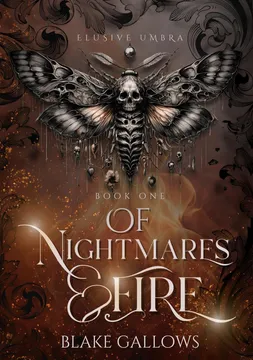


Plot Summary
The Princess Runs
Astraea1 remembers being six when her father5 seized Eathian’s throne, killing her mother and countless others. Now, as he prepares to marry his twenty-year-old daughter1 for political advantage, she objects to the rushed courtship and he beats her with a leather curtain strap. Colette,4 her closest friend and a palace handmaiden, tends the wounds.
Astraea1 decides to flee before her father5 can choose another man to control her life. She leaves her mother’s pendant at her throat, takes food and a knife, and slips out through the servants’ passages. The decision is more than escape from one night’s violence: Astraea1 is trying to claim the first choice her father5 has not made for her.
Astraea’s escape begins with a distinction between survival and agency. She has endured violence by learning to obey, conceal her feelings, and prepare for the next punishment. Her father’s attempt to arrange her marriage makes that strategy feel like a life sentence, so she accepts the danger of the unknown. Colette’s care offers a brief countermodel to the king’s rule: intimacy without ownership. The pendant, her only material link to her mother, gives the flight emotional weight, while Astraea’s secret use of a contraceptive tonic shows that resistance has been quietly present long before she runs.
Stormbound with Strangers
Outside the palace, Astraea1 sees the poverty her father5 has hidden from her and understands why he kept her within the walls. When a trader accuses her of theft, a scarred stranger2 intervenes. She gives him her dead friend Sienna’s11 name rather than reveal herself. At the dune port, rain forces her into a crowded tavern, where the same man recognizes her as a princess.
He is Kyros,2 though she does not yet know his name; his twin, Mavros,3 is also staying there. The innkeeper assigns Astraea1 a shared room, and she discovers Mavros3 already asleep in its bed. The storm has halted her escape and placed her among men whose purposes she cannot read.
The journey’s first reversal comes through weather, not a deliberate act of pursuit. The storm suspends Astraea’s plan and forces proximity with people outside her father’s hierarchy. Her false name is a small, practical defense, but it also recalls Sienna, a murdered friend who helped her understand the king’s lies. The market scene makes class visible through Astraea’s body: she carries the signs of privilege into a district shaped by deprivation. Kyros’s intervention offers protection without yet establishing trust, leaving the encounter balanced between rescue and threat.
The Roommate’s Mission
Astraea1 wakes to find Mavros3 in the bed she thought was hers, and their awkward first night gives way to an uneasy truce. Kyros2 and the armed Zinya6 soon join them, while Mavros’s3 teasing hides a serious mission: he and Kyros2 have come to restore magick and will kill anyone who blocks them.
When a drunken soldier named Leoric23 corners Astraea1 and tries to force himself on her, Kyros2 pulls him away. Later, Kyros2 kills Leoric23 and conceals his body with Mavros’s3 help. Astraea’s1 recurring nightmares intensify, and the twins recognize that the king’s5 soldiers are searching the district. The strangers are not ordinary travelers, and Astraea’s1 presence has become dangerous to them too.
The tavern compresses several kinds of threat into one confined space. Astraea is vulnerable to sexual violence, political capture, and the nightly terror she cannot explain. Kyros’s intervention distinguishes him from the men who treat her as available, but his later killing of Leoric also establishes a brutal moral code: protection is immediate and personal, not governed by law. Mavros’s levity and Kyros’s severity are contrasting ways of managing danger, while their shared mission introduces the political struggle over magick that will soon intersect with Astraea’s flight.
The Escape Ends
When the rain stops, Astraea1 sees her father’s5 soldiers flooding the streets and bolts from the tavern. Ruby,15 the innkeeper, helps make the pursuit look convincing, but guards catch Astraea1 beneath a market cart. Kellan,7 a palace guard who knows her, returns her to the king’s5 control.
Before they reach the palace, Pravin9 orders a local man executed and threatens to burn the surrounding block, though its residents did not help Astraea.1 At the gates, Astraea1 sees four bodies hanging, including palace women, and fears Colette4 is among them. Her father5 reveals that the dead are meant to punish her. Astraea1 returns physically defeated, but the spectacle hardens her resolve not to be tamed.
The escape fails because Astraea has been denied the knowledge and resources that would make independence survivable. Her father converts that vulnerability into collective punishment, making the people’s suffering an instrument of control over her. The execution also exposes the moral trap in which she lives: every act of resistance can be used to justify harm to someone else. Yet witnessing the bodies does not restore obedience. It clarifies the king’s method, which is to make her believe that compassion itself causes the violence he chooses.
A Daughter Strikes Back
The king5 presents Astraea1 to Prince Cadoc of Iorworth10 as though her return were a happy reunion, but she confronts him over the people killed in her name. Kellan7 intervenes and escorts her away before the outburst earns harsher punishment. Soon afterward, the king5 forces Kellan7 to whip Colette4 in the courtyard as a warning to both women.
Astraea1 watches her friend endure the lashes, then strikes her father5 across the face. He calls the rebellion a sign that his lessons have made her strong. Later, Kellan7 admits that he used healing salve to help Colette4 and urges Astraea1 to stay away from him. Astraea1 realizes that the people protecting her are also being endangered by her captivity.
Astraea’s slap is not a victory over the king; it is a refusal to preserve the performance he demands. The punishment of Colette shows how he controls his daughter through attachment, forcing her to watch a friend suffer and then framing that suffering as education. Kellan’s coerced role complicates simple ideas of loyalty: he obeys to survive, yet risks himself to soften the harm. Astraea’s growing anger is therefore mixed with guilt, a combination that her father exploits and that she must eventually learn to distinguish from responsibility.
The Heirs Enter Court
Astraea’s1 father5 gathers the petitioning nobles for formal courtship, while she prepares to resist becoming a bargaining piece. Kyros2 and Mavros3 enter as appointed heirs of Diemos, and the brothers’ arrival reunites her with the strangers from the tavern. Kyros2 refuses to flatter the king5 and asks Astraea1 to dance, using the closeness to challenge the false name she gave him.
Mavros3 follows with a more playful dance and asks why she ran. Astraea1 admits that she wants control of her own life. His suggestion that she might seize more than personal freedom gives her a new possibility to consider. The courtship is now both a contest for her hand and a dangerous cover for the brothers’ mission.
The court transforms private coercion into public spectacle. Astraea is expected to appear desirable while men negotiate around her, but Kyros’s refusal to perform easy deference unsettles the script. Mavros’s humor creates another kind of opening, allowing her to speak more plainly than she can with her father. Their presence offers neither uncomplicated rescue nor immediate safety: they have their own political objective. Astraea’s emerging agency begins when she recognizes that control might mean more than escaping the palace; it could mean challenging the conditions that made her flight necessary.
Kyros Wins the Arena
During the first trial, Astraea1 is expected to favor Benat, a powerful local suitor, but she gives her token instead to Kyros.2 Benat answers her formal greeting by stealing a kiss, making his entitlement plain.
When the warriors fight, Kyros2 and Mavros3 work together until Kyros2 defeats Benat and kills him with Astraea’s1 hairpin. The crowd cheers, but her father5 blames her for the political consequences. He orders Pravin9 to punish her, and Pravin9 beats her in the bathing chamber before Colette4 interrupts.
Colette’s4 healing balm quickly closes the injuries, leaving Astraea1 to wonder how it works. Kyros’s2 victory has won him private courtship, but it has also made him a target and brought Astraea1 closer to the consequences of choosing for herself.
The arena makes courtship literally lethal, turning the men’s competition into a public test of power and the princess’s favor into a weapon. Astraea’s choice is meaningful precisely because her father has scripted another outcome. Benat’s stolen kiss reveals what the marriage market permits men to presume, while Kyros’s decisive violence answers that presumption in the arena’s own language. The punishment afterward shows that her choice carries costs beyond the ring. The healing balm quietly signals that suppressed magick survives in practices the king cannot fully erase.
A Dune Trial Looms
As the suitors gather for more dinners and trials, Astraea’s1 nightmares deepen and Kyros’s2 attention grows more difficult to dismiss. He notices a strange magickal pull around her and suspects that the relic his group seeks may not be an object at all. Astraea1 also overhears enough to learn that the brothers aim to revive magick, though Kyros2 refuses to explain further.
When her father5 announces that the next contest will take place in the Dunes of Parreth, Kyros2 resists being excluded from it. Astraea1 and Kellan7 quietly begin planning to keep Mavros3 from being sacrificed to the king’s5 design. Their arrangement gives Astraea1 a role in the escape, but the looming trial narrows the time available to act.
This section changes the romance from an incidental attraction into a political problem. Kyros reads Astraea as a source of power before he understands her as a person, while Astraea hears his mission without knowing its full stakes. Their mutual incompleteness is not merely a romantic obstacle; it reflects how secrecy is necessary under a regime that punishes knowledge. Her alliance with Kellan shows that she is beginning to use relationships strategically, rather than only as emotional shelter. The desert trial forces those private calculations toward action.
Thunderbird at the Gates
At the favor ceremony, Astraea1 publicly awards the next token to Cadoc,10 disguising her plan to leave with Kyros.2 A Thunderbird suddenly dives into the gathered crowd, scattering soldiers and suitors. Kyros2 and his allies use the panic to find Astraea,1 while Mavros3 protects Colette4 and the others. Kellan7 leads the escape through a newly dug passage intended to reach the Dead Sea.
He joins them until their route divides, then chooses to return to Eathian and aid the women from within. Astraea1 is angry and frightened to leave him behind, but Kyros2 assures her that Colette4 is with Mavros.3 The group has escaped the palace, yet they are fugitives moving through a dangerous landscape without a safe route home.
The Thunderbird attack is both an external disruption and a practical release from the court’s surveillance. Astraea’s false favor for Cadoc demonstrates that she can now perform obedience while pursuing another plan. Kellan’s decision to stay behind prevents the escape from becoming a simple rescue fantasy: leaving Eathian requires abandoning a friend to work within its danger. The underground passage literalizes the politics of the kingdom, with hidden routes built beneath the king’s visible authority. Freedom arrives, but it begins as separation and uncertainty.
The Manticore’s Choice
The escape route brings Astraea1 and Kyros2 into the Dead Sea’s black dunes, where Scylia pirates intercept them and recognize Kyros2 as the Hawk. Their leader, Karnnen,14 boasts that Astraea1 has a bounty on her and threatens her. Kyros’s2 magick surges from the sand, scattering the pirates, but a manticore19 charges into the battle.
Astraea1 cannot abandon the creature19 when the surviving pirates attack it. Kyros2 fights beside the manticore,19 and when the beast19 bows rather than attacking them, Astraea1 touches its brow. Karnnen14 survives long enough to warn that Astraea1 will bring destruction, and Kyros2 kills him. Kyros2 portals them onward without explaining the warning, leaving Astraea’s1 growing trust badly shaken.
The desert fight tests whether Astraea’s compassion can coexist with danger. She risks herself to protect a creature that everyone else treats as a threat, and the manticore’s bow suggests that her judgment may perceive something the others miss. Kyros’s power is revealed as elemental and formidable, but his silence after Karnnen’s warning reproduces the pattern of withholding that has governed Astraea’s life. His protection is real, yet protection without explanation can feel like another form of control. The battle therefore advances both the external escape and the central tension over trust.
Aithne Welcomes the Fugitives
Kyros2 brings Astraea1 to Aithne, where she reunites with Colette4 and sees Mavros3 and Zinya6 among a community celebrating the Shula Morana. The lively gathering honors those killed in Eathian’s Great War and the people who survived its aftermath. Astraea1 learns that Kyros,2 Mavros,3 and Zinya6 were among the orphaned Eathians Queen Phaedra8 took into Diemos.
Their welcome makes Astraea1 feel accepted, but also confronts her with the human cost of her father’s5 rule. She and Kyros2 draw closer amid the celebrations, though he keeps disappearing to pursue his mission. The oasis offers her a first experience of safety beyond the palace, but it also reveals that her escape has carried her into a conflict far larger than her marriage.
Aithne gives Astraea a community rather than simply a hiding place. The Neer celebration reframes remembrance as a collective practice that sustains people after political violence, unlike the king’s ceremonies, which use spectacle to glorify conquest. Learning that her companions lost their families to the same war complicates her inherited guilt: she did not choose her father’s actions, but she cannot pretend their consequences are abstract. The warmth of the gathering gives her room to belong while making the moral stakes of her eventual choices harder to evade.
The Nightmare Crosses Over
Astraea’s1 nightmares begin leaving real wounds, and Kyros2 secretly visits Queen Phaedra8 to report his suspicion that Astraea1 is the source of the magickal relic they sought. Phaedra8 orders him to bring the princess1 to Diemos, viewing her power as a way to remove Eathian’s king5 and restore magick. Kyros2 then enters Astraea’s1 dream from afar and sees a bone-faced figure20 seize her.
He sends his own magick into the dream, helping her resist, but the intervention cannot fully end the threat. Astraea1 wakes injured and learns that Kyros2 has been absent. Mavros3 confronts his brother for hiding the nightmare’s danger. Kyros’s2 mission now centers on Astraea,1 yet he has already promised her future to a queen8 without her knowledge.
The living relic revelation transforms Astraea from a political hostage into the object of competing political plans. Phaedra’s response is strategic rather than tender, showing that opposition to Connard does not guarantee a different relationship to power. Kyros’s dream intervention is intimate and protective, but his secret conversation with the queen makes that intimacy ethically unstable. The nightmare’s ability to injure Astraea blurs the border between psychic suffering and physical danger. Her body becomes evidence that private terror has political consequences, while the secrecy around it threatens the trust she is beginning to place in Kyros.
Scars Become Testimony
After another nightmare leaves Astraea1 bleeding, Mavros3 treats her wounds and challenges Kyros2 for withholding what he knows. Astraea1 later shows Kyros2 the scars on her back and admits that her father5 and Pravin9 repeatedly punished her. Kyros2 promises that no one will hurt her again, and she asks him to help replace the memories with new ones.
Their intimacy deepens into a mutual claim, while Astraea1 explains that her mother’s pendant and Sienna’s11 healing balm once eased the nightmares. Kyros2 recognizes that her father5 may have made a bargain involving her. He still does not reveal the full truth, but he begins to see the nightmare, the pendant, and Astraea’s1 unknown power as parts of one threat.
Astraea’s disclosure changes the meaning of her scars: they are no longer private proof of weakness but testimony she chooses to share. Kyros responds by offering protection, yet his promise carries the risk of repeating the possessive logic that has harmed her. Their intimacy matters because Astraea initiates its terms, reclaiming touch from a history in which her body was controlled. The pendant and balm connect her mother’s care to a suppressed network of magick. The section’s tenderness does not solve the mystery; it makes the cost of continued concealment more personal.
The Cerkin Attacks
On Astraea’s1 birthday, Kyros2 gives her a pair of Tsalalerian steel knives, then the two spend the night together. At dawn, a skeletal Cerkin enters their room. Kyros2 shields Astraea1 with shadow magick and portals them into the forest, where he kills the creature with her blade.
Astraea1 thanks him rather than recoiling from the violence, and the two return to the village changed by the attack. She also tells Kyros2 that the nightmare has begun appearing while she is awake. He translates its repeated word as meaning shadowed, but cannot yet explain its purpose. Their private celebration has become a battle for survival, and the danger is no longer confined to sleep.
The birthday marks a break from the king’s ownership of the calendar: Astraea spends it with people she chose, not at the court that planned her marriage. The Cerkin’s arrival collapses the temporary safety of intimacy into immediate physical danger. Kyros’s violence is protective, but the scene also gives Astraea a weapon and a more active place in her survival. The shift from nightmares to waking attacks signals that the threat is crossing boundaries faster than either of them can understand. Emotional trust grows alongside the need for practical defense.
The Death Flame Awakens
At the Shula Morana pyre, Astraea1 discovers that Kyros2 is the true heir of Eathian, born to the royal family her father5 displaced. The revelation makes her feel deceived, and she runs from the gathering. Before she can decide whether to return, Connard’s5 soldiers arrive and Cerkins attack.
A scarred woman21 steps through a portal, addresses Connard5 over a broken bargain, and tells Astraea1 that her mother’s eyes are familiar. A memory of her mother urging her to let her fire burn breaks through. Astraea’s1 back erupts in flame, forming wings as Kyros2 reaches her and opens a portal. She vanishes with him as the manticore19 watches from a distant dune, leaving her power, lineage, and the battle unresolved.
The ending binds the book’s private and political conflicts without resolving them. Astraea learns that Kyros is heir to the throne her father stole just as she begins to trust him, making love and betrayal arrive in the same instant. The scarred woman’s reference to a bargain and Astraea’s mother recasts the nightmares as part of a larger history, while the remembered warning reframes the princess’s fire as something others have tried to contain. Her awakening is not a victory so much as a threshold: she escapes the immediate battle, but her identity and allegiance remain unsettled.
Analysis
Of Nightmares & Fire frames personal escape as a political act, then repeatedly complicates the idea that leaving is enough. Astraea1 flees an abusive father,5 but the social order he built follows her through soldiers, suitors, bounty hunters, and the people endangered by her resistance. Her guilt is one of Connard’s5 most effective weapons: he teaches her to confuse the harm he chooses with harm she causes. Her growth depends on refusing that equation while still acknowledging the kingdom’s suffering.
The romance with Kyros2 develops in the same unstable space. His protection offers Astraea1 the care she has lacked, but his secrets and unilateral decisions echo the control she is trying to escape. Their attraction does not erase that tension. Instead, the story makes trust a question of whether affection can coexist with the right to know and choose. Kyros2 must confront his habit of treating secrecy as duty, while Astraea1 must decide whether intimacy is another form of surrender or something she can enter on her own terms. Magick functions as both suppressed public knowledge and bodily inheritance. Connard’s5 banishment of it impoverishes Eathian materially and narrows what its people can imagine. The nightmares suggest that political violence has not been buried with the past; it has entered Astraea’s1 body and sleep. The pendant and balm preserve forms of care that survive outside royal permission, while the final fire suggests that Astraea1 may embody a force no ruler can safely claim.
The ending refuses a clean liberation. Astraea1 discovers Kyros’s2 royal identity at the moment she must choose whether to trust him, and her power awakens amid a battle whose causes are still unclear. Her fire may make her capable of changing Eathian, but it also draws her into conflicts shaped by her parents’ generation. The novel closes not with freedom secured, but with Astraea1 crossing into a new uncertainty under her own emerging power.
Review Summary
Of Nightmares & Fire receives overwhelmingly positive reviews, averaging 4.14/5. Readers frequently praise the unique Sandman/Freddy Krueger-inspired magic system, rich world-building, and the slow-burn romance between Astraea and Kyros. The atmospheric dark fantasy setting, political intrigue, and dual POV storytelling are recurring highlights. Many readers were captivated by the brooding MMC and resilient FMC. Common criticisms include an underdeveloped psychological depth, jarring writing style, and a cliffhanger ending that leaves too many questions unanswered. The audiobook narration by Anthony Palmini and Jacci Prior also received strong praise.
Characters
Astraea
The rebellious princessAstraea is Eathian’s only heir, raised in luxury but confined by a father5 who treats her as a tool for political marriage. Her memories of his conquest and her mother’s death shape her guilt, while her compassion makes it difficult for her to ignore the suffering beyond the palace. She has learned to survive through silence, concealment, and private acts of defiance, including resisting the future her father5 plans for her. Her curiosity about history and magick, and her fierce loyalty to Colette4, reveal a mind reaching beyond the narrow role assigned to her. Astraea wants agency, but she is still learning how to distinguish responsibility from the guilt others place upon her.
Kyros
The shadow wielding heirKyros is a feared warrior, spy, and magick user from Diemos, where he serves Queen Phaedra8 alongside his twin brother3. He approaches danger through discipline and control, keeping his emotions boxed away while completing missions. Astraea1 disrupts that order because he is drawn to her before he understands her identity or power. His instinct to protect her sits uneasily beside his secrecy and his willingness to decide what she needs to know. Kyros is shaped by the loss of his family and by a life built around duty, yet moments of care reveal a more vulnerable man beneath his reputation. He values loyalty, but must confront how withholding truth can undermine it.
Mavros
The irreverent twin heirMavros is Kyros’s2 twin, a charismatic fighter whose humor and sexual confidence make him seem careless. Beneath the performance, he is loyal to his brother2 and committed to the mission they share. He reads tension imperfectly, often using jokes to deflect it, but can become serious when the lives of his people are at stake. His ease with Astraea1 helps her feel less like a political object, while his closeness with Zinya6 suggests a bond neither has neatly defined. Mavros’s lightness is not the absence of grief; it is one way he keeps grief from governing every moment.
Colette
Astraea’s steadfast confidanteColette is Astraea’s1 childhood friend and the daughter of her mother’s handmaiden. She tends Astraea’s1 injuries, helps her escape, and remains a source of practical care when palace life turns cruel. Their closeness survives differences in rank because Colette treats Astraea1 as a person rather than a princess. She is perceptive, protective, and increasingly eager to build a life beyond service. Her loyalty does not make her passive: she takes risks, learns to fight, and speaks honestly when Astraea1 is hiding from her own feelings. Colette represents the chosen family Astraea1 has been denied.
King Connard Casimir
The usurping kingConnard seized Eathian’s throne through violence and maintains power through fear, public punishment, and the suppression of magick. He presents himself as a loving father when an audience is watching, but in private he treats Astraea1 as property whose marriage can expand his influence. His cruelty is strategic as well as personal: he punishes her friends to make her feel responsible for the suffering he causes. Connard fears losing control and disguises that fear as strength. His rule has impoverished the outer districts and left a kingdom divided by the history he tries to bury.
Zinya
The armed commanderZinya is a skilled fighter and trusted commander who accompanies Kyros2 and Mavros3 from Diemos. She is blunt, observant, and harder to charm than Mavros3, though her loyalty to both brothers runs deep. Her practical judgment helps protect the group, and she is among the first to recognize that Astraea1 matters to Kyros2. Zinya also carries her own history of displacement and loss, which gives her a sharp understanding of what power does to people without it.
Kellan
The conflicted palace guardKellan is a palace guard with a private bond to Astraea1 and a family he must protect. He is compassionate but constrained by the king’s5 authority, and his attempts to help often carry danger for those around him. He cares for Astraea1, though their connection cannot become the life he might want. His choices show how decency survives inside a corrupt institution, but also how easily loyalty to loved ones can be weaponized.
Queen Phaedra Lazuro
Diemos’s formidable queenPhaedra rules Diemos and took in children displaced by Eathian’s war, including Kyros2, Mavros3, and Zinya6. She is powerful, politically astute, and accustomed to seeing people in terms of what they can accomplish. Her care for the displaced exists alongside a hard ambition to restore magick and reshape the balance between kingdoms. She expects loyalty from those she raises and does not easily relinquish control.
Pravin
The king’s enforcerPravin is Connard’s5 favored guard and the blunt instrument of his authority. He enforces punishments, threatens those who defy the king5, and treats Astraea’s1 vulnerability as permission to humiliate her. His obedience is not presented as loyalty to justice; he serves the ruler who rewards his brutality.
Cadoc
The considerate princeCadoc is the Prince of Iorworth and one of Astraea’s1 suitors. He is courteous and attentive, and he recognizes that a marriage arranged by their fathers cannot guarantee genuine affection. His decency distinguishes him from men who treat Astraea1 as a prize, though he remains part of a political courtship shaped by power.
Sienna
The vanished caretakerSienna was a former handmaiden who cared for Astraea1 and became one of the first adults to tell her the truth about the king’s5 lies. She introduced Astraea1 to the Neer and helped treat her injuries. Her friendship taught Astraea1 that kindness and knowledge could exist beyond the rules of the palace.
Viltarin
The loyal Diemos soldierViltarin is a trusted soldier in Kyros’s2 company, dependable in combat and willing to guard Astraea1 when danger reaches the group. His practical steadiness contrasts with Mavros’s3 teasing and Kyros’s2 severity. He also begins forming a connection with Colette4.
Rowan
The magick readerRowan is a powerful acquaintance of Kyros2 who can read magickal signatures. He offers a way to test the strange energy associated with the Dead Sea and Astraea1, though his playful manners can obscure a ruthless interest in power.
Karnnen
The desert pirateKarnnen is a Scylia pirate who recognizes Kyros’s2 reputation and sees Astraea1 as valuable prey. His threats show how the king’s5 bounty has made her danger travel beyond Eathian’s borders. He also carries a personal grievance against Kyros2.
Ruby
The defiant innkeeperRuby runs the crowded tavern where the storm traps Astraea1 and the Diemos party. Brash and capable, she helps Astraea’s1 escape look convincing despite the risk to her own business and safety.
Mortala
The sharp tongued hostMortala runs the Aithne tavern and speaks to Kyros2 without fear. Her bluntness offers a glimpse of the people who know his history outside the battlefield, though she is not inclined to make Astraea1 feel welcome.
Kaeleith
The Creshian dwellerKaeleith is an aged dweller who prepares healing balms with magick and maintains ties to the Neer. She speaks in riddles and offers Kyros2 remedies without satisfying his demand for every answer.
Drabek
Kyros’s magickal ravenDrabek is a large raven bonded to Kyros2 and Mavros3, able to carry messages between them. His presence links Kyros2 to his lost family and to the Creshian Forest.
The manticore
The dune born beastThe manticore is a powerful legendary creature with a feline body, wings, and a scorpion tail. It fights the Scylia in the dunes and responds to Astraea1 in a way that unsettles Kyros’s2 assumptions about monsters.
The bone faced figure
The nightmare stalkerAstraea’s1 recurring nightmare takes the shape of a horned, bone masked figure with long claws. Its presence grows increasingly physical, turning her sleep into a threat that follows her into waking life. The figure appears connected to an older power and to secrets Astraea’s1 father5 has concealed.
The scarred woman
The stranger from the portalThe scarred woman appears during the final battle, moving calmly through violence and speaking as though she knows Astraea’s1 mother and the bargain surrounding her. Her confidence and knowledge make her a dangerous presence whose motives are not yet clear.
Beckett
Kyros’s adoptive brotherBeckett is Kyros2 and Mavros’s3 adoptive brother, raised alongside them in Diemos. He is sociable, irreverent, and quick to tease Kyros2, offering a glimpse of the family life the twins built after displacement.
Leoric
The abusive guideLeoric is a dune guide hired to lead the Diemos party through Eathian. He abuses his access and intoxication to assault Astraea1, exposing the danger she faces even beyond the palace.
Plot Devices
The mother’s pendant
A fragile ward against nightmaresAstraea1 wears a silver pendant inherited from her mother, a constant reminder of the parent she lost and the life that preceded Connard’s5 rule. Sienna11 gives it to her when she is ten, after recurring nightmares begin, and Astraea1 finds that wearing it keeps the dreams at bay for years. The necklace later carries a magickal charge, though its full purpose remains uncertain. Its connection to Astraea’s1 mother, the nightmares, and the power awakening in Astraea1 makes it both emotional keepsake and possible protection.
Shadow magick
Travel, defense, and concealmentKyros2 and Mavros3 wield shadows as a form of magick, using them to fight, hide, and protect others. Kyros2 can also shape a portal from the shadows and transport himself and companions across great distances, though the power can be depleted. The brothers’ abilities make them effective in the arena, the desert, and the escape from Eathian. Astraea’s1 growing connection to shadow and fire complicates the meaning of their gift, which is more than a tool for the twins.
The nightmare and Cerkin
A private terror becomes physicalAstraea1 experiences recurring dreams of pursuit, fire, hoofbeats, and a bone faced figure20 that calls her by an unfamiliar name. Over time, the dreams cause real wounds and the threat crosses into waking life. Kyros’s2 magick can enter and disrupt a nightmare, but it cannot yet explain who the figure20 is or what it wants. The Cerkin, skeletal creatures with similar menace, turn the danger into a physical struggle. The device connects Astraea’s1 trauma to a larger supernatural mystery and makes sleep a recurring source of vulnerability.
The suitor trials
Marriage made into political combatConnard5 uses courtship, public favor, and dangerous trials to secure an alliance for Eathian and choose a husband who will extend his control. The suitors compete in arenas and are expected to win Astraea’s1 favor, though her father5 dictates whom she should choose. Astraea1 gradually uses the ceremonies as cover for decisions of her own, including selecting Kyros2 and later naming Cadoc10 as a decoy. The trials make the costs of her autonomy visible and give her a way to act within the system her father5 controls.
The Shula Morana pyre
Grief becomes prophecy and crisisThe Shula Morana is a Neer observance honoring the dead of the Great War and the survivors who carry their memory. Its central pyre gives the community a ritual of remembrance distinct from Connard’s5 triumphal celebrations. At the final gathering, the rite becomes the stage for the revelation of Kyros’s2 Eathian heritage and Astraea’s1 awakening power. The ceremony binds mourning, political legitimacy, and supernatural change, but the attack that erupts there prevents the community from reaching any settled resolution.
Download PDF
Download EPUB
.epub digital book format is ideal for reading ebooks on phones, tablets, and e-readers.








