

Key Takeaways
Borrow Okinawa's food pattern, not its promise of a 100-year life.
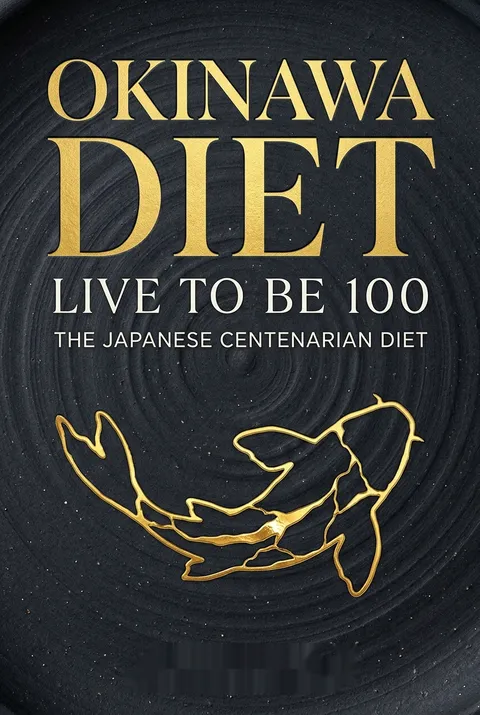
The book's central claim. This guide presents traditional Okinawan eating as a route to longer life and better health. It reports a local obesity rate below 2%, and much lower heart disease and cancer risks than in the United States. But it does not explain how those figures were measured, which populations were compared, or how other influences were separated from diet. Treat them as claims made by the book, not as guaranteed results.
A pattern, not a prescription. The most useful idea is that everyday food choices may matter more than a quick-fix product. The book offers practical eating and activity guidance, but its promise of dramatic health benefits outruns the evidence it provides. No diet can promise that an individual will reach a particular age or avoid disease.
What's valuable is the shift from a miracle ingredient to a population-level pattern. Yet comparisons between places cannot establish that diet alone caused different health outcomes. Income, healthcare, physical activity, social ties, and historical circumstances can all matter, and the book does not account for them. This distinction need not diminish the practical advice. It simply separates a reasonable experiment, eating more minimally processed plant foods, from a stronger claim, that following this plan reliably produces exceptional longevity.
Build meals around vegetables, sweet potatoes, soy, and fish.
A plant-forward plate. The guide recommends at least seven servings of fruit and vegetables daily, fish about three times a week, and comparatively small amounts of red meat, dairy, sugar, and salt. It highlights sweet potatoes and soy foods, such as tofu, as staples, alongside grains, fruit, vegetables, water, and tea. Its broad instruction is to make nutrient-rich foods the center of meals rather than relying on processed fare.
Adapt the pattern. The aim is not to copy every traditional dish or follow a rigid menu. The book offers breakfast, lunch, and dinner recipes, including tofu dishes, fish, soups, and vegetables, as ways to make the pattern workable. It also suggests limiting alcohol, though its descriptions of what is allowed are not always consistent.
This pattern is memorable because it changes the default composition of a meal: plants and familiar staples take up more space, while animal foods become less central. That is more useful than treating individual foods as magic. The advice also needs personal adaptation. Dietary needs, allergies, budgets, and access differ, so an ingredient list cannot serve as a universal medical plan. The book's strongest contribution here is a flexible direction of travel, not a fixed menu or a promise that every listed food suits everyone.
Use calories per gram to compare foods, not just portion size.
A density-based guide. Caloric density means the number of calories in a given weight of food. The book sorts foods into four bands, from low-density options such as water-rich produce and tofu to higher-density choices such as oil, bacon, cheese, and fried foods. Its example calculates a 62-gram biscuit with 220 calories as 3.54 calories per gram. The point is that a larger amount of a low-density food can contain fewer calories than a smaller amount of a dense food.
Know the limits. The guide calls the bands Featherweights, Lightweights, Middleweights, and Heavyweights. It presents the first group as freely eaten, while recommending restraint with the others. These cutoffs are a rough sorting tool, not a full measure of nutritional quality: foods with similar density can differ in nutrients, and the book's category boundaries leave small gaps.
The framework turns an abstract calorie number into a comparison people can use while shopping. It also helps explain why water-rich vegetables can be filling without being energy-dense. But density is not a verdict on whether a food is healthy. Nuts, oils, and some other calorie-dense foods can have a place in a balanced diet, while a low-density food can still be nutritionally limited. Used as one lens among several, the tool can guide choices without turning a simplified chart into a moral ranking of foods.
Pause before finishing a meal, and let fullness catch up.
Stop short of stuffed. The book advises paying attention to hunger and ending a meal when comfortably satisfied, roughly 80% full. If hunger remains, it suggests waiting about 20 minutes before deciding whether to eat more. The purpose is to avoid continuing out of habit after the body has had enough, rather than to ban food or require people to endure hunger.
Practice awareness, not arithmetic. The guide says people often eat beyond comfortable fullness, adding calories they do not need. Its advice is to slow down, notice bodily signals, and choose nutrient-rich food if still hungry. The 80% figure is an informal cue, not a precise measurement, and the book does not explain how someone should use it when appetite or fullness cues are unreliable.
This is a useful invitation to bring attention back to eating, especially when meals are rushed or distracted. A pause can create space between an impulse to keep eating and a deliberate decision. Still, fullness is not a perfect instrument: stress, medication, illness, and individual differences can affect appetite. The most humane reading is to treat the percentage as shorthand for comfortable satisfaction, not a test to pass. Food guidance should reduce needless rigidity, not make ordinary hunger feel like failure.
Make meals social and unhurried instead of eating on autopilot.
Food has a social role. The guide describes Okinawan meals as occasions for conversation with family and friends, not merely a chance to consume food. Its reasoning is practical: eating more slowly and sharing a meal may make it easier to notice what is being eaten and stop when satisfied. The book contrasts this with a hurried approach focused only on the food itself.
Build connection into the routine. A meal with company can be a simple way to make healthier choices feel less like solitary self-denial. The point is not that every meal must be communal, or that conversation guarantees a particular portion size. Rather, the book treats eating as part of daily life and relationships, where pace and attention can shape the experience as much as the menu.
This section quietly broadens the meaning of a diet. Meals are not only nutrient delivery; they are repeated social rituals, and rituals can make a way of eating more sustainable. That insight connects food choices to belonging rather than willpower alone. The book's contrast between cultures is too sweeping to treat as a complete account of either society, but its practical suggestion travels well: a calmer shared meal can support attention and enjoyment without demanding elaborate tracking.
Keep moving through daily life, not only scheduled workouts.
Activity beyond exercise. The book recommends regular aerobic activity and gives a target of 30 minutes on three to four days each week. It also stresses that movement should be part of ordinary life: walking, doing housework energetically, playing with children or pets, and taking part in sports are offered as possibilities. The underlying lesson is that a healthy eating pattern does not cancel the need to move.
The schedule is inconsistent. Elsewhere, the guide says most people should exercise 30 minutes at least six days a week. It also advises varying workouts, though it does not show that changing exercises each day is necessary. Because its proposed frequencies conflict, the reliable takeaway is to build an active routine that can be sustained, rather than treating one exact schedule as definitive.
The emphasis on everyday movement is stronger than a narrow focus on gym sessions. Small bouts of activity can fit around work and home life, making movement less dependent on motivation or equipment. At the same time, the book gives conflicting weekly targets, so readers should not mistake its numbers for a coherent training prescription. The useful question is practical: which regular forms of movement are accessible, enjoyable, and safe enough to keep doing?
Change your food routine gradually, and make support easy to reach.
Expect a transition. The guide says that changing from a diet high in fat and sugar may bring cravings, irritability, or mild stomach discomfort for a few days. It recommends making changes gradually rather than trying to transform every meal at once. Before starting, it suggests clearing tempting foods from the pantry and stocking foods that fit the new routine.
Use people and planning. The book advises telling friends and family about the change, seeking online support, keeping a journal, and marking personal milestones. If a lapse happens, it recommends moving on instead of abandoning the plan. It also proposes an occasional treat, limited to one item from its higher-density categories. These are coping suggestions, not evidence that everyone will experience the same symptoms or benefit from the same reward system.
Gradual change is a sound behavioral strategy because a plan that fits ordinary life is more likely to survive the first burst of enthusiasm. Clearing the kitchen and asking for support also shift the burden from constant self-control to preparation. The guide's account of withdrawal-like symptoms should be read cautiously, since discomfort has many possible causes. A useful transition plan is flexible: it allows adjustments when the new routine feels unsustainable instead of treating difficulty as proof of weak commitment.
Plan for restaurants, holidays, and travel before hunger takes over.
Prepare for real situations. The book does not ask readers to stop traveling or attending celebrations. It suggests checking menus in advance, choosing grilled or steamed options, asking restaurant staff how dishes are prepared, and carrying fruit or vegetables for travel. When a hotel stay is involved, it recommends looking for a room with a kitchenette so meals can be prepared.
Make gatherings manageable. For holidays, it suggests bringing a dish that fits the eating plan, drinking water or tea, eating before an event if suitable food may be scarce, and choosing one small portion of a favorite food rather than sampling everything. These tactics are meant to reduce last-minute decisions. The book also stresses that other people need not change their celebration to accommodate one person's diet.
Planning is a form of friction reduction: it makes a preferred choice easier at the moment when convenience, hunger, and social pressure are competing. The advice is concrete because it addresses the settings where plans often unravel, not just what to buy at home. Still, a diet should not make shared life feel like a series of threats. Flexibility matters; a sustainable approach can accommodate cultural traditions and restaurant meals without turning every deviation into a crisis.
Use Okinawan ingredients for variety, not as cures.
Make unfamiliar foods approachable. The guide highlights seaweed, bitter melon called goya, sweet potatoes, tofu, shiitake mushrooms, fennel, and turmeric. It presents these ingredients as ways to add flavor, texture, and nutrients, and its recipes show several ways to use them in meals. Sweet potatoes appear as an alternative to rice, while seaweed and tofu appear in soups and other dishes.
Separate food from treatment. The book also repeats claims that ingredients such as seaweed, turmeric, and mushrooms may prevent or treat serious diseases. It acknowledges that evidence is lacking for some of these claims, and the text does not establish that any ingredient is a cure. Its recipes are not always consistent with its own restrictions, either: some include pork, cheese, salt, or cooking oils.
A cuisine becomes easier to adopt when it offers more than a list of prohibitions. New ingredients can expand a cook's options and make a plant-forward pattern more appealing. But the language of medicinal properties can blur the line between nutritious food and treatment. An ingredient can contribute to a varied diet without being a proven therapy. The guide is most useful when it inspires culinary exploration, and least reliable when it implies that particular foods protect against specific diseases without showing evidence.
Analysis
This is a practical lifestyle guide built around one central image: Okinawa as a place whose traditional food habits appear to accompany unusually long lives. Its accessible structure moves from the claim of longevity to food choices, daily routines, social and travel obstacles, ingredient lists, and recipes. The narrative invites readers to imitate a way of eating rather than buy a product, and its most transferable ideas are straightforward: emphasize vegetables and other low-density foods, eat with attention, stay active, and prepare for situations that make old habits convenient.
The book's evidence is its central weakness. It presents striking comparisons between Okinawa and the United States, including disease-risk figures, but does not give enough methodological context to judge them. Place-based health differences cannot establish that a particular diet caused them. The guide also shifts between incompatible exercise schedules and offers calorie advice that is too extreme to adopt casually: its claim that a usual Okinawan diet provides only about 800 calories per day should not be treated as an appropriate target for readers. The text's warning to consult a doctor does not repair the lack of evidence behind broad promises.
Its practical guidance is also uneven. The density pyramid offers a simple shopping heuristic, but labels such as heavyweight can wrongly imply that energy-dense foods are inherently harmful. Meanwhile, recipes sometimes include ingredients the guide says to restrict. The best reading is therefore selective rather than credulous: retain the pattern of more plants, modest portions, movement, and social eating; treat disease-prevention claims, calorie targets, and food-as-medicine language with skepticism. The book works as an introduction to a set of habits, not as a clinically validated prescription or a guarantee of exceptional longevity.
Glossary
caloric density
Calories per food weightCaloric density is the number of calories in a given weight of food, calculated in this book as calories divided by grams. The guide uses it to distinguish foods that provide relatively few calories in a larger amount from foods that pack more calories into a smaller amount. It is a comparison tool, not a complete measure of nutritional value.
Okinawa food pyramid
Four density-based food groupsThe Okinawa food pyramid is the guide's way of sorting foods by caloric density into four groups: Featherweights, Lightweights, Middleweights, and Heavyweights. The book suggests eating more from the lowest-density group and limiting the highest-density group. Its categories simplify food choices, but they do not account for every difference in nutrients or individual dietary needs.
Featherweights
Foods at 0.7 density or lessFeatherweights are the lowest-density foods in the book's pyramid, defined as foods with a caloric density of 0.7 or less. Examples given include water-rich fruits and vegetables, such as apples and peaches, as well as squash and tofu. The guide says these foods can be eaten freely, though that broad instruction is not individualized nutrition advice.
Lightweights
Foods at 0.8 to 1.5 densityLightweights are foods assigned a caloric density from 0.8 to 1.5 in the guide's pyramid. Examples include rice, pasta, sushi, and white fish. The book recommends moderation, describing a normal-sized portion as the general limit. The category is based on calories per gram and is not a complete judgment of a food's nutritional quality.
Middleweights
Foods at 1.6 to 3.0 densityMiddleweights are foods with a caloric density between 1.6 and 3.0 according to the guide. Its examples include hummus, soy cheese, and fatty red fish. The book recommends limiting these foods, if eating them at all. The label describes only the guide's density band; it should not be understood as a scientific designation that every food in it is unhealthy.
Heavyweights
Foods above 3.0 densityHeavyweights are foods the book places above a caloric density of 3.0, including vegetable oil, bacon, cheddar cheese, doughnuts, and French fries. The guide advises avoiding them as often as possible and reserving them for rare occasions. This grouping simplifies calorie comparisons and does not, by itself, establish that every dense food is harmful or that every processed food has identical effects.
Download PDF
Download EPUB
.epub digital book format is ideal for reading ebooks on phones, tablets, and e-readers.








