

Plot Summary
Prologue
In 1841, an exhausted young woman dies moments after giving birth in a London workhouse. The infant survives, but the parish surgeon fears the dangers awaiting a destitute girl and orders the nurse to raise her as a boy.
The nurse names the child Oliver Twist, hoping the name will lend her strength. Eighteen years later, the child is Olivia, a young woman moving through London society under the protection of her uncle, Charles Brownlow, while keeping the hard-won habits of her street childhood.
Olivia’s first disguise is imposed before she can understand it. The surgeon and nurse see gender as a danger to manage, so survival begins with a false name and a concealed identity. Yet the nurse’s choice is also an act of care: she gives the child not only protection but a name tied to tenacity. The opening establishes the novel’s central tension between being seen and being safe. Olivia will repeatedly cross social borders, but the first crossing happens in the workhouse, where adults decide who she must appear to be.
The Stranger in Green
At an elegant London dinner party, eighteen-year-old Olivia Brownlow spots Jack MacCarron, a handsome newcomer whose face stirs memories she cannot place. When he appears beside her and catches her gossiping, his presence makes her remember the streets she escaped.
Later, while slipping through the Platts’ house to steal valuables for the orphans she secretly supports, Olivia finds Jack breaking into an adjoining bedroom. She recognizes him as the Artful Dodger, the boy who once rescued her from a trafficker and gave her a place among his young thieves.
Jack seizes her, demanding to know how she knows his old name. Olivia evades him and flees, carrying a stolen silver trinket and a question: why has her childhood protector returned to stealing?
The first reunion joins attraction to threat: Olivia recognizes a figure from her safest childhood refuge in the same moment she catches him committing a crime. Both have learned to survive by managing appearances, but their disguises now serve different ends. Olivia performs the respectable heiress while secretly redistributing stolen luxuries; Jack performs the gentleman while returning to the underworld. Their shared history creates intimacy, yet it cannot guarantee trust. The opening conflict is therefore not simply whether they still care for each other. It is whether either can approach the other without reverting to the roles that once kept them alive.
Two Lives on Holborn
The morning after the party, Jack leaves the Platts with stolen jewels and stops to help a small boy being beaten for coins. He directs the child toward a convent that once sheltered him, then forces himself to keep walking rather than take responsibility for every hungry child he sees.
Olivia, meanwhile, follows Jack through the poorer streets, gives a battered boy money, and continues toward Saffron Hill with food and household goods for the Hill Orphans. At a pawnbroker’s shop, she finds Jack again and is cornered by two thugs. Her dog Brom is struck with a pan, and Olivia fights back until Jack intervenes, frightens the men off, and takes her into an alley to demand why she has followed him.
The two characters’ charity comes from the same wound but takes different forms. Jack offers a single child a practical route to shelter, then turns away from the wider crowd because he fears being pulled back into an unending obligation. Olivia accepts that obligation and keeps returning to the orphan refuge with food, even when each trip risks exposing her. Their encounter at the pawnshop puts that difference in motion: Olivia’s courage is real, but so is her vulnerability; Jack’s protective reflex remains, though he insists on controlling the terms. Care here is neither sentimental nor effortless. It costs time, safety, and the ability to pretend the streets are someone else’s problem.
The Money Between Them
In the alley, Jack presses Olivia about her knowledge of the Dodger, but she turns his flirtation into a pickpocket’s trick and escapes with the money in his waistcoat. Brom bites Jack’s leg long enough for Olivia to get away. That night, Jack follows a disguised boy and dog leaving Olivia’s home, catches the runner in a park, and discovers the boy is Olivia in her street clothes.
He recognizes her as Ollie, the orphan companion he once believed he had lost. Olivia confirms it, then reminds him that he abandoned her when a constable caught her stealing. Their reunion becomes a collision of old hurt and present danger: Jack sees a lie where Olivia sees a betrayal, and neither will accept the other’s version without proof.
The stolen money makes their relationship legible in the language they both know: the person who notices first wins. Olivia’s maneuver is playful, but it is also self-protection, allowing her to control an encounter in which Jack’s physical confidence could overwhelm her. His later recognition changes the stakes. She is not merely a society woman who has learned a few street tricks; she is the child whose trust once made him feel responsible. Yet memory does not erase injury. Olivia’s accusation is emotionally accurate even if it is factually incomplete, while Jack’s anger reflects the shock of discovering that the person he failed to recognize has been watching him closely.
A Proposal Without Choice
Olivia’s friend Maxwell Grimwig, encouraged by her declining uncle and her family’s financial strain, asks her to marry him. She cannot return his feelings, and his explanation that he knows about her humble birth makes the offer sound less like acceptance than a promise to manage her.
Olivia refuses him and runs from the proposal. Later, Jack finds her stealing small possessions at a party; instead of turning her in, he kisses her, then abruptly sends her away.
The encounter leaves Olivia aware of the desire between them but no closer to trusting him. Worried about her uncle’s future and believing love cannot support them, she eventually accepts Maxwell’s proposal, hoping marriage will give her the means to help the children she has taken under her wing.
Maxwell’s proposal presents security as a bargain in which Olivia must accept supervision along with comfort. His kindness is genuine, but his confidence that he can educate her into proper conduct exposes the social hierarchy beneath his affection. Jack offers the opposite temptation: intensity without a reliable future. Olivia’s choice is shaped less by romantic indecision than by material responsibility. Her uncle’s illness and dwindling resources make marriage feel like a duty she can perform for others. The kiss complicates that calculation, because it reveals a desire she has not experienced with Maxwell. But desire alone cannot yet persuade Olivia that Jack will stay, disclose himself, or build a life beyond the next theft.
The Locket Finds Monks
After accepting Maxwell, Olivia asks him to fund food and medical care for the Hill Orphans. He refuses, believing aid will make the boys dependent, so she leaves with the engagement still intact and little hope of changing his mind. Meanwhile, Jack discovers an oval locket at a gambling table.
Its portrait resembles the woman in the Brownlow home, and the man who buys it is Edward Leeford, a brutal street boss known as Monks. Jack hears Monks speak of a sibling and realizes the locket may lead him to Olivia. He warns her that Monks is searching for her and explains that the man is his old enemy. Olivia must now protect the children from a threat connected to her own unknown family.
The locket turns private history into a mechanism of pursuit. Until this point, Olivia’s parents have been an absence she can manage through fragments and her uncle’s carefully limited explanations. The image gives that absence a market value, and Monks’s purchase makes family history dangerous in the present. Maxwell’s refusal also clarifies what his proposed protection cannot provide: he sees the orphans as a problem to discipline rather than people whose immediate needs demand response. Olivia has accepted a future secured by wealth, yet the children’s danger makes that future morally unstable. Jack’s warning reconnects them through a shared responsibility, even as his own history with Monks remains only partly revealed.
The Dodger Returns
Olivia tells Jack about the Hill Orphans, and he joins her in disguise. When factory workers surround them and threaten Olivia, Jack defeats them with an umbrella and his fists. At the refuge, the children welcome him as a protector, and he helps Brit and Archie strengthen their hideout.
Olivia learns that Monks’s men have been extorting street children and that the locket came from Brit, who sold it to raise supplies. Jack encourages the boys to spread word that the Dodger has returned, using his old reputation to deter attacks and draw Monks’s attention. The plan protects the group for the moment, but it also places Jack back inside the dangerous street hierarchy he had tried to leave.
Jack’s return to the streets is not a simple recovery of his former power. The boys’ need gives him a reason to use the reputation he once escaped, but every use of that reputation risks restoring the identity built through violence. Olivia’s refuge has its own structure of care, with Brit’s leadership and the children’s shared labor; Jack contributes tactical knowledge rather than replacing their agency. The defense of the hideout also exposes the limits of lone heroism. His skills can deter a few attackers, but the children face an organized network of coercion. By accepting the role of protector, Jack moves from private remorse toward collective responsibility, though he has not yet learned how to do so without placing himself at the center.
A Letter Under the Desk
Jack tells Olivia how he left Fagin’s gang after resisting Monks’s violent orders, and admits that he once killed a man while trying to rescue a child named Daniel. Olivia responds with compassion, then searches her uncle’s study for her mother’s letter. A hidden drawer reveals Agnes’s account of an abusive husband, Edwin Leeford, and his son Edward’s opium addiction and thefts.
Agnes feared Edwin planned to leave his fortune to a child who preserved the family name, so she fled while pregnant with Olivia. The letter gives Monks a motive: he believes Olivia stands between him and an inheritance. Meanwhile, Monks challenges Jack to meet him on Blackfriars Bridge and threatens the orphans if Jack refuses.
Agnes’s letter recasts inheritance as more than money. Edwin’s imagined preference for an unblemished heir turns reputation into a weapon, giving Monks a reason to target a sister he has never known. Olivia’s search also marks a shift from accepting her uncle’s protective omissions to claiming knowledge of her own past. Jack’s confession about Daniel parallels that recovery: he does not present himself as a flawless rescuer, but as someone still burdened by the child he could not save. The challenge on the bridge makes these personal histories urgent. Monks converts old wounds and disputed family property into leverage over children who have no part in either conflict.
The Door She Refuses
At the opera, Olivia sees Jack escorting her cousin Francesca and tries to renew her commitment to Maxwell. Jack finds her alone and offers to leave with her, but she returns to the party rather than risk her future. Later, he enters her room while she prepares to visit the orphans, and they kiss; Olivia stops before the encounter can carry them beyond her choice to marry.
When she asks what Jack wants from life, he admits he has trained himself to want nothing. On their journey to the refuge, he explains that he returned her uncle’s wallet after her arrest and watched from a distance until Brownlow secured her freedom. Olivia’s belief that Jack abandoned her begins to fracture, but their divided futures remain.
Olivia’s refusal is not evidence that she feels nothing; it is a deliberate attempt to honor a commitment she believes necessary. Jack’s presence makes that effort costly, while his inability to imagine a future exposes how thoroughly deprivation has narrowed his expectations. The late disclosure about the arrest changes their shared memory without cancelling the pain of what Olivia experienced. Jack acted to save her, but he kept that action secret, leaving her to interpret his disappearance as abandonment. Their reconciliation therefore depends on more than attraction: it requires a willingness to revisit the stories each has used to protect themselves from vulnerability.
The Ball Breaks Apart
At the Grimwig ball, Olivia arrives prepared to announce her engagement, while Jack slips away to steal the family emeralds for Lois March. A message claims Brit has gone missing, and Olivia leaves the celebration to search for him. Maxwell tries to keep her at the party, but she ends their engagement rather than ignore a child in danger.
Jack, having learned of the engagement, meets Monks on the bridge and fights him under the terms of a street challenge. Olivia arrives with Topher and a pistol, scattering Monks’s men, but Monks recognizes her as his sister and escapes. Jack is wounded. After Olivia returns home, police arrest her for Francesca’s murder, citing her wrap and a necklace planted in her room.
The ball forces Olivia to choose between the polished future arranged around her and the immediate needs of a child. Her decision to leave is morally consistent with the life she has built among the orphans, but it also destroys the security she hoped marriage would provide. Jack’s bridge fight is driven by love and anger, yet it fails to remove Monks as a threat; Olivia’s intervention saves him from the gang but reveals her identity to her brother. The murder accusation then turns the consequences of their divided choices into a legal trap. Wealth, respectability, and public appearance, which seemed to promise protection, now become tools for framing Olivia.
Jack Takes the Blame
Olivia is held in Newgate while the police treat the planted jewels as proof that she killed Francesca. Jack visits Charles Brownlow, admits his criminal past, and explains his history with Monks.
To spare Olivia, he tells the authorities he hid Francesca’s necklace in her room and confesses to the murder, though he did not commit it. The court convicts him, and his execution is scheduled. Olivia is released when Jack’s confession replaces the case against her, but she learns from Brownlow and Violet that he has sacrificed himself in her place.
Topher’s attempt to challenge the conviction cannot immediately free Jack, so Olivia turns from grief to investigation, determined to find evidence of Monks’s guilt before the sentence is carried out.
Jack’s confession is an act of love shaped by the same self-erasure that has governed his life. He assumes that his own survival matters less than Olivia’s, just as he once believed he had no right to want a future. The sacrifice saves her from prison but does not solve the injustice; it transfers the danger onto someone whose past makes the accusation credible. Olivia’s response matters because she refuses to treat his choice as an ending. Her investigation becomes an answer to the helplessness she felt in Newgate, and a reversal of their old pattern: this time Jack cannot protect her by withholding the truth, and she must act to protect him.
The Key to Tellson’s
With Jack’s execution days away, Olivia and the Hill Orphans track Critch, one of Monks’s men. She pressures him into revealing that Monks keeps valuables in a safe box at Tellson’s Bank. Olivia follows Monks there and spots Francesca’s missing amethyst earrings inside his box.
During a staged commotion involving the boys and a bread cart, she steals the safe key, then switches in a paper copy when Monks catches her. She takes the real key to Judge Perkins and identifies the earrings. The opened box also contains Edwin Leeford’s will, confirming Monks’s motive to frame Olivia. With the evidence in hand, the judge releases Jack and orders a warrant for Monks.
The resolution depends on Olivia combining the skills society taught her to hide with the loyalties she formed on the streets. Her disguise lets her enter Monks’s world; the children’s coordinated distraction gives her a chance to act; and the false key buys the time needed to reach a judge. The earrings provide material evidence connecting Monks to Francesca’s murder, while the will clarifies why he targeted Olivia. Justice does not arrive through a sudden moral awakening by the authorities. It arrives because Olivia assembles proof they can no longer dismiss. The episode converts her double life from a liability into a form of expertise.
A Future Freely Chosen
After leaving Newgate, Jack goes directly to Olivia’s home and plays the violin beneath her window. He asks her to marry him, promising to earn a living through music rather than theft. Olivia accepts and tells him that Edwin’s inventions produced a fortune after all, once Mr. Appleton located the accounts and the will.
She offers to use the money to build a home for the street children, turning the wealth that Monks sought into a source of shelter. Jack agrees to the life she proposes. Their union is founded not on a rescue or a bargain, but on mutual disclosure: he names the work he will do, and she makes clear that their future will include the children they have chosen to protect.
The proposal resolves the conflict between desire and duty by refusing to make them opposites. Jack does not ask Olivia to choose him at the expense of the orphans; he offers a lawful livelihood and joins the work she has already committed herself to. The inheritance also changes its meaning. Edwin’s fortune began as a condition that divided his children and enabled Monks’s violence, but Olivia redirects it toward communal care. Their happiness is not presented as escape from the city’s inequalities. It is a decision to use resources and skill against them, while building a private life that does not require either partner to conceal who they are.
Epilogue
In 1861, Olivia and Jack live at a Hill Orphanage filled with children, including the once-ill Chip and the capable Brit. The boys and girls race downstairs for a cricket match while Jack and Brit compete for Olivia’s place on a team.
Topher arrives with Violet, now engaged to him, while Aunt Becky remains unwilling to accept Olivia’s unconventional life. Jack gives Olivia her mother’s recovered locket, which he tracked down as a gift. Surrounded by the children they have raised and protected, Olivia and Jack share a settled happiness built from the life they chose together.
The epilogue measures the couple’s success not by their entry into high society, but by the home they have made beyond its approval. Olivia’s loss of Aunt Becky remains painful, showing that choosing a principled life does not repair every relationship. Yet the orphanage gives the children safety and education without making them passive recipients of charity. Jack’s recovery of Agnes’s locket joins personal memory to present belonging: Olivia can carry her mother’s image without being trapped by the history attached to it. The final cricket game makes family an active, shared practice, not merely a bloodline or a fortune.
Analysis
Olivia Twist makes identity a practical question before it makes it a romantic one. Olivia survives by changing clothes, names, posture, and audience, while Jack changes from street thief to gentleman without believing the new identity can become a real self. Their disguises are not merely games of concealment. They are responses to a city that distributes safety according to gender, class, and reputation. The novel’s sharpest irony is that Olivia’s respectable future with Maxwell offers material comfort but asks her to accept rules that would keep her from the children she loves.
The orphan plot gives the romance an ethical test. Olivia does not want to be rescued from the streets so much as to prevent other children from being abandoned there. Jack’s development follows a parallel path: he begins by helping individuals while insisting he cannot save everyone, then accepts responsibility for a community. His violence remains troubling, even when used defensively, because the same street authority that protects children can reproduce the world of coercion they face. The book treats his movement toward an honest life as a change in what he believes he may want, not as a simple erasure of his past. Family history supplies the thriller’s engine. Agnes’s letter and Edwin’s will show how private obsession with status can outlive the people who created it, becoming an inheritance of fear and resentment. Monks turns that legacy into a campaign against Olivia, while Olivia redirects the fortune toward shelter and care. The legal plot then tests whether truth can survive when evidence has been arranged against the vulnerable. It can, but only because Olivia uses the same observation, disguise, and alliance-building that once helped her survive.
The ending’s emotional claim is modest and persuasive: love is not a replacement for social responsibility. Jack and Olivia choose one another by joining their futures to the children’s, rather than asking either partner to abandon the work that gives life meaning. Their home becomes an alternative to both the workhouse and the drawing room, built through chosen kinship, practical generosity, and a willingness to tell the truth.
Review Summary
Olivia Twist is a gender-bent retelling of Oliver Twist that has received mixed reviews. Many readers praise its engaging plot, romantic elements, and Victorian London setting. The characters, especially Olivia and Jack, are generally well-liked. However, some criticize the book for its lack of depth, rushed ending, and deviation from the original story. Content warnings include theft, violence, and romantic scenes. Despite its flaws, many readers find it an enjoyable, fast-paced read with a satisfying romance.
People Also Read

Characters
Olivia Brownlow
Orphan turned society missBorn in a workhouse and raised as a boy for her protection, Olivia learned to pass between social worlds before she had the freedom to choose either. Her uncle’s home gives her education and security, but she secretly disguises herself again to bring food and supplies to a group of street children. She is observant, daring, and quick to act, with a strong instinct for recognizing when rules protect comfort rather than people. Her loyalty can become self-denial: she treats her own desires as expendable when family or children need help. Olivia’s central drive is to make the safety she once received available to others, while discovering whether she can accept love without surrendering her independence.
Jack MacCarron
Gentleman with a thief’s pastKnown on the streets as the Artful Dodger, Jack survived childhood hunger by becoming a clever, protective leader among orphan thieves. He now presents himself as an Irish gentleman and steals from the wealthy to support Lois March’s household. His self-control is a survival skill: he distrusts attachment because every person he has depended on has either failed him or been endangered. Beneath his swagger is a sharp moral instinct, especially when children are threatened. Jack wants freedom from the violence that shaped him, but struggles to imagine a future he has not earned through risk. Olivia unsettles his practiced detachment because she remembers who he was before he learned to hide.
Charles Brownlow
Olivia’s steadfast guardianOlivia’s uncle and guardian, Charles Brownlow is a thoughtful, aging man whose affection is steadier than his health or finances. He gives Olivia a home, education, and the chance to live openly, while hoping she will find security after his death. His protectiveness sometimes leads him to withhold painful parts of her history, believing silence can spare her. Yet he is capable of revising his expectations when he sees what Olivia needs. His relationship with her is rooted in chosen kinship, and he values her happiness more than the respectable future he once imagined for her.
Maxwell Grimwig
Respectable suitorMaxwell is Olivia’s longtime friend and a wealthy gentleman who offers marriage as a path to stability. He is courteous and sincere in his affection, but his assumptions about class, charity, and women’s conduct reveal how little he understands the life Olivia has survived. He believes orderly support is more useful than giving street children direct aid, and he expects a wife to respect society’s boundaries. Maxwell is not cruel, but his confidence in conventional solutions makes it difficult for him to recognize when his own comfort has become a form of blindness.
Violet Cramstead
Olivia’s loyal confidanteViolet is Olivia’s closest friend and cousin, a romantic reader with a perceptive eye for other people’s feelings. Her warmth and loyalty make her one of the few people with whom Olivia can imagine sharing difficult truths. Violet is also more independent than her anxious family expects: she resists being treated as a marriage prospect to be displayed and wants affection rather than a merely useful match. Her optimism can sound impractical, but it gives Olivia a model of hope that is not based on wealth or social approval.
Christopher March
Heir with a sharp tongueChristopher, usually called Topher, is Lois March’s grandson and Jack’s supposed cousin. He is educated, privileged, and initially suspicious of Jack’s place in his family. Beneath his polished manners and teasing arrogance, Topher is perceptive and capable of acting when the people he cares about are at risk. His connection with Violet brings out a more generous side, while his willingness to challenge Jack forces Jack to be more honest about his past.
Lois March
Eccentric mentor and accompliceThe formidable Widow March is Jack’s benefactor and the architect of his transformation into a gentleman. After her husband leaves her with gambling debts, she uses her knowledge of wealthy households to direct Jack toward profitable thefts. She is sharp, demanding, and more affectionate than her theatrical manner suggests. Lois believes survival requires ingenuity, not respectability, even as she teaches Jack the manners that let him cross into high society. Her relationship with him is built on mutual usefulness, loyalty, and a willingness to make an unconventional family.
Edward Leeford, Monks
Crime lord with a grievanceKnown among London’s street gangs as Monks, Edward Leeford is an ambitious and violent criminal who uses threats, extortion, and intimidation to expand his control. He understands how hunger makes children vulnerable and treats loyalty as something to purchase or punish. His interest in family history is entangled with status and money rather than affection. Monks serves as a dark counterpoint to Jack: both know the street’s codes, but one uses that knowledge to protect vulnerable people while the other turns it into a system of control.
Brit
Young leader of the HillBrit is the steady, serious leader of the Hill Orphans. Though still a child, he shoulders responsibility for the group’s safety and resists admitting when he is frightened or overwhelmed. His practical intelligence shows in the refuge’s defenses and the plans he makes for moving the children. Brit respects Olivia’s help but wants to prove he can protect his friends himself. He embodies the burden placed on children forced to become adults too early, while retaining the loyalty and courage that make others trust him.
Archie
Quick-witted street allyArchie is one of the older Hill Orphans and Brit’s closest partner in keeping the group fed and organized. Clever, bold, and quick to defend his friends, he often backs Brit’s decisions and helps carry them out. His confidence can tip toward recklessness, especially when a fight seems more honorable than retreat. Archie’s value lies in both his nerve and his practical loyalty to the younger children.
Chip
Youngest hope of the refugeChip is a small, blond orphan whose persistent cough first brings Olivia into contact with the children at St. Bart’s. His illness makes the dangers of poverty immediate, but his returning energy and affection bring warmth to the Hill refuge. Chip trusts Olivia and Brom, and his childlike playfulness offers a glimpse of what the boys might be when hunger and danger no longer govern every day.
Francesca Lancaster
Olivia’s dazzling cousinFrancesca is a fashionable, outspoken cousin who enjoys beautiful clothes, attention, and the thrill of testing social limits. She can be vain and competitive, yet she is not simply a foil for Olivia: her confidence allows her to pursue what she wants without apology. Her teasing pushes Olivia to confront feelings she would rather keep hidden. Francesca’s lively presence complicates the family’s social world, where affection and rivalry often occupy the same room.
Fagin
The old kidsmanFagin once trained Jack and his young crew in theft, acting as a father figure while exploiting their need for food and shelter. His care is real but compromised by the criminal system he maintains. The children depend on him, yet his failures to protect them help push Jack toward independence. Fagin represents the blurred line between refuge and exploitation in a world that offers poor children few safe choices.
Agnes Fleming
Olivia’s absent motherAgnes is Olivia’s mother, known to her daughter first through a locket, family stories, and a hidden letter. She was a spirited young woman who left her family to marry Edwin Leeford, hoping love could overcome differences of class. Her history gives Olivia a powerful but incomplete inheritance: a connection to family, alongside questions about the violence and fear that shaped her birth.
Edwin Leeford
A father lost to obsessionEdwin is Olivia’s father, an inventor and industrialist whose ambition for social respectability becomes destructive. His troubled marriage and concern with reputation shape the family conflict that follows him. Though dead before the main action, his choices continue to affect Olivia and the people seeking his fortune.
Brom
Olivia’s loyal dogBrom is Olivia’s large, mixed-breed dog and constant companion. Scrappy despite his size, he guards her on dangerous walks, rallies the children at the refuge, and judges Jack by his own instincts. His presence gives Olivia comfort without requiring her to explain herself, and his loyalty makes him a living link between her private home and her street life.
Thompson
The Brownlows’ watchful butlerThompson is the Brownlows’ formal, observant butler. His reserve can make him seem severe, but his concern for Olivia is genuine, and he remains loyal to Charles Brownlow. He represents the household’s rules while quietly recognizing when someone needs protection.
The old nurse
Olivia’s first protectorThe unnamed nurse helps deliver Olivia in the workhouse and raises her as a boy on the surgeon’s advice. Having lost several children, she understands how little safety the world offers an orphan. Her care gives Olivia both a name and the early protection that makes survival possible.
Critch
A thug who knows MonksCritch is a rough street criminal who works with Monks’s network and once threatens Olivia at a pawnbroker’s shop. He is fearful when faced with people stronger or more determined than himself, making him a useful link between the crime lord and the street children he exploits.
Judge Perkins
A cautious legal authorityJudge Perkins presides over Jack’s case and is wary of claims that lack proof. He is not easily moved by emotion, but he is willing to revisit a conviction when Olivia brings him concrete evidence. His role highlights the distance between a just result and a justice system that requires evidence from people with little power.
Plot Devices
Olivia’s boy disguise
A shield across social bordersOlivia is raised as Oliver after a workhouse surgeon fears the danger an orphaned girl might face. As an adult, she again dresses as a boy when entering London’s poorest districts and visiting the Hill Orphans. The disguise lets her move through streets where a young woman would be exposed to different dangers, but it also requires her to hide her identity from people she wants to trust. It connects her history to her present work and makes her skill at passing between social worlds essential to the plot.
Agnes’s locket
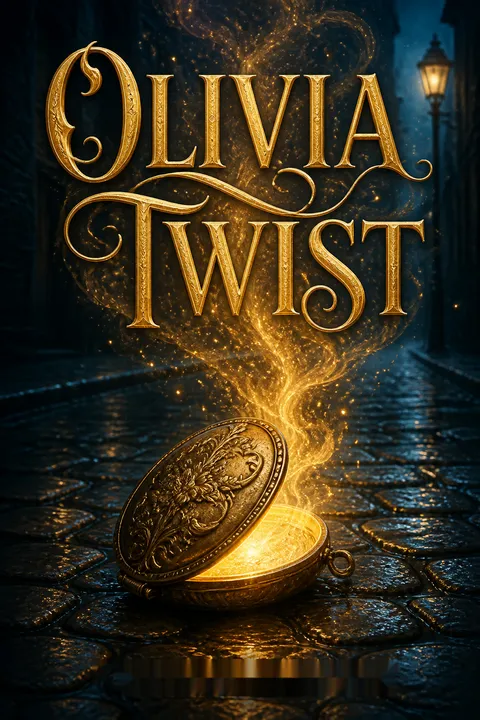
A keepsake turned trailThe oval locket carries a portrait of Olivia’s mother and links Olivia to a family history she knows only in fragments. When the Hill Orphans sell it to raise money, Monks buys it and uses its connection to search for his sibling. The object turns private grief into evidence, reveals why Olivia is being targeted, and eventually leads her toward the conflict over Edwin Leeford’s will. Its emotional value to Olivia exceeds its market price, which is why its loss becomes both a practical danger and a personal wound.
The Dodger’s reputation
Protection with a priceJack’s old street identity carries authority among London’s gangs and orphan crews. When Monks threatens the Hill Orphans, Jack allows word to spread that the Dodger has returned, hoping his reputation will deter attacks and draw the crime lord into the open. The tactic gives the children a measure of protection, but it also pulls Jack back toward the violent world he left. His name is therefore both a resource and a risk, showing how a survival identity can remain powerful long after its owner wants to outgrow it.
Edwin’s hidden will
Inheritance becomes motiveAgnes’s letter describes Edwin’s intention to leave his fortune to a child who protects the family name. Olivia later learns that Monks believes she stands in the way of that inheritance. The will transforms a family wound into a concrete motive for framing her, and its presence in Monks’s bank box helps connect him to the crime against Francesca. The document also changes the meaning of the fortune: it can perpetuate a struggle for status, or be redirected toward the children Olivia and Jack have chosen to protect.
The planted necklace
Respectability turned against OliviaAfter Francesca is murdered, police find Olivia’s wrap at the scene and her cousin’s necklace hidden in Olivia’s room. These planted clues make Olivia’s secret street life and absence from the ball look like evidence of guilt. Jack’s false confession temporarily shifts the accusation away from her, but cannot establish the truth. The missing amethyst earrings finally provide a trace back to Monks, and the safe box containing them exposes the frame-up. This device shows how easily visible respectability can be manufactured, and how difficult it is for an accused person to overturn a convincing lie.
Download PDF
Download EPUB
.epub digital book format is ideal for reading ebooks on phones, tablets, and e-readers.








